Explained
Heat Presses, Explained
After reading, you'll understand what platen size, pressure type and auto-off mean, and which listing details to trust.
In this guide
Heat press listings mix craft terms with shop terms, and the numbers that matter are not always on the page. Platen size, pressure type and whether the press opens itself decide how it behaves, while wattage and voltage decide whether your outlet can run it. First-time buyers also confuse a handheld press with a full machine and miss the safety listings. This guide covers the terms you will meet and what each means in practice.
The 30-second version
- Platen size is the first filter, because it sets the biggest design you can press in one go.
- Handheld presses depend on your hands, while swing-away, clamshell and auto presses apply pressure through the machine.
- Auto-off and auto-open are only real when the maker lists them, ideally with a time.
- Wattage and voltage tell you about your outlet, and a missing figure means you should check the manual.
- Safety listings should match the maker page exactly, and a missing listing is unknown, not assumed.
The products this guide is about
Our verdict on each, with the full reasoning on the companion review.
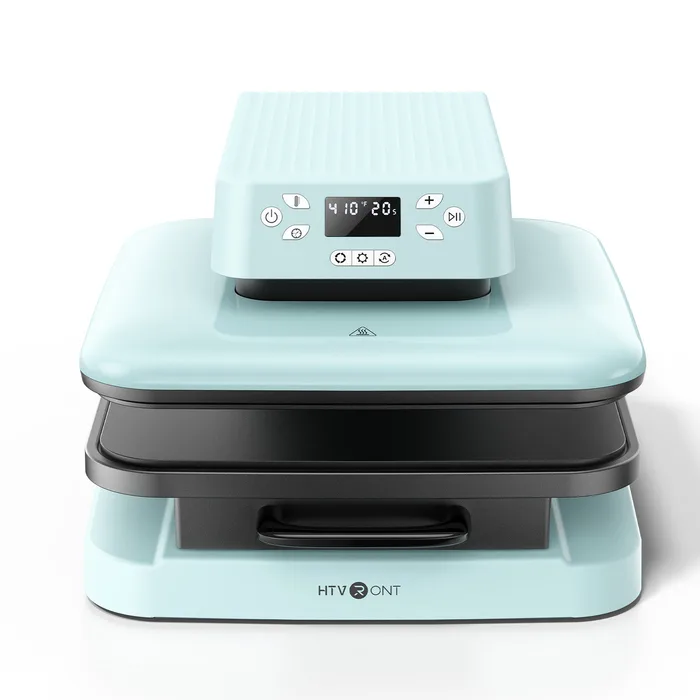
- Buy HTVRONT Auto Heat Press 15 x 15 A 15 x 15 inch auto press with a slide-out drawer, automatic lifting and a 15-minute auto-off, built for people who press shirts regularly at home. Amazon
- Buy Cricut EasyPress SE 12 x 10 A handheld 12 x 10 inch press with a ceramic-coated plate, an insulated safety base and an auto-off, and the easiest way to start pressing. Amazon
- Buy xTool Heat Press Tool (Smart Press and Mini Press) A 12 x 10 inch handheld Smart Press plus a small Mini Press in one kit, with a temperature range of 212 to 400 F.
- It depends Geo Knight DK20S 16x20 Digital Swing-Away Press A 16 x 20 inch swing-away shop press rated 1800 W at 120 V, with a 600 F ceiling and digital time and pressure readout.
- It depends Hotronix Auto Open Clam Heat Press A clamshell shop press in 11 x 15, 16 x 16 and 16 x 20 inch sizes that opens by itself at the end of the cycle. Amazon
- Skip VEVOR 8 in 1 Heat Press Machine 15x15 Inch A 15 x 15 inch swing-away combo press with mug and cap attachments, but the page lists no auto-off and no safety certification.
What actually matters
- Platen size - This is the heated plate's size in inches. It sets how large a design you can press in one go, so match it to the shirts and prints you make.
- Pressure type - Handheld presses use your hands, while swing-away and clamshell presses use an adjustable mechanism. Auto presses lower themselves, which makes results more repeatable.
- Maximum temperature - Handhelds list around 400 F, while shop presses go higher. Most HTV and sublimation work needs less than the maximum.
- Auto-off - A timer that cuts heat after a period of inactivity. It only counts if the maker lists it, ideally with a time.
- Auto-open - The press releases the garment at the end of the cycle without you lifting it. It helps prevent over-pressing when you are busy.
- Wattage and voltage - These tell you what the press draws from the wall. A 1500 W or 1800 W machine needs a proper outlet, so check the label.
- Warranty terms - Shop presses often split coverage by part, such as the heating element, frame and controller. Read which part carries the longest cover.
The specs, in plain English
Green flags vs red flags
Green flags
- The page lists a platen size in inches rather than just a model name.
- An auto-off time is stated, such as 15 minutes.
- A maximum temperature and a timer range are listed.
- Wattage and voltage appear on the page or in the manual.
- A named certification or safety base is listed by the maker.
Red flags
- No auto-off or safety listing at all on the page.
- No voltage or wattage published for a high-heat machine.
- A product title crammed with attachments but no clear platen size.
- Conflicting specs between pages or sellers for the same model.
- No manual available to download before you buy.
Who's who: the brands
- Cricut - Known for craft cutting machines, with handheld EasyPress heat presses and a Heat Guide for settings.
- HTVRONT - Known for crafter-friendly auto presses and handheld presses sold direct.
- xTool - Known for lasers and craft machines, and sells a Smart Press and Mini Press kit.
- Geo Knight - A US press maker known for heavy swing-away and clamshell shop machines.
- Hotronix - A US maker of clamshell, swing-away and cap presses sold through distributors.
How to read a listing without getting fooled
Start with platen size and press type, then look for the maximum temperature and timer range. Next find auto-off or auto-open and read how the maker words it, including any time. Check wattage and voltage against your outlet, and read the safety line for a named certification or safety base. If a figure is missing, treat it as unknown and check the manual before you buy.
How much should you spend?
Handheld presses sit at the budget tier, and full-size auto presses sit in the mid-range. Shop-style swing-away and clamshell presses sit at the premium tier and are priced for regular production. The tier is mostly paying for platen size, build and warranty rather than extra features. For occasional home use, a handheld or a mid-range auto press is usually enough.
Questions, answered
Can I press hats and mugs with these?
It depends on the press. The VEVOR listing includes a cap press and mug attachments, and the Geo Knight sells interchangeable tables including a cap table. The other presses here are flat-garment machines. Check the maker page for the exact attachment list before you buy.
What does a pressure bar graph show?
On the Geo Knight DK20S, the maker lists a digital pressure bar graph as a feature. It gives a visual reading of the pressure setting. The page does not publish a numeric pressure figure.
Is a bigger platen always better?
Not always. A bigger plate handles larger designs, but it adds weight, power draw and space. Match the plate to your biggest regular design rather than buying the largest.
How do I know a press is safe to use?
Look for the safety features the maker lists, such as an auto-off, an insulated base or a named certification, and follow the manual for use and cool-down. If the page lists none, treat that as unknown and ask the maker before you buy.
Or jump to the head-to-head: HTVRONT Auto Heat Press 15 x 15 vs Cricut EasyPress SE 12 x 10.