Explained
Bike Locks, Explained
After reading this you will know which lock type fits your bike and route, and how to read a security rating without being fooled by marketing.
In this guide
Buying a bike lock means trading security against weight, and no single design wins on both. The category is full of confident-sounding ratings, hardened-steel numbers, and lock-type labels that hide one blunt truth: what stops a casual thief is not what stops a determined one. This guide decodes the terms so you can buy for your real risk, not the packaging.
The 30-second version
- Match the lock to your risk, not the maximum. so a high-theft city commute justifies a heavy U-lock or folding lock, while a brief in-sight stop does not.
- Independent security ratings matter more than a brand's own scale, because a published, third-party gold or diamond equivalent tells you how the lock resisted real hand-tool and picking attacks.
- No consumer lock survives a cordless angle grinder, so the realistic goal is to resist hand tools long enough that a thief gives up and moves on.
- Weight is the honest daily cost of security, and the strongest lock protects nothing if it is heavy enough that you leave it at home.
- Lock type decides where you can lock, as a rigid U-lock, a folding lock, and a chain each reach different frames, wheels, and anchors.
The products this guide is about
Our verdict on each, with the full reasoning on the companion review.
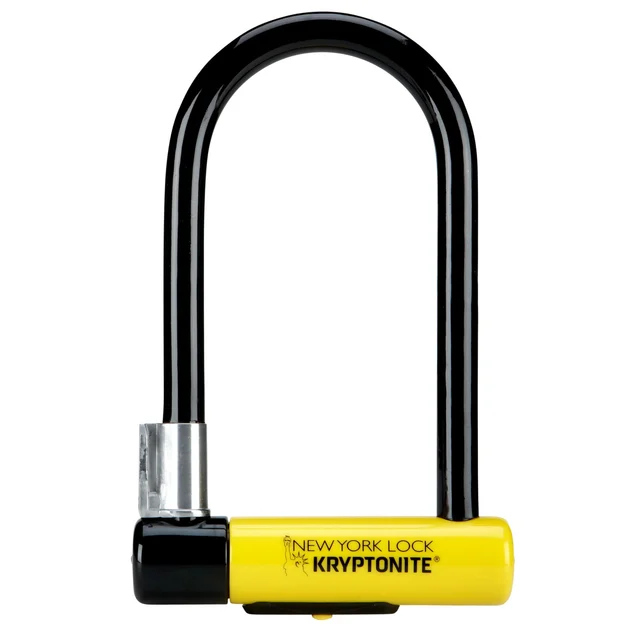
- Buy Kryptonite New York Standard Heavy Duty U-Lock A 16mm hardened U-lock that shrugs off hand tools and remains the default choice for high-risk city parking. Amazon
- Buy Abus Bordo Granit 6500K Folding Lock The updated top-security folding lock from Abus, rated 15 on its own scale and folding to a compact block that wraps objects a U-lock cannot. Amazon
- It depends Hiplok Gold Wearable Chain Lock A Gold-rated 10mm chain you wear around your waist, trading serious heft for the freedom to leave the bike unmounted. Amazon
- Skip Ottolock Hexband Cinch Lock A featherweight banded lock that coils into a jersey pocket, and that Ottolock itself says is not a replacement for a U-lock. Amazon
What actually matters
- Independent security rating - a published, third-party resistance grade (rather than a brand's own marketing scale) is the single best predictor of how a lock holds up against hand tools and picking.
- Lock type - U-lock, folding lock, chain, or cable each strikes a different balance of strength, weight, and reach, and this choice drives everything else.
- Weight and carry - the honest daily cost of protection, since a lock you find too heavy to bring gives zero security on the day it stays home.
- Locking span and flexibility - whether the lock can actually reach a solid anchor around your frame and wheel, which is critical for fat tubes, cargo bikes, and e-bikes.
- Mounting and portability - a frame bracket, a folding-lock holster, or a wearable belt determines whether the lock rides cleanly or rattles and annoys you into leaving it behind.
- Attack surface - the number of joints, links, or locking points, because each rivet or link is one more place a thief can attack compared with a single thick shackle.
- Keyway and cylinder quality - a pick-resistant disc-style cylinder resists lock-picking and snapping, which matters more on higher-value bikes.
The specs, in plain English
Green flags vs red flags
Green flags
- Carries a published independent security rating, ideally a gold or diamond equivalent for city use, not just the maker's own scale
- Uses a thick hardened shackle or heavy hardened links, with a double-deadbolt or equivalent multi-point locking design
- Has a pick-resistant disc-style cylinder rather than a basic pin-tumbler keyway
- Ships with a proper carry method, such as a frame bracket, folding holster, or wearable belt, so you will actually bring it
- Offers a locking span that fits your frame, wheel, and typical anchor
Red flags
- Relies on a lightweight cable or thin band as its only security; these are deterrents, and Ottolock itself does not claim its cinch cannot be cut
- Quotes only a brand's private security number with no independent rating behind it
- Marketed as unbreakable or grinder-proof; no consumer lock in this class truly is
- Feels dramatically light for its size, which usually means thin or soft steel
- Uses a cheap-feeling keyway prone to picking, bumping, or snapping
Who's who: the brands
- Kryptonite - U-lock maker whose New York Standard carries Sold Secure Diamond and ART 4-star badges, plus an anti-theft protection offer.
- Abus - Maker of U-locks, folding locks, and chains, including the Bordo Granit folding range.
- Hiplok - Specialist in wearable chain locks, best known for chains you can wear around your waist instead of mounting hardware to the frame.
- OTTOLOCK - Makes ultralight banded locks that coil into a pocket; positioned as a lightweight deterrent for brief stops rather than standalone security.
How to read a listing without getting fooled
Start with the security rating, and check whether it comes from an independent scheme or only from the brand's own scale; a published gold or diamond equivalent means far more than a private number. Next read the lock type and the shackle diameter or link thickness in millimeters, since these tell you how it resists bolt cutters and leverage. Look at the internal locking span to be sure it fits your frame and wheel around a real anchor, and note the cylinder type, favoring pick-resistant disc-style over basic pin-tumbler. Finally, treat weight as a feature, not a flaw: a lighter lock you always carry beats a heavier one you leave home. Mentally discount words like unbreakable or grinder-proof; every lock in this class yields to a cordless angle grinder, so the honest question is how long it resists hand tools.
How much should you spend?
Spend enough to reach a published independent security rating, because below that threshold you are usually paying for a deterrent rather than real protection. The value sweet spot for most city riders is a well-rated hardened U-lock or a top-rated folding lock; these cost more than cable locks but far less than the loss of a stolen bike. Spending more buys convenience and reach, such as a folding lock's flexible geometry or a wearable chain's mount-free carry, rather than dramatically more raw security once you are already at a gold-equivalent grade. Cheaping out is the false economy here: a bargain cable or thin band offers almost no resistance to hand tools. Conversely, the priciest angle-grinder-resistant locks are worth it only if you routinely leave a high-value bike or e-bike in high-theft areas; for lower-risk use, that spend and weight are overkill.
Questions, answered
Which lock type is most secure: U-lock, folding, or chain?
A hardened U-lock generally gives the most security for its weight, because a single thick shackle offers fewer attack points than the many joints of a folding lock or the links of a chain. High-end folding and chain locks can reach comparable independent ratings, but they do so by adding weight. Lightweight bands and thin cables sit well below all of them and should be treated as deterrents only.
Can any bike lock stop an angle grinder?
No consumer lock in the everyday U-lock, folding, or chain class is designed to defeat a cordless angle grinder, and independent testing shows a determined thief can cut standard hardened steel with one. Dedicated angle-grinder-resistant locks exist but are heavier and more expensive. For normal locks, the realistic goal is to resist hand tools long enough to deter theft, so combine a strong lock with well-lit, busy, camera-covered parking.
How much lock weight do I actually need?
Match the weight to your risk rather than buying the heaviest option available. For high-theft cities, a U-lock of around 4.5 pounds, like the New York Standard, is a reasonable carry for the protection gained. For low-risk short stops where the bike stays in sight, a much lighter lock is far more pleasant, as long as you accept it is only a deterrent. A heavy chain makes the most sense when it is worn on your body rather than mounted.
What is the best lock for an e-bike or a large-framed bike?
Larger frames and e-bikes need a long enough locking span to reach a solid anchor around a thick frame and wheel, so a long chain or a folding lock's reach usually beats a compact U-lock whose small window is hard to fit around fat tubes. Because e-bikes are high-value targets, favor a high independent security rating and, where practical, use two different lock types together.
What does a security rating like gold or diamond actually mean?
These grades come from independent testing schemes that subject locks to timed attacks with common tools; higher grades survived tougher, longer attempts. A gold or diamond equivalent signals strong resistance to hand tools and picking and is a good bar for city use. Ratings are guidance, not guarantees, and a brand's own private scale is not the same thing, so look for an independent grade before trusting a number.
Or jump to the head-to-head: Kryptonite New York Standard Heavy Duty U-Lock vs Abus Bordo Granit 6500K Folding Lock.