

Cycling
The Best Bike Locks: 4 Compared (and One to Skip)
We compared a U-lock, a folding lock, a wearable chain, and a lightweight band on security rating, weight, portability, and mounting.
The short version
For most riders parking in a city, the Kryptonite New York Standard U-lock is the strongest, most practical choice: a top independent security rating in a compact, bracket-mounted body. The Abus Bordo Granit 6500K folding lock is the best pick when you need flexible locking geometry and easy carry. The Hiplok Gold wearable chain, rated Sold Secure Gold, is excellent for big or heavy bikes if you can live with wearing a heavy 10mm chain. The Ottolock Hexband is a featherweight deterrent only; Ottolock itself says it is not a replacement for a U-lock, so never rely on it alone. No consumer lock survives an angle grinder, so pair any lock with smart parking. Best for: city commuters who want proven, hand-tool-resistant security without overthinking it.
Our picks at a glance
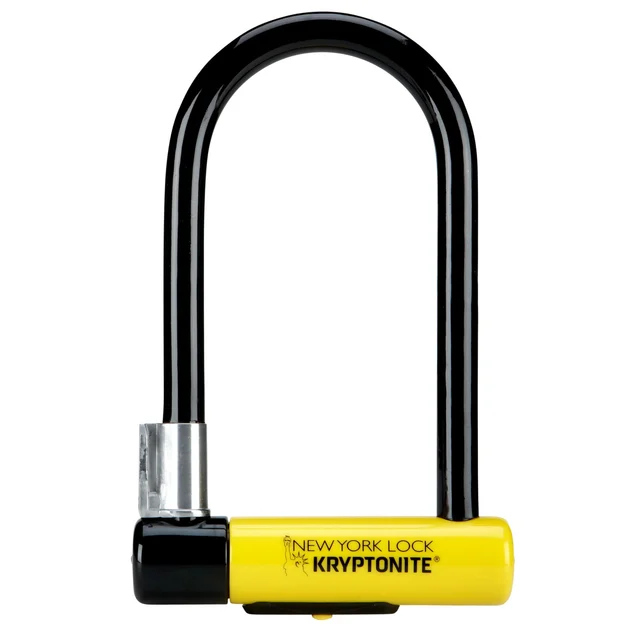
- Kryptonite New York Standard Heavy Duty U-Lock - Buy. A 16mm hardened U-lock that shrugs off hand tools and remains the default choice for high-risk city parking.
- Abus Bordo Granit 6500K Folding Lock - Buy. The updated top-security folding lock from Abus, rated 15 on its own scale and folding to a compact block that wraps objects a U-lock cannot.
- Hiplok Gold Wearable Chain Lock - It depends. A Gold-rated 10mm chain you wear around your waist, trading serious heft for the freedom to leave the bike unmounted.
- Ottolock Hexband Cinch Lock - Skip. A featherweight banded lock that coils into a jersey pocket, and that Ottolock itself says is not a replacement for a U-lock.
The verdict in 30 seconds
What mattered most
- Lock type
- Independent security rating
- Approx. weight
- Portability / carry
- Mounting
- Locking flexibility
Bike locks force a trade-off between security and how much weight you are willing to carry, and no single design wins on both. We lined up four models spanning the main categories: a hardened U-lock, a folding lock, a wearable chain, and an ultralight band. Two earn a clear buy, one depends entirely on your bike and route, and one should stay reserved for the lowest-risk stops.
A 16mm hardened U-lock that shrugs off hand tools and remains the default choice for high-risk city parking.
Best for: Commuters parking in dense urban areas who want maximum hand-tool resistance in a compact form.
- Rated 9/10 on Kryptonite's own scale, with Sold Secure Diamond and ART 4-star badges, and a hardened double deadbolt Kryptonite says resists twist and cut attacks
- 16mm hardened steel intimidates opportunists before a tool is drawn
- Includes a FlexFrame-U bracket, a disc-style cylinder, three keys and Kryptonite's anti-theft protection offer
- Heavy for its 4 x 8 inch locking area, at a stated 4.45 pounds
- Like nearly all consumer locks, it yields to a determined angle-grinder attack
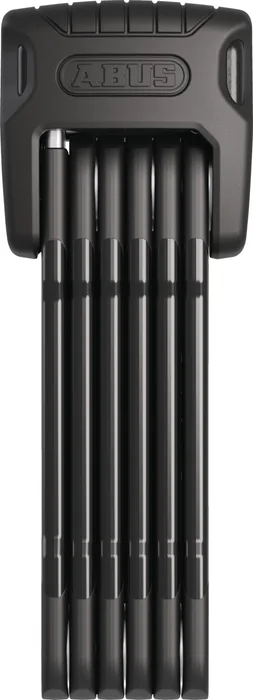
The updated top-security folding lock from Abus, rated 15 on its own scale and folding to a compact block that wraps objects a U-lock cannot.
Best for: Riders who prize flexible locking geometry and easy carry but refuse to drop to cable-lock security.
- Abus rates it 15 in its security level system, the top of its own scale, with 5.5mm hardened steel bars and drill-resistant rivets
- XPlus disc cylinder for manipulation resistance, and a Link Protection Shield over the rivets against sawing
- Unfolds to 90cm and ships with the SH carrier for mounting on the bike
- Abus lists it at 3.68 lb, not far off the U-lock it competes with
- The many rivet joints are inherently more attack points than a single U-lock shackle

A Gold-rated 10mm chain you wear around your waist, trading serious heft for the freedom to leave the bike unmounted.
Best for: Owners of big or heavy bikes who would rather wear the lock than mount it, and who accept the weight.
- Rated Sold Secure Gold, with a hardened 10mm chain and a 12mm shackle
- Patented belt fastening, adjustable for 30 to 44 inch waists, lets you wear the chain while riding instead of bolting a bracket to the frame
- An 85cm locking length suits large frames, cargo bikes, and e-bikes
- Hiplok does not publish a weight, and a 10mm chain with a 12mm shackle is a heavy thing to wear on longer rides
- There is no frame mount, so it is either worn or carried in a bag
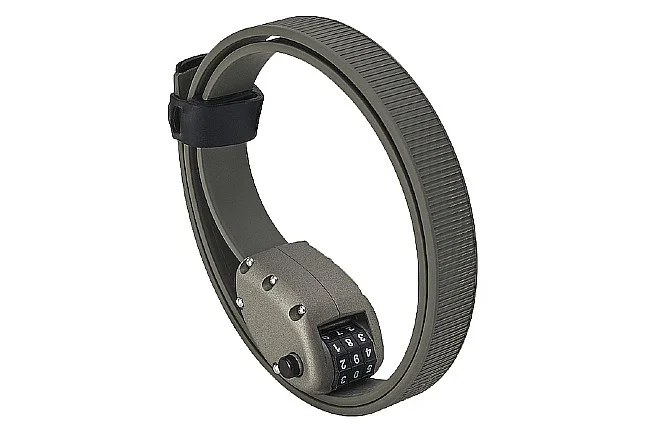
A featherweight banded lock that coils into a jersey pocket, and that Ottolock itself says is not a replacement for a U-lock.
Best for: Cyclists and cafe-stop riders who need a lightweight deterrent for brief, low-risk, in-sight stops.
- Light and packable, from a stated 190 grams and coiling to a 3 inch diameter
- Six hardened stainless steel band layers in an aramid fiber jacket, aimed at quick-stop, opportunistic theft
- Combination dial means no keys to lose
- Ottolock states it does not claim the cinch cannot be cut, and publishes no cut-resistance figure
- Ottolock calls it a quick-stop lock, not a replacement for a U-lock, and recommends a second lock for higher-crime areas or longer lock-ups
| Criteria | Kryptonite New York Standard Heavy Duty U-Lock Top pick | Abus Bordo Granit 6500K Folding Lock | Hiplok Gold Wearable Chain Lock | Ottolock Hexband Cinch Lock |
|---|---|---|---|---|
| Verdict | Buy it | Buy it | It depends | Skip it |
| Best for | Commuters parking in dense urban areas who want maximum hand-tool resistance in a compact form. | Riders who prize flexible locking geometry and easy carry but refuse to drop to cable-lock security. | Owners of big or heavy bikes who would rather wear the lock than mount it, and who accept the weight. | Cyclists and cafe-stop riders who need a lightweight deterrent for brief, low-risk, in-sight stops. |
| Price tier | $$$ · premium | $$$ · premium | $$$ · premium | $$ · mid-range |
| Lock type | Hardened U-lock | Folding lock | Wearable chain | Lightweight band |
| Independent security rating | Sold Secure Diamond, ART 4 stars | Abus level 15 (top of its scale) | Sold Secure Gold | Low, deterrent only |
| Approx. weight | 4.45 lb (heavy) | 3.68 lb | Not published | From 190 g (ultralight) |
| Portability / carry | Bulky, bracket-mounted | Folds to a compact block | Worn around the waist | Coils into a pocket |
| Mounting | Frame bracket included | SH carrier included | No mount; wearable belt | No mount; stows loose |
| Locking flexibility | Small window, rigid | Wraps large / awkward objects | Long, very flexible span | Flexible but insecure |
| Best risk level | High-risk urban | Medium to high risk | Medium to high risk | Low risk, short stops |
| Price tier | $$$ · premium | $$$ · premium | $$$ · premium | $$ · mid-range |
Which one is right for you?
- Commuters parking in dense urban areas who want maximum hand-tool resistance in a compact form. Buy it Kryptonite New York Standard Heavy Duty U-Lock
- Riders who prize flexible locking geometry and easy carry but refuse to drop to cable-lock security. Buy it Abus Bordo Granit 6500K Folding Lock
- Owners of big or heavy bikes who would rather wear the lock than mount it, and who accept the weight. It depends Hiplok Gold Wearable Chain Lock
- Cyclists and cafe-stop riders who need a lightweight deterrent for brief, low-risk, in-sight stops. Skip it Ottolock Hexband Cinch Lock
How we judged the field
We do not run our own destructive lab. Instead we synthesize independent security testing, established third-party rating schemes, and aggregated owner reports, then weigh them against how a lock actually fits into daily riding. Four things mattered most:
- Security rating: independent, published resistance to hand tools and picking, not marketing numbers alone.
- Weight and carry: the honest daily cost of protection, since a lock left at home protects nothing.
- Portability and mounting: whether the lock rides cleanly on the frame, on your body, or in a bag.
- Locking flexibility: how easily the lock reaches a solid anchor around real frames and wheels.
One truth frames everything below: reviewers and independent testing agree that no lock in this class survives a cordless angle grinder. The realistic job is to resist hand tools long enough that a thief moves on, so we judged these locks as deterrents matched to a risk level, not as guarantees.
Kryptonite New York Standard Heavy Duty U-Lock
Buy itThis is the lock that defined serious city security, and it still earns its place. Its 16mm hardened shackle and double-deadbolt design mean a thief must defeat two locking points, and Kryptonite says the deadbolt adds protection against twist and cut attacks. Kryptonite rates it 9/10 on its own scale and shows Sold Secure Diamond and ART 4-star certifications, and it ships with a FlexFrame-U bracket, a disc-style cylinder and an anti-theft protection offer. The honest cons are weight, a stated 4.45 pounds for a 4 x 8 inch locking window, and the same angle-grinder vulnerability every lock here shares. For riders in high-theft areas who want proven hand-tool resistance, it is the safe default.
Abus Bordo Granit 6500K Folding Lock
Buy itFolding locks usually trade away security for convenience; this one mostly refuses to. The 6500K is the updated version of the Bordo Granit XPlus 6500, with a revised design and locking mechanism, and Abus rates it 15 in its own security level system. It is built from 5.5mm bars of specially hardened steel joined by drill-resistant rivets, with a Link Protection Shield over the joints against sawing and an XPlus disc cylinder against picking. Folded, it collapses into a compact block that rides in the included SH carrier; unfolded, it reaches 90cm and wraps around thick posts, racks, and large frames that a rigid U-lock cannot. The trade-offs are real: at a stated 3.68 lb it is not much lighter than the Kryptonite, it sits at the premium end of the category, and its many joints are inherently more attack points than a single shackle. For riders who value flexible locking geometry and easy carry without dropping to cable-lock security, it is a genuine buy.
Hiplok Gold Wearable Chain Lock
It dependsThe Hiplok Gold solves a specific problem elegantly: how to carry a real chain without bolting hardware to your frame. Its hardened 10mm chain and 12mm shackle are rated Sold Secure Gold, and a patented belt fastening, adjustable for 30 to 44 inch waists, lets you wear the chain while riding. The 85cm locking length suits big frames, cargo bikes, and e-bikes that defeat compact locks. But Hiplok does not publish a weight, and a chain of this size is heavy to wear on longer rides. Whether it is right for you depends almost entirely on your bike and tolerance for weight, which is why it lands at “depends” rather than a blanket buy.
Ottolock Hexband Cinch Lock
Skip itThe Hexband is a delight to carry and a liability to trust. It starts at a stated 190 grams, coils to a 3 inch diameter, and uses six hardened stainless steel band layers in an aramid jacket plus a resettable combination, which is aimed at deterring a casual grab-and-go. The problem is decisive: Ottolock says it does not claim the cinch cannot be cut, calls it a quick-stop lock that is not a replacement for a U-lock, and recommends a second lock for higher-crime areas or longer lock-ups. As the sole security for anything you value, it should be skipped. It has a narrow, legitimate role as a lightweight deterrent for brief, in-sight stops, but that is a supporting part, not a lead.
Kryptonite New York Standard vs Abus Bordo Granit 6500K: which should you buy?
Both are premium locks aimed at city riders, so the decision is mostly about shape and use. The Kryptonite is a rigid U-lock: fewer attack points, the most reassuring single-shackle security, and a compact profile, at the cost of a small locking window that can be awkward around fat frames. The Abus folds flat and unfolds long, so it reaches anchors and frame shapes the Kryptonite simply cannot, and many riders find the folded block easier to stash. Choose the Kryptonite if you lock to standard racks in a high-theft city and want the simplest, hardest target. Choose the Abus if your parking spots are varied or your frame is large; it carries the top rating on Abus’s own scale.
What to look for
- A published independent security rating, not just a brand’s own scale, and ideally a gold or diamond equivalent for city use.
- Weight you will actually carry every day; the strongest lock is worthless if it stays home.
- A locking span that fits your bike and anchor, especially for fat frames, wheels, and e-bikes.
- A carry method that suits you, whether a frame bracket, a folding holster, or a wearable belt.
- Realistic expectations: assume any lock can be angle-ground, and prioritize busy, lit, well-anchored parking.
Our final take
Security and convenience pull in opposite directions, and these four locks map that tension cleanly. The Kryptonite New York Standard is the default answer for most city riders: top-tier hand-tool resistance in a compact, well-mounted package. The Abus Bordo Granit 6500K is the smarter buy when locking geometry or carry matters more than a single-shackle design. The Hiplok Gold rewards owners of big or heavy bikes who would rather wear their lock than mount it, provided they accept real weight. The Ottolock Hexband is best understood as a pocketable deterrent, never the only thing between a thief and your bike. Pick the lock that matches your risk, then park like the grinder is always a possibility.
Questions, answered
Which bike lock type is most secure: U-lock, folding, or chain?
A hardened U-lock generally gives the most security for its weight because a single thick shackle offers fewer attack points than the joints of a folding lock or the links of a chain. High-end chain locks like the Sold Secure Gold Hiplok Gold can carry strong independent ratings, but they do so by adding weight. The lightweight band category, such as the Ottolock Hexband, sits well below all of them and should be treated as a deterrent only.
Can any of these locks stop an angle grinder?
No. None of the four locks here is designed to defeat a cordless angle grinder, and independent testing shows determined thieves can cut through standard hardened steel with one. Angle-grinder-specific locks exist and are heavier and more expensive. For these models, the realistic goal is to resist hand tools long enough to deter theft, so combine a strong lock with well-lit, busy, camera-covered parking.
How much lock weight do I actually need?
Match the weight to your risk, not the maximum available. For high-theft cities, the 4.45-pound Kryptonite is a reasonable carry for the protection gained. For low-risk short stops where you keep the bike in sight, the 190-gram Ottolock is far more pleasant to carry, accepting that it is only a deterrent. The heavy Hiplok Gold makes most sense when it is worn rather than mounted.
What is the best lock for an e-bike or a large-framed bike?
Larger frames and e-bikes need a long enough locking span to reach a solid anchor around a thick frame and wheel. The Hiplok Gold's 85cm chain and the 90cm Abus Bordo Granit 6500K handle this better than a compact U-lock, whose small window can be hard to fit around fat tubes. Because e-bikes are high-value targets, favor a high independent security rating and, where practical, use two different lock types together.
Do these locks come with a mounting bracket?
The Kryptonite New York Standard includes a FlexFrame-U frame bracket. The Abus Bordo Granit 6500K ships with the SH carrier for mounting it on the frame. The Hiplok Gold has no frame mount by design; it is worn around the waist using its belt clasp. The Ottolock has no mount and simply coils into a pocket, bag, or saddlebag.
Deciding between the top two? See our head-to-head: Kryptonite New York Standard Heavy Duty U-Lock vs Abus Bordo Granit 6500K Folding Lock.
More Cycling reviews
 The Best Bike Mirrors: 4 Compared (and One to Skip)
  The Best Bike Multitools: 4 Compared (and One to Skip)
  The Best Bike Panniers: 4 Compared (and One to Skip)
  The Best Bike Phone Mounts: 4 Compared (and One to Skip)
  The Best Car Bike Racks: 4 Compared (and One to Skip)
  The Best Bike Radars: 4 Compared (and One to Skip)