Explained
Bike Frame Protection, Explained
After reading, you'll know which thickness suits your riding, what the durability claims actually cover, and how to apply film without leaving edges you will stare at forever.
In this guide
Every frame protection product promises to stop your paint getting chipped, and they are not all protecting against the same thing. Some are thin, hard films that shrug off cable rub and shoe scuffs. Some are thick composites that spread the energy of a stone strike. Telling them apart takes one number, and finding that number is most of the work.
The 30-second version
- Thickness decides the job, with thin films for abrasion and thick composites for impact.
- Construction matters as much as thickness, since a soft layer under a hard one absorbs rather than transmits.
- Model-specific kits fit, universal kits are trimmed, and makers who sell both will tell you so.
- Self-healing fixes swirls, not cuts, and only where the maker claims it.
- Application method is not interchangeable, so read whether the film goes on wet or dry before opening it.
The products this guide is about
Our verdict on each, with the full reasoning on the companion review.
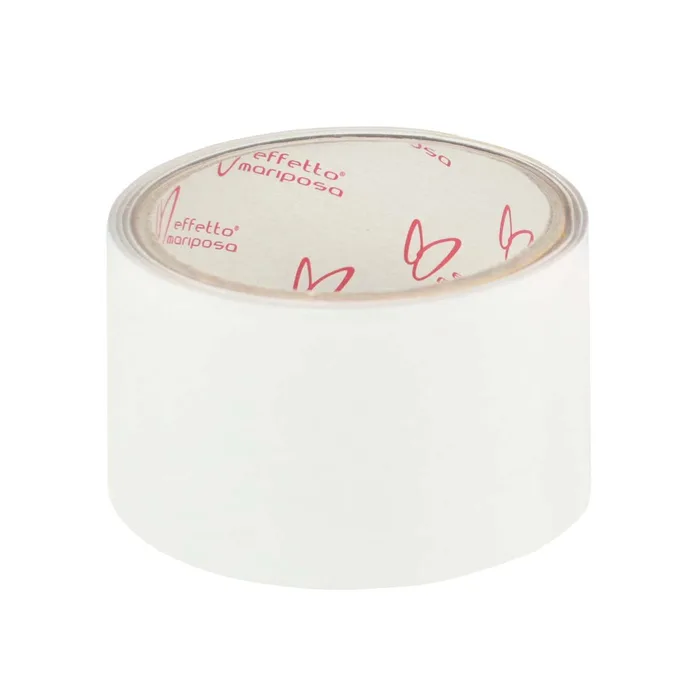
- Buy Effetto Mariposa Shelter Off-Road 1,2 mm The only one that publishes its layer construction, and the only one designed to absorb impact rather than resist it.
- Buy Muc-Off Frame Protection Kit, Clear Gloss 45 pre-cut self-healing TPU pieces, in two sizes so an e-bike down tube actually fits.
- It depends All Mountain Style Honeycomb Frame Guard Extra, Clear A precisely specified 380 micron honeycomb polymer, in only ten pieces.
- Skip invisiFRAME Universal BASE Kit, MTB Hardtail A genuinely excellent film in the one format this company exists to avoid.
What actually matters
- Thickness - quoted in microns or millimetres. Roughly, under 400 micron is abrasion and chip protection; over a millimetre is impact absorption. Most makers do not publish it.
- Construction - whether the product is one uniform film or a layered composite. A hard scratch layer over a soft viscoelastic layer spreads impact energy instead of passing it to the frame.
- Format - a roll you cut, a universal pre-cut kit, or a kit cut for your exact bike and model year. Each trades cost against fit and time.
- Coverage - how many pieces and which frame areas. An itemised list beats a piece count, because ten pieces can mean a down tube and chainstays or the whole bike.
- Self-healing - whether light scratches close up with heat or warm water. Genuinely useful on clear gloss film, irrelevant on a cut.
- Yellowing and staining - automotive-grade films are formulated not to go yellow in UV. Cheaper films do, and it shows most on a white or pale frame.
- Finish - gloss, matt or textured. A gloss film over a matt frame looks wrong, and honeycomb textures are visible even when clear.
The specs, in plain English
Green flags vs red flags
Green flags
- A thickness given in microns or millimetres.
- The layer construction described, not just the material named.
- An itemised list of pieces and what each covers.
- A size or fit option keyed to down tube width.
- Self-healing and non-yellowing stated explicitly.
Red flags
- No thickness anywhere on the page.
- A piece count with no description of the pieces.
- A universal kit whose description admits significant trimming.
- Protection claimed with no material named at all.
- Only one finish offered when the brand's frames come in both gloss and matt.
Who's who: the brands
- Effetto Mariposa - Italian maker of the Shelter range of viscoelastic protection tapes, sold by the roll in 0.2mm, 0.6mm and 1.2mm thicknesses with the construction published.
- Muc-Off - UK bike care brand whose Frame Protection Kits are self-healing TPU in 45 pieces, sized by down tube width and available in gloss or matt.
- All Mountain Style - Known for the honeycomb-textured Frame Guard, a 380 micron impact-resistant polymer sold in itemised kits and in patterned designs as well as clear.
- invisiFRAME - UK company built around bike-model-specific kits cut from XPEL film, with hundreds of frames covered down to model year, plus a universal range.
- Dyedbro - Spanish brand offering printed and clear frame protection kits, including an EVO clear kit aimed at MTB and e-bike frames.
How to read a listing without getting fooled
Find the thickness first. If it is not on the page, you are looking at a cosmetic product until proven otherwise, and you should assume it protects against rub rather than stones. Then look for the construction: one layer or two, and whether a soft layer is named, because that is what distinguishes impact absorption from abrasion resistance. Next read the coverage properly. A piece count is marketing; an itemised list saying one down tube piece, four chainstay pieces and one rectangle is information, and it lets you work out whether your fork and head tube are covered or not. Check whether a fit variant exists and whether it matches your frame, since down tube width is the usual failure. Then read the durability claims and note which are absent, because non-yellowing and self-healing cost nothing to claim. Finally, look for any sentence admitting trimming is required, and believe it.
How much should you spend?
This is a cheap product relative to the frame it protects, so the real cost is your time. The budget approach is a roll of protection tape cut to shape, which covers the two or three areas that actually get hit for very little money and takes an evening. Mid-range buys a universal pre-cut kit of 40 or more pieces, which covers most of a frame in a couple of hours and is the right choice for most new bikes. The premium option is a model-specific kit cut for your exact frame and year, which costs several times a universal kit and is the only way to get film that follows a complicated full-suspension frame without visible trimmed edges. If the bike is expensive and you intend to keep it, the model-specific kit is easy to justify. A thick viscoelastic roll for the chainstay on top of any of those is a sensible extra.
Questions, answered
Where does a frame actually get damaged?
In a predictable handful of places. The down tube takes stone strikes thrown up by the front wheel, which is why every kit's largest piece goes there. The chainstay takes chain slap, the worst of it on the drive side just behind the bottom bracket. The head tube and top tube collect grey marks where cables and housing rub, and scuffs from a frame bag or a lock. The seat tube behind the rear wheel takes spray and grit. And the top tube takes shoe rub and whatever the bike leans against. Protect those first and you have covered most of what actually happens.
Can I apply film over an existing scratch?
You can, and it will seal in the damage rather than hide it, particularly with a clear gloss film that magnifies whatever is underneath. If the scratch is through to bare metal or carbon, clean and treat it first, because moisture trapped under a film will not evaporate. For a cosmetic scratch in clear coat, a light polish beforehand makes a large difference to how the covered area looks. For anything structural on a carbon frame, that is a frame builder's question, not a film question.
How long does frame protection last?
Automotive-grade films are typically good for years rather than seasons, and the failure modes are edges lifting, staining and yellowing rather than the film wearing through. Edges lift where a piece was stretched around a tight curve or applied to a dusty surface, so preparation is most of the answer. Yellowing is a formulation question, and every maker here states or guarantees against it. A thick protection tape on a chainstay is the exception; it is a consumable and will need replacing when it has taken enough hits.
Should I protect an aluminium frame too, or just carbon?
Both, for different reasons. Carbon frames are protected mostly against impact, because a hard enough strike can damage the structure and not just the finish. Aluminium and steel frames are protected mostly against corrosion: a chip through the paint on steel starts rust, and on aluminium it lets oxidation creep under the paint from the edges. The cosmetic case is the same for all of them, and resale value on a frame with a clean down tube is noticeably better.
Or jump to the head-to-head: Effetto Mariposa Shelter Off-Road 1,2 mm vs Muc-Off Frame Protection Kit, Clear Gloss.