

Coffee & Espresso
The Best Bean-to-Cup Espresso Machines: 4 Compared (and One to Skip)
We compared four super-automatic espresso machines on drink range, grinder adjustment, milk system, cleaning routine, capacity and footprint, using each maker's published specs and manuals.
The short version
The JURA E8 is the best overall: 27 specialties, a 7-level P.A.G.2 grinder, one-touch automatic milk system cleaning and a 1.9 l water tank, from a machine only 10.6 in wide. The Philips 3300 Series LatteGo (EP3347/90) is the value pick, with 12 ceramic grind settings, a two-part milk system with no tubes, a removable brew group and a two-year warranty. The De'Longhi Rivelia suits households that want two different coffees on tap, thanks to two swappable 8.8 oz bean hoppers and four user profiles, but cold milk drinks need an upgrade set bought separately. Skip the Gaggia Magenta Plus if you want push-button lattes: it lists five drinks, none of them a milk drink, and you steam milk yourself with a 2.5 in wand. Best for: JURA if you want the widest one-touch menu and low-effort milk cleaning, Philips if you want lattes and cappuccinos without paying premium money.
Our picks at a glance
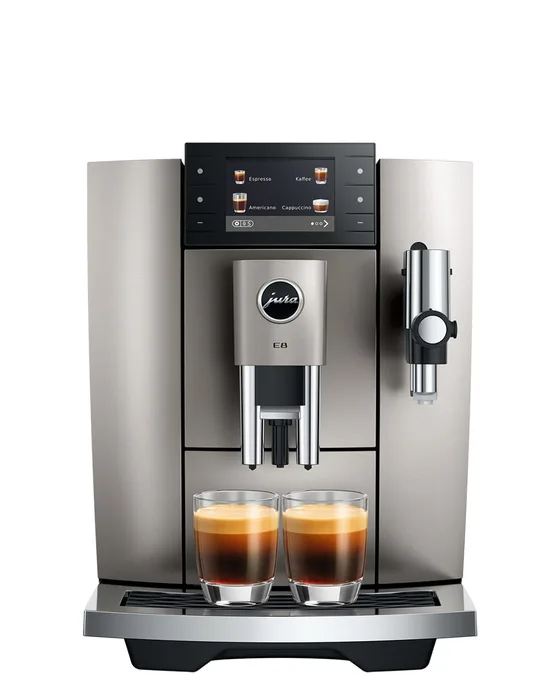
- JURA E8 - Buy. The fullest one-touch menu in the group, 27 specialties, with automatic milk system cleaning and a grinder JURA says resets after every grind.
- Philips 3300 Series LatteGo (EP3347/90) - Buy. The easiest milk system to keep clean, a removable brew group and 12 ceramic grind settings at a mid-range tier.
- De'Longhi Rivelia (EXAM44055B) - It depends. Two swappable bean hoppers and four user profiles make it the two-coffee household's machine, but you pay extra for that and cold milk drinks are an add-on.
- Gaggia Magenta Plus - Skip. A slim, well-known super-automatic that makes no milk drink by itself, which removes the main reason most people buy one.
The verdict in 30 seconds
What mattered most
- Drinks listed
- One-touch milk drinks
- Grind settings
- Milk system cleaning
- Water tank
- Bean capacity
A super-automatic espresso machine grinds, doses, tamps, brews and, on most models, froths milk at the press of a button. The catch is that the brochure features all look alike, while the things you live with every day, how the milk system gets cleaned, how many grind steps you get and whether the brew group comes out for a rinse, are buried in spec tables and manuals. We picked a premium Swiss machine, a value machine with the easiest milk cleanup, a two-hopper machine for households that drink different beans, and a popular mid-range machine that leaves milk entirely to you.
The fullest one-touch menu in the group, 27 specialties, with automatic milk system cleaning and a grinder JURA says resets after every grind.
Best for: Households that want the widest push-button drink menu and the least hands-on milk cleaning, and will pay premium money for it.
- 27 specialties, including Light Brew and sweetened Sweet Foam versions of the milk drinks, from one 3.5 in color display.
- One-Touch automatic milk system cleaning plus an integrated rinsing, cleaning and descaling program.
- Big 1.9 l water tank and 280 g bean container in a body 10.6 in wide, with 0 W standby power listed.
- The coffee timer and app features need the optional Wi-Fi Connect V2; the transmitter is not supplied.
- No milk carafe in the box: you get a milk pipe, and the glass container and Cool Control coolers are accessories.
- JURA says to use only its own cleaning tablets, descaling tablets and milk system cleaner, so running costs are tied to one brand.
- Only 7 grind levels, fewer steps than the Philips or De'Longhi.
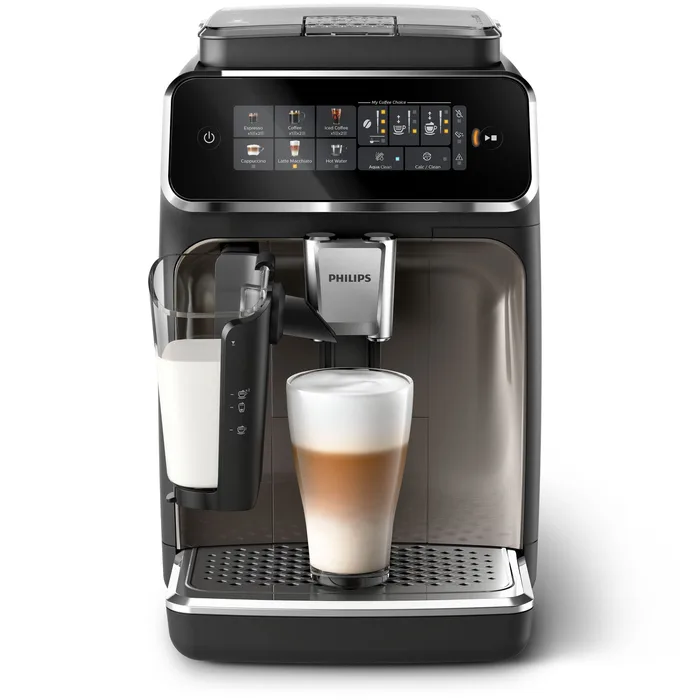
The easiest milk system to keep clean, a removable brew group and 12 ceramic grind settings at a mid-range tier.
Best for: Anyone who wants cappuccinos and lattes at a button press and a cleaning routine that takes seconds, without paying JURA money.
- LatteGo has two parts and no tubes, and Philips says it rinses clean in under 10 seconds under the tap or goes in the dishwasher.
- 100% ceramic grinder with 12 settings, which Philips rates for about 20,000 cups.
- Removable brew group you rinse under the tap weekly, and an AquaClean filter Philips says can skip descaling for up to 5,000 cups over 8 filter changes.
- Six drinks only: espresso, coffee, cappuccino, latte macchiato, iced coffee and hot water.
- No user profiles; the Philips comparison table lists 0 coffee profiles.
- Grind setting can only be changed while the grinder is running, one notch at a time, per the manual.
- Smaller 250 ml LatteGo milk container, so a second milk drink often means a refill.
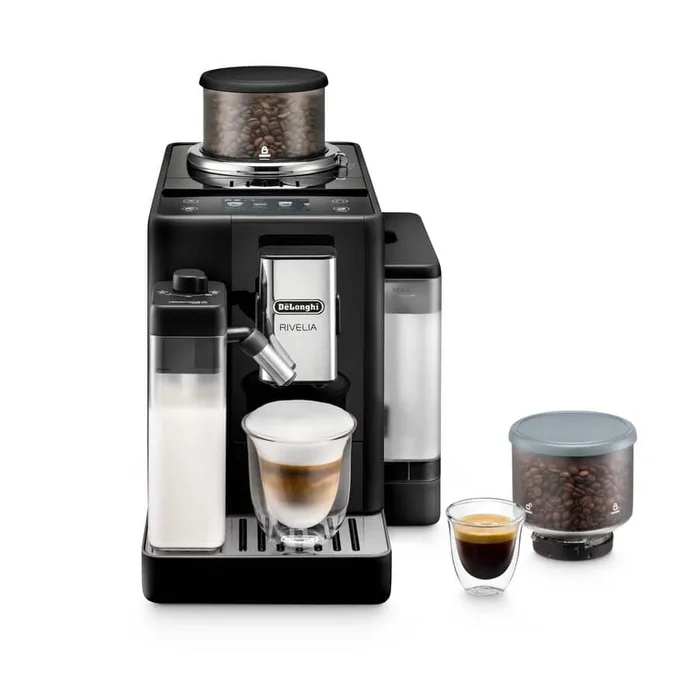
Two swappable bean hoppers and four user profiles make it the two-coffee household's machine, but you pay extra for that and cold milk drinks are an add-on.
Best for: Households where two people drink different beans every day and will use the hopper swap and saved profiles.
- Bean Switch System: two interchangeable 8.8 oz hoppers let you swap from a dark roast to a decaf without emptying anything.
- Bean Adapt guided setup saves grind, dose and temperature per bean type, using a 13-setting conical burr grinder.
- 18 preset recipes and four user profiles on a 3.5 in color touch display, with an included LatteCrema Hot milk system that has an auto-clean function.
- The six cold milk drinks need the LatteCrema Cool Upgrade set, sold separately.
- Smallest water tank in the group at 1.4 l.
- Heaviest machine here at 28 lb, and no manual steam option for milk.
- Costs well above the Philips 3300 for a similar core espresso and milk menu.
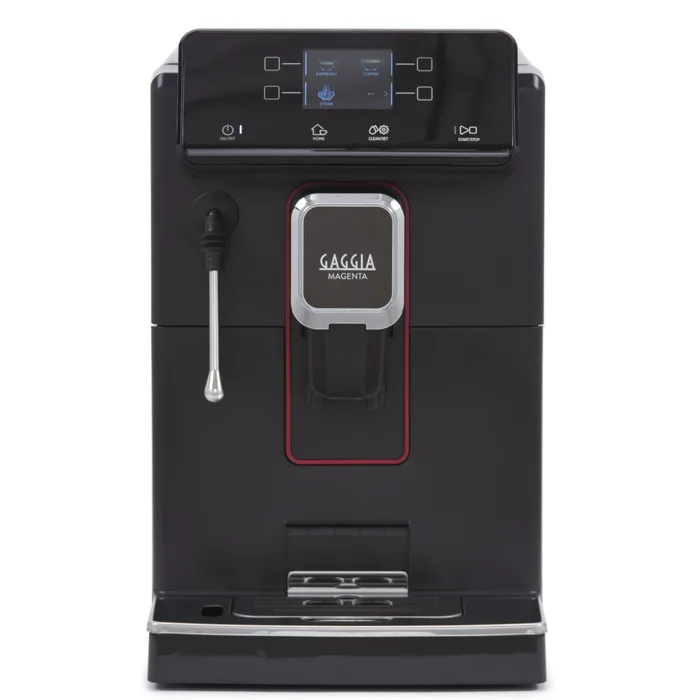
A slim, well-known super-automatic that makes no milk drink by itself, which removes the main reason most people buy one.
Best for: Only someone who wants black coffee at a button and enjoys steaming milk by hand; everyone else gets more from the Philips.
- Slim 8.8 in wide body with a 1.8 L reservoir and an 8.8 oz hopper.
- Americano and espresso lungo on the menu, plus 5 aroma strengths and 3 temperature levels you can tweak on the fly.
- Commercial-style pivoting steam wand gives full control if you want to learn to steam.
- Only five drinks listed (espresso, coffee, Americano, espresso lungo, hot water) and none is a milk drink.
- Milk is all on you, with a 2.5 in usable wand length to work with.
- Only 5 grind settings, against 12 on the Philips 3300 in the same tier.
- Housing and front panel are black ABS plastic.
| Criteria | JURA E8 Top pick | Philips 3300 Series LatteGo (EP3347/90) | De'Longhi Rivelia (EXAM44055B) | Gaggia Magenta Plus |
|---|---|---|---|---|
| Verdict | Buy it | Buy it | It depends | Skip it |
| Best for | Households that want the widest push-button drink menu and the least hands-on milk cleaning, and will pay premium money for it. | Anyone who wants cappuccinos and lattes at a button press and a cleaning routine that takes seconds, without paying JURA money. | Households where two people drink different beans every day and will use the hopper swap and saved profiles. | Only someone who wants black coffee at a button and enjoys steaming milk by hand; everyone else gets more from the Philips. |
| Price tier | $$$ · premium | $$ · mid-range | $$$ · premium | $$ · mid-range |
| Drinks listed | 27 specialties | 6 drinks | 18 preset recipes | 5 drinks |
| One-touch milk drinks | Yes, automatic milk system | Yes, LatteGo | Yes, LatteCrema Hot | No, manual steam wand |
| Grind settings | 7 levels (P.A.G.2) | 12 (ceramic) | 13 (conical burr) | 5 (flat ceramic burr) |
| Milk system cleaning | One-Touch automatic cleaning | 2 parts, no tubes, tap or dishwasher | Auto-clean function | Wipe and purge the wand yourself |
| Water tank | 1.9 l | 1.8 l | 1.4 l | 1.8 L |
| Bean capacity | 280 g | 275 g | 2 x 8.8 oz hoppers | 8.8 oz |
| User profiles | Not listed | None | 4 | Not listed |
| Size and weight | 10.6 in wide, 22 lb | 9.6 x 14.6 x 17.0 in, 17.6 lb | 17 x 9.75 x 14.75 in, 28 lb | 8.8 in wide, 17 lb |
Which one is right for you?
- Households that want the widest push-button drink menu and the least hands-on milk cleaning, and will pay premium money for it. Buy it JURA E8
- Anyone who wants cappuccinos and lattes at a button press and a cleaning routine that takes seconds, without paying JURA money. Buy it Philips 3300 Series LatteGo (EP3347/90)
- Households where two people drink different beans every day and will use the hopper swap and saved profiles. It depends De'Longhi Rivelia (EXAM44055B)
- Only someone who wants black coffee at a button and enjoys steaming milk by hand; everyone else gets more from the Philips. Skip it Gaggia Magenta Plus
How we judged the field
Five things decide whether a super-automatic is a joy or a chore. First, the milk system: whether it makes milk drinks at a button and, more important, how it gets cleaned, because milk residue is where these machines go wrong. Second, grind adjustment, since the number of steps sets how well you can match a light or dark bean. Third, the brew group and descaling routine, which decide your weekly maintenance. Fourth, capacity, meaning water tank and bean hopper size, which sets how often you refill. Fifth, footprint, because these machines live on the counter permanently.
The field splits into premium machines with long menus and self-cleaning milk systems, value machines that cover the core drinks with simple cleaning, specialist machines built around one idea, and older-style models that grind and brew but leave milk to a steam wand. We picked the JURA E8 for the premium end, the Philips 3300 LatteGo for value, the De’Longhi Rivelia for its two-hopper design, and the Gaggia Magenta Plus as the popular mid-range model that misses what most buyers want. Our beginner espresso guide already skips the De’Longhi Magnifica for learners; this guide looks at super-automatics for people who do not want to learn.
The JURA E8 is the machine for people who want the most from a single button. JURA lists 27 specialties, from espresso and cortado to flat white and latte macchiato, plus Light Brew versions served at a gentler temperature and Sweet Foam drinks using the supplied syrup attachment. The P.A.G.2 grinder has 7 levels, and you can set strength in 10 levels and brew temperature in 3. The 1.9 l tank and 280 g bean container mean fewer refills, and the body is 10.6 in wide. The milk side is where the money shows: One-Touch automatic milk system cleaning, plus an integrated rinsing, cleaning and descaling program that JURA says is TÜV-certified for hygiene. The trade-offs are cost and lock-in. JURA tells owners to use only its own tablets and milk cleaner, the coffee timer and app need the optional Wi-Fi Connect V2, and there is no milk carafe in the box, only a milk pipe. It suits a household that drinks several milk drinks a day and wants the cleaning done for them.
The Philips 3300 Series LatteGo (EP3347/90) is the value pick because it gets the daily chores right. Its LatteGo milk system has two parts and no tubes; Philips says it rinses clean in under 10 seconds or goes in the dishwasher, and the drip tray is dishwasher safe too. The 100% ceramic grinder has 12 settings, the Aroma setting doses between 6 and 9 g, and the brew group slides out for a rinse under the tap once a week. An AquaClean filter, per Philips, lets you skip descaling for up to 5,000 cups across 8 filter changes. The 1.8 l tank and 275 g hopper are close to the JURA’s. What you give up is range: six drinks (espresso, coffee, cappuccino, latte macchiato, iced coffee, hot water), no user profiles, and a 250 ml milk container. Philips adds SilentBrew, which it rates 40% quieter than its previous models, and a two-year warranty. It is the right machine for someone who drinks cappuccinos and lattes and wants cleanup measured in seconds.
The De’Longhi Rivelia (EXAM44055B) is built around one idea: two people, two coffees. Its Bean Switch System uses two interchangeable 8.8 oz hoppers, so you lift one out and drop the other in rather than emptying beans. The Bean Adapt guided setup then saves grind, dose and temperature for each bean, using a 13-setting conical burr grinder, and the 3.5 in touch display stores preferences for four users. The included LatteCrema Hot system froths dairy or plant milk and has an auto-clean function, and De’Longhi lists 18 preset recipes. The catches are real. The six cold milk drinks need the LatteCrema Cool Upgrade set, bought separately. The water tank is the smallest here at 1.4 l, the machine weighs 28 lb, and there is no manual steam option. It also costs well above the Philips 3300 for a similar core menu. Buy it if your household switches beans daily and will use the profiles; otherwise the Philips does the same everyday job for less.
The Gaggia Magenta Plus is a familiar name in mid-range super-automatics, and it does several things well: it is only 8.8 in wide, holds 1.8 L of water and 8.8 oz of beans, and lets you tweak aroma strength in 5 steps and temperature in 3 before each drink. The problem is what it leaves out. Gaggia lists five beverages, espresso, coffee, Americano, espresso lungo and hot water, and none of them is a milk drink. Milk goes through a commercial-style pivoting steam wand with 2.5 in of usable length, so every cappuccino means steaming by hand. The grinder offers 5 settings, against 12 on the Philips 3300 in the same tier, and the housing and front panel are black ABS plastic. If you want to steam milk yourself, a semi-automatic such as the Gaggia Classic Pro in our beginner guide gives you a proper portafilter too. If you want push-button lattes, the Philips does that for similar money. Skip it unless you drink only black coffee.
JURA E8 vs Philips 3300 Series LatteGo (EP3347/90): which should you buy?
The JURA E8 and the Philips 3300 LatteGo both make a cappuccino from beans at one press, so the choice comes down to range and how much you value hands-off cleaning. The E8 offers 27 specialties to the Philips’s six, adds Light Brew and Sweet Foam options, gives finer control over strength and temperature, and cleans its own milk system at a touch. The Philips answers with a milk system so simple that a tap rinse does the job, a brew group you can pull out and see is clean, and 12 grind steps to the JURA’s 7.
Pick the JURA if several people drink different milk drinks every day, you want flat whites and cortados as well as cappuccinos, and you would rather pay JURA for tablets than handle parts. Pick the Philips if your household lives on espresso, coffee, cappuccino and latte, you do not mind rinsing two milk parts and a brew group, and you would rather keep the price difference. For milk drinks without a full machine, our milk frother and Nespresso guides cover cheaper routes.
What to look for
- Milk system cleaning: Look for an automatic clean cycle or a milk system with few parts and no hidden tubes, because daily milk cleaning is the chore that decides whether you keep using the machine.
- One-touch milk drinks: Check the drink list for cappuccino and latte; some super-automatics only grind and brew and leave milk to a manual steam wand.
- Grind steps: More settings, such as 12 or 13, give more room to match light and dark beans than 5.
- Brew group access: A removable brew group lets you rinse it yourself; a fixed one relies on the machine’s cleaning program and tablets.
- Water and bean capacity: A 1.8 l or larger tank and a hopper near 275 g or more mean fewer refills for a household.
- Running costs: Check which cleaning tablets, descaler and water filters the maker specifies, since they are an ongoing cost for the life of the machine.
Our final take
For most households that want milk drinks at a button, the Philips 3300 Series LatteGo is the sensible buy: 12 grind settings, a two-part milk system you rinse in seconds, a removable brew group and a two-year warranty at a mid-range tier. If you want the widest menu and a machine that cleans its own milk system, the JURA E8 is worth the premium. The De’Longhi Rivelia earns its price only if two coffees are on the go every day. Skip the Gaggia Magenta Plus unless you never drink milk coffee, because it leaves every latte to a steam wand.
Questions, answered
Is a super-automatic espresso machine worth it over a semi-automatic?
It is worth it if you want consistent drinks with no skill and no mess, and you accept less control over the shot. A super-automatic grinds, doses, tamps and brews in one step, and the models here with automatic milk systems finish a cappuccino at the same button. A semi-automatic with a portafilter and steam wand can make better espresso in practised hands, but you have to learn grind, dose and steaming. If learning is part of the appeal, our beginner espresso machine guide covers that route instead.
How much cleaning does a bean-to-cup machine need?
More than people expect, and the milk system is the part that matters. JURA tells E8 owners to clean the milk system every day they make milk drinks, which its one-touch program handles in about two minutes. Philips has you rinse the two-part LatteGo after use and take the brew group out for a rinse every week, with a coffee oil remover tablet monthly. Every machine here also needs descaling or a water filter, and the drip tray and grounds container need emptying.
Can I use pre-ground coffee in these machines?
The JURA E8 has a powder chute for ground coffee, the De'Longhi Rivelia lists pre-ground coffee as an option, and the Philips manual covers a pre-ground coffee compartment. It is handy for a single cup of decaf. For everyday use, whole beans through the built-in grinder give a fresher result, which is the point of buying a bean-to-cup machine.
Why does the Rivelia have two bean hoppers?
De'Longhi's Bean Switch System lets you lift one 8.8 oz hopper out and drop the other in, so you can keep a dark roast and a decaf or a lighter bean ready without emptying and refilling. Its Bean Adapt setup saves grind, dose and temperature for each bean type. If only one person drinks coffee or you buy one bean at a time, you are paying for a feature you will not use.
Do any of these make iced coffee?
The Philips 3300 lists iced coffee as one of its six drinks. The De'Longhi Rivelia makes six cold milk drinks only after you add the LatteCrema Cool Upgrade set, sold separately. The JURA E8 instead offers Light Brew drinks, which JURA describes as served at a pleasant temperature rather than hot. The Gaggia Magenta Plus does not list a cold drink.
Deciding between the top two? See our head-to-head: JURA E8 vs Philips 3300 Series LatteGo (EP3347/90).
More Coffee & Espresso reviews
 The Best Burr Coffee Grinders (2026): Honest Picks and One to Skip
  The Best Coffee Canisters: 4 Compared (and One to Skip)
  The Best Coffee Scales: 4 Compared (and One to Skip)
  The Best Cold Brew Coffee Makers: 4 Compared (and One to Skip)
  Best Drip Coffee Makers (2026): Flavor, Value, and One to Skip
  The Best Electric Kettles: Honest Picks for Tea, Coffee, and Everyday Boiling