

Audio & Headphones
The Best Open-Ear Headphones: 4 Compared (and One to Skip)
Four air-conduction open-ear earbuds compared on fit, water rating, battery and calls, read from each maker's own spec page, plus the one to pass on.
The short version
The Shokz OpenFit 2 is our pick for most people: 9.4 g ear-hook buds, physical buttons, two mics per bud, multipoint and 48 hours with the case, though its IP55 rating is the lowest here. The Baseus Bowie MC1 Pro is the runner-up and the value buy, a clip-on pair with IP67 and multipoint at a budget price. The Cleer ARC 5 is an it-depends pick: IPX7, 60 hours with the case and a touchscreen case, but heavier buds and a 117 g total carry. Skip the soundcore AeroFit 2 for workouts, since its product page publishes no water rating, weight or mic details. Best for: staying aware of your surroundings with earbuds that sit outside the ear rather than on the cheekbone.
Our picks at a glance
- Shokz OpenFit 2 - Buy. Light ear-hook earbuds with physical buttons, two mics per bud and the most complete spec sheet for workouts and calls.
- Baseus Bowie MC1 Pro - Buy. A budget clip-on open-ear pair with an IP67 rating, multipoint and Bluetooth 6.0, the value pick of the group.
- Cleer ARC 5 - It depends. The most feature-packed pair here, with IPX7, 60 hours with the case and a touchscreen case, but heavier buds and a bulky case.
- soundcore AeroFit 2 - Skip. Adjustable ear hooks and big drivers, but a product page that publishes no water rating, weight or call-mic details.
The verdict in 30 seconds
What mattered most
- Design
- Water rating
- Battery (buds / with case)
- Quick charge
- Weight per bud
- Calls and connection
Open-ear earbuds use small air-conduction speakers that sit just outside your ear canal and aim sound in, so you keep hearing cars, cyclists and voices while you listen, without the cheekbone vibration of bone conduction. This comparison covers air-conduction open-ear earbuds only. We do not test units first-hand; we read each maker's product page for the specs that separate them: fit, water rating, battery with and without the case, quick charge, and call mics. Below are four current options from four brands, ranked on those facts, plus one popular pair whose own page leaves out what a workout buyer needs.
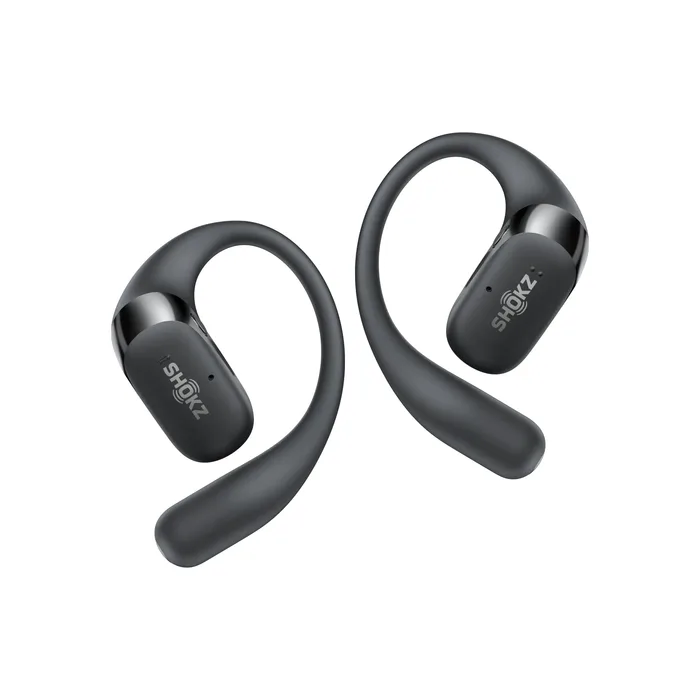
Light ear-hook earbuds with physical buttons, two mics per bud and the most complete spec sheet for workouts and calls.
Best for: Runners, gym-goers and commuters who want one pair of open-ear buds that handles workouts and calls equally well.
- DualBoost air-conduction drivers, with Shokz's DirectPitch 2.0 aimed at keeping leakage low
- Each bud weighs 9.4 g, with Shokz Ultra-Soft Silicone 2.0 hooks
- Up to 11 hours per charge and 48 hours with the case; a 10-minute charge gives 2 hours
- Physical multifunction buttons instead of touch-only controls
- Two microphones in each earbud, plus multipoint pairing to two devices
- IP55 covers dust, sweat and light rain, and the charging case is not waterproof
- Two separate buds are easier to drop or misplace than a one-piece band
- Premium price tier
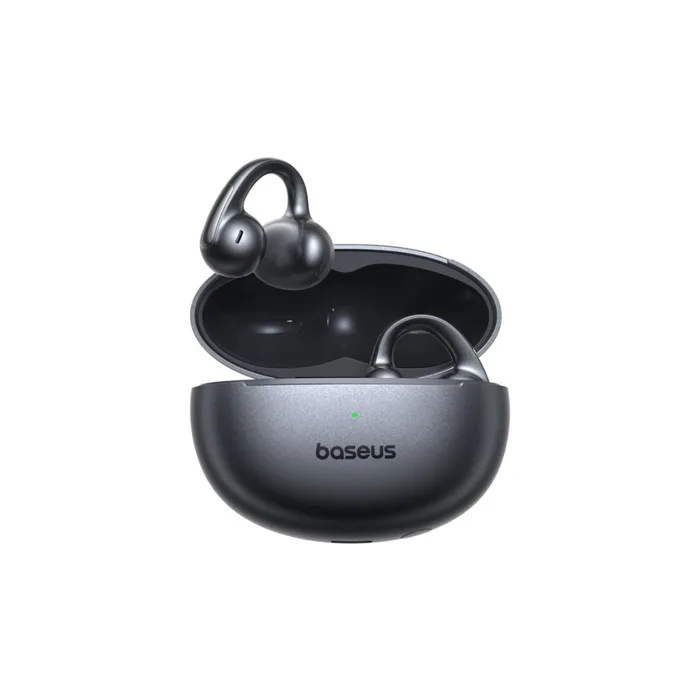
A budget clip-on open-ear pair with an IP67 rating, multipoint and Bluetooth 6.0, the value pick of the group.
Best for: Budget buyers who want a water-resistant, multipoint open-ear pair, especially anyone who prefers a clip-on design to ear hooks.
- IP67 dust and water rating, well above the OpenFit 2's IP55
- Clip-on U-ring design about 5 g per bud, for buyers who find ear hooks uncomfortable
- Multipoint connection, Bluetooth 6.0, and SBC, AAC and LDAC codecs
- About 40 hours of total playback with the charging case
- Baseus quotes about 9 hours per charge at 50 percent volume with Bass Boost and Spatial Audio off, so expect less with them on
- No quick-charge figure on the product page
- A clip-on cuff holds differently from an ear hook, so check the fit if you sprint
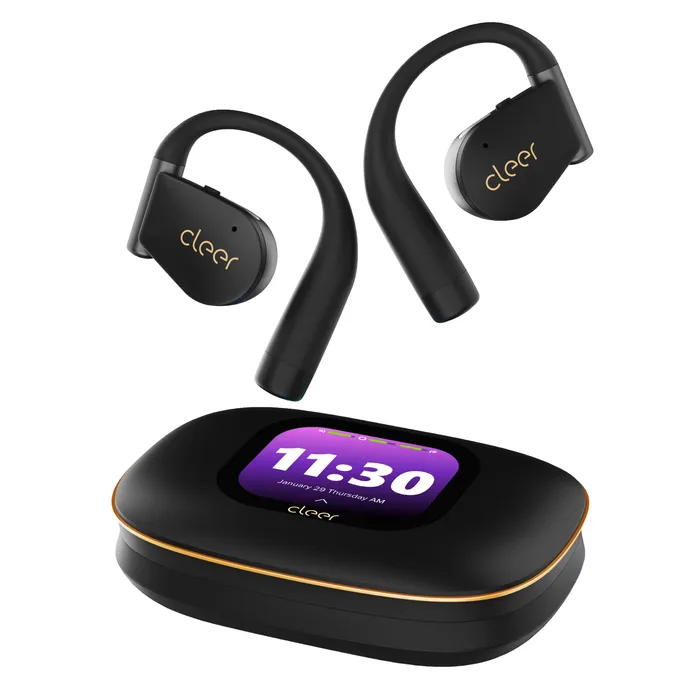
The most feature-packed pair here, with IPX7, 60 hours with the case and a touchscreen case, but heavier buds and a bulky case.
Best for: Listeners who want strong water resistance and the longest battery and will use the touchscreen case and spatial audio.
- IPX7 water and sweat resistance, level with the Baseus for the best water protection here
- Up to 12 hours per charge and 60 in total; a 10-minute charge gives 4 hours
- Smart AMOLED touchscreen case for EQ and playback without your phone
- 2-mic Qualcomm cVc call pickup, multipoint, Bluetooth 5.4 and a wide codec list including aptX Lossless and LDAC
- Dolby Atmos with head tracking and THX Spatial Audio
- Each bud weighs 11.5 g, heavier than the OpenFit 2's 9.4 g
- Buds and case together weigh 117 g, so it is a bulky pocket carry
- Premium price, much of it paying for the screen case and spatial audio
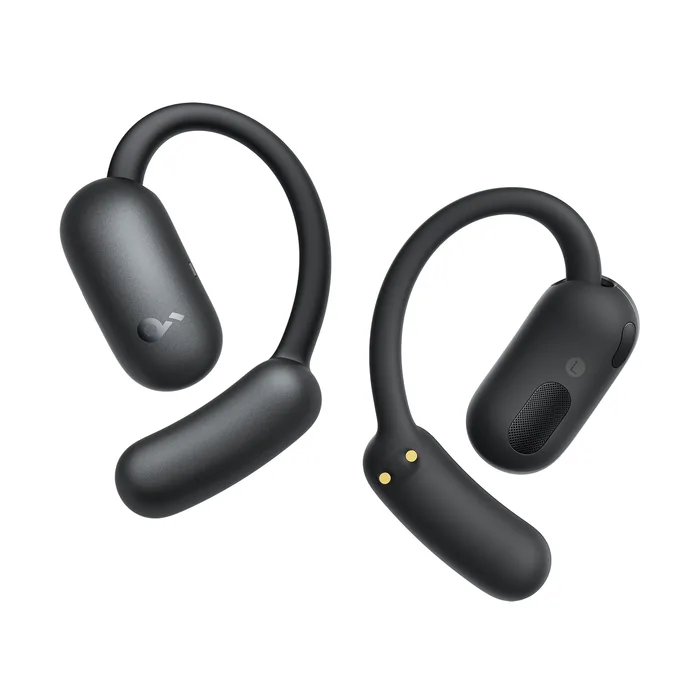
Adjustable ear hooks and big drivers, but a product page that publishes no water rating, weight or call-mic details.
Best for: Desk and commute listeners who mainly want adjustable fit and bass and do not need a stated sweat rating.
- Four-position adjustable ear hooks, which soundcore says bring the sound closer for up to 7.5 dB more bass than non-adjustable hooks
- Large 20 mm by 11.5 mm racetrack drivers with LDAC support
- Up to 10 hours per charge and 42 hours with a wireless-charging case
- The product page states no water or sweat rating, which a workout buyer needs to know
- No published weight, microphone count or multipoint support
- Every other pair here publishes those numbers at a similar or lower price tier
| Criteria | Shokz OpenFit 2 Top pick | Baseus Bowie MC1 Pro | Cleer ARC 5 | soundcore AeroFit 2 |
|---|---|---|---|---|
| Verdict | Buy it | Buy it | It depends | Skip it |
| Best for | Runners, gym-goers and commuters who want one pair of open-ear buds that handles workouts and calls equally well. | Budget buyers who want a water-resistant, multipoint open-ear pair, especially anyone who prefers a clip-on design to ear hooks. | Listeners who want strong water resistance and the longest battery and will use the touchscreen case and spatial audio. | Desk and commute listeners who mainly want adjustable fit and bass and do not need a stated sweat rating. |
| Price tier | $$$ · premium | $ · budget | $$$ · premium | $$ · mid-range |
| Design | Ear hook, DualBoost air conduction | Clip-on U-ring, 10.8 mm driver | Ear hook, 16.2 mm driver | Adjustable ear hook, 20 x 11.5 mm driver |
| Water rating | IP55 buds, case not waterproof | IP67 | IPX7 | Not listed on the maker page |
| Battery (buds / with case) | 11 hrs / 48 hrs | About 9 hrs at 50% volume / about 40 hrs | 12 hrs / 60 hrs | 10 hrs / 42 hrs |
| Quick charge | 10 min for 2 hrs | Not listed on the maker page | 10 min for 4 hrs | Not listed on the maker page |
| Weight per bud | 9.4 g | About 5 g | 11.5 g (117 g with case) | Not listed on the maker page |
| Calls and connection | Two mics per bud, multipoint | AI call mics, multipoint, Bluetooth 6.0 | 2-mic cVc, multipoint, Bluetooth 5.4 | Not listed on the maker page |
| Price tier | $$$ · premium | $ · budget | $$$ · premium | $$ · mid-range |
Which one is right for you?
- Runners, gym-goers and commuters who want one pair of open-ear buds that handles workouts and calls equally well. Buy it Shokz OpenFit 2
- Budget buyers who want a water-resistant, multipoint open-ear pair, especially anyone who prefers a clip-on design to ear hooks. Buy it Baseus Bowie MC1 Pro
- Listeners who want strong water resistance and the longest battery and will use the touchscreen case and spatial audio. It depends Cleer ARC 5
- Desk and commute listeners who mainly want adjustable fit and bass and do not need a stated sweat rating. Skip it soundcore AeroFit 2
How we judged the field
We do not operate a lab and we did not test these units first-hand. Every spec below comes from the maker’s own product page, and where a maker does not publish a number, we say so, because for workout earbuds a missing water rating is a fact worth knowing. This comparison covers air-conduction open-ear earbuds only; if you want the ear fully uncovered, with transducers resting on the cheekbone, see our bone-conduction headphones comparison.
The factors that mattered most were fit security, the water and sweat rating, battery life per charge and with the case, quick charge, and call quality as the maker describes it in mic count and connection features. Sound matters too, but open-ear earbuds will never match sealed buds for bass, so we treated it as a tie-breaker. With that lens, three pairs earned a place and one fell short.
Shokz OpenFit 2
Buy itThe OpenFit 2 is Shokz’s air-conduction ear-hook earbud, and it has the most complete workout spec sheet of the group. Shokz uses DualBoost drivers with its OpenBass 2.0 tuning, and says DirectPitch 2.0 keeps sound aimed at your ear with minimal leakage. Each bud weighs 9.4 g, with soft silicone hooks, and the controls are physical multifunction buttons rather than touch surfaces that sweaty fingers can misfire.
Battery is up to 11 hours per charge and 48 hours with the case, and a 10-minute charge gives 2 hours of playtime. Two microphones in each earbud handle calls, and multipoint pairing keeps it connected to two devices at once. The trade-offs: IP55 covers dust, sweat and light rain but is the lowest rating here, the charging case is not waterproof, and two separate buds are easier to lose than a band. For most people who want one open-ear pair for workouts and calls, it is the default choice.
Baseus Bowie MC1 Pro
Buy itThe Bowie MC1 Pro takes a different route to the ear: a clip-on U-ring that cuffs the edge of the ear instead of hooking over the top, at about 5 g per bud. Baseus rates it IP67, a higher published water rating than the OpenFit 2, and lists multipoint connection, Bluetooth 6.0 and SBC, AAC and LDAC codecs.
Battery is about 9 hours per charge, which Baseus measures at 50 percent volume with Bass Boost and Spatial Audio off, and about 40 hours with the case. The product page gives no quick-charge figure, and a clip-on holds differently from an ear hook, so anyone doing hard intervals should check the fit early in a return window. At a budget price tier, it is the value buy of the group.
Cleer ARC 5
It dependsThe ARC 5 has the strongest numbers on paper. Cleer rates it IPX7, level with the Baseus for the best water protection here, quotes up to 12 hours per charge and 60 hours in total, and says a 10-minute charge gives 4 hours. It adds a 2-mic Qualcomm cVc call setup, multipoint over Bluetooth 5.4, a long codec list including aptX Lossless and LDAC, Dolby Atmos with head tracking and THX Spatial Audio, and a charging case with an AMOLED touchscreen for EQ and playback.
The catch is size and what you pay for. Each bud weighs 11.5 g against the OpenFit 2’s 9.4 g, and buds plus case come to 117 g, a noticeable pocket load on a run. Much of the premium goes to the screen case and spatial audio. If you will use those and want strong water resistance and the longest battery, it is a strong choice; if you want the lightest, simplest workout pair, the OpenFit 2 fits better.
soundcore AeroFit 2
Skip itThe AeroFit 2 has real strengths on its product page: four-position adjustable ear hooks that soundcore says bring the sound closer for up to 7.5 dB more bass than non-adjustable hooks, large 20 mm by 11.5 mm racetrack drivers with LDAC, and up to 10 hours per charge with 42 hours from a wireless-charging case.
What the page leaves out is the problem for this audience. It states no water or sweat rating, no weight, no microphone details and no multipoint support. Every other pair here publishes those numbers, at a similar or lower price tier, and for earbuds bought for running and the gym, the water rating is not a detail to guess at. It may suit a desk or commute listener who mainly wants adjustable fit and bass, but for workouts, buy one of the three above.
Sources
Specs in this review come from these pages.
Shokz OpenFit 2 vs Baseus Bowie MC1 Pro: which should you buy?
Choose the OpenFit 2 if you want physical buttons, two mics per bud for calls, a published quick charge, and the longer per-charge battery, and you are fine with IP55 and a premium price. Choose the Bowie MC1 Pro if you want the higher IP67 rating, a clip-on cuff that leaves the area behind the ear free for glasses arms, and a budget price, accepting about 9 hours per charge measured at half volume and no published quick-charge figure. Both offer multipoint, so either can stay connected to a phone and a laptop at once.
What to look for
- Water rating first for workouts: IP55 handles sweat and light rain, IP67 and IPX7 handle more, and a page with no rating at all should give you pause.
- Ear hook or clip-on: hooks wrap over the top of the ear, clip-ons cuff its edge; fit varies by ear shape, so favor a seller with easy returns.
- Battery per charge, not just the case total: the single-charge figure is what you live with during a long session, and check the conditions it was measured under.
- Quick charge: a 10-minute top-up that buys 2 to 4 hours matters when you forget to charge.
- Controls: physical buttons are easier with sweaty fingers than touch surfaces.
- Calls: look for a stated mic count and multipoint if you switch between a phone and a laptop.
- Weight of buds and case: a few grams per bud is noticeable over hours, and a heavy case is a pocket burden on a run.
Our final take
The Shokz OpenFit 2 is the open-ear pair to buy for most people, balancing light buds, physical buttons, strong call hardware and long battery, provided IP55 is enough for your weather. The Baseus Bowie MC1 Pro is the value pick, with IP67 and multipoint at a budget price. The Cleer ARC 5 earns its place if you want strong water resistance, the longest battery and a touchscreen case, and accept heavier buds and a bulky carry. Skip the soundcore AeroFit 2 for workouts until its maker publishes a water rating.
Questions, answered
Are open-ear earbuds safe for running and cycling near traffic?
That is their main advantage. The speaker sits just outside your ear canal rather than sealing it, so you can still hear cars, cyclists and warnings while you listen. Keep the volume moderate, and follow local rules, since some places restrict headphone use while cycling.
What is the difference between open-ear earbuds and bone conduction?
Open-ear earbuds use small air-conduction speakers that aim sound into the ear from just outside it. Bone-conduction headphones rest transducers on your cheekbones and leave the ear completely uncovered. They are different product types, and we cover bone conduction in a separate comparison.
Can I swim with these?
No pair here is rated for swimming. The Cleer ARC 5 is IPX7 and the Baseus Bowie MC1 Pro is IP67, while the Shokz OpenFit 2 is IP55 and its charging case is not waterproof. soundcore's AeroFit 2 page lists no rating at all.
Clip-on or ear hook, which stays put better?
Both designs aim to stay secure without sealing the ear. Ear hooks like the OpenFit 2 and ARC 5 wrap over the top of the ear, while a clip-on like the Bowie MC1 Pro cuffs the ear's edge and avoids anything behind the ear, Fit varies by ear shape, so buy from a seller with easy returns.
Will other people hear my music?
Some leakage is unavoidable with any open design, and it grows with volume. Shokz says the OpenFit 2's DirectPitch 2.0 is aimed at minimal leakage, but none of these makers publishes a leakage figure. In quiet shared spaces, keep the volume down.
Deciding between the top two? See our head-to-head: Shokz OpenFit 2 vs Baseus Bowie MC1 Pro.
More Audio & Headphones reviews
 The Best Outdoor Speakers: 4 Compared (and One to Skip)
  The Best Large Party Speakers: 4 Compared (and One to Skip)
  The Best Phono Preamps: 4 Compared (and One to Skip)
  The Best Pop Filters: 4 Compared (and One to Skip)
  The Best Portable Audio Recorders: 4 Compared (and One to Skip)
  The Best Portable Bluetooth Speakers: 4 Compared, 1 We'd Skip