

Office
The Best Laminators: 4 Compared (and One to Skip)
We compared four pouch laminators on the numbers that actually change the result: how wide they feed, how thick a pouch they can handle, how long they take to heat up, and how they get a jammed pouch back out.
The short version
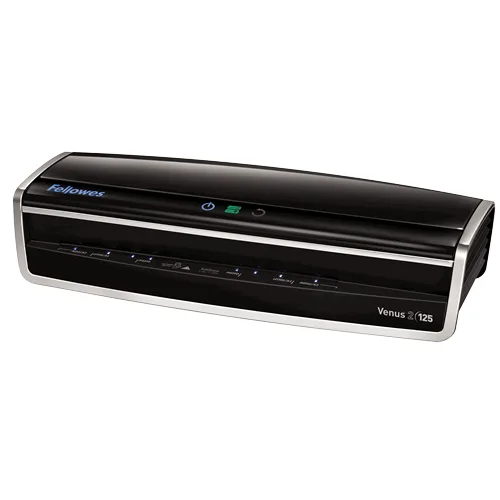
The Fellowes Venus 2 125 is the one to buy if you laminate regularly: a 12.5 inch throat, pouches up to 10 mil, a 30 to 60 second warm-up, 53 inches per minute and a published six-roller system, plus AutoSense thickness detection and an auto reverse that backs a misfeed out for you. It also costs the most here by a distance. The GBC Fusion 3000L is the value pick, keeping a one minute warm-up and adding a three year warranty, trading down to 5 mil pouches, two rollers and 19 inches per minute. The Scotch Thermal Laminator TL906 is a genuine 'depends': it is small, cheap and simple, and fine if you laminate a few letter size items a month, but it is 9 inches wide, waits five to six minutes to heat, and 3M lists no cold setting. Skip the Swingline Inspire Plus 12.5 inch, which has a single fixed heat setting, the slowest speed here at 10 inches per minute, and a 90 day warranty. Best for: anyone who wants laminating to be a two minute job rather than a project.
Our picks at a glance
- Fellowes Venus 2 125 - Buy. Six published rollers, a 30 to 60 second warm-up and 10 mil pouches, at the steepest price here.
- GBC Fusion 3000L (12 inch) - Buy. A one minute warm-up and a three year warranty at mid-range money, with a 5 mil ceiling instead of 10.
- Scotch Thermal Laminator TL906 - It depends. A small, cheap 9 inch machine that makes you wait five to six minutes every time.
- Swingline Inspire Plus (12.5 inch) - Skip. Wide on paper, but one fixed heat setting, the slowest feed here and a 90 day warranty.
The verdict in 30 seconds
What mattered most
- Max document width
- Max pouch thickness
- Warm-up time
- Laminating speed
- Rollers (published)
- Temperature control
A laminator is one of the few desk machines where the spec sheet tells you almost everything. Feed width decides whether a poster fits, maximum pouch thickness decides whether the finished card is floppy or rigid, and warm-up time decides whether you laminate the thing you meant to laminate or give up and walk away. The gap between the cheapest machines and the good ones is enormous on those three numbers, and much smaller on price than people expect. We picked four thermal pouch laminators for home, classroom and small office use, from three different parent companies, and we only used specifications the manufacturers publish themselves.
Six published rollers, a 30 to 60 second warm-up and 10 mil pouches, at the steepest price here.
Best for: Classrooms, church offices and small businesses that laminate in batches and want rigid 10 mil results with the shortest wait of anything here.
- Fellowes publishes a six-roller system, the only roller count above two in this group, and rollers are what spread heat evenly across a wide pouch.
- Warm-up is 30 to 60 seconds and the feed runs at 53 inches per minute, both the fastest here by a clear margin.
- Takes hot pouches up to 10 mil and cold pouches at a full 12.5 inch throat, with AutoSense reading the pouch thickness and setting the temperature itself.
- Advanced Pouch Tracking System detects a misfeed and reverses the pouch out, and Fellowes lists 'Carrier Required: No'.
- It is by far the most expensive machine here, and the gap to the Fusion 3000L is wider than the capability gap most households will ever use.
- Two year warranty, a year shorter than GBC gives on the Fusion 3000L.
- 12.5 inches is generous but still stops short of a 13 inch tabloid or A3 sheet.
- Fellowes' own Venus 2 manual warns you may have to wait 30 to 60 minutes for the machine to cool before the cold setting will work after hot lamination.
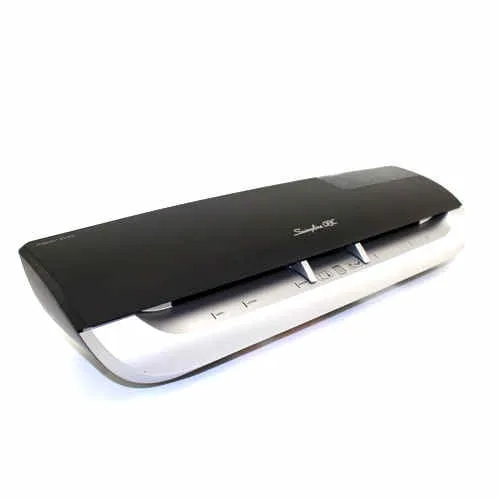
A one minute warm-up and a three year warranty at mid-range money, with a 5 mil ceiling instead of 10.
Best for: Home offices and teachers who want a proper 12 inch machine and a fast warm-up without paying for 10 mil capability.
- One minute warm-up, the feature that most often decides whether a laminator gets used or ignored.
- Full 12 inch feed width, so legal sheets and small posters go through without folding.
- Cold setting for self-adhesive pouches, auto jam detection with a release button, and a three year limited warranty.
- GBC lists just two rollers, and a maximum of 5 mil, so no rigid 10 mil work.
- 19 inches per minute is roughly a third of the Venus 2 125's speed, which shows up on long runs.
- GBC lists carrier-free operation as 'No' for this model, so check the pouch instructions before feeding anything unusual.
- GBC lists no auto thickness detection, so you still choose the setting yourself.
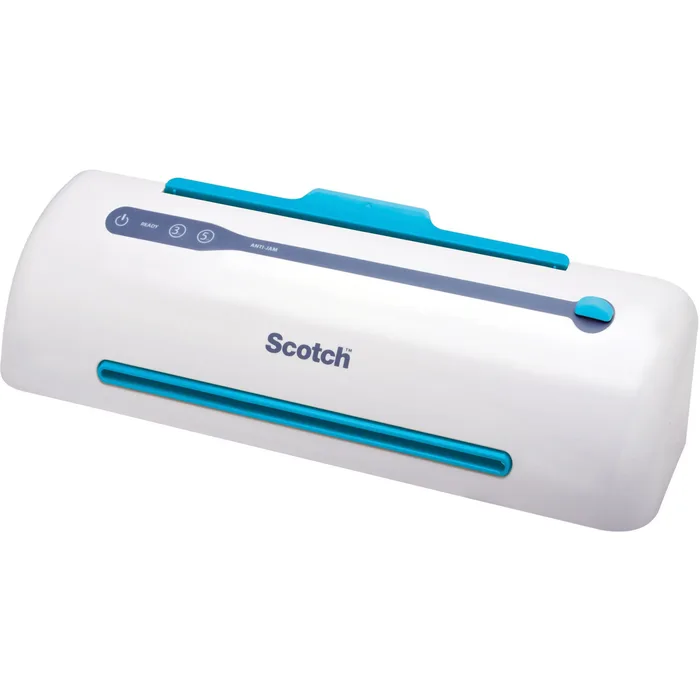
A small, cheap 9 inch machine that makes you wait five to six minutes every time.
Best for: Someone who laminates a handful of letter size cards or photos a month and wants the smallest, cheapest machine that still lets them match heat to pouch thickness.
- Separate 3 mil and 5 mil heat buttons, so the temperature actually matches the pouch you are using.
- 3M publishes a full spec sheet: 9.06 inch entry, two rollers, 15 inches per minute, 3.2 pounds.
- Pouch release lever and a carrying handle, and it is light enough to live in a cupboard between jobs.
- Five to six minute ready time, which is the difference between laminating something and meaning to.
- 9.06 inch entry width rules out anything wider than letter size.
- 3M's manual lists only 3 mil and 5 mil heat settings, so there is no cold setting for self-adhesive pouches.
- One year limited warranty, against two years on the Fellowes and three on the GBC Fusion 3000L.
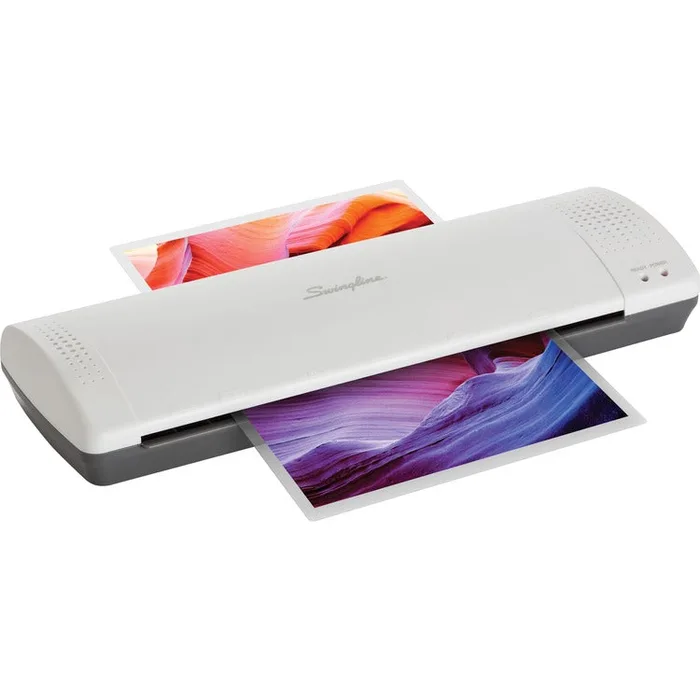
Wide on paper, but one fixed heat setting, the slowest feed here and a 90 day warranty.
Best for: Almost nobody. If 12 inches will do, the Fusion 3000L's one minute warm-up and three year warranty are worth the step up, and if you genuinely need 12.5 the Venus 2 125 is the only machine here that pairs that width with real temperature control.
- 12.5 inch maximum document width ties the Venus 2 125 for the widest in this group.
- Cold option for pressure-sensitive self-adhesive pouches, plus a jam release lever.
- At 3.2 pounds it is genuinely easy to store and carry.
- A single fixed power setting means the machine cannot be matched to 3 mil versus 5 mil pouches, and GBC lists temperature control as 'No'.
- 10 inches per minute is the slowest here, and it still needs five minutes to warm up.
- GBC lists carrier-free operation as 'No', so you may need a carrier sleeve for some pouches.
- 90 day warranty, against one year on the Scotch, two on the Fellowes and three on the GBC Fusion 3000L.
| Criteria | Fellowes Venus 2 125 Top pick | GBC Fusion 3000L (12 inch) | Scotch Thermal Laminator TL906 | Swingline Inspire Plus (12.5 inch) |
|---|---|---|---|---|
| Verdict | Buy it | Buy it | It depends | Skip it |
| Best for | Classrooms, church offices and small businesses that laminate in batches and want rigid 10 mil results with the shortest wait of anything here. | Home offices and teachers who want a proper 12 inch machine and a fast warm-up without paying for 10 mil capability. | Someone who laminates a handful of letter size cards or photos a month and wants the smallest, cheapest machine that still lets them match heat to pouch thickness. | Almost nobody. If 12 inches will do, the Fusion 3000L's one minute warm-up and three year warranty are worth the step up, and if you genuinely need 12.5 the Venus 2 125 is the only machine here that pairs that width with real temperature control. |
| Price tier | $$$ · premium | $$ · mid-range | $ · budget | $ · budget |
| Max document width | 12.5 in | 12 in | 9.06 in | 12.5 in |
| Max pouch thickness | 10 mil (3 to 10) | 5 mil (3, 5) | 5 mil (3, 5) | 5 mil (3, 5) |
| Warm-up time | 30 to 60 seconds | 1 minute | 5 to 6 minutes | 5 minutes |
| Laminating speed | 53 in/min | 19 in/min | 15 in/min | 10 in/min |
| Rollers (published) | 6 | 2 | 2 | Not published |
| Temperature control | AutoSense thickness detection | Yes, user-selected | Yes, 3 mil / 5 mil buttons | No, single setting |
| Cold / no-heat setting | Yes | Yes | Not listed by 3M | Yes |
| Jam handling and warranty | Pouch tracking, auto reverse; 2 year | Auto jam detection, release button; 3 year | Pouch release lever, anti-jam light; 1 year | Jam release lever; 90 day |
Which one is right for you?
- Classrooms, church offices and small businesses that laminate in batches and want rigid 10 mil results with the shortest wait of anything here. Buy it Fellowes Venus 2 125
- Home offices and teachers who want a proper 12 inch machine and a fast warm-up without paying for 10 mil capability. Buy it GBC Fusion 3000L (12 inch)
- Someone who laminates a handful of letter size cards or photos a month and wants the smallest, cheapest machine that still lets them match heat to pouch thickness. It depends Scotch Thermal Laminator TL906
- Almost nobody. If 12 inches will do, the Fusion 3000L's one minute warm-up and three year warranty are worth the step up, and if you genuinely need 12.5 the Venus 2 125 is the only machine here that pairs that width with real temperature control. Skip it Swingline Inspire Plus (12.5 inch)
How we judged the field
Five things decide whether a laminator is worth owning. Feed width comes first, because a machine that cannot swallow the sheet is useless no matter how good the seal is: 9 inches handles letter size and nothing else, 12 to 12.5 inches covers legal and small posters, and 13 inches is a separate class of machine. Maximum pouch thickness comes second, because it is what makes the difference between a floppy laminated sheet and a rigid card you can punch a hole in. Warm-up time is third, and it is the spec that quietly determines how often the machine gets used at all. Fourth is temperature control: a machine with separate settings for 3 and 5 mil pouches, or with automatic thickness detection, will give you clearer results than one with a single fixed heat. Fifth is what happens when a pouch goes in crooked, which is where a release lever, a reverse button or a motorized reverse earns its keep.
The field splits cleanly along warm-up time. On one side sit machines that are ready in about a minute or less, which almost always also have proper temperature control and a real jam response. On the other sit machines that need four to six minutes, which tend to be lighter, cheaper and much slower to feed. We took one machine from the top of the fast group and one from its value end, then added the best-known cheap 9 inch machine as a clear case of ‘this is fine if your needs are small’, and finished with the wide budget machine that people buy because the width number looks good on the box. We also made a point of not sourcing the whole field from one company. GBC and Swingline are both ACCO Brands, so only one pick here comes from ACCO; the top pick is a Fellowes and the budget case is a 3M. Every specification below comes from the manufacturer’s own product page, brochure or manual, and where a manufacturer does not publish a figure, we say so rather than guessing.
Fellowes Venus 2 125
Buy itThe Fellowes Venus 2 125 is the machine to buy if laminating is a regular job rather than an occasional one, and the reason is that Fellowes publishes the numbers nobody else in this group will. Six rollers, listed plainly on the spec table, against two on the GBC Fusion 3000L and two on the Scotch, and roller count is what determines whether heat and pressure arrive evenly across a 12.5 inch pouch or only in the middle. It is also the fastest here at both ends: InstaHeat gets it ready in 30 to 60 seconds, and it feeds at 53 inches per minute, which is close to three times the Fusion 3000L. It takes hot pouches up to 10 mil, so rigid luggage tags, room signs and menu cards are all on the menu, and it takes cold pouches too. AutoSense reads the pouch thickness and picks the setting for you, and the Advanced Pouch Tracking System spots a misfeed and reverses the pouch back out instead of leaving you prying at it. Fellowes lists carrier required as ‘No’. The catch is money: it carries far and away the highest price in this comparison, and the warranty is two years where GBC gives three. Fellowes’ own manual also warns that after hot lamination you may have to wait 30 to 60 minutes for the machine to cool before the cold setting will work.
GBC Fusion 3000L (12 inch)
Buy itThe GBC Fusion 3000L in its 12 inch form is the value pick, and the reason is that it delivers the one feature that changes daily use for a fraction of the Fellowes price. Warm-up is one minute, and the warranty is three years limited, the longest in this group. Feed width is the full 12 inches, so legal sheets and small posters go through flat. What you give up is thickness, rollers and speed: GBC lists two rollers, a maximum of 5 mil and 19 inches per minute, so this is a machine for flexible and general-purpose lamination rather than rigid cards, and long runs take a while. GBC lists no auto thickness detection, so you pick the setting yourself, and GBC lists carrier-free operation as ‘No’, which is worth reading before you feed anything unusual. If 5 mil covers your work and you are not laminating in batches, this is the sensible buy.
Scotch Thermal Laminator TL906
It dependsThe Scotch Thermal Laminator TL906 is the machine most people picture when they think ‘home laminator’, and 3M publishes an unusually complete spec sheet for it: 9.06 inch entry width, two rollers, 15 inches per minute, 3.2 pounds and a five to six minute ready time. It has separate 3 mil and 5 mil heat buttons, which is more control than the cheap wide machines offer, plus a pouch release lever, an anti-jam indicator and a carrying handle. The catch is that ready time. Five to six minutes is long enough that laminating stops being a quick task and becomes something you schedule, and the 9 inch throat means letter size is your ceiling. 3M’s manual lists only the two heat settings, so there is no cold option for self-adhesive pouches. It is a genuine ‘depends’: right for light, letter-only use, wrong for anyone doing batches.
Swingline Inspire Plus (12.5 inch)
Skip itThe Swingline Inspire Plus in its 12.5 inch version is the one to skip, and not because it is cheap. The problem is the combination. GBC lists temperature control as ‘No’, meaning a single fixed power setting that cannot be matched to a 3 mil or a 5 mil pouch, which is the most direct route to cloudy or under-sealed results. It runs at 10 inches per minute, the slowest here, and still asks for a five minute warm-up, so the wide throat does not translate into getting more done. Carrier-free operation is listed as ‘No’. The warranty is 90 days, against one year on the Scotch, two on the Fellowes and three on the GBC Fusion 3000L. It does have a cold setting and a jam release lever, and at 3.2 pounds it stores easily, but the 12.5 inch number on the box is doing all the work here. If 12 inches will do, the Fusion 3000L is the better machine for not much more; if you truly need 12.5, the Venus 2 125 is the only other machine here that offers it, and it offers everything else as well.
Sources
Specs in this review come from these pages.
- Fellowes Venus 2 125 product page and specifications (item 5734801) (fellowes.com)
- GBC Fusion 3000L 12 inch product page and specifications (gbc.com)
- Swingline Inspire Plus 12.5 inch product page and specifications (gbc.com)
- 3M Scotch Thermal Laminator TL906 instruction manual (multimedia.3m.com)
- Fellowes Venus 2 laminator manual (roller count, cool-down before cold lamination, pouch capacity per side) (assets.fellowes.com)
- US Consumer Product Safety Commission recall 26-050, 3M thermal laminators (cpsc.gov)
Fellowes Venus 2 125 vs GBC Fusion 3000L (12 inch): which should you buy?
The two buy picks come from different companies and sit at opposite ends of the price ladder, which makes the choice unusually clean. The Fellowes Venus 2 125 wins on every performance number that is published: 30 to 60 seconds to heat against one minute, 53 inches per minute against 19, six rollers against two, 12.5 inches of throat against 12, and 10 mil against 5. It also reads the pouch and sets its own temperature, and reverses a misfeed out on its own. The GBC Fusion 3000L wins on the two things a spec table is bad at conveying: it costs a fraction as much, and it carries a three year warranty where Fellowes gives two.
So the question is volume and rigidity. At 53 inches per minute the Venus 2 runs roughly three times faster than the 3000L, which is invisible if you laminate three things and matters a lot if you laminate thirty, and only the Venus 2 can produce a 10 mil card stiff enough to punch a hole in and hang on a door. A teacher preparing a set of classroom signs, or an office sealing a run of certificates, will feel both differences in every session. A household that laminates a recipe card and an emergency contact sheet will feel neither, and should not pay premium-tier money to find that out. Buy the 3000L if your laminating is occasional and flexible; buy the Venus 2 125 if it is regular, batched, or needs to come out rigid.
What to look for
- Feed width first: 9 inches means letter size only, 12 to 12.5 inches covers legal and small posters, and anything tabloid or A3 needs a machine sold specifically as 13 inch.
- Match the mil ceiling to the job: 3 mil stays flexible, 5 mil is the general-purpose choice, and only a machine rated for 7 or 10 mil will give you rigid tags and signs.
- Treat warm-up time as the usability spec: one minute machines get used, five and six minute machines get avoided, and the difference costs less than most people assume.
- Insist on temperature control: separate 3 mil and 5 mil settings, or automatic thickness detection, produce clearer seals than a single fixed heat that has to suit everything.
- Check how the machine clears a jam: a release lever is the minimum, a reverse button is better, and a motorized auto reverse that detects the misfeed itself is best.
- Read the warranty and the carrier-free line: these range from 90 days to three years in this group, and manufacturers do state whether a machine can run pouches without a carrier sleeve.
Our final take
Laminating is one of the few purchases where the spec sheet does not lie to you. Width, mil ceiling and warm-up time predict almost everything about how the machine will feel to live with, and all three are published. The Fellowes Venus 2 125 is the best of this group because it is the fastest at both heating and feeding, the only one with a published roller count above two, and one of only two here that can produce rigid 10 mil results. The GBC Fusion 3000L is the one most households should actually buy, because a one minute warm-up and a three year warranty at mid-range money is the real bargain here, and the Fellowes costs several times as much. Buy the Scotch TL906 only if your laminating is genuinely occasional and letter size. Leave the Swingline Inspire Plus on the shelf.
Questions, answered
What does 'mil' actually mean on a laminating pouch?
A mil is one thousandth of an inch, not a millimeter. Fellowes describes its laminators' capacity as hot pouches of a given mil rating 'per side', which means the number on the box is the film on each face of the pouch rather than the two faces added together. On that reading a 5 mil pouch puts 5 mil of film above your document and 5 mil below it. Not every brand spells this out, and some retail descriptions treat the figure as a combined total, so the safest way to use the number is as a stiffness scale: 3 mil stays flexible, 5 mil is the general-purpose choice, 7 and 10 mil are for cards and tags you want to feel rigid. What matters for buying is simply that your machine's maximum matches the pouches you intend to use.
Do I need a carrier, or can I feed pouches straight in?
A carrier is a folded card sleeve that protects the rollers from adhesive squeeze-out. Modern machines are often described as carrier-free, but it is worth checking the spec rather than assuming: Fellowes lists 'Carrier Required: No' for the Venus 2 125, while GBC explicitly lists carrier-free operation as 'No' for both the Fusion 3000L and the Swingline Inspire Plus. If your machine is not carrier-free, using one is cheap insurance, because adhesive baked onto a roller is a common cause of cloudy, streaky results. Whatever the machine, follow the pouch maker's instructions, feed the sealed edge in first, and keep a small margin of clear film around the document so the seal has something to bond to.
Why does warm-up time matter so much?
Because it decides whether you use the machine. The gap in this group is stark: the Fellowes Venus 2 125 is ready in 30 to 60 seconds and the GBC Fusion 3000L in one minute, while the Scotch TL906 needs five to six minutes and the Swingline Inspire Plus needs five. That is not a small inconvenience when you have one certificate to seal before a meeting. Fast warm-up also tends to travel with better temperature control, more rollers and a proper jam response, because it signals a more substantial heating system rather than a hotplate and two rollers. If you are choosing between two machines and everything else is close, take the faster warm-up.
Have any laminators been recalled?
Yes. The US Consumer Product Safety Commission announced a recall of the Scotch Thermal Laminator model TL909-50 on 23 October 2025, covering about 13,440 units with serial numbers between 2406000001 and 2501001920, because the laminator can overheat and pose a burn hazard. No incidents or injuries were reported, and the remedy is a full refund from 3M after the power cord is cut and photographed. That recall does not cover the TL906 in this comparison. It is worth searching CPSC's recall database for any laminator you are about to buy, especially secondhand, since these are heating appliances that sit on desks near paper.
Can a pouch laminator handle a 13 inch or A3 poster?
Not the ones here. The widest machine in this group takes 12.5 inches, which covers letter, legal and most photo work but stops short of tabloid and A3. If you regularly laminate 13 inch wide banners, certificates or charts, you need to shop specifically for a 13 inch entry width. Wider machines can be heavier and bulkier, so only buy one if the width is a real requirement. For occasional oversized work, splitting the artwork across two letter size pouches is usually cheaper than buying a second machine.
Deciding between the top two? See our head-to-head: Fellowes Venus 2 125 vs GBC Fusion 3000L (12 inch).
More Office reviews
 The Best Lap Desks: 4 Compared (and One to Skip)
  The Best Laptop Backpacks for Commuting: 4 Compared (and One to Skip)
  The Best Laptop Stands: 4 Compared (and One to Skip)
  The Best Laser Printers: 4 Compared (and One to Skip)
  The Best LED Desk Lamps: 4 Compared (and One to Skip)
  The Best Monitor Arms for Office and WFH Desks (2026)