

Tech & Gadgets
Kids Telescopes: Which to Buy and Which to Skip
We compared six beginner telescopes for kids and young teens on aperture, focal length, mount type, weight and the age or safety guidance each maker publishes.
The short version
The Orion StarBlast 4.5 is our pick: Orion lists a 114 mm mirror, a 450 mm focal length and a 10 lb total weight on a manual tabletop base. The Celestron FirstScope is the value pick, a 76 mm reflector with a 4.3 lb kit weight in the budget tier. The National Geographic NT114CF gives 114 mm on a full tripod with a phone adapter, also budget tier. The Sky-Watcher Heritage 150 suits an older teen who will keep it, and the Gskyer 80 Explore suits a family that wants phone photos, if the warranty wording is clear. Skip the Thames & Kosmos Essential STEM Tools Telescope: a 40 mm aperture advertised at 100x. Best for: parents buying a child's first real telescope.
Our picks at a glance
- Orion StarBlast 4.5 Astro Dobsonian - Buy. A 114 mm tabletop Dobsonian with a 450 mm focal length that is manual, battery-free and 10 lb all-in.
- Celestron National Park Foundation FirstScope - Buy. A 76 mm tabletop Dobsonian with a 1.4 lb tube and a 4.3 lb total kit weight.
- National Geographic NT114CF - Buy. A 114 mm, 500 mm focal length reflector on a full tripod with a panhandle mount and a phone adapter.
- Sky-Watcher Heritage 150 Tabletop Dobsonian - It depends. A 150 mm collapsible tabletop Dobsonian at 750 mm focal length, for a family that will keep it.
- Gskyer 80 Explore (AZ80400) - It depends. An 80 mm, 400 mm focal length refractor on an altazimuth mount with a phone adapter and Bluetooth remote.
- Thames & Kosmos Essential STEM Tools Telescope - Skip. A 40 mm refractor advertised at 20x and 100x, labeled ages 8 and up, with a 1.9 lb tabletop tripod.
The verdict in 30 seconds
What mattered most
- Aperture
- Focal length
- Design
- Mount type
- Included eyepieces
- Finder
A kids' telescope succeeds or fails on three plain things: how much light the front lens or mirror gathers, how stable and easy the mount is, and whether a child can lift and aim it alone. Box magnification is the least useful number on the page. We compared six models from six brands using only what each maker's own page states: three 76 mm to 150 mm reflectors, a refractor kit, and a small toy-grade scope to pass on. Adult picks live in our best telescopes review, and for backyard birds see our best binoculars and best kids microscopes reviews.
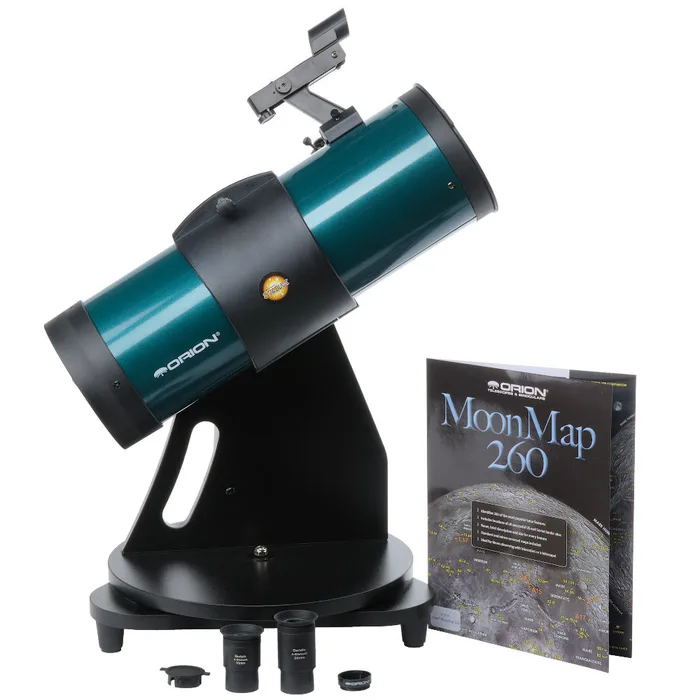
A 114 mm tabletop Dobsonian with a 450 mm focal length that is manual, battery-free and 10 lb all-in.
Best for: Families who want the most aperture in a simple manual scope that a young teen can carry.
- Orion lists a 114 mm parabolic primary mirror at f/3.9 and 450 mm focal length, which is a lot of aperture for a scope this small.
- The base is a tabletop Dobsonian with a built-in eyepiece rack, and Orion states the telescope and base weigh 10 lbs together.
- The kit lists 1.25 inch eyepieces for 22x and 45x, a red dot finder, a Moon filter, a collimation cap and a MoonMap 260 lunar map, backed by a 2-year warranty.
- It is fully manual: Orion says it does not find or track objects, so a child has to learn to aim it.
- As a reflector it will occasionally need collimation, which means aligning the mirrors, and the base needs assembly.
- It sits on a table or similar surface, and Orion publishes no age grade for it.
- One line of the listing gives a 25 mm eyepiece while the rest of the page says 20 mm and 22x, so check the box.
Own the Orion StarBlast 4.5 Astro Dobsonian? Tell us how it held up.
Thanks. Counted, and shown once enough owners have weighed in.
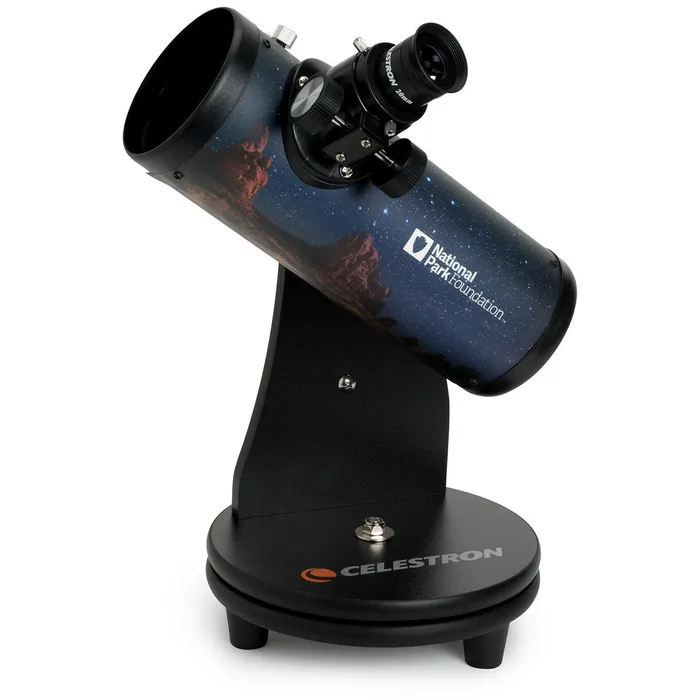
A 76 mm tabletop Dobsonian with a 1.4 lb tube and a 4.3 lb total kit weight.
Best for: A younger child's first scope, or a gift where the lowest cost and weight matter most.
- Celestron lists a 76 mm Newtonian reflector, 300 mm focal length and f/4, on a manual tabletop Dobsonian mount.
- The tube weighs 1.4 lbs and the whole kit 4.3 lbs, so a child can carry it, and the page calls it a no-tool setup.
- Two eyepieces are included, 20 mm for 15x and 10 mm for 30x, plus a free SkyPortal app and a National Parks guidebook download, with a 2-year warranty shown on the page.
- The page says the finderscope, Barlow lens and star diagonal are not included, so aiming is by eye along the tube.
- The primary mirror is listed as spherical and the optical tube as plastic, which suits a first scope more than a long-term one.
- It is a smaller 76 mm aperture than the 114 mm scopes in this review, and the page gives no age grade.
- The page's solar warning must be followed: never look at the Sun with the scope unless it has the proper solar filter.
Own the Celestron National Park Foundation FirstScope? Tell us how it held up.
Thanks. Counted, and shown once enough owners have weighed in.
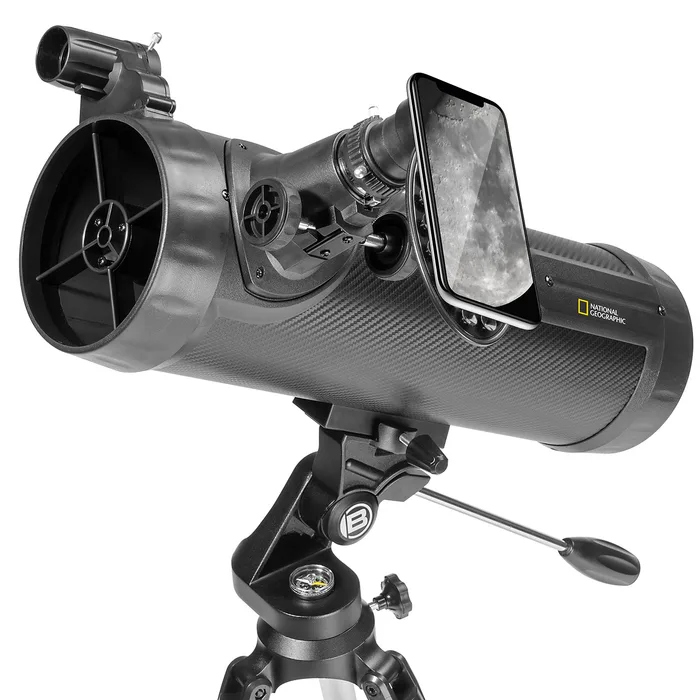
A 114 mm, 500 mm focal length reflector on a full tripod with a panhandle mount and a phone adapter.
Best for: Kids and teens who want a 114 mm scope at their own standing height, with a phone adapter in the box.
- The listing gives a 114 mm aperture and 500 mm focal length, with two Plossl eyepieces (26 mm and 9.7 mm) for 19x and 51.5x.
- It sits on an alt-azimuth mount with a panhandle control and a full-size adjustable tripod, so it stands at standing or sitting height.
- A red dot finder, a smartphone adapter, downloadable astronomy software and a star map are listed in the kit.
- The listing text does not mention a Barlow lens, so do not assume one is in the box.
- Weight and an age grade are not published on the page.
- The warranty is listed as 1 year limited, and registration within 60 days is needed to activate it.
- The tripod and mount make it bulkier to move than a tabletop Dobsonian.
Own the National Geographic NT114CF? Tell us how it held up.
Thanks. Counted, and shown once enough owners have weighed in.
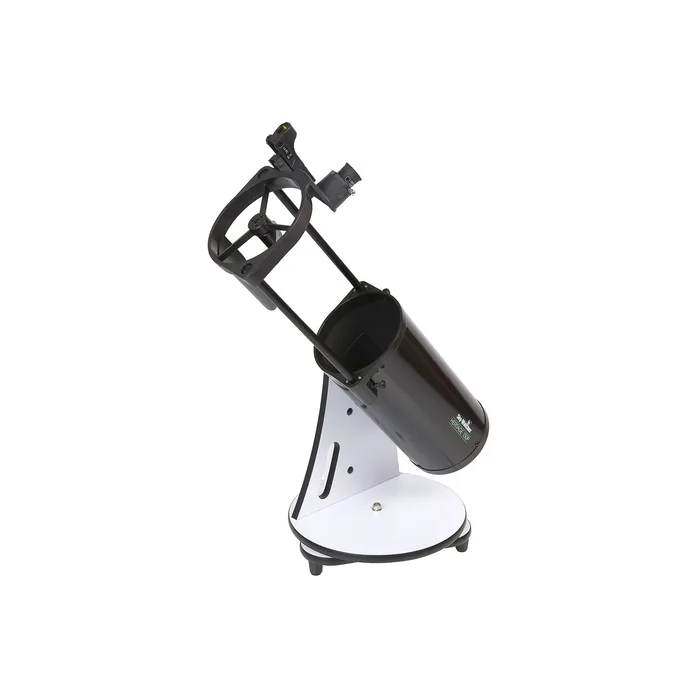
A 150 mm collapsible tabletop Dobsonian at 750 mm focal length, for a family that will keep it.
Best for: A keen older teen or a family stargazing together who want real aperture and will keep the scope for years.
- Sky-Watcher lists a 150 mm borosilicate parabolic primary mirror at f/5 and 750 mm focal length, the largest aperture in this review.
- The tube is collapsible, and the maker says it retains collimation while collapsed for storage.
- The azimuth base uses Teflon bearings, an altitude locking knob and rubber feet to damp vibration, and the focuser is a 1.25 inch helical type.
- The product page we loaded publishes no weight, eyepiece list or age grade, so check those before buying for a child.
- It is the largest and costliest scope here, and it is a tabletop design that needs a stable surface.
- Sky-Watcher markets it as a grab-and-go travel telescope rather than a kids product.
- It is a manual scope with no finder or app described on the page.
Own the Sky-Watcher Heritage 150 Tabletop Dobsonian? Tell us how it held up.
Thanks. Counted, and shown once enough owners have weighed in.
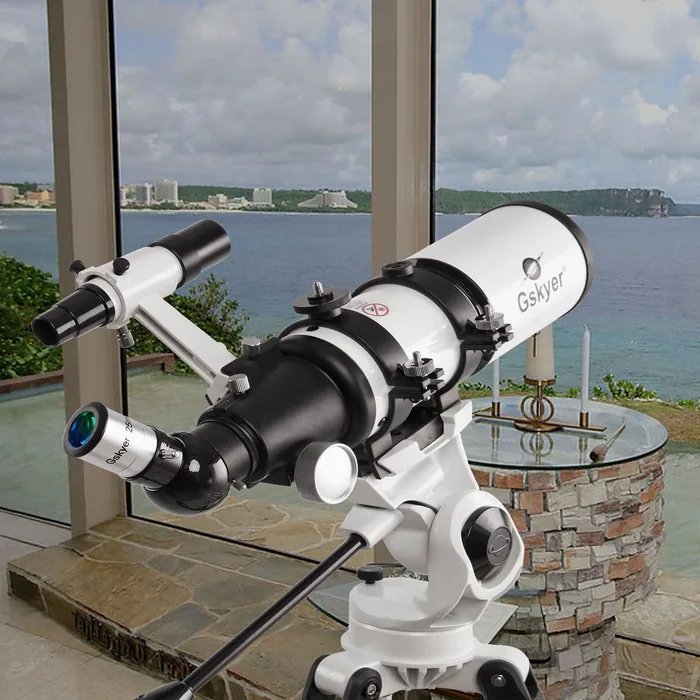
An 80 mm, 400 mm focal length refractor on an altazimuth mount with a phone adapter and Bluetooth remote.
Best for: A family that wants a refractor with phone photos, and will read the warranty terms first.
- Gskyer lists an 80 mm aperture, 400 mm focal length, an altazimuth mount and a 6x30 finderscope.
- The kit lists 25 mm, 10 mm and 5 mm eyepieces for 16x, 40x and 80x, plus a 3X Barlow lens, an erect-image diagonal and a stainless steel tripod.
- A smartphone adapter with a Bluetooth shutter remote is included, and the page says no tools are needed for assembly.
- Gskyer advertises up to 240x on an 80 mm aperture, while Celestron lists a highest useful magnification of 241x for its 100 mm Inspire, so treat the top figure as marketing.
- Warranty wording conflicts on the page: the header says lifetime warranty, while the description says 1 year of free replacement.
- The page gives no weight or age grade and only describes it as loved by families and kids.
- The product photo shows two eyepieces and a Barlow lens, while the text lists three eyepieces.
Own the Gskyer 80 Explore (AZ80400)? Tell us how it held up.
Thanks. Counted, and shown once enough owners have weighed in.
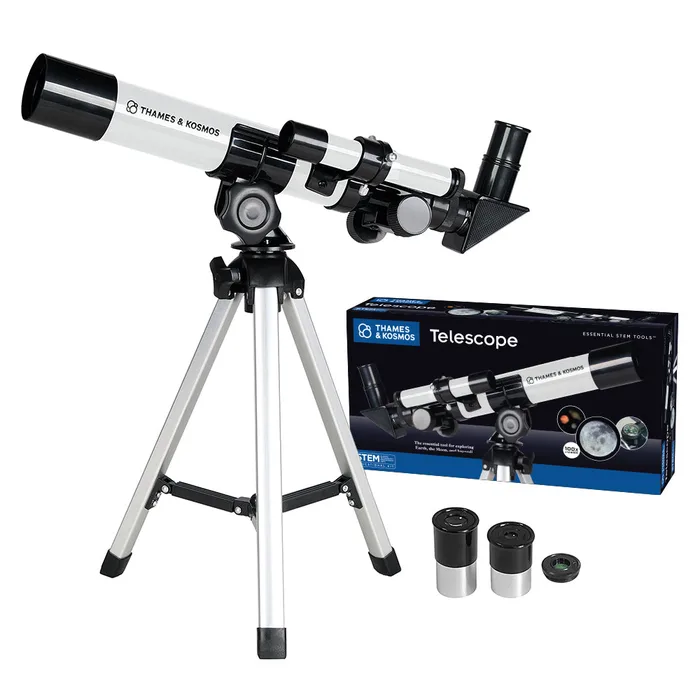
A 40 mm refractor advertised at 20x and 100x, labeled ages 8 and up, with a 1.9 lb tabletop tripod.
Best for: A child who wants a small toy-grade scope for the Moon and the backyard; most families are better served by a larger aperture.
- The maker lists glass optics, a 400 mm focal length and 40 mm objective lens, an aluminum tube and a dew shield.
- It includes a 5x18 finderscope, a built-in compass, a diagonal mirror and an instruction manual, with an age grade of 8+.
- At 1.9 lbs and 15 x 7.7 x 3.5 in in the box it is easy to store and carry.
- The 100x figure comes from a 4 mm eyepiece on a 40 mm aperture, and Thames & Kosmos publishes no highest useful magnification for it.
- At 40 mm it gathers far less light than the 70 mm to 150 mm scopes here, so the Moon is realistic but the promise of planets is thin.
- The tripod is an aluminum tabletop type with altitude and altazimuth knobs, not a full tripod.
- The 5x18 finderscope has an 18 mm aperture, smaller than the 6x30 finder on the Gskyer.
Own the Thames & Kosmos Essential STEM Tools Telescope? Tell us how it held up.
Thanks. Counted, and shown once enough owners have weighed in.
| Criteria | Orion StarBlast 4.5 Astro Dobsonian Top pick Buy it Buy | Celestron National Park Foundation FirstScope Buy it Buy | National Geographic NT114CF Buy it Buy | Sky-Watcher Heritage 150 Tabletop Dobsonian It depends Buy | Gskyer 80 Explore (AZ80400) It depends Buy | Thames & Kosmos Essential STEM Tools Telescope Skip it Buy |
|---|---|---|---|---|---|---|
| Best for | Families who want the most aperture in a simple manual scope that a young teen can carry. | A younger child's first scope, or a gift where the lowest cost and weight matter most. | Kids and teens who want a 114 mm scope at their own standing height, with a phone adapter in the box. | A keen older teen or a family stargazing together who want real aperture and will keep the scope for years. | A family that wants a refractor with phone photos, and will read the warranty terms first. | A child who wants a small toy-grade scope for the Moon and the backyard; most families are better served by a larger aperture. |
| Price tier | $$ · mid-range | $ · budget | $ · budget | $$$ · premium | $$ · mid-range | $ · budget |
| Aperture | 114 mm | 76 mm | 114 mm | 150 mm | 80 mm | 40 mm |
| Focal length | 450 mm | 300 mm | 500 mm | 750 mm | 400 mm | 400 mm |
| Design | Newtonian reflector | Newtonian reflector | Newtonian reflector | Newtonian reflector | Refractor | Refractor |
| Mount type | Manual tabletop Dobsonian | Manual tabletop Dobsonian | Alt-azimuth, panhandle, full tripod | Tabletop Dobsonian, manual azimuth base | Altazimuth, adjustable tripod | Tabletop tripod, altitude and altazimuth knobs |
| Included eyepieces | Two 1.25 in (22x, 45x) | 20 mm and 10 mm (15x, 30x) | 26 mm and 9.7 mm (19x, 51.5x) | Not published on page | 25, 10 and 5 mm plus 3X Barlow | 20 mm and 4 mm (20x, 100x) |
| Finder | Red dot finder | Not included | Red dot finder | Not published on page | 6x30 finderscope | 5x18 finderscope |
| Weight as stated | 10 lbs total | 4.3 lbs kit | Not published | Not published | Not published | 1.9 lbs |
| Age grade as stated | Not published | Not published | Not published | Not published | Not published | Ages 8+ |
Which one is right for you?
- Families who want the most aperture in a simple manual scope that a young teen can carry. Buy it Orion StarBlast 4.5 Astro Dobsonian
- A younger child's first scope, or a gift where the lowest cost and weight matter most. Buy it Celestron National Park Foundation FirstScope
- Kids and teens who want a 114 mm scope at their own standing height, with a phone adapter in the box. Buy it National Geographic NT114CF
- A keen older teen or a family stargazing together who want real aperture and will keep the scope for years. It depends Sky-Watcher Heritage 150 Tabletop Dobsonian
- A family that wants a refractor with phone photos, and will read the warranty terms first. It depends Gskyer 80 Explore (AZ80400)
- A child who wants a small toy-grade scope for the Moon and the backyard; most families are better served by a larger aperture. Skip it Thames & Kosmos Essential STEM Tools Telescope
How we judged the field
Five things matter in a kids’ telescope. Aperture sets how much light it gathers and so how much a child sees. Mount type and stability decide whether the view holds still. Weight decides whether a child can carry and aim it alone. Kit contents, meaning eyepieces and a finder, decide whether it works out of the box. Age and safety guidance counts only when the maker states it. Sun safety comes from the maker’s words and nothing more.
The field splits into tabletop Dobsonian reflectors, tripod-mounted reflectors, refractor kits and toy-grade scopes. We picked three reflectors that differ in size and mount, a bigger one for a teen, a refractor kit and one scope to skip, from six brands. The StarSense Explorer 114, Heritage 130, Travel Scope 50 and PowerSeeker 70AZ in our best telescopes review are not repeated. Every figure comes from a page we loaded, and where a page is silent we say not published.
Orion StarBlast 4.5 Astro Dobsonian
Buy itThe StarBlast 4.5 is the scope we would hand a curious ten-year-old and expect to still be used at fourteen. Orion lists a 114 mm parabolic mirror at f/3.9 with a 450 mm focal length, which is the same aperture class as the StarSense Explorer 114 in our best telescopes review but without the phone-app navigation. It is deliberately simple: a tabletop Dobsonian base, a red dot finder, 1.25 inch eyepieces for 22x and 45x, a Moon filter and a MoonMap 260. Orion states the telescope and base weigh 10 lbs together and that it is fully manual, so it does not find or track objects. As a reflector it will occasionally need collimation, and the base needs assembly. Orion does not publish an age grade, so judge it by whether your child can lift and aim it. The listing says 25 mm in one line and 20 mm elsewhere, so check the box. It suits families who want aperture first.
Celestron National Park Foundation FirstScope
Buy itCelestron’s FirstScope is the cheapest way here to get a real reflector into small hands. The National Park Foundation edition lists a 76 mm Newtonian mirror, 300 mm focal length and f/4 on a manual tabletop Dobsonian, with 20 mm and 10 mm eyepieces for 15x and 30x. The tube weighs 1.4 lbs and the whole kit 4.3 lbs, so a child can carry the lot. The trade-offs are stated on the page: no finderscope, Barlow lens or star diagonal, a spherical primary mirror and a plastic tube. Celestron also prints a solar warning, which says never to look at the Sun with the scope unless it has the proper solar filter, and to keep an adult with the scope at all times. If your child outgrows it, Celestron’s Inspire 100AZ is a 100 mm refractor with a 660 mm focal length on a 12.4 lb kit. This is the pick for a first scope at the lowest cost.
National Geographic NT114CF
Buy itThe NT114CF is the full-tripod alternative to the tabletop Dobsonians. National Geographic’s listing, sold through Explore Scientific, gives a 114 mm aperture and 500 mm focal length, with Plossl eyepieces of 26 mm and 9.7 mm for 19x and 51.5x. The alt-azimuth mount has a panhandle control and sits on a full-size adjustable tripod, so a child can use it standing or seated without a table. A red dot finder, a smartphone adapter, downloadable astronomy software and a star map are listed. The listing text does not mention a Barlow lens, so do not assume one is included, and no weight or age grade is published. The warranty is 1 year limited and needs registering within 60 days. It is a bulkier setup than a tabletop scope. Choose it for a kid who wants a 114 mm view without a table.
Sky-Watcher Heritage 150 Tabletop Dobsonian
It dependsThe Heritage 150 is the scope for the family that is serious rather than just curious. Sky-Watcher lists a 150 mm borosilicate parabolic mirror at f/5 and 750 mm focal length, the most aperture in this review. The tube collapses for storage and the maker says it retains collimation, and the base uses Teflon bearings, an altitude locking knob and rubber feet. It is also the costliest here. The page we loaded publishes no weight, eyepiece list or age grade, and Sky-Watcher markets it as a travel telescope rather than a kids product. We keep it as a depends: it overlaps in spirit with the Heritage 130 in our best telescopes review but adds aperture. Pick it for an older teen who will keep it, not for a six-year-old who may lose interest in a month.
Gskyer 80 Explore (AZ80400)
It dependsThe Gskyer 80 Explore is a refractor with a lot of kit for the money. The page lists an 80 mm aperture, 400 mm focal length, an altazimuth mount, a 6x30 finderscope, three eyepieces (25 mm, 10 mm, 5 mm) for 16x, 40x and 80x, a 3X Barlow lens, a stainless steel tripod and a phone adapter with a Bluetooth remote. The caveats are on the page too. Gskyer advertises up to 240x on an 80 mm aperture, a figure Celestron lists as the highest useful magnification for a 100 mm refractor, and the warranty reads lifetime in one place and 1 year in another. The listing photo shows two eyepieces and a Barlow, not three. There is no weight or age grade, only a line saying families and kids love it. Read the warranty terms before you buy. It suits a family that wants phone photos and a refractor design.
Thames & Kosmos Essential STEM Tools Telescope
Skip itThe Essential STEM Tools Telescope looks like the kid-sized answer, which is why it earns the skip. Thames & Kosmos lists a 40 mm objective, 400 mm focal length, 20 mm and 4 mm eyepieces for 20x and 100x, a 5x18 finderscope, a compass and an aluminum tabletop tripod, labeled ages 8+, at 1.9 lbs. The problem is the 100x claim. A 4 mm eyepiece on a 40 mm aperture is a lot of magnification for little light, and the maker publishes no highest useful magnification. A 114 mm mirror has about eight times the light-gathering area of 40 mm. The Moon will work. The planets will disappoint. For the same budget, the FirstScope gives more aperture.
Sources
Specs in this review come from these pages.
- Orion StarBlast 4.5 Astro Dobsonian product page (telescope.com)
- Celestron National Park Foundation FirstScope product page (celestron.com)
- National Geographic NT114CF product page (Explore Scientific) (explorescientific.com)
- Sky-Watcher Heritage 150 product page (skywatcherusa.com)
- Gskyer 80 Explore product page (gskyer.com)
- Thames & Kosmos Essential STEM Tools Telescope product page (thamesandkosmos.com)
Orion StarBlast 4.5 Astro Dobsonian vs Celestron National Park Foundation FirstScope: which should you buy?
The StarBlast 4.5 and the FirstScope are both manual tabletop Dobsonians, and the choice is size and cost. The StarBlast lists a 114 mm mirror and a 10 lb total weight, plus a red dot finder and a Moon filter. The FirstScope lists a 76 mm mirror and a 4.3 lb kit with no finderscope. If your child is young and light, or you want the lowest cost, take the FirstScope. If they will use it for years, the extra aperture is worth the weight.
The NT114CF is the third buy and the one to pick if a table is the problem. It lists the same 114 mm aperture as the StarBlast, on a full adjustable tripod with a panhandle and a phone adapter, but no weight is published and it is bulkier. Choose by where you will observe: a table or bench means the StarBlast, a lawn or patio means the NT114CF.
Who should buy which
- A first telescope for a curious pre-teen: the Orion StarBlast 4.5 Astro Dobsonian. A 114 mm mirror on a simple manual tabletop base that Orion lists at 10 lbs total.
- The lowest cost and lightest kit: the Celestron National Park Foundation FirstScope. A 76 mm reflector in a kit Celestron lists at 4.3 lbs.
- A child who needs to stand to observe: the National Geographic NT114CF. A 114 mm reflector on a full adjustable tripod with a phone adapter.
- An older teen who will keep it for years: the Sky-Watcher Heritage 150 Tabletop Dobsonian. A 150 mm collapsible reflector, the largest aperture in this review.
- A family that wants phone photos and a refractor: the Gskyer 80 Explore (AZ80400). An 80 mm refractor with a phone adapter and Bluetooth remote, once you check the warranty wording.
What to look for
- Aperture first: The diameter of the mirror or lens sets how much light it gathers. Compare it before any magnification figure.
- Magnification claims: Box numbers like 100x or 240x are marketing unless the maker also gives a highest useful magnification. Celestron lists 180x for 76 mm.
- A stable mount: A tabletop Dobsonian or a full tripod holds still. A flimsy tripod makes the view shake at every touch.
- Weight a child can handle: Look for a stated kit weight. Celestron lists 4.3 lbs for its FirstScope and Orion lists 10 lbs for the StarBlast.
- A finder: A red dot or small finderscope makes aiming far easier. The FirstScope page says it has none.
- Maker sun warning: Read it and follow it. Celestron says never to look at the Sun with the scope unless it has the proper solar filter.
Our final take
Buy for aperture and a stable mount, and ignore the biggest number on the box. For most families the Orion StarBlast 4.5 is the right balance of light gathered, simplicity and weight. The Celestron FirstScope is the budget way in for a younger child, and the National Geographic NT114CF suits a kid who needs a tripod. Keep the Sky-Watcher Heritage 150 for an older teen and the Gskyer 80 Explore for a phone-photo family that reads the warranty terms. Skip the Thames & Kosmos 40 mm scope, because a 100x claim cannot rescue so small an aperture. Whatever you buy, read the maker’s sun warning with your child before the first use.
Questions, answered
What aperture should a kids' telescope have?
Aperture decides how much light the scope gathers, so it matters more than magnification. The scopes here run from 40 mm to 150 mm. Our picks sit at 76 mm to 150 mm. A larger mirror shows more but is heavier and costs more, so match it to whether your child can lift and aim the scope alone.
Is a tabletop Dobsonian good for a child?
It is a strong fit for many families. The base is manual and simple, there are no batteries, and you push the tube where you want it to point. The Orion StarBlast 4.5 and Celestron FirstScope both use this style, and the Sky-Watcher Heritage 150 does too. You need a sturdy table, a picnic bench or a similar surface to put it on.
Can a child look at the Sun with these telescopes?
Follow the maker's warning. Celestron's page says never to look directly at the Sun with the naked eye or with an optic unless you have the proper solar filter, and that permanent and irreversible eye damage may result. It also says never to project an image of the Sun onto any surface and never to leave the optic unsupervised, with an adult familiar with the operating procedures present, especially around children. Check each product's manual for its own guidance.
Do these telescopes need collimation?
The reflectors do. Orion says its StarBlast 4.5 will occasionally need collimation, which means aligning the mirrors, and provides step-by-step instructions in the manual. Sky-Watcher says the Heritage 150's collapsible tube retains collimation while collapsed. Refractors such as the Gskyer 80 Explore use lenses, so this step does not apply to them.
Is a phone adapter worth having?
It lets a child photograph the Moon through the eyepiece and share it, which keeps interest up. The National Geographic NT114CF and the Gskyer 80 Explore both list one in the box. Orion says its StarBlast works with a smartphone adapter sold separately. Treat it as a bonus rather than a reason to choose a scope, since aperture and mount matter more.
Deciding between the top two? See our head-to-head: Orion StarBlast 4.5 Astro Dobsonian vs Celestron National Park Foundation FirstScope.
More in Tech & Gadgets
Kids Telescopes, Explained Plain-English guide → Orion StarBlast 4.5 Astro Dobsonian vs Celestron National Park Foundation FirstScope Head-to-head →  The Best Label Makers: 4 Compared (and One to Skip)
 Which Laptop Sleeve Should You Buy? 6 Compared
 The Best Smart LED Strip Lights: 4 Compared (and One to Skip)
 The Best Logic Analyzers: 4 Compared (and One to Skip)