

Tech & Gadgets
The Best Home Theater Projectors: 4 Compared (and One to Skip)
We compared four living-room-class home theater projectors - long-throw and ultra-short-throw - on picture quality, brightness, setup, and long-term value.
The short version
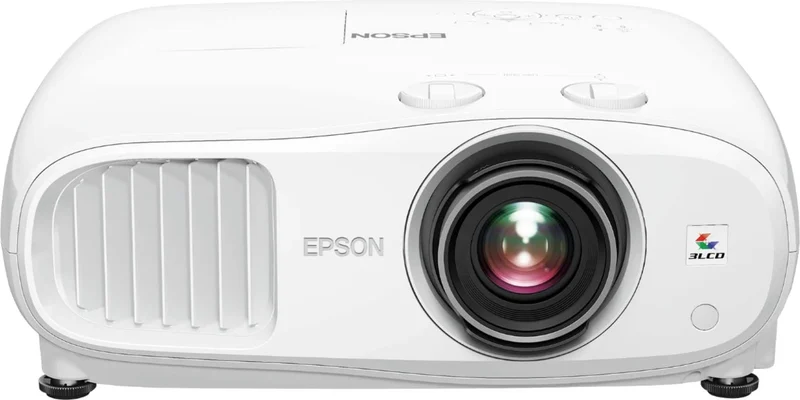
For most living rooms, the Epson Home Cinema 3800 is still the projector to beat: independent testing consistently finds its 3LCD engine delivers brighter, punchier, more contrast-rich images than similarly priced DLP models, with flexible placement and no rainbow artifacts - its only real tax is occasional lamp replacement. The BenQ HT4550i is the premium alternative, with factory-calibrated, full DCI-P3 color from a maintenance-free LED engine that dark-room movie purists will love. The Hisense PX3-Pro is the best ultra-short-throw of the group and the closest thing here to a giant TV, but it's flagship-priced and genuinely needs a dedicated ALR screen to shine, so budget accordingly. The Optoma UHZ55's laser engine and gaming speed can't offset gray blacks and noisy HDR performance when the Epson costs about the same. Best for: movie lovers who want a true 100-inch-plus cinema experience - the Epson for classic setups, the Hisense for TV-replacement living rooms.
Our picks at a glance
- Epson Home Cinema 3800 - Buy. The long-running value king of living-room projection: bright, punchy, rainbow-free, and easier to place than almost anything else.
- BenQ HT4550i - Buy. The colorist's choice: a factory-calibrated 4K LED projector that covers the full digital-cinema color gamut with no lamp to replace.
- Hisense PX3-Pro Laser Cinema - It depends. A brilliant triple-laser ultra-short-throw that replaces a TV - if you also budget for the screen it deserves.
- Optoma UHZ55 - Skip. A capable laser projector on paper, but gray blacks and stiff competition make it hard to justify at this price.
The verdict in 30 seconds
What mattered most
- Projection type
- Light source lifespan
- Contrast / black level
- Color performance
- HDR support
- Smart TV & sound built in
A living-room-class home theater projector is a different animal from the portable minis flooding the market: these are machines built to fill a 100-inch-plus screen with a genuinely cinematic picture. We synthesized independent testing and owner reports on four current models - two traditional long-throw projectors, one ultra-short-throw laser TV, and one laser long-throw - and the verdicts split cleanly. Two are easy recommendations, one is superb but only for the right room and budget, and one is outclassed at its price.
The long-running value king of living-room projection: bright, punchy, rainbow-free, and easier to place than almost anything else.
Best for: Anyone who wants the most convincing big-screen movie picture per dollar in a normal living room and doesn't mind a lamp.
- 3-chip LCD design means full color brightness and no rainbow artifacts
- Strong real-world contrast and dark-scene performance for the money
- Generous zoom plus vertical and horizontal lens shift make placement flexible
- Full-bandwidth HDMI and low input lag suit consoles as well as movies
- Lamp-based light source needs periodic bulb replacement, unlike laser rivals
- No built-in streaming or speakers worth using - plan on external gear
- Bulky chassis and audible fan in its brightest mode
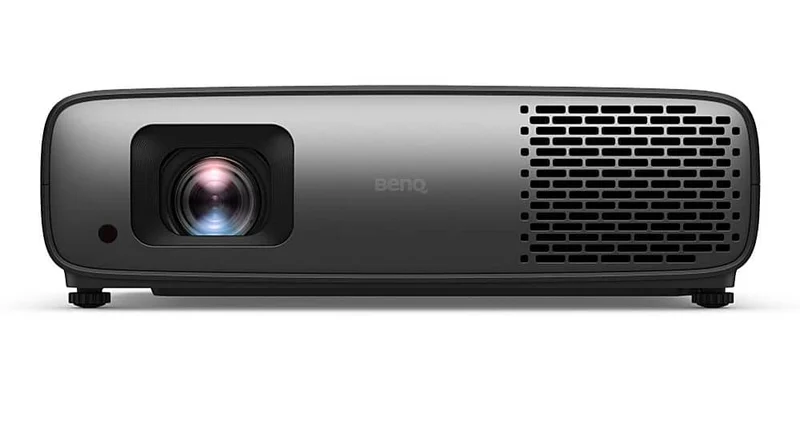
The colorist's choice: a factory-calibrated 4K LED projector that covers the full digital-cinema color gamut with no lamp to replace.
Best for: Picture-quality purists with a light-controlled room who want reference-grade color without paying flagship money.
- Covers essentially the full DCI-P3 cinema color gamut with excellent out-of-box accuracy
- Long-life 4LED light source - no lamp replacements, fast on/off
- Two-dimensional lens shift and vertical stretch support simplify installation
- Ships with an Android TV streaming dongle and an individual calibration report
- Accurate picture modes are noticeably dimmer than the headline brightness spec
- Single-chip DLP, so rainbow-sensitive viewers may notice artifacts
- Costs meaningfully more than the Epson without a decisive contrast win
Amazon had no buyable listing for this when we last checked. The link still works if it returns.
Find it on Amazon Read our detailed assessment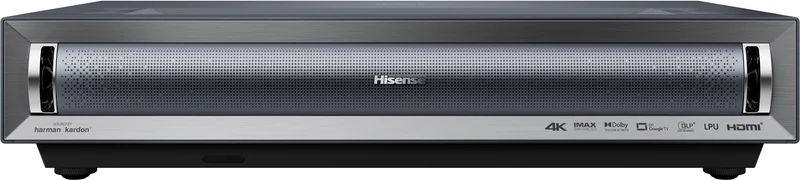
A brilliant triple-laser ultra-short-throw that replaces a TV - if you also budget for the screen it deserves.
Best for: TV-replacement buyers who want a 100-to-120-inch picture in a bright living room and are prepared to buy a proper ALR screen.
- Triple-laser engine produces spectacular, wider-than-cinema color
- Sits inches from the wall - no ceiling mount, no cables across the room
- Rare full-format HDR support including Dolby Vision, plus built-in Google TV
- Genuinely useful built-in Harman Kardon sound and a fast gaming mode
- Needs a dedicated UST ambient-light-rejecting screen - a significant extra cost - to look its best
- UST geometry is fussy: alignment and a perfectly flat screen surface are critical
- Owner reports on after-sales support are mixed
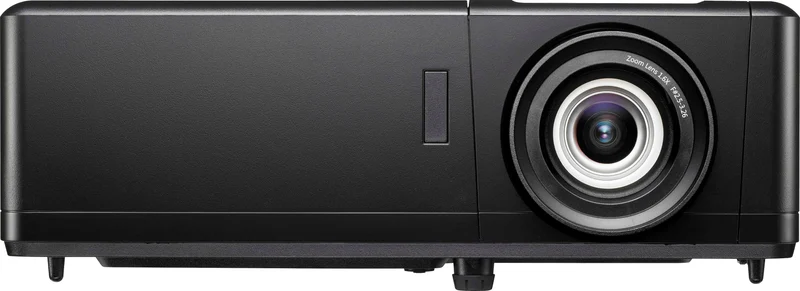
A capable laser projector on paper, but gray blacks and stiff competition make it hard to justify at this price.
Best for: Bright-room sports and gaming sessions where laser convenience matters more than dark-scene movie performance.
- Maintenance-free laser light source with a long rated lifespan
- Bright output and very low input lag make it a solid gaming option
- Low native contrast - independent testing found dark scenes wash out to gray
- Single-chip DLP rainbow artifacts and a fan that gets loud in HDR mode
- Clunky smart features and menus compared with rivals
- The similarly priced Epson delivers a more cinematic picture overall
| Criteria | Epson Home Cinema 3800 Top pick Buy it Buy | BenQ HT4550i Buy it | Hisense PX3-Pro Laser Cinema It depends Buy | Optoma UHZ55 Skip it Buy |
|---|---|---|---|---|
| Best for | Anyone who wants the most convincing big-screen movie picture per dollar in a normal living room and doesn't mind a lamp. | Picture-quality purists with a light-controlled room who want reference-grade color without paying flagship money. | TV-replacement buyers who want a 100-to-120-inch picture in a bright living room and are prepared to buy a proper ALR screen. | Bright-room sports and gaming sessions where laser convenience matters more than dark-scene movie performance. |
| Price tier | $$ · mid-range | $$$ · premium | $$$$ · flagship | $$ · mid-range |
| Projection type | Long-throw 3LCD, lamp | Long-throw DLP, 4LED | Ultra-short-throw DLP, triple laser | Long-throw DLP, laser |
| Light source lifespan | Lamp - periodic replacement | LED - rated for the projector's life | Laser - rated for the projector's life | Laser - rated for the projector's life |
| Contrast / black level | Very good for the class | Good in a dark room | Good, screen-dependent | Weak - grayish blacks |
| Color performance | Strong, full color brightness | Outstanding - full DCI-P3, factory calibrated | Outstanding - widest gamut here | Decent after adjustment |
| HDR support | HDR10 / HLG | HDR10 / HLG, HDR-PRO tone mapping | Dolby Vision, HDR10+, HDR10, HLG | HDR10 / HLG |
| Smart TV & sound built in | None - bring your own | Android TV dongle included; basic speaker | Google TV plus capable Harman Kardon audio | Basic smart features; modest speakers |
| Placement flexibility | Excellent - big zoom plus 2D lens shift | Good - 2D lens shift, modest zoom | Sits on furniture inches from the wall | Fair - zoom but minimal shift |
| Price tier | $$ · mid-range | $$$ · premium | $$$$ · flagship | $$ · mid-range |
Which one is right for you?
- Anyone who wants the most convincing big-screen movie picture per dollar in a normal living room and doesn't mind a lamp. Buy it Epson Home Cinema 3800
- Picture-quality purists with a light-controlled room who want reference-grade color without paying flagship money. Buy it BenQ HT4550i
- TV-replacement buyers who want a 100-to-120-inch picture in a bright living room and are prepared to buy a proper ALR screen. It depends Hisense PX3-Pro Laser Cinema
- Bright-room sports and gaming sessions where laser convenience matters more than dark-scene movie performance. Skip it Optoma UHZ55
How we judged the field
We don’t run our own lab. Instead, we synthesized independent testing of each projector - measured brightness, contrast, color accuracy, and input lag - with aggregated owner reports covering the stuff that only shows up after months of use: fan noise, reliability, software quirks, and support experiences. For living-room-class home theater projectors, we weighted four things most heavily: real-world picture quality (especially dark-scene contrast, which separates ‘cinematic’ from ‘office projector’), brightness in accurate picture modes rather than headline specs, placement and setup flexibility, and total cost of ownership including lamps and screens. All four models are current and widely available; the field deliberately spans traditional long-throw designs and an ultra-short-throw laser TV so you can compare across styles, not just brands.
Epson Home Cinema 3800
Buy itThe Home Cinema 3800 has been the default recommendation in this class for years, and independent testing keeps confirming why. Its 3-chip LCD engine puts out equal white and color brightness - so bright scenes look vivid rather than washed out - and its native contrast beats every similarly priced DLP rival, which shows up exactly where it matters: letterboxed movies in a dim room. Because it’s 3LCD, there are no rainbow artifacts, full stop. Placement is unusually forgiving thanks to a long zoom range and both vertical and horizontal lens shift, so it works on a rear shelf or a ceiling mount without keystone-distorting the image. Full-bandwidth HDMI and low input lag make it quietly excellent for console gaming too. The honest costs: it’s lamp-based, so you’ll buy a bulb every few years; it’s big; and it has no useful built-in streaming or audio. None of that dents the core proposition - reviewers consistently conclude it delivers the most convincing home-cinema picture per dollar in the category.
BenQ HT4550i
Buy itThe HT4550i is BenQ’s answer to a specific question: what if a living-room projector shipped already looking the way the director intended? Its 4LED light engine covers essentially 100% of the DCI-P3 digital-cinema gamut, and each unit ships with an individual factory calibration report - out of the box, independent testing found its color accuracy embarrasses most projectors at any price. The LED source means no lamp replacements and quick on/off, and 2D lens shift eases installation. So why isn’t it the top pick? Two reasons. In its accurate picture modes, real-world brightness lands well below the headline spec, so it wants a light-controlled room to look its best. And it’s a single-chip DLP, so rainbow-sensitive viewers may notice artifacts the Epson simply can’t produce. If you have blackout capability and care about color fidelity above all, this is the one - reviewers describe its film picture as genuinely reference-like for the class.
Hisense PX3-Pro Laser Cinema
It dependsThe PX3-Pro is the most technologically ambitious projector here: a triple-laser ultra-short-throw with a color gamut wider than commercial cinema, the rare full house of HDR formats including Dolby Vision and HDR10+, built-in Google TV, legitimately good Harman Kardon speakers, and a fast gaming mode. Set it on a media console inches from the wall and it throws a 100-to-150-inch image with no mounting, no long cable runs, and no shadows. Independent testing praises its brightness and color as among the best any UST has produced. So why ‘it depends’? Because the sticker price is only the entry fee. To get the picture reviewers rave about - especially with any ambient light - you need a rigid, UST-specific ambient-light-rejecting screen, a significant additional investment. UST optics are also unforgiving: the screen must be dead flat and alignment takes patience. And owner reports on Hisense’s projector support are mixed enough to note. If you’re replacing a TV in a real living room and will budget for the full setup, it’s spectacular. If you just want maximum movie quality per dollar in a dedicated space, the long-throws win.
Optoma UHZ55
Skip itOn a spec sheet, the UHZ55 looks like the modern choice at this price: a maintenance-free laser light source, high rated brightness, 4K HDR, and outstanding input lag that makes it one of the quicker gaming projectors around. In practice, independent testing keeps hitting the same wall - native contrast is low even by single-chip DLP standards, so dark movie scenes render as shades of gray rather than black. Owners and reviewers also note the fan spins up audibly in HDR mode, the smart platform feels clunky, and rainbow artifacts affect sensitive viewers. None of these are fatal individually; the problem is the company it keeps. For roughly the same money, the Epson Home Cinema 3800 produces a decisively more cinematic image, and the step up to the BenQ buys dramatically better color. The UHZ55 makes sense in a narrow lane - bright-room sports and low-lag gaming where laser convenience is the priority - but as a home theater centerpiece, it’s outclassed.
Epson Home Cinema 3800 vs BenQ HT4550i: which should you buy?
This comes down to your room and your priorities. The Epson is brighter in real-world accurate modes, has stronger native contrast, offers more placement flexibility, and costs meaningfully less - it’s the better all-rounder for a multi-use living room where lighting varies and the projector must handle everything from cartoons at 4 p.m. to a thriller at 10. The BenQ counters with clearly superior color: full DCI-P3 coverage, factory-verified accuracy, and a maintenance-free LED engine, making film content in a darkened room look richer and more faithful than the Epson can manage. If you’ll watch mostly at night with controlled light and care about color fidelity, spend up on the BenQ and never think about lamps again. For everyone else - and especially for first projector buyers - the Epson is the smarter, safer purchase, and the money saved covers years of lamps or a good screen.
What to look for
- Throw type first. Decide between a long-throw (mounted or shelf-placed, best picture per dollar) and an ultra-short-throw (sits below the screen like TV furniture, easier to live with, pricier for equal quality) before comparing anything else.
- Contrast over lumens. Headline brightness sells projectors, but native contrast is what makes movies look cinematic. Reviewers consistently rank dark-scene performance above raw lumens for home theater use.
- Accurate-mode brightness. Check what independent testing measured in calibrated picture modes, not the spec-sheet maximum, which is often achieved in a green-tinted mode you’ll never use.
- Light source trade-offs. Laser and LED mean zero maintenance; lamps are cheaper up front but need periodic replacement. Neither guarantees a better picture.
- Placement fit. Measure your room and verify throw distance, zoom range, and lens shift cover your screen position - keystone correction degrades the image and should be a last resort.
- Screen budget. Factor in a screen, especially for UST models, where an ALR screen is effectively part of the purchase price.
- Rainbow sensitivity. If you’ve never watched a single-chip DLP projector, try to see one before buying - or default to a 3LCD design.
Our final take
The living-room projector market has split into two good answers and this comparison reflects it. For a classic setup - a mount or shelf, a screen or wall, movie nights with the lights down - the Epson Home Cinema 3800 remains the benchmark, delivering contrast and brightness the similarly priced DLP competition can’t touch, with the BenQ HT4550i as the worthy premium upgrade for color purists in dark rooms. For a TV-replacement setup in a bright, shared space, the Hisense PX3-Pro is the best ultra-short-throw here by a distance - just go in with eyes open about the screen it needs and the flagship-tier total cost. The Optoma UHZ55 is the cautionary tale: a decent laser projector that exists in the shadow of a cheaper, better rival. Buy the Epson for value, the BenQ for fidelity, the Hisense for the living room of the future - and skip the Optoma.
Questions, answered
What's the difference between a long-throw and an ultra-short-throw (UST) projector?
A long-throw projector sits several feet back from the screen - usually ceiling-mounted or on a rear shelf - while a UST like the Hisense PX3-Pro sits on a credenza just inches from the wall and fires upward. UST models are easier to live with (no mounting, no shadows when someone walks by) but are pickier about screen flatness and cost more for comparable picture quality.
Do I really need a projector screen, or can I use a white wall?
A wall works for casual use with a long-throw projector, but a proper screen gives you a flatter, more reflective, color-neutral surface and visibly better sharpness and contrast. For a UST projector, a dedicated ultra-short-throw ALR (ambient-light-rejecting) screen is close to mandatory - owners consistently report the picture falls apart on a bare wall or a standard screen in a bright room.
Lamp vs. LED vs. laser - how much does the light source matter?
Laser and LED engines (BenQ, Hisense, Optoma here) run for tens of thousands of hours with no maintenance, switch on almost instantly, and hold their brightness longer. A lamp projector like the Epson needs a replacement bulb every few years with regular use. That's a genuine convenience gap - but it doesn't determine picture quality, which is why the lamp-based Epson still wins on image per dollar.
What is the 'rainbow effect' and should I worry about it?
Single-chip DLP projectors (the BenQ, Hisense, and Optoma) create color sequentially, and a minority of viewers perceive brief rainbow flashes on bright objects against dark backgrounds. Most people never notice; sensitive viewers find it distracting. The 3-chip LCD Epson is immune, which is one reason it's a safe default if you've never watched a DLP projector before.
How dark does my room need to be for a home theater projector?
Brightness in this class is good enough for lights-dimmed evening viewing on all four models, and the Epson and Hisense handle moderate ambient light well - the Hisense especially when paired with an ALR screen. But no projector defeats direct daylight the way a TV does, so if your room has big uncovered windows and you watch mostly in daytime, temper expectations or invest in blackout curtains.
Deciding between the top two? See our head-to-head: Epson Home Cinema 3800 vs BenQ HT4550i.
More in Tech & Gadgets
Home Theater Projectors, Explained Plain-English guide → Epson Home Cinema 3800 vs BenQ HT4550i Head-to-head →  The Best Instant Print Cameras: 4 Compared (and One to Skip)
  The Best Internal NVMe SSDs: 4 Compared (and One to Skip)
  The Best IP KVM Devices: 4 Compared (and One to Skip)
  The Best Label Makers: 4 Compared (and One to Skip)