

Office & WFH
The Best Fountain Pens: 4 Compared (and One to Skip)
From Pilot's $34 Metropolitan to LAMY's indestructible Safari - the starter pens that turn 'nice handwriting' into a hobby, and the $4 disposable that misses the entire point.
The short version
Gift the Pilot Metropolitan ($34) - metal body, smooth nib, converter included, no learning curve. The LAMY Safari ($30) is the tougher, quirkier alternative with the teaching grip. The TWSBI ECO ($37) is for hobbyists who want to fill from a bottle. Skip the Varsity - a disposable fountain pen is a contradiction wearing a nib.
Our picks at a glance
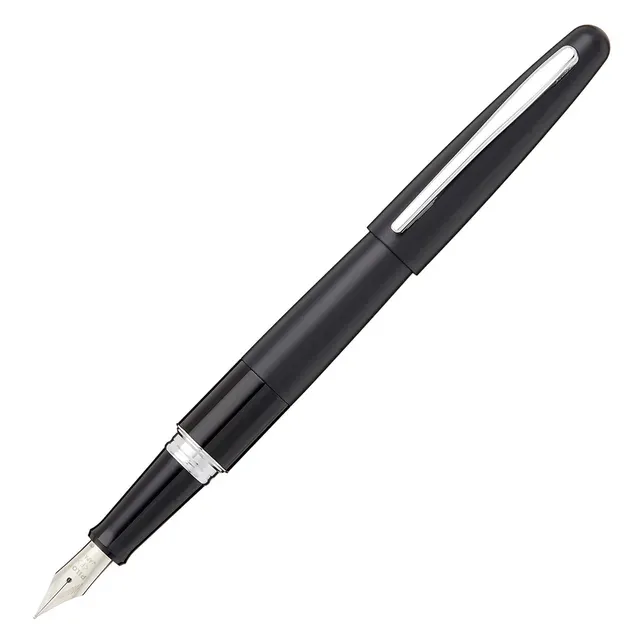
- Pilot Metropolitan - Buy. Brass-barreled starter pen with Pilot's buttery steel nib - $34 that writes like $100.
- LAMY Safari - Buy. The ABS-plastic tank with the triangular grip - nearly indestructible, endlessly moddable.
- TWSBI ECO - It depends. Piston-filler demonstrator - bottled ink only, huge capacity, tinkerer's pen.
- Pilot Precise Varsity - Skip. A $3.73 disposable fountain pen - writes fine, then goes in the trash.
The verdict in 30 seconds
What mattered most
- Price (street)
- Body
- Filling system
- Nib
- Verdict
A fountain pen is the rare gift that upgrades someone's handwriting, desk, and personality simultaneously - for under $40. The starter-pen field has been settled law for a decade: Pilot's Metropolitan and LAMY's Safari dominate because they're nearly unbreakable and write like pens costing triple. We compared the classics, the tinkerer's pick, and the disposable that betrays the category's whole premise.
Brass-barreled starter pen with Pilot's buttery steel nib - $34 that writes like $100.
Best for: First-pen giftees, journalers, and desk workers who want grown-up gear cheap.
- Brass body with glossy accent band - real heft; feels like a serious instrument, not a toy.
- Pilot's Japanese steel nib (F/M) - famously smooth out of the box, no tuning needed.
- Includes converter + cartridge - starts on cartridges, grows into bottled ink.
- M/F nib options cover both fine-note and flowing-signature writers.
- Capped design - the clip posts only in one direction, so cap discipline required.
- Proprietary Pilot cartridges - you can't use standard international cartridges.
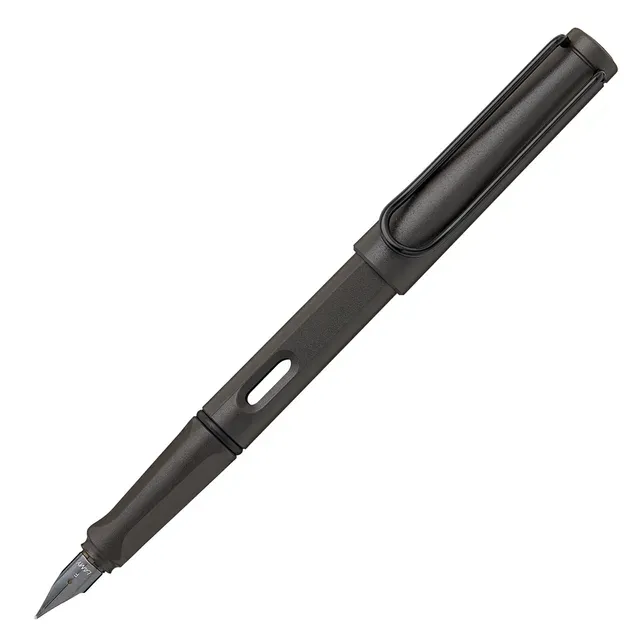
The ABS-plastic tank with the triangular grip - nearly indestructible, endlessly moddable.
Best for: Students, sketchers, and anyone hard on their gear.
- Triangular grip section teaches proper hold automatically - the teacher's favorite.
- ABS body survives drops that would dent metal; decades of proven durability.
- Swappable steel nib units - switch EF to B in 30 seconds with tape.
- Iconic Bauhaus design in a dozen colors - personality in a pen.
- $29.60 and the nib runs slightly broader/drier than the Pilot's out of the box.
- The grip triangle polarizes: love it or find it constraining - no middle.
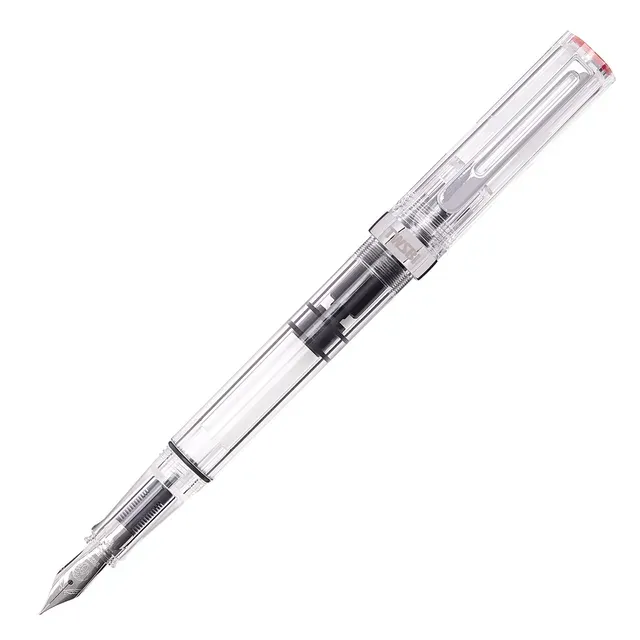
Piston-filler demonstrator - bottled ink only, huge capacity, tinkerer's pen.
Best for: Tinkerers and ink collectors - people who'll enjoy the ritual of filling.
- Built-in piston filler - draw ink straight from the bottle; ~1.9ml vs a cartridge's ~0.7ml.
- Clear demonstrator body shows the ink sloshing - half the fun of fountain pens.
- Stainless nib (EF to B) + disassembles fully for cleaning - the hobbyist's instrument.
- Bottle-only filling - no cartridges, so you must buy a bottle of ink to use it at all.
- Plastic body threads and cap can crack if overtightened - a known TWSBI quirk.
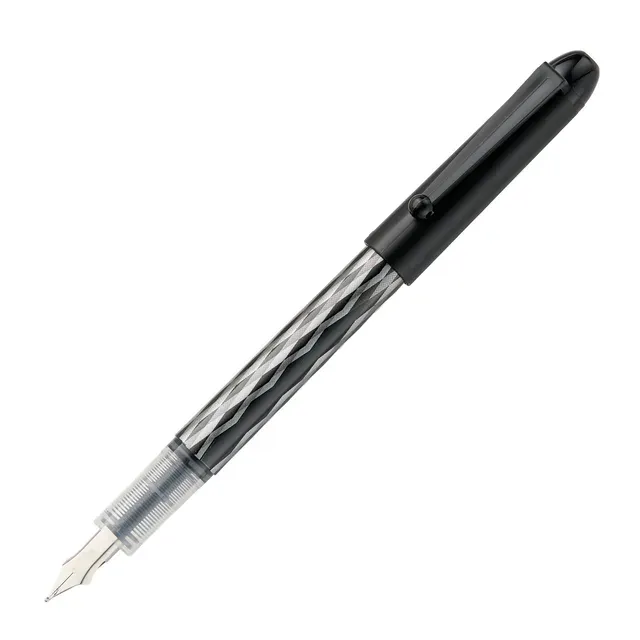
A $3.73 disposable fountain pen - writes fine, then goes in the trash.
Best for: Curiosity purchases only - a prop, not a gift.
- Actually writes like a decent medium-nib Pilot - it is a real fountain pen.
- $3.73 - cheap enough to test the waters risk-free.
- Disposable by design - no refill, no converter, straight to landfill when dry.
- That defeats the entire gift premise: a fountain pen is an heirloom, not a consumable.
- Spend $30 more and own a pen that outlives the recipient's career.
| Criteria | Pilot Metropolitan Top pick | LAMY Safari | TWSBI ECO | Pilot Precise Varsity |
|---|---|---|---|---|
| Verdict | Buy it | Buy it | It depends | Skip it |
| Best for | First-pen giftees, journalers, and desk workers who want grown-up gear cheap. | Students, sketchers, and anyone hard on their gear. | Tinkerers and ink collectors - people who'll enjoy the ritual of filling. | Curiosity purchases only - a prop, not a gift. |
| Price tier | $ · budget | $ · budget | $$ · mid-range | $ · budget |
| Price (street) | $34 | $29.60 | $36.99 | $3.73 |
| Body | Brass, glossy band | ABS plastic, grip triangle | Clear demonstrator | Plastic disposable |
| Filling system | Cartridge + converter | Cartridge + converter | Piston, bottle only | Prefilled, disposable |
| Nib | Steel, F/M | Steel, EF-B swappable | Stainless, EF-B | Steel, M only |
| Verdict | Buy - the default answer | Buy - the rugged classic | It depends - hobbyist's pen | Skip - disposable sin |
Which one is right for you?
- First-pen giftees, journalers, and desk workers who want grown-up gear cheap. Buy it Pilot Metropolitan
- Students, sketchers, and anyone hard on their gear. Buy it LAMY Safari
- Tinkerers and ink collectors - people who'll enjoy the ritual of filling. It depends TWSBI ECO
- Curiosity purchases only - a prop, not a gift. Skip it Pilot Precise Varsity
How we judged the field
Starter fountain pens are judged on three things: out-of-box writing quality (a scratchy first pen kills the hobby), durability, and whether the filling system grows with the user. Every pen here is under $40; the differences are in feel and philosophy.
The Metro is the recommendation-in-one-pen: a brass body that feels like a serious instrument, Pilot’s famously smooth steel nib, and a converter in the box so bottled ink is a day’s-old discovery rather than a future purchase. At $34 it’s priced at exactly the gift sweet spot - real, not precious. The capped posting is fiddly (one direction only) and Pilot cartridges are proprietary, but neither matters much: this is the pen that turns ‘I got a nice pen’ into ‘I own a fountain pen.’
The Safari is the other answer, and arguably the more interesting one: an ABS body so tough it’s been run over in tests, a triangular grip that corrects your hold whether you asked or not, and swappable nib units that turn a $30 pen into a lifetime experiment. It writes slightly broader and drier than the Metro out of the box, and the grip triangle divides writers into lovers and haters - but for students and rough handlers, it’s the tank of the category.
The ECO is the pen that teaches the hobby: a clear demonstrator showing ink slosh, a built-in piston filler that draws ~1.9ml from a bottle, and a nib that disassembles for cleaning. It’s the more interesting object. It’s also the more demanding one - no cartridge option means you must buy bottled ink to use it at all, and TWSBI’s cap threads have a known crack risk if overtightened. For someone who already owns a bottle of ink, it’s a treasure; for a first-pen giftee, it’s a homework assignment.
The Varsity is a paradox: a genuinely good-writing Pilot medium nib sealed in a disposable body, meant to be used once and thrown away. It’s not bad at writing - it’s bad at being a gift. A fountain pen’s whole premise is permanence: the refillable instrument, the growing collection of inks, the object that ages with you. A disposable fountain pen is a contradiction in plastic. Buy one for curiosity; don’t wrap it.
Pilot Metropolitan vs LAMY Safari: which should you buy?
Temperament decides. The Metro is for the person who’ll put it on a desk and treat it like a nice object - heftier, more formal, smoother out of the box. The Safari is for the person who’ll toss it in a bag with keys and still use it in ten years - lighter, tougher, more moddable. Both write better than anything under $30 has a right to; pick by personality, not specs.
What to look for in a fountain pen
- Steel nib first, gold later. Sub-$50 steel nibs from Pilot and LAMY write beautifully; gold is a $200+ upgrade with diminishing returns for beginners.
- Filling system decides the hobby. Cartridge+converter pens ease you in; piston-fillers commit you to bottled ink and its rituals.
- Nib size to writing style. Small handwriting and fast notes want F/EF; signatures and journal flow want M/B.
- The pen is the beginning. Budget $10-15 for a first bottle of ink - it’s half the experience and lasts a year.
Our final take
The Pilot Metropolitan is the gift: $34, metal body, smooth nib, zero learning curve. The LAMY Safari is the cult alternative for tougher hands. The TWSBI ECO is the hobbyist’s doorway once cartridges feel small. And the Varsity belongs in a desk drawer, not a gift box - some pens are meant to be kept, not consumed.
Questions, answered
Fountain pen vs rollerball - what's the difference?
Fountain pens use liquid ink that flows through a nib by capillary action - less pressure, more line variation, a different feel entirely. Rollerballs use gel-ink refills. The fountain pen requires refilling; that's the ritual, not a bug.
Do fountain pens leak?
A well-treated pen doesn't leak in normal use. Cap it, don't drop it nib-down, and don't fly with a full converter - cabin pressure pushes ink out. Modern pens handle daily carry fine.
What ink should I buy?
Start with the included cartridge, then move to a bottle - Pilot Iroshizuku or Waterman Intense Black are safe picks. Bottled ink costs pennies per fill vs cartridges.
Left-handed writers - can they use fountain pens?
Yes - lefties should choose fine nibs and fast-drying inks to avoid smearing (hand drags over fresh ink). Overhand and underhand grips both work; the Safari's triangle actually helps some lefties.
Deciding between the top two? See our head-to-head: Pilot Metropolitan vs LAMY Safari.
More Office & WFH reviews
 The Best Gaming Chairs: 4 Compared (and One to Skip)
  The Best Headphone Stands: 4 Compared (and One to Skip)
  The Best Home Printers: 4 Compared (and One to Skip)
  The Best Keyboard Switches: 4 Compared (and One to Skip)
  The Best Under-Desk Keyboard Trays: 4 Compared (and One to Skip)
  The Best Keycap Sets: 4 Compared (and One to Skip)