

Office & WFH
The Best Affordable Ergonomic Office Chairs (And the Popular One to Skip)
We compared the real budget-chair winners against the racing-style gaming chair that owners and ergonomists keep panning.
The short version
The Sihoo Doro C300 is our pick: its self-adjusting dynamic lumbar keeps contact with your lower back even as you recline, something rivals at this level tend to drop. The HON Ignition 2.0 wins if you want a proven, easily serviced office standard with six-position back height and a firmer supportive seat. Skip the RESPAWN 110 racing-style chair; its thin seat, fixed arms and bucket shape cause aches within an hour of upright work. Best for desk workers who sit through long, mixed-posture days and want support without constant fiddling.
Our picks at a glance
- Sihoo Doro C300 - Buy. A mid-range chair that punches like a flagship one, thanks to lumbar that actually tracks your spine.
- Branch Ergonomic Chair - It depends. The most adjustable chair in the range, but its lumbar is polarizing.
- HON Ignition 2.0 - Buy. The boring, contract-grade workhorse that just keeps working for years.
- RESPAWN 110 (Racing-Style Gaming Chair) - Skip. A best-selling racing chair that ergonomists and owners agree is wrong for all-day desk work.
The verdict in 30 seconds
What mattered most
- Price tier
- Lumbar support
- Adjustability
- Recline / tilt
- Breathability
- Warranty
You don't need a flagship-priced Aeron to sit comfortably for eight hours, but you do need real lumbar support, meaningful adjustability, and a recline that actually works. We cross-checked the current picks from independent testers to find three good mid-range chairs with no rose-tinting on their flaws. We also flag one hugely popular chair that testers across sites agree you should walk past.
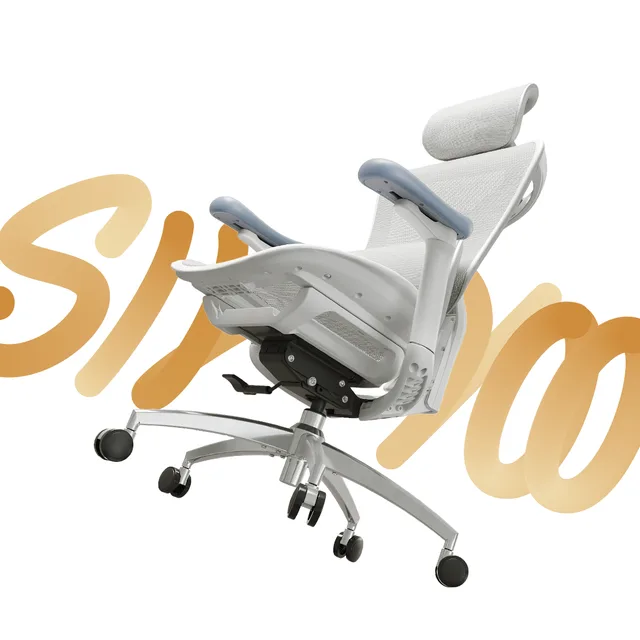
A mid-range chair that punches like a flagship one, thanks to lumbar that actually tracks your spine.
Best for: Value hunters under 6'0" who want premium ergonomics without four-figure spend
- Self-adapting lumbar moves with you as you lean and recline, so there's nothing to constantly re-fiddle
- 4D armrests that pivot up to 75 degrees, weight-sensing tilt, 130-degree recline and full breathable mesh at a price where those features are rare
- Dynamic lumbar can feel too pushy for lighter users until you break it in
- Fixed 18.1-inch seat depth on this version (the C300 Pro adds a slider), and the arms shift if you bump them
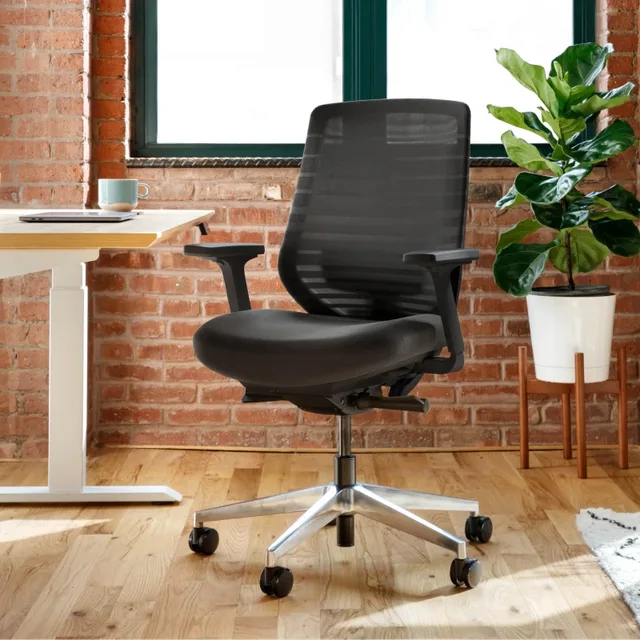
The most adjustable chair in the range, but its lumbar is polarizing.
Best for: Tinkerers who want maximum adjustment points and will dial the chair in to their body
- Wide, easy-to-tune adjustability: 3D arms, seat depth and height-adjustable lumbar with a synchronous tilt
- Anodized aluminum base, Greenguard Gold certified, BIFMA-rated to 275 pounds, and backed by a 7-year warranty
- The height-adjustable lumbar pad is firm and polarizing; some owners remove it entirely
- Doesn't match a Steelcase Series 1 for out-of-the-box comfort despite similar money
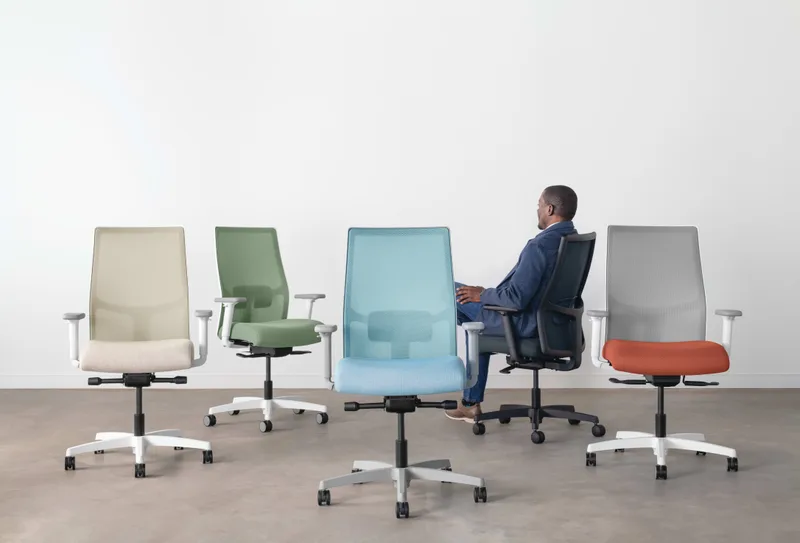
The boring, contract-grade workhorse that just keeps working for years.
Best for: People who sit mostly upright and prioritize longevity and warranty over recline flexibility
- Durable, business-grade build with a synchro-tilt control, height/width-adjustable arms, adjustable lumbar, and a 300-pound rating
- Breathable 4-way stretch mesh back; HON's full lifetime warranty covers the chair, with the mesh itself covered for 5 years
- Backrest recline is the weak spot; owners rank its recline among the least comfortable here
- Plain, office-standard styling with less 'wow' than newer direct-to-consumer chairs
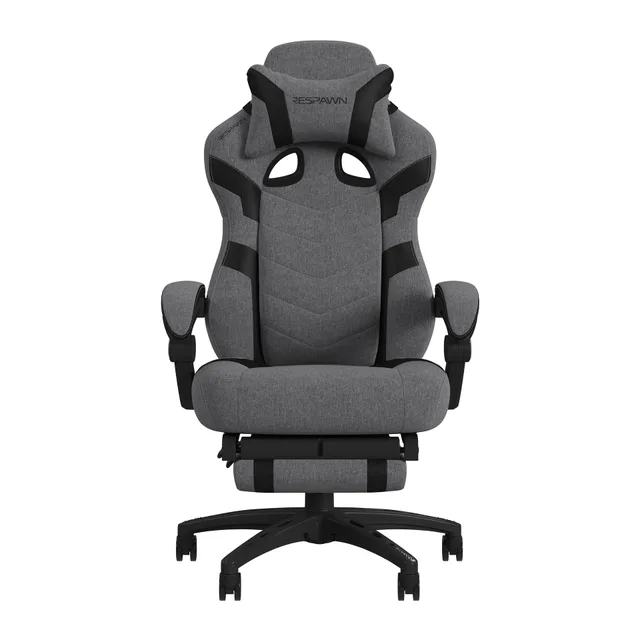
A best-selling racing chair that ergonomists and owners agree is wrong for all-day desk work.
Best for: Almost no one doing serious desk work; ergonomists steer you to a real task chair instead
- Cheap, looks aggressive, and reclines to 135 degrees with an infinite-angle lock
- Fine for short casual gaming sessions if you're not sitting for full workdays
- Fixed arms and an integrated (non-adjustable) lumbar on the current version; the seat shows hard spots within minutes per owner reviews
- Bucket-seat bolsters pinch and restrict movement, and units commonly develop audible creaking within hours
- RESPAWN has redesigned the 110: the current model drops the footrest and the strap-on pillows, so older reviews describe a different chair
| Criteria | Doro C300 Top pick | Ergonomic Chair | Ignition 2.0 | RESPAWN 110 (Racing-Style Gaming Chair) |
|---|---|---|---|---|
| Verdict | Buy it | It depends | Buy it | Skip it |
| Best for | Value hunters under 6'0" who want premium ergonomics without four-figure spend | Tinkerers who want maximum adjustment points and will dial the chair in to their body | People who sit mostly upright and prioritize longevity and warranty over recline flexibility | Almost no one doing serious desk work; ergonomists steer you to a real task chair instead |
| Price tier | $$ · mid-range | $$ · mid-range | $$ · mid-range | $ · budget |
| Price tier | $$ · mid-range | $$ · mid-range | $$ · mid-range | $ · budget |
| Lumbar support | Dynamic, self-adapting (can feel firm) | Adjustable but polarizing | Adjustable, mesh-backed | Loose pillow that won't stay put |
| Adjustability | 4D arms + weight-sensing tilt | Wide: 3D arms, seat depth, lumbar | Synchro-tilt, height/width arms | Height + tilt tension only, fixed arms |
| Recline / tilt | Smooth, weight-sensing | Synchronous tilt with tension control | Weakest link (least-liked recline) | 135-degree recline, infinite-angle lock |
| Breathability | Full mesh | Mesh upper back | 4-way stretch mesh | Padded faux-leather (runs hot) |
| Warranty | 3 years | 7 years | Full lifetime (mesh 5 years) | 5 years frame, 2 years parts and fabric |
Which one is right for you?
- Value hunters under 6'0" who want premium ergonomics without four-figure spend Buy it Sihoo Doro C300
- People who sit mostly upright and prioritize longevity and warranty over recline flexibility Buy it HON Ignition 2.0
- Tinkerers who want maximum adjustment points and will dial the chair in to their body It depends Branch Ergonomic Chair
- Almost no one doing serious desk work; ergonomists steer you to a real task chair instead Skip it RESPAWN 110 (Racing-Style Gaming Chair)
How we judged the field
We prioritized what actually reduces fatigue over an eight-hour day: lumbar support that tracks your spine, seat comfort that holds up past the first hour, armrests that adjust in enough directions to unload your shoulders, and tilt mechanisms that let you shift posture without fighting the chair. We discounted racing-style aesthetics and inflated weight ratings that don’t translate into daily comfort. RBE synthesizes independent expert testing and long-term owner reports rather than running our own lab, so patterns across many users carry more weight than any single impression. Our pick is the Sihoo Doro C300 for its self-adjusting lumbar; the HON Ignition 2.0 is the runner-up for its proven, serviceable office-standard build.
Sihoo Doro C300
Buy itThe Doro C300 is a mesh task chair built around a dynamic lumbar system that moves with you. Its standout feature is that self-adaptive lumbar support, mounted inside a flexing backrest, which keeps contact with your lower back as you recline rather than pulling away the way fixed pads do. The waterfall-shaped seat reduces pressure behind the knees, and the 4D armrests move up and down, forward and back, left and right, and pivot up to 75 degrees, then track the backrest as it reclines; a weight-sensing mechanism sets the tilt tension, with recline up to 130 degrees. Sihoo rates it for 330 pounds, cites BIFMA and TUV certification, and backs it with a 3-year warranty. Owners consistently single out the recline behavior: because the lumbar follows you, leaning back stays supported instead of turning into a slouch. What owners like less is seat depth; the standard model’s pan is fixed at 18.1 inches, so very tall users can find the cushion shallow, and the padding runs on the firm side. Right buyer: a long-day desk worker who shifts posture often and wants support without micro-adjusting. Wrong buyer: someone needing a deep, plush seat or sliding seat depth out of the box.
Branch Ergonomic Chair
It dependsBranch’s task chair leans on breadth of adjustment, eight points by Branch’s count. The height-adjustable lumbar rest slides up and down to meet your curve and can be removed entirely, the seat pan adjusts for depth, and the synchronous mechanism tilts seat and back together with tension control. Height-, width-, and depth-adjustable 3D armrests round out the fit, the base is anodized aluminum, the chair is Greenguard Gold certified and BIFMA-rated to 275 pounds, and Branch covers it for 7 years. Owners like the range of tailoring and the clean, upright structure; set correctly, it holds good posture well. What owners like less is padding: both the seat cushion and armrest tops run thin, and multiple long-term reports describe soreness after a full day. Owners also flag armrests that feel hard and can pop out of their set position, plus controls that aren’t intuitive without watching a setup video. It depends because the chair rewards people who will dial in every adjustment and prefer a firmer seat; if you want cushioning that forgives long sessions or arms that stay put, look elsewhere. Right buyer: the adjustment tinkerer. Wrong buyer: anyone who wants plush comfort out of the box.
HON Ignition 2.0
Buy itThe Ignition 2.0 is a widely deployed office-standard task chair with a 4-way stretch mesh back and a contoured foam seat. Its adjustable lumbar slides up and down to meet your back, the mesh back height sets to six vertical positions to fit different torso lengths, and the synchro-tilt control with seat slider moves seat and back together. Height- and width-adjustable arms let you narrow the support under your elbows, and HON rates the chair for users up to 300 pounds. Owners like its predictability and serviceability: it is a fleet chair, so parts, warranty support, and replacements are easy to find, HON’s full lifetime warranty covers it (the 4-way stretch mesh for five years), and the upright posture it encourages is comfortable. What owners like less is that the arms adjust in fewer directions than the Sihoo’s, the lumbar offers height only rather than depth, and several note it suits intermittent use better than marathon all-day sitting. Right buyer: someone wanting a proven, easy-to-service chair for a home or shared office. Wrong buyer: a heavy all-day user craving deep 4D arm and lumbar tuning.
RESPAWN 110 (Racing-Style Gaming Chair)
Skip itThe RESPAWN 110 is a bucket-style gaming chair with a backrest that reclines to 135 degrees with an infinite-angle lock, a tilt-tension knob, and a 275-pound rating. RESPAWN has redesigned it: the current 110 on the maker’s site has an integrated headrest and integrated lumbar support and fixed arms, and drops the extendable footrest and strap-on head and lumbar pillows of the original version that most older owner reviews describe (the 110 Pro keeps the footrest and pillows). On paper it still looks feature-rich, and the deep recline is pleasant for lounging, watching, or a short nap. In daily desk use the problems surface quickly. The seat cushion is thin enough that owners report feeling the base bowing beneath them, with lower-back ache developing within about an hour. The integrated lumbar cannot be moved to your spine, and the fixed arms don’t adjust the way a task chair’s do, so you can’t unload your shoulders properly. Assembly draws frequent complaints about misaligned holes. RESPAWN’s warranty runs five years on the frame and two on fabric, electrical and moving parts. It earns a skip not because it’s poorly made for its category, but because a racing bucket optimized for reclining is the wrong tool for eight hours of upright work. Right buyer: a casual gamer who mostly leans back. Wrong buyer: anyone using it as a primary work chair.
Sources
Specs in this review come from these pages.
- Sihoo, Doro C300 Ergonomic Office Chair product page and specifications (4D arms, seat depth, 330 lb, 3-year warranty) (sihoooffice.com)
- Branch, Ergonomic Chair product page (3D arms, seat depth, lumbar, aluminum base, Greenguard Gold, 275 lb, 7-year warranty) (branchfurniture.com)
- HON, Ignition 2.0 4-way stretch Mesh Back Task Chair product page (hon.com)
- HON, Ignition 2.0 cut sheet (six-position back height, tilt controls, arms, lumbar) (hon.com)
- HON, Warranty (Full Lifetime Warranty; 4-way stretch mesh 5 years) (hon.com)
- RESPAWN, RESPAWN 110 product page and limited warranty (135-degree recline, fixed arms, integrated lumbar, 275 lb) (respawnproducts.com)
Sihoo Doro C300 vs HON Ignition 2.0: which should you buy?
Both are capable all-day task chairs; the difference is adjustment philosophy. The Sihoo Doro C300 gives you more automatic support and more manual range: its lumbar tracks your spine through recline without input, and its 4D arms tune in four directions plus pivot. That suits people who change posture constantly and want the chair to keep up. The HON Ignition 2.0 trades some of that adjustability for proven durability and easy service; it is a corporate fleet staple, so support and replacement parts are simple to source, its six-position back height fits a wide range of torsos, and its lifetime warranty outlasts Sihoo’s three years. Choose the Sihoo if you want the most adaptive lumbar and finer arm tuning for long mixed-posture days. Choose the HON if serviceability, a firmer supportive seat, and a track record matter more than maximum adjustment. For most long-day desk workers, the Sihoo’s lumbar edges it ahead.
What to look for
Start with how you sit. If you’re upright at a desk for long stretches, prioritize lumbar support that stays in contact as you recline and a seat that’s comfortable past the first hour; that combination, more than any spec sheet, determines whether you ache by evening. Next, count your adjustments realistically: 4D arms and depth-adjustable lumbar matter if your proportions are away from average or you share the chair, but they add cost and complexity you may not use. Check seat depth against your height; taller users need a deeper pan or a sliding seat, while shorter users want the front edge to clear the knees. Consider material: mesh backs breathe and suit warm rooms, while foam seats vary in firmness, so match padding to your tolerance. Factor in serviceability, since a chair with easy parts and warranty support outlasts one you replace. Finally, treat recline-and-footrest gaming chairs as lounge furniture, not primary work seating, unless upright support is good.
Our final take
For long, mixed-posture workdays, the Sihoo Doro C300 is the chair to buy: its self-adjusting lumbar and 4D arms support you without constant fiddling. The HON Ignition 2.0 is the safer institutional choice when serviceability and a firmer seat matter most. The Branch Ergonomic suits adjustment tinkerers who accept thinner padding. The RESPAWN 110 is fine for reclining and gaming but wrong for full workdays. Match the seat depth and support to your body, and you’ll feel the difference by evening.
Questions, answered
Is the Sihoo Doro C300 good for tall users?
Mostly, though the standard model's seat depth is fixed at 18.1 inches per Sihoo, so users over about six-foot-two may find the pan shallow. The backrest and self-adjusting lumbar accommodate longer torsos well, but if deep thigh support matters, consider the C300 Pro, which adds sliding seat depth.
Can a gaming chair like the RESPAWN 110 replace an office chair?
For full workdays, no. Its thin seat, fixed arms and bucket bolsters lead to lower-back ache within about an hour for many owners, and the current redesign's integrated lumbar cannot be adjusted. Its 135-degree reclining backrest suits lounging and gaming, not upright eight-hour work.
Is the HON Ignition 2.0 comfortable for all-day sitting?
It's comfortable for regular office days, with adjustable lumbar and a supportive contoured seat. Several long-term owners note it suits intermittent use better than nonstop marathon sitting, and its arms adjust in fewer directions than pricier chairs. For most home offices it holds up well.
Why does the Branch Ergonomic Chair get an 'it depends'?
Its adjustment range (Branch counts eight points, including 3D arms, seat depth and a height-adjustable lumbar) and upright structure are strong, but the seat and armrest padding run thin, causing soreness for some after a full day, and the arms can unlock unexpectedly. It rewards people who dial in every setting and prefer firmer support.
Deciding between the top two? See our head-to-head: Sihoo Doro C300 vs HON Ignition 2.0.
More Office & WFH reviews
 The Best Fire Rated Safes: 4 Compared (and One to Skip)
  The Best Fountain Pens: 4 Compared (and One to Skip)
  The Best Gaming Chairs: 4 Compared (and One to Skip)
  The Best Headphone Stands: 4 Compared (and One to Skip)
  The Best Home Printers: 4 Compared (and One to Skip)
  The Best Keyboard Switches: 4 Compared (and One to Skip)