

Automotive
The Best Engine Degreasers: 4 Compared (and One to Skip)
We compared four engine degreasers on the thing that actually decides the outcome: what is in the bottle. Chemistry family, pH, dilution, dwell time and what each maker will commit to in writing about aluminium.
The short version
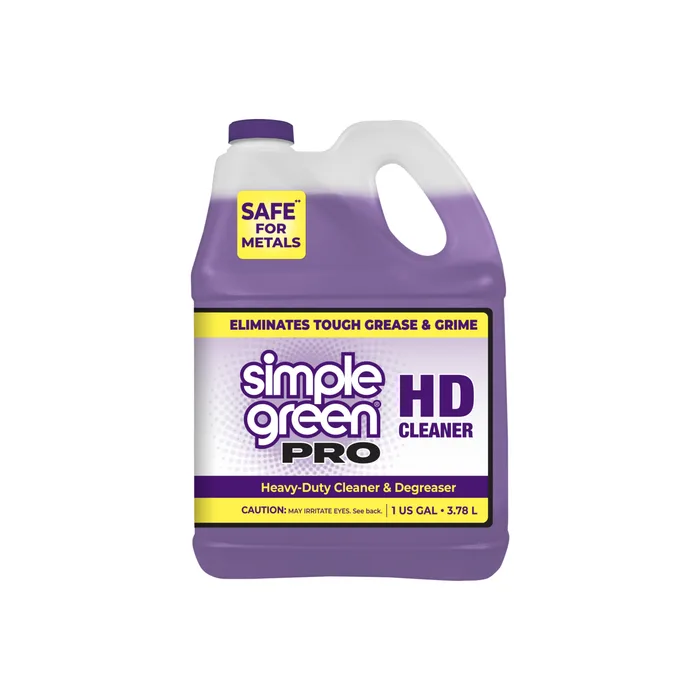
Simple Green Pro HD is the pick, because it is the one product here whose maker puts the metal claim in writing: optimized for use on metals, non-degrading to plastics, works on aluminum, stainless steel and chrome, with printed dilutions of 1:3, 1:5 and 1:10. Oil Eater Cleaner & Degreaser Original Formula is the value pick, a water-based concentrate that the maker says dilutes up to 30:1, though the SDS pH of 12.4 means gloves and a thorough rinse are not optional. Simple Green All-Purpose Cleaner suits the person doing light, regular engine bay maintenance and wanting an EPA Safer Choice product, but Simple Green's own FAQ caps contact on unprotected aluminium at 10 minutes. Gunk Original Engine Degreaser is the one to skip: its SDS lists 60 to 70 percent aliphatic petroleum distillate plus 20 to 30 percent kerosene, classified as an extremely flammable aerosol, a category 1 aspiration hazard and a category 2 suspected carcinogen. It works, and the plain version is not even sold in California. Whatever you buy, cover the alternator, distributor and air intake before you rinse, and think about where the runoff lands. Best for: anyone who wants a clean engine bay without dulling the aluminium or sending kerosene down a storm drain.
Our picks at a glance
- Simple Green Pro HD Heavy-Duty Cleaner - Buy. A water-based alkaline concentrate built around silicate and phosphate builders rather than caustic soda, which is why the maker will say it works on aluminium.
- Oil Eater Cleaner & Degreaser Original Formula - Buy. A silicate-built water-based concentrate that dilutes hard, cleans hard, and is strongly alkaline enough that you should treat the undiluted jug with respect.
- Simple Green All-Purpose Cleaner - It depends. The green bottle half the garages in the country already own, genuinely fine for light engine bay upkeep and genuinely outgunned by heavy grease.
- Gunk Original Engine Degreaser - Skip. A kerosene and petroleum distillate aerosol that absolutely dissolves old grease, and carries the hazard profile you would expect from that description.
The verdict in 30 seconds
What mattered most
- Chemistry family
- pH on the maker's SDS
- Form
- Maker's engine dilution
- Dwell time the maker states
- What the maker says about aluminium
Engine degreaser is one of the few product categories where the marketing copy and the safety data sheet tell noticeably different stories. Every bottle says it cuts grease. What separates them is which chemical family they belong to, because that decides whether the stuff eats baked-on oil, whether it can sit on an aluminium casting without dulling it, and where the runoff is allowed to go. So we read the SDS and the maker's own directions for each product instead of the label. Four made the cut: two water-based concentrates worth buying, one mild all-purpose cleaner that suits a specific buyer, and one very effective solvent aerosol that most people should leave on the shelf.
A water-based alkaline concentrate built around silicate and phosphate builders rather than caustic soda, which is why the maker will say it works on aluminium.
Best for: The person cleaning a modern engine bay full of aluminium castings and plastic covers who wants a written metal claim rather than a vague one.
- Simple Green states it is optimized for use on metals and works on aluminum, stainless steel and chrome.
- Printed dilution ladder of 1:3 heavy, 1:5 medium and 1:10 light means one jug covers light wipedowns and serious grease.
- No sodium hydroxide on the ingredient list; the alkalinity comes from triethanolamine, tetrapotassium pyrophosphate and potassium silicate.
- The non-corrosive claim comes with conditions attached: do not dilute beyond 1:10, do not exceed 109F, do not let it dry on the surface.
- Classified as an eye irritant 2B on the SDS, so eye protection is sensible.
- The SDS restricts use to rinseable surfaces, so it is a hose-and-bucket job rather than a wipe-and-walk-away one.
- Needs agitation and dwell time on properly baked-on grease; it is not a solvent.
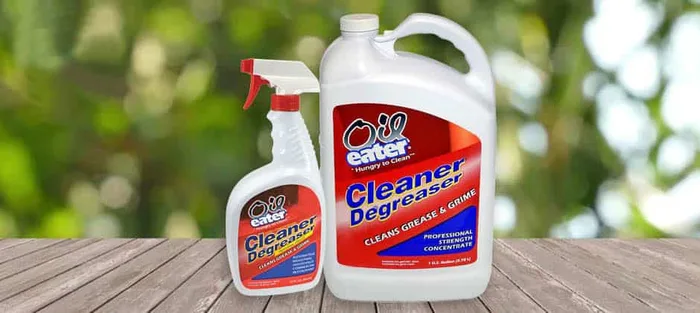
A silicate-built water-based concentrate that dilutes hard, cleans hard, and is strongly alkaline enough that you should treat the undiluted jug with respect.
Best for: Someone who degreases more than one engine, mower or parts tray a year and would rather buy concentrate than pay to ship water.
- The maker's page describes it as a highly concentrated formula that dilutes up to 30:1, so a single jug goes a long way.
- Ingredient list on the SDS is short: sodium metasilicate, 2-butoxyethanol and a linear alcohol ethoxylate, each under 5 percent.
- Listed by the maker as water-based, biodegradable, low VOC and meeting Boeing D6-17487 rev. p.
- SDS pH is 12.4 in the concentrate, which is a strong alkali and needs gloves.
- Classified skin irritant category 2 on the safety data sheet.
- The maker gives no engine-specific dwell time, so you are judging it by eye.
- At pH 12.4 it deserves a spot test on any surface you have not cleaned before, which is more homework than a ready-to-use spray.
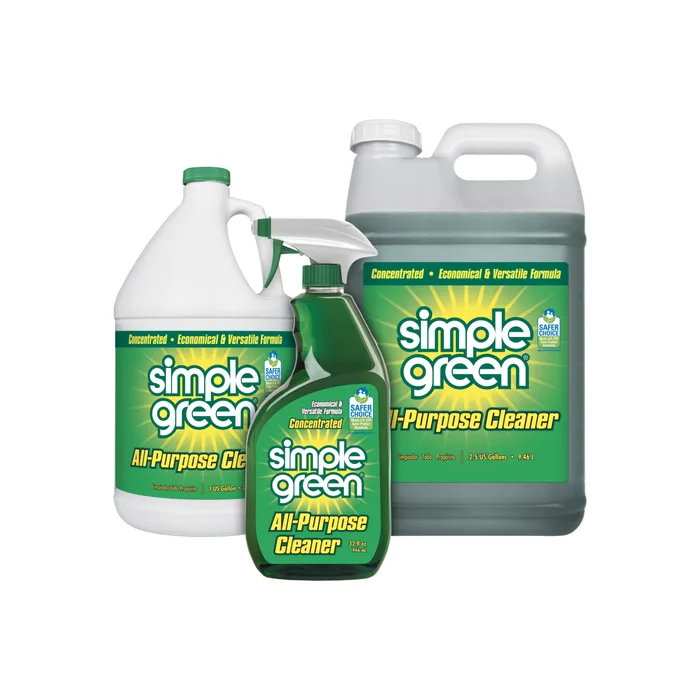
The green bottle half the garages in the country already own, genuinely fine for light engine bay upkeep and genuinely outgunned by heavy grease.
Best for: The owner of a tidy, regularly cleaned engine bay who wants one bottle for the whole garage and cares about the Safer Choice label.
- EPA Safer Choice certified and not classified as hazardous under the OSHA hazard communication standard.
- Mild by degreaser standards at pH 8.0 to 10.0, and it dilutes from full strength down to 1:30.
- Simple Green publishes a step-by-step engine bay procedure for it, including a 3 to 5 minute dwell.
- Simple Green's own FAQ says contact times on unprotected aluminium should never exceed 10 minutes and that the alkalinity can accelerate corrosion.
- The same FAQ steers anyone wanting a metal-safe formula toward Pro HD or the aircraft cleaner instead.
- It is an all-purpose cleaner, so years of baked-on grease will need repeat passes and a lot of brushing.
- No engine-specific dilution is given, only the general heavy, medium and light ratios.
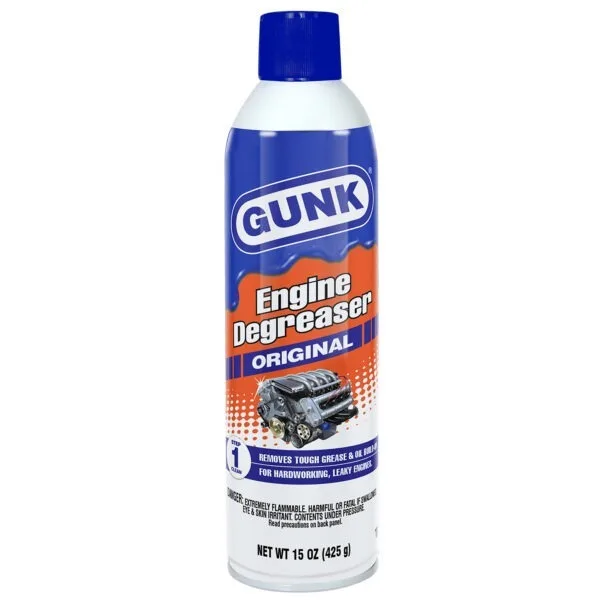
A kerosene and petroleum distillate aerosol that absolutely dissolves old grease, and carries the hazard profile you would expect from that description.
Best for: A neglected outdoor machine where nothing water-based has touched the grease and the runoff can be properly contained, which is a narrower case than the shelf placement suggests.
- Spray on, wait 10 to 15 minutes, hose off; the maker's directions really are that simple.
- Solvent chemistry dissolves hardened, baked-on oil that water-based cleaners have to work at.
- Rinses clean with water despite being solvent based.
- SDS composition is 60 to 70 percent aliphatic petroleum distillate and 20 to 30 percent kerosene, with naphthalene and tert-butylbenzene also listed.
- Classified as an extremely flammable aerosol, a category 1 aspiration hazard and a category 2 suspected carcinogen, with a 136F flash point.
- The standard EB1 is marked not for sale in California; Gunk sells a separate EB1CA version there.
- The SDS ecotoxicity table lists naphthalene at an LC50 of 1.11 to 1.68 mg/l for pink salmon over 96 hours, and all of it ends up in the runoff.
| Criteria | Pro HD Heavy-Duty Cleaner Top pick | Cleaner & Degreaser Original Formula | All-Purpose Cleaner | Original Engine Degreaser |
|---|---|---|---|---|
| Verdict | Buy it | Buy it | It depends | Skip it |
| Best for | The person cleaning a modern engine bay full of aluminium castings and plastic covers who wants a written metal claim rather than a vague one. | Someone who degreases more than one engine, mower or parts tray a year and would rather buy concentrate than pay to ship water. | The owner of a tidy, regularly cleaned engine bay who wants one bottle for the whole garage and cares about the Safer Choice label. | A neglected outdoor machine where nothing water-based has touched the grease and the runoff can be properly contained, which is a narrower case than the shelf placement suggests. |
| Price tier | $$ · mid-range | $ · budget | $ · budget | $ · budget |
| Chemistry family | Water-based alkaline, builder chemistry | Water-based alkaline, silicate built | Water-based, mildly alkaline surfactant | Solvent, petroleum distillate aerosol |
| pH on the maker's SDS | 10 to 11.5 | 12.4 | 8.0 to 10.0 | Not available, non-aqueous |
| Form | Concentrate | Concentrate | Concentrate | Ready to use aerosol |
| Maker's engine dilution | 1:3 for heavy cleaning | Highly concentrated, dilutes up to 30:1 | Full strength to 1:1 heavy duty | None, spray as supplied |
| Dwell time the maker states | Several minutes, do not let it dry | Not stated for engines | 3 to 5 minutes | 10 to 15 minutes |
| What the maker says about aluminium | Works on aluminum, stainless steel and chrome | SDS lists corrosivity as non-corrosive | Never more than 10 minutes on unprotected aluminium | Not addressed |
| GHS classification on the SDS | Eye irritant 2B | Skin irritant category 2 | Not hazardous under OSHA HCS | Flammable aerosol 1, aspiration 1, carcinogen 2 |
| Sold in California | Yes | Yes | Yes | Separate EB1CA version required |
Which one is right for you?
- The person cleaning a modern engine bay full of aluminium castings and plastic covers who wants a written metal claim rather than a vague one. Buy it Simple Green Pro HD Heavy-Duty Cleaner
- Someone who degreases more than one engine, mower or parts tray a year and would rather buy concentrate than pay to ship water. Buy it Oil Eater Cleaner & Degreaser Original Formula
- The owner of a tidy, regularly cleaned engine bay who wants one bottle for the whole garage and cares about the Safer Choice label. It depends Simple Green All-Purpose Cleaner
- A neglected outdoor machine where nothing water-based has touched the grease and the runoff can be properly contained, which is a narrower case than the shelf placement suggests. Skip it Gunk Original Engine Degreaser
How we judged the field
Five things decide whether an engine degreaser is the right one for your engine bay. First, chemistry family, because solvent, caustic and water-based surfactant products behave completely differently on rubber, plastic and bare metal. Second, pH, which is printed on every safety data sheet and tells you more about aluminium risk than any label claim. Third, whether it is a concentrate and what dilution the maker actually specifies for engines, because that is the real cost and the real strength. Fourth, dwell time, since water-based cleaners need minutes of contact to work and none of them should be allowed to dry on hot metal. Fifth, what the manufacturer will commit to in writing about aluminium and painted surfaces, as opposed to the word ‘safe’ printed on the front of the bottle.
The field splits neatly into three chemistries. Solvent degreasers run on petroleum distillates and kerosene, dissolve grease fastest, and bring flammability, aspiration and carcinogenicity classifications with them. Caustic products lean on sodium hydroxide, strip well and can darken or etch aluminium. Water-based cleaners use builders and surfactants, need dwell time and agitation, and are the only family whose makers routinely put an aluminium claim in print. We picked four that let you see the whole spread: two water-based concentrates from opposite ends of the alkalinity range, one mild all-purpose cleaner that a lot of people already reach for, and the best-selling solvent aerosol so you can see exactly what you would be trading away.
Simple Green Pro HD Heavy-Duty Cleaner
Buy itPro HD is the bottle that most closely matches what an engine bay actually contains. Its safety data sheet puts it at pH 10 to 11.5 and lists the working ingredients as triethanolamine, a proprietary surfactant, propylene glycol butyl ether, tetrapotassium pyrophosphate and potassium silicate. There is no sodium hydroxide on that list, and that is the difference between a builder-based alkaline cleaner and a caustic one. Simple Green states on the product page that it is optimized for use on metals, non-degrading to plastics, and works on aluminum, stainless steel, chrome and other metals. The dilution ladder is printed alongside: 1:3 for heavy cleaning, 1:5 medium, 1:10 light. The catch sits in the same paragraph, in the form of conditions on the non-corrosive claim: do not dilute beyond 1:10, do not exceed 109F, and do not allow the solution to dry on the surface. Honour those and you have a straightforward, rinse-clean concentrate. For anyone facing aluminium castings and plastic covers, this is where to start.
Oil Eater Cleaner & Degreaser Original Formula
Buy itOil Eater earns the value slot on arithmetic. It is a concentrate, and the maker’s page says it dilutes up to 30:1, so one jug stretches across a lot of jobs. The SDS ingredient list is short: sodium metasilicate as the builder, 2-butoxyethanol as the solvent and a linear alcohol ethoxylate for detergency, each under 5 percent. Kafko describes it as water-based, biodegradable, low VOC and meeting Boeing D6-17487 rev. p. The number that matters is on the safety data sheet: pH 12.4 undiluted, with a skin irritant category 2 classification, even though the same sheet lists corrosivity as non-corrosive. That is a genuinely strong alkali in the jug, so wear gloves, dilute it as directed and rinse thoroughly rather than letting it linger on bare aluminium. Best for the person who cleans more than one greasy thing a year.
Simple Green All-Purpose Cleaner
It dependsThis is the green bottle a lot of people already have on the shelf, and for a specific job it is the right answer. Simple Green publishes an engine bay procedure for it: cool engine, cover the alternator, distributor and air intake with plastic bags and tape, apply, let it sit 3 to 5 minutes, agitate with a non-metallic brush, rinse and dry. The safety data sheet puts it at pH 8.0 to 10.0 and does not classify it as hazardous under the OSHA hazard communication standard, and the label carries EPA Safer Choice certification. Where it runs out of road is heavy, baked-on grease, because it is fundamentally an all-purpose cleaner. Simple Green’s own FAQ also draws a hard line on metal: aluminium is soft, the alkalinity can accelerate corrosion, contact on unprotected aluminium should never exceed 10 minutes, and rinsing must be extremely thorough. That FAQ then points you at Pro HD. Right for light regular upkeep, wrong for a decade of grime.
Gunk Original Engine Degreaser
Skip itGunk calls this its number one best selling formula, and it does work: spray, wait 10 to 15 minutes, hose it off. The safety data sheet explains why, and also why we would leave it alone. The composition is 60 to 70 percent aliphatic petroleum distillate and 20 to 30 percent kerosene, with heavy aromatic hydrocarbons, tert-butylbenzene and naphthalene making up much of the remainder, a flash point of 136F and, in the sheet’s own words, a diesel fuel odour. Blaster classifies it as an extremely flammable aerosol, a category 1 aspiration hazard, a category 2 suspected carcinogen and a category 2 hazard for organ damage through repeated exposure. The plain EB1 is marked not for sale in California, with a separate EB1CA version sold there instead. The ecotoxicity table lists naphthalene at an LC50 of 1.11 to 1.68 mg/l for pink salmon over 96 hours, and every bit of that leaves your engine in the rinse water. Skip it unless nothing else has worked.
Sources
Specs in this review come from these pages.
- Simple Green Pro HD Cleaner Safety Data Sheet, Sunshine Makers Inc. (cdn.simplegreen.com)
- Simple Green FAQs, including the aluminium contact time guidance (simplegreen.com)
- Oil Eater Cleaner & Degreaser Original Safety Data Sheet, Kafko International (oileater.com)
- GUNK Engine Brite Heavy Duty Engine Degreaser Safety Data Sheet, Blaster LLC (gunk.com)
- US EPA, Nonpoint Source: Urban Areas (epa.gov)
- US EPA, Stormwater Discharges from Municipal Sources (epa.gov)
Simple Green Pro HD Heavy-Duty Cleaner vs Oil Eater Cleaner & Degreaser Original Formula: which should you buy?
Both picks are water-based concentrates and both will get an engine bay clean, so the choice comes down to how much chemistry management you want to do. Pro HD sits at pH 10 to 11.5 and comes with a written metal claim and a printed three-step dilution ladder, which means you can follow the label and stop thinking. Oil Eater sits at pH 12.4 in the jug, dilutes further and covers more jobs per container, but it hands you more responsibility: gloves, a spot test on any surface you have not cleaned before, and a rinse thorough enough that nothing feels slippery afterwards.
Choose Pro HD if the engine bay is modern, full of exposed aluminium and plastic covers, and you would rather buy the safer default than manage dilution ratios. Choose Oil Eater if you are cleaning several things regularly, you already work in gloves, and you want the concentrate that goes furthest, particularly if a pressure washer is involved and you will be thinning it a long way anyway. Neither is a solvent, so both want a few minutes of dwell and a brush on anything genuinely baked on.
What to look for
- Read the SDS, not the front label: the pH, the GHS classification and the ingredient list are all on a document the maker has to publish, and they tell you more in thirty seconds than the marketing copy does.
- Know which family you are buying: solvent products run on petroleum distillates, caustic ones on sodium hydroxide, and water-based ones on builders and surfactants, and only the last group routinely commits to an aluminium claim in writing.
- Check the dilution, not the bottle size: a concentrate that the maker dilutes heavily covers far more work than a ready-to-use spray, which is mostly water you are paying to transport.
- Look for a stated dwell time: water-based cleaners need contact time to work, typically several minutes, and every maker here warns against letting the solution dry on the surface.
- Treat ‘safe on everything’ as a red flag: the manufacturers with the most credible chemistry are the ones who publish limits, like a maximum contact time on unprotected aluminium or a maximum working temperature.
- Plan the runoff before you plan the spray: the EPA counts oil and grease from motor vehicles among urban runoff pollutants, and washing on grass or gravel rather than a driveway that drains to the street is the simple fix.
Our final take
Engine degreaser is a category where the safety data sheet is the review. Simple Green Pro HD wins because its maker is willing to be specific in public: metals it works on, plastics it does not degrade, three dilution ratios, and a set of named conditions on the non-corrosive claim. Oil Eater gets you most of the same result from a concentrate that stretches further, as long as you treat pH 12.4 with the gloves it deserves. Simple Green All-Purpose is a fine light-duty choice and a poor heavy-duty one, and its own maker will tell you so. Gunk Original works, and its ingredient list is the reason to leave it there. Cover the alternator and intake, keep contact short, and rinse somewhere the runoff can soak away.
Questions, answered
Do I really have to cover things before I spray?
Yes, and the manufacturers say so themselves. Simple Green's engine cleaning guide tells you to cover the alternator, distributor and air intake system with plastic bags and tape, and to disconnect and remove the battery if you can. The logic is not that degreaser is uniquely corrosive, it is that you are about to point a hose at electrical connections and an air path into the engine. The same guide warns against spraying a hot engine with water at all, because the thermal shock can warp or crack components. Let it cool to the touch, bag the vulnerable parts, then work.
Will engine degreaser damage aluminium?
It depends entirely on which bottle you picked and how long you leave it. Simple Green's own FAQ is unusually candid here: aluminium is a soft metal that corrodes with unprotected exposure to water, and the aqueous base and alkalinity of their All-Purpose Cleaner can accelerate that process, so contact time on unprotected or unpainted aluminium should never exceed 10 minutes. They also recommend rinsing extremely thoroughly and flushing out cracks and crevices. Products built for the job say something different: Simple Green states Pro HD works on aluminum, stainless steel and chrome, and Oil Eater's SDS lists corrosivity as non-corrosive. The practical rule across all of them is short contact, generous rinse, and never let the solution dry on the metal.
Where is it legal to rinse all this off?
That is a real question with local answers, so check your city or state rules rather than guessing. The EPA lists oil, grease and toxic chemicals from motor vehicles among the pollutants that urban runoff carries into waterways, and its municipal stormwater programme exists specifically to stop harmful pollutants being washed or dumped into storm sewer systems. Washington State's Department of Ecology puts the practical version plainly: stormwater is not always treated even when it flows into street drains, and its advice is to wash vehicles on lawn or gravel or use a commercial car wash. Rinsing an engine bay on a driveway that drains to the street is the case those rules are aimed at. Grass, gravel, or a wash bay that drains to sewer is the safer default.
Solvent or water-based, which one actually cleans better?
Solvent wins on raw speed against hardened, baked-on oil, because it dissolves grease rather than lifting it with surfactants. Gunk's Original Engine Degreaser is a clear example: 60 to 70 percent aliphatic petroleum distillate and 20 to 30 percent kerosene, spray on and hose off after 10 to 15 minutes. The trade is everything else. That same SDS carries an extremely flammable aerosol classification, a category 1 aspiration hazard, a suspected carcinogen listing and a 136F flash point, and the plain version is not sold in California. Water-based alkaline cleaners need dwell time and a brush, but they rinse into a far less alarming puddle and are gentler on the rubber and plastic that fills a modern engine bay.
Can I use a pressure washer on an engine bay?
Carefully, at low pressure, and not aimed at connectors. Simple Green's engine guide describes pouring the cleaner into a pressure washer detergent tank, applying it as a low-pressure spray, letting it penetrate for 3 to 5 minutes, then rinsing at higher pressure while keeping a safe distance from sensitive components. Oil Eater is a concentrate that the maker says dilutes up to 30:1, so follow the label dilution for a pressure washer. The failure mode is not the chemical, it is forcing water past a seal or into a connector that was never designed for it. Dry everything afterwards with a towel or compressed air.
Deciding between the top two? See our head-to-head: Simple Green Pro HD Heavy-Duty Cleaner vs Oil Eater Cleaner & Degreaser Original Formula.
More Automotive reviews
 The Best Home EV Chargers: 4 Compared (and One to Skip)
  The Best Floor Jacks: 4 Compared (and One to Skip)
  The Best All-Weather Car Floor Mats: 4 Compared (and One to Skip)
  The Best Foam Cannons: 4 Compared (and One to Skip)
  The Best Fuel Injector Cleaners: 4 Compared (and One to Skip)
  The Best Garage Floor Mats: 4 Compared (and One to Skip)