

Pets
The Best Dog Seat Belts and Car Harnesses: 4 Compared (and One to Skip)
We compared four popular dog car restraints on one thing that is hard to fake: whether an independent lab has published a result for them. Certification status, attachment method, sizing and hardware are all here.
The short version
The Sleepypod Clickit Sport Plus is the pick for most people: it holds a 5 star Center for Pet Safety rating under protocol CPS-001-014.01, the vehicle seat belt threads through the harness itself at three points, and Sleepypod says it can double as a walking harness. The Saker Bomber Harness is the premium choice and the one to buy if the same harness has to work on the trail, with machined aluminum hardware and its own CPS 5 star rating. The Ruffwear Load Up is a genuine "depends": Ruffwear publishes a real FMVSS 213 sled test at MGA Research using 25, 45 and 75 pound mannequins, and also states plainly that the harness would not meet CPS excursion limits because the belt attachment sits lower on the back. Skip the PetSafe Safety Seatbelt Tether and every product like it, because an extension tether lets a dog travel forward before anything stops it and CPS specifically advises against tethers and zipline devices. A properly secured crate is the other legitimate answer, and CPS certifies several. Whatever you buy, attach it to a harness rather than a collar and put the dog in the back seat. Best for: owners who want a restraint whose test result they can actually look up.
Our picks at a glance
- Sleepypod Clickit Sport Plus - Buy. The certified harness that most owners should default to, with the vehicle belt running through the harness at three points.
- Saker Bomber Harness - Buy. A CPS certified harness built to work as trail gear too, with machined aluminum hardware instead of plastic.
- Ruffwear Load Up Harness - It depends. Honest, well documented maker testing and unusually good size coverage, but Ruffwear says outright that it would not pass CPS certification.
- PetSafe Safety Seatbelt Tether - Skip. A cheap, useful anti-distraction strap that shoppers keep buying as a crash restraint, which it does not claim to be.
The verdict in 30 seconds
What mattered most
- CPS certification
- CPS test record
- Maker's own crash testing
- How it attaches
- Dog weight covered
- Sizes and fit
Almost every dog car harness on the market says "crash tested" somewhere on the box. Very few can point to an independent organization that ran the test, published the protocol, and put the product on a list you can check yourself. The Center for Pet Safety, a nonprofit that tests to its own published protocol, is one of the few bodies doing that in the US, and its certified harness list is short. We picked four restraints that show the full spread: two with current CPS certification, one whose maker publishes its own detailed crash testing and is candid about not being certified, and one hugely popular product that is not a crash restraint at all.
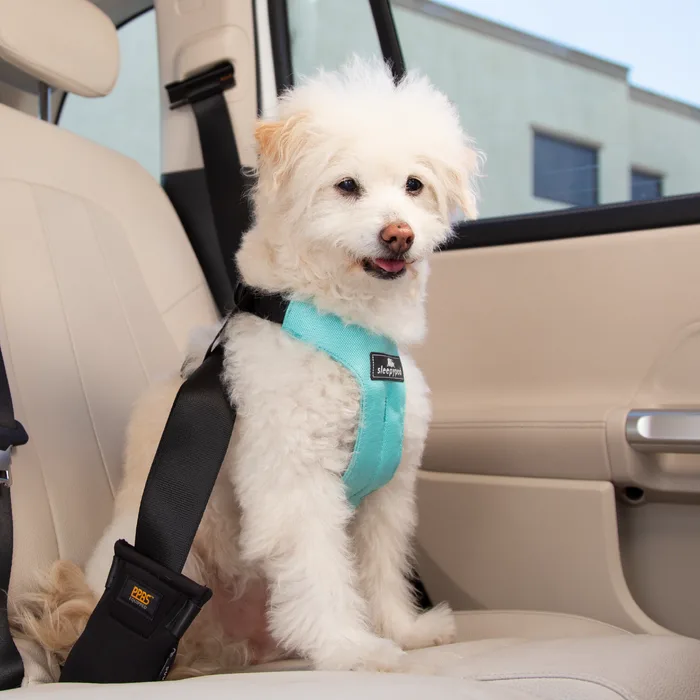
The certified harness that most owners should default to, with the vehicle belt running through the harness at three points.
Best for: Owners of a 25 to 90 pound dog who want a certified restraint they can also walk the dog in.
- Listed as CPS Certified with a 5 star rating under protocol CPS-001-014.01.
- Sleepypod's CPS ratings cover the small size to 25 lb and the medium, large and X-large to 90 lb.
- Sleepypod states it can be used as a walking harness outside the car, so it is not dead weight between trips.
- The certification test on record for the Clickit Sport dates to July 2014, older than Sleepypod's newer Clickit Range result.
- Padded vest construction is warm and bulky compared with a strap harness.
- Sizing is by chest fit, so deep-chested and barrel-chested dogs can fall between sizes.
- Costs several times what a supermarket harness costs, and the difference is invisible until a crash.
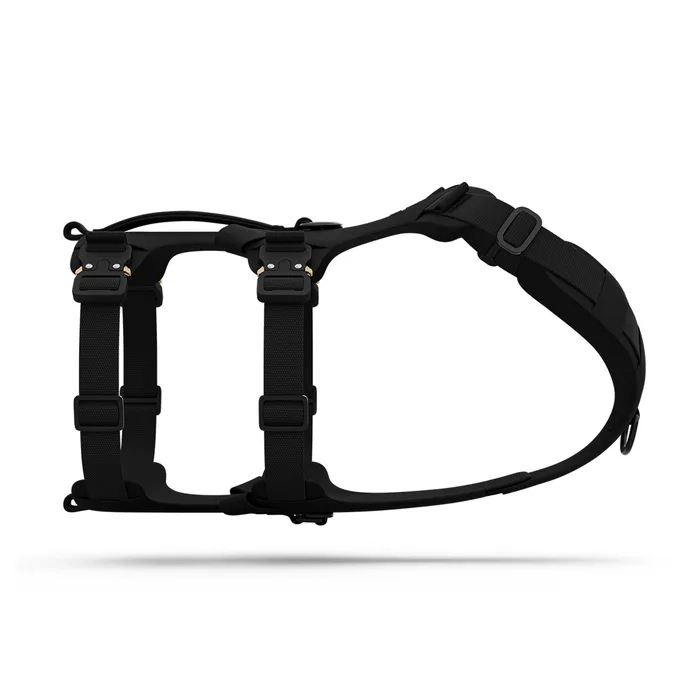
A CPS certified harness built to work as trail gear too, with machined aluminum hardware instead of plastic.
Best for: People who hike or travel with their dog and want one certified harness that does both jobs.
- Listed as CPS Certified with a 5 star rating, test protocol CPS-001-014.01, tested November 2022.
- Hardware is 7075 CNC machined aluminum buckles rated to a 1,311 lb load with a 6061 aluminum D-ring.
- A neck buckle opens wide so the harness does not go over the dog's head, and the seat belt passes through the top handle.
- The most expensive harness here.
- Saker's own listing cites FMVSS 213 crash conditions and a 3,000 lb force figure without publishing the full test report.
- Heavier than a car-only harness, from about 18.7 oz in XS to 25.9 oz in L.
- Fitting takes patience because the chest pad and both strap rows adjust separately.
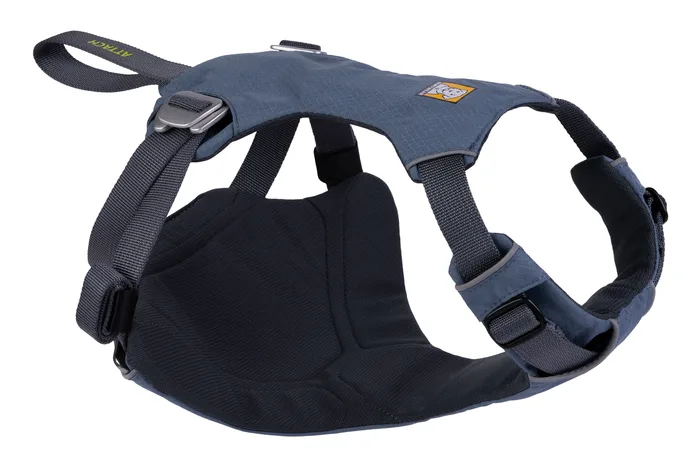
Honest, well documented maker testing and unusually good size coverage, but Ruffwear says outright that it would not pass CPS certification.
Best for: Owners of a very small or very broad dog who cannot get a good fit in a certified harness and want documented testing anyway.
- Ruffwear publishes the detail most brands hide: FMVSS 213 sled tests at MGA Research Corporation on a 30 mph frontal crash pulse with 25, 45 and 75 pound dog mannequins.
- Size range runs from a 13 inch girth in XXS up to a 42 inch girth in L/XL, which covers dogs the certified harnesses may not fit.
- Forged anodized 6061 aluminum slide buckles and a padded 300D polyester ripstop shell.
- Not CPS Certified, and Ruffwear states the design would not meet CPS's current excursion measurement limits because the belt attachment point sits lower on the dog's back.
- Vehicle use only, with no leash attachment, so you still need a walking harness.
- Ruffwear publishes no per-size dog weight limit.
- You are trusting a manufacturer's own test rather than an independent one.
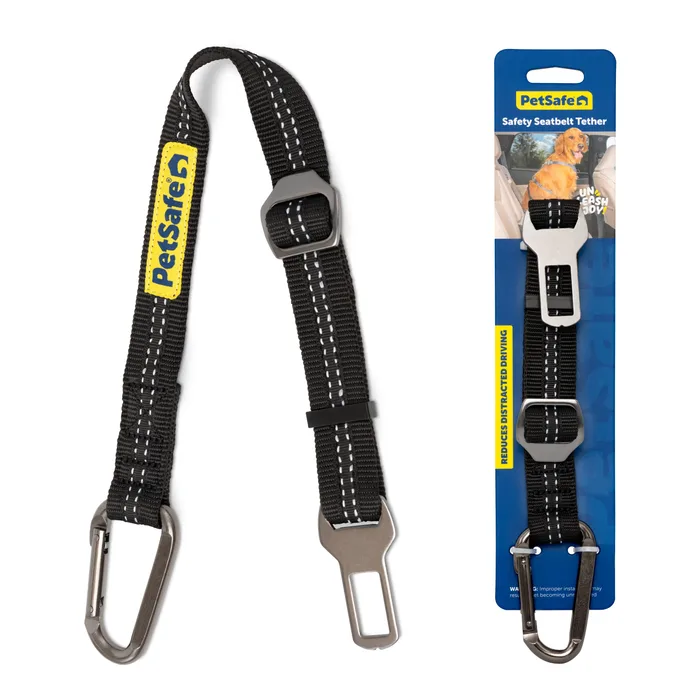
A cheap, useful anti-distraction strap that shoppers keep buying as a crash restraint, which it does not claim to be.
Best for: Someone who just wants to stop a calm dog wandering into the front footwell on short errands and understands it is not crash protection.
- Cheap, simple, and it clicks straight into the seat belt buckle receptacle.
- The nylon strap adjusts from 15 to 22 inches and the carabiner works with any pet harness.
- A stainless steel carabiner rather than a plastic clip.
- PetSafe publishes no crash test claim for it, and the packaging sells it on reducing distracted driving.
- It is an extension tether, and CPS advises against extension tethers and zipline devices and excludes brands selling them from its certification program.
- Even at its shortest setting it leaves slack, so a dog moves before anything restrains it.
- The 725 lb figure is a hardware load rating, not a crash result, and buyers routinely read it as one.
| Criteria | Clickit Sport Plus Top pick | Bomber Harness | Load Up Harness | Safety Seatbelt Tether |
|---|---|---|---|---|
| Verdict | Buy it | Buy it | It depends | Skip it |
| Best for | Owners of a 25 to 90 pound dog who want a certified restraint they can also walk the dog in. | People who hike or travel with their dog and want one certified harness that does both jobs. | Owners of a very small or very broad dog who cannot get a good fit in a certified harness and want documented testing anyway. | Someone who just wants to stop a calm dog wandering into the front footwell on short errands and understands it is not crash protection. |
| Price tier | $$ · mid-range | $$$ · premium | $$ · mid-range | $ · budget |
| CPS certification | CPS Certified, 5 star, protocol CPS-001-014.01 | CPS Certified, 5 star, protocol CPS-001-014.01 | Not certified; maker says it would not meet CPS excursion limits | Not certified; CPS excludes extension tether brands |
| CPS test record | Tested July 2014, video evidence on file | Tested November 2022, 75 lb test dog | No CPS test | No CPS test |
| Maker's own crash testing | States testing at US, Canadian and EU child safety standards | States FMVSS 213 crash conditions, 3,000 lb force | FMVSS 213 sled test at MGA Research, 30 mph, 25/45/75 lb mannequins | None published |
| How it attaches | Vehicle seat belt runs through the harness, three points of contact | Seat belt passes through the top handle | Seat belt threads through a universal loop on the back | Clips into the seat belt buckle, carabiner to a harness |
| Dog weight covered | S rated to 25 lb, M/L/XL up to 90 lb per CPS | CPS test dog 75 lb; sizes XS to L | No stated weight limit; mannequins to 75 lb | No crash rating; 725 lb load rating only |
| Sizes and fit | S, M, L, XL | XS to L, girth 13 to 45.3 in | XXS to L/XL, girth 13 to 42 in | One size, strap adjusts 15 to 22 in |
| Also a walking harness | Yes, per Sleepypod | Yes, built as trail gear too | No, vehicle use only | Not a harness; you supply one |
| Hardware and extras | Padded vest, Infinity Loop webbing, S-Clip and Buckle Shield included | 7075 aluminum buckles, 6061 aluminum D-ring, modular add-ons | Forged anodized 6061 aluminum slide buckles, 300D ripstop shell | Stainless steel carabiner, clicks into the seat belt buckle |
Which one is right for you?
- Owners of a 25 to 90 pound dog who want a certified restraint they can also walk the dog in. Buy it Sleepypod Clickit Sport Plus
- People who hike or travel with their dog and want one certified harness that does both jobs. Buy it Saker Bomber Harness
- Owners of a very small or very broad dog who cannot get a good fit in a certified harness and want documented testing anyway. It depends Ruffwear Load Up Harness
- Someone who just wants to stop a calm dog wandering into the front footwell on short errands and understands it is not crash protection. Skip it PetSafe Safety Seatbelt Tether
How we judged the field
Five things decide whether a dog car restraint is worth anything. First, independent certification: the Center for Pet Safety is a 501(c)(3) that tests to its own published protocol, CPS-001-014.01, and publishes a list of certified products with test dates and test numbers. Second, what the maker’s own testing actually says, since “crash tested” is a phrase anyone can print but a named standard, lab and dummy weight is a claim you can check. Third, how the restraint connects to the car, because a harness the seat belt threads through behaves very differently from a strap that adds length between the dog and the belt. Fourth, fit, since certification applies to specific sizes and a harness that does not fit is not the product that was tested. Fifth, hardware and stitching, which is where cheap products fail first.
The field splits cleanly. On one side sit the handful of harnesses CPS currently lists as certified, which is why two of our four are on that list. In the middle sits a small group of brands who run real sled tests and publish the parameters without seeking certification, and Ruffwear is the most transparent of them because it says in writing why the Load Up would not meet CPS excursion limits. On the far side sits the biggest chunk of the market by unit sales: tethers, ziplines and elastic straps sold under safety branding that make no crash claim at all. We picked one of each, plus the tether most people actually put in their cart, so you can see what the differences cost and what they buy you.
Sleepypod Clickit Sport Plus
Buy itThe Clickit Sport Plus is the version of Sleepypod’s Clickit Sport currently on sale, and it is the harness on the CPS certified list with a 5 star rating under protocol CPS-001-014.01, tested July 2014 with video evidence on file. Sleepypod’s ratings run to 25 pounds in small and up to 90 pounds in medium, large and X-large. What makes it work in practice is the connection: the vehicle belt runs through the harness itself at three points of contact, so there is no extra strap adding length and nothing to forget. It is built around a broad padded vest with Sleepypod’s Infinity Loop webbing, and Sleepypod says it can be used as a walking harness, which matters because a restraint that lives in the car is one you eventually stop using. The trade-offs are real: the vest is warm and bulky, fit is fussy on deep or barrel chests, and the certification test on record is older than Sleepypod’s newer Clickit Range result. For a dog between 25 and 90 pounds, it is still the easiest good decision here.
Saker Bomber Harness
Buy itSaker’s Bomber Harness is the outdoor-gear answer to the same problem, and it holds its own CPS certification: 5 star, protocol CPS-001-014.01, tested November 2022 with a 75 pound test dog. In the car, the seat belt passes directly through the harness’s reinforced top handle, and the page describes it as crash-tested to FMVSS 213 conditions. The hardware is the reason to pay the premium: 7075 CNC machined aluminum buckles rated to a 1,311 pound load, a 6061 aluminum D-ring, and a neck buckle that opens wide so nothing goes over the dog’s head. Leash attachments and modular add-ons mean it works as a genuine trail harness rather than a car harness with a leash ring bolted on. The costs are weight, from roughly 18.7 ounces in XS to 25.9 ounces in L, a fitting process that takes a few sessions, and a premium price. Saker cites FMVSS 213 crash conditions and a 3,000 pound force figure without publishing the underlying report, so lean on the CPS listing instead. Buy it if one harness has to do both jobs.
Ruffwear Load Up Harness
It dependsThe Load Up is the most honest non-certified product in this category, and that honesty is exactly why it lands as a “depends”. Ruffwear publishes what its testing was: FMVSS 213 sled tests at MGA Research Corporation on a 30 mph generic frontal crash pulse, with 25, 45 and 75 pound dog mannequins, and it reports that the mannequin stayed upright and on the seat in all three. It also states that the harness has not been tested against the CPS harness protocol and would not meet CPS’s current excursion limits, because Ruffwear deliberately placed the belt attachment lower on the dog’s back for comfort. That is a design choice, disclosed, and you can decide what you think of it. Practically, the draw is fit: girth coverage runs from 13 inches in XXS to 42 inches in L/XL, which reaches dogs the certified harnesses may not. It is car-only with no leash attachment, and Ruffwear publishes no per-size dog weight limit. Choose it when fit is the binding constraint.
PetSafe Safety Seatbelt Tether
Skip itThe PetSafe Safety Seatbelt Tether is a good product being bought for the wrong job. It is a nylon strap that adjusts from 15 to 22 inches with a stainless steel carabiner on one end and a seat belt attachment on the other, so it clicks into the buckle receptacle and clips to any pet harness. PetSafe sells it on reducing distracted driving, and the packaging says so, which is the accurate description of what it does. What it does not do is restrain a dog in a crash, and no crash test claim is made for it. The 725 pound figure is a hardware load rating, not a crash result. CPS is direct about this whole product class: it advises against extension tethers and zipline devices, describes the forward-then-snapback loading they allow, and excludes brands that sell them from its certification program. If you want to stop a settled dog wandering into the front footwell on a short errand, fine. If you think you are buying a seat belt for your dog, you are not.
Sources
Specs in this review come from these pages.
- Center for Pet Safety - CPS Certified product list (centerforpetsafety.org)
- Center for Pet Safety - 2013 Harness Crash Test Study Results (centerforpetsafety.org)
- Center for Pet Safety - Extension Tether Advisory (centerforpetsafety.org)
- Center for Pet Safety - Cargo Area Connection Advisory (centerforpetsafety.org)
- Ruffwear - Load Up Harness testing and design (ruffwear.com)
- Sleepypod - Clickit Sport Plus product page (sleepypod.com)
Sleepypod Clickit Sport Plus vs Saker Bomber Harness: which should you buy?
The Clickit Sport Plus and the Bomber Harness are both on the same CPS certified list with the same 5 star rating and the same protocol number, so the choice between them is not a safety argument. It is a use-case argument. Sleepypod’s is the car harness that can also walk the dog. Saker’s is the trail harness that is also certified for the car, and the difference shows up in the hardware, the leash attachments, the modular add-ons and the price. Sleepypod’s CPS ratings are published per size, to 25 pounds in small and up to 90 pounds in the three larger sizes, which is useful when you are matching a specific dog. Saker’s CPS record shows a single 75 pound test dog across a size range of XS to L.
Pick the Clickit Sport Plus if the car is the main event, if your dog is between 25 and 90 pounds, and if you want the cheaper of the two certified options. Pick the Bomber if you hike, if you dislike plastic hardware, if your dog hates things going over its head, or if you are consolidating gear rather than owning two harnesses. If your dog is over 90 pounds or has an unusual chest shape, look at Sleepypod’s newer Clickit Range instead, which Sleepypod says earned a 5 star CPS rating for dogs up to 110 pounds. And if none of the three fits, that is a genuine reason to look at a secured crate rather than to settle for a strap.
What to look for
- Certification you can look up: the phrase “crash tested” is unregulated, so check the CPS certified list yourself rather than trusting a badge on a product page.
- A named standard and a named lab: the honest non-certified brands tell you the standard (usually FMVSS 213, which is the child restraint standard), the test facility, the crash pulse and the dummy weights.
- Belt through the harness, not a strap in between: anything that adds length between the harness and the belt adds travel, and CPS advises against extension tethers and zipline devices outright.
- A harness connection, never a collar: load has to spread across the chest and torso, and any product that suggests clipping to a collar has told you something about itself.
- Size coverage that matches your actual dog: certification applies to the sizes that were tested, so measure girth and compare against published ranges rather than guessing from a weight bracket.
- Hardware and stitching you can inspect: metal buckles with published load ratings, bar-tacked webbing and a stated crash replacement policy all suggest a company that expects its product to be loaded once and retired.
Our final take
Buy the Sleepypod Clickit Sport Plus unless you have a specific reason not to. It is currently certified, it connects directly to the vehicle belt, and it is the cheaper of the two certified harnesses here. Step up to the Saker Bomber if you want machined aluminum hardware and a harness that works on the trail, or across to Sleepypod’s Clickit Range if your dog is bigger or oddly shaped. Take the Ruffwear Load Up when fit rules out the certified options and you would rather have documented testing than nothing. Leave the tether for what it is sold as, which is keeping a settled dog out of the front seat, and remember that a properly anchored, strength-rated crate is the other real answer.
Questions, answered
Does "crash tested" on the box mean the harness passed something?
Not by itself. There is no rule that says what a pet restraint has to survive, so a brand can run one test, at one speed, with one weight, and print the phrase whether or not the dog stayed on the seat. The useful version of that claim names the standard, the lab, the dummy weights and the result, the way Ruffwear does for the Load Up. The stronger version is independent certification, where an outside organization runs its own protocol and lists the product publicly. Center for Pet Safety certification is the one you can look up, and the harness list is currently short.
Is a crate safer than a harness?
A properly secured, strength-rated crate is a legitimate alternative and CPS certifies several travel crates, including Gunner and Lucky Duck kennels. The catch is that a crate only performs if it is anchored properly, and CPS warns that cargo area anchors are not always weight rated for the forces a crash generates. It advises checking with your vehicle manufacturer about anchor strength and using strength-rated anchor straps rather than tethers. Crates also demand cargo space, cost more, and are impractical in a sedan. For most owners with one dog and a back seat, a certified harness is the more realistic answer.
Can I clip a car restraint to my dog's collar?
No. Every restraint here connects to a harness that spreads load across the dog's chest and torso, and PetSafe's tether is explicitly sold to attach to a harness. A collar concentrates all the deceleration force on the neck. Sleepypod's design is built around a broad padded vest and multiple points of contact for the same reason. If a product suggests a collar connection, treat that as a signal about the whole product.
Where should the dog ride, and does the front seat matter?
CPS advises securing pets in the back seat. Front passenger airbags deploy fast and are calibrated for adult humans, not for a dog sitting close to the dash. The back seat also keeps the dog out of the driver's lap and pedals, which is the everyday risk that happens far more often than a crash. If your only option is a cargo area, read CPS's cargo area advisory first, because the anchors back there may not be rated for what you are asking of them.
Do I have to replace the harness after a crash?
Treat webbing and hardware the same way you would treat a child seat: once it has taken a real load, its condition is unknown from the outside. Sleepypod runs a crash replacement program for exactly this reason and lists the Clickit Sport and Clickit Range as eligible. Check whether your brand offers something similar before you buy, since it tells you how the company thinks about single-use loading. Also retire a harness whose stitching has pulled, whose buckle faces are gouged, or whose webbing has gone stiff or faded.
Deciding between the top two? See our head-to-head: Sleepypod Clickit Sport Plus vs Saker Bomber Harness.
More Pets reviews
 The Best Dog Shampoos: 4 Compared (and One to Skip)
  The Best Dog Training Collars: 4 Compared (and One to Skip)
  The Best Dog Winter Coats: 4 Compared (and One to Skip)
  The Best Elevated Dog Bowls: 4 Compared (and One to Skip)
  The Best Hamster and Small Animal Exercise Wheels: 4 Compared (and One to Skip)
  The Best Heated Pet Beds: 4 Compared (and One to Skip)