

Tools & DIY
The Best Cut-Resistant Gloves: 4 Compared (and One to Skip)
We compared four cut-resistant gloves on the numbers their makers actually publish: ANSI/ISEA 105 cut level, EN 388 code, knit gauge, coating, and whether puncture and needlestick are rated at all.
The short version
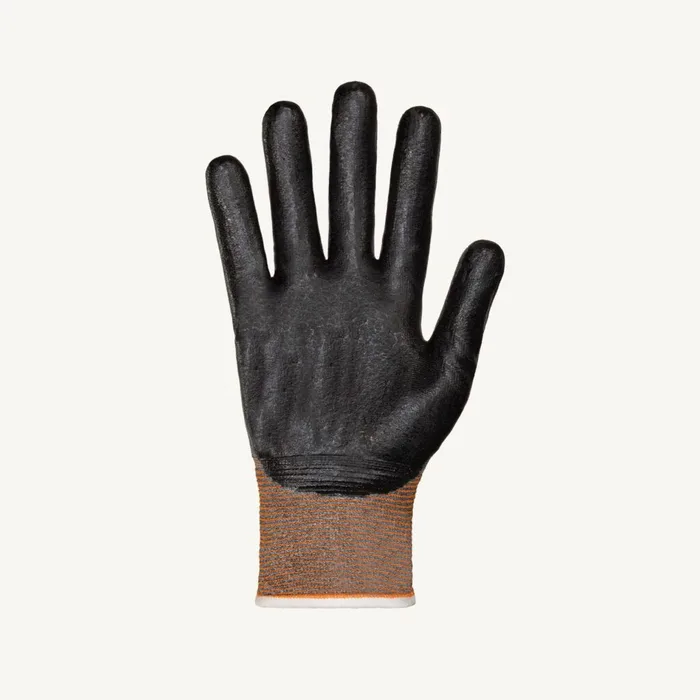
The Superior Glove Dexterity Pro S21TXUFN is our overall pick: a 21-gauge knit that Superior rates ANSI A9, the top of the American cut scale, in a glove thin enough for small-parts work and listed as food safe. The DEWALT DPG578 is the value pick, an A6 glove on the same 21-gauge construction with an EN 388 code of 3X41F, which is the same protection story told in newtons. The HexArmor PointGuard Ultra 9032 suits one specific buyer very well: anyone whose hazard is a hypodermic needle, because it carries an ANSI needlestick rating of 5 alongside cut A9, and almost no knit glove is rated for needles at all. Skip the NoCry CutGuard Pro Stainless Steel, whose own product page headlines "Certified Level 5 cut resistance" while the certificate block below it lists ANSI 105-2016 A2 and puts the only Level 5 next to EN 420 dexterity. Before you buy anything, find out which standard produced the number you are looking at, because level 5 in Europe and A5 in America are not the same claim. Best for: anyone who needs to compare cut gloves honestly instead of by the biggest number on the packaging.
Our picks at a glance
- Superior Glove Dexterity Pro S21TXUFN - Buy. A 21-gauge knit that Superior rates ANSI A9 for cut, which is the top of the American scale in a glove thin enough to pick up a washer.
- DEWALT DPG578 Foam Nitrile A6 Cut Resistant Glove - Buy. The same 21-gauge idea three cut levels down, and one of the few consumer gloves that prints both its ANSI and EN 388 ratings where you can read them.
- HexArmor PointGuard Ultra 9032 - It depends. One of the few gloves carrying a real needlestick rating, which matters enormously to a small group of buyers and not at all to everyone else.
- NoCry CutGuard Pro Stainless Steel Cut Resistant Gloves - Skip. Sold on a headline of "Certified Level 5 cut resistance" when the certificate list underneath it says ANSI 105-2016 A2 and the only Level 5 belongs to a dexterity test.
The verdict in 30 seconds
What mattered most
- ANSI/ISEA 105 cut level
- EN 388 code published by the maker
- Knit gauge
- Palm coating
- ANSI abrasion level
- ANSI puncture level (blunt probe)
Cut-resistant gloves are sold almost entirely on one number, and that number comes from two different rulebooks that do not agree. The American standard, ANSI/ISEA 105, grades cut resistance A1 to A9 in grams. The European standard, EN 388, uses a 1 to 5 index from its old rotating-blade test plus a separate A to F letter from a straight-blade test measured in newtons. A glove can be a genuine level 5 under one system and near the bottom of the other, which is exactly what happens with one of the four gloves below. We picked a field that lets you see the same physics reported four different ways.
A 21-gauge knit that Superior rates ANSI A9 for cut, which is the top of the American scale in a glove thin enough to pick up a washer.
Best for: Precision work with genuinely sharp material, where you want the highest cut number without giving up the ability to feel small parts.
- Superior lists ANSI A9 cut, the highest of the nine ANSI/ISEA 105 levels, and labels it 360 degrees rather than palm only.
- The 21-gauge shell is about as fine as engineered knits get, so the cut level does not cost you fingertip feel.
- Listed as food safe and touchscreen friendly, with sizes 5 through 12 and machine wash and tumble dry care.
- The EN 388 code (3X41F) is shown only inside the CE certification entry, so it is easy to miss when comparing against a European-rated glove.
- ANSI abrasion is listed at level 3, lower than several cheaper gloves here, so the coating is not the toughest on the list.
- No hypodermic needle rating is listed, so it is not the glove for needle hazards.
- Premium pricing for what is still a thin knit that will wear out like any thin knit.
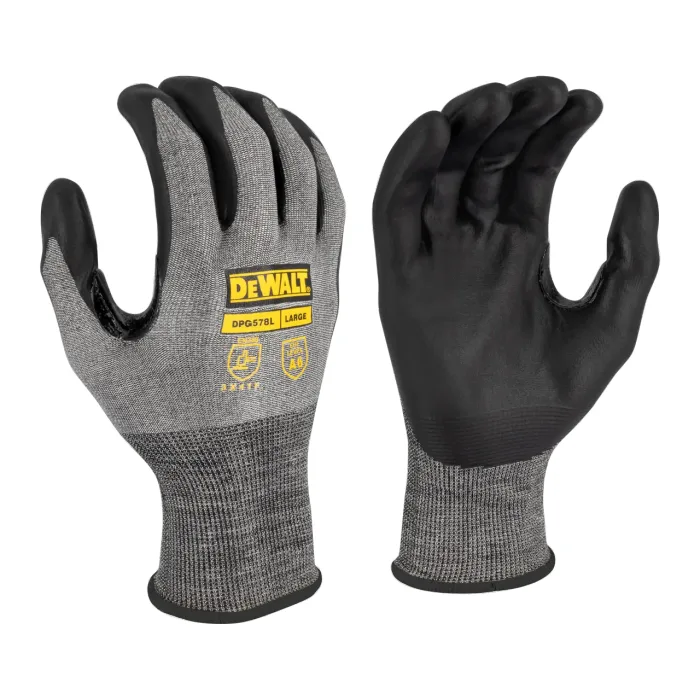
The same 21-gauge idea three cut levels down, and one of the few consumer gloves that prints both its ANSI and EN 388 ratings where you can read them.
Best for: Jobsite and workshop use where you want a verified, mid-to-high cut level and a thin glove, and you buy gloves by the pair regularly.
- DEWALT publishes the full set: ANSI/ISEA 105-2016 cut A6, abrasion level 4, puncture level 3, plus EN 388:2016 3X41F.
- A 21-gauge HPPE shell with a foam nitrile palm gives grip in wet and dry conditions without the bulk of a 13-gauge glove.
- Touchscreen fingertips, a reinforced thumb saddle and a seamless knit cuff, at the cheapest tier in this comparison.
- A6 is a real step down from A9 if your hazard is sheet metal edges or glass rather than hand tools.
- EN 388 abrasion is only level 3 against ANSI abrasion 4, a reminder that the two abrasion scales are not interchangeable either.
- EN 388 puncture is level 1, the lowest band, so this is not a puncture glove.
- Warranty on the page is 90 days, which is short even for a consumable.
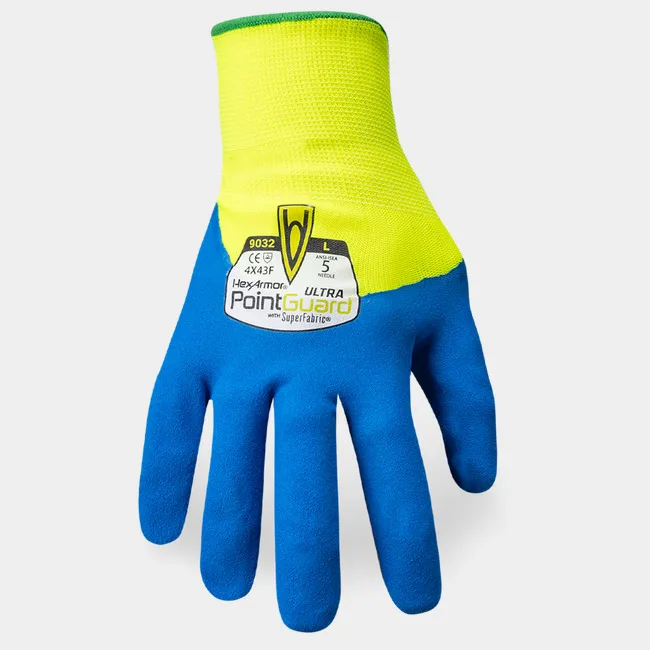
One of the few gloves carrying a real needlestick rating, which matters enormously to a small group of buyers and not at all to everyone else.
Best for: Waste sorting, recycling lines, roadside and public-space cleanup, and any job where an unseen hypodermic needle is a live risk.
- Rated needlestick level 5 under ANSI/ISEA 105, the top band, which is a separate test from the probe puncture rating most gloves quote.
- HexArmor publishes cut A9, puncture 4, abrasion 6 and EN 388 4X43F, and states the ratings comply with ANSI/ISEA 105-2024.
- A SuperFabric palm layer under a sandy nitrile three-quarter knuckle coating handles grip and abrasion at the same time.
- The 15-gauge shell is noticeably coarser than the 21-gauge gloves here, so you lose fingertip feel.
- The hi-vis build is designed to be seen, not to blend in on a kitchen counter or a workbench.
- Nothing on the product page lists food contact suitability.
- You are paying a premium for a needlestick rating that most buyers will never use.
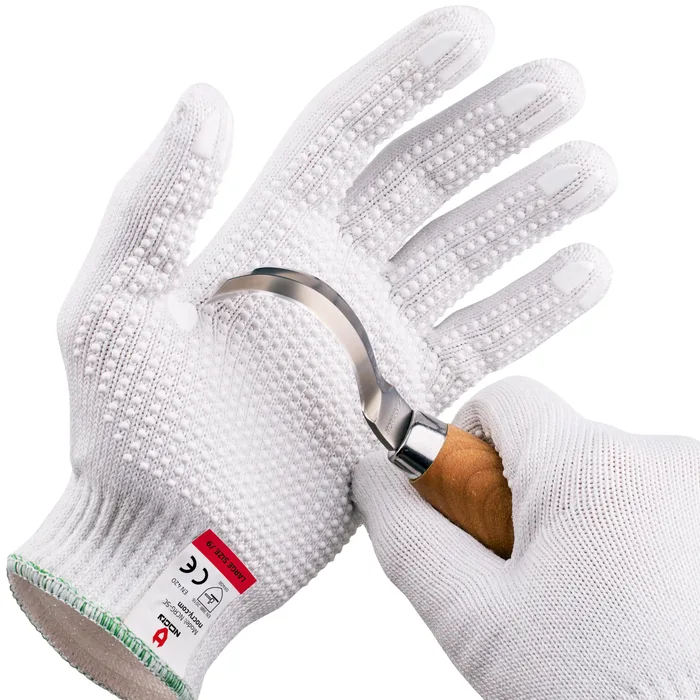
Sold on a headline of "Certified Level 5 cut resistance" when the certificate list underneath it says ANSI 105-2016 A2 and the only Level 5 belongs to a dexterity test.
Best for: Nobody, until NoCry reconciles the two cut figures on its own page or tells buyers which one describes the glove they will receive.
- NoCry does publish a certificate block, which is more than many budget sellers do.
- EN 388 abrasion level 4 and tear level 4 are respectable numbers for the price tier.
- Silicone grip dots on a stainless steel, polyethylene, glass fibre and spandex blend, in a washable glove.
- The page's headline Level 5 sits next to EN 420 dexterity, not cut, while the ANSI cut level given is A2, second from the bottom of nine.
- The same block also claims EN 388 cut level E, which is around 22 newtons or roughly A5 territory, and that cannot be squared with an A2 on the same glove.
- EN 388 puncture is level 2 and no needlestick rating is listed, so the stainless steel content buys you less than the word suggests.
- Cut figures on the page do not reconcile (see above), which undermines trust in the other numbers, including the food-safe answer in its FAQ.
| Criteria | Dexterity Pro S21TXUFN Top pick | DPG578 Foam Nitrile A6 Cut Resistant Glove | PointGuard Ultra 9032 | CutGuard Pro Stainless Steel Cut Resistant Gloves |
|---|---|---|---|---|
| Verdict | Buy it | Buy it | It depends | Skip it |
| Best for | Precision work with genuinely sharp material, where you want the highest cut number without giving up the ability to feel small parts. | Jobsite and workshop use where you want a verified, mid-to-high cut level and a thin glove, and you buy gloves by the pair regularly. | Waste sorting, recycling lines, roadside and public-space cleanup, and any job where an unseen hypodermic needle is a live risk. | Nobody, until NoCry reconciles the two cut figures on its own page or tells buyers which one describes the glove they will receive. |
| Price tier | $$$ · premium | $ · budget | $$$ · premium | $ · budget |
| ANSI/ISEA 105 cut level | A9, labelled 360 degrees | A6 | A9 | A2 |
| EN 388 code published by the maker | 3X41F | 3X41F | 4X43F | Cut E, tear 4, puncture 2, abrasion 4 |
| Knit gauge | 21-gauge | 21-gauge | 15-gauge shell | Not published |
| Palm coating | Foam nitrile, palm | Foam nitrile, palm | Sandy nitrile, three-quarter knuckle | Silicone dots |
| ANSI abrasion level | Level 3 | Level 4 | Level 6 | Not given, EN abrasion 4 |
| ANSI puncture level (blunt probe) | Level 3 | Level 3 | Level 4 | Not given, EN puncture 2 |
| Needlestick rating (ASTM F2878) | None listed | None listed | Level 5 | None listed |
| Food contact listed by maker | Listed food safe | Not listed | Not listed | Page FAQ says certified food safe (EC 10/2011) |
Which one is right for you?
- Precision work with genuinely sharp material, where you want the highest cut number without giving up the ability to feel small parts. Buy it Superior Glove Dexterity Pro S21TXUFN
- Jobsite and workshop use where you want a verified, mid-to-high cut level and a thin glove, and you buy gloves by the pair regularly. Buy it DEWALT DPG578 Foam Nitrile A6 Cut Resistant Glove
- Waste sorting, recycling lines, roadside and public-space cleanup, and any job where an unseen hypodermic needle is a live risk. It depends HexArmor PointGuard Ultra 9032
- Nobody, until NoCry reconciles the two cut figures on its own page or tells buyers which one describes the glove they will receive. Skip it NoCry CutGuard Pro Stainless Steel Cut Resistant Gloves
How we judged the field
Five things decide whether a cut glove is worth buying. First, which standard the cut number came from, because ANSI/ISEA 105 grades A1 to A9 in grams on a straight-blade machine while EN 388 carries both an old rotating-blade index of 1 to 5 and a newer A to F letter in newtons, and sellers quote whichever flatters the glove. Second, gauge, the number of knitting needles per inch, which is what actually determines how thin and tactile the glove feels. Third, the coating, because a foam nitrile palm, a sandy nitrile palm and a scattering of silicone dots behave completely differently on a wet workpiece. Fourth, the puncture story, where the rating almost every glove quotes comes from a blunt stylus about 4mm wide with a 1mm rounded tip and has very little to do with a needle. Fifth, whether the maker publishes anything at all beyond the headline number.
The field splits along how honest the labelling is. At the top are makers who publish a full ANSI/ISEA 105 set, sometimes an EN 388 code alongside it, and tell you the gauge: Superior Glove, HexArmor and, more surprisingly for a consumer brand, DEWALT. In the middle sit the trade brands sold by cut level as a numbered system, which is convenient but invites exactly the standards mixup this piece is about. At the bottom are direct-to-consumer sellers whose product copy quotes a level without saying which scale it belongs to. We picked one glove from each of the first two groups, one specialist that exists to answer a hazard the mainstream ratings do not cover, and one from the bottom group whose own page contains everything you need to see the problem.
Superior Glove Dexterity Pro S21TXUFN
Buy itSuperior’s Dexterity Pro S21TXUFN is the clearest demonstration on this page that cut resistance and dexterity stopped being opposites. It is a 21-gauge TenActiv knit, about as fine as engineered yarn gets knitted, with a foam nitrile palm coating, and Superior rates it ANSI A9 for cut. A9 is the top of the nine-level American scale, meaning at least 6,000 grams of load before the blade cuts through, and Superior labels it 360 degrees, its shorthand for protection around the glove rather than only under the coated palm. The rest of the published set is more modest and more useful for knowing what you are getting: ANSI abrasion level 3 and ANSI puncture level 3, both mid-scale. It is listed as food safe, touchscreen friendly, latex free and UKCA and CE certified, in sizes 5 through 12, and it washes and tumble dries on low heat. Its EN 388 code is 3X41F, listed inside the CE certification entry. For anyone handling sharp small parts, the main trade-off is the mid-scale abrasion level.
DEWALT DPG578 Foam Nitrile A6 Cut Resistant Glove
Buy itDEWALT’s DPG578 is what happens when a mainstream brand publishes its homework. It uses a 21-gauge HPPE shell, the same fineness class as the Superior glove, with a foam nitrile palm coating that DEWALT says grips in wet and dry conditions, touchscreen fingertips, a reinforced thumb saddle and a seamless knit cuff. The important part is the ratings block: ANSI/ISEA 105-2016 cut A6, abrasion level 4, puncture level 3, and EN 388:2016 3X41F. Read those two together and the whole standards puzzle becomes concrete. The X is the coup test, dropped because the shell blunts the blade. The F is the ISO 13997 straight-blade result, at least 30 newtons, and 30 newtons is roughly 3,000 grams, which is exactly where A6 starts. The two ratings agree because they came from the same machine reported in different units. The compromises are real: EN 388 puncture level 1 is the lowest band, and the stated warranty is 90 days. For the price tier, this is the most information per dollar in the group.
HexArmor PointGuard Ultra 9032
It dependsThe PointGuard Ultra 9032 exists to answer a question the other gloves cannot. HexArmor rates it needlestick level 5 under ANSI/ISEA 105, which comes from ASTM F2878 driving a real 25-gauge hypodermic needle into the material, not from the blunt stylus that produces the puncture number on almost every other glove. Level 5 is the top band. Alongside it HexArmor publishes cut A9, puncture 4, abrasion 6 and EN 388 4X43F, and states the ratings comply with ANSI/ISEA 105-2024. Construction is a 15-gauge hi-vis polyester shell with a SuperFabric palm layer underneath and a sandy nitrile three-quarter knuckle coating, in sizes small through double extra large. The trade-offs follow directly from that build. A 15-gauge shell with an armoured palm is nowhere near as tactile as a 21-gauge knit, the hi-vis colourway is designed to be conspicuous, and no food-contact claim is made. If needles are not part of your job, you are paying a premium for a rating you will never use.
NoCry CutGuard Pro Stainless Steel Cut Resistant Gloves
Skip itNoCry’s CutGuard Pro Stainless Steel is a skip you can justify entirely from NoCry’s own product page. The technical details section says “Certifications: Certified Level 5 cut resistance for maximum hand safety.” The certificate list immediately below it says something quite different: ANSI 105-2016 A2, and under EN 420:2003 plus A1:2009, “Dexterity: Level 5.” The only Level 5 on the page belongs to a dexterity test, which measures how well you can pick up small pins, not how hard the glove is to cut. A2 is the second of nine ANSI levels, roughly 500 grams. The same block then lists EN 388:2016 plus A1:2018 cut resistance Level E, about 22 newtons, which converts to roughly 2,200 grams and sits near A5. A2 and Level E cannot both describe the same glove, and NoCry does not explain which one applies. Tear level 4 and abrasion level 4 are fine, puncture is level 2, and the page’s FAQ says the gloves are certified food safe under EC regulation 10/2011. Until the cut figures reconcile, buy something that publishes one number and means it.
Sources
Specs in this review come from these pages.
- ISEA: ISEA Announces Updated ANSI/ISEA 105 Hand Protection Standard (safetyequipment.org)
- SATRA: EN 388, assessing mechanical risks (satra.com)
- Bob Dale Gloves: ANSI/ISEA 105-2024 cut resistance fact sheet (bobdalegloves.com)
- Tilsatec: Puncture Resistance, EN 388:2016 versus ANSI/ISEA 105-2024 (tilsatec.com)
- HexArmor: ANSI/ISEA 105 needlestick test explained (hexarmor.com)
- NiroflexUSA: Niroflex 2000 metal mesh glove specifications (niroflex.com)
Superior Glove Dexterity Pro S21TXUFN vs DEWALT DPG578 Foam Nitrile A6 Cut Resistant Glove: which should you buy?
The Superior Dexterity Pro and the DEWALT DPG578 are built on the same insight: a 21-gauge shell with a foam nitrile palm can carry a high cut level without feeling like a mitten. What separates them is headroom and paperwork. Superior claims A9, the top band of the ANSI scale, and rates it around the whole glove rather than just the coated palm, which matters if your hazard reaches the back of your hand or the side of a finger. DEWALT claims A6, which is three bands down but still comfortably into the range most people call high. Both makers list an EN 388 code of 3X41F, so the European numbers match even though the ANSI cut levels differ.
Choose on hazard and consumption rate. If you handle genuinely sharp stock all day, if a slip means a deep laceration rather than a scratch, or if you need the food-safe listing, the Superior is the one to buy and the extra cut headroom is worth what it costs. If you are buying gloves by the box for general jobsite and workshop work, the DEWALT gets you most of the way there for a fraction of the outlay, and cut gloves are consumables that wear out no matter what you pay. One genuine caution in the other direction: Superior lists abrasion at level 3 and DEWALT lists it at level 4, so on rough, scraping work the cheaper glove may actually last longer. Cut resistance and abrasion resistance are separate ratings for a reason.
What to look for
- Ask which standard produced the number: “Cut level 5” with no context is meaningless, because it could be an EN 388 coup index of 20.0 or an ANSI A5 of 2,200 grams, and those are different claims about different tests.
- Convert the EN letter yourself: the ISO 13997 letters run A at 2 newtons, B at 5, C at 10, D at 15, E at 22 and F at 30, and since one newton is about 102 grams they line up almost exactly with A1, A2, A3, A4, A5 and A6.
- Remember the EN scale runs out: EN 388 stops at F, about 3,000 grams, so ANSI A7, A8 and A9 gloves all report F and the letter cannot distinguish between them.
- Read the gauge, not the cut level, for feel: gauge is knitting needles per inch, so 21-gauge is thin and tactile while 7-gauge is thick and clumsy, and a high cut level no longer forces you into a thick glove.
- Treat the puncture rating as a tear rating: both standards measure puncture with a blunt stylus roughly 4mm wide with a 1mm rounded tip, so if your hazard is a needle you need the separate ASTM F2878 needlestick level instead.
- Check food contact is claimed explicitly: a glove being white, washable and sold for kitchen use is not a food-contact statement, and only the maker can make that claim for the materials involved.
Our final take
Buy the Superior Glove Dexterity Pro S21TXUFN if you want the highest published cut level in a glove you can still work small parts in, and the DEWALT DPG578 if you want most of that at the cheapest tier here with both rating systems printed where you can check them. The HexArmor PointGuard Ultra 9032 is worth its premium only if hypodermic needles are a real part of your day, in which case nothing else on this page is adequate. Skip the NoCry CutGuard Pro until its published cut figures agree with each other. Above all, never accept a bare level number: ask which standard it came from, and if the seller cannot say, that is your answer.
Questions, answered
Is EN 388 "cut level 5" the same as ANSI A5?
No, and this is the single biggest source of confusion in the category. EN 388's 1 to 5 scale comes from the rotating circular blade test, often called the coup test, and it reports a dimensionless index: level 1 is 1.2, level 2 is 2.5, level 3 is 5.0, level 4 is 10.0 and level 5 is 20.0. ANSI/ISEA 105 reports grams of load needed to cut through on a straight-blade machine, from 200 grams at A1 up to 6,000 grams at A9. The two numbers are not measuring the same thing in the same units, so a level 5 coup result tells you nothing directly about where a glove sits on A1 to A9. The comparable EN figure is the separate A to F letter, which does use the same straight-blade method as ANSI.
What does the X mean in an EN 388 code like 3X41F?
The second character of an EN 388 code is the coup test result, and X means it was not reported. That is common on genuinely cut-resistant gloves, because the coup test has a known weakness: hard fibres such as glass and steel blunt the rotating blade as the test runs, which makes the glove look better than it is. EN 388:2016 handles this by watching a control cut on reference material, and if the cycles needed to cut through that reference rise by more than a factor of three, the blade is considered blunted and the ISO 13997 straight-blade test becomes the reference instead. When that happens the coup position is reported as X and the last character, the A to F letter, is the number that counts. So an X is not a gap in the data, it is a sign the glove is made of something the old test cannot measure.
Does a higher cut level always mean a clumsier glove?
Not any more, and the gloves here show it directly. Gauge, not cut level, is what governs how thin a knit glove feels: gauge is the number of knitting needles per inch on the machine, so a 7-gauge glove uses thick yarn and comes out bulky while a 21-gauge glove is fine and close-fitting. Two of the four gloves on this page are rated ANSI A9 and A6 on 21-gauge shells, which was not possible before engineered yarns got good. What you do still trade away is durability and coverage: the thinner the shell, the sooner it wears through, and a very fine glove usually pairs with a thin coating that scuffs faster. Check the gauge and the abrasion level together rather than assuming the cut number tells you how the glove will feel.
Will a cut-resistant glove stop a hypodermic needle?
Almost certainly not, and the puncture level on the box is not the reassurance it looks like. Both EN 388 and ANSI/ISEA 105 measure puncture with a blunt stylus around 4mm wide with a rounded 1mm tip, which models a tear or burst hazard, not a needle. ANSI/ISEA 105 added a separate needlestick classification based on ASTM F2878, which drives an actual 25-gauge hypodermic needle into the material and reports levels 1 to 5 from about 2 newtons up to 10 newtons or more at level 5. If needles are a real hazard in your work, the only rating that means anything is that needlestick level, and very few knit gloves carry one. The HexArmor glove on this page is here specifically because it does.
Are any of these safe for handling food?
Two of the four make a food claim. Superior Glove marks the Dexterity Pro S21TXUFN as food safe on its product page. The NoCry CutGuard Pro page answers a FAQ by saying the gloves are certified food safe under EC regulation 10/2011, though its cut figures contradict each other. DEWALT and HexArmor make no food-contact claim on the pages for the gloves reviewed here. Food contact is a regulatory question about the materials touching the food, not a cut question, so it has to be claimed separately by the maker. If you are buying for a kitchen, look for an explicit food-contact statement and a stated wash procedure, and note that in most professional settings a cut glove is worn under a disposable glove rather than against the food.
Deciding between the top two? See our head-to-head: Superior Glove Dexterity Pro S21TXUFN vs DEWALT DPG578 Foam Nitrile A6 Cut Resistant Glove.
More Tools & DIY reviews
 The Best Digital Calipers: 4 Compared (and One to Skip)
  The Best Drill and Driver Bit Sets: 4 Compared (and One to Skip)
  The Best Electric Screwdrivers: 4 Compared (and One to Skip)
  The Best Extension Cords for Tools: 4 Compared (and One to Skip)
  The Best Fall Protection Harnesses: 4 Compared (and One to Skip)
  The Best Fish Tapes: 4 Compared (and One to Skip)