

Tools & DIY
The Best Extension Cords for Tools: 4 Compared (and One to Skip)
We compared outdoor extension cords on wire gauge, rated amps and watts, length and jacket, the numbers that decide whether a cord can safely run your tools.
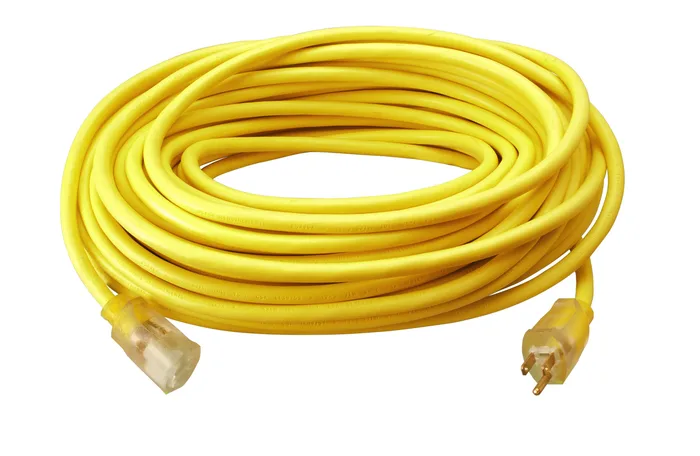
The short version
The Southwire 12/3 SJTW 50 ft cord is our pick: 12 gauge copper, rated 15 amps and 1875 watts, recommended by Southwire for heavy-duty equipment and tools, with a lighted end and a bright jacket. The Southwire 14/3 50 ft cord is the value pick, also rated 15 amps at this length and lighter to carry. The Iron Forge 25 ft coiled 14/3 SJEOW cord suits benches and trucks where you want short, tangle-free reach. Skip the Iron Forge 150 ft 16/3 cord for tools: it is marketed as heavy duty and suggested for lawnmowers and leaf blowers, yet it is rated for only 10 amps. Best for: anyone running saws, mowers, blowers or other high-draw tools.
Our picks at a glance
- Southwire 12/3 SJTW 50 ft Lighted Extension Cord - Buy. A heavy 12 gauge outdoor cord rated 15 amps, made for high-draw tools and equipment.
- Southwire 14/3 SJTW 50 ft Extension Cord - Buy. A lighter 14 gauge outdoor cord that still carries a 15 amp rating at 50 feet.
- Iron Forge Cable 25 ft Coiled 14/3 SJEOW Extension Cord - It depends. A coiled, oil-resistant 14 gauge cord that stays tidy at the bench but reaches only about 20 feet.
- Iron Forge Cable 150 ft 16/3 SJTW Outdoor Extension Cord - Skip. A very long 16 gauge cord marketed as heavy duty but rated for only 10 amps.
The verdict in 30 seconds
What mattered most
- Gauge / conductors
- Length
- Rating
- Jacket
- Lighted end
- Marketed as
Most extension cord mistakes come from buying by length and ignoring the rating. A long, thin cord can be perfectly fine for patio lights and a poor match for a saw or a corded mower. The printed gauge and amp rating tell you which is which. We compared two heavy-gauge Southwire cords, a short coiled cord for the shop, and a best-selling 150 foot cord that is sold as heavy duty.
A heavy 12 gauge outdoor cord rated 15 amps, made for high-draw tools and equipment.
Best for: Saws, mowers, compressors and other high-draw tools, especially on longer runs.
- 12 gauge all-copper wire, rated 15 amps, 125 volts and 1875 watts.
- Southwire recommends it for heavy-duty equipment and tools, and says the heavy gauge limits voltage drop on high amperage tools.
- Lighted end shows when power is on, and the bright jacket is easy to spot on a jobsite.
- Heavier and stiffer to coil than a 14 gauge cord.
- Costs more than lighter cords of the same length.
- A single outlet; you need a separate tap for several tools.
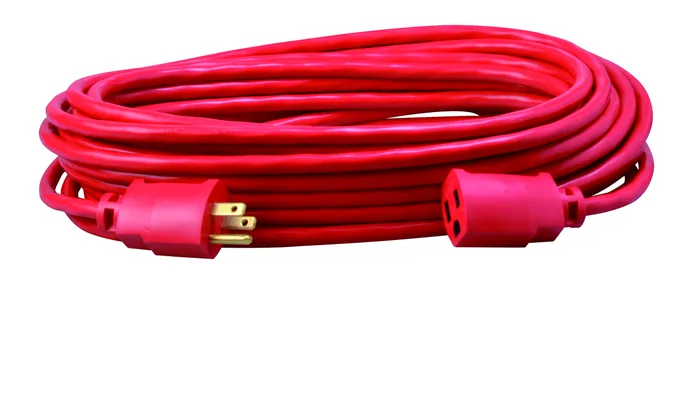
A lighter 14 gauge outdoor cord that still carries a 15 amp rating at 50 feet.
Best for: Everyday DIY tools and yard work within 50 feet of an outlet.
- Rated 15 amps, 125 volts and 1875 watts, the same rating as the 12 gauge cord at this length.
- Lighter and easier to coil and carry than 12 gauge.
- Outdoor jacket and a lighted end.
- Thinner wire than 12 gauge, so it has less margin on long runs and heavy loads.
- Buy longer 14 gauge cords with care; ratings drop as length increases.
- Not the cord for tools that run near their limit all day.
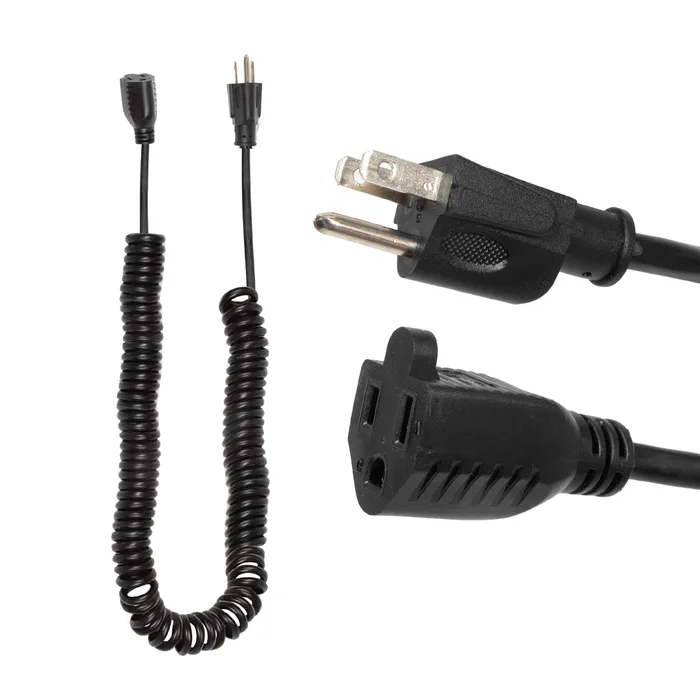
A coiled, oil-resistant 14 gauge cord that stays tidy at the bench but reaches only about 20 feet.
Best for: Workbenches, garages and truck beds where short, tangle-free reach matters most.
- 14 gauge, rated 15 amps, 125 volts and 1875 watts.
- SJEOW jacket that Iron Forge lists as oil resistant and flame retardant, rated from -40°F to +140°F.
- Coils to about 5 feet and stretches to about 20 feet, so it does not tangle or trail across the floor.
- About 20 feet of usable reach when stretched, not 25.
- A stretched coil pulls back, which can tug on a tool or plug.
- Too short for most yard work.
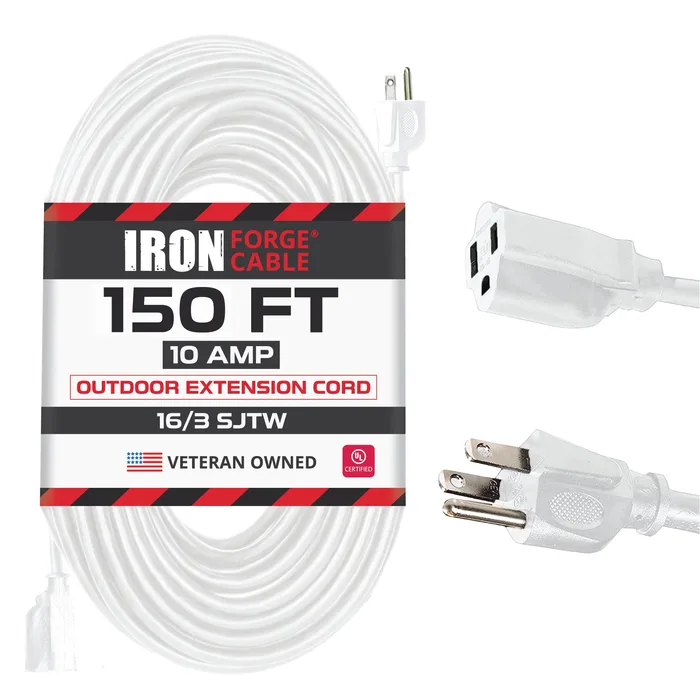
A very long 16 gauge cord marketed as heavy duty but rated for only 10 amps.
Best for: Holiday lights and low-draw gear far from an outlet, not power tools.
- UL certified, outdoor SJTW jacket rated from -40°F to +140°F.
- Nickel-coated blades and strain relief at the plug.
- Long enough to reach the far corners of a yard for lights.
- Rated 10 amps, 125 volts and 1250 watts, well below the 15 amp rating of the 12 and 14 gauge cords here.
- Iron Forge suggests it for lawnmowers and leaf blowers; check that your tool draws no more than 10 amps before plugging in.
- Thin wire over a long run is the combination that loses the most voltage.
- Marketed as heavy duty, which the rating does not support for tools.
| Criteria | Southwire 12/3 SJTW 50 ft Lighted Extension Cord Top pick | Southwire 14/3 SJTW 50 ft Extension Cord | Iron Forge Cable 25 ft Coiled 14/3 SJEOW Extension Cord | Iron Forge Cable 150 ft 16/3 SJTW Outdoor Extension Cord |
|---|---|---|---|---|
| Verdict | Buy it | Buy it | It depends | Skip it |
| Best for | Saws, mowers, compressors and other high-draw tools, especially on longer runs. | Everyday DIY tools and yard work within 50 feet of an outlet. | Workbenches, garages and truck beds where short, tangle-free reach matters most. | Holiday lights and low-draw gear far from an outlet, not power tools. |
| Price tier | $$ · mid-range | $ · budget | $ · budget | $$ · mid-range |
| Gauge / conductors | 12/3 | 14/3 | 14/3 | 16/3 |
| Length | 50 ft | 50 ft | 25 ft (about 20 ft stretched) | 150 ft |
| Rating | 15 A, 1875 W | 15 A, 1875 W | 15 A, 1875 W | 10 A, 1250 W |
| Jacket | SJTW outdoor vinyl | SJTW outdoor | SJEOW, oil resistant | SJTW outdoor |
| Lighted end | Yes | Yes | Not listed | Not listed |
| Marketed as | Heavy duty | Heavy duty | Heavy duty | Heavy duty |
| High-draw tools | Yes | Yes, within 50 ft | Yes, short reach | No |
| Best for | Saws, mowers, compressors | Everyday DIY | Bench and truck | Lights and low-draw gear |
Which one is right for you?
- Saws, mowers, compressors and other high-draw tools, especially on longer runs. Buy it Southwire 12/3 SJTW 50 ft Lighted Extension Cord
- Everyday DIY tools and yard work within 50 feet of an outlet. Buy it Southwire 14/3 SJTW 50 ft Extension Cord
- Workbenches, garages and truck beds where short, tangle-free reach matters most. It depends Iron Forge Cable 25 ft Coiled 14/3 SJEOW Extension Cord
- Holiday lights and low-draw gear far from an outlet, not power tools. Skip it Iron Forge Cable 150 ft 16/3 SJTW Outdoor Extension Cord
How we judged the field
Five things decide whether an extension cord is right for tools: wire gauge, the rated amps and watts, length, the jacket rating and practical details like a lighted end. Gauge and length together decide how much current a cord can carry and how much voltage it loses along the way. The amp and watt rating printed on the cord is the number to match against your tool.
The field splits into heavy-gauge cords built for tools and thinner cords sold for lights and light appliances, often under the same heavy duty label. We picked a 12 gauge cord, a 14 gauge cord, a short coiled shop cord and a best-selling long 16 gauge cord, then compared the ratings each maker prints for them.
The Southwire 12/3 SJTW 50 foot cord is the one to buy if you run real tools. It uses 12 gauge all-copper wire and is rated for 15 amps, 125 volts and 1875 watts, and Southwire recommends it for heavy-duty equipment and tools, noting that the heavy gauge limits voltage drop on high amperage tools. The flexible vinyl jacket is rated for outdoor use and resists moisture, abrasion and sunlight, the molded plug is oversized to resist bending, and a lighted end tells you the cord is live. The bright jacket also helps it stand out on a lawn or jobsite. The trade-offs are weight and stiffness: 12 gauge is heavier to carry and less willing to coil than 14 gauge, and it costs more. For a circular saw, a corded mower or a compressor, the extra copper is worth it.
The Southwire 14/3 SJTW 50 foot cord is the practical value choice. At this length, Southwire rates it the same as the 12 gauge cord: 15 amps, 125 volts and 1875 watts. It has an outdoor jacket and a lighted end, and the thinner wire makes it noticeably lighter and easier to coil and carry. The catch is margin. Thinner wire loses more voltage over distance, so a 14 gauge cord has less headroom on long runs and under tools that run near their limit all day. Ratings also fall as 14 gauge cords get longer, so check the label before buying a 100 foot version. Within 50 feet of an outlet, for everyday drills, sanders, trimmers and most yard tools, it is all the cord most people need, and it is easier to live with.
The Iron Forge Cable 25 foot coiled 14/3 SJEOW cord solves a different problem: clutter. It is 14 gauge and rated 15 amps, 125 volts and 1875 watts, with an SJEOW jacket that Iron Forge lists as oil resistant, moisture resistant and flame retardant, rated from -40°F to +140°F. The coil sits at about 5 feet and stretches to about 20 feet, so it stays off the floor at a workbench or in a truck bed. The downsides come with the coil. Usable reach is about 20 feet, not the 25 feet of wire, and a stretched coil pulls back, which can tug on a tool or a loosely seated plug. It is too short for yard work. If you want a tidy, tangle-free cord at the bench, it is a good fit; for anything farther away, buy a straight cord.
The Iron Forge Cable 150 foot 16/3 cord is a good example of a label that promises more than the rating delivers. Iron Forge markets it as heavy duty, describes it as able to handle demanding tasks and suggests it for lawnmowers and leaf blowers. The printed rating tells the real story: 16 gauge wire, 10 amps, 125 volts and 1250 watts. That is two-thirds of the 15 amp rating the 12 and 14 gauge cords here carry, over three times the length, and thin wire on a long run is the combination that loses the most voltage. Iron Forge’s build quality is fine, with a UL certified outdoor jacket, nickel-coated blades and strain relief. For holiday lights and low-draw gear at the far end of a yard, it works. For tools, check your tool’s amp rating against this cord’s, and in most cases buy a heavier cord instead.
Southwire 12/3 SJTW 50 ft Lighted Extension Cord vs Southwire 14/3 SJTW 50 ft Extension Cord: which should you buy?
The two Southwire cords share the same 15 amp rating at 50 feet, so the choice is about margin versus convenience. The 12 gauge cord has thicker copper, loses less voltage on long runs and under heavy loads, and is the safer bet for tools that work hard for long periods. The 14 gauge cord is lighter, easier to handle and costs less.
If you run a table saw, compressor or corded mower, or often work at the far end of the cord, buy the 12 gauge. If your tools are drills, sanders and trimmers used close to the house, the 14 gauge does the job and is nicer to live with.
What to look for
- The amp and watt rating: match it to your tool’s label, not to the word heavy duty.
- Lower gauge for tools: 12 and 14 gauge carry more current than 16 gauge.
- The shortest length that reaches: longer cords lose more voltage and run warmer under load.
- A W in the jacket code: it means the cord is rated for outdoor use.
- A lighted end: it shows at a glance whether power is reaching the tool.
- One cord, not chains: every extra connection is another place to overheat or pull apart.
Our final take
Buy the cord for your hungriest tool. The Southwire 12/3 SJTW 50 foot cord is our pick because its 12 gauge copper and 15 amp rating handle high-draw tools with room to spare. The 14 gauge Southwire is the value choice within 50 feet. The Iron Forge coiled cord is a tidy bench companion if 20 feet of reach is enough. Skip long, thin cords like the Iron Forge 150 foot 16/3 for tools: whatever the label says, a 10 amp rating is the number that counts. Read the rating on the cord before you read the word on the box.
Questions, answered
What do the numbers like 12/3 mean?
The first number is the wire gauge and the second is the number of conductors. A lower gauge number means thicker wire, so 12 gauge is heavier than 14, and 14 is heavier than 16. Three conductors means the cord has a ground wire and a three-prong plug. Thicker wire carries more current with less loss.
How do I match a cord to my tool?
Check the amp or watt rating on your tool's label and compare it with the rating printed on the cord. Use a cord rated at or above what the tool draws. Every cord in this comparison lists its amp and watt rating, and the 150 foot 16 gauge cord is rated lower than the rest. If in doubt, choose the heavier gauge.
Why does length matter?
Longer cords resist current more, so they lose more voltage and run warmer under load, especially with thin wire. That is why the same gauge can carry a lower rating at a longer length. Buy the shortest cord that reaches, in the heaviest gauge your tools need.
What does SJTW or SJEOW mean?
These letters describe the cord's jacket. The W means it is rated for outdoor use, and O means oil resistant, which is why a shop cord might carry SJEOW. Indoor cords without the W should not be used outside.
Can I plug two extension cords together?
It is better not to. Each connection adds resistance and another point that can overheat or pull apart. Buy one cord of the right length and gauge instead of chaining shorter ones.
Deciding between the top two? See our head-to-head: Southwire 12/3 SJTW 50 ft Lighted Extension Cord vs Southwire 14/3 SJTW 50 ft Extension Cord.
More Tools & DIY reviews
 The Best Fall Protection Harnesses: 4 Compared (and One to Skip)
  The Best Fish Tapes: 4 Compared (and One to Skip)
  The Best Framing Nailers: 4 Compared (and One to Skip)
  The Best Grease Guns: 4 Compared (and One to Skip)
  The Best Hard Hats: 4 Compared (and One to Skip)
  The Best Heat Guns: 4 Compared (and One to Skip)