

Outdoors & Fitness
The Best Bike Grips: 4 Compared (and One to Skip)
We compared four handlebar grips on how they attach, what they are made of, installed diameter and what each maker actually publishes.
The short version
The ODI Elite Pro Lock-On is the grip to buy for most mountain and gravel riders: a single aluminium clamp holds it still in any weather, the half-waffle front and variable knurl give traction without shredding bare hands, and the reinforced end is molded from a softer material specifically to stop grip blowout in a crash. ESI Chunky is the value pick and the one to choose if your hands go numb, because silicone damps vibration in a way rubber does not, and ESI publishes what most brands will not: 60 grams, 32mm installed diameter, a 5 1/8 inch length, latex and rubber free, made in the USA. Wolf Tooth Fat Paw V2 is the answer for large or gloved hands, at 36mm installed diameter over 9mm of dual-density silicone foam, which is a lot of grip and wrong for small hands. Portland Design Works Lisbon Cork grips are handsome and made in Portugal, but they push on with no clamp and PDW's own note says the solid ends add 26mm to your bar width. Best for: riders who want their hands to stop going numb.
Our picks at a glance
- ODI Elite Pro Lock-On Grips - Buy. A lock-on grip that solves rotation, blowout and glove traction in one part.
- ESI Grips Chunky Grips - Buy. Silicone foam that damps vibration, with the fullest spec sheet of any grip here.
- Wolf Tooth Fat Paw Grips V2 - It depends. A deliberately huge 36mm silicone foam grip for large hands and thick gloves.
- Portland Design Works Lisbon Cork Grips - Skip. Genuinely lovely natural cork, with no clamp and a side effect on bar width PDW is upfront about.
The verdict in 30 seconds
What mattered most
- How they attach
- Material
- Installed diameter
- Surface texture
- Stated weight
- Stated length
Grips are the cheapest contact point on a bike and the one riders put up with longest. A worn or wrong-diameter grip shows up as numb fingers on a long ride, or as a grip that rotates on the bar the first time it rains. The decisions are simpler than the wall of colours suggests: lock-on or push-on, thick or thin, rubber or silicone. We took four widely sold grips that sit at different points on those axes and lined up what each maker publishes about them, which turns out to be the fastest way to tell a serious grip from a fashion item.
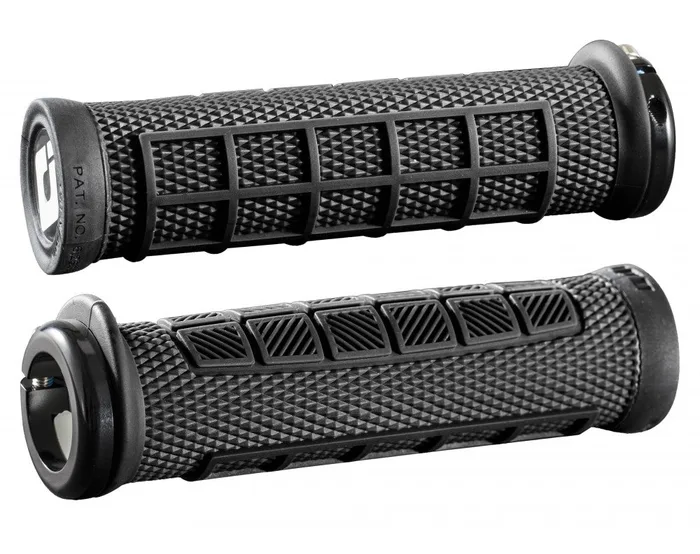
A lock-on grip that solves rotation, blowout and glove traction in one part.
Best for: Mountain and gravel riders who want a grip that will not move and will survive going down.
- The v2.1 single clamp system frees up more usable grip space than a two-clamp design.
- The end is molded from a soft but durable reinforced material specifically to prevent grip blowout.
- A variable knurl alternates smooth and sharp texture, which is what makes it tolerable on bare hands.
- ODI does not publish an installed diameter, which matters if you are trying to match a grip you liked.
- No weight figure is published either, so it is not a grip to buy for a weight-conscious build.
- Lock-on hardware adds mass and cost compared with a push-on grip.
- The half-waffle front is aimed at off-road control and is more texture than a commuter needs.
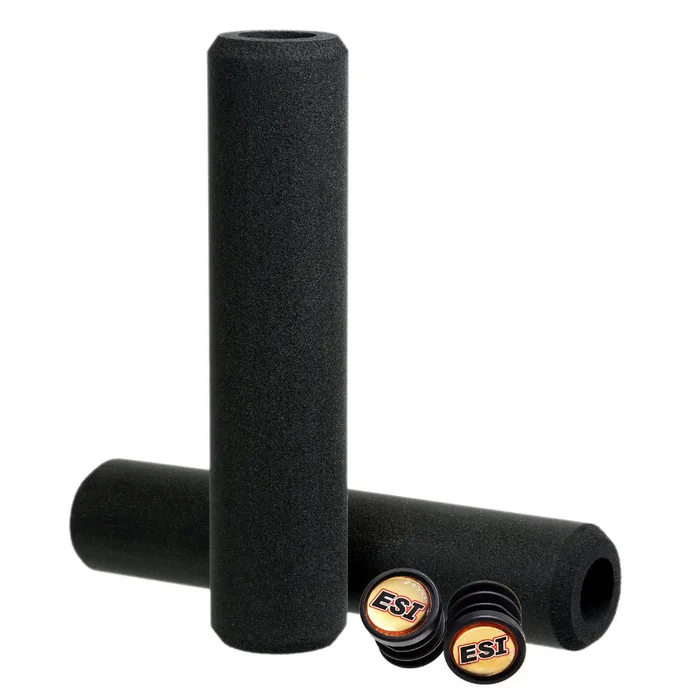
Silicone foam that damps vibration, with the fullest spec sheet of any grip here.
Best for: Riders whose hands go numb, and anyone running grip shift who cannot fit a lock-on.
- ESI publishes the numbers: 60 grams the pair, 32mm installed diameter, 5 1/8 inch length.
- Silicone is latex and rubber free, which rules out a common skin reaction and does not harden with age.
- ESI calls out grip shift compatibility, which many lock-on grips cannot offer.
- There is no clamp, so installation depends on isopropyl alcohol and a clean bar.
- Silicone scuffs and tears more easily than rubber if you drop the bike on rough ground.
- It is a plain cylinder with no ergonomic shaping or bar-end support.
- ESI notes a weight variation of plus or minus five percent, so a claimed 60 grams is a range.
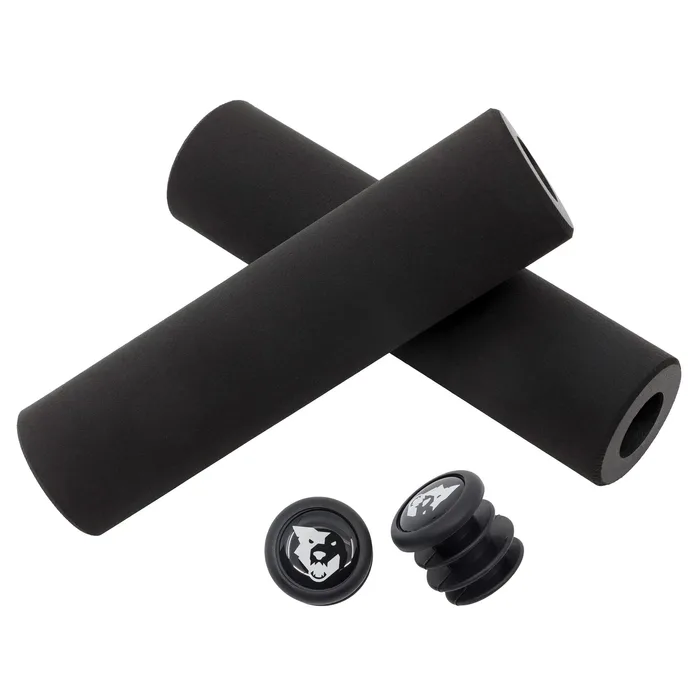
A deliberately huge 36mm silicone foam grip for large hands and thick gloves.
Best for: Riders with large or gloved hands, and anyone whose fingers still go numb on a standard grip.
- 36mm installed diameter over 9mm of foam is the most cushioning in this group by a clear margin.
- Wolf Tooth's dual-density silicone compound is built with a consistent density cross-section to avoid the air pockets that cause uneven breakdown.
- The suede-like surface is designed to stay tacky with or without gloves in wet weather.
- 36mm is too large for many hands, and a grip that is too fat causes its own fatigue.
- Wolf Tooth does not publish a weight for the V2 foam grips.
- Push-on installation on a grip this thick takes patience and a lot of alcohol.
- Wolf Tooth's own line-up puts the thinner Karv V2 at 6.5mm and 32mm, which is the version most riders should actually try first.
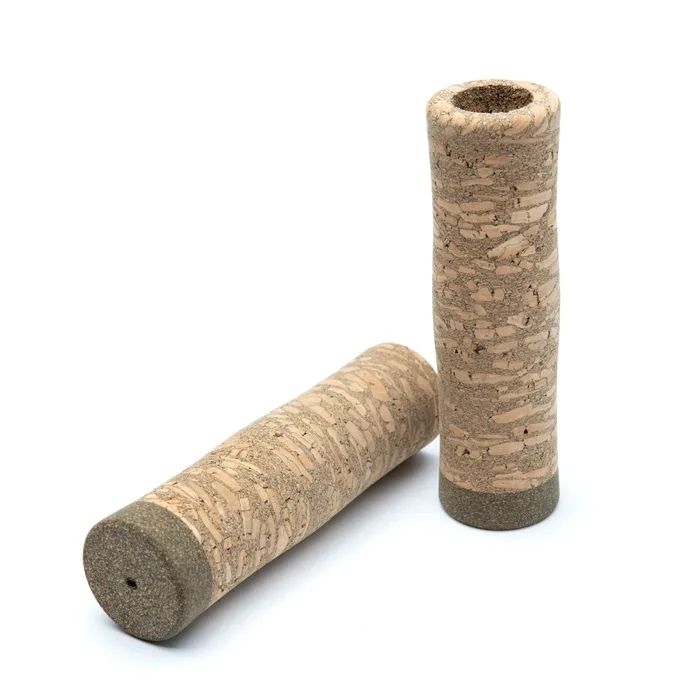
Genuinely lovely natural cork, with no clamp and a side effect on bar width PDW is upfront about.
Best for: Classic and commuter builds where the look matters and the bars have room to grow.
- Made in Lisbon from natural cork, with a rubber and cork compound at the high-wear ends.
- Cork's texture gives usable grip dry or wet without the tackiness of soft rubber.
- They are light and they suit a classic build in a way no moulded grip does.
- PDW states the solid ends are 13mm long each, which effectively makes your handlebars 26mm wider.
- There is no lockring, so they rely on friction alone to stay put.
- Cork is a wear item and will not shrug off a fall the way a reinforced rubber end does.
- PDW publishes no diameter, length or weight for them.
| Criteria | Elite Pro Lock-On Grips Top pick | Chunky Grips | Fat Paw Grips V2 | Lisbon Cork Grips |
|---|---|---|---|---|
| Verdict | Buy it | Buy it | It depends | Skip it |
| Best for | Mountain and gravel riders who want a grip that will not move and will survive going down. | Riders whose hands go numb, and anyone running grip shift who cannot fit a lock-on. | Riders with large or gloved hands, and anyone whose fingers still go numb on a standard grip. | Classic and commuter builds where the look matters and the bars have room to grow. |
| Price tier | $ · mid-range | $ · budget | $$ · premium | $ · mid-range |
| How they attach | Lock-on, single aluminium clamp | Push-on, friction | Push-on, friction | Push-on, friction |
| Material | Rubber with a reinforced end | Silicone, latex and rubber free | Dual-density silicone foam | Natural cork with rubber and cork ends |
| Installed diameter | Not published | 32mm | 36mm | Not published |
| Surface texture | Half-waffle front plus variable knurl | Smooth silicone | Suede-like soft touch | Natural cork grain |
| Stated weight | Not published | 60 grams, plus or minus 5 percent | Not published | Not published |
| Stated length | 130mm | 5 1/8 inches | Not published | Not published |
| Effect on bar width | None stated | None stated | None stated | Adds 26mm, per PDW |
| Where it is made | Not published | USA | Not published | Portugal |
Which one is right for you?
- Mountain and gravel riders who want a grip that will not move and will survive going down. Buy it ODI Elite Pro Lock-On Grips
- Riders whose hands go numb, and anyone running grip shift who cannot fit a lock-on. Buy it ESI Grips Chunky Grips
- Riders with large or gloved hands, and anyone whose fingers still go numb on a standard grip. It depends Wolf Tooth Fat Paw Grips V2
- Classic and commuter builds where the look matters and the bars have room to grow. Skip it Portland Design Works Lisbon Cork Grips
How we judged the field
Five things decide whether a grip is right, and only one of them is how it feels in a shop. The first is attachment: a lock-on grip clamps to the bar and cannot rotate, while a push-on grip relies on friction and a careful installation. The second is diameter, which is the single number most closely tied to hand comfort and the one riders most often get wrong. The third is material, because rubber, silicone and cork damp vibration very differently and age very differently. The fourth is the end of the grip, which is where grips actually fail, either by blowing out in a crash or by letting an open bar end stay exposed. The fifth is whether the maker publishes any of this, since a grip listing that offers nothing but colours is telling you what it was designed for.
The field splits three ways. Lock-on rubber grips, led by ODI, dominate mountain biking because rotation under braking is the failure everyone remembers. Push-on silicone and silicone foam, from ESI and Wolf Tooth, trade that security for real vibration damping and lower weight, and they have quietly taken over endurance gravel and cross-country. Cork and leather sit in a third camp that is about how a bike looks and feels rather than how it performs under load. We took the strongest example from each, plus a second silicone entry at the extreme thick end, so the diameter question gets a proper airing.
The Elite Pro is ODI’s answer to every way a grip goes wrong. The v2.1 lock-on system uses a single clamp rather than two, which ODI says frees up more usable grip space and improves comfort at the outboard end, the part of a two-clamp grip that always dug into the heel of your hand. The surface combines a half-waffle pattern on the front, where your fingers wrap, with a variable knurl that alternates between smooth and sharp texture so it holds without chewing up bare palms. The end is the detail worth paying for: it is molded from a soft but durable material specifically to resist grip blowout, which is what happens when a bike goes down and the bar end punches through the grip. ODI offers it in six colours and states a 130mm length. What ODI does not publish is diameter or weight, which is a real gap if you are matching a grip you already like. For most riders off road, this is the default.
ESI took a different route: skip the clamp, skip the rubber, and make the whole grip out of silicone. Chunky is the popular one, and ESI publishes more about it than most brands publish about anything. Sixty grams for the pair, with a stated plus or minus five percent variation. A 32mm installed diameter, which is the sweet spot for most adult hands. A 5 1/8 inch standard length, sized for 22mm bars. Latex and rubber free, made in the USA, bar plugs in the box. ESI also calls out grip shift compatibility, which matters because lock-on hardware frequently will not clear a twist shifter. What you give up is toughness and convenience. Silicone scuffs and can tear where rubber would scrape, and installation means isopropyl alcohol and a clean bar rather than a 3mm hex key. In exchange you get the best vibration damping per gram in this group, and that is the whole reason silicone grips exist.
Fat Paw V2 is Wolf Tooth going deliberately large. The numbers are 36mm installed diameter over 9mm of foam, against 32mm and 6.5mm for the company’s own thinner Karv V2, and the difference in the hand is not subtle. The compound is a proprietary dual-density silicone foam, rebuilt for V2 with a consistent density cross-section so it does not develop the internal air pockets that make a foam grip break down unevenly. The surface is a soft-touch suede texture, first used on Wolf Tooth’s lock-on grips, which is meant to stay grippy gloved or bare and in the wet. Bar end plugs are included and it fits any mountain bike bar. The reason this is a depends rather than a buy is simply that 36mm is a lot. If your hands are large, or you ride winter gloves, or a standard grip still leaves your fingers numb, it is the right tool. If not, Wolf Tooth’s own Karv V2 is the grip to try instead, and Wolf Tooth says so in its own product copy.
Portland Design Works makes the Lisbon from natural cork in Lisbon, with a rubber and cork compound at the ends where wear is worst. Cork genuinely works as a grip material: it is light, its texture holds in the wet, and it has a resilience that is closer to firm than squishy, which is what long-distance riders on drop bars have liked about cork tape for decades. Two things keep it off the buy list for most people. There is no lockring, so it holds on by friction, and cork is a consumable that will wear rather than a moulded part that will not. The third thing is one PDW puts in its own listing, to the company’s credit: the solid rubber and cork ends are 13mm long each, so fitting them makes your handlebars 26mm wider overall. That is enough to change how a bike fits through a doorway, a bike rack or a set of bar bags. Buy them for the look, knowing what they cost you.
ODI Elite Pro Lock-On Grips vs ESI Grips Chunky Grips: which should you buy?
The Elite Pro and ESI Chunky are not really competing for the same problem, and the choice becomes obvious once you name yours. If your complaint is that a grip moved, or tore, or that you want the bar end to survive a crash, buy the Elite Pro. A single aluminium clamp removes rotation as a category of problem, the variable knurl works on bare hands in a way a full waffle does not, and the reinforced end is engineered against the exact failure that ends most grips. If your complaint is numbness or vibration on a long ride, buy Chunky. Silicone damps buzz that rubber passes straight through, sixty grams the pair is about as light as a real grip gets, and ESI is one of the few brands that will tell you the diameter before you buy.
There is a compatibility tiebreaker worth knowing. If you run grip shift, the lock-on collar often will not fit, and ESI explicitly positions Chunky for grip shift users. There is also a durability tiebreaker in the other direction: if you regularly lay the bike down on rock, rubber and a reinforced end will outlast silicone. Riders who want some of both can look at a lock-on silicone or foam grip, which several brands including Wolf Tooth now make, though it gives up some of the damping that makes plain silicone worth the installation hassle.
What to look for
- A published installed diameter: it is the number most tied to comfort, and a grip listing that omits it is asking you to buy on colour.
- Lock-on versus push-on: a clamp removes rotation entirely, and friction fitting gives you lighter weight, better damping and grip shift compatibility.
- How the end is built: a reinforced closed end, like ODI’s, is designed against blowout, and included bar plugs cover the safety issue on push-on grips.
- Material honesty: silicone damps vibration and does not harden, rubber survives abrasion, and cork is a wear item, so pick for the failure you actually have.
- Single clamp versus double: ODI moved the Elite Pro to a single clamp specifically to free up usable grip space at the outboard end, which is where two-clamp grips dig in.
- Length against your bar setup: a 130mm grip and a 5 1/8 inch grip are close, and extra-long options exist for wide bars, but a grip that overhangs a shifter clamp will not sit flat.
Our final take
Grips are the cheapest meaningful upgrade on a bike, and the choice comes down to which failure you are trying to stop. The ODI Elite Pro stops the grip moving and stops the bar end punching through in a crash, with a texture that works gloved or bare, which is why it is the default answer off road. ESI Chunky stops your hands going numb, weighs sixty grams, and is the only grip here whose maker publishes the numbers you need to compare it with anything else. Wolf Tooth Fat Paw V2 is the right call for large or gloved hands and the wrong call for everyone else, and Wolf Tooth’s own thinner Karv V2 is the sensible first try. Cork is for the bike you look at as much as ride.
Questions, answered
Lock-on or push-on: which should I actually buy?
Lock-on if you ride off road, ride in the wet, or have ever had a grip twist under you, because a clamped grip physically cannot rotate. Push-on if you want the lightest option, the most vibration damping, or you run grip shift, which lock-on hardware often cannot clear. The real cost of push-on is installation: you need isopropyl alcohol, a clean bar and some patience, and Wolf Tooth specifically recommends 91 percent isopropyl for its foam grips. Once on, a well-fitted push-on silicone grip stays put for a long time.
What diameter grip should I get?
Most riders land between 30mm and 33mm installed diameter, which is why ESI Chunky at 32mm and Wolf Tooth Karv V2 at 32mm are the popular defaults. Go thicker, up to something like the 36mm Fat Paw V2, if you have large hands, ride in thick winter gloves, or still get numbness on a standard grip. Go thinner if you have small hands or want more direct feel on technical ground. The honest test is that a grip is too fat when you feel you are squeezing rather than resting.
Why do my hands go numb, and will grips fix it?
Numbness is usually pressure on the nerves that run through the base of the palm, and it is caused by a combination of weight on the hands, vibration and grip shape. Grips are the cheapest part of the fix and often help a lot, particularly a silicone or foam grip that damps high frequency buzz rather than transmitting it. They are not the whole answer. If numbness persists after a grip change, the next things to look at are bar position, saddle tilt and glove padding.
How do I get push-on grips onto the bar?
Spray or wipe 91 percent isopropyl alcohol inside the grip and on the bar, then slide the grip on immediately and twist it into position before the alcohol flashes off. It acts as a lubricant and leaves nothing behind, so once it evaporates the grip locks on by friction. Fit the bar plugs first where the maker says to, which both ESI and Wolf Tooth do, because pushing a grip against a plugged end is far easier than fighting an open tube. Do not use soapy water, which stays slippery.
Do bar end plugs actually matter?
Yes, for two reasons. An open handlebar end is a genuine injury risk in a crash, which is why plugs are standard equipment and why many grips include them, as ESI and Wolf Tooth both do. Plugs also stop the grip end from being torn back when the bike goes over. A lock-on grip with a reinforced closed end, like ODI's Elite Pro, handles both jobs in one piece, which is part of what you are paying for.
Deciding between the top two? See our head-to-head: ODI Elite Pro Lock-On Grips vs ESI Grips Chunky Grips.
More Outdoors & Fitness reviews
 The Best Bike Lights: 4 Compared (and One to Skip)
  The Best Bike Locks: 4 Compared (and One to Skip)
  The Best Bike Multitools: 4 Compared (and One to Skip)
  The Best Bike Panniers: 4 Compared (and One to Skip)
  The Best Car Bike Racks: 4 Compared (and One to Skip)
  The Best Bike Repair Stands: 4 Compared (and One to Skip)