

Outdoors & Fitness
The Best Bike Fenders: 4 Compared (and One to Skip)
We compared four sets of bike fenders on material, coverage, the tire width each is rated for and how much mounting hardware comes in the box.
The short version
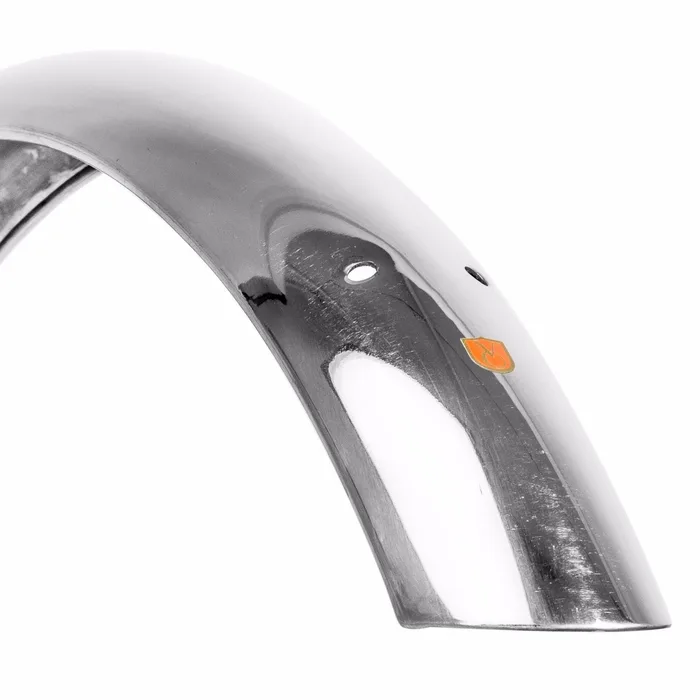
The Velo Orange 700c Smooth Fenders in 55mm are the set to buy if your bike has eyelets and you want fenders that will outlast it: aluminium alloy, full wrap, rated for tires up to 45mm, with a rear fender 120cm long, a front 90cm, both pre-drilled for stays, and a hardware kit that Velo Orange itemises down to the leather washers. Portland Design Works' Poncho Recycled Fenders are the value pick and the better answer if you would rather not polish anything, built from recycled polycarbonate on 6mm stays with polypropylene mudflaps and front safety release tabs, designed for tires up to 700x35mm. Mucky Nutz's Face Fender is the right call for mountain bikes, where full coverage is impossible: a low-profile front guard made in the UK from fully recycled plastic that keeps spray off your face and out of your fork seals, sized to any tire. The RockBros adjustable clip-on set is the one to skip, because it publishes no fender width, no tire clearance and no fender length, only the size of the box it ships in. Best for: anyone who has stopped riding in October and wants to stop doing that.
Our picks at a glance
- Velo Orange 700c Smooth Fenders, 55mm - Buy. Full-coverage alloy fenders with the most completely specified hardware kit here.
- Portland Design Works Poncho Recycled Fenders, 700x45 - Buy. Recycled polycarbonate full-coverage fenders with proper stays, mudflaps and a front safety release.
- Mucky Nutz Face Fender - It depends. The low-profile front guard that keeps trail spray out of your eyes and off your fork seals.
- ROCKBROS Adjustable Bike Fenders Set - Skip. A tool-free clip-on set whose listing publishes the dimensions of the box and almost nothing about the fenders.
The verdict in 30 seconds
What mattered most
- Material
- Coverage
- Fender width
- Maximum tire width stated
- Fender length
- Mounting
Fenders are the cheapest thing you can do to make a bike usable in winter, and the part of a bike build most likely to end in a rattle, a rub, or a set of unused brackets in a drawer. The reason is fit. A fender has to clear your tire, reach your frame's mounting points, and stay quiet over a season, and the makers that take this seriously publish tire clearances, fender lengths and a full list of the hardware they include. The ones that do not leave you to discover the gap on your living room floor. We compared four sets that cover the realistic range, from a polished full-coverage alloy set to a clip-on you can throw in a bag.
Full-coverage alloy fenders with the most completely specified hardware kit here.
Best for: A commuter, tourer or all-road bike with eyelets, where the fenders should outlive several drivetrains.
- Velo Orange publishes the dimensions that matter: 55mm wide, tires up to 45mm, rear fender 120cm and front 90cm.
- Both fenders arrive pre-drilled for stays, and the front is pre-drilled for a fork crown mount.
- The hardware kit is itemised: 5mm aluminium stays, R-clips and screws, L bracket, reinforcement plates, closed eyelet bolts, fork crown daruma, sliding bracket and leather washers.
- Velo Orange says the kit is as universal as possible and that you may still need one or two extra bits for your particular build.
- Aluminium dents, and a dented fender is difficult to make quiet again.
- There is no mention of a safety release tab at the front, which the PDW sets include.
- It is the most expensive set here and it wants a frame with proper eyelets.
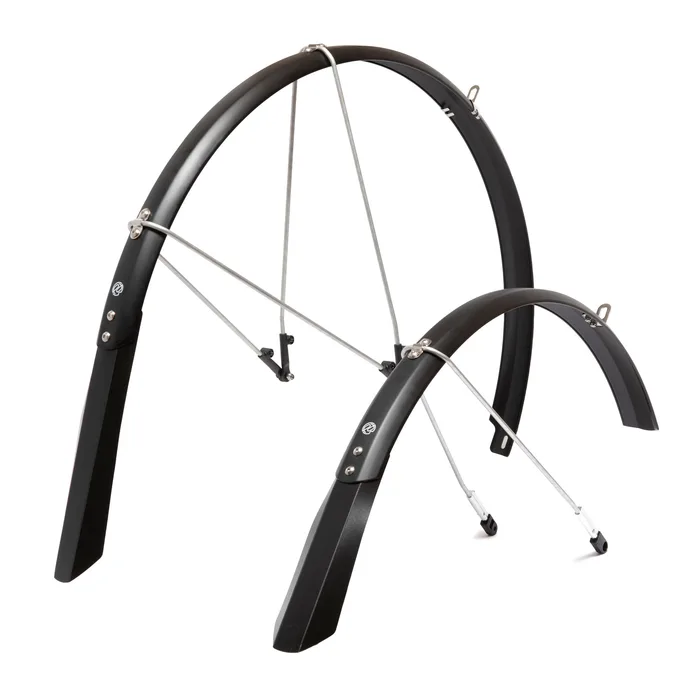
Recycled polycarbonate full-coverage fenders with proper stays, mudflaps and a front safety release.
Best for: Daily riders on 35mm or narrower tires who want full coverage without worrying about dents.
- Front safety release tabs let the fender break away if debris jams between it and the tire, which is the failure mode that hurts.
- Thick 6mm stays and sturdy polypropylene mudflaps, so the coverage extends past the fender itself.
- Made from recycled polycarbonate, which will not dent and does not need polishing.
- PDW states a maximum tire size of 700x35mm, narrower than the Velo Orange set's 45mm.
- PDW does not publish the fender lengths, only the nominal size.
- The hardware supplied is for bikes with brazed-on eyelets, so a frame without them needs extra parts from PDW's separate fit collection.
- PDW asks you to note an order if you have an eyelet under the brake bridge, which means the default kit does not cover every frame.
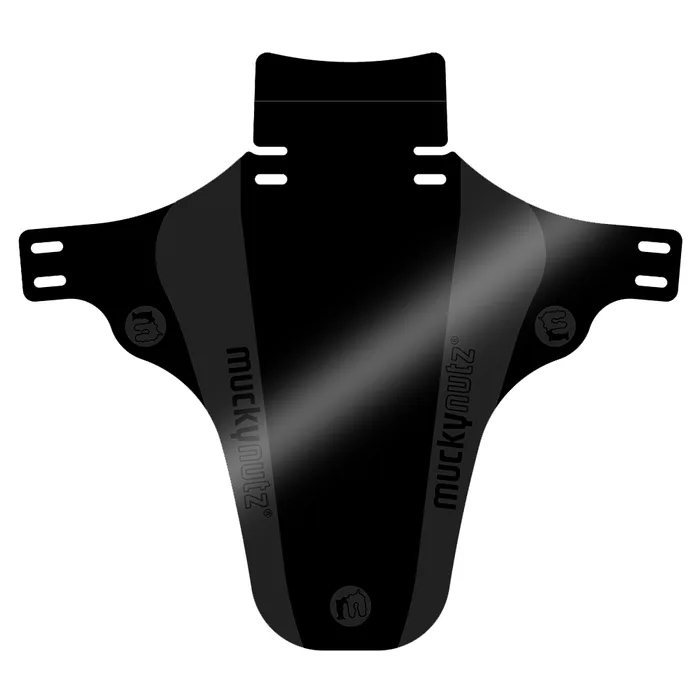
The low-profile front guard that keeps trail spray out of your eyes and off your fork seals.
Best for: Mountain bikers on suspension forks, where a full-coverage fender cannot be fitted at all.
- Designed to fit mountain bikes with forward-arch suspension forks regardless of wheel or tyre size, so fit is close to universal.
- Made in the UK from 100 percent recycled plastic, and light enough to leave on year round.
- Mucky Nutz positions it to pair with its Gut Fender for more front-end coverage, so there is a route to more protection.
- It is a front guard, not a fender set, so your back stays wet unless you add a rear.
- Mucky Nutz publishes no dimensions, no weight and no coverage figure.
- It does nothing for your drivetrain, which is the main thing full fenders protect.
- The mounting method is not described on the product page.
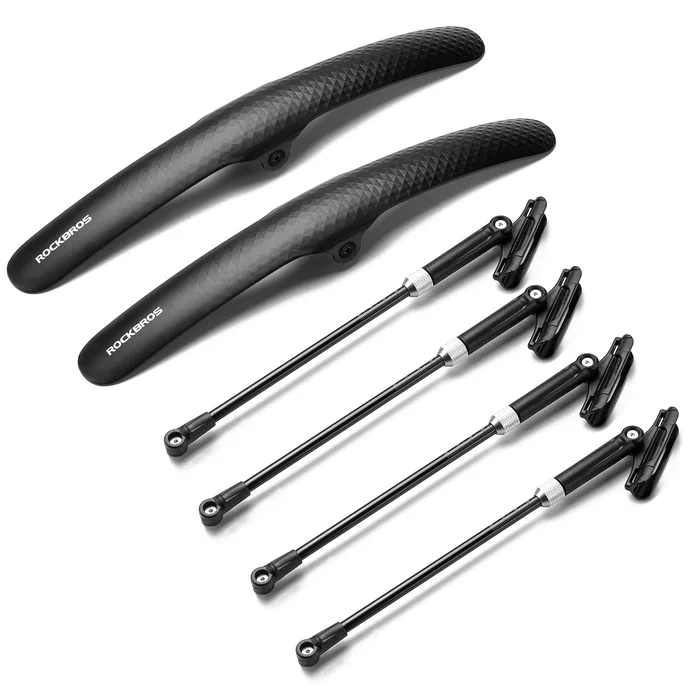
A tool-free clip-on set whose listing publishes the dimensions of the box and almost nothing about the fenders.
Best for: A bike with no eyelets where you genuinely only need occasional, partial cover.
- Fits without frame eyelets and comes off without tools, which suits a bike that only needs fenders some of the time.
- The support rod adjusts across a stated 28 to 32cm range, so it spans more than one wheel size.
- Sold singly or as a pair, so you can buy only the rear if that is all you want.
- No fender width, no fender length and no maximum tire width are published anywhere in the listing.
- The only measurements given are the package dimensions and the package weight.
- A clip-on fender sits further from the tire than a mounted one, so coverage is worse at the same length.
- There is no mention of a safety release, which matters more on a fender held by a clamp than one on rigid stays.
| Criteria | 700c Smooth Fenders, 55mm Top pick | Poncho Recycled Fenders, 700x45 | Face Fender | Adjustable Bike Fenders Set |
|---|---|---|---|---|
| Verdict | Buy it | Buy it | It depends | Skip it |
| Best for | A commuter, tourer or all-road bike with eyelets, where the fenders should outlive several drivetrains. | Daily riders on 35mm or narrower tires who want full coverage without worrying about dents. | Mountain bikers on suspension forks, where a full-coverage fender cannot be fitted at all. | A bike with no eyelets where you genuinely only need occasional, partial cover. |
| Price tier | $$ · premium | $ · mid-range | $ · budget | $ · budget |
| Material | Aluminium alloy | Recycled polycarbonate | 100 percent recycled plastic | PP plastic |
| Coverage | Full wrap, front and rear | Full wrap, front and rear | Front only, low profile | Partial, clip-on |
| Fender width | 55mm | 45mm nominal | Not published | Not published |
| Maximum tire width stated | 45mm | 700x35mm | Any, fork arch dependent | Not published |
| Fender length | Rear 120cm, front 90cm | Not published | Not published | Support rod 28 to 32cm |
| Mounting | Pre-drilled for stays and fork crown, itemised hardware kit | Hardware for brazed-on eyelets, 6mm stays | Fits forward-arch suspension forks, method not published | Clamp fit, Allen wrench to install, tool-free removal |
| Safety release | Not published | Front safety release tabs | Not applicable | Not published |
| Mudflaps | Not published | Polypropylene mudflaps included | None | Not published |
Which one is right for you?
- A commuter, tourer or all-road bike with eyelets, where the fenders should outlive several drivetrains. Buy it Velo Orange 700c Smooth Fenders, 55mm
- Daily riders on 35mm or narrower tires who want full coverage without worrying about dents. Buy it Portland Design Works Poncho Recycled Fenders, 700x45
- Mountain bikers on suspension forks, where a full-coverage fender cannot be fitted at all. It depends Mucky Nutz Face Fender
- A bike with no eyelets where you genuinely only need occasional, partial cover. Skip it ROCKBROS Adjustable Bike Fenders Set
How we judged the field
Five things decide whether a fender is worth fitting. The first is coverage, which is a function of length rather than width: a fender that stops at the brake bridge sends a rooster tail up the back of your jacket, and one that runs down past the bottom bracket keeps your feet and your drivetrain dry. The second is clearance, the gap between fender and tire, which has to be enough that wet grit passes through rather than packing up and rubbing. The third is the mounting hardware, because the difference between a good afternoon and a bad one is whether the box contains the specific bracket your frame needs. The fourth is what happens when something goes wrong, which on a front fender means whether there is a release designed to let go before the wheel locks. The fifth is material, which sets whether the fender dents, cracks or just gets scuffed.
The field splits by what the bike will accept. Full-coverage sets in alloy or polycarbonate need eyelets and a fork crown mount, and in return they keep the whole bike clean; Velo Orange and Portland Design Works both play here, one in polished metal and one in recycled plastic. Mountain bikes cannot take any of that, so the category answer there is a small guard on the fork arch, which is what Mucky Nutz built its business on. Clip-on sets are the third group, aimed at bikes with no mounting points at all, and they trade coverage for fitting anywhere. We took one from each position plus a second full-coverage set, so the material choice gets a fair hearing.
Velo Orange’s Smooth Fenders in 55mm are the most completely specified set here, and that is most of why they win. They are aluminium alloy, 55mm wide, made for 700c wheels and rated for tires up to 45mm. The rear fender is 120cm long and the front is 90cm, which is the figure that actually determines how dry you stay and the one most makers omit. Both come pre-drilled for stays and the front is pre-drilled for a fork crown mount. The hardware kit is listed item by item: 5mm polished aluminium stays, R-clips and screws, an L bracket, reinforcement plates, stay-to-fender closed eyelet bolts, a fork crown daruma, a sliding bracket, leather washers and printed instructions, all finished to match the fenders. Velo Orange is also honest that the kit is universal rather than exhaustive and that a particular build may need one or two extra bits. The real cost is the material: alloy dents, and a dented fender is hard to silence. Buy them for a bike you intend to keep.
PDW’s Poncho set answers the same brief in recycled polycarbonate. The stays are thick 6mm items rather than the thin wire that makes cheap fenders resonate, and there are sturdy polypropylene mudflaps so the coverage extends past the end of the fender itself, which is the part that keeps your shoes and the rider behind you dry. The feature worth paying for is at the front: safety release tabs, designed to let the fender break away if debris wedges between it and the tire, which is the fender failure that actually causes crashes. The set is designed for tires up to 700x35mm and ships with hardware for bikes with brazed-on eyelets, with PDW selling additional fit hardware separately. Two caveats sit in PDW’s own listing: the tire limit is narrower than the Velo Orange set’s, and PDW asks you to flag an order if your frame has an eyelet under the brake bridge, which tells you the default kit does not fit every frame. For most daily riders, this is the sensible buy.
The Face Fender is a different product for a different bike, and Mucky Nutz has been making it since 2009. It is a short, low-profile front guard that fits mountain bikes with forward-arch suspension forks, and because it hangs off the arch rather than the frame it fits regardless of wheel or tyre size. The job is not to keep you clean but to keep spray out of your eyes and off your fork seals, which is the part of a suspension fork that suffers most from grit. It is made in the UK from 100 percent recycled plastic, comes in several colours, and Mucky Nutz suggests pairing it with its Gut Fender if you want more front-end protection. The reasons this is a depends rather than a buy are structural. It covers the front only, it does nothing for your drivetrain, and Mucky Nutz publishes no dimensions, weight or coverage figure at all. If you ride a suspension bike, none of that matters, because the alternative is nothing.
The RockBros adjustable set is the shape of fender most people buy first: a clamp-on pair with an adjustable support rod, fitted with an included Allen wrench and removed without tools. That flexibility is genuine, and the stated 28 to 32cm rod adjustment means it spans more than one wheel size. The problem is that the listing never describes the fenders. There is no fender width, no fender length, no maximum tire width, no material thickness. The only measurements RockBros publishes are the dimensions of the shipping package and its weight, which tell you what the postman carries and nothing about what the fender covers. There is also no mention of a safety release, and that omission matters more here than elsewhere, because a clamp-mounted fender has a less defined path than one on rigid stays. Clip-ons have a real use case on a frame with no eyelets. Buy one that tells you how wide it is.
Velo Orange 700c Smooth Fenders, 55mm vs Portland Design Works Poncho Recycled Fenders, 700x45: which should you buy?
Velo Orange and Portland Design Works are competing for the same bike, and the decision is metal against plastic. Velo Orange gives you the numbers and the widest tire clearance: 55mm of fender for tires up to 45mm, a rear fender 120cm long, a front at 90cm, and a hardware kit itemised down to the leather washers that stop the stays buzzing. It is also the set that will still look good in ten years if you never hit anything, and will look permanently bad the first time you do. PDW’s Poncho gives you a material that shrugs off the knock, mudflaps that extend the coverage past the fender, 6mm stays that resist resonance, and front safety release tabs that no alloy set here mentions.
Choose Velo Orange if your tires are wider than 35mm, if your frame has proper eyelets, and if the bike is one you are building rather than commuting to death on. Choose the PDW Poncho if your tires are 35mm or narrower, if the bike lives outside or on a train, or if you want the safety release at the front. One practical warning applies to both: read the mounting notes before ordering rather than after. Velo Orange says outright that you may need an extra bracket for your build, and PDW asks you to flag an order if you have an eyelet under the brake bridge. Sorting that at checkout costs nothing and sorting it afterwards costs a week.
What to look for
- A published fender length: coverage comes from length, and Velo Orange stating a 120cm rear and a 90cm front is more useful than any width figure.
- The maker’s own maximum tire width: fender arcs differ, so use the stated limit rather than assuming a 45mm fender clears a 45mm tire.
- An itemised hardware list: stays, brackets, reinforcement plates and washers are what make a fender quiet, and a listing that names them has thought about fitting.
- A front safety release: PDW fits release tabs so the fender lets go if debris jams, and makers who have them say so.
- Mudflaps: they extend coverage past the end of the fender, which is what protects your feet, your bottom bracket and the rider behind you.
- Material against how the bike lives: alloy looks best and dents permanently, polycarbonate absorbs knocks and never needs polishing.
Our final take
Fenders are the highest return per pound you can spend on a bike that gets ridden in bad weather, and the whole game is fit. Velo Orange’s 55mm Smooth set wins because it publishes what you need to order correctly, clears the widest tires here, and arrives with hardware listed down to the washers. PDW’s Poncho is the more practical daily choice, with a material that does not dent, mudflaps that extend the coverage and a front safety release that the alloy sets do not mention. Mucky Nutz’s Face Fender is the right answer for a suspension bike, where a full fender is not an option and keeping grit out of your fork seals is the real win. And any fender whose listing will not tell you how wide it is has told you enough.
Questions, answered
How do I know what size fender my bike takes?
Start with your tire width and add clearance. The working rule is that a fender should be at least 10mm to 15mm wider than the tire so water thrown sideways still lands on it and so grit does not bridge the gap. Then check the maker's own stated limit, because the fender's arc matters as much as its width: Velo Orange rates its 55mm fenders for tires up to 45mm, while PDW rates its 700x45 sets for tires up to 700x35mm. Those two numbers look contradictory until you realise they describe different fender profiles, which is exactly why you use the maker's figure rather than your own arithmetic.
Can I fit fenders to a bike with no eyelets?
Yes, but it changes what you should buy. Full-coverage fenders assume brazed-on eyelets at the dropouts and a mount at the fork crown and brake bridge, and makers sell adapter hardware for frames that lack them. If your frame has none of those points, a clip-on or seatpost-mounted design is the realistic option, and you accept less coverage in return. What you should not do is improvise mounts for a rigid full-coverage fender, because the fender then has no defined path and will move into the tire.
What is a safety release tab and do I need one?
It is a front fender mount designed to let go if something gets jammed between the fender and the tire. Without it, debris can lock the front wheel, which is the most dangerous thing a fender can do. PDW fits front safety release tabs to its Poncho and Full Metal sets and says so explicitly. Not every maker publishes whether they have one, and if you ride a bike with a front fender in leaf and gravel season it is worth asking about before you buy.
Why do fenders rattle, and can it be fixed?
Almost always because a stay is under tension it was not meant to carry, or a fastener has loosened. The cure is order of assembly: mount the fender so it follows the tire's arc with even clearance all the way round, then attach the stays so they are neutral rather than pulling the fender into shape. Leather or rubber washers at the fender-to-stay joints damp the buzz, which is why Velo Orange includes leather washers in its kit. Retighten after the first wet ride, since everything settles.
Do mountain bikes need a different kind of fender?
Yes, because a suspension fork has no fixed relationship to the wheel and there is nowhere to hang a full-coverage front fender. The category answer is a short low-profile guard that mounts to the fork arch and catches spray before it reaches your face and the fork seals, which is what the Mucky Nutz Face Fender does. Rear protection on a full suspension bike is similarly a shock guard or a short rear rather than a wrap-around. Coverage is lower than a commuter set by design, and the goal is different.
Deciding between the top two? See our head-to-head: Velo Orange 700c Smooth Fenders, 55mm vs Portland Design Works Poncho Recycled Fenders, 700x45.
More Outdoors & Fitness reviews
 The Best Bike Floor Pumps: 4 Compared (and One to Skip)
  The Best Bike Grips: 4 Compared (and One to Skip)
  The Best Bike Lights: 4 Compared (and One to Skip)
  The Best Bike Locks: 4 Compared (and One to Skip)
  The Best Bike Multitools: 4 Compared (and One to Skip)
  The Best Bike Panniers: 4 Compared (and One to Skip)