

Health & Wellness
The Best Balance Boards: 4 Compared (and One to Skip)
We compared four balance boards - rocker, roller, wobble and standing-desk - on motion, difficulty, build and who each one actually suits.
The short version
Balance boards split into four jobs, so match the board to the goal rather than chasing one “best.” The StrongTek Professional Wooden Balance Board is our overall pick - an inexpensive, durable single-axis rocker that handles desk standing, core work and light rehab without a scary learning curve. The Indo Board Original is the runner-up and the one to buy if you genuinely want dynamic, skate- and surf-style balance you can progress for years. The Yes4All Wooden Wobble Balance Board is a smart, cheap buy for ankle rehab and balance drills specifically, but its constant 360-degree wobble makes it a poor all-rounder. Skip the FluidStance Level unless you want a design object - its motion is too gentle to justify flagship pricing when a wooden rocker does much the same desk job. Best for: most people, start with a rocker like the StrongTek; step up to the Indo Board only if you want real balance training.
Our picks at a glance
- StrongTek Professional Wooden Balance Board - Buy. A sturdy single-axis rocker that's the most useful first balance board for a desk, core work or early rehab.
- Indo Board Original - Buy. The gold-standard roller board for people who actually want to train dynamic, skate- and surf-style balance.
- Yes4All Wooden Wobble Balance Board - It depends. A round 360-degree wobble board that's excellent for ankle rehab and balance drills - and not much else.
- FluidStance Level - Skip. A beautifully made standing-desk board whose subtle, limited motion is hard to justify at flagship money.
The verdict in 30 seconds
What mattered most
- Motion type
- Difficulty / learning curve
- Best use case
- Build quality & durability
- All-day desk suitability
- Portability & footprint
“Balance board” covers four very different tools: a gentle rocker you can stand on at a desk, a dynamic roller that mimics a skateboard, a 360-degree wobble disc built for ankle work, and a designer board made to add movement to a standing desk. They are not interchangeable, so the right pick depends entirely on why you want one. We weighed independent testing against long-run owner reports to sort them out - the result is two easy recommendations, one that only makes sense for a specific job, and one good-looking board whose motion doesn't justify its price.
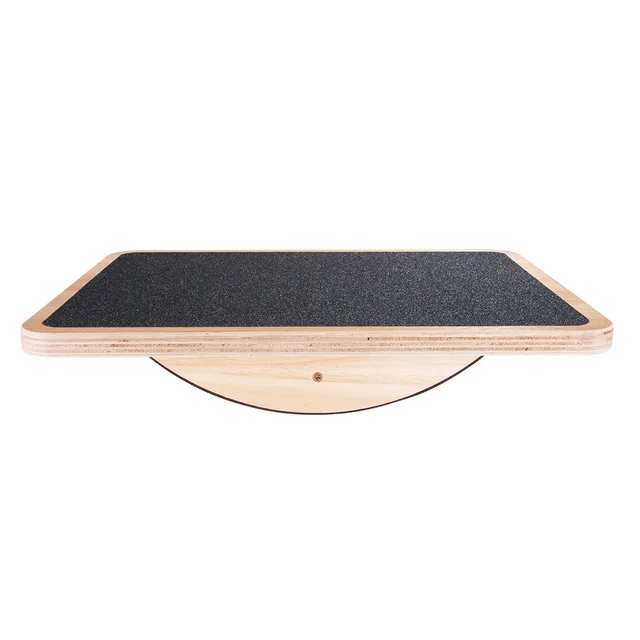
A sturdy single-axis rocker that's the most useful first balance board for a desk, core work or early rehab.
Best for: Anyone buying their first balance board for a standing desk, general core work or gentle stability training.
- Predictable side-to-side rocker motion is easy to control, so you can use it under a desk without thinking about it
- Wide anti-slip deck and a hardwood build that owners report holding up under heavy, repeated use and higher body weights
- Genuinely versatile - desk standing, calf and ankle work, squats and push-up variations all work on it
- Single-axis rocking is tame once your balance improves - it won't keep challenging an athlete
- The flat, wide deck is bulkier to store than a compact roller or disc
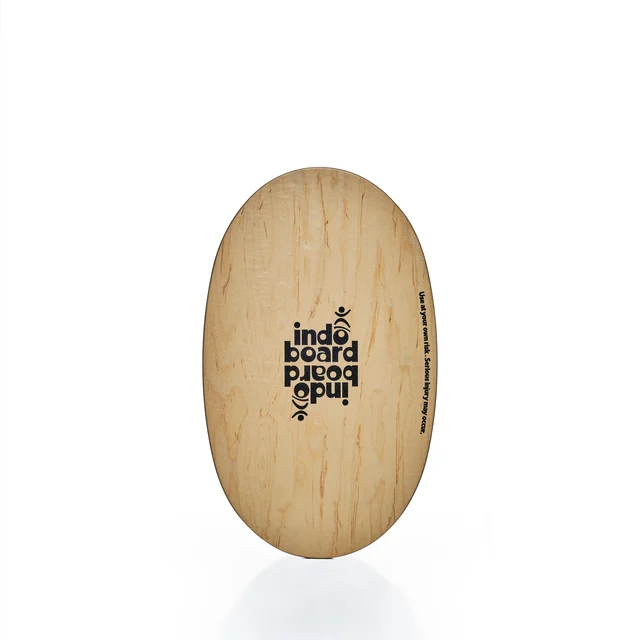
The gold-standard roller board for people who actually want to train dynamic, skate- and surf-style balance.
Best for: Surfers, skaters, snowboarders and anyone who wants a serious, progressable balance-training tool.
- Deck-on-roller design delivers true multi-directional, dynamic balance that no rocker or disc can match
- Maple deck and roller are widely praised in owner reports for smoothness and long-term durability
- Deep ecosystem - cushions, rollers and progressions let you scale from beginner to advanced
- Steep learning curve and a real fall risk - you need space and, at first, a wall or spotter
- Among the priciest options here, and overkill if you only want gentle desk movement
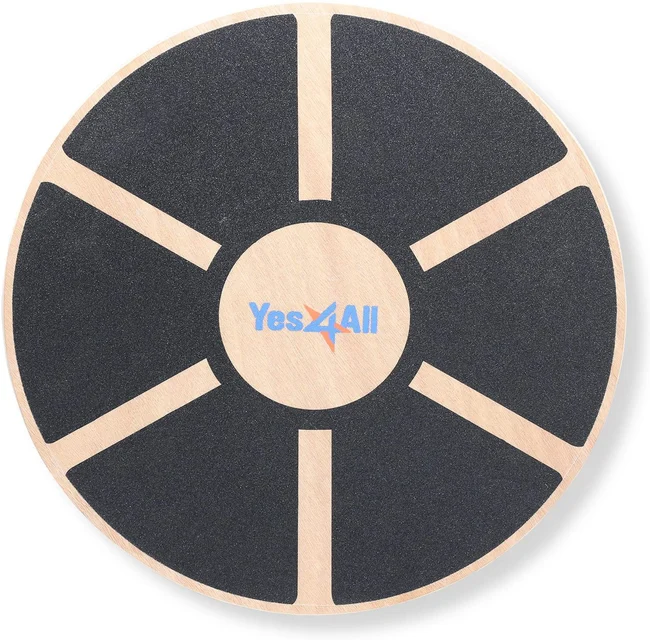
A round 360-degree wobble board that's excellent for ankle rehab and balance drills - and not much else.
Best for: Ankle rehab, physical-therapy programs and focused balance drills - not a general fitness or desk board.
- Full 360-degree tilt on a domed base is exactly what physios use for ankle and proprioception work
- Compact, light and cheap - easy to store and take to a gym or clinic
- Anti-slip surface and a stated load rating that suits standing drills and light plyometrics
- The constant multi-directional wobble is too demanding and distracting for all-day desk use
- Limited exercise range compared with a rocker or roller - it does balance drills and little else
- Fixed tilt means less room to progress once the basic drills feel easy
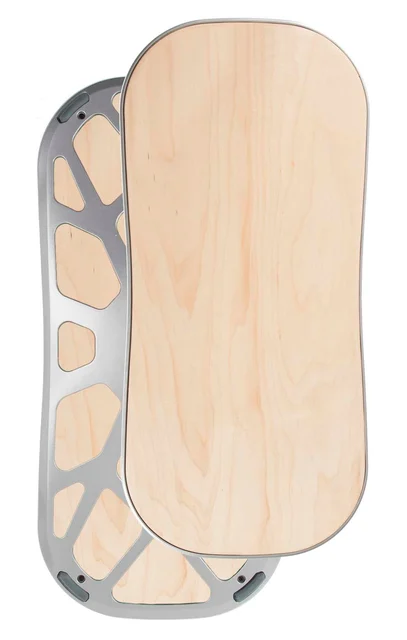
A beautifully made standing-desk board whose subtle, limited motion is hard to justify at flagship money.
Best for: Buyers who specifically want a design-object desk board and don't care about training value or price.
- Premium build with a cast-metal base and hardwood deck that looks and feels the part in an office
- Multi-directional but very gentle tilt keeps you subtly moving without disrupting focused work
- The motion is deliberately shallow - owners report it's far tamer than the price suggests
- Costs several times what a wooden rocker does while doing a similar desk job
- Not a training tool - too easy for balance or fitness work, so you pay for finish, not function
| Criteria | StrongTek Professional Wooden Balance Board Top pick | Indo Board Original | Yes4All Wooden Wobble Balance Board | FluidStance Level |
|---|---|---|---|---|
| Verdict | Buy it | Buy it | It depends | Skip it |
| Best for | Anyone buying their first balance board for a standing desk, general core work or gentle stability training. | Surfers, skaters, snowboarders and anyone who wants a serious, progressable balance-training tool. | Ankle rehab, physical-therapy programs and focused balance drills - not a general fitness or desk board. | Buyers who specifically want a design-object desk board and don't care about training value or price. |
| Price tier | $ · budget | $$$ · premium | $ · budget | $$$$ · flagship |
| Motion type | Single-axis rocker | Dynamic deck-on-roller | 360° dome wobble | Gentle multi-directional tilt |
| Difficulty / learning curve | Easy | Hard - steep curve | Moderate | Very easy |
| Best use case | Desk, core, light rehab | Dynamic balance training | Ankle rehab & drills | Standing-desk movement |
| Build quality & durability | Very good | Excellent | Good | Excellent |
| All-day desk suitability | Very good | Poor - too dynamic | Poor - too twitchy | Very good |
| Portability & footprint | Bulky deck | Deck + roller to store | Compact & light | Compact but heavy |
| Room to progress | Moderate | High | Low | Low |
| Price tier | $ · budget | $$$ · premium | $ · budget | $$$$ · flagship |
Which one is right for you?
- Anyone buying their first balance board for a standing desk, general core work or gentle stability training. Buy it StrongTek Professional Wooden Balance Board
- Surfers, skaters, snowboarders and anyone who wants a serious, progressable balance-training tool. Buy it Indo Board Original
- Ankle rehab, physical-therapy programs and focused balance drills - not a general fitness or desk board. It depends Yes4All Wooden Wobble Balance Board
- Buyers who specifically want a design-object desk board and don't care about training value or price. Skip it FluidStance Level
How we judged the field
We don’t run our own lab. Instead we synthesize independent testing, coaching and physical-therapy guidance, and a large volume of long-run owner reports, then weigh everything toward one question: what job is this board actually for?
That framing matters more here than in most categories, because “balance board” bundles together four genuinely different tools. So rather than crown a single winner, we judged each board on the job it’s built for - a rocker for the desk and general core work, a roller for dynamic training, a wobble disc for ankle rehab, and a designer board for standing-desk movement. Within that, we looked hard at motion type and how controllable it is, build quality and durability, how well the board suits all-day desk use versus focused sessions, portability, and how much room it leaves you to progress. Price was weighed against what you actually get, not in isolation.
This is the board most people should buy first. It’s a single-axis wooden rocker: a wide anti-slip deck on a fixed curved base that tips smoothly side to side. That predictability is the whole point - you can stand on it at a desk and stay subtly active without your conscious attention being dragged into balancing, and it’s forgiving enough for gentle stability and early rehab-style work. Owners consistently praise the hardwood build and stability under heavy, repeated use, and it’s versatile well beyond desk standing: calf raises, squats, planks and push-up variations all work on it. The honest limits are that the single-axis motion becomes tame once your balance improves, so it won’t keep challenging an athlete, and the flat deck is bulkier to tuck away than a disc. For the money, nothing else here is as broadly useful.
If your real goal is to train balance rather than just add movement to your day, this is the one to buy. The Original is a maple deck balanced on a loose roller, and that design produces true dynamic, multi-directional balance that a rocker or wobble disc can’t reproduce - it’s the closest thing to skateboarding or surfing you can do in a living room. Owner reports over years describe the deck and roller as smooth and highly durable, and the wider ecosystem of cushions, rollers and progressions means you can start gently and keep scaling the difficulty for a long time. The trade-offs are real: there’s a genuine learning curve and a fall risk, so you need clear floor space and, at first, a wall or spotter, and it’s among the priciest boards here. But for surfers, skaters, snowboarders or anyone who wants a serious, progressable trainer, it earns the premium.
This one is easy to recommend for a narrow job and easy to warn off for everything else. It’s a round wooden board on a dome, so it tilts a full 360 degrees - exactly the kind of multi-directional instability that physios lean on for ankle rehab and proprioception drills. It’s also compact, light and cheap, which makes it a sensible thing to keep by the desk or throw in a gym bag. The catch is that the same constant, unpredictable wobble that makes it good for focused balance drills makes it a poor all-rounder: it’s too twitchy and attention-hungry for all-day desk standing, and it doesn’t support the broader range of exercises a rocker or roller does. Buy it if you specifically want ankle and balance work; look elsewhere if you want one board to do everything.
The Level is the best-looking board in this group and the hardest to recommend. It pairs a cast-metal base with a hardwood deck, and it’s genuinely lovely to have on a desk - the multi-directional tilt keeps you gently moving while you work. The problem is value. The motion is deliberately shallow, and owners repeatedly note it’s far more subtle than the flagship price implies. It isn’t a training tool - it’s too easy for any real balance or fitness work - so what you’re paying for is finish and design, not function. A plain wooden rocker like the StrongTek delivers a very similar amount of desk movement for a small fraction of the cost. Unless you specifically want a design object and the price is genuinely irrelevant to you, this is the one to skip.
StrongTek Professional Wooden Balance Board vs Indo Board Original: which should you buy?
This is the real decision for most readers, because these two boards are both excellent and they answer completely different questions. Buy the StrongTek if you want a do-everything board for daily life: it’s cheap, sturdy, easy to stand on, and it covers desk standing, core work and gentle stability training without a scary learning curve. Buy the Indo Board Original if the point is to actually train dynamic balance - it delivers a quality and depth of motion the rocker can’t touch, and it will keep challenging you for years, but it costs more and demands practice, space and a bit of care. Put simply: the StrongTek is the smart default for the desk and general fitness; the Indo Board is the specialist’s board worth paying up for if dynamic balance is the goal.
What to look for
- Match the motion to the job. A single-axis rocker for the desk and general use; a roller for dynamic training; a 360-degree wobble for ankle rehab. Buying the wrong type is the most common mistake.
- Build quality and load rating. Look for solid hardwood or a proper cast base, a real anti-slip surface, and a load rating that comfortably clears your body weight.
- Controllability for your level. Predictable motion is a feature, not a weakness, for desk use and beginners; save the loose, dynamic boards for when you actually want the challenge.
- Room to progress. If you want to keep improving, favor a board with adjustable difficulty or an ecosystem of rollers and cushions rather than a fixed, one-note tilt.
- Footprint and storage. Wide decks are versatile but bulkier; discs and rollers store smaller. Be honest about where it will live.
- Price against function. Pay for motion and durability, not for looks alone - a premium finish doesn’t add training value.
Our final take
There is no single best balance board, only the best board for your reason for wanting one. For most people that reason is a standing desk, some core work and a bit of stability training, and the StrongTek Professional Wooden Balance Board covers all of it cheaply and durably - our overall pick. If you genuinely want to train dynamic, skate- and surf-style balance, step up to the Indo Board Original; it’s more expensive and takes practice, but nothing else here trains balance as well. The Yes4All Wooden Wobble Balance Board is a smart, inexpensive buy for ankle rehab and focused drills, as long as you don’t expect it to be an all-rounder. And the FluidStance Level is the one to skip: it’s beautifully made, but its gentle motion doesn’t justify flagship money when a wooden rocker does much the same desk job. Buy for the movement you’ll actually use - not for the one that looks best on the desk.
Questions, answered
What's the difference between a rocker board, a wobble board and a roller board?
A rocker board (like the StrongTek) sits on a fixed curved base and tips on one axis - simple, stable and predictable. A wobble board (the Yes4All) balances on a dome so it tilts 360 degrees, which is harder and great for ankle work but twitchy for everyday use. A roller board (the Indo Board) is a separate deck balanced on a loose cylinder, giving true side-to-side dynamic motion that mimics skating or surfing - the most challenging and the most trainable of the three.
Which balance board is best for a standing desk?
A gentle single-axis rocker is the right desk tool because its predictable motion lets you keep working while your legs stay subtly active - the StrongTek does this well for very little money. The FluidStance Level is also built for the desk and looks fantastic, but its motion is similarly gentle at a far higher price. Avoid a 360-degree wobble board or a roller at your desk: both demand too much attention to balance and pull focus from your work.
Are balance boards good for physical therapy and injury recovery?
This is general product information, not medical advice - for any injury or rehab program, follow the guidance of a qualified professional. That said, wobble boards like the Yes4All are a classic proprioception and ankle-stability tool that clinicians often use, and gentle rocker boards can suit early, controlled stability work. If you're recovering from an injury, get a specific recommendation on which board and which drills before you start.
Is the Indo Board worth the extra money over a cheap rocker?
Only if you want what it does. The Indo Board Original delivers genuine dynamic, multi-directional balance training that a rocker simply can't, and its build quality and progression options justify the premium for surfers, skaters and dedicated trainers. But if your goal is desk movement, light core work or basic stability, a rocker like the StrongTek gives you most of the everyday benefit for a fraction of the cost - the Indo Board would be overkill.
Are balance boards safe for beginners?
It depends on the type. A rocker board is very beginner-friendly because it only tips one way and stays close to the ground. A wobble board is manageable but takes practice. A roller board has a real fall risk early on, so beginners should use it near a wall or with a spotter, on a clear floor, and ideally over a mat. Whatever you choose, start with light, short sessions and build up as your balance improves.
Deciding between the top two? See our head-to-head: StrongTek Professional Wooden Balance Board vs Indo Board Original.
More Health & Wellness reviews
 The Best Indoor Air Quality Monitors: What's Worth Buying in 2026
  The Best Blood Glucose Meters: 4 Compared (and One to Skip)
  The Best Home Blood Pressure Monitors of 2026
  The Best Blue-Light Glasses for Screen Use: 4 Compared (and One to Skip)
  The Best Carbon Monoxide Detectors: 4 Compared (and One to Skip)
  The Best Cold Plunge Tubs: 4 Compared (and One to Skip)