

Health & Wellness
The Best Blood Glucose Meters: 4 Compared (and One to Skip)
We compared four current fingerstick glucose meters on reported accuracy, sample size, handling, app support, and long-term strip supply.
The short version
For most people the Contour Next One is the meter to beat: it is consistently one of the most accurate consumer models and its re-dosing strip reduces wasted tests. The Accu-Chek Guide is nearly as strong and has the most fumble-proof strips and fast results, making it an easy second choice. The OneTouch Verio Reflect is worth it only if you specifically want on-meter coaching and color range cues and can accept premium strip prices. The Care Touch CT210 is cheap but far less validated and carries real uncertainty about future strip supply, so it is hard to recommend for daily use. Accuracy standards, sample size, handling, and long-term strip availability mattered most in our comparison. Best for: buy the Contour Next One (or the Accu-Chek Guide) for the best mix of accuracy, easy testing, and dependable strips.
Our picks at a glance
- Ascensia (Contour) Contour Next One - Buy. The accuracy benchmark most reviewers measure everything else against, with a forgiving re-dosing strip.
- Roche (Accu-Chek) Accu-Chek Guide - Buy. A fumble-proof design with fast results and a strip ejector that keeps you from touching used strips.
- LifeScan (OneTouch) OneTouch Verio Reflect - It depends. A feature-rich meter that talks back with on-screen coaching, if you can live with premium strip costs.
- Care Touch CT210 Blood Glucose Meter - Skip. A cheap, no-frills kit whose biggest risk is whether you'll still be able to buy matching strips.
The verdict in 30 seconds
What mattered most
- Reported accuracy
- Blood sample size
- Result speed
- App and connectivity
- Handling and strips
- Built-in guidance
A fingerstick glucose meter is only as good as its accuracy, how forgiving it is at the moment of testing, and whether you can reliably buy strips for years. We synthesized independent testing and owner reports across four widely sold 2026 models. Two earn a clear buy, one is a solid choice only if you want built-in coaching, and one budget kit is hard to recommend for the long haul. This is general product information, not medical advice.
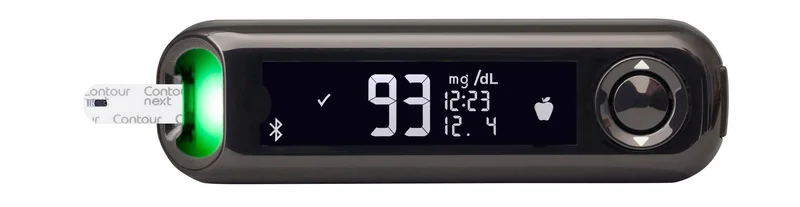
The accuracy benchmark most reviewers measure everything else against, with a forgiving re-dosing strip.
Best for: Anyone who wants the closest thing to a reference-grade reading and a strip that forgives a small blood drop.
- Independent testing repeatedly places it among the most accurate consumer meters, reading close to lab reference values
- Second-Chance sampling lets you add more blood to the same strip without wasting it or skewing the result
- smartLIGHT target range indicator gives instant feedback; syncs to the Contour Diabetes app over Bluetooth
- Meter guidance is simpler than coaching-style rivals
- Strips are moderately priced rather than the cheapest available
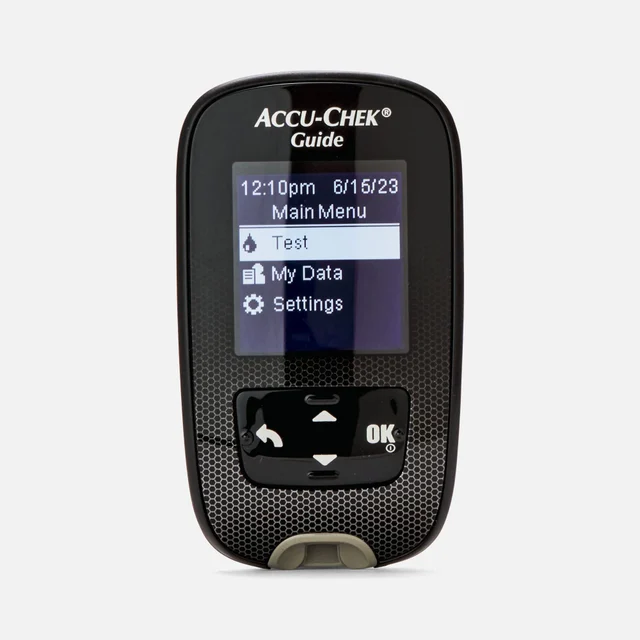
A fumble-proof design with fast results and a strip ejector that keeps you from touching used strips.
Best for: People who value easy handling and mess-free strips as much as raw accuracy.
- Reviewers report accuracy comfortably inside recognized meter standards, with quick results
- A strip ejector button avoids touching used strips, and the edge-fill strip is easy to target
- Connects to the mySugr app over Bluetooth for logging and trends
- Strips can run a little pricier than some competitors
- App experience is capable but less hand-holding than coaching-focused meters
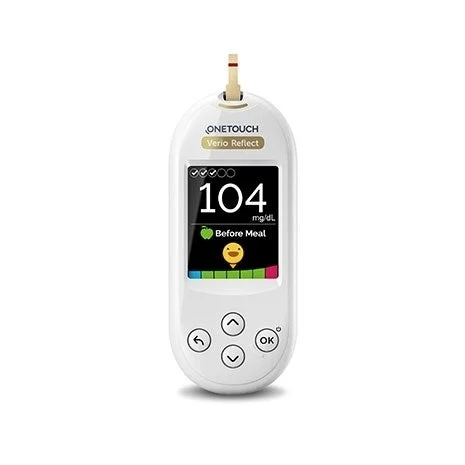
A feature-rich meter that talks back with on-screen coaching, if you can live with premium strip costs.
Best for: Newer testers or anyone who wants built-in guidance and visual range cues more than the lowest running cost.
- ColorSure Plus technology signals when a reading is approaching high or low
- Provides personalized guidance and encouragement, per LifeScan
- Bluetooth sync to the OneTouch Reveal app builds an easy-to-read history
- Independent testing puts its accuracy a step behind the class leaders, though still within standards
- Strips are among the more expensive, which adds up quickly over months of testing
Amazon had no buyable listing for this when we last checked. The link still works if it returns.
Find it on Amazon Read our detailed assessment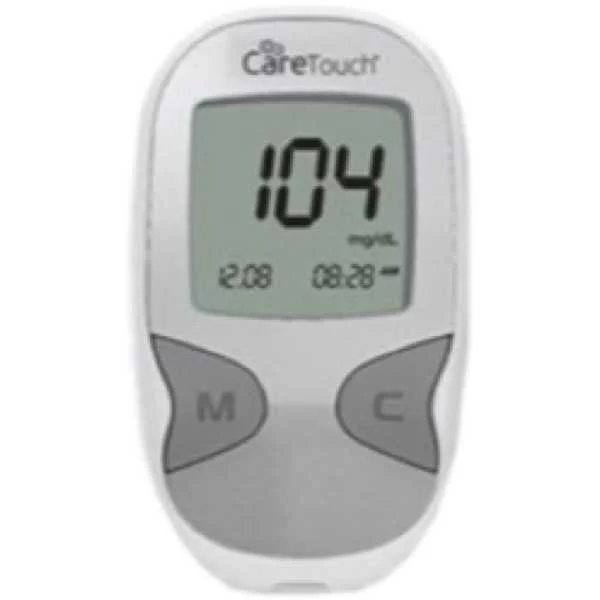
A cheap, no-frills kit whose biggest risk is whether you'll still be able to buy matching strips.
Best for: Occasional, cost-first testing where you can verify strips are in stock and in date before relying on it.
- Very low upfront cost, with meter, lancing device, and lancets bundled together
- No coding, a small blood sample, and a quick result keep it simple
- On-device memory with pre/post-meal flags and averages
- Accuracy is far less independently validated, and owners report more result-to-result variance
- No Bluetooth or app for trend tracking
- We could not confirm current strip supply from the maker, so long-term strip availability is a real concern
| Criteria | Contour Next One Top pick Buy it Buy | Accu-Chek Guide Buy it Buy | OneTouch Verio Reflect It depends | Care Touch CT210 Blood Glucose Meter Skip it Buy |
|---|---|---|---|---|
| Best for | Anyone who wants the closest thing to a reference-grade reading and a strip that forgives a small blood drop. | People who value easy handling and mess-free strips as much as raw accuracy. | Newer testers or anyone who wants built-in guidance and visual range cues more than the lowest running cost. | Occasional, cost-first testing where you can verify strips are in stock and in date before relying on it. |
| Price tier | $$ · mid-range | $$ · mid-range | $$$ · premium | $ · budget |
| Reported accuracy | Among the most accurate in independent testing | Strong; comfortably within meter standards | Solid but a step behind the leaders | Least independently validated; more variance reported |
| Blood sample size | Small sample, volume not checked | Small drop along the strip edge | Tiny sample per maker | Small sample, volume not checked |
| Result speed | Seconds, figure not checked | Under 4 seconds | About 5 seconds | Quick, figure not checked |
| App and connectivity | Bluetooth; Contour Diabetes app | Bluetooth; mySugr app | Bluetooth; OneTouch Reveal app | None; standalone on-device memory |
| Handling and strips | Second-Chance re-dosing; smartLIGHT | Strip ejector; edge-fill strip | Color range indicator; edge-fill strips | Basic strips; no coding |
| Built-in guidance | smartLIGHT range colors | Target range and trend flags | On-meter guidance plus ColorSure Plus | Pre/post-meal flags and averages |
| Strip ecosystem outlook | Widely stocked | Widely stocked | Widely stocked | Supply not confirmed with the maker |
| Price tier | $$ · mid-range | $$ · mid-range | $$$ · premium | $ · budget |
Which one is right for you?
- Anyone who wants the closest thing to a reference-grade reading and a strip that forgives a small blood drop. Buy it Ascensia (Contour) Contour Next One
- People who value easy handling and mess-free strips as much as raw accuracy. Buy it Roche (Accu-Chek) Accu-Chek Guide
- Newer testers or anyone who wants built-in guidance and visual range cues more than the lowest running cost. It depends LifeScan (OneTouch) OneTouch Verio Reflect
- Occasional, cost-first testing where you can verify strips are in stock and in date before relying on it. Skip it Care Touch CT210 Blood Glucose Meter
How we judged the field
We did not run our own lab. Instead, we synthesized independent testing, published accuracy evaluations against recognized meter standards, and aggregated owner reports from people who test every day. Four criteria did most of the work in separating these meters.
First, accuracy: how closely a meter tracks reference values, and how repeatable it is test to test. Second, the moment of testing: sample size, how forgiving the strip is if your blood drop is small, and whether the design helps you avoid fumbling or touching used strips. Third, guidance and connectivity: on-screen range cues, coaching messages, and whether results sync to an app. Fourth, and easy to overlook, the strip ecosystem: strips are the real long-term cost and the thing you must be able to buy for years, so brand stability matters.
One note that applies to every product here: these are general observations to help you compare devices, not medical advice, and no home meter replaces guidance from a healthcare professional.
Contour Next One
Buy itThe Contour Next One is the meter reviewers tend to treat as the accuracy yardstick. Across independent evaluations it repeatedly lands among the closest consumer meters to lab reference values, with strong repeatability. Its standout practical feature is Second-Chance sampling: if your first drop is too small, you can add more blood to the same strip within a few seconds without ruining the reading or wasting a strip. The smartLIGHT target range indicator gives instant feedback, and results sync over Bluetooth to the Contour Diabetes app. Strips are moderately priced rather than rock-bottom, and the on-meter guidance is simpler than coaching-heavy rivals, but for pure trustworthiness of the number it is our top pick.
Accu-Chek Guide
Buy itThe Accu-Chek Guide is the most fumble-proof meter in the group. A strip-eject button means you never have to pull a used strip out by hand, you apply a small drop anywhere along the strip edge, results appear in under four seconds, and Roche states that 95 percent of results fall within 10 mg/dL of the lab reference below 100 mg/dL and within 10 percent at 100 mg/dL or higher. It pairs with the mySugr app over Bluetooth for logging and trends. Strips can cost a touch more than some competitors, and the app is more of a logbook than a coach, but as an everyday, low-hassle meter it is excellent and only a hair behind our top pick.
OneTouch Verio Reflect
It dependsThe OneTouch Verio Reflect is the most feature-rich meter here. Its ColorSure Plus technology signals whether you are approaching a high or low reading, and LifeScan says the system provides personalized guidance and encouragement. Results also sync to the OneTouch Reveal app over Bluetooth. The trade-offs are real: independent testing places its accuracy a step behind the class leaders, though still within standards, and its strips are among the pricier options, which adds up fast for daily testers. If you want built-in coaching and visual range cues and are willing to pay more per strip, it is a good fit; if you mainly want the most accurate, lowest-running-cost meter, the two picks above make more sense.
Care Touch CT210 Blood Glucose Meter
Skip itThe Care Touch CT210 is the budget option, usually sold as an all-in-one kit with a lancing device and lancets. It keeps things simple with no coding, a small blood sample, and a quick result, plus on-device memory with meal flags and averages. The problems are the ones that matter most over time. Its accuracy is far less independently validated than the name brands, and owners report more variability between readings. There is no Bluetooth or app. Most importantly, we could not confirm current strip supply with the maker, so there is genuine uncertainty about whether you will be able to buy matching strips down the road, and a meter you cannot get strips for is useless. Unless you only need occasional testing and can confirm in-date strips are in stock, spend a little more elsewhere.
Contour Next One vs Accu-Chek Guide: which should you buy?
These two are close, and you would be well served by either. Choose the Contour Next One if accuracy is your single highest priority and you like the safety net of adding more blood to the same strip; it is the model most often cited as the front-runner for reading close to lab values. Choose the Accu-Chek Guide if day-to-day convenience matters just as much as the number: its strip ejector, edge-fill strip, and fast results make the whole routine smoother, especially if dexterity is a concern. Both connect to solid apps and both use widely stocked strips, so neither leaves you worrying about supply. In short: Contour for the most trustworthy reading, Accu-Chek for the most trouble-free testing.
What to look for
- Accuracy and repeatability: favor meters with a strong record in independent testing against recognized standards.
- Strip cost and availability: strips are the real long-term expense; make sure they are affordable and reliably in stock.
- Sample size and re-dosing: a small required drop and the ability to re-apply blood reduce painful repeat sticks and wasted strips.
- Handling: strip ejectors, edge-fill strips, and target range lights make testing easier, particularly with reduced dexterity or vision.
- Guidance and connectivity: color range indicators, on-screen tips, and app syncing help you see patterns, if you want them.
- Strip compatibility: strips are not interchangeable between brands, so confirm any strips you already own match the exact meter model.
Our final take
For most people, the Contour Next One is the meter to buy: it is consistently one of the most accurate home meters and its Second-Chance strip forgives an imperfect blood drop. The Accu-Chek Guide is an equally easy recommendation and the better pick if handling convenience is a priority. The OneTouch Verio Reflect is worth its premium only if you specifically want on-meter coaching and color range cues. The Care Touch CT210 is inexpensive but far less validated and clouded by strip-supply uncertainty, so it is the one to skip for regular use. Whichever you choose, remember this is general product information, not medical advice, and talk to a healthcare professional about how to test and what your results mean.
Questions, answered
Which blood glucose meter is the most accurate?
In the independent testing and owner reports we synthesized, the Contour Next One is consistently at or near the top for accuracy, with the Accu-Chek Guide close behind. The name-brand meters here publish accuracy claims against recognized standards, but no home fingerstick meter is lab-perfect, and readings can vary with technique, strip handling, and sample quality.
Are the numbers on these images and comparisons medical advice?
No. This is general product information to help you compare devices, not medical advice. It is not guidance for diagnosing, dosing, or treating diabetes or any other condition. Always follow the instructions that come with your meter and consult a doctor, pharmacist, or diabetes educator about testing, targets, and how to act on your results.
Why do strip costs matter more than the price of the meter?
Meters themselves are relatively inexpensive, but if you test daily you buy strips continuously, so strips drive nearly all of the long-term cost. That is why we weigh both the ongoing strip price and whether a brand's strips are reliably in stock. The Care Touch kit is cheap upfront but carries more uncertainty about future strip supply.
Do I need Bluetooth and an app?
It is optional. The Contour Next One, Accu-Chek Guide, and OneTouch Verio Reflect all sync to phone apps that chart your history, which many people find motivating. The Care Touch stores readings on the device only. If you like reviewing trends or sharing logs, a connected meter helps; if you prefer simplicity, on-device memory can be enough.
What should I look for when switching meters?
Check that the meter uses strips you can easily and affordably buy, confirm the sample size and handling suit your dexterity, and look at whether you want features like re-dosing, a lit test port, or on-screen range coaching. Also make sure any strips you already own match the exact meter model, since strips are not interchangeable across brands.
Deciding between the top two? See our head-to-head: Ascensia (Contour) Contour Next One vs Roche (Accu-Chek) Accu-Chek Guide.
More in Health & Wellness
Blood Glucose Monitors, Explained Plain-English guide → Ascensia (Contour) Contour Next One vs Roche (Accu-Chek) Accu-Chek Guide Head-to-head →  The Best Home Blood Pressure Monitors of 2026
  The Best Blue-Light Glasses for Screen Use: 4 Compared (and One to Skip)
  The Best Carbon Monoxide Detectors: 4 Compared (and One to Skip)
  The Best Cold Plunge Tubs: 4 Compared (and One to Skip)