

Outdoors & Fitness
The Best Two-Way Radios: 4 Compared (and One to Skip)
We compared four current walkie-talkies on real-world range, ruggedness, battery life, ease of use, and who each one actually suits.
The short version
For serious outdoor use, the Rocky Talkie 5 Watt Radio is the pick: waterproof to IP67, drop-tough, glove-friendly, and the strongest real-world reach in this group, though it costs the most and sells as a single unit. For families, campers, and road trips, the Midland GXT1030VP4 is the better value, a ready-to-use GMRS pair with weather scan, alerts, and plenty of channels at a mid-range price. The Motorola Talkabout T480 is fine for casual, close-range use and adds an AA-battery fallback, but its lower power and light sealing limit it. Skip the Baofeng UV-9G unless you enjoy programming radios, since its capability comes wrapped in menus that frustrate beginners. And ignore the 36-mile box claims: that is line-of-sight marketing, and most pairs realistically reach 1 to 5 miles depending on terrain. Best for: outdoor groups and families who want radios that work where phones do not.
Our picks at a glance
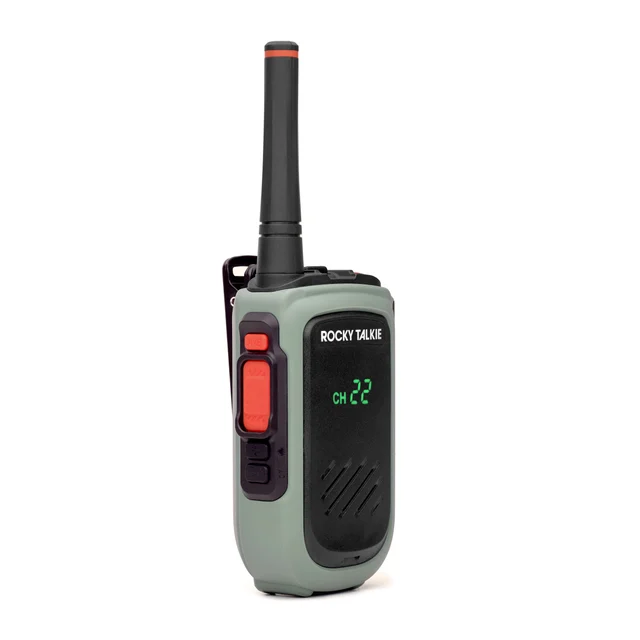
- Rocky Talkie 5 Watt Radio - Buy. The rugged, waterproof backcountry radio that survives drops, cold, and dunkings while staying dead simple to use.
- Midland GXT1030VP4 - Buy. The capable GMRS pair that packs weather alerts, high power, and loads of features for a sensible mid-range price.
- Motorola Talkabout T480 - It depends. A friendly, familiar consumer radio for casual use, but its low power and light sealing cap what it can do.
- Baofeng UV-9G GMRS - Skip. A powerful, waterproof GMRS handheld that most families should skip because the setup and controls fight beginners.
The verdict in 30 seconds
What mattered most
- Service (FRS/GMRS)
- Real-world range
- Durability & water
- Ease of use
- Battery
- Weather alerts
Two-way radios still beat phones when there is no signal: on the ski hill, on a trail, or spread across a campsite. The catch is that the giant range numbers on the box ("36 miles!") are line-of-sight marketing, not what you get between two people on the ground. We synthesized independent testing and a large pool of owner reports to sort four radios you can actually buy in 2026. Two earn a clear buy, one is a it-depends pick for casual families, and one powerful radio we steer most people away from.
The rugged, waterproof backcountry radio that survives drops, cold, and dunkings while staying dead simple to use.
Best for: Skiers, climbers, backcountry and off-road users who need a tough, waterproof radio that just works in bad conditions.
- Full 5-watt GMRS output plus repeater access gives it the strongest real-world reach here in open terrain
- IP67 waterproof and shock-resistant with a shatterproof screen and a climbing-rated leash, built for skiing and mountains
- Long cold-weather battery life (owners report several days per charge) and controls you can work with gloves on
- Priciest option, and it is a single radio rather than a bundled pair by default
- Transmitting on GMRS legally requires an inexpensive no-test FCC license
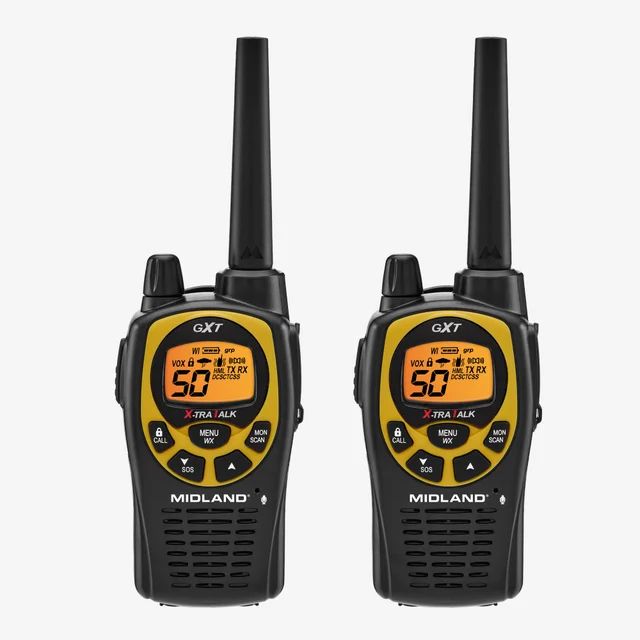
The capable GMRS pair that packs weather alerts, high power, and loads of features for a sensible mid-range price.
Best for: Families, campers, and road-trippers who want a fully featured pair with weather alerts without paying premium prices.
- Ships as a ready-to-use pair with chargers, so a family or group is set up out of the box
- High-power GMRS with NOAA weather scan and alerts, an SOS siren, and 50 channels with privacy codes
- Strong value: most of the range and features of premium radios for noticeably less money
- Only splash-resistant, not submersible, so it is less at home in heavy rain or on the water
- Bulkier plastic build feels less durable than the toughened outdoor radios
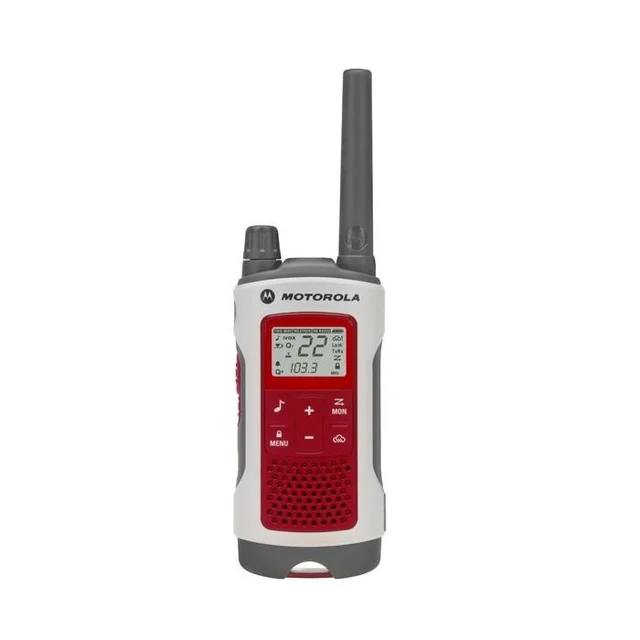
A friendly, familiar consumer radio for casual use, but its low power and light sealing cap what it can do.
Best for: Casual family use, neighborhood and event coordination, or a low-cost backup radio in a go-bag.
- Simple, approachable interface with a built-in flashlight, FM radio, and NOAA weather channels
- Runs on the rechargeable pack or standard AA batteries, a handy backup when you cannot recharge
- Light, pocketable, and inexpensive for keeping a group loosely in touch
- Lower effective power means shorter real-world range than the GMRS picks once terrain gets in the way
- Only splash-rated (IP54), so it will not survive a dunk or heavy downpour
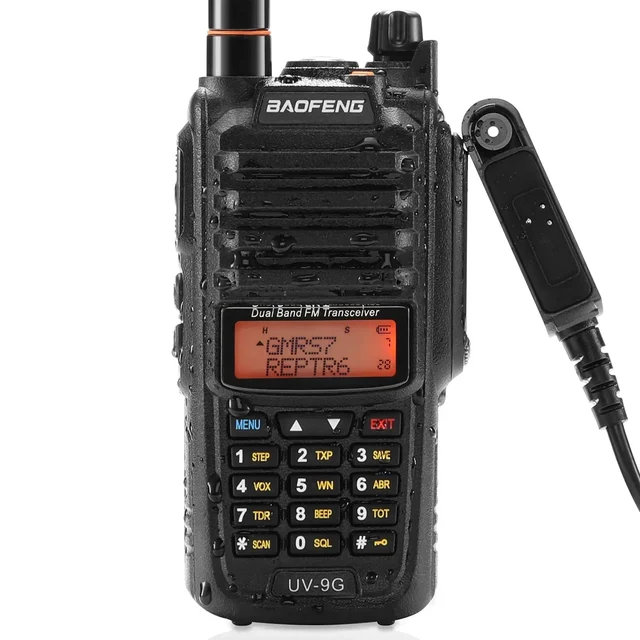
A powerful, waterproof GMRS handheld that most families should skip because the setup and controls fight beginners.
Best for: Radio hobbyists and tinkerers comfortable programming channels, not families wanting grab-and-go simplicity.
- A lot of capability for the money: 5-watt GMRS output, IP67 waterproofing, and repeater support
- Full keypad and CHIRP compatibility let tinkerers program and customize channels in detail
- Sold as a rechargeable pair, so two people are covered from one box
- Fiddly menus and channel programming are frustrating for anyone who just wants to press talk
- Manuals and firmware feel rough, and you still need the GMRS license before transmitting
| Criteria | Rocky Talkie 5 Watt Radio Top pick | Midland GXT1030VP4 | Motorola Talkabout T480 | Baofeng UV-9G GMRS |
|---|---|---|---|---|
| Verdict | Buy it | Buy it | It depends | Skip it |
| Best for | Skiers, climbers, backcountry and off-road users who need a tough, waterproof radio that just works in bad conditions. | Families, campers, and road-trippers who want a fully featured pair with weather alerts without paying premium prices. | Casual family use, neighborhood and event coordination, or a low-cost backup radio in a go-bag. | Radio hobbyists and tinkerers comfortable programming channels, not families wanting grab-and-go simplicity. |
| Price tier | $$$ · premium | $$ · mid-range | $ · budget | $ · budget |
| Service (FRS/GMRS) | GMRS, 5W (license) | GMRS, high power (license) | FRS, low power (no license) | GMRS, 5W (license) |
| Real-world range | Best here in open terrain | Strong | Modest, drops with terrain | Strong (once set up) |
| Durability & water | IP67, shockproof, shatterproof screen | Splash-resistant only | IP54 splash-resistant | IP67 waterproof |
| Ease of use | Very simple, glove-friendly | Simple, well labeled | Very simple | Complex, menu-heavy |
| Battery | Long, strong in cold | Rechargeable pack, good | Rechargeable or AA backup | Rechargeable pair, good |
| Weather alerts | NOAA channels + alerts | NOAA scan + alerts | NOAA channels + alerts | NOAA channels |
| Sold as | Single radio | Pair with chargers | Single (pairs sold too) | Pair with chargers |
| Price tier | $$$ · premium | $$ · mid-range | $ · budget | $ · budget |
Which one is right for you?
- Skiers, climbers, backcountry and off-road users who need a tough, waterproof radio that just works in bad conditions. Buy it Rocky Talkie 5 Watt Radio
- Families, campers, and road-trippers who want a fully featured pair with weather alerts without paying premium prices. Buy it Midland GXT1030VP4
- Casual family use, neighborhood and event coordination, or a low-cost backup radio in a go-bag. It depends Motorola Talkabout T480
- Radio hobbyists and tinkerers comfortable programming channels, not families wanting grab-and-go simplicity. Skip it Baofeng UV-9G GMRS
How we judged the field
We do not run our own radio lab. Instead we synthesize independent testing and a broad pool of owner reports, then weight the criteria that decide whether a radio earns its place in a pack or a glovebox. Those are: real-world range in terrain that actually blocks signal (not the line-of-sight number on the box); durability and water resistance; battery life, especially in cold; ease of use when you are tired, gloved, or in a hurry; useful extras like NOAA weather alerts; and whether the radio ships ready to use. We deliberately spanned the real decision here, from no-license FRS radios for casual family use to higher-power GMRS radios for people who want more reach and toughness. Prices are given only as qualitative tiers.
One theme runs through everything below: ignore the giant mileage claims. A “36-mile” radio is rated mountaintop to mountaintop with clear air in between. Between two people standing on the ground, expect something closer to 1 to 5 miles depending on hills, trees, and buildings. Power and antenna quality still matter, which is why the GMRS radios pull ahead, but no handheld beats physics.
This is the radio we would hand someone heading into real conditions. It runs a full 5 watts on GMRS with repeater access, which gives it the strongest usable range in this group once you are in open terrain. More important is how it is built: waterproof to IP67 (it survives a dunk), shock-resistant, with a shatterproof screen and a climbing-rated leash so it rides safely on a pack strap. Owners consistently praise its cold-weather battery life and controls big enough to work with gloves. The interface stays simple, which matters when you are cold and rushing. The trade-offs are straightforward: it is the most expensive option, it comes as a single radio rather than a bundled pair, and like any GMRS unit it needs the inexpensive no-test license. For skiers, climbers, and off-road users, none of that outweighs having a radio that keeps working when the weather turns.
The GXT1030VP4 is the value play, and a strong one. It arrives as a ready-to-use pair with chargers, so a family or camp crew is set up straight out of the box. You get high-power GMRS, a deep feature set (50 channels with privacy codes, NOAA weather scan and alerts, an SOS siren, and hands-free operation), and range that trails the Rocky Talkie only modestly in most settings. What you give up is toughness: it is splash-resistant rather than submersible, and the plastic body feels less rugged than the purpose-built outdoor radios. For campers, road-trippers, and families who want a lot of capability and weather awareness without paying premium prices, it hits the sweet spot better than anything else here.
The T480 is the easy, familiar consumer radio, and for the right buyer it is enough. It is simple to operate, light and pocketable, and adds genuinely useful touches: a built-in flashlight, an FM radio, NOAA weather channels, and the option to run on standard AA batteries when you cannot recharge. That AA fallback makes it a sensible go-bag radio. The limits are real, though. As an FRS radio it runs at lower power, so its effective range falls off faster than the GMRS picks once terrain gets in the way, and its IP54 rating means splashes are fine but a dunk or heavy downpour is not. If your use is casual and close range (a campground, a neighborhood, an event, a backup in a drawer), it is a fine, low-cost choice. If you want reach and ruggedness, you will outgrow it quickly.
We want to be fair to the UV-9G, because on paper it is a lot of radio for the money: 5-watt GMRS output, IP67 waterproofing, repeater support, and a rechargeable pair in the box. Tinkerers who like a full keypad and CHIRP programming can bend it to their needs. But that is exactly the problem for most buyers. The menus are dense, channel programming is fiddly, and the manuals and firmware feel rough compared with the plug-and-play radios. Someone who just wants to press a button and talk will fight this radio, and you still need the GMRS license before you legally transmit. Unless you actively enjoy configuring radios, the extra hassle is not worth the savings when the Midland pair does the everyday job with far less friction.
Rocky Talkie 5 Watt Radio vs Midland GXT1030VP4: which should you buy?
These are the two we recommend, and the choice comes down to where you use them. The Rocky Talkie wins on the things that matter outdoors: it is genuinely waterproof, tougher, better in the cold, and has the best usable range in this group, all wrapped in an interface simple enough for gloved hands in bad weather. It costs the most and comes as a single unit, so kitting out a group adds up. The Midland answers with value and convenience: a fully featured GMRS pair with weather alerts and chargers for a mid-range price, ready to go the moment you open it. If you ski, climb, boat, or head into the backcountry, buy the Rocky Talkie. If you want a capable, weather-aware pair for family trips, camping, and the car at a friendlier price, the Midland is the smarter buy. Both are easy to live with.
What to look for
- Ignore the mileage claim: the big number is line-of-sight marketing; expect roughly 1 to 5 miles in real terrain.
- FRS vs GMRS: FRS needs no license but runs low power; GMRS goes farther and adds repeater access for a small, no-test license fee.
- Water and durability: IP67 means submersible; IP54 or “splash-resistant” means keep it out of a downpour.
- Battery in the cold: if you use radios in winter, cold-weather runtime and a reliable recharge matter more than headline hours.
- Ease of use: simple controls you can work gloved beat a feature list you never touch.
- Weather alerts: NOAA scan and alerts are worth having outdoors, and most good radios include them.
- Sold single or as a pair: factor in whether you need to buy two units to cover a group.
Our final take
Buy the Rocky Talkie 5 Watt Radio if you head outdoors in real conditions and want a waterproof, drop-tough radio with the best usable range here, accepting that it costs more and sells as a single unit. Buy the Midland GXT1030VP4 if you want the best value: a ready-to-use GMRS pair with weather alerts that covers families, camping, and road trips without paying premium prices. The Motorola Talkabout T480 is a reasonable low-cost pick for casual, close-range use and a smart go-bag backup thanks to its AA option, but its power and sealing limit it. And skip the Baofeng UV-9G unless you genuinely enjoy programming radios, because its real capability is buried under menus that frustrate the people most radios are meant to serve. Whichever you pick, set your expectations by real-world range, not the number on the box.
Questions, answered
Are the '36-mile range' claims on the box real?
No, not in the way most people expect. Those figures are line-of-sight best cases, measured mountaintop to mountaintop with nothing in between. On the ground, buildings, trees, hills, and your own body block the signal. In practice most of these radios reach roughly 1 to 5 miles: less in a city or dense forest, more across open water, a valley, or a ski slope. Judge radios on real-world range, not the number on the box.
What is the difference between FRS and GMRS?
FRS (Family Radio Service) radios are low-power, use fixed antennas, and need no license, which makes them the grab-and-go choice for casual family use. GMRS (General Mobile Radio Service) radios can transmit at higher power, use repeaters for more reach, and cover more channels, so they generally go farther. GMRS does require an FCC license, but it is inexpensive, needs no exam, and one license covers your whole immediate family for years.
Do I really need a license for these radios?
For the GMRS radios here (the Rocky Talkie, Midland, and Baofeng), yes, transmitting legally requires a GMRS license from the FCC. There is no test; you file and pay a small fee, and the license covers your immediate family for a multi-year term. The FRS-based Motorola T480 needs no license at all. If you want the extra power and range of GMRS, the license is a quick, low-cost step worth doing.
Which radio is best for skiing and the backcountry?
The Rocky Talkie 5 Watt Radio. It was designed for exactly this use: it is waterproof to IP67, shock-resistant with a shatterproof screen, keeps its battery alive in the cold, and clips on with a climbing-rated leash. The controls are large enough to work with gloves, and the interface stays simple so a group can coordinate without fumbling through menus in bad weather.
Can two-way radios from different brands talk to each other?
Usually yes, as long as they share the same service and channel settings. FRS and GMRS radios use the same standardized channel frequencies, so a Midland and a Motorola can talk if both are set to the same channel and the same privacy (tone) code. Privacy codes do not encrypt anything; they just filter who you hear. To connect mixed radios, put everyone on the same channel first, then match the tone code.
Deciding between the top two? See our head-to-head: Rocky Talkie 5 Watt Radio vs Midland GXT1030VP4.
More Outdoors & Fitness reviews
 The Best 2-Person Backpacking Tents: 4 Compared (and One to Skip)
  The Best Backpacking Water Filters: 4 Compared
  The Best Winter Beanies: 4 Compared (and One to Skip)
  The Best Bear Canisters: 4 Compared (and One to Skip)
  The Best Belay Devices: 4 Compared (and One to Skip)
  The Best Binoculars: 4 Compared (and One to Skip)