

Tech & Gadgets
The Best Projector Screens: 4 Compared (and One to Skip)
We compared a fixed-frame, an ambient-light-rejecting, a motorized drop-down, and a portable tripod screen on picture quality, room fit, and install.

The short version
If you can darken the room, buy the Silver Ticket STR-169120 fixed frame: a flat, color-neutral surface that has anchored value home-theater builds for years. If light is a problem, step up to the VividStorm ALR screen, which rejects stray light to hold contrast in a lit room. The Elite Screens Spectrum 2 Electric is a reasonable pick only if you specifically need the screen to retract, since the motor adds a failure point and the surface may not lie as flat as a fixed frame. Skip the Elite Screens Tripod for home theater; it is a fine presentation and travel screen but a weak fit for movies. Best for: a permanent fixed frame if your room allows it, and an ALR screen if it does not.
Our picks at a glance
- Silver Ticket STR-169120 120-inch Fixed Frame - Buy. A drum-tight, color-neutral fixed frame that has been the value benchmark for home theater for years.
- VividStorm ALR Fixed Frame Obsidian Long Throw Screen - Buy. An ambient-light-rejecting screen that keeps contrast alive when you cannot fully darken the room.
- Elite Screens Spectrum 2 Electric SPM100H-E12 (100-inch) - It depends. A budget-friendly motorized drop-down that disappears when you are done watching, with the usual electric-screen trade-offs.
- Elite Screens Tripod Series Portable Pull-Up Screen - Skip. A capable grab-and-go presentation screen that struggles to justify itself for a real home theater.
The verdict in 30 seconds
What mattered most
- Screen type
- Best room
- Surface flatness
- Ambient light handling
- Install / permanence
- Setup effort
A projector is only as good as the surface it throws light onto, and the right screen depends almost entirely on your room. We looked at four honest choices that map to the real decision: a permanent fixed-frame, an ambient-light-rejecting (ALR) screen for bright rooms, a motorized drop-down for flexible spaces, and a portable tripod. Two are easy recommendations, one is a maybe, and one is better left on the shelf for home theater.
A drum-tight, color-neutral fixed frame that has been the value benchmark for home theater for years.
Best for: A dedicated or light-controlled room where the screen can stay up and picture quality per dollar matters most.
- Rod-in-pocket tensioning pulls the surface flat and, per the maker, removes puckers and wrinkles
- Neutral 1.1-gain white material renders accurate color that owners often praise
- Velvet-wrapped aluminum frame absorbs overspill and looks like a permanent installation
- Permanent wall mount only, so it cannot be hidden or moved
- Assembly of the six-piece frame takes patience and a helper
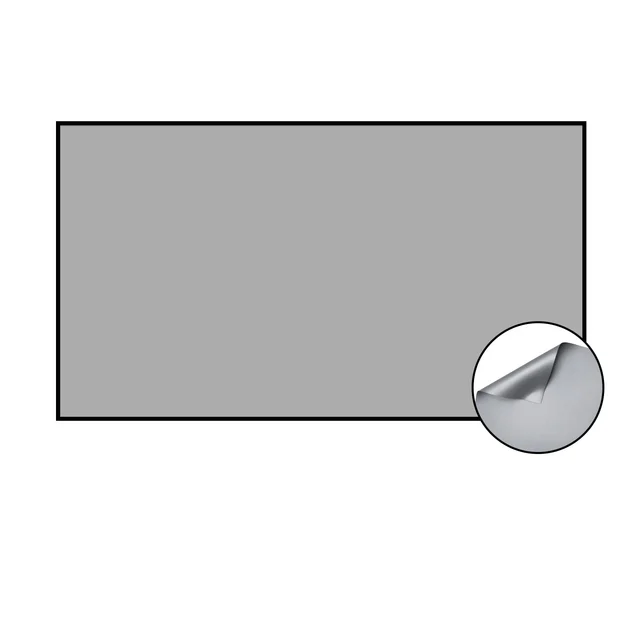
An ambient-light-rejecting screen that keeps contrast alive when you cannot fully darken the room.
Best for: Living rooms and multipurpose spaces with windows or lamps you cannot fully control.
- Obsidian ALR material is built to reject overhead and side light, so the image stays punchier in a lit room
- Noticeably deeper blacks and better perceived contrast than a plain white screen in ambient light
- Rigid fixed frame designed for standard and long-throw projectors
- Costs well more than a plain white fixed frame of the same size
- The grey surface trims a little peak brightness and rewards a brighter projector
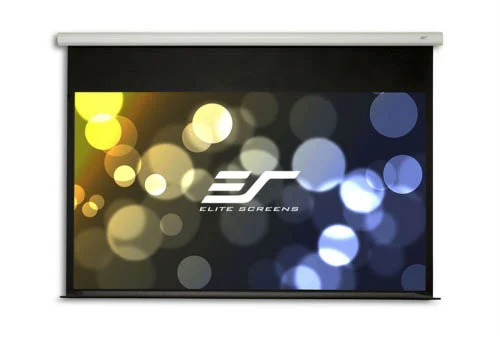
A budget-friendly motorized drop-down that disappears when you are done watching, with the usual electric-screen trade-offs.
Best for: Rooms that double as living space where the screen needs to vanish between movie nights.
- Retracts fully into a slim casing, ideal when a permanent frame is not welcome
- Includes IR and RF remotes, a wall switch, and a 12-volt trigger for automation
- Slidable floating mount brackets make wall or ceiling alignment forgiving
- The motor and roller add a moving part that can fail over time
- A non-tensioned rolled surface may not lie as flat as a tensioned fixed frame
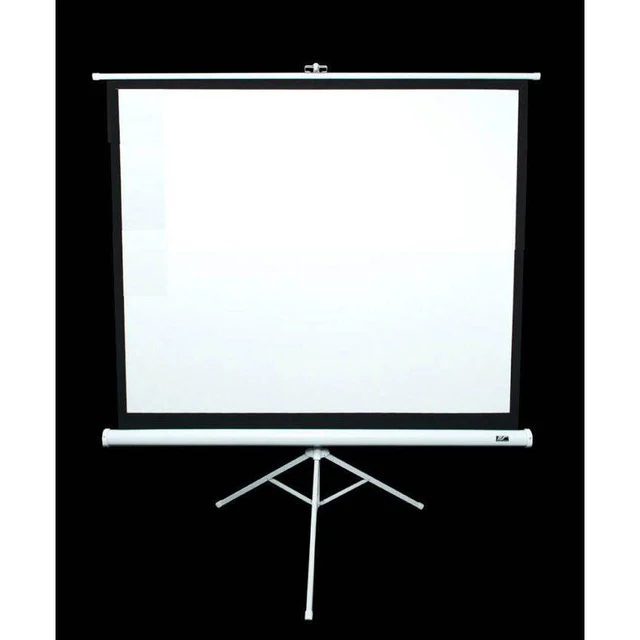
A capable grab-and-go presentation screen that struggles to justify itself for a real home theater.
Best for: Classrooms, offices, and occasional portable use, not a fixed home-theater setup.
- Sets up anywhere in seconds with no tools and folds into a carry-friendly package
- GreenGuard-certified 1.1-gain surface is fine for slides and casual outdoor movie nights
- Height-adjustable stand with a keystone eliminator for quick leveling
- Owners report a light stand that can wobble and a surface that is not truly flat, so image geometry can suffer
- Owners report visible creases and a dated look that hold it back for movies
| Criteria | Silver Ticket STR-169120 120-inch Fixed Frame Top pick | VividStorm ALR Fixed Frame Obsidian Long Throw Screen | Elite Screens Spectrum 2 Electric SPM100H-E12 (100-inch) | Elite Screens Tripod Series Portable Pull-Up Screen |
|---|---|---|---|---|
| Verdict | Buy it | Buy it | It depends | Skip it |
| Best for | A dedicated or light-controlled room where the screen can stay up and picture quality per dollar matters most. | Living rooms and multipurpose spaces with windows or lamps you cannot fully control. | Rooms that double as living space where the screen needs to vanish between movie nights. | Classrooms, offices, and occasional portable use, not a fixed home-theater setup. |
| Price tier | $ · mid-range | $$ · premium | $ · mid-range | $ · budget |
| Screen type | Fixed frame | ALR fixed frame | Motorized drop-down | Portable tripod |
| Best room | Dark / controlled room | Room with ambient light | Flexible living space | Anywhere temporary |
| Surface flatness | Excellent (rod-tensioned) | Excellent (rigid frame) | Good (non-tensioned) | Fair (can crease) |
| Ambient light handling | Needs a dark room | Rejects much of the stray light | Needs a dark room | Needs a dark room |
| Install / permanence | Permanent wall mount | Permanent wall mount | Semi-permanent, retractable | None, fully portable |
| Setup effort | Moderate (frame assembly) | Moderate (frame assembly) | Wiring + mounting | Seconds, no tools |
| Best for | Picture-per-dollar | Bright rooms | Rooms that share duty | Presentations / travel |
| Price tier | $ · mid-range | $$ · premium | $ · mid-range | $ · budget |
Which one is right for you?
- A dedicated or light-controlled room where the screen can stay up and picture quality per dollar matters most. Buy it Silver Ticket STR-169120 120-inch Fixed Frame
- Living rooms and multipurpose spaces with windows or lamps you cannot fully control. Buy it VividStorm ALR Fixed Frame Obsidian Long Throw Screen
- Rooms that double as living space where the screen needs to vanish between movie nights. It depends Elite Screens Spectrum 2 Electric SPM100H-E12 (100-inch)
- Classrooms, offices, and occasional portable use, not a fixed home-theater setup. Skip it Elite Screens Tripod Series Portable Pull-Up Screen
How we judged the field
We do not run our own lab. Instead we synthesize independent testing, long-term owner reports, and the documented specs from each maker, then weigh them against the questions buyers actually ask. Four things mattered most: surface quality (how flat and color-neutral the material stays), room fit (whether it needs a dark room or fights ambient light), install reality (permanent, retractable, or portable), and value for the picture you get. A projector screen is a long-lived purchase, so we favored surfaces that stay flat and materials that render color honestly over gimmicks. The result is not four winners; it is one clear pick for most rooms, a strong alternative for bright rooms, one situational choice, and one to skip for home theater.
This screen has quietly anchored value home-theater builds for years, and the reasons hold up. The material attaches with rods that slide through pockets on every edge, pulling the surface taut so there are fewer waves to distract from the image. Owners often describe the 1.1-gain white material as color-neutral, and the velvet-wrapped aluminum frame swallows overspill so the picture looks like it floats. The trade-offs are honest: it is a permanent wall mount, and assembling the six-piece frame takes patience and ideally a second pair of hands. But for picture quality per dollar in a room you can darken, it is the pick here.
If your viewing room has windows or lamps you cannot switch off, this is the screen to consider. Its Obsidian ambient-light-rejecting material is built to reject overhead and side light while returning the projector’s beam, so blacks stay dark and the image keeps its punch instead of washing out. Owners moving from white screens in bright rooms report the biggest jump in perceived contrast here. The catch is cost and context: it runs well above a plain white frame of the same size, and the grey surface trims a little peak brightness, so it rewards a brighter projector. In a fully dark room you would not need it. In a lit one, it is the difference between a watchable image and a great one.
The appeal of a motorized drop-down is simple: press a button and the screen vanishes into a slim casing when the movie ends. The Spectrum 2 does this affordably and ships with IR and RF remotes, a wall switch, and a 12-volt trigger so it can drop automatically when the projector powers on. Slidable floating brackets make the mounting alignment forgiving. But retractable convenience comes with strings. The motor and roller are moving parts that can eventually fail, and a rolled surface may not lie as flat as a tensioned fixed frame. Buy it because you need the screen to disappear, not because you expect fixed-frame flatness.
As a grab-and-go presentation tool this Elite Screens tripod is genuinely useful: it sets up in seconds without tools, folds down for transport, and its GreenGuard-certified white surface is fine for slides or a casual backyard movie. For a real home theater, though, it falls short of everything else here. Owners describe a stand that can wobble and a surface that is not truly flat, with visible creases and a dated look that undercut movie viewing. If your screen can stay up, a fixed frame often costs about the same and looks better. Keep the tripod in mind for the classroom or the campsite, not the living room.
Silver Ticket STR-169120 vs VividStorm ALR: which should you buy?
This comes down to one question: can you control the light in your room? The Silver Ticket fixed frame gives you the flattest, most color-accurate image for the money, and in a dark or light-controlled room it should beat the more expensive ALR screen on pure picture fidelity while costing less. The VividStorm ALR screen exists for the opposite situation. In a living room with windows or lamps, its Obsidian material rejects the stray light that would gray-out a white screen, preserving the contrast that makes projection look cinematic. Spend less and get a better dark-room picture with the Silver Ticket, or pay the premium for the VividStorm and get a watchable image when you cannot kill the lights. Most buyers with a dedicated space should take the Silver Ticket; anyone fighting ambient light should take the VividStorm.
What to look for
- Room light first. A dark room favors a neutral white screen; a bright room favors an ALR surface. This single factor drives everything else.
- Surface flatness. Tensioned fixed frames stay flat; rolled and portable screens can wave or crease, which shows in the image.
- Gain and color. Around 1.1 gain with a neutral white surface is the safe default for accurate color in a controlled room.
- Install type. Decide up front whether you want permanent (fixed frame), retractable (motorized), or portable (tripod); each is a different compromise.
- Size for your seating. Match the diagonal to your seating distance and confirm it fits your projector’s throw range before buying.
- Frame and edges. A light-absorbing velvet frame sharpens perceived contrast by masking overspill.
Our final take
For most people, the answer is a fixed frame in a room you can darken, and the Silver Ticket STR-169120 remains the value benchmark that delivers the best picture per dollar with a rock-steady surface. If you cannot control the light, step up to the VividStorm ALR screen, which keeps contrast alive where a white screen would wash out. The Elite Screens Spectrum 2 Electric earns a spot only when you specifically need the screen to retract, and the Elite Screens Tripod is worth owning for presentations and travel but not for movie night. Pick based on your room, not the spec sheet, and you will be happy for years.
Questions, answered
Fixed frame or motorized drop-down, which should I get?
If the screen can live permanently on one wall, a fixed frame tends to win on picture quality and reliability because a tensioned surface stays flatter and there is no motor to fail. Choose a motorized drop-down only when the room does double duty and the screen genuinely needs to disappear between viewings.
Do I actually need an ALR screen?
Only if you cannot control ambient light. Ambient-light-rejecting material is engineered to bounce overhead and side light away from your eyes while returning the projector's light, so contrast survives in a room with windows or lamps. In a fully dark room a plain white screen can look as good for less money.
What screen color and gain should I choose?
For a dark room, a neutral white surface around 1.1 gain gives accurate color and even brightness, which is why it remains the default for home theater. Grey or ALR surfaces trade a little peak brightness for better perceived black levels and are worth it mainly when you are fighting ambient light or using a very bright projector.
Can I just project onto a white wall or a bedsheet instead?
You can, but the result usually looks soft and uneven: wall texture scatters light, paint is rarely color-neutral, and a sheet ripples and shows the room behind it. A real screen adds a flat, uniform, color-correct surface and a light-absorbing frame, which is most of what makes projected images look sharp.
How big a screen should I buy for my room?
Match the diagonal to your seating distance and your projector's throw. A rough guide many owners follow is a seating distance of roughly 1.2 to 1.5 times the screen width for movies; sit closer and you may see pixel structure, farther and the image feels small. Always confirm the size fits your projector's throw range before ordering.
Deciding between the top two? See our head-to-head: Silver Ticket STR-169120 120-inch Fixed Frame vs VividStorm ALR Fixed Frame Obsidian Long Throw Screen.
More Tech & Gadgets reviews
 The Best 2-in-1 Convertible Laptops: 4 Compared (and One to Skip)
  The Best 3D Printers: 4 Compared (and One to Skip)
  The Best 4K Gaming Monitors: 4 Compared (and One to Skip)
  The Best 4K Streaming Devices in 2026 (and the One to Skip)
  The Best 4K TVs: 4 Compared (and One to Skip)
  The Best Action Cameras: 4 Compared (and One to Skip)