

Tech & Gadgets
The Best Powerline Adapters: 4 Compared (and One to Skip)
We compared four powerline (ethernet-over-power) kits on real-world speed, ports, passthrough and honest fit against mesh Wi-Fi.
The short version
For turning a distant room into a wired connection, the TP-Link AV1000 passthrough kit (TL-PA7017P KIT) is the one to buy first: it has a gigabit port so the adapter itself isn't the ceiling, a passthrough outlet that hands the socket back, and a fair price. If you're on a gigabit plan, need to wire more than one device, or your wiring is long or noisy, the two-port AV2000 (TL-PA9020P KIT) with 2x2 MIMO is the stronger, pricier performer. The budget NETGEAR PL1000 is a fine single-device link if you can give up the whole outlet, since it has no passthrough. Skip the AV500 kit: its Fast Ethernet port caps real speed near 100 Mbps no matter what the wiring can do. And be honest with yourself first - powerline speed swings wildly with house wiring, and for whole-home coverage a modern mesh Wi-Fi system is often the better spend. Best for: getting one hard-to-reach device onto a stable wired link when running a full cable isn't practical.
Our picks at a glance
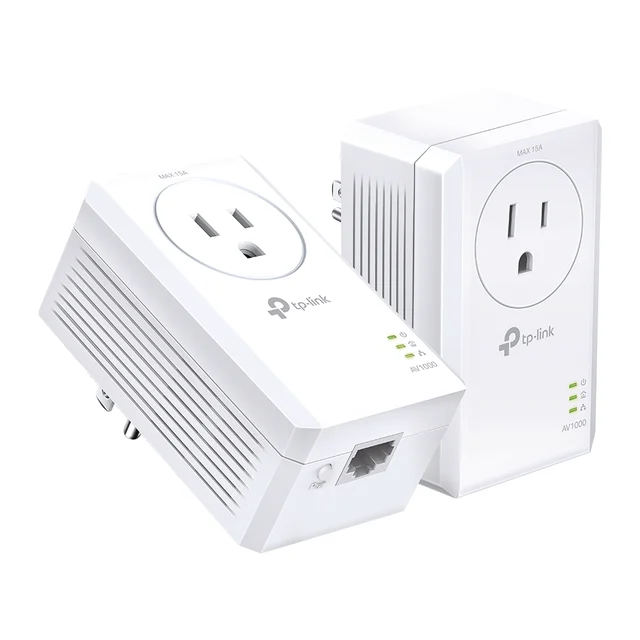
- TP-Link AV1000 Gigabit Passthrough Powerline Kit (TL-PA7017P KIT) - Buy. The sensible default: gigabit port, a passthrough outlet so you don't lose the socket, and enough real-world headroom for almost any home use.
- TP-Link AV2000 2-Port Gigabit Passthrough Powerline Kit (TL-PA9020P KIT) - Buy. The performance pick: two gigabit ports and 2x2 MIMO that squeezes more out of tricky wiring and longer runs.
- NETGEAR PowerLINE 1000 (PL1000) - It depends. A compact, no-frills gigabit kit that's easy to recommend on price alone, as long as you can spare the whole outlet.
- TP-Link AV500 Powerline Kit (TL-PA4010P KIT) - Skip. Its own 10/100 port caps you around 100 Mbps no matter what the powerline manages, which makes it a poor value in 2026.
The verdict in 30 seconds
What mattered most
- Rated powerline speed
- Ethernet port per unit
- Passthrough outlet
- Realistic ceiling
- Best home fit
- Setup & security
A powerline kit turns your home's electrical wiring into a wired network path, which sounds like magic and sometimes behaves like it. The catch is that advertised speeds assume near-perfect wiring you almost certainly don't have, so the honest question isn't just which kit is fastest on the box but whether powerline is even the right fix versus modern mesh Wi-Fi. We synthesized independent testing and owner reports to sort the field: two are easy recommendations, one is a fine no-frills option with a real caveat, and one is a dated part whose own port throttles it.
The sensible default: gigabit port, a passthrough outlet so you don't lose the socket, and enough real-world headroom for almost any home use.
Best for: Most people who want a reliable wired link to one room and don't want to sacrifice the outlet.
- One Gigabit Ethernet port per unit, so the adapter itself isn't the bottleneck
- Built-in passthrough outlet keeps the wall socket usable for a lamp, TV or console
- HomePlug AV2 with 128-bit AES and true plug-and-pair setup
- Real throughput still depends heavily on your wiring and can fall well short of the rated figure
- No Wi-Fi built in, so it only helps a device you can run a short cable to
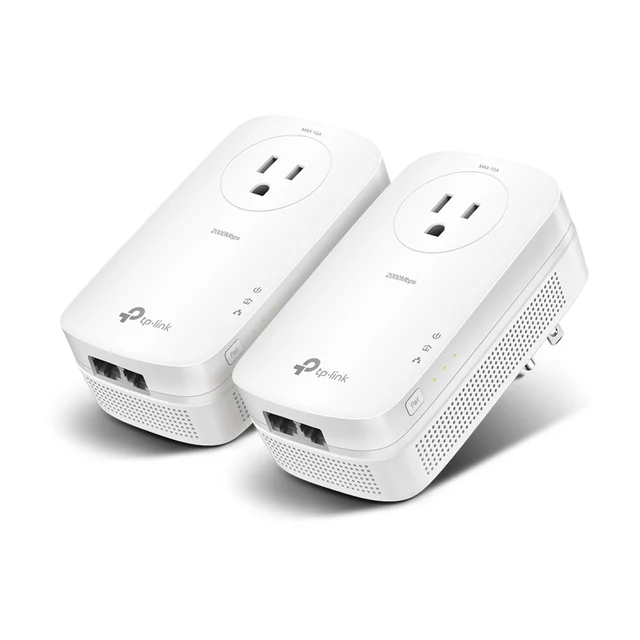
The performance pick: two gigabit ports and 2x2 MIMO that squeezes more out of tricky wiring and longer runs.
Best for: Enthusiasts on a gigabit plan who want the best odds on difficult wiring or need to feed multiple wired devices.
- Two Gigabit Ethernet ports per unit for wiring a console and a TV or two PCs from one adapter
- 2x2 MIMO uses extra conductors in your wiring for better stability on longer or cross-circuit runs
- Passthrough outlet plus 128-bit AES, same simple pairing as the rest of the line
- Costs meaningfully more than a single-port AV1000 kit
- The 2000 headline number is a rated maximum you will not see in a real home
- Larger, heavier bricks that can crowd a tight outlet or power strip
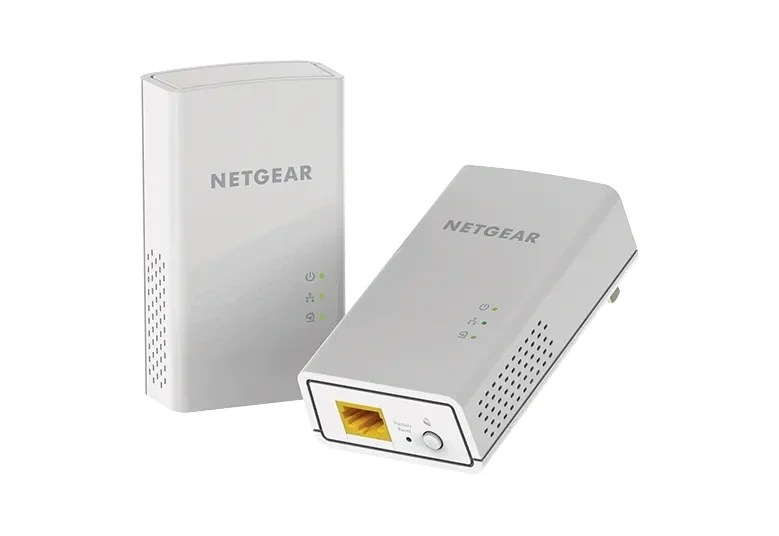
A compact, no-frills gigabit kit that's easy to recommend on price alone, as long as you can spare the whole outlet.
Best for: Budget buyers running a single wired device who have a spare outlet to give up.
- One Gigabit Ethernet port keeps a solid wired ceiling at a budget price
- Small, light bricks that are easy to tuck behind furniture
- HomePlug AV2 and plug-and-play pairing with a physical Pick a Plug link check
- No passthrough outlet, so each adapter takes over the entire wall socket
- No Wi-Fi and only a single port per unit, so it's strictly a one-device-per-adapter link
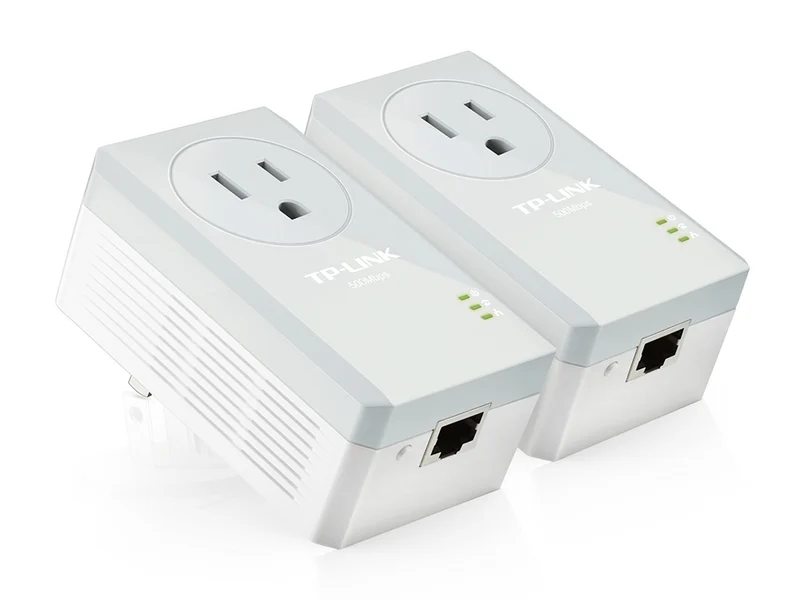
Its own 10/100 port caps you around 100 Mbps no matter what the powerline manages, which makes it a poor value in 2026.
Best for: Almost no one buying new today; only a stopgap for a low-bandwidth device on a slow connection.
- Budget-friendly
- Fine for light jobs like a smart TV doing standard-definition or HD streaming
- Only a Fast Ethernet (10/100) port, so real throughput is hard-capped around 100 Mbps
- AV500-class speed is dated and struggles as home internet plans climb past 100 Mbps
- Priced close enough to a gigabit-port kit that the saving may not justify the ceiling
| Criteria | TP-Link AV1000 Gigabit Passthrough Powerline Kit (TL-PA7017P KIT) Top pick | TP-Link AV2000 2-Port Gigabit Passthrough Powerline Kit (TL-PA9020P KIT) | NETGEAR PowerLINE 1000 (PL1000) | TP-Link AV500 Powerline Kit (TL-PA4010P KIT) |
|---|---|---|---|---|
| Verdict | Buy it | Buy it | It depends | Skip it |
| Best for | Most people who want a reliable wired link to one room and don't want to sacrifice the outlet. | Enthusiasts on a gigabit plan who want the best odds on difficult wiring or need to feed multiple wired devices. | Budget buyers running a single wired device who have a spare outlet to give up. | Almost no one buying new today; only a stopgap for a low-bandwidth device on a slow connection. |
| Price tier | $ · mid-range | $$ · premium | $ · budget | $ · budget |
| Rated powerline speed | AV1000 (up to 1000 Mbps) | AV2000 (up to 2000 Mbps, 2x2 MIMO) | AV1000 (up to 1000 Mbps) | AV500 (up to 500 Mbps) |
| Ethernet port per unit | One Gigabit | Two Gigabit | One Gigabit | One Fast Ethernet (10/100) |
| Passthrough outlet | Yes - socket stays usable | Yes - socket stays usable | No - uses the whole outlet | Yes - socket stays usable |
| Realistic ceiling | High (gigabit port, wiring permitting) | Highest of the group | High (gigabit port) | Capped near 100 Mbps by the port |
| Best home fit | Value all-rounder | Heavy or multi-device on gigabit plans | Simple single wired run | Low-bandwidth stopgap only |
| Setup & security | Plug & pair, 128-bit AES | Plug & pair, 128-bit AES | Plug & pair, 128-bit AES | Plug & pair, 128-bit AES |
| Price tier | $ · mid-range | $$ · premium | $ · budget | $ · budget |
Which one is right for you?
- Most people who want a reliable wired link to one room and don't want to sacrifice the outlet. Buy it TP-Link AV1000 Gigabit Passthrough Powerline Kit (TL-PA7017P KIT)
- Enthusiasts on a gigabit plan who want the best odds on difficult wiring or need to feed multiple wired devices. Buy it TP-Link AV2000 2-Port Gigabit Passthrough Powerline Kit (TL-PA9020P KIT)
- Budget buyers running a single wired device who have a spare outlet to give up. It depends NETGEAR PowerLINE 1000 (PL1000)
- Almost no one buying new today; only a stopgap for a low-bandwidth device on a slow connection. Skip it TP-Link AV500 Powerline Kit (TL-PA4010P KIT)
How we judged the field
We don’t run our own lab. Instead we pull together independent testing and a broad read of owner reports, then weigh the things that actually decide whether one of these kits is worth buying. The single most important truth about powerline is that its real speed is set by your house, not the box: the same adapter can be excellent on one home’s wiring and mediocre on another’s, so we lean on the factors you can actually control. That means the port on the adapter (a gigabit port versus a Fast Ethernet one sets a hard ceiling before wiring even enters the picture), whether there’s a passthrough outlet so you don’t sacrifice the socket, how the kit copes with longer or cross-circuit runs, and honest value against the alternative most people should at least consider - a mesh Wi-Fi system. We call out rated speeds only as a rough ranking of potential, never as a number you should expect to see.
This is the kit to recommend when someone just wants a distant device wired up without fuss. It pairs a full Gigabit Ethernet port with a passthrough outlet, which is the combination that matters: the gigabit port means the adapter itself won’t be your bottleneck the way a Fast Ethernet model would, and the passthrough hands the wall socket back so you don’t lose an outlet to it. Setup is the uneventful kind owners like - plug both units into the wall, let them pair, connect a cable, done, with 128-bit AES handling security in the background. The limit is the one every powerline product shares: how much of that gigabit headroom you actually see comes down to your wiring, and it can fall well short. But for the money, it gives you a high realistic ceiling for a typical home without asking you to overthink it.
TP-Link AV2000 2-Port Gigabit Passthrough Powerline Kit (TL-PA9020P KIT)
Buy itCheck price on AmazonThe AV2000 kit is the step up for people who are asking more of powerline than a single link. Each unit carries two Gigabit Ethernet ports, so one adapter can feed, say, a console and a smart TV, and it adds 2x2 MIMO, which uses extra conductors in your home wiring to hold a steadier connection on longer runs or when the two ends aren’t on the same circuit. In practice that’s where it earns its premium: on difficult wiring it tends to keep more of its speed than a basic single-channel kit. It keeps the passthrough outlet and the same simple pairing. The trade-offs are real - it costs noticeably more, the bricks are bigger, and the 2000 on the label is still a lab maximum you won’t meet at home. Buy it if you’re on a fast plan, wiring multiple devices, or wrestling with wiring that a cheaper kit chokes on.
The PL1000 is the honest budget option, and whether it’s right for you comes down to one question: can you spare the whole outlet? It has a single Gigabit Ethernet port, so its wired ceiling is genuinely competitive with the pricier TP-Link kits, and the compact bricks are easy to hide behind a cabinet. It pairs simply and includes a physical link-quality check so you can tell at a glance whether the two ends are talking cleanly. What you give up for the low price is passthrough - each adapter occupies the entire wall socket - and any flexibility beyond a single device per unit. If outlets are plentiful where you’re installing and you only need to wire one thing, it’s a smart save. If sockets are precious, the small premium for a passthrough kit is usually worth it.
The AV500 kit isn’t broken; it’s simply been outclassed by its own port. It uses a Fast Ethernet (10/100) connection, which caps the wired link at roughly 100 Mbps no matter how good the powerline path or your internet plan is. A decade ago that was fine. Today, with plenty of home plans well past 100 Mbps, that ceiling means you can be paying for speed the adapter throws away - and because it costs close to a gigabit-port kit, the saving may not make sense. It can still serve a light job like a TV doing HD streaming on a slow connection, but as a new purchase for most people it’s the clear skip: spend a little more, get the gigabit port, and remove the bottleneck.
TP-Link AV1000 (TL-PA7017P KIT) vs TP-Link AV2000 (TL-PA9020P KIT): which should you buy?
These two share a design language - gigabit ports, passthrough outlets, painless pairing - so the choice is really about how hard your situation is. The AV1000 kit is the right default for the majority of homes: one gigabit port is plenty for a single console, TV or PC, the passthrough keeps your socket, and it doesn’t cost much. Most people never need more. The AV2000 kit justifies its higher price in three specific cases: you’re on a gigabit internet plan and want the best shot at using it, you need to wire more than one device from a single adapter thanks to its two ports, or your run is long or crosses circuits and its 2x2 MIMO can claw back stability a single-channel kit loses. If none of those describe you, the AV1000 is the smarter spend; if one or more do, the AV2000 is worth the stretch.
What to look for
- Check the port, not just the AV rating: a Gigabit Ethernet port is the real ceiling. Avoid Fast Ethernet (10/100) models like the AV500 kit on any plan faster than ~100 Mbps.
- Favour passthrough if outlets are scarce: a passthrough model hands the wall socket back; a non-passthrough kit like the PL1000 claims it entirely.
- Same circuit beats crossing circuits: powerline is happiest when both ends share a circuit. For long or cross-circuit runs, a MIMO kit like the AV2000 copes better.
- Plug into the wall, never a power strip: surge protectors and strips filter the signal and can wreck the link.
- Right tool for the job: powerline wires up one device; it does nothing for Wi-Fi. If you want whole-home wireless coverage, look at a mesh Wi-Fi system instead of, or alongside, a powerline link.
Our final take
For most people, the answer is the TP-Link AV1000 passthrough kit (TL-PA7017P KIT): a gigabit port so the adapter isn’t the bottleneck, a passthrough outlet so you keep the socket, and a fair price. Move up to the two-port AV2000 (TL-PA9020P KIT) only if you’re on a fast plan, feeding several wired devices, or fighting long or noisy wiring - that’s exactly where its MIMO earns the premium. The NETGEAR PL1000 is a genuinely good budget link if you can hand over the whole outlet, and the AV500 kit is the one to walk past, because its own Fast Ethernet port throttles it near 100 Mbps. Above all, be clear about the job: powerline is a neat fix for one stubborn wired device, but it swings hard with your home’s wiring, and if what you really want is better coverage everywhere, a modern mesh Wi-Fi system is usually the wiser buy.
Questions, answered
How fast is a powerline adapter really?
Much slower than the number on the box, and it varies a lot from home to home. Those AV500, AV1000 and AV2000 figures are theoretical maximums measured on ideal wiring; in a real house with older cabling, multiple circuits and electrical noise from appliances, owners commonly see a fraction of the rated speed. The two adapters usually pass traffic best when they're on the same circuit and not fighting a fridge or microwave on the same line. Treat the rating as a ranking of potential, not a promise.
Should I buy a powerline kit or a mesh Wi-Fi system instead?
It depends on the problem. If you need to get one specific device - a game console, a smart TV, a desktop - onto a rock-steady wired link in a room you can't easily cable, powerline is a tidy, inexpensive fix. If your actual goal is better Wi-Fi coverage for phones and laptops across the whole house, a modern mesh Wi-Fi system is usually the better and more future-proof spend, because powerline does nothing for wireless devices on its own. Many homes end up wanting mesh for coverage and a powerline link only for that one stubborn wired device.
Do I really need the passthrough version?
It's not essential, but it's usually worth it. A passthrough model like the AV1000 or AV2000 kit has a filtered outlet built into the front, so plugging the adapter in doesn't cost you the wall socket - you can still run a lamp, TV or charger through it. The NETGEAR PL1000 skips passthrough to hit a lower price, which means each adapter claims the whole outlet. If outlets are scarce where you're installing, pay the small premium for passthrough.
Why skip the AV500 kit if it's the cheapest?
Because its own port throttles it. The AV500 kit uses a Fast Ethernet (10/100) port, which hard-caps the wired connection at roughly 100 Mbps regardless of what the powerline link or your internet plan could deliver. A gigabit-port kit like the AV1000 costs only a little more but removes that ceiling, so on any plan faster than about 100 Mbps the cheaper kit quietly leaves speed on the table. It's only defensible for a low-bandwidth device on a slow connection.
Will a powerline adapter work across different circuits or on a power strip?
Sometimes, but it's the least reliable scenario. Powerline works best when both adapters share the same electrical circuit; links that cross between circuits or between phases in the breaker panel can slow down or fail to pair. A MIMO model like the AV2000 kit handles cross-circuit and longer runs better than a basic one, but nothing is guaranteed. Plug adapters straight into the wall, not into a power strip or surge protector, which filters the signal and can cripple the connection.
Deciding between the top two? See our head-to-head: TP-Link AV1000 Gigabit Passthrough Powerline Kit (TL-PA7017P KIT) vs TP-Link AV2000 2-Port Gigabit Passthrough Powerline Kit (TL-PA9020P KIT).
More Tech & Gadgets reviews
 The Best Projector Screens: 4 Compared (and One to Skip)
  The Best 2-in-1 Convertible Laptops: 4 Compared (and One to Skip)
  The Best 3D Printers: 4 Compared (and One to Skip)
  The Best 4K Gaming Monitors: 4 Compared (and One to Skip)
  The Best 4K Streaming Devices in 2026 (and the One to Skip)
  The Best 4K TVs: 4 Compared (and One to Skip)