Explained
Diaper Caddies, Explained
After reading this you will be able to look at any diaper caddy listing and predict how it will behave when it is full, carried one handed, and spilled in.
In this guide
A diaper caddy is a portable bin that holds a day or two of diapers, wipes, cream and a spare outfit so you are not walking back to the nursery mid change. Every listing sells you a look and a compartment count, which is why most buyers pick on appearance and then get annoyed within a few months. The specs that actually decide whether a caddy stays in service are the material, the handle design, whether the dividers move, and what the care label says you are allowed to do after a mess.
The 30-second version
- Cleanability is the whole ballgame. Fabric and natural fibre caddies are spot clean only by the manufacturer's own instructions, so a leaking cream or a blowout inside one is a permanent stain rather than a two minute wipe.
- Structure beats capacity. A caddy that slumps when loaded is harder to reach into and dumps its contents when lifted, so a smaller rigid one usually outperforms a bigger soft one in daily use.
- Handle design decides one handed carrying. A single centre handle or short reinforced grips let you lift with a baby on your hip; long soft dual handles pull the walls inward and need both hands.
- Removable dividers extend the useful life. What you store changes from newborn to toddler, and fixed compartments lock you into whatever proportions the designer chose on day one.
- Buy for the daily loadout, not bulk storage. Overloading is what makes fabric walls bow and handles tear, so keep the box of diapers in a closet and treat the caddy as a working supply.
The products this guide is about
Our verdict on each, with the full reasoning on the companion review.
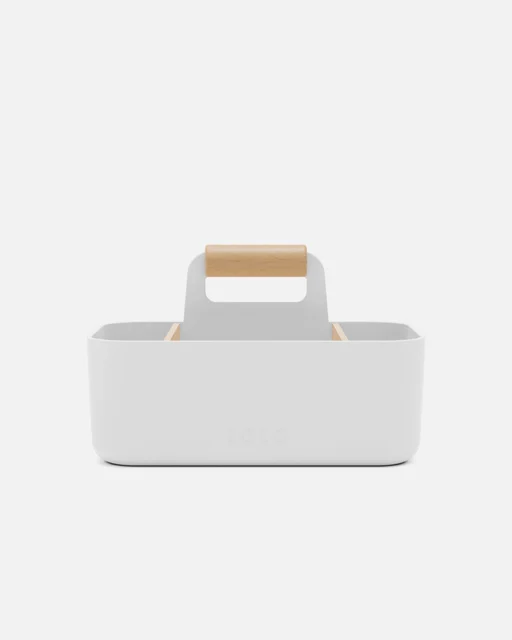
- Buy Lalo The Caddy A rigid, wipe clean shell with a solid wood handle and two removable dividers, which is exactly what the category has been missing. Amazon
- Buy KeaBabies Original 2.0 Diaper Caddy The value pick: structured felt, removable dividers and eight side pockets for a budget tier price. Amazon
- It depends Comfy Cubs Rope Diaper Caddy The roomiest and best looking fabric option, with fixed compartments and cotton rope that absorbs whatever you spill on it. Amazon
- Skip Bebe Bask Lily Diaper Caddy A gorgeous handwoven seagrass basket that fails at the one job a diaper caddy has to do, which is survive a mess. Amazon
What actually matters
- Material and cleanability. Moulded plastic can be wiped out with soap and a sponge. Structured felt and woven cotton rope are spot clean only. Natural fibres such as seagrass and rattan are wipe the surface with a damp cloth only, which means an interior spill is not really recoverable. This one criterion separates caddies that last the whole diapering run from caddies that get retired stained.
- Structure when full. A caddy holds its shape either because it has a rigid shell or because its walls are stiff enough to stand alone. Soft sided bins bulge once loaded with a diaper stack, a wipes pack and a bottle of cream, and a bulging caddy is harder to reach into and more likely to tip.
- Handle type and placement. A solid centre handle running across the middle is the strongest design for one handed lifting because the load balances underneath it. Side grips work if they are short and reinforced into the wall. Long fabric loops on a soft caddy pull the sides toward each other and squeeze the contents.
- Divider layout, not divider count. Diapers want a tall narrow bay, wipes want a wide flat one, and creams and clippers want somewhere they will not tip. Removable dividers let you retune that split. Fixed compartments in the wrong proportions are worse than one open bay.
- Exterior pockets. Small items buried under a diaper stack are effectively lost. Outside pockets keep thermometers, nail clippers, pacifiers and cream visible and free the interior for the bulky stuff. Rigid caddies rarely have them, which is the trade you make for the wipeable shell.
- Footprint versus your surface. Measure the changing table or dresser top before you buy. The largest caddies in this category run close to sixteen inches wide, and a caddy that overhangs an edge eventually gets knocked off.
- Empty weight. You will lift it many times a day. A heavy woven basket is noticeably more effort than a light felt bin, and that difference compounds over months even though it looks trivial on a spec sheet.
The specs, in plain English
Green flags vs red flags
Green flags
- The care instructions describe wiping with soap or mild detergent rather than spot cleaning only
- A single centre handle, or short grips reinforced into the wall rather than long soft loops
- Dividers described as removable, with the resulting configurations spelled out
- Exterior pockets sized for cream tubes, clippers and a thermometer
- Published dimensions and empty weight, not just a photo with a baby in frame
- The maker shows the caddy in a second life as craft, snack or toy storage, which implies the layout adapts
Red flags
- The listing leads with styling and colourways and never mentions cleaning
- Care instruction is wipe the surface with a damp cloth, on a product designed to hold leaking liquids
- Compartment count is advertised but no dimensions are given for each bay
- Long soft dual handles on a soft sided body, which usually means two handed lifting
- Pale natural fibres or light felt sold for a product that lives next to diaper cream
- Premium pricing justified by handcrafting and appearance rather than by materials or structure
Who's who: the brands
- Lalo - Direct to consumer baby gear brand known for rigid, wipe clean designs with solid wood details and modular interiors.
- KeaBabies - High volume value brand covering most nursery accessory categories, usually the feature per dollar leader in structured felt.
- Comfy Cubs - Fabric nursery storage specialist, best known for large woven cotton rope caddies in neutral colourways.
- Bebe Bask - Premium natural fibre brand making handwoven seagrass baskets aimed at nursery styling rather than heavy daily use.
- Parker Baby Co. - Baby organizer brand; check each model's materials and care label rather than assuming a layout.
- Skip Hop - Mainstream baby gear label with a range of storage pieces; check each model's care label and dimensions.
How to read a listing without getting fooled
Read a caddy listing backwards. Start with the care instructions, because that single line predicts whether the product survives its first real mess, and manufacturers state it plainly even when marketing does not. Then find the material description and translate it: structured felt means stands up but stains, cotton rope means roomy but absorbent, moulded plastic means wipeable but smaller, seagrass or rattan means decorative. Next check whether the dividers are described as removable or simply as compartments, and look for the size of each bay rather than the total count, since three sections in the wrong proportions are less useful than one open bay. Then read the handle description literally: a centre handle is one handed, long fabric loops usually are not. Finally, take the dimensions and the empty weight and hold them against your actual changing surface and your actual daily lifting. Product photos are shot with a light, tidy load and a stiff new body, so assume the caddy will look fuller, softer and heavier than the picture within a month.
How much should you spend?
This is a category where price predicts appearance far better than it predicts performance. The budget tier, dominated by structured felt, is genuinely competitive: it is where you find the most capacity, the most exterior pockets and the most reconfigurable interiors, and it is cheap enough to replace without regret once the walls soften. The mid tier is where you buy structure, either a rigid wipe clean shell or a heavier woven cotton body, and paying up to that tier is worth it if the caddy will travel between rooms, ride in the car, and take real messes. The premium tier is mostly buying craftsmanship and materials that photograph well, and in this category those materials tend to clean worse rather than better, so spending more can move you backward on the criterion that matters most. The value sweet spot is the cheapest option that is either wipeable or genuinely rigid; beyond that, extra money buys looks. Spending more makes sense only if the upgrade is a hard shell, a stronger handle or a removable divider system, and rarely if it is a nicer fibre.
Questions, answered
What size diaper caddy should I get?
Size it to a day or two of changes plus a wipes pack, a cream, and one spare outfit. That is what most caddies in this category are designed around. Buying a larger one so it can hold bulk stock is the mistake that causes bowed walls and strained handles, and a caddy loaded to the rim is also harder to carry with one hand. Keep the box of diapers in a closet and restock the caddy each morning.
Can a diaper caddy go in the washing machine?
Almost never. Structured felt is typically hand wash or spot clean with no machine and no dryer, rigid shells are usually wipe with mild soap and do not submerge, and woven natural fibres are wipe the surface with a damp cloth and air dry. Check the manufacturer's care line before buying rather than after, because it is the single biggest long term difference between two caddies that look identical in photos.
Is a rigid caddy better than a fabric one?
Better at the things that retire caddies, yes: it holds its shape when full, lifts cleanly by a centre handle, and can be washed out after a spill. It is worse on capacity for the same shelf space and it rarely has exterior pockets. If the caddy mostly sits in one place and holds a lot, structured felt is the better value. If it travels and takes abuse, buy the rigid one and accept the smaller footprint.
Do exterior pockets actually matter?
More than most buyers expect. Small items like nail clippers, a thermometer, pacifiers and cream tubes sink under a stack of diapers and become invisible, which defeats the point of a grab and go bin. Pockets on the outside keep them in sight and keep the main bay free for bulk. This is one area where fabric caddies clearly beat rigid ones.
What do I do with it after the diaper years?
The ones worth buying convert. A rigid caddy with removable dividers becomes craft supply, snack or cleaning storage. Felt and rope caddies become toy, book or bathroom storage. Woven baskets become shelf or blanket storage. A caddy with fixed compartments sized only for diapers and wipes has a shorter real life than its price implies, so weigh that when comparing two similar options.
Do I need a caddy at all if I have a changing table?
If every change happens at that one station and the dresser has drawers, a caddy is a convenience and a couple of drawer organizers do the same job for less. Most families change the baby wherever the baby is, and that is where a caddy earns its place, by stopping the mid change trip back to the nursery. Buy one if changes happen in more than one room.
Or jump to the head-to-head: Lalo The Caddy vs KeaBabies Original 2.0 Diaper Caddy.