Explained
Camping Hammocks, Explained
After this guide you'll be able to read any hammock listing and know whether it's a real piece of camping gear or a backyard lounger in disguise.
In this guide
A camping hammock looks like the simplest gear you can buy - a sheet of nylon with two loops - which is exactly why the category is full of near-identical listings hiding big differences in fabric, hardware, and honesty. The two things that trip up first-time buyers: not realizing that many hammocks ship without the straps you need to hang them, and not knowing that an open hammock needs separate bug, rain, and insulation add-ons before it can replace a tent. Once you understand fabric denier, capacity ratings, and the lounger-versus-shelter split, the choices get easy.
The 30-second version
- Fabric denier is the single best quality signal. 40 to 70D ripstop or taffeta holds its shape under you all night; thin 210T parachute nylon stretches, sags, and feels scratchy.
- Check what's actually in the stuff sack. Many well-regarded hammocks sell suspension straps separately, so the real cost of a complete hang is higher than the listing price.
- Loungers and shelters are different products. An open gathered-end hammock is for hanging out and modular overnights; an integrated system with bug net and rainfly is a full shelter that weighs and costs more.
- A 'double' hammock is for one sleeper. The extra width exists so a single person can lie diagonally and flat - two adults can sit in one, but nobody sleeps well two-up.
- You need insulation underneath you, not just around you. A compressed sleeping bag insulates poorly below your body, so cool-night hammock sleeping means an underquilt or a sleeping pad.
The products this guide is about
Our verdict on each, with the full reasoning on the companion review.
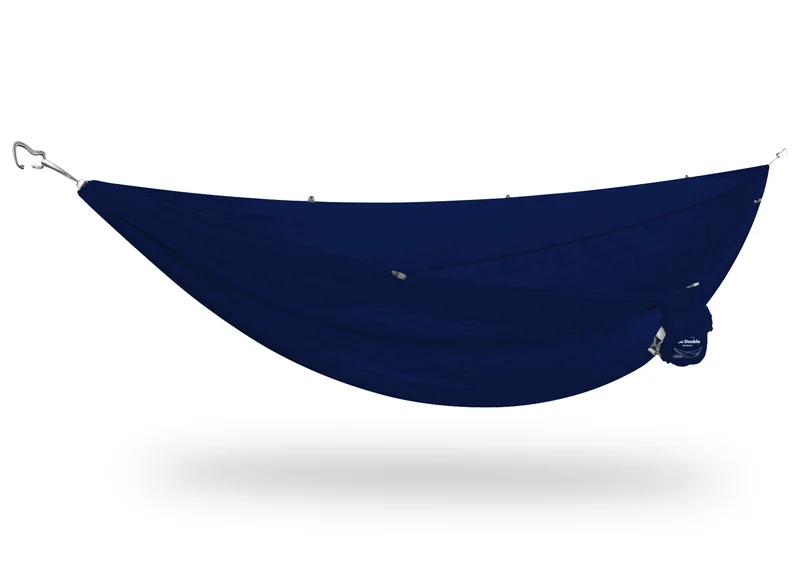
- Buy Kammok Roo Double The best-feeling fabric and strongest build in the lounger class, backed by a lifetime guarantee. Amazon
- Buy Eagles Nest Outfitters ENO DoubleNest Hammock The proven workhorse of camp hammocks - roomy, tough 70D fabric, and the easiest ecosystem to build on. Amazon
- It depends Hennessy Hammock Hennessy Expedition Zip A complete hanging shelter - bug net, rainfly, and ridgeline included - that's brilliant for overnights and overkill for lounging. Amazon
- Skip Wise Owl Outfitters DoubleOwl Hammock A fine backyard lounger at a tempting price, but the thin, stretchy fabric and inconsistent quality don't hold up to real camping. Amazon
What actually matters
- Fabric weight and weave - denier (the D number) tells you how thick the yarn is; mid-weight ripstop or taffeta resists stretching and abrasion, while ultra-thin parachute nylon sags overnight and wears out faster.
- Weight capacity and the hardware behind it - a big number only means something if it's backed by reinforced gathered ends, quality stitching, and climbing-style carabiners rather than hardware-store clips.
- What's included - straps, carabiners, bug net, and rainfly may or may not be in the bag; two hammocks at the same price can differ enormously once you add the missing pieces.
- Suspension straps - wide, tree-friendly webbing with many attachment loops makes hanging fast and protects bark; thin loop-style straps are slower to adjust and harder on trees.
- Size and lay geometry - length and width determine whether you can lie diagonally and flat; taller users need longer hammocks, and asymmetrical cuts are shaped specifically for a flatter diagonal sleep.
- Packed weight and bulk - an open lounger can pack down to grapefruit size and around a pound; a full shelter system runs several times that, which matters for backpacking and not at all for car camping.
- Warranty and brand track record - hammocks live under constant tension, so a lifetime guarantee or a long record of durable owner-reported use is worth real money.
The specs, in plain English
Green flags vs red flags
Green flags
- Fabric spec is stated plainly in denier (40D, 70D) with a named weave like ripstop or taffeta
- Climbing-style aluminum carabiners and reinforced or sling-built gathered ends backing the capacity claim
- Wide, daisy-chain tree straps included, or the maker is upfront that straps are sold separately
- Lifetime or strong manufacturer guarantee, which signals the maker expects years of hanging
- Long-running owner reports of the same model surviving seasons of use
- Honest sizing guidance - stated max user height as well as max weight
Red flags
- '210T parachute nylon' dressed up with premium-sounding marketing language
- A huge weight-capacity number paired with flimsy-looking hooks or unbranded hardware
- Listing photos that hide whether straps, net, or rainfly are actually included
- Owner reports of inconsistent stitching or units that vary widely in quality
- Thin loop-style straps presented as a full suspension system
- A 'double' marketed as sleeping two adults comfortably - that's a sitting arrangement, not a sleeping one
Who's who: the brands
- Kammok - Maker known for premium recycled ripstop fabrics, climbing-grade hardware, and a lifetime guarantee.
- Eagles Nest Outfitters (ENO) - The category's default brand - proven 70D hammocks and the deepest ecosystem of straps, nets, tarps, and underquilts.
- Hennessy Hammock - Pioneer of the integrated hammock shelter - asymmetrical designs with sewn-in bug nets, rainflies, and ridgelines for serious overnighters.
- Wise Owl Outfitters - High-volume budget brand; fine for backyard lounging, but thin fabric and variable quality control show up in camping use.
- Warbonnet Outdoors - Small US maker with a cult following among hammock campers for flat-sleeping bridge and asymmetrical designs.
- Grand Trunk - Long-standing travel-hammock brand spanning budget parachute models up to sturdier trunk-tech fabrics.
How to read a listing without getting fooled
Start with the fabric line: a listing that names a denier and weave ('70D nylon taffeta', '40D ripstop') is telling you something real, while 'premium parachute nylon' with no number usually means thin 210T fabric. Next, find out exactly what ships in the bag - search the listing for 'straps sold separately', because two hammocks at the same price aren't comparable if one needs another purchase to hang at all. Weigh the capacity claim against the hardware you can see in photos: wiregate climbing-style carabiners and sewn, reinforced ends make a 400 to 500 lb rating believable; shiny generic clips do not. Check stated dimensions against your height - roughly two feet longer than you are tall is a comfortable minimum - and treat 'fits two people' as marketing for extra width, not a promise of two-person sleep. Finally, scan long-term owner reports for the failure modes that never show up on day one: sagging fabric, popped stitches, and warranty runarounds.
How much should you spend?
Hammock pricing splits cleanly into three tiers, and the driver is almost entirely fabric and hardware quality plus what's included. Budget models get you in a tree for very little, but the thin, stretchy fabric and inconsistent stitching mean they're best treated as backyard loungers with a limited lifespan. The value sweet spot for actual camping is the mid-range: noticeably better fabric that holds its shape overnight, trustworthy capacity ratings, and strong warranties - the modest extra spend typically works out cheaper over a few seasons than replacing a budget hammock. Spending up to the premium tier makes sense in one specific case: you sleep out overnight regularly and want an integrated shelter with the bug net, rainfly, and ridgeline built in, which replaces several separate purchases. Remember to budget for straps if they're not included, and for an underquilt or pad if you'll sleep in cool weather - those add-ons are where the 'cheap' path quietly gets expensive.
Questions, answered
Do camping hammocks come with everything I need to hang them?
Surprisingly often, no. Several of the best-regarded hammocks ship without suspension straps, which are sold separately - so check the listing carefully and factor straps into the real price. When straps are included on budget models, they tend to be basic loop-style webbing that's slower to adjust than daisy-chain straps.
Can a hammock really replace my tent?
Yes, if you set it up for the job. An open hammock needs a bug net in insect season, a tarp overhead for rain, and insulation underneath you once nights turn cool. Integrated shelter-style hammocks bundle the net and rainfly in one system. The payoff is sleeping off roots, rocks, and slopes, often at less weight than a tent - the catch is you need two well-spaced trees.
What's the trick to lying flat in a hammock?
Lie diagonally, roughly 30 degrees off the centerline, instead of straight down the middle. That flattens the fabric under your back and eliminates the banana-shaped sag beginners complain about. It's also why 'double' width matters for solo sleepers and why asymmetrical hammocks - cut specifically for the diagonal lay - sleep flattest of all.
Should I trust the weight capacity on the listing?
Trust it in proportion to the build quality behind it. Reputable mid-range makers back their ratings with reinforced ends, quality stitching, and climbing-style hardware, and independent testing suggests those ratings are conservative. Budget brands often print optimistic numbers on the same thin fabric and undersized clips, and owner reports reflect that. Also remember that sitting down hard or climbing in creates loads well above your standing body weight.
Why do people say hammocks sleep cold?
Because your body compresses whatever insulation is beneath you, and air moving under the hammock strips heat away. A sleeping bag alone stops working underneath you at surprisingly mild temperatures. The fix is an underquilt that hangs below the hammock uncompressed, or a sleeping pad inside it - either one turns a chilly night into a comfortable one.
Is a cheap parachute-nylon hammock a bad first buy?
Not if you're honest about the use. For backyard, beach, or festival lounging, a budget hammock is perfectly serviceable and the included straps make it a one-bag purchase. For real camping, the thin fabric stretches and sags overnight, quality control is inconsistent, and you'll likely replace it within a season or two - which makes a mid-range hammock the cheaper choice over time.
Or jump to the head-to-head: Kammok Roo Double vs Eagles Nest Outfitters ENO DoubleNest Hammock.