

Audio & Headphones
The Best Turntable Cartridges: 4 Compared (and One to Skip)
Four current phono cartridges compared on phono stage compatibility, mount type, stylus profile, setup tolerance and long run stylus cost.
The short version
Check your phono stage first: moving magnet cartridges work with any phono input, low output moving coil cartridges need a dedicated MC setting or a step up transformer. The Audio-Technica AT-VM95E is our pick for most people because it fits almost any arm, tolerates imperfect setup, and the whole VM95 stylus range drops into the same body, so future upgrades cost a stylus rather than a cartridge. The Ortofon 2M Blue is the better performer thanks to its nude elliptical stylus, and if your turntable came with a 2M Red you can get most of the way there by buying the Blue stylus alone. The Hana EL is excellent and conditional: superb with moving coil capable amplification and careful setup, inert without it, and its stylus is not user replaceable. Skip buying a 2M Red as an upgrade, because it is very likely already on your turntable and the genuine upgrade is a stylus. Best for: anyone who wants a real improvement without buying a new phono stage, starting with the AT-VM95E and stepping up to the 2M Blue when the rest of the system earns it.
Our picks at a glance
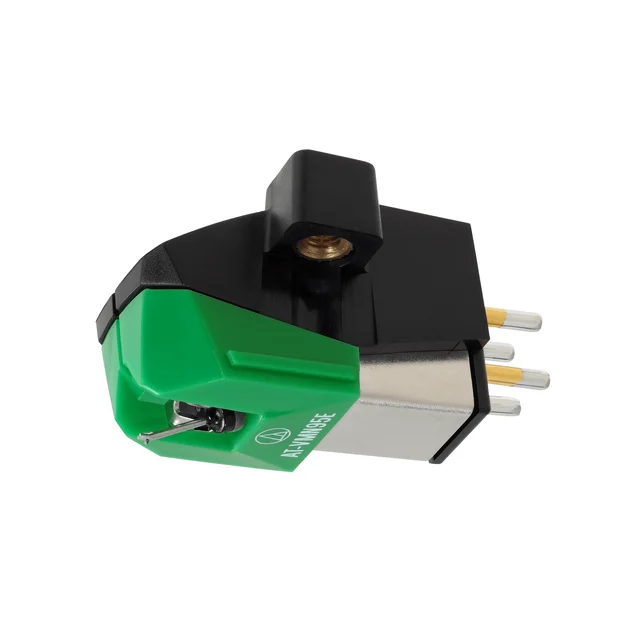
- Audio-Technica AT-VM95E - Buy. The lowest friction real upgrade in vinyl: it fits everything, works with any phono input, and its whole stylus ladder drops into the same body.
- Ortofon 2M Blue - Buy. A nude elliptical stylus on a proven moving magnet body, and it drops straight onto the 2M Red your turntable probably shipped with.
- Hana EL - It depends. A genuinely lovely low output moving coil that does nothing useful unless your phono stage has a real moving coil input.
- Ortofon 2M Red - Skip. A perfectly decent cartridge sold as an upgrade to people who already have it fitted to their turntable.
The verdict in 30 seconds
What mattered most
- Cartridge type
- Phono stage required
- Stylus profile
- Mount type
- Stylus user replaceable
- Setup tolerance
Buying a phono cartridge is mostly a compatibility problem wearing a sound quality costume. Moving magnet versus moving coil decides whether your phono stage can amplify it, mount type decides whether it fits, and the stylus profile decides how much of the groove you actually hear. We compared four current cartridges: two we would buy without hesitation, one that is superb only if your system is ready for it, and one that most people shopping for an upgrade already own.
The lowest friction real upgrade in vinyl: it fits everything, works with any phono input, and its whole stylus ladder drops into the same body.
Best for: Anyone on an entry or mid tier turntable who wants a clear improvement now and a cheap upgrade path later.
- Dual moving magnet with 4.0 mV output, so any moving magnet phono input or built in preamp drives it properly
- Half inch standard mount with screws and washers included, and a threaded body so no nuts are needed
- The full VM95 stylus range, conical through nude elliptical, microlinear and Shibata, fits this one body
- Forgiving of imperfect alignment and mildly warped records, which suits real world setups
- The bonded elliptical stylus sits below the nude and line contact profiles in resolution
- Inner groove passages get busier than they do on pricier cartridges
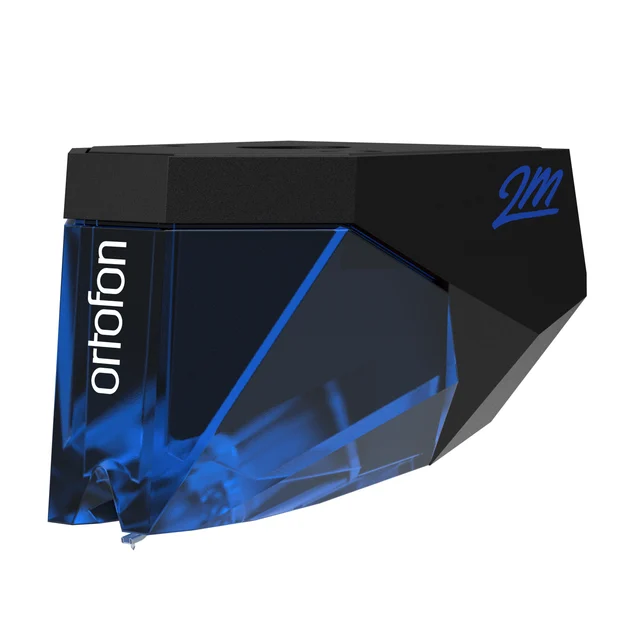
A nude elliptical stylus on a proven moving magnet body, and it drops straight onto the 2M Red your turntable probably shipped with.
Best for: Listeners past the experimental stage who have a decent arm, a clean collection and the patience to align properly.
- Nude elliptical stylus tracks inner grooves more calmly and resolves more than bonded profiles
- High output moving magnet design works with the phono input already on most amps and receivers
- The stylus assembly fits a 2M Red body, so many owners upgrade by buying a stylus rather than a cartridge
- Widely stocked with an established stylus supply, so replacements are easy to find
- Ortofon now sells the current body as the 2MR Blue, 3 mm lower than the original 2M, which it says removes the need for spacers on low-profile turntables; check which body a listing is selling
- Detailed and slightly forward, so it exposes thin or aggressively mastered pressings
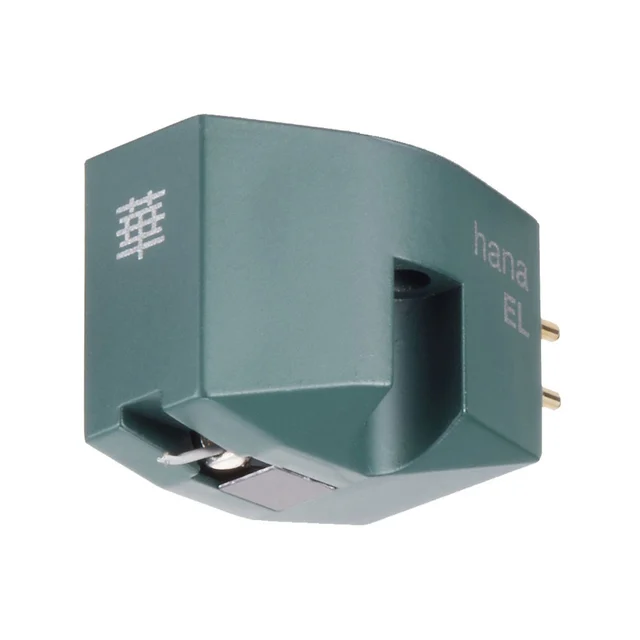
A genuinely lovely low output moving coil that does nothing useful unless your phono stage has a real moving coil input.
Best for: Owners who already have moving coil capable amplification, a trustworthy arm and the willingness to set up carefully.
- Reviewers and owners describe a coherent, natural presentation that costlier moving magnets struggle to match
- Hana now sells it as the EL MK II, with a threaded body for easier mounting
- Elliptical stylus on an aluminium cantilever, tuned for believability rather than spec sheet retrieval
- Half inch standard mount, so it physically fits any conventional arm
- Low output means a plain moving magnet phono stage leaves it thin and hissy; you need an MC setting or a step up transformer
- The stylus is not user replaceable, so wear means a factory rebuild or trade in rather than a part swap
- Rewards precise alignment, tracking force and loading more than the moving magnets here
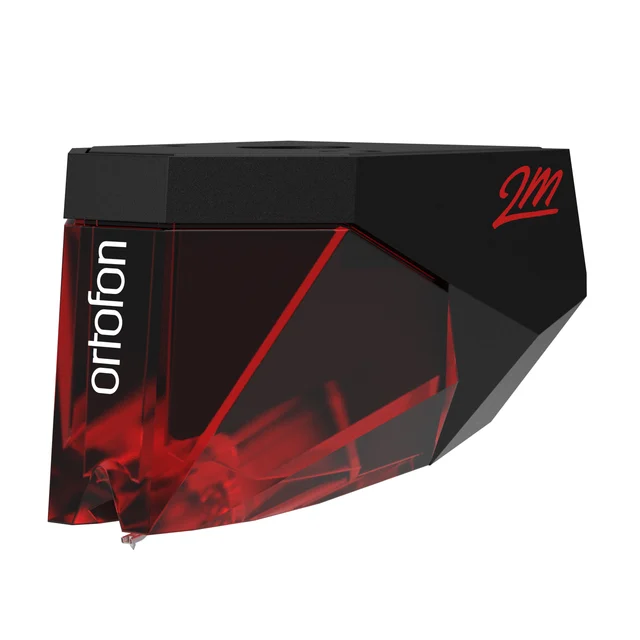
A perfectly decent cartridge sold as an upgrade to people who already have it fitted to their turntable.
Best for: Only someone replacing a physically damaged Red who specifically wants like for like.
- Easy to fit, forgiving to live with, and works with any moving magnet phono input
- The body accepts better 2M styli, so it is a usable foundation even when the supplied tip is not
- Its elliptical stylus is the entry profile of the 2M ladder, below the Blue's nude elliptical, and can sound congested on dense inner grooves
- A common factory fit on popular turntables, so buying one as an upgrade often means paying twice for the same part
- The replacement Red stylus costs enough that the Blue stylus is the smarter purchase
| Criteria | Audio-Technica AT-VM95E Top pick | Ortofon 2M Blue | Hana EL | Ortofon 2M Red |
|---|---|---|---|---|
| Verdict | Buy it | Buy it | It depends | Skip it |
| Best for | Anyone on an entry or mid tier turntable who wants a clear improvement now and a cheap upgrade path later. | Listeners past the experimental stage who have a decent arm, a clean collection and the patience to align properly. | Owners who already have moving coil capable amplification, a trustworthy arm and the willingness to set up carefully. | Only someone replacing a physically damaged Red who specifically wants like for like. |
| Price tier | $ · budget | $ · mid-range | $$ · premium | $ · budget |
| Cartridge type | Dual moving magnet, high output | Moving magnet, high output | Moving coil, low output | Moving magnet, high output |
| Phono stage required | Any moving magnet input | Any moving magnet input | Moving coil input or step up transformer | Any moving magnet input |
| Stylus profile | Bonded elliptical | Nude elliptical | Elliptical on aluminium cantilever | Bonded elliptical |
| Mount type | Half inch standard, hardware included | Half inch standard | Half inch standard | Half inch standard |
| Stylus user replaceable | Yes, whole VM95 range fits the body | Yes, and it fits 2M Red bodies too | No, factory rebuild or trade in | Yes, including the Blue stylus |
| Setup tolerance | Forgiving | Moderate, wants accurate alignment | Demanding, wants alignment and loading right | Forgiving |
| Upgrade path | Swap up to nude elliptical, microlinear or Shibata | Swap up within the 2M stylus range | None short of a different cartridge | Swap to the Blue stylus, which is the point |
| Price tier | $ · budget | $ · mid-range | $$ · premium | $ · budget |
Which one is right for you?
- Anyone on an entry or mid tier turntable who wants a clear improvement now and a cheap upgrade path later. Buy it Audio-Technica AT-VM95E
- Listeners past the experimental stage who have a decent arm, a clean collection and the patience to align properly. Buy it Ortofon 2M Blue
- Owners who already have moving coil capable amplification, a trustworthy arm and the willingness to set up carefully. It depends Hana EL
- Only someone replacing a physically damaged Red who specifically wants like for like. Skip it Ortofon 2M Red
How we judged the field
We do not run a lab. What we do is read across independent testing, manufacturer specifications, dealer setup notes and a large pile of owner reports, then look for the places where those sources agree and, more usefully, where they disagree.
For phono cartridges, four things decided the ranking. First, compatibility: a cartridge is useless if your phono stage cannot amplify it, and moving magnet versus moving coil is the fork in that road. Second, mount type and setup tolerance: nearly everything modern is half inch standard mount, but weight, body height and how fussy a cartridge is about alignment decide whether a normal person can fit it without a protractor obsession. Third, stylus profile, because conical, elliptical and line contact profiles are the actual performance ladder and the marketing rarely says so plainly. Fourth, running cost, which almost nobody counts properly: a stylus is a consumable, a worn one grinds your records, and whether the stylus is user replaceable changes the long run maths more than the sticker ever does.
We also weighted setup reality. Reviewers listening on a precisely aligned arm hear things that owners on a factory headshell do not, so we discounted findings that only appear under ideal conditions.
This is the cartridge we recommend to most people because it removes almost every reason not to upgrade. It is a dual moving magnet design with healthy output, so it works with any moving magnet phono input, including the built in preamp on a cheap turntable or the phono socket on a vintage receiver. It is half inch standard mount and ships with screws and washers, with a threaded body so no nuts are needed, which sounds trivial until you are hunting for hardware at midnight.
Reviewers consistently describe the step from a factory conical cartridge to the VM95E as obvious rather than subtle: cleaner leading edges, less congestion when a chorus arrives, and noticeably calmer tracking as the needle nears the label. Owners report the same, and they add something reviewers often skip, which is that the VM95E is forgiving. Slightly imperfect alignment or a mildly warped record does not turn it sour.
The part that matters most over time is the body. The whole VM95 stylus range drops into the same cartridge, from conical at the bottom through nude elliptical and microlinear up to Shibata. When the stylus wears out, or when you decide you want more, you buy a stylus and press it on. You do not rebalance the arm or realign anything. That single design decision makes the long run cost of ownership lower than anything else at this level.
The limits are real. The E stylus is a bonded elliptical, meaning the diamond tip is mounted on a metal shank rather than being a solid nude diamond, and it carries more mass than the better profiles. Against a nude elliptical you lose a little resolution and a little inner groove composure. That is the trade, and at this tier it is a fair one.
The 2M Blue is the sensible target for anyone who has decided vinyl is a real habit rather than an experiment. It is a moving magnet cartridge with a nude elliptical stylus, and nude is the operative word: the diamond is solid rather than bonded to a shank, which lowers tip mass and lets it follow groove modulation more accurately. Independent listening reports and owner accounts converge on the same description, which is a cleaner top end, more separation between instruments that used to smear together, and inner groove tracks that no longer sound tired.
Output is high, so it drives a standard moving magnet phono input without drama. It is half inch mount and easy enough to fit. Note that Ortofon’s own store now sells the body as the 2MR Blue, which Ortofon says is 3 mm lower to suit low-profile turntables without spacers, and which takes all 2M styli. Ortofon publishes a recommended tracking force and it is worth respecting: owners who set it light report exactly the mistracking they were trying to avoid.
The upgrade angle is the quiet argument in its favour. The 2M Blue stylus assembly fits the 2M Red body, so if your turntable arrived with a Red already installed, you can buy the Blue stylus alone, pull the old one off and push the new one on. No alignment, no soldering, no tools. For a very large number of readers that is the single highest value change they can make to their system.
The caveat: the 2M Blue is a detailed, slightly forward sounding cartridge. On thin or aggressively mastered pressings it will show you exactly how thin and aggressive they are. If your collection leans that way, a warmer cartridge may suit you better even if it measures worse.
The Hana EL is the one that splits the audience cleanly in two. It is a low output moving coil cartridge, and low output is not a marketing tier, it is an electrical fact. A plain moving magnet phono stage does not have anything like enough gain for it. Plug the EL into one and you get a thin, quiet, hissy sound and conclude that expensive cartridges are a scam. Give it a phono stage with a genuine moving coil setting, or a step up transformer, and it becomes one of the most satisfying things you can bolt onto a mid priced turntable.
What reviewers and owners describe when it is fed properly is coherence rather than fireworks: voices sit in one place, decay on cymbals and piano sounds like decay rather than a fade, and the whole presentation feels less mechanical than a comparably priced moving magnet. It uses an elliptical stylus on an aluminium cantilever, with 0.4 mV output on the current MK II, so it is not chasing the last word in retrieval; it is chasing believability, and it lands.
Two practical warnings. It rewards accurate setup more than either Audio-Technica or Ortofon here (Hana’s current EL MK II weighs 8.6 g and specifies 2 g tracking force), so a protractor and a decent scale are not optional. More importantly, the stylus is not user replaceable. When the tip wears you send the cartridge away for a rebuild or trade it in, and that cost is a fixed part of owning it. Against a VM95E, where a worn stylus is a two minute part swap, that is a meaningfully different ownership model.
Buy it if you already have moving coil capable amplification and an arm you trust. Skip it if you would be buying a new phono stage to make it work, because that money buys a better outcome spent elsewhere.
Nothing here is a criticism of how the 2M Red sounds. It is a competent, tidy, easy to live with cartridge, and it has sold in enormous numbers for good reason. The problem is that it is very often the cartridge you already own.
The 2M Red is a common factory fit on popular turntables, which means a huge share of people shopping for a cartridge upgrade are looking at the exact part already sitting on the end of their arm. Buying one new, as an upgrade, is paying a second time for the same performance. And when the stylus does wear out, the replacement Red stylus costs enough that stepping up to the Blue stylus, which fits the same body, is the obviously better use of the money.
On its own merits the Red uses an elliptical stylus that Ortofon positions as the entry level of the series, below the Blue’s nude elliptical. Owner reports describe it as slightly soft and slightly congested compared to the Blue, particularly on inner grooves and dense mixes. That is consistent with what the profile predicts. It is not bad. It is simply the floor of a range where the next rung up is a straight stylus swap.
The only scenario where buying a 2M Red makes sense is replacing one you physically damaged and wanting like for like. Otherwise, put the money toward the Blue stylus or start over with a VM95E body.
Audio-Technica AT-VM95E vs Ortofon 2M Blue: which should you buy?
These two answer different questions. The VM95E is about removing friction: it works with any phono input, it fits any standard arm, it tolerates imperfect setup, and it turns future upgrades into a stylus purchase rather than a cartridge purchase. If you are not certain how deep into this you are going, it is the cartridge that costs you the least to be wrong.
The 2M Blue is about the ceiling. Its nude elliptical stylus resolves more and tracks inner grooves more calmly than the bonded elliptical on the VM95E, and reviewers describing both in sequence tend to reach for words like open and separated when they get to the Blue. You pay for that, and you pay again in setup care, because it is less forgiving of a lazy alignment.
There is also a decision shortcut. If your turntable already has a 2M Red on it, the Blue is not really a cartridge purchase at all: buy the Blue stylus, pull, push, done. That path is cheap in effort and large in effect, and it beats buying a whole new cartridge of either brand. If your turntable came with a conical Audio-Technica or an unbranded cartridge, the VM95E body is the better foundation, because it opens the entire VM95 stylus ladder to you later.
Our pick for most readers is the AT-VM95E, on compatibility, tolerance and upgrade economics. The 2M Blue is the runner up and the better sounding cartridge, and it becomes the outright recommendation once your phono stage, arm and records are good enough to hear the difference.
What to look for
- Moving magnet or moving coil. Moving magnet has high output and works with any phono input. Low output moving coil needs a phono stage with an MC setting or a step up transformer. Check this before anything else, because it decides whether the cartridge works at all.
- Mount type. Half inch standard mount, with two screws through a headshell, is what nearly every modern tonearm uses. Older and some budget decks use P-mount (also called T4P), which plugs straight in with no alignment. They are not interchangeable without an adapter, so confirm which arm you have.
- Stylus profile. Conical is the floor, elliptical is the sensible middle, and line contact profiles such as microlinear and Shibata sit at the top. Nude beats bonded at the same nominal profile, because a solid diamond has less tip mass than one glued to a shank.
- Is the stylus user replaceable? On most moving magnet cartridges it is, and that turns wear into a cheap part swap. Moving coil cartridges usually require a factory rebuild. Work out that cost before you buy, not after.
- Cartridge weight and body height. Your tonearm has a usable cartridge weight range, and a tall body can throw off arm height. Both are listed in the manuals, and both cause more setup misery than they should.
- Tracking force and alignment. Every cartridge has a recommended tracking force and it is not a suggestion. Too light mistracks and damages records faster than slightly too heavy. A cheap digital scale and a printed protractor are worth more than a cartridge upgrade if you currently have neither.
- Stylus life. Treat the stylus as a consumable with a finite hour count. A worn tip does not just sound dull, it carves at groove walls, and replacing records is the expense nobody budgets for.
Our final take
Buy the Audio-Technica AT-VM95E if you want the widest compatibility, the most forgiving setup and the cheapest path upward, because the entire VM95 stylus range fits the same body. Buy the Ortofon 2M Blue if you want the better sound now and your system and records can show it, and buy it as a bare stylus if a 2M Red is already fitted to your turntable, which is the highest value move in this whole comparison.
Treat the Hana EL as conditional. It is genuinely excellent, and it is inert without moving coil capable amplification and setup care, so buy it only when your system is already ready for it. Leave the 2M Red where it is. It is a fine cartridge and a poor purchase, because most of the people considering it already own one, and the upgrade they actually want is a stylus, not a cartridge.
Whatever you fit, set the tracking force with a scale and replace the stylus before it starts sounding bad rather than after. The cheapest thing in this category is the stylus. The most expensive is the record collection it runs on.
Questions, answered
How do I know whether my phono stage will work with a moving coil cartridge?
Look for an MM/MC switch, an input labelled MC, or a gain and loading setting in the manual. If your phono input is a single unlabelled pair of RCA sockets marked PHONO, or your turntable has a built in preamp with a line output, assume moving magnet only. A low output moving coil cartridge plugged into a moving magnet input will sound quiet, thin and hissy, and that is a gain mismatch, not a faulty cartridge. High output moving coil cartridges exist specifically to work with moving magnet inputs if you want the topology without new electronics.
How often should I replace the stylus, and what happens if I do not?
Manufacturers quote a life in playing hours, and the figure varies by stylus profile and tracking force. Track your hours roughly rather than waiting for the sound to degrade, because by the time a worn stylus is obviously dull it has already been reshaping groove walls. That is the cost people do not count: a stylus is cheap and replaceable, a damaged record is neither. Keeping records clean and setting tracking force accurately both extend stylus life meaningfully.
What is the difference between half inch mount and P-mount, and does it matter?
Half inch standard mount, sometimes written as one half inch or as two screw mount, uses two screws spaced half an inch apart through a headshell and needs alignment with a protractor. P-mount, also called T4P, plugs directly into the tonearm and is pre aligned, which is simpler but far more limiting in cartridge choice. Check your tonearm before buying. Adapters exist to fit half inch cartridges to some P-mount arms, but they change effective mass and are not always a clean solution.
Is a better stylus profile actually worth it, or is it marketing?
It is real and it is measurable in tracking behaviour. A conical tip sits high in the groove and struggles with the tightly packed modulation near the label, an elliptical follows the groove wall more closely, and line contact profiles such as microlinear and Shibata contact a longer section of the wall again, which improves high frequency retrieval and spreads wear over more surface. Nude versions of any given profile beat bonded ones because a solid diamond has lower tip mass. The catch is that better profiles are less forgiving of sloppy alignment, so the gain only appears if you set the cartridge up properly.
Can I just replace the stylus instead of buying a whole new cartridge?
On most moving magnet cartridges, yes, and it changes the long run maths considerably. The stylus assembly pulls off the front of the body and a new one pushes on, with no realignment and no tools, which means a wear replacement or an upgrade is a two minute job. Some families go further and let you fit better profiles to the same body, which is why an inexpensive moving magnet body can be a smart long term foundation. Moving coil cartridges generally do not work this way and need a factory rebuild or trade in, so factor that into the total cost before you buy one.
Deciding between the top two? See our head-to-head: Audio-Technica AT-VM95E vs Ortofon 2M Blue.
More Audio & Headphones reviews
 The Best Turntable Mats: 4 Compared (and One to Skip)
  Best Turntables of 2026: Value, Sound, and One to Skip
  The Best Ukuleles: 4 Compared (and One to Skip)
  The Best USB Microphones for Podcasting and Streaming
  The Best Vinyl Record Storage: 4 Compared (and One to Skip)
  The Best Wired In-Ear Monitors: 4 Compared (and One to Skip)