

Audio & Headphones
The Best Studio Monitors: 4 Compared (and One to Skip)
We compared four popular powered studio monitors on tonal accuracy, bass control, imaging, and value for mixing and mastering.
The short version
For accurate monitoring per dollar, the Kali Audio LP-6 V2 is the one to beat: flat, quiet, and with real bass extension (Kali rates it to 39 Hz). The Yamaha HS5 is the trusted, unhyped reference, held back only by shallow sub-bass. The Adam Audio T5V is worth it if you specifically want its smooth, low-fatigue ribbon-tweeter highs and can place it carefully. The hugely popular KRK Rokit 5 G5 is fun and punchy, but its colored Create and Focus voicings and DSP extras add cost without adding accuracy over the Kali or Yamaha, so we'd skip it for serious mixing. Best for: anyone building a home or project studio who wants monitors that tell the truth - start with the Kali LP-6 V2.
Our picks at a glance
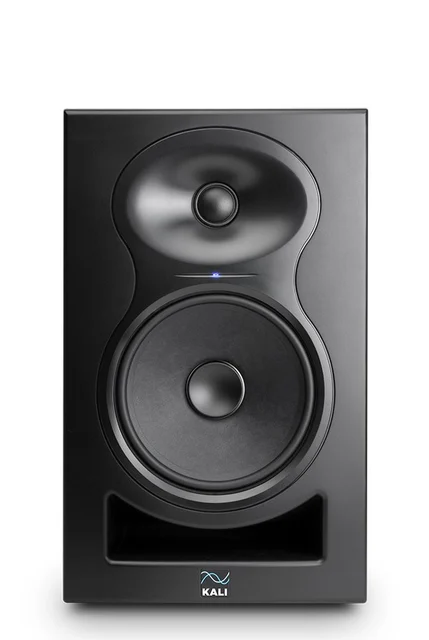
- Kali Audio LP-6 V2 - Buy. The value benchmark: near-reference flatness and real low-end for a budget price.
- Yamaha HS5 - Buy. The honest industry reference - it shows you exactly what your mix is doing, warts and all.
- Adam Audio T5V - It depends. A U-ART ribbon tweeter brings airy, low-fatigue highs - if you can live with the trade-offs.
- KRK Rokit 5 G5 - Skip. Fun, punchy, and popular, but its colored voicings work against accurate mixing.
The verdict in 30 seconds
What mattered most
- Tonal accuracy (flatness)
- Bass extension & control
- High-frequency character
- Stereo imaging
- Room/placement flexibility
- Build & finish
Studio monitors are meant to tell you the truth about your mix, not flatter it - which makes "accuracy" the whole ballgame. We weighed four widely sold, currently buyable nearfield monitors on how flat and revealing they are, how honestly they handle bass, and how much you get for the money. Two are easy recommendations, one earns its place only for a specific buyer, and one popular favorite is the one we'd steer most mixers away from.
The value benchmark: near-reference flatness and real low-end for a budget price.
Best for: Home and project-studio mixers who want the most accurate monitoring per dollar.
- Flat, neutral frequency response, with full measurement data published by Kali
- 6.5-inch woofer delivers deeper, more usable bass than most rivals at this price
- Boundary EQ dip switches help tame the low end when placed near a wall or on a desk
- Low noise floor, which Kali says is 12 dB lower on the 2nd Wave than on the original LP-6
- Utilitarian looks and plasticky feel won't win any design awards
- Big cabinet needs some breathing room and proper stands to sound its best
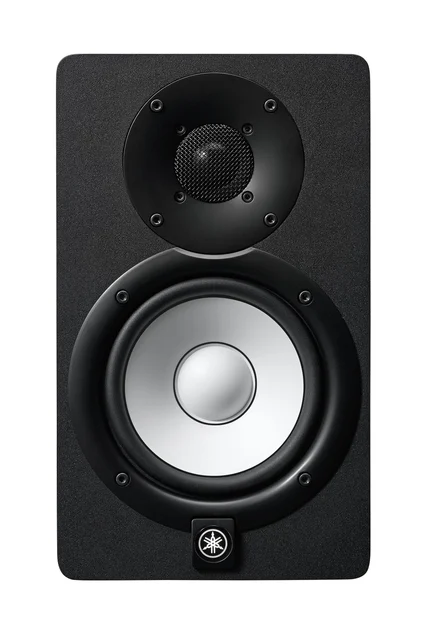
The honest industry reference - it shows you exactly what your mix is doing, warts and all.
Best for: Mixers who want a trusted flat reference and don't need deep sub extension.
- Famously flat, unhyped voicing that reviewers and engineers trust for critical mixing
- Fast, clear midrange makes vocal and instrument balance easy to judge
- A known quantity, so mixes made on HS-series monitors translate predictably to other systems
- Room Control (0, -2 or -4 dB below 500 Hz) and High Trim switches adapt it to real, imperfect rooms
- The 5-inch woofer rolls off early (Yamaha rates it to 74 Hz at -3 dB), so it's light on sub-bass for hip-hop or EDM
- That same honesty can sound unforgiving or clinical on long sessions
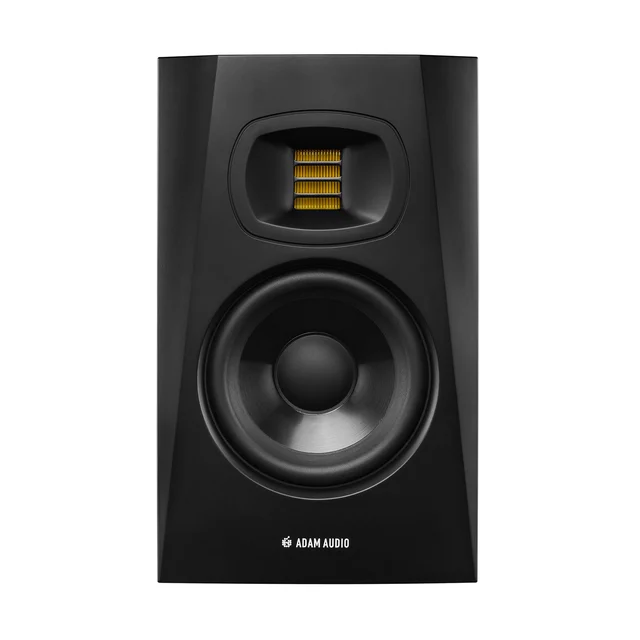
A U-ART ribbon tweeter brings airy, low-fatigue highs - if you can live with the trade-offs.
Best for: Producers who prioritize crisp, fatigue-free high-frequency detail and have room to place them well.
- U-ART ribbon tweeter gives detailed, smooth highs without the harshness of cheap domes
- Easier on the ears over long sessions than many budget monitors
- Strong stereo imaging and a wide, stable sweet spot
- Punches above its price for detail retrieval in the treble
- Rear-firing port can get boomy close to a wall, so placement matters more here
- Bass is more forward and less tightly controlled than the flattest rivals
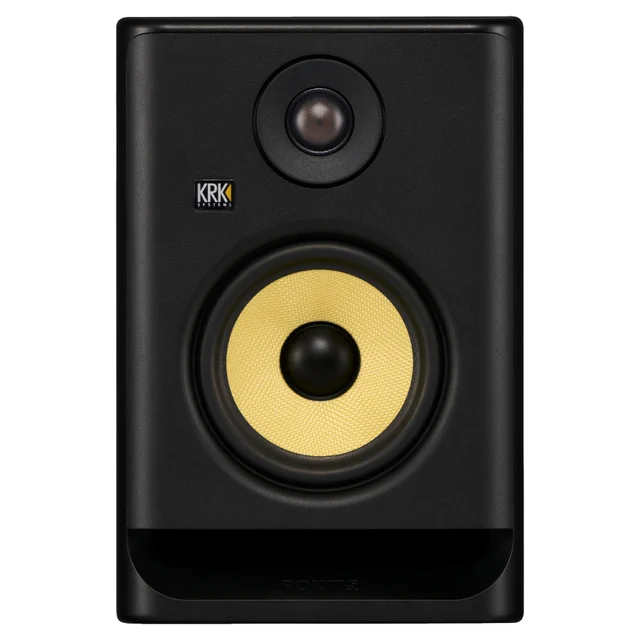
Fun, punchy, and popular, but its colored voicings work against accurate mixing.
Best for: Listeners and casual beatmakers who want an exciting sound, not mixers chasing accuracy.
- Iconic look, solid build, and a genuinely enjoyable, punchy low end
- Onboard DSP adds three voicing modes (Mix, Create, Focus) plus 25 boundary and tuning EQ combinations
- KRK describes the Mix mode as flat in frequency and phase response, a step away from earlier bass-heavy generations
- The Create voicing is, in KRK's words, more inspirational, which flatters rather than reveals
- Reviewers warn mixes made on it can translate poorly to flatter systems
- You're paying for enclosure DSP and styling more than reference-grade accuracy
| Criteria | Kali Audio LP-6 V2 Top pick Buy it Buy | Yamaha HS5 Buy it Buy | Adam Audio T5V It depends Buy | KRK Rokit 5 G5 Skip it Buy |
|---|---|---|---|---|
| Best for | Home and project-studio mixers who want the most accurate monitoring per dollar. | Mixers who want a trusted flat reference and don't need deep sub extension. | Producers who prioritize crisp, fatigue-free high-frequency detail and have room to place them well. | Listeners and casual beatmakers who want an exciting sound, not mixers chasing accuracy. |
| Price tier | $ · budget | $$ · mid-range | $ · budget | $$ · mid-range |
| Tonal accuracy (flatness) | Excellent - very flat | Excellent - reference-flat | Good - airy but slightly forward | Fair - flat Mix mode, colored Create mode |
| Bass extension & control | Deep and controlled | Tight but shallow | Reasonable, port-sensitive | Punchy, voicing-dependent |
| High-frequency character | Neutral, clean | Neutral, slightly clinical | Smooth, airy ribbon | 1-inch silk dome, voicing-dependent |
| Stereo imaging | Very good | Very good | Excellent | Good |
| Room/placement flexibility | Boundary EQ switches | Room & trim switches | Sensitive to wall distance | 25 DSP boundary/tuning EQ combinations |
| Build & finish | Plain, functional | Solid, classic | Solid for the price | Premium-looking |
| Price tier | $ · budget | $$ · mid-range | $ · budget | $$ · mid-range |
Which one is right for you?
- Home and project-studio mixers who want the most accurate monitoring per dollar. Buy it Kali Audio LP-6 V2
- Mixers who want a trusted flat reference and don't need deep sub extension. Buy it Yamaha HS5
- Producers who prioritize crisp, fatigue-free high-frequency detail and have room to place them well. It depends Adam Audio T5V
- Listeners and casual beatmakers who want an exciting sound, not mixers chasing accuracy. Skip it KRK Rokit 5 G5
How we judged the field
We don’t run our own anechoic lab. Instead we synthesized independent measurement-based testing, published expert reviews, and aggregated owner reports to weigh each monitor on the things that actually matter for a studio speaker. The single most important criterion is tonal accuracy - how flat and uncolored the frequency response is - because a monitor’s whole job is to reveal your mix, not to make it sound good. From there we looked at bass extension and control (does the low end stay tight, and how deep does it usefully reach?), high-frequency character and listening fatigue, stereo imaging and sweet-spot stability, placement and room-adaptation options, build quality, and finally value.
Across these sources a clear pattern emerges: the monitors that measure flattest and stay quiet at idle are the ones engineers trust, while the crowd-pleasing, bass-forward voicings tend to flatter mixes in a way that hurts translation to other systems.
Kali Audio LP-6 V2
Buy itThe LP-6 V2 is the value benchmark of this group. Its frequency response is widely described as flat and neutral, and Kali publishes full measurement data for it, which is a strong sign for a monitor. Its 6.5-inch woofer delivers deeper and more usable low-end than the 5-inch models here, so you’re not guessing about the bottom octave. Kali says the 2nd Wave revision lowered the noise floor by 12 dB compared with the original LP-6. Boundary EQ dip switches let you compensate for desk or wall placement. It looks plain and feels utilitarian, and it wants proper stands and a little space, but on pure monitoring-per-dollar nothing here touches it.
Yamaha HS5
Buy itThe HS series is the closest thing this category has to an industry standard, and the reputation is earned. Its entire philosophy is a flat, unhyped response: it doesn’t boost bass or sparkle up the treble to sound exciting, which is exactly why mixes made on it translate so predictably to other systems. The midrange is fast and clear, making vocal and instrument balance easy to judge, and Room Control and High Trim switches help it cope with real rooms. The catch is physics: the 5-inch woofer rolls off fairly early (74 Hz at -3 dB per Yamaha), so it’s light on sub-bass for bass-driven genres, and its honesty can feel a touch clinical over long sessions. If you want a trusted reference and don’t need deep low end, it’s a lock. (Yamaha’s HS7 and HS8 step up the woofer size for bigger rooms.)
Adam Audio T5V
It dependsThe T5V’s headline feature is its U-ART ribbon tweeter, trickle-down technology from Adam’s pricier ranges. It moves air faster than a conventional dome and produces highs that reviewers describe as detailed, airy, and smooth - noticeably less fatiguing over long sessions than many budget domes. Imaging is excellent and the sweet spot is wide. So why “it depends”? The rear-firing port makes it more sensitive to placement than the others; too close to a wall and the bass can turn boomy. And its low end is a little more forward and less tightly controlled than the flattest rivals. If crisp, low-fatigue treble is your priority and you can place them properly, it’s a genuine bargain. If you want the flattest possible reference, look at the two picks above.
KRK Rokit 5 G5
Skip itThe Rokit is one of the most popular monitor lines around, and it’s easy to hear why: it’s punchy, fun, well built, and its DSP adds three voicing modes (Mix, Create and Focus) plus 25 boundary and tuning EQ combinations. KRK describes the Mix mode as flat, a real change from the bass-heavy Rokits of old. But the Create voicing is designed to be inspirational rather than accurate, and colored voicings flatter your mix rather than revealing its flaws. Independent reviewers repeatedly warn that mixes made on colored monitors like this can translate poorly to flatter systems, forcing you to second-guess your low end and midrange balance. For casual listening or beat sketching it’s enjoyable; for accurate mixing, you’re paying for enclosure DSP and styling instead of the neutrality you actually need. We’d skip it and put the money toward the Kali or Yamaha.
Kali Audio LP-6 V2 vs Yamaha HS5: which should you buy?
These are the two strongest choices, and the decision comes down to bass and trust. The Kali LP-6 V2 is flatter overall for the money and reaches meaningfully deeper thanks to its 6.5-inch woofer (39 Hz versus 54 Hz at -10 dB on the makers’ sheets), making it the better technical value and the smarter pick if you mix anything with real low-end content. The Yamaha HS5 counters with a long track record: it’s the reference countless engineers already know, so your mixes translate to a sound millions of other rooms share, and its compact 5-inch cabinet is easier to place on a crowded desk. Choose the Kali for maximum accuracy and bass per dollar; choose the Yamaha if you value a proven, universally understood reference and don’t need deep sub extension. Either way you’re getting an honest monitor - which is more than the crowd favorite can say.
What to look for
- Flat frequency response first. A monitor should reveal your mix, not flatter it. Be skeptical of “punchy” or “exciting” voicings.
- Match woofer size to your room and genre. 5-inch for small rooms and non-bass-heavy work; 6.5-inch or larger if sub-bass matters and you have space.
- Buy a matched pair. You can’t judge stereo balance or imaging with a single monitor.
- Plan for placement. Stands or isolation pads, tweeters at ear height, and distance from walls matter as much as the speaker itself - especially for rear-ported designs.
- Use boundary/room EQ switches to compensate for desk and wall placement, but don’t expect them to fix a bad room.
- Don’t overpay for DSP and looks. Room presets are a nice bonus, not a substitute for an inherently accurate speaker.
Our final take
If you want monitors that tell you the truth, start with the Kali Audio LP-6 V2 - it’s the flattest, deepest, and quietest option here for the money. The Yamaha HS5 is the dependable reference standard, ideal if you value a proven track record over sub-bass reach. The Adam Audio T5V is a smart pick for one specific reason - its smooth, low-fatigue ribbon-tweeter highs - provided you place it carefully. And while the KRK Rokit 5 G5 is fun and wildly popular, its colored voicings are exactly what a monitor shouldn’t lean on, so we’d pass on it for serious mixing. Get the room and placement right, buy a matched pair, and let the Kali or Yamaha show you what your music actually sounds like.
Questions, answered
Do I need to buy studio monitors in pairs?
Most of these are sold as singles so you can buy exactly what you need, but for mixing you want a matched stereo pair. A single monitor is fine for casual listening or a mono reference, but you can't judge stereo balance, panning, or imaging without two. Budget for a pair from the start.
What size woofer should I get - 5-inch or bigger?
For small rooms and nearfield desk setups, a 5-inch monitor like the Yamaha HS5 or Adam T5V is usually plenty and easier to place. If you mix bass-heavy genres like hip-hop or EDM and have room to breathe, a 6.5-inch model like the Kali LP-6 V2 gives you more low-end extension so you're not mixing blind below 50Hz.
Why not just buy the most popular monitor?
Popularity often tracks fun sound and marketing rather than accuracy. The KRK Rokit line is a top seller partly because its punchy voicing sounds exciting in a store demo, but that same coloration is what makes mixes translate poorly elsewhere. For monitoring, boring and flat is the goal.
Will room treatment matter more than which monitor I pick?
Often, yes. Even the flattest monitor will lie to you in an untreated room with strong reflections and bass buildup. Get your monitors off the desk and onto stands or isolation pads at ear height, pull them away from walls, and add basic acoustic treatment. Several models here include boundary or room-EQ switches to help, but they're no substitute for placement.
Do the onboard DSP room-correction features on some monitors actually help?
They can help, within limits. Switches and presets like Kali's boundary EQ or KRK's room modes mostly attenuate specific problem frequencies caused by wall or desk placement - useful, but coarse. They won't fix serious room acoustics or replace measuring your space. Treat them as a helpful nudge, not a cure.
Deciding between the top two? See our head-to-head: Kali Audio LP-6 V2 vs Yamaha HS5.
More in Audio & Headphones
Studio Monitors, Explained Plain-English guide → Kali Audio LP-6 V2 vs Yamaha HS5 Head-to-head →  The Best Turntable Stylus Cleaners: 4 Compared (and One to Skip)
  The Best Home Subwoofers: 4 Compared (and One to Skip)
  The Best Budget True Wireless Earbuds (and the One to Skip)
  The Best Turntable Cartridges: 4 Compared (and One to Skip)