

Audio & Headphones
The Best Home Subwoofers: 4 Compared (and One to Skip)
We weighed four current subwoofers on deep-bass output, tightness, room control, and value to find the ones worth buying.
The short version
Four very different subwoofers, four very different buyers. The SVS SB-1000 Pro is our overall pick: a compact sealed 12 with app-based room correction that plays music and movies with equal poise. The Monolith M-12 V2 is the output champ, a big ported box built for cinema-grade slam at a value price, provided you have floor space. The Klipsch R-121SW is a legitimately good budget ported sub, but without room correction it depends on your room and your ears. The REL T/7x is beautifully made and fast, yet its small driver and premium price make it a niche buy. Best for: most people should start with the SVS SB-1000 Pro, step up to the Monolith M-12 V2 for a bigger theater, and only choose the REL if two-channel music is your priority.
Our picks at a glance
- SVS SB-1000 Pro - Buy. A compact sealed 12-inch that punches far above its footprint, with app-tuned bass that suits music and movies alike.
- Monoprice Monolith M-12 V2 (by Monoprice) - Buy. A THX-certified output monster that delivers cinema-grade slam for a fraction of what that used to cost.
- Klipsch Reference R-121SW - It depends. Loud, punchy ported bass on a budget, as long as you don't need finesse or room correction.
- REL Acoustics T/7x - Skip. A jewel-like music subwoofer for two-channel purists, priced and voiced for a very specific listener.
The verdict in 30 seconds
What mattered most
- Enclosure type
- Driver
- Rated amplifier power
- Deep-bass extension
- App / DSP room control
- Footprint
A subwoofer is the single easiest way to make a stereo or home-theater system feel real, but the four models here aim at very different buyers. We pulled together independent testing and owner reports across a sealed compact, a THX output monster, a budget ported box, and a boutique music sub. Two are easy recommendations, one depends on your room and budget, and one is a lovely product that most people should skip.
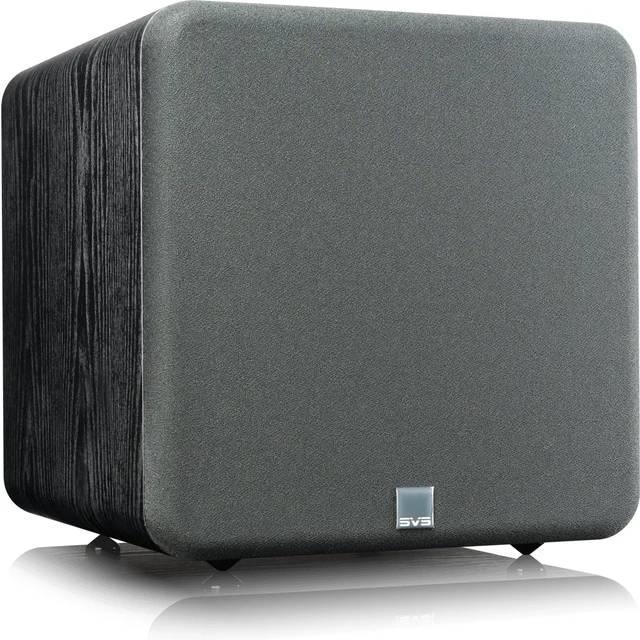
A compact sealed 12-inch that punches far above its footprint, with app-tuned bass that suits music and movies alike.
Best for: Anyone who wants one subwoofer that handles both music and movies well in a small-to-medium room.
- Sealed cabinet gives tight, articulate bass that reviewers consistently praise for texture and timing
- Smartphone app with parametric EQ makes taming room boom genuinely easy
- Small cube footprint fits rooms where a big ported box won't
- A sealed 12 won't move as much air at the very bottom as a large ported rival
- Costs more than budget ported subs of the same driver size
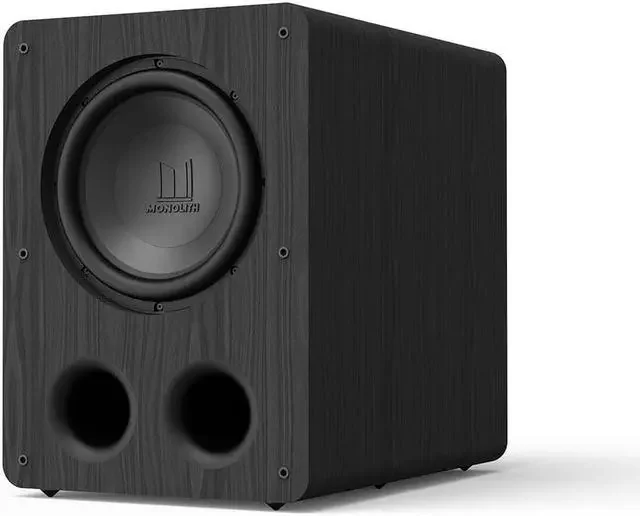
A THX-certified output monster that delivers cinema-grade slam for a fraction of what that used to cost.
Best for: Home-theater fans who want maximum deep-bass output per dollar and have room for a large cabinet.
- Massive deep-bass output from a large ported 12-inch design
- Monoprice markets it as THX Ultra certified, a badge aimed at reference levels in larger rooms
- Enormous deep-bass performance per dollar versus name-brand rivals
- Big, heavy ported cabinet that dominates a room and needs floor space
- No smartphone app; setup relies on the rear dial controls
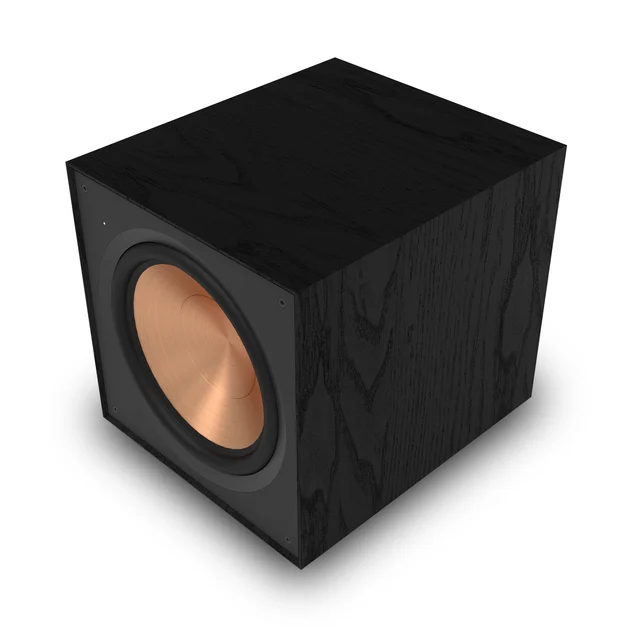
Loud, punchy ported bass on a budget, as long as you don't need finesse or room correction.
Best for: Budget buyers who want impactful movie bass and already own Klipsch speakers.
- Strong, impactful movie bass for the money
- Front-firing 12-inch driver with a 200W continuous (400W peak) amplifier
- Voicing pairs naturally with Klipsch Reference speakers
- No app or DSP room correction, so a boomy room stays boomy
- Owner reports note it can sound one-note next to a sealed or DSP-tuned sub
- Deep extension stops higher than the bigger boxes here
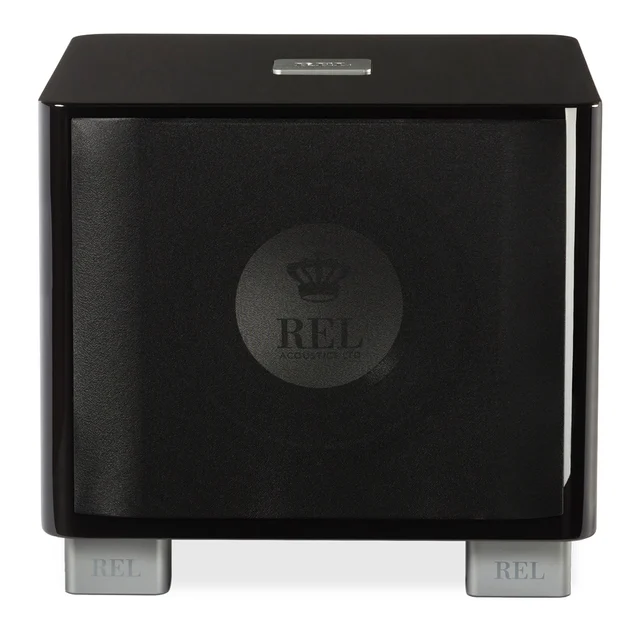
A jewel-like music subwoofer for two-channel purists, priced and voiced for a very specific listener.
Best for: Two-channel audiophiles who prize speed and integration over deep-bass output.
- Fast, tuneful bass that reviewers say integrates seamlessly with stereo speakers
- Beautiful gloss cabinet and high-level connection that blends with the main amp's character
- Compact for its class and easy to live with
- Smallest driver of this group (an 8-inch with a 10-inch passive radiator), so movie impact is limited
- Premium price buys refinement, not output
- No app or DSP room correction
Amazon had no buyable listing for this when we last checked. The link still works if it returns.
See our pick instead Find it on Amazon anyway Read our detailed assessment| Criteria | SVS SB-1000 Pro Top pick Buy it Buy | Monolith M-12 V2 (by Monoprice) Buy it Buy | Klipsch Reference R-121SW It depends Buy | REL Acoustics T/7x Skip it |
|---|---|---|---|---|
| Best for | Anyone who wants one subwoofer that handles both music and movies well in a small-to-medium room. | Home-theater fans who want maximum deep-bass output per dollar and have room for a large cabinet. | Budget buyers who want impactful movie bass and already own Klipsch speakers. | Two-channel audiophiles who prize speed and integration over deep-bass output. |
| Price tier | $$ · mid-range | $$ · mid-range | $ · budget | $$$ · premium |
| Enclosure type | Sealed | Ported | Ported | Down-firing passive radiator |
| Driver | 12-inch | 12-inch | 12-inch | 8-inch plus 10-inch passive radiator |
| Rated amplifier power | 325W RMS | Not confirmed on maker page | 200W continuous, 400W peak | 200W RMS |
| Deep-bass extension | 20 Hz extension (per SVS) | Deep (large ported cabinet) | 28 Hz low end of rated range | 27 Hz at -6 dB (per REL) |
| App / DSP room control | Yes (app + parametric EQ) | No (rear controls) | No | No |
| Footprint | Compact cube | Large | Large | Compact |
| Best-suited use | Music and movies | Home-theater output | Budget movie punch | Two-channel music |
| Price tier | $$ · mid-range | $$ · mid-range | $ · budget | $$$ · premium |
Which one is right for you?
- Anyone who wants one subwoofer that handles both music and movies well in a small-to-medium room. Buy it SVS SB-1000 Pro
- Home-theater fans who want maximum deep-bass output per dollar and have room for a large cabinet. Buy it Monoprice Monolith M-12 V2 (by Monoprice)
- Budget buyers who want impactful movie bass and already own Klipsch speakers. It depends Klipsch Reference R-121SW
- Two-channel audiophiles who prize speed and integration over deep-bass output. Skip it REL Acoustics T/7x
How we judged the field
We don’t run our own lab. Instead, we synthesize independent bench testing, expert listening reviews, and aggregated owner reports, then weigh them against what actually matters when a subwoofer lives in a real room. Four things carried the most weight. First, deep-bass extension and clean output: how low the sub plays and how loud it stays before it strains. Second, tightness and musicality, the quality that separates defined, tuneful bass from one-note boom. Third, room control, meaning whether the sub gives you app-based EQ or DSP to tame the peaks every room creates. And fourth, value and livability, which folds in size, finish, and how much performance you get for the tier you pay.
Because these four models target different buyers, we did not force them onto a single scoreboard. A boutique music sub and a THX output monster are answering different questions, and we judged each on the job it is built for.
SVS SB-1000 Pro
Buy itThe SB-1000 Pro is the sub we would point most people toward first. It packs a high-excursion 12-inch driver and a 325-watt RMS amplifier into a compact sealed cabinet that SVS rates to 20 Hz, and its tight, textured, well-timed bass is the reason to buy it. The sealed design trades a little bottom-octave slam for accuracy, which is exactly the tradeoff most listeners actually want in a room they also use for music. The headline advantage, though, is the SVS smartphone app: parametric EQ, level, phase, and low-pass control from the couch. That turns the hardest part of subwoofer ownership, taming room boom, into a five-minute job. For a compact, do-everything sub, it is hard to beat.
Monolith M-12 V2 (by Monoprice)
Buy itIf your priority is raw movie output, the Monolith M-12 V2 is the value story of this group. Monoprice markets it as THX Ultra certified, and its large ported 12-inch design is built for the deep region you feel more than hear. Owners describe genuinely cinema-grade slam that used to cost far more. The catch is physical: this is a big, heavy ported cabinet that will dominate a room, and setup is done from rear dial controls rather than an app. If you have the floor space and want the most deep output per dollar, it earns the buy.
Klipsch Reference R-121SW
It dependsThe R-121SW is a legitimately good budget ported sub, and it is the easiest pick if you already run Klipsch Reference speakers and want a voicing that matches. It hits hard on movie effects, and it uses a front-firing 12-inch driver. Note that Klipsch’s spec sheet lists a rear-firing port, so leave some clearance from the wall behind it. But there is no app and no DSP room correction, so whatever your room does to bass, you live with it, and owner reports note it can sound one-note next to a sealed or DSP-tuned sub. Klipsch rates its range down to 28 Hz, short of the SVS’s 20 Hz. Whether that matters depends entirely on your room and how much finesse you expect at this price, which is why it lands on ‘depends’ rather than a clear buy.
REL Acoustics T/7x
Skip itThe T/7x is the most charming product in this roundup and, for most buyers, still the wrong one. REL builds it around a smaller 8-inch driver paired with a 10-inch passive radiator, and the result is fast, tuneful bass that reviewers praise for integrating seamlessly with stereo speakers, helped by REL’s signature high-level connection. It is beautifully finished and compact. But it is also the most expensive here, has the smallest driver, and offers no app or room correction. You are paying a premium for refinement, not output. Unless two-channel music is genuinely your priority, most people will get more subwoofer, and more flexibility, elsewhere, so we call it a skip for the general buyer while acknowledging it is superb at its narrow job.
SVS SB-1000 Pro vs Monolith M-12 V2: which should you buy?
These are the two we would actually shortlist, and they split cleanly. The SB-1000 Pro is the versatile, room-friendly choice: sealed accuracy, a compact footprint, and app-based EQ that makes it easy to get great sound in a small-to-medium room used for both music and movies. The Monolith M-12 V2 is the muscle: more air, deeper extension, and THX Ultra output that fills a bigger home theater, at the cost of size and no app.
Decide on space and intent. If your room is modest, or music matters as much as movies, take the SVS. If you have a dedicated or larger theater and want the deepest, loudest clean bass per dollar, take the Monolith. Buyers torn between them should also consider running two smaller SVS subs instead of one big box, which smooths bass across more than one seat.
What to look for
- Enclosure type: sealed for tight, accurate, compact bass; ported for more deep output at a larger size.
- Room correction: an app or onboard DSP is the single biggest quality-of-life feature, because it fixes the peaks your room creates.
- Driver size and extension: 8-to-10 inches suits small rooms and music; 12 inches and up suits movies and larger spaces.
- Placement flexibility: front-firing ports are more forgiving near walls and in cabinets; rear-firing ports need clearance.
- Two subs vs one: a pair of smaller subs beats a single large one for even bass across multiple seats.
- Match to your speakers and room, not just the spec sheet: the biggest number rarely wins the listening test.
Our final take
Most people should start with the SVS SB-1000 Pro. It is the most complete package here, blending sealed accuracy with app-based room tuning in a box that fits real rooms, and it does music and movies with equal composure. If your ambitions and your floor plan are bigger, the Monolith M-12 V2 gives you cinema-grade output for a value price and is the easy step up. The Klipsch R-121SW is a solid budget option that lives or dies by your room, since it has no way to correct one. And the REL T/7x, for all its craft and speed, is a specialist we would only recommend to dedicated two-channel listeners. Buy for the job you actually have, and add room correction wherever you can.
Questions, answered
Sealed or ported subwoofer, which should I get?
Sealed subs like the SVS SB-1000 Pro tend to sound tighter and more accurate and fit in smaller spaces, which many listeners prefer for music. Ported subs like the Monolith M-12 V2 and Klipsch R-121SW move more air and dig deeper for the same driver size, which favors movie effects, but they are bigger. Neither is universally 'better'; it depends on whether you prioritize precision and size or maximum deep output.
Do I really need an app or room correction?
It helps more than most people expect. Every room has spots where bass piles up or disappears, and a subwoofer with app-based EQ, like the SVS, lets you flatten that boom without moving furniture. Subs without it, such as the Klipsch and REL, can still sound excellent, but you are relying on placement and your receiver's room correction to do the tuning.
Is one subwoofer enough, or should I run two?
One good sub transforms most systems. That said, adding a second subwoofer is the most reliable way to even out bass across multiple seats, because two sources smooth room modes better than one. If you have a wide couch or an open-plan room, budgeting for a pair of smaller subs often beats a single large one.
What subwoofer driver size do I need?
For a small room and music, an 8-to-10-inch sub like the REL T/7x can be plenty and stays fast and tuneful. For movies or a larger room, a 12-inch driver like the SVS, Klipsch, or Monolith gives more headroom and deeper output. Bigger drivers in ported boxes generally win on sheer output; smaller sealed designs win on agility and footprint.
Can these subwoofers do both movies and music well?
All four can, but they lean different ways. The SVS SB-1000 Pro is the most balanced all-rounder. The Monolith leans toward movie impact, the Klipsch toward budget punch, and the REL toward music refinement. If your system does both jobs, prioritize a sub with room tuning and an enclosure type that matches your dominant use.
Deciding between the top two? See our head-to-head: SVS SB-1000 Pro vs Monoprice Monolith M-12 V2 (by Monoprice).
More in Audio & Headphones
Subwoofers, Explained Plain-English guide → SVS SB-1000 Pro vs Monoprice Monolith M-12 V2 (by Monoprice) Head-to-head →  The Best Budget True Wireless Earbuds (and the One to Skip)
  The Best Turntable Cartridges: 4 Compared (and One to Skip)
  The Best Turntable Mats: 4 Compared (and One to Skip)
  Best Turntables of 2026: Value, Sound, and One to Skip