

Audio & Headphones
The Best Stereo Amplifiers: 4 Compared (and One to Skip)
We compared four integrated stereo amplifiers with built-in DAC and streaming on sound, features, app quality and real value.
The short version
For most people the WiiM Amp Pro is the value shock of the category: near-complete streaming, room correction and a stack of inputs for pocket money, limited only by modest power. Step up to the Cambridge Audio Evo 150 SE when you want genuine hi-fi power and a mature platform in one elegant box. The Marantz Model 40n is a lovely-sounding, beautifully built integrated, but you buy it for the listening and the looks rather than the features. Skip the Sonos Amp as a stereo centerpiece, because it is a multiroom convenience product with few real hi-fi inputs and weak value. Best for: building a modern streaming stereo without overpaying, start with the WiiM and graduate to the Evo 150 SE if your speakers demand it.
Our picks at a glance
- WiiM Amp Pro - Buy. A compact streaming amp with room correction and HDMI ARC, minus AirPlay and a phono stage, at a fraction of the price of the boxes here.
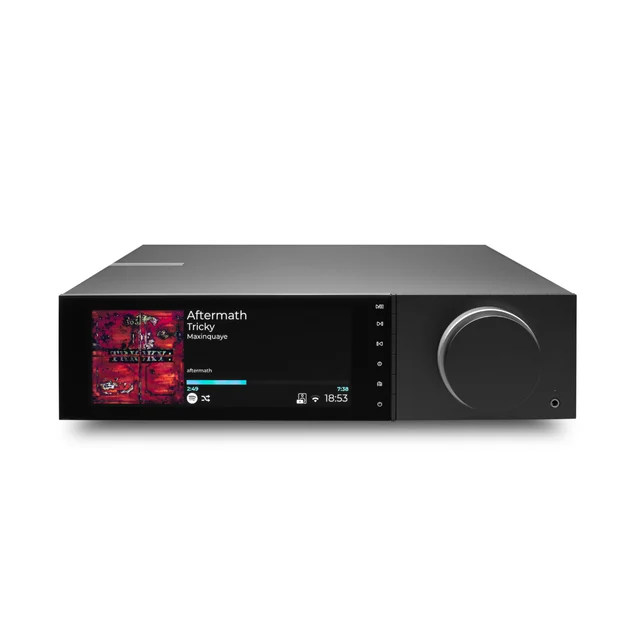
- Cambridge Audio Evo 150 SE - Buy. The all-in-one to buy if you want real hi-fi power and a polished streaming platform in one elegant box.
- Marantz Model 40n - It depends. A gorgeous, warm-sounding integrated for people who value the listening over the feature list.
- Sonos Amp - Skip. A capable multiroom brick that makes a poor centerpiece for a real stereo system.
The verdict in 30 seconds
What mattered most
- Rated power (per channel, 8Ω)
- Streaming platform
- Built-in DAC & digital inputs
- Room correction / EQ
- Analog & extra connectivity
- Sound character (per reviews)
A modern integrated amplifier is now the whole hi-fi brain in one box: amplification, a digital-to-analog converter, and network streaming for services and phones. We looked at four current, buyable options that span from a giant-killing budget streamer-amp to serious audiophile pieces. Two are easy recommendations, one is a great amp that only makes sense for a specific buyer, and one is popular but hard to justify for anyone building a real stereo.
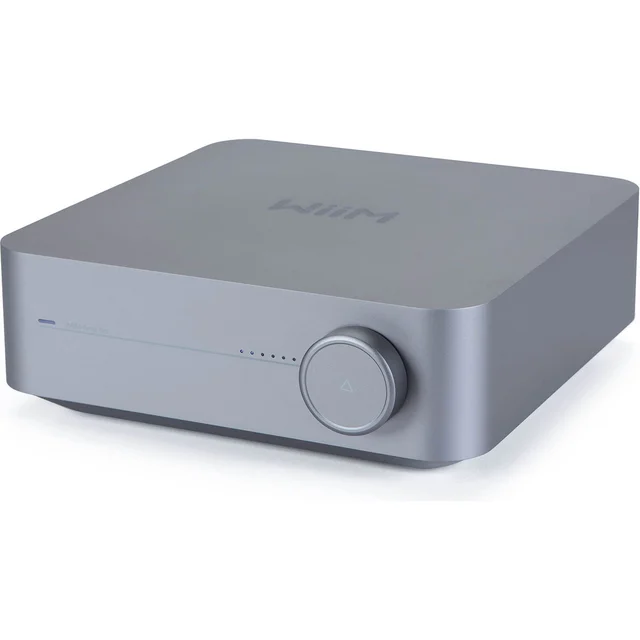
A compact streaming amp with room correction and HDMI ARC, minus AirPlay and a phono stage, at a fraction of the price of the boxes here.
Best for: Anyone starting or rebuilding a system who wants near-complete features and streaming for the least money.
- Broad streaming support (Google Cast, Spotify, TIDAL and Qobuz Connect, Roon Ready) in a compact aluminum chassis
- Automatic room correction plus 10-band graphic and parametric EQ built into the app
- Loaded with connections for the money: HDMI ARC, optical, line-in, sub out and USB audio out
- Class-D power is modest (60W into 8 ohms), so it can run out of headroom driving big or inefficient floorstanders
- WiiM states it is not an AirPlay receiver, and there is no phono input
- Fit and finish and sound refinement are good-for-the-price, not high-end
Own the WiiM Amp Pro? Tell us how it held up.
Thanks. Counted, and shown once enough owners have weighed in.
The all-in-one to buy if you want real hi-fi power and a polished streaming platform in one elegant box.
Best for: Listeners who want one beautiful box to drive quality speakers and stream everything without compromise.
- Serious power and wide dynamics from its Hypex-based amplification, comfortable with demanding speakers
- Mature StreamMagic platform with AirPlay 2, Chromecast and Roon Ready support
- Strong connectivity including balanced XLR input, MM phono stage, HDMI ARC, USB audio, subwoofer out and pre-out
- Costs many times what the WiiM does
- Cambridge's product page lists no EQ, placement settings or microphone-based room correction, which the far cheaper WiiM includes
Own the Cambridge Audio Evo 150 SE? Tell us how it held up.
Thanks. Counted, and shown once enough owners have weighed in.
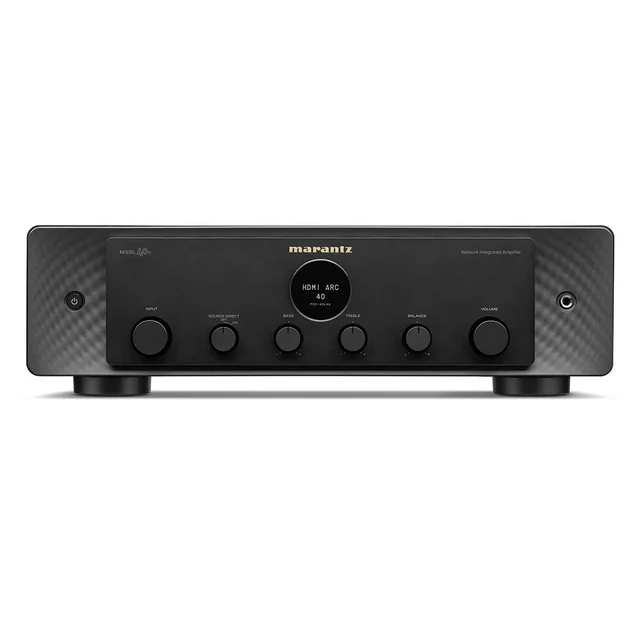
A gorgeous, warm-sounding integrated for people who value the listening over the feature list.
Best for: Buyers who prioritize sound quality, build and a classic look over cutting-edge features or high power.
- Class AB amplification with a smooth, musical, refined presentation and excellent build
- Includes a good moving-magnet phono stage and classic tactile controls
- HEOS streaming plus HDMI ARC make it a tidy hub for a TV and turntable setup
- Premium price for relatively modest rated power and a shorter feature list than rivals
- HEOS app and streaming feel dated next to newer platforms, and there is no room correction
Own the Marantz Model 40n? Tell us how it held up.
Thanks. Counted, and shown once enough owners have weighed in.
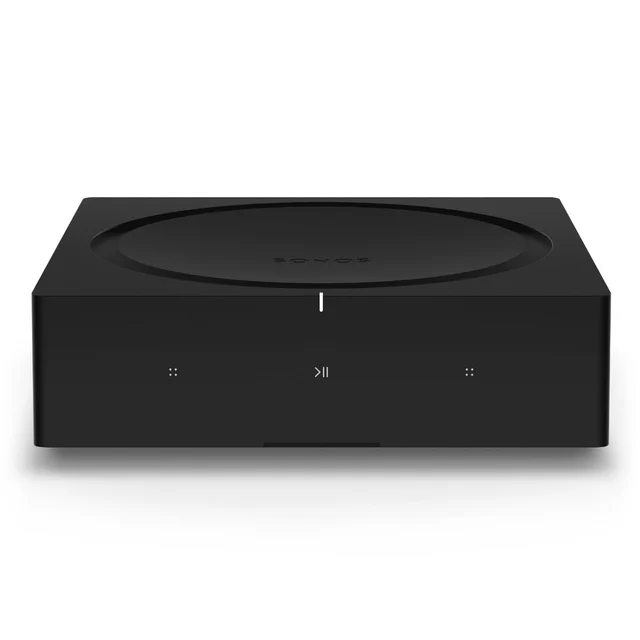
A capable multiroom brick that makes a poor centerpiece for a real stereo system.
Best for: Existing Sonos households wanting to add passive speakers, not people building a dedicated two-channel system.
- Effortless whole-home multiroom and simple setup within the Sonos ecosystem
- HDMI ARC input makes it easy to power passive speakers from a TV
- Locked to the Sonos app, whose 2024 redesign drew many owner complaints
- Few real hi-fi inputs and a hidden DAC, so it is not built to be the hub of a stereo
- Weak value: a budget streamer-amp offers more flexibility and comparable sound for far less
Own the Sonos Amp? Tell us how it held up.
Thanks. Counted, and shown once enough owners have weighed in.
| Criteria | WiiM Amp Pro Buy it Buy | Cambridge Audio Evo 150 SE Top pick Buy it Buy | Marantz Model 40n It depends Buy | Sonos Amp Skip it Buy |
|---|---|---|---|---|
| Best for | Anyone starting or rebuilding a system who wants near-complete features and streaming for the least money. | Listeners who want one beautiful box to drive quality speakers and stream everything without compromise. | Buyers who prioritize sound quality, build and a classic look over cutting-edge features or high power. | Existing Sonos households wanting to add passive speakers, not people building a dedicated two-channel system. |
| Price tier | $ · budget | $$$ · premium | $$$ · premium | $$ · mid-range |
| Rated power (per channel, 8Ω) | 60W Class D (120W into 4Ω) | 150W Class D (Hypex NCore) | 70W Class AB (100W into 4Ω) | 125W |
| Streaming platform | WiiM Home - Google Cast, Roon Ready, Connect apps; no AirPlay | StreamMagic - AirPlay 2, Chromecast, Roon Ready | HEOS - AirPlay, Roon Ready, multiroom | Sonos app only - AirPlay 2 |
| Built-in DAC & digital inputs | ESS ES9038Q2M DAC; HDMI ARC, optical; USB audio out only | ESS ES9018K2M DAC; HDMI ARC, optical, coax, USB | HDMI ARC, optical, coax; USB-A for storage only | Hidden DAC; HDMI ARC only |
| Room correction / EQ | Full parametric EQ + room correction | Not published; no mic-based correction listed | Tone controls only | Trueplay tuning (iOS only) |
| Analog & extra connectivity | Line-in, sub out, no phono | Balanced XLR + RCA, MM phono, sub out, pre-out | MM phono, sub out, no pre-out | RCA line-in, RCA sub out |
| Sound character (per reviews) | Clean, neutral, punchy for the money | Refined, powerful, wide dynamics | Warm, smooth, musical | Adequate mid-fi, not audiophile |
| Value | Exceptional | Strong for an all-in-one | Fair - you pay for sound and build | Poor for a dedicated stereo |
| Price tier | $ · budget | $$$ · premium | $$$ · premium | $$ · mid-range |
Which one is right for you?
- Anyone starting or rebuilding a system who wants near-complete features and streaming for the least money. Buy it WiiM Amp Pro
- Listeners who want one beautiful box to drive quality speakers and stream everything without compromise. Buy it Cambridge Audio Evo 150 SE
- Buyers who prioritize sound quality, build and a classic look over cutting-edge features or high power. It depends Marantz Model 40n
- Existing Sonos households wanting to add passive speakers, not people building a dedicated two-channel system. Skip it Sonos Amp
How we judged the field
We do not run our own lab. Instead we synthesize independent testing, professional reviews and aggregated owner reports, then weigh them against what actually matters when an amplifier is also your DAC and streamer. That means looking past the spec sheet: how clean and powerful the amplification really is with normal speakers, how good the built-in converter and inputs are, how mature and reliable the streaming app is, and whether the connectivity (HDMI ARC, phono, subwoofer out, balanced inputs) fits a real system.
We gave particular weight to two things reviewers and owners keep raising. First, app and platform quality - a great-sounding amp is frustrating if its control app is slow or unreliable. Second, honest value: several of these do similar jobs at wildly different prices, so we asked what each one adds over the cheapest capable option.
WiiM Amp Pro
Buy itThe WiiM Amp Pro is the value story of the category. In a chassis smaller than a hardback book it packs broad streaming support (Google Cast, Spotify, TIDAL and Qobuz Connect, Roon Ready), an ESS ES9038Q2M DAC, and a genuinely useful set of tuning tools including parametric EQ and automatic room correction. Connectivity is strong for the money, with HDMI ARC, optical, line-in, a subwoofer output and USB audio out. Two gaps matter: WiiM states it cannot act as an AirPlay receiver, and there is no phono input. Reviewers describe the sound as clean, neutral and surprisingly punchy for the price. Its main limit is power: the Class-D amplifier is rated at 60W into 8 ohms, so very large or inefficient speakers can outrun it. For most people building or rebuilding a system, nothing else here is close on value.
Cambridge Audio Evo 150 SE
Buy itIf the WiiM is about value, the Evo 150 SE is about doing the whole job with no asterisks. Its Hypex-based amplification delivers real power and wide dynamics, so it stays composed with demanding floorstanders where the budget options strain. The StreamMagic platform is one of the more mature streaming systems, with AirPlay 2, Chromecast and Roon Ready on board, and the connectivity is broad: balanced XLR input, a moving-magnet phono stage, HDMI ARC, USB audio, subwoofer out and pre-out in a genuinely elegant, well-finished box. The catches are the price and, ironically, the lack of the microphone-based room correction the far cheaper WiiM includes. For a buyer who wants one beautiful box to anchor a quality pair of speakers, it is the most complete choice here.
Marantz Model 40n
It dependsThe Model 40n is the enthusiast’s pick, known for a smooth, warm, musical presentation from its Class AB amplification and its lovely build and classic looks. It includes a moving-magnet phono stage, a subwoofer output, tactile controls and HDMI ARC, and HEOS streaming makes it a tidy hub for a TV-and-turntable setup. But you pay a premium for relatively modest rated power and a shorter feature list than rivals, and the HEOS app and streaming experience feel dated next to newer platforms, with no room correction to help in awkward rooms. None of that is a flaw so much as a set of priorities: this is an amplifier you buy for how it sounds and looks, not for what it does on paper. If that is your priority, it delivers; if you want features and flexibility, look elsewhere.
Sonos Amp
Skip itThe Sonos Amp is popular and easy to live with, but it makes a poor centerpiece for a real stereo. Its strengths are multiroom convenience and simple setup inside the Sonos ecosystem, plus an HDMI ARC input for powering passive speakers from a TV. As the hub of a two-channel system, though, it falls short: it is locked to the Sonos app, whose 2024 redesign drew many owner complaints, it offers few genuine hi-fi inputs and a DAC you never really interact with, and its value is weak. A budget streamer-amp gives you more inputs, room correction and comparable sound for far less money. Unless you are extending an existing Sonos household with passive speakers, this is the one to pass on.
Sources
Specs in this review come from these pages.
Cambridge Audio Evo 150 SE vs WiiM Amp Pro: which should you buy?
These are the two we would actually spend money on, and they answer different questions. The WiiM Amp Pro wins on value by a landslide: it streams from almost everything except AirPlay, includes room correction, and costs a small fraction of the Cambridge. For a normal room and efficient speakers, most listeners would struggle to feel short-changed.
The Evo 150 SE justifies its much higher price in two ways. It has the power and dynamic composure to drive bigger, harder-to-drive speakers cleanly, and it delivers a more refined, high-end experience in both sound and build, wrapped in a mature streaming platform with Roon Ready support. The honest rule of thumb: start with the WiiM, and step up to the Evo 150 SE only when your speakers or your ears genuinely ask for more. Buying the Cambridge to drive small bookshelf speakers is spending for headroom you may never use; buying the WiiM to drive large floorstanders may leave you wanting.
What to look for
- Enough clean power for your speakers. Match the amp to your speakers’ sensitivity and size - modest Class-D output suits efficient bookshelves, while big floorstanders want more headroom.
- A streaming platform you trust. The app runs your daily experience; favor mature platforms with AirPlay 2 or Chromecast and a good reliability record.
- The right inputs. Check for HDMI ARC if you will use a TV, a phono stage if you spin vinyl, and a subwoofer output if you may add a sub.
- Room correction or EQ. In real rooms this can matter more than a modest hardware upgrade, and not every amp includes it.
- Value versus the cheapest capable option. Ask what a premium model adds over a budget streamer-amp - sometimes it is real power and refinement, sometimes just a badge.
Our final take
This category has quietly become one of the best-value corners of hi-fi. The WiiM Amp Pro is the one to recommend to almost anyone, delivering broad streaming, room correction and HDMI ARC for pocket money, held back by modest power and the lack of AirPlay and a phono stage. When your speakers or ambitions demand more, the Cambridge Audio Evo 150 SE is the complete one-box answer, with real power and a polished platform in a beautiful chassis. The Marantz Model 40n is a genuinely lovely amplifier for the listener who buys with their ears and eyes rather than a feature checklist. And the Sonos Amp, for all its multiroom convenience, is the one to skip as a stereo centerpiece - a budget streamer-amp does the hi-fi job better for less.
Questions, answered
What is an integrated amplifier with a built-in DAC and streaming?
It combines three things that used to be separate boxes: the amplifier that powers your passive speakers, a digital-to-analog converter (DAC) that turns digital audio into an analog signal, and a network streamer that plays from services and phones over Wi-Fi. One box, one remote, and usually one app to run the whole system.
How is this different from an AV receiver?
An AV receiver is built for surround sound and home theater - many channels, video switching and room calibration for movies. An integrated stereo amp focuses on doing two channels of music as well as possible, with cleaner amplification and a simpler signal path. If music is your priority, a stereo integrated usually sounds better for the money.
Do I still need a separate DAC or streamer if the amp has them built in?
Usually no. The built-in DAC and streamer in all four of these handle streaming services and digital inputs well, though the WiiM Amp Pro does not support AirPlay. You would only add an external DAC or streamer later if you are chasing a specific sound or a platform the amp does not support.
How much power do I actually need?
It depends on your speakers and room. Efficient bookshelf speakers in a normal room are happy with the modest output of something like the WiiM Amp Pro, while larger or harder-to-drive floorstanders benefit from the extra headroom of the Evo 150. Check your speakers' sensitivity and recommended power, and remember that clean headroom matters more than raw watts.
Can I connect a turntable to these amplifiers?
The Cambridge Evo 150 SE and Marantz Model 40n include a moving-magnet phono stage, so a standard turntable plugs straight in. The WiiM Amp Pro and Sonos Amp do not have a built-in phono stage, so you would need an inexpensive external phono preamp between the turntable and a line input.
Deciding between the top two? See our head-to-head: Cambridge Audio Evo 150 SE vs WiiM Amp Pro.
More in Audio & Headphones
Stereo Amplifiers, Explained Plain-English guide → Cambridge Audio Evo 150 SE vs WiiM Amp Pro Head-to-head →  The Best Studio Monitors: 4 Compared (and One to Skip)
  The Best Turntable Stylus Cleaners: 4 Compared (and One to Skip)
  The Best Home Subwoofers: 4 Compared (and One to Skip)
  The Best Budget True Wireless Earbuds (and the One to Skip)