

Home Gym
The Best Squat Racks: 4 Compared (and One to Skip)
Four home-gym squat and power racks compared on steel spec, safety systems, stability, attachment ecosystems, and long-term value.
The short version
After synthesizing independent testing and owner reports across the 2026 squat-rack market, the REP PR-4000 Power Rack is the rack to buy: 3x3-inch 11-gauge steel, a 1,000 lb rackable rating, 1-inch bench-zone hole spacing, and an attachment ecosystem that can grow from bare cage to full training station. The Rogue RML-390F Flat Foot Monster Lite Rack is the close runner-up - the same steel class, made in the USA, with a flat-foot base that never needs bolting - you simply pay a flagship price for the logo and the origin. On a tight budget, the REP PR-1100 is the honest value play: 14-gauge steel and a smaller ecosystem, but real included safeties and a 700 lb rating that covers most beginners for years. The CAP Barbell FM-905Q is the one to skip - its low weight limit, absent safety catches, and reported wobble make it a pull-up stand masquerading as a squat rack. Buy the strongest rack your space and budget allow; it is the one purchase in a home gym you should never have to make twice. Best for: home lifters who want a safe, future-proof foundation for barbell training.
Our picks at a glance
- REP Fitness REP PR-4000 Power Rack - Buy. Gym-grade 3x3-inch 11-gauge steel and a huge attachment ecosystem at a price that undercuts the big-name equivalent.
- Rogue Fitness Rogue RML-390F Flat Foot Monster Lite Rack - Buy. USA-made 3x3-inch 11-gauge power rack whose flat-foot base needs no bolting - the low-fuss heavy-duty option.
- REP Fitness REP PR-1100 Power Rack - It depends. The best of the true budget cages - honest about being 14-gauge steel, and excellent within that limit.
- CAP Barbell FM-905Q Power Rack Exercise Stand - Skip. A tempting-looking stand whose low weight rating and missing safeties make it the wrong place to put a loaded barbell.
The verdict in 30 seconds
What mattered most
- Steel / construction
- Rated capacity
- Safeties
- Bolting required
- Hole spacing
- Attachment ecosystem
A squat rack is the anchor purchase of a home gym: get it right and everything else - bench, bar, plates - slots around it for a decade. Get it wrong and you either outgrow it in a year or lift heavy without real safeties. We compared four current, widely available racks spanning true budget to USA-made flagship. Two earn a clear buy, one is a smart pick only for a specific kind of lifter, and one popular cheap stand is a genuine skip for anyone serious about squatting.
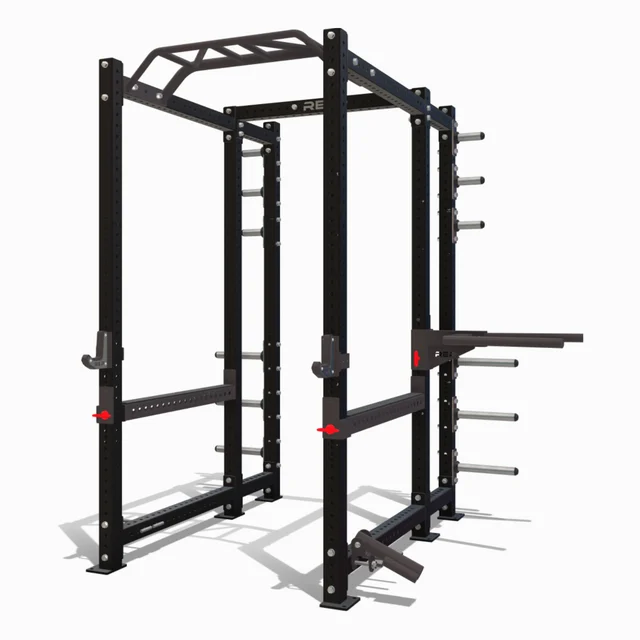
Gym-grade 3x3-inch 11-gauge steel and a huge attachment ecosystem at a price that undercuts the big-name equivalent.
Best for: Lifters who want a buy-once rack that can grow into a full training station
- 3x3-inch 11-gauge steel rated to a 1,000 lb rackable capacity
- Westside-style 1-inch hole spacing through the bench zone for precise unrack heights
- Configurable height, depth, and color with a deep catalog of attachments (safeties, spotter arms, dip bars, lat towers)
- Laser-cut numbered uprights make setting J-cups and safeties fast and symmetrical
- The build-your-own configurator can be overwhelming, and add-ons inflate the final cost quickly
- Tall 93-inch builds need generous ceiling clearance; bolting or plate storage is advisable for maximum stability
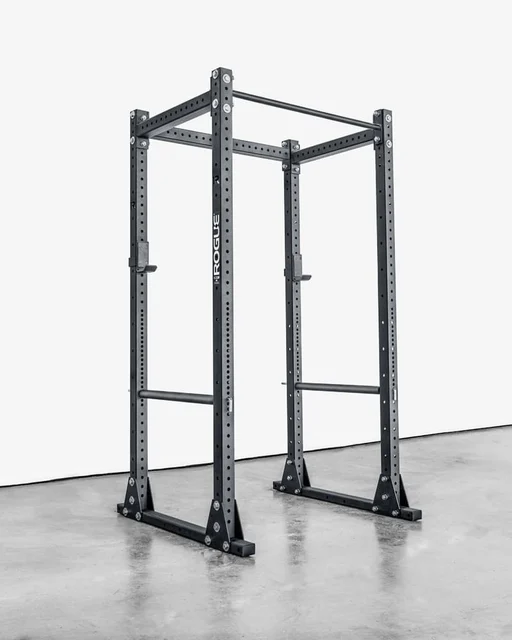
USA-made 3x3-inch 11-gauge power rack whose flat-foot base needs no bolting - the low-fuss heavy-duty option.
Best for: Buyers who want a premium, no-bolt-down rack with legendary build quality and resale value
- 3x3-inch 11-gauge steel with 5/8-inch hardware, made in Columbus, Ohio
- Flat-foot design stays planted without drilling into your slab - ideal for garages and rentals
- Westside hole spacing plus included pull-up bar, J-cups and pin/pipe safeties, with a 48 x 49 inch footprint and 30 inches of inside depth
- Works with many Monster Lite attachments, though Rogue says band pegs and spotter arms should not be used on the flat-foot version
- Costs meaningfully more than near-identical imported specs, and attachments add up fast
- At 92 inches tall it is a tight fit under standard 8-foot ceilings once you count the pull-up bar
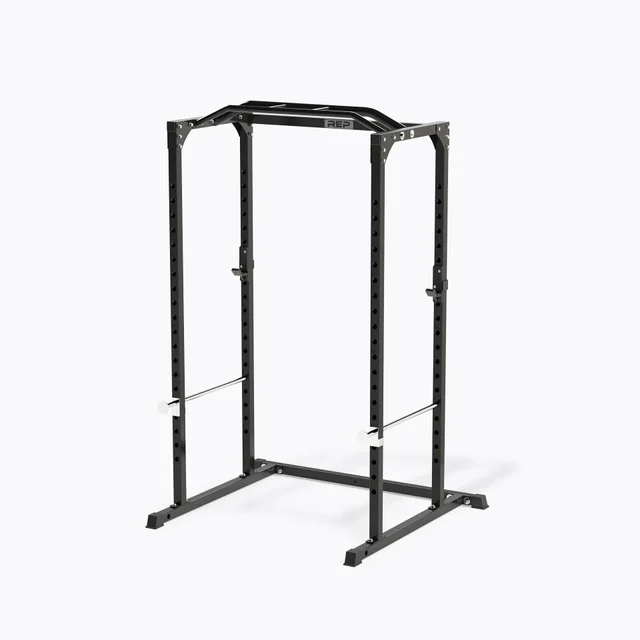
The best of the true budget cages - honest about being 14-gauge steel, and excellent within that limit.
Best for: Beginners and casual lifters on a firm budget who still refuse to train without safeties
- Flat-foot base needs no bolting and fits apartments and low-commitment setups
- Rated to 700 lb with included extended pin-pipe safeties - real protection for solo lifting
- Multi-grip pull-up arch and numbered uprights, rare niceties at this price
- The pull-up arch can be inverted to fit lower ceilings
- 14-gauge 2x2-inch steel shows some wobble on aggressive re-racks, per independent testing
- Smaller attachment range and coarser 3-inch hole spacing than the 3x3-inch racks here
- Strong intermediates pushing heavy lower-body weights will eventually want more rack
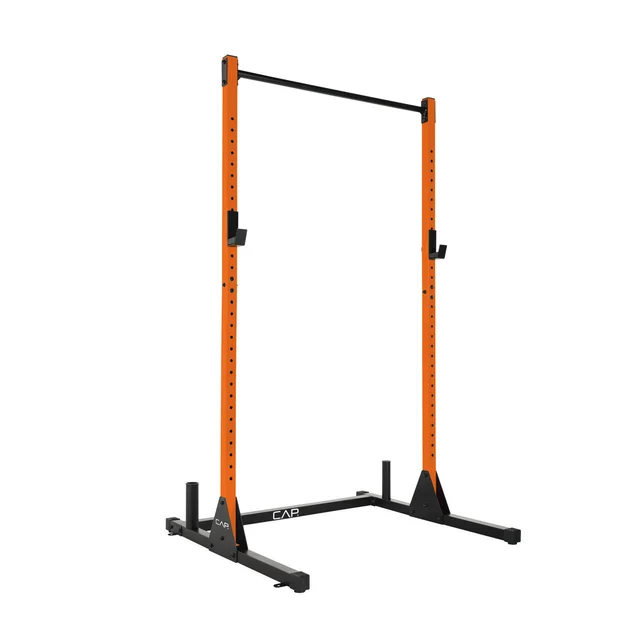
A tempting-looking stand whose low weight rating and missing safeties make it the wrong place to put a loaded barbell.
Best for: Almost no one buying it as a squat station - light-duty pull-up and curl work only
- Very cheap, compact, and easy to assemble
- Serviceable as a pull-up station or a rack for light pressing
- CAP rates it to a 500 lb maximum training load, the lowest here, which a consistent lifter can outgrow
- No safety catches are listed as included, so failed squats have nowhere to go unless you add them
- Reviewers note midsection flex and wobble when the bar is re-racked with any speed
| Criteria | REP PR-4000 Power Rack Top pick Buy it Buy | Rogue RML-390F Flat Foot Monster Lite Rack Buy it Buy | REP PR-1100 Power Rack It depends Buy | CAP Barbell FM-905Q Power Rack Exercise Stand Skip it Buy |
|---|---|---|---|---|
| Best for | Lifters who want a buy-once rack that can grow into a full training station | Buyers who want a premium, no-bolt-down rack with legendary build quality and resale value | Beginners and casual lifters on a firm budget who still refuse to train without safeties | Almost no one buying it as a squat station - light-duty pull-up and curl work only |
| Price tier | $$$ · premium | $$$$ · flagship | $$ · mid-range | $ · budget |
| Steel / construction | 3x3-inch 11-gauge | 3x3-inch 11-gauge, USA-made | 2x2-inch 14-gauge | 11, 12 and 14 gauge steel stand |
| Rated capacity | 1,000 lb rackable | Not published | 700 lb | 500 lb training load, lowest here |
| Safeties | Pin, strap, or spotter-arm options | Pin/pipe safeties included | Pin-pipe safeties included | None listed as included |
| Bolting required | Optional (or ballast with plate storage) | No - flat-foot base | No - flat-foot base | No, but stability suffers anyway |
| Hole spacing | Westside: 1-inch in bench zone | Westside: 1-inch in bench zone | Standard, coarser spacing | Basic fixed spacing |
| Attachment ecosystem | Very large and growing | Large (Monster Lite compatible) | Smaller (1000 series) | Minimal |
| Height / footprint | 80 or 93 in tall, 16 to 41 in depths | 92.25 in tall, 48 x 49 in base | 85 in tall, 58.1 x 48.5 in | 85 in tall, 46 x 30 in |
| Price tier | $$$ · premium | $$$$ · flagship | $$ · mid-range | $ · budget |
Which one is right for you?
- Lifters who want a buy-once rack that can grow into a full training station Buy it REP Fitness REP PR-4000 Power Rack
- Buyers who want a premium, no-bolt-down rack with legendary build quality and resale value Buy it Rogue Fitness Rogue RML-390F Flat Foot Monster Lite Rack
- Beginners and casual lifters on a firm budget who still refuse to train without safeties It depends REP Fitness REP PR-1100 Power Rack
- Almost no one buying it as a squat station - light-duty pull-up and curl work only Skip it CAP Barbell FM-905Q Power Rack Exercise Stand
How we judged the field
We don’t run a private test lab. Instead, we synthesized independent testing of current squat and power racks with large volumes of owner reports - the people who have actually lived with these racks through years of re-racks, failed reps, and garage humidity. Four criteria mattered most: structural spec (steel gauge, tubing size, hardware), safety (what catches the bar when a rep fails, and whether it’s included), stability (does it stay planted without bolting), and ecosystem (whether the rack can grow with attachments instead of being replaced). We also weighed footprint and ceiling requirements, because the best rack is worthless if it doesn’t fit your space. Every product here is current and buyable in 2026.
REP PR-4000 Power Rack
Buy itThe PR-4000 is the rack that made gym-grade steel a home-gym default. The 3x3-inch 11-gauge uprights carry a 1,000 lb rackable rating, the holes are sized for 5/8-inch pins, and the Westside-style hole pattern gives you 1-inch increments through the bench zone so your unrack height is exactly right, not one hole off. Its case is value: spec for spec it matches racks that cost meaningfully more.
What sets it apart long-term is the ecosystem. Heights of 80 or 93 inches, four depths, six-post options, plate storage, dip bars, spotter arms, strap safeties, lat towers, cable systems - the PR-4000 can start as a bare cage and end as the hub of a complete gym. The flip side: the configurator is genuinely overwhelming for first-time buyers, and attachments can quietly double the invoice. Owners also note that, like any four-post rack without a flat-foot base, it is happiest bolted down or ballasted with plate storage. Neither caveat changes the verdict. This is the definitive home power rack.
Rogue RML-390F Flat Foot Monster Lite Rack
Buy itThe RML-390F answers the one question the PR-4000 leaves open: what if you cannot, or will not, bolt a rack to your floor? Its self-stabilizing flat-foot base is engineered to stay planted on a matted garage slab with nothing drilled, and owner reports back that up even for heavy singles and pull-ups. The steel is the same class as the REP - 3x3-inch 11-gauge with 5/8-inch hardware and Westside spacing - but fabricated in Columbus, Ohio, with the fit-and-finish and resale value Rogue is known for. Pull-up bar, J-cups and a pin/pipe safety system are in the box, but Rogue says band pegs and safety spotter arms should not be used with the flat-foot rack.
The honest case against it is purely economic: you pay a flagship price for a spec that imports match for less, and Monster Lite attachments are similarly premium. At 92.25 inches it also wants more than a bare 8-foot ceiling if you plan to do pull-ups. If those aren’t obstacles, this is the buy-it-once, zero-fuss option - and Rogue gear tends to hold its resale value if you ever change course.
REP PR-1100 Power Rack
It dependsThe PR-1100 is what a budget rack looks like when the corners are cut in the right places. You still get a true four-post cage with included extended pin-pipe safeties, a 700 lb rating, a multi-grip pull-up arch, numbered uprights, and a freestanding base that REP says cannot be bolted down. Owner reports are overwhelmingly positive at its price.
The compromises are real, though. The 2x2-inch 14-gauge steel is the thinnest you’ll find in a usable home rack, and testers note some wobble when a loaded bar is re-racked with speed. Hole spacing is 3 inches, coarser than the Westside pattern on the 3x3 racks, the attachment range is smaller, and heavier accessories like dip bars carry lower ratings. So the verdict depends on who you are: a beginner or casual lifter who wants safe barbell training on a firm budget should buy it happily and may never need more. A lifter already squatting serious weight, or one who knows they’ll want cables, jammer arms, and heavy dips, should stretch to the PR-4000 now rather than pay twice.
CAP Barbell FM-905Q Power Rack Exercise Stand
Skip itThe FM-905Q is everywhere - big-box listings, deal sites, marketplace bundles - and its price makes it the first rack many beginners see. As a pull-up stand or a place to rack an empty bar for curls and light presses, it’s fine. As a squat station, which is how it’s marketed, it’s a skip. CAP rates it to a 500 lb maximum training load, the lowest here and half the PR-4000’s rating, which a consistent lifter can outgrow. CAP lists no safety catches among what is included, so unless you add them a failed squat has nowhere to go but the floor, or you. And reviewers repeatedly note flex and wobble through the midsection when the bar comes back to the hooks with any speed.
The frustrating part is that the money isn’t saved - it’s deferred. Nearly every serious owner story ends with replacing it and re-spending on a real rack. If the budget truly caps out here, buy nothing yet and save the gap to a PR-1100. That’s the cheapest rack worth owning.
REP PR-4000 Power Rack vs Rogue RML-390F Flat Foot Monster Lite Rack: which should you buy?
On paper these two are nearly twins: 3x3-inch 11-gauge steel, 5/8-inch hole sizing, Westside hole spacing, deep attachment catalogs. The decision comes down to three practical questions. First, floor anchoring: the RML-390F’s flat-foot design is genuinely freestanding, while the PR-4000 prefers bolts or plate-storage ballast - renters and finished-floor owners should weigh that heavily. Second, configuration: the PR-4000 offers an 80-inch height and multiple depths, which the fixed 92-inch Rogue cannot match, making REP the pick for basements and low garages. Third, money: the REP undercuts the Rogue on the base unit and again on almost every attachment, which is why it wins the overall pick. Buy the RML-390F if USA manufacturing, no-drill stability, and resale value justify the flagship premium to you. Buy the PR-4000 if you want the same structural class plus more flexibility, and would rather spend the difference on plates.
What to look for
- Steel and hardware: 3x3-inch 11-gauge tubing with 5/8-inch bolts is the gym standard; 2x2-inch 14-gauge is acceptable for beginners, and anything lighter is a pull-up stand.
- Included safeties: Pin pipes, straps, or spotter arms should be in the box or bought the same day - never squat alone without them.
- Bench-zone hole spacing: 1-inch (Westside) spacing around chest height makes bench unracks dramatically better; coarser spacing is livable for squats only.
- Ceiling math: Rack height plus pull-up clearance decides your options before price does - measure first.
- Stability plan: Flat-foot racks stand alone; standard four-posts want bolts or loaded plate storage.
- Ecosystem: Attachments you might want in three years (dips, lat pulldown, spotter arms) should already exist for the rack you buy today.
- Capacity honesty: A rating far above your best lifts is a safety margin, not marketing excess - a rating near your working weights is a warning.
Our final take
A squat rack is infrastructure, and infrastructure rewards buying quality once. The REP PR-4000 Power Rack is the best combination of gym-grade steel, safety options, configurability, and long-term ecosystem in the 2026 market, and it’s our definitive pick for most home gyms. The Rogue RML-390F Flat Foot Monster Lite Rack is every bit its structural equal and the right call when no-bolt stability and USA manufacturing are worth the flagship premium. The REP PR-1100 proves a budget rack can still be a safe rack - its 14-gauge steel is a real limit, but an honest one, and for beginners it’s the smartest entry point in the category. The CAP FM-905Q is the cautionary tale: a rack-shaped object whose low limit and missing safeties defer the real purchase rather than replace it. Whatever you choose, choose something with safeties you’ll actually set - the best rack is the one that catches the rep you miss.
Questions, answered
Do I need a full power rack, or is a squat stand enough?
If you ever train alone, a four-post power rack (or at minimum a rack with proper spotter arms) is the safer choice, because pin or strap safeties catch a failed squat or bench press. Squat stands are lighter and cheaper but leave nowhere for the bar to go when a rep fails, which is exactly the problem with ultra-budget stands like the CAP FM-905Q.
How much ceiling height do I need for a power rack?
Measure before you buy. A 92-to-93-inch rack technically fits under a standard 8-foot (96-inch) ceiling, but pull-ups become impossible. The REP PR-4000's 80-inch configuration is the go-to for basements and low garages, and most owners report they never miss the extra height for squats and presses.
What does steel gauge actually mean for a squat rack?
Lower gauge means thicker steel: 11-gauge 3x3-inch tubing is the commercial-gym standard used by the PR-4000 and RML-390F, while 14-gauge 2x2-inch tubing, as on the PR-1100, is thinner and flexes more under heavy or fast re-racks. For most lifters under intermediate strength levels 14-gauge is adequate; if you plan to squat seriously heavy for years, buy 11-gauge once instead of upgrading later.
Do these racks need to be bolted to the floor?
The Rogue RML-390F and REP PR-1100 use flat-foot bases engineered to stay put without anchoring, which owners confirm works well on rubber-matted concrete. The PR-4000 is stable freestanding once loaded with plate storage, but bolting (or a rack-mounted stabilizer) is the by-the-book route, especially for kipping pull-ups or aggressive re-racking.
Is a cheap rack better than no rack at all?
For pull-ups, curls, and light overhead work, yes - but for squats and bench pressing, a rack without included safeties and with a low weight rating can be worse than no rack, because it invites loads it cannot reliably hold. Independent testing and owner reports consistently point to the PR-1100 as the floor for safe barbell training; below that, save up rather than settle.
Deciding between the top two? See our head-to-head: REP Fitness REP PR-4000 Power Rack vs Rogue Fitness Rogue RML-390F Flat Foot Monster Lite Rack.
More in Home Gym
Squat Racks, Explained Plain-English guide → REP Fitness REP PR-4000 Power Rack vs Rogue Fitness Rogue RML-390F Flat Foot Monster Lite Rack Head-to-head →  The Best Treadmills: 4 Compared (and One to Skip)
  The Best Adjustable Weight Benches: 4 Compared (and One to Skip)
  The Best Weighted Vests: 4 Compared (and One to Skip)
  The Best Wrist Wraps: 4 Compared (and One to Skip)