

Home Gym
The Best Adjustable Weight Benches: 4 Compared (and One to Skip)
We compared four current adjustable benches on build quality, weight capacity, adjustability, stability, storage, and value.
The short version
The REP Fitness AB-3000 2.0 is the bench to buy for most people: it pairs commercial-grade 11-gauge steel and a 1,000 lb rated capacity with full flat-incline-decline adjustability, all at a mid-range price. The Rogue AB-3 is the more durable, USA-built upgrade, but its flagship price is hard to justify unless you train heavy or share it across many users. The FLYBIRD WB6 from FED Fitness is the standout budget pick, folding to 9.5 inches thick with an 880 lb rating for beginner dumbbell work. The BowFlex 5.1S is well made but its lower capacity, slower pin adjustment, and mid-range price make it easy to skip once you compare it. Best for: home lifters who want the most bench per dollar without sacrificing real adjustability or stability.
Our picks at a glance
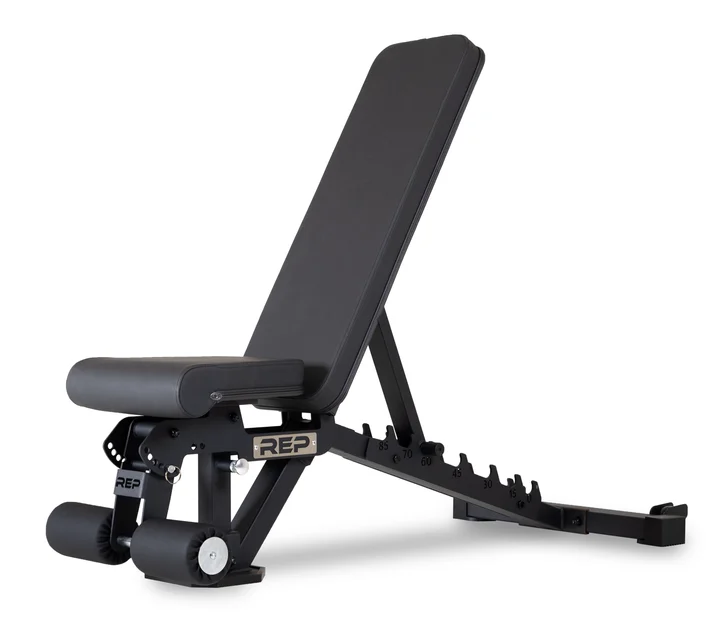
- REP Fitness AB-3000 2.0 FID Adjustable Bench - Buy. Commercial-grade capacity and true FID adjustability at a mid-range price that undercuts everything close to its quality.
- Rogue Fitness Rogue AB-3 Adjustable Bench - It depends. A USA-built, borderline-indestructible bench with 50-plus position combos, priced well above what most home lifters need.
- FED Fitness FLYBIRD WB6 Foldable Adjustable Weight Bench Classic - Buy. The budget bench to beat: foldable to 9.5 inches thick, 30.1 lb, and rated to 880 lb for beginner-to-intermediate dumbbell training.
- BowFlex 5.1S Stowable Bench - Skip. A sturdy, foldaway FID bench whose lower capacity and slow pin adjustment leave it outclassed on value.
The verdict in 30 seconds
What mattered most
- Frame & steel
- Weight capacity
- Adjustability
- Stability
- Storage / footprint
- Best use
An adjustable weight bench is the quiet workhorse of a home gym, and the four here span every budget and ambition. We weighed a value-leading FID bench, a USA-built commercial-grade unit, a foldable budget favorite, and a stowable space-saver. Two earn a clear buy, one depends entirely on your budget and space, and one is easy to skip once you see what the others offer for similar money.
Commercial-grade capacity and true FID adjustability at a mid-range price that undercuts everything close to its quality.
Best for: Most home-gym owners who want near-commercial build and versatility without paying flagship money.
- Heavy 11-gauge steel frame with a 1,000 lb rated load capacity that reviewers call genuinely commercial-tier
- Full flat-incline-decline adjustability with multiple back and seat angles for a wide exercise range
- Version 2.0 added rubber floor covers, a lockable leg roller, and denser pads, and owners report it stays notably stable
- Not foldable, so it needs a permanent footprint
- A minority of owners still note slight seat-pad play at steep angles
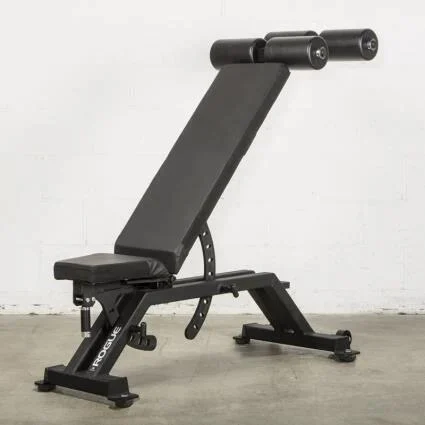
A USA-built, borderline-indestructible bench with 50-plus position combos, priced well above what most home lifters need.
Best for: Serious or multi-user setups where lifetime durability and dynamic-training versatility justify the premium.
- Made in the USA from 2x2 and 2x3 inch 11-gauge steel with a reputation for rock-solid stability at heavy loads
- Over 50 back-and-seat combinations, including a decline setting with a removable foot catch
- Load-bearing rubber feet, cordura pad edges, and a handle with wheels for easy repositioning
- Flagship price that reviewers openly say many rivals now match on features for far less
- Heavy and large, with no folding or compact-storage option
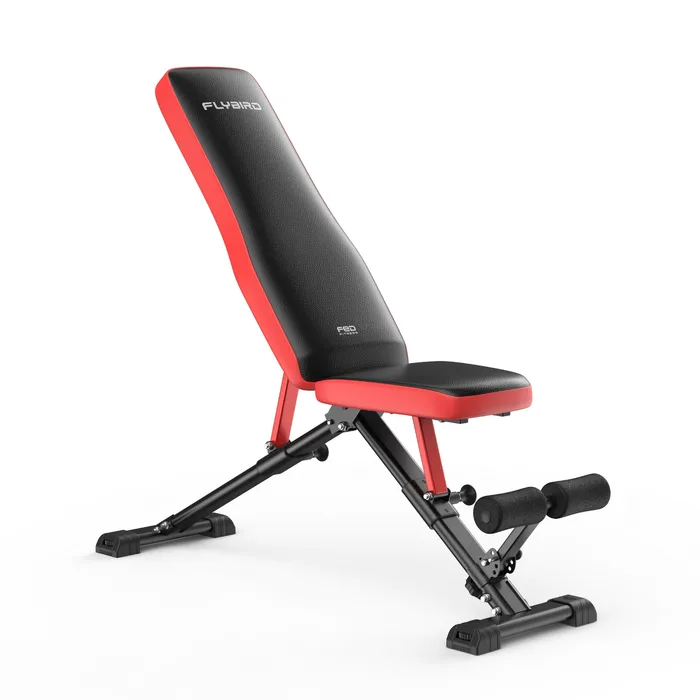
The budget bench to beat: foldable to 9.5 inches thick, 30.1 lb, and rated to 880 lb for beginner-to-intermediate dumbbell training.
Best for: Beginners, apartment gyms, and anyone training mostly with dumbbells on a tight budget.
- Folds to 30.1 by 13.8 by 9.5 inches and weighs a stated 30.1 lb, so it slides under a bed or sofa
- 8 back angles from 90 degrees to a -30 degree decline, plus 4 seat angles, on a pop-pin adjustment
- A stated 880 lb capacity on a triangular frame of 1.4mm steel, and it arrives 96 percent pre-assembled
- Thin-wall 1.4mm steel and a folding frame are not built for serious barbell work, whatever the rating
- FED Fitness lists a 1 year warranty and a 30-day money-back guarantee
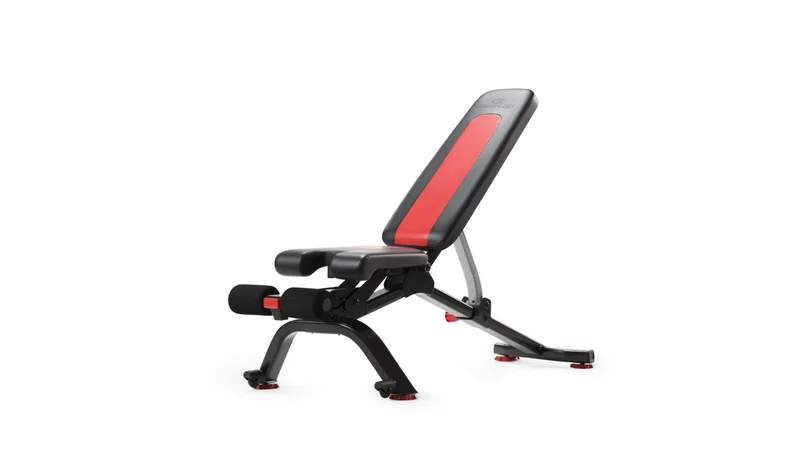
A sturdy, foldaway FID bench whose lower capacity and slow pin adjustment leave it outclassed on value.
Best for: Space-tight buyers who specifically prioritize fold-up storage over capacity and adjustment speed.
- Genuinely rock-solid and heavy for a folding bench, with a well-made feel owners praise
- Stows upright to save floor space, with transport wheels for easy moving
- Full flat-incline-decline positions plus a seat adjustment
- Its 600 lb rating trails the REP and covers user and lift load combined
- Only six back angles and a pull-pin system that owners find slow to change
- At its mid-range price, the REP outbuilds it and the FLYBIRD undercuts it
| Criteria | REP Fitness AB-3000 2.0 FID Adjustable Bench Top pick Buy it Buy | Rogue AB-3 Adjustable Bench It depends Buy | FLYBIRD WB6 Foldable Adjustable Weight Bench Classic Buy it Buy | BowFlex 5.1S Stowable Bench Skip it Buy |
|---|---|---|---|---|
| Best for | Most home-gym owners who want near-commercial build and versatility without paying flagship money. | Serious or multi-user setups where lifetime durability and dynamic-training versatility justify the premium. | Beginners, apartment gyms, and anyone training mostly with dumbbells on a tight budget. | Space-tight buyers who specifically prioritize fold-up storage over capacity and adjustment speed. |
| Price tier | $$ · mid-range | $$$$ · flagship | $ · budget | $$ · mid-range |
| Frame & steel | 11-gauge steel, near-commercial build | USA-made 11-gauge 2x2/2x3 steel | 1.4mm steel, triangular folding frame | Heavy-duty folding frame |
| Weight capacity | 1,000 lb rated | Not published | 880 lb rated | 600 lb, user plus load |
| Adjustability | 8 back / 5 seat, full FID | 9 back / 6 seat, 50+ combos | 8 back / 4 seat, full FID | 6 back angles + seat, full FID |
| Stability | Very stable, minor seat play | Rock-solid at heavy loads | Fine for light-to-moderate work | Rock-solid for a folding bench |
| Storage / footprint | Fixed, permanent footprint | Large and heavy, not foldable | Folds to 9.5 in thick, 30.1 lb | Stows upright, transport wheels |
| Best use | All-round home training | Serious / multi-user gyms | Beginner dumbbell training | Space-limited casual use |
| Price tier | $$ · mid-range | $$$$ · flagship | $ · budget | $$ · mid-range |
Which one is right for you?
- Most home-gym owners who want near-commercial build and versatility without paying flagship money. Buy it REP Fitness AB-3000 2.0 FID Adjustable Bench
- Beginners, apartment gyms, and anyone training mostly with dumbbells on a tight budget. Buy it FED Fitness FLYBIRD WB6 Foldable Adjustable Weight Bench Classic
- Serious or multi-user setups where lifetime durability and dynamic-training versatility justify the premium. It depends Rogue Fitness Rogue AB-3 Adjustable Bench
- Space-tight buyers who specifically prioritize fold-up storage over capacity and adjustment speed. Skip it BowFlex 5.1S Stowable Bench
How we judged the field
We don’t run our own lab. Instead, we synthesize independent testing and aggregated owner reports, then weigh them against the specs each maker publishes. For adjustable benches, a handful of things separate a bench you’ll keep for a decade from one you’ll replace in a year: frame gauge and welds, real-world stability (does the seat or back wobble under load?), the number and usefulness of back and seat angles, rated weight capacity relative to how you actually train, and practicalities like folding, footprint, and warranty. We also read the complaints, not just the praise, because a pattern of small gripes, seat play, slow adjustment, pad wear, tells you more than a star average. The four benches below cover the full spectrum from budget-foldable to USA-built flagship.
REP Fitness AB-3000 2.0 FID Adjustable Bench
Buy itThis is the bench independent reviewers point most home-gym owners toward, and it’s easy to see why. It’s built from heavy 11-gauge steel with a 1,000 lb rated capacity that puts it in commercial territory, yet it lands at a mid-range price. The 2.0 revision added rubber floor covers, a lockable leg roller, and denser pads, and owner reports back up the claim that it stays planted through pressing. You get true flat-incline-decline adjustability with several back and seat positions. The honest caveats: it doesn’t fold, so it wants a permanent spot, and a small share of owners still mention faint seat-pad play at the steepest angles. Neither undercuts its core value.
Rogue AB-3 Adjustable Bench
It dependsThe Rogue AB-3 is the tank of this group: made in the USA from 2x2 and 2x3 inch 11-gauge steel, with a reputation for being rock-solid at loads that make lighter benches flex. It offers more than 50 back-and-seat combinations, including a decline mode with a removable foot catch, plus load-bearing rubber feet, cordura pad edges, and a handle with wheels. So why not a straight buy? Price. It sits at flagship money, and independent reviewers now openly note that rivals, including the REP above, match much of its functionality for far less. If you train heavy, run a shared or semi-commercial space, or simply want a buy-it-for-life bench and the budget is there, it’s superb. For a typical home user, it’s more bench than the goal requires.
FLYBIRD WB6 Foldable Adjustable Weight Bench Classic
Buy itFLYBIRD benches are now sold under the FED Fitness name, and the WB6 Classic is the folding adjustable that carries on the default budget recommendation. FED Fitness states a 30.1 lb bench that folds to 30.1 by 13.8 by 9.5 inches, thin enough to slide under a bed or sofa, which makes it a natural fit for apartments and shared rooms. A pop-pin sets 8 back angles, from upright through flat to a -10 or -30 degree decline, and 4 seat angles, and the triangular frame of 1.4mm steel is rated to 880 lb. It arrives 96 percent pre-assembled. The limits are exactly what you’d expect at this cost: thin-wall steel on a folding frame is not the platform for serious barbell work, whatever the rating says, and the warranty is 1 year. For beginners and dumbbell-focused lifters, none of that is disqualifying, it’s the most bench you can get for the least money.
BowFlex 5.1S Stowable Bench
Skip itThe 5.1S is a likable bench that struggles to make a case at its price. It’s genuinely sturdy and heavy for a folding design, stows upright on transport wheels, and covers full flat-incline-decline positions with a seat adjustment. But two things hold it back: its 600 lb rating trails the REP’s 1,000 lb and covers user weight and lift load combined, and its six back angles adjust through a pull-pin system that owners find slow. At a mid-range price, it’s outbuilt by the REP and undercut by the FLYBIRD. Unless upright fold-away storage is your single overriding priority, the others deliver more for the same or less.
REP Fitness AB-3000 2.0 vs Rogue AB-3: which should you buy?
These are the two strongest builds here, and the decision comes down to budget and ambition. Both use 11-gauge steel, both are rock-solid, and both offer full FID adjustability with plenty of angles. The Rogue is made in the USA, offers the widest range of position combinations, and has the edge in outright, share-it-across-a-gym durability. The REP gives up very little of that in practice while costing dramatically less, and its 2.0 stability upgrades closed much of the perceptible gap. For the overwhelming majority of home lifters, the REP AB-3000 2.0 is the smarter buy: near-commercial quality at a mid-range price. Step up to the Rogue only if you train heavy, need multi-user toughness, or specifically want a lifetime, American-made centerpiece and the flagship price doesn’t faze you.
What to look for
- Frame gauge and welds: 11-gauge steel and a wide, well-triangulated base are the biggest predictors of long-term stability.
- Real stability, not just rated capacity: check owner reports for seat or back wobble; a high number on paper means little if the pad shifts under load.
- Useful adjustability: more angles help, but confirm the flat, common incline, and decline positions you’ll actually use are comfortable.
- Capacity with margin: make sure the rating comfortably exceeds your bodyweight plus your heaviest lift.
- Storage reality: if space is tight, prioritize a folding or upright-stowable design and check its folded footprint.
- Pad and warranty: denser pads resist wear, and a longer frame warranty signals the maker’s own confidence.
Our final take
Buy the REP Fitness AB-3000 2.0 if you want the most capable, best-value bench for a typical home gym, it’s the pick that fits the widest range of lifters. Stretch to the Rogue AB-3 only if heavy or shared use, and a flagship budget, justify its lifetime build. Grab the FLYBIRD WB6 if you’re starting out, training mostly with dumbbells, or short on both cash and space. And pass on the BowFlex 5.1S unless upright fold-away storage outweighs everything else, because at its price the rest of this field simply gives you more.
Questions, answered
What does FID mean, and do I need it?
FID stands for flat, incline, and decline, meaning the bench can lie flat, tilt up for incline presses, and angle down for decline work. All four benches here are FID. If you only ever do flat pressing, a cheaper flat bench works, but FID adds chest, shoulder, and core variety for little extra money.
How much weight capacity should I look for?
Capacity ratings combine your bodyweight and the load you lift. For dumbbell work, a bench rated a few hundred pounds is plenty; for heavy barbell pressing you want a high-capacity, heavy-gauge frame like the REP or Rogue. Treat manufacturer ratings as a guide and leave yourself a comfortable margin.
Are foldable benches stable enough to lift on?
A well-made folding bench like the FLYBIRD or BowFlex is stable enough for beginner-to-intermediate dumbbell training. Owners report the tradeoff shows up under very heavy barbell loads, where a fixed, heavy-gauge frame flexes less. If you plan to press near your limit, prioritize a non-folding heavy-duty bench.
Is a decline setting worth having?
Decline lets you target the lower chest and anchor your feet for weighted sit-ups, and each of these benches offers it. It is a nice-to-have rather than essential for most home lifters, so do not pay a large premium for decline alone if the rest of the bench does not fit your needs.
Which of these is best for a small apartment?
The FLYBIRD folds flat and is light, making it the easiest to tuck away, while the BowFlex 5.1S stows upright on wheels if you want a sturdier fold-up design. The REP and Rogue are fixed-footprint benches better suited to a dedicated space.
Deciding between the top two? See our head-to-head: REP Fitness AB-3000 2.0 FID Adjustable Bench vs Rogue Fitness Rogue AB-3 Adjustable Bench.
More in Home Gym
Weight Benches, Explained Plain-English guide → REP Fitness AB-3000 2.0 FID Adjustable Bench vs Rogue Fitness Rogue AB-3 Adjustable Bench Head-to-head →  The Best Weighted Vests: 4 Compared (and One to Skip)
  The Best Wrist Wraps: 4 Compared (and One to Skip)
  The Best Yoga Blocks: 4 Compared (and One to Skip)
  The Best Yoga Mats: Grip, Cushioning, and Durability Compared