

Outdoors & Fitness
The Best Yoga Blocks: 4 Compared (and One to Skip)
We compared four yoga blocks on published dimensions, weight, surface finish and cleaning guidance, and on whether the three heights you get from one block match everybody else's.
The short version
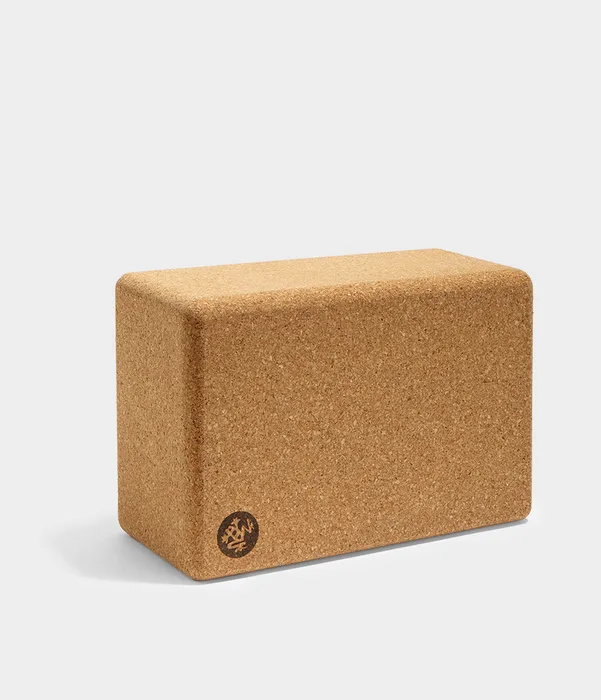
The Manduka Cork Yoga Block is the one to buy if you want a block that does not move: 4 x 6 x 9 in at 2.2 lb, dense enough to take your full weight in a supported backbend without creeping across the floor. The Hugger Mugger 4 in. Foam Yoga Block is the value pick at 0.8 lb, and for restorative work where the block goes under your spine rather than under your hand, lighter is genuinely better. The JadeYoga Cork Block suits people who want the smaller 3 x 4.75 x 9 in size for shoulder work, with the caveat that blocks are sold individually and no weight is published. Skip the Yoga Design Lab Cork Block: it is well made, but its 5.5 in face breaks the 4, 6 and 9 inch ladder every other block uses, so it will never match a second block or the ones at your studio. Best for: anyone buying their first pair of blocks, or replacing foam that has started to dent.
Our picks at a glance
- Manduka Cork Yoga Block - Buy. A standard-size cork block heavy enough to stay where you put it, with the clearest care instructions in the category.
- Hugger Mugger 4 in. Foam Yoga Block - Buy. The studio-standard foam block at 0.8 lb, with beveled edges and a stated country of manufacture, which is more than most foam blocks manage.
- JadeYoga Cork Yoga Block - It depends. The only block here offered in a genuinely small 3 x 4.75 x 9 in size, which is useful for shoulders and wrong as a general-purpose block.
- Yoga Design Lab Cork Yoga Block, Mandala Black - Skip. Good cork at a normal density, built to a 5.5 in face that quietly breaks the height ladder every other block uses.
The verdict in 30 seconds
What mattered most
- Material
- Dimensions
- Published weight
- Heights from one block
- Surface finish
- Cleaning guidance
A yoga block is a rectangle, which makes it the kind of product people buy on colour and regret on the mat. The things that actually matter are dull and measurable: the three heights the block gives you, how heavy it is, whether the surface stays grippy when your hands are damp, and whether a second block from anywhere else will match it. Cork and foam behave differently on every one of those, and the sizes are less standard than you would assume. We compared four blocks that between them cover the real choices.
A standard-size cork block heavy enough to stay where you put it, with the clearest care instructions in the category.
Best for: Anyone who wants one block that will match every other block they ever buy.
- Standard 4 x 6 x 9 in (10 x 15 x 23 cm) dimensions, so it stacks and pairs with almost any other block you already own.
- At 2.2 lb (1 kg) it is the densest block here, which is what stops cork skidding when you load it in a standing pose.
- Manduka publishes real cleaning guidance, including a 50/50 water and vinegar solution for deeper cleaning.
- At 2.2 lb it is nearly three times the weight of the foam block, which you notice carrying two of them to a class.
- Manduka warns against submerging the block because water can cause expansion or a change in texture.
- Cork edges are harder than foam, so the corners are less forgiving under a shoulder or a hip.
- Sold as a single block, and most sequences assume you have two.
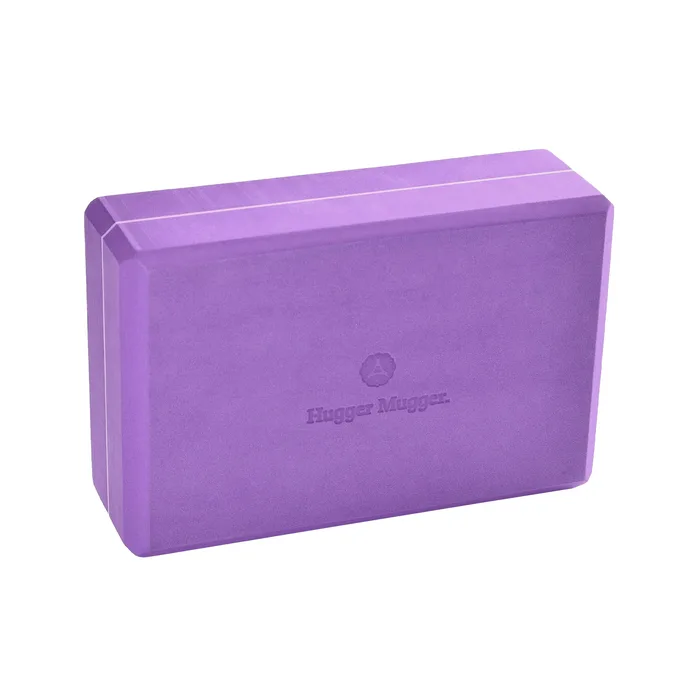
The studio-standard foam block at 0.8 lb, with beveled edges and a stated country of manufacture, which is more than most foam blocks manage.
Best for: Restorative and supported work, and anyone carrying two blocks to a class each week.
- At 0.8 lb it is by far the lightest block here, which matters when the block goes under your back for ten minutes.
- Standard 4 x 9 x 6 in dimensions, so it gives the same 4, 6 and 9 inch heights as the cork blocks.
- Beveled edges and a stated country of manufacture (Taiwan), and it cleans with a mat wash or a warm damp cloth.
- EVA foam compresses under load, so it will not hold a hard edge for as many years as cork will.
- Light weight means it can slide or tip under a standing pose in a way the 2.2 lb cork block does not.
- Foam holds sweat and skin oil at the surface rather than shedding it the way sealed cork does.
- Colour options are bright rather than neutral, which some people will not want in a living room.
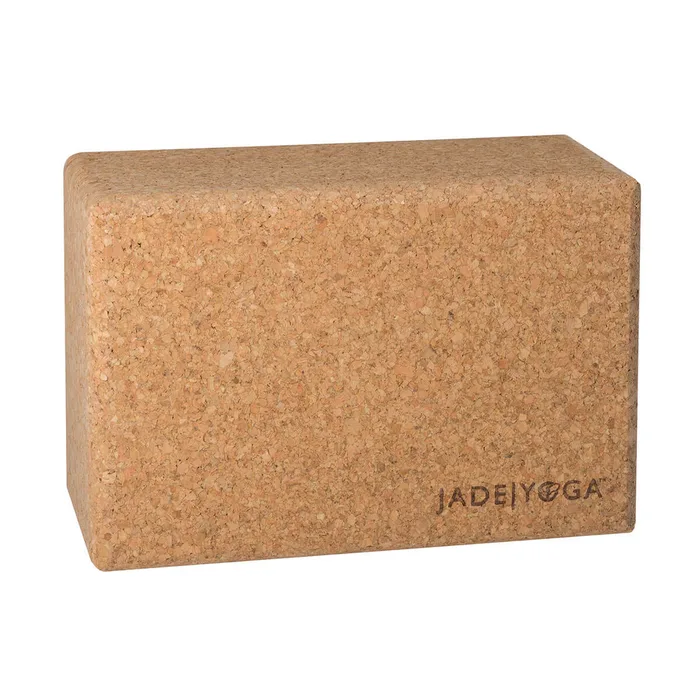
The only block here offered in a genuinely small 3 x 4.75 x 9 in size, which is useful for shoulders and wrong as a general-purpose block.
Best for: Someone who already owns standard blocks and wants a narrow one for shoulder and chest work.
- Two sizes: small at 3 x 4.75 x 9 in and large at 4 x 6 x 9 in, so you can buy the narrow one deliberately.
- Cork is sustainably harvested in Portugal, and JadeYoga states cork is naturally antimicrobial and water resistant.
- JadeYoga states that each block sold preserves 2,000 square feet of rainforest through its Rainforest Trust partnership.
- No weight is published for either size, which is the single most useful number for a cork block.
- Blocks are sold individually, stated on the page, so a pair costs twice what the listing suggests.
- The small size gives heights of 3, 4.75 and 9 inches, which do not line up with a standard block if you mix them.
- No cleaning guidance is given on the product page.
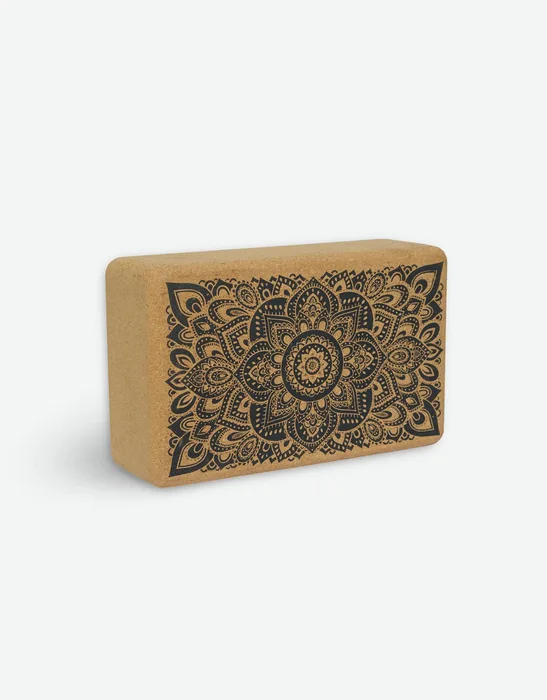
Good cork at a normal density, built to a 5.5 in face that quietly breaks the height ladder every other block uses.
Best for: Someone buying exactly one decorative block and who will never need it to match another.
- Fully specified: 3 x 5.5 x 9 in (7.6 x 14 x 23 cm) and 1.5 lb (700 g), which is more than JadeYoga publishes.
- 100% renewable cork printed with non-toxic, water-based inks.
- Cork density works out close to the Manduka once you account for the smaller volume, so this is not a cheap block.
- The 5.5 in face replaces the conventional 6 in one, so the medium height is half an inch lower than every standard block.
- That mismatch means it will not pair with a second block from another brand, or with the blocks in a studio.
- The printed mandala sits on the face you put your hands and body weight on, and ink on cork is a wear surface.
- Spot clean with warm water and soap only, with no submerging, and no deeper cleaning method given.
| Criteria | Cork Yoga Block Top pick | 4 in. Foam Yoga Block | Cork Yoga Block | Cork Yoga Block, Mandala Black |
|---|---|---|---|---|
| Verdict | Buy it | Buy it | It depends | Skip it |
| Best for | Anyone who wants one block that will match every other block they ever buy. | Restorative and supported work, and anyone carrying two blocks to a class each week. | Someone who already owns standard blocks and wants a narrow one for shoulder and chest work. | Someone buying exactly one decorative block and who will never need it to match another. |
| Price tier | $$ · mid-range | $ · budget | $$ · mid-range | $$ · mid-range |
| Material | Cork | EVA foam | Cork | Cork |
| Dimensions | 4 x 6 x 9 in (10 x 15 x 23 cm) | 4 x 9 x 6 in | Small 3 x 4.75 x 9 in, Large 4 x 6 x 9 in | 3 x 5.5 x 9 in (7.6 x 14 x 23 cm) |
| Published weight | 2.2 lb (1 kg) | 0.8 lb | Not published | 1.5 lb (700 g) |
| Heights from one block | 4, 6 and 9 in | 4, 6 and 9 in | 3, 4.75 and 9 in, or 4, 6 and 9 in | 3, 5.5 and 9 in |
| Surface finish | Plain cork | Plain foam, beveled edges | Plain cork | Printed cork, water-based inks |
| Cleaning guidance | Damp cloth and mild soap, or 50/50 water and vinegar, do not submerge | Mat wash or warm damp cloth, air dry out of sunlight | Not stated on the product page | Spot clean with warm water and soap, do not submerge |
| Stated origin | Not stated on the product page | Made in Taiwan | Cork harvested in Portugal | Not stated on the product page |
| Price tier | $$ · mid-range | $ · budget | $$ · mid-range | $$ · mid-range |
Which one is right for you?
- Anyone who wants one block that will match every other block they ever buy. Buy it Manduka Cork Yoga Block
- Restorative and supported work, and anyone carrying two blocks to a class each week. Buy it Hugger Mugger 4 in. Foam Yoga Block
- Someone who already owns standard blocks and wants a narrow one for shoulder and chest work. It depends JadeYoga Cork Yoga Block
- Someone buying exactly one decorative block and who will never need it to match another. Skip it Yoga Design Lab Cork Yoga Block, Mandala Black
How we judged the field
Five things decide whether a block earns its place. The first is the set of heights it gives you, because a block is really three props in one and those heights need to be the standard ones if you ever want to pair it. The second is weight, which cuts both ways: dense cork stays put under a loaded hand, light foam is kinder under a shoulder and easier to carry. The third is surface, meaning whether it stays grippy when your palms are damp and whether anything printed on it is going to wear. The fourth is cleaning, because blocks absorb sweat and most cork blocks must never be soaked. The fifth is simply what the maker is willing to publish, since a cork block with no stated weight is a cork block whose density you cannot judge.
The field splits on material first and then on size. Cork blocks are the default serious choice: denser, more stable, more expensive, and they hold their edges for years. Foam blocks are lighter, softer, cheaper, and they compress. Within cork there is a second split between standard-size blocks that pair with anything and narrower blocks aimed at people who want an easier grip or a lower prop. We picked one standard cork block, one standard foam block, one cork block offered in a deliberately small size, and one cork block whose dimensions quietly step outside the convention, because that last category catches people out more often than it should.
The Manduka Cork Yoga Block is the reference point in this group. It is 4 x 6 x 9 in (10 x 15 x 23 cm) and 2.2 lb (1 kg), which is the densest block here and the reason it does not shift when you put real weight through a hand in a standing pose. Those dimensions are the informal standard, so it pairs and stacks with almost anything else you own or find at a studio. Manduka is also the only maker here that gives you a proper cleaning routine: a damp cloth with mild soap normally, a 50/50 water and vinegar solution when that is not enough, and an explicit warning not to submerge the block because water can cause expansion or a change in texture. Storage guidance is equally specific, flat or neatly stacked, away from direct sunlight and humidity. The trade-offs are the obvious ones for cork: hard corners under a shoulder, and 2.2 lb per block to carry. If you want one block that will still match whatever you buy in five years, this is it.
The Hugger Mugger 4 in. Foam Yoga Block is the block most studios have a stack of, and there is a reason. It is 4 x 9 x 6 in, which gives the same standard 4, 6 and 9 inch heights as the cork blocks, and it weighs 0.8 lb, roughly a third of the Manduka. That difference stops being abstract the moment you hold a block overhead or lie on one for a ten-minute supported shape. Hugger Mugger specifies EVA foam, beveled edges for comfort in supported poses, and manufacture in Taiwan, which is more disclosure than foam blocks usually carry. Cleaning is straightforward: a mat and gear wash or a warm wet cloth, then air dry out of direct sunlight. The limits are inherent to the material. Foam compresses under repeated load, so the edges soften over years, and at 0.8 lb it can slide or tip in a standing pose where cork would stay. For support work and for anyone carrying blocks to class, it is the better everyday buy.
The JadeYoga Cork Yoga Block is the interesting option rather than the safe one. It comes in two sizes, small at 3 x 4.75 x 9 in and large at 4 x 6 x 9 in, and the small one is genuinely useful: narrow enough to grip comfortably and low enough to slide under a shoulder without tipping your chest open too far. The cork is sustainably harvested in Portugal, JadeYoga describes it as naturally antimicrobial and water resistant, and the company states that each block sold preserves 2,000 square feet of rainforest through its Rainforest Trust partnership. What is missing is the number that matters most for cork: there is no published weight for either size, so you cannot judge density before buying. The page is also explicit that blocks are sold individually, which is honest but easy to skim past when you need two. As a second, narrower block alongside standard ones it is a good buy; as your only block the small size will fight you.
The Yoga Design Lab Cork Yoga Block is well made and badly sized. Yoga Design Lab publishes everything you want, 3 x 5.5 x 9 in (7.6 x 14 x 23 cm) and 1.5 lb (700 g), and run the numbers and the cork density lands close to the Manduka once you account for the smaller volume, so this is not a lightweight imitation. The problem is the 5.5 in face. Every other block in this comparison uses a 6 in middle face, which is the informal standard, and half an inch is enough that two blocks side by side under your hands sit at different heights. Buy one and you can never buy a matching second from anyone else, and it will not line up with a studio’s blocks either. The printed mandala compounds it slightly: that decorated face is a surface you load with hands and body weight, and ink on cork is a wear point rather than a feature. It is a lovely object and a compromised tool.
Manduka Cork Yoga Block vs Hugger Mugger 4 in. Foam Yoga Block: which should you buy?
The Manduka and the Hugger Mugger are the two to choose between, and the honest answer is that they are for different halves of a practice. Put a block under your hand in a standing pose, lean into it, and the 2.2 lb cork block is simply better: it does not creep across the floor, the edge does not round off, and you can trust it. Put a block under your thoracic spine for a ten-minute supported backbend, and the 0.8 lb foam block is better: it is softer against bone, the beveled edges do not dig in, and you are not carrying 4.4 lb of cork to a class twice a week.
The decision rule is about which of those you do more of. If your practice is mostly standing sequences, balance work and anything where the block takes load through your arms, buy the cork and accept the weight. If it is mostly restorative, supported or floor-based, buy the foam, spend a fraction of the money, and put the difference toward a second one so you have the pair the sequences assume. If you genuinely do both, buy one of each rather than two of either, because the cork covers stability and the foam covers comfort and neither does the other job as well.
What to look for
- Check the three heights, not the price: a block is three props in one, and 4, 6 and 9 inches is the informal standard that lets blocks pair, stack and match a studio’s.
- Look for a published weight on cork: density is what makes cork stable under load, and a cork block with no stated weight is one whose density you are guessing at.
- Assume blocks are sold individually: most sequences assume two, and nearly every listing in this category prices a single block.
- Match the material to your practice: dense cork for standing poses where you load the block through a hand, light foam for restorative work where it sits under bone.
- Read the cleaning instructions before buying: most cork blocks must never be submerged, and a maker that gives you an actual method is a maker who expects the block to last.
- Treat printed or textured faces as wear surfaces: the decorated side of a block is the side you put your weight on, and ink on cork does not improve with use.
Our final take
Yoga blocks look interchangeable and are not, and the differences are all in numbers that take ten seconds to check. The Manduka is the one to buy if you want a block that stays put under load and matches everything else you will ever own. The Hugger Mugger is lighter, cheaper and better for supported work, and buying two of them is a perfectly good answer for most people. JadeYoga’s small size is genuinely useful as a second block, though the missing weight is a gap. The Yoga Design Lab block is the cautionary one: good cork, fully specified, and built to a 5.5 in face that quietly locks you out of ever buying a matching pair.
Questions, answered
Cork or foam: which should I actually buy?
It depends on what you use a block for more often. If the block goes under your hand in a standing pose, cork wins, because the extra density means it stays put when you push down on it and the edge does not deform. If the block goes under your spine, shoulders or hips for long restorative holds, foam wins, because it is lighter to carry, softer against bone, and you are not loading it hard enough for compression to matter. The 2.2 lb cork block and the 0.8 lb foam block here are both good; they are answers to different uses. Plenty of people end up owning one of each.
Why do blocks come in 4, 6 and 9 inch sizes?
Because a rectangular block gives you three working heights depending on which face you stand it on, and 4, 6 and 9 inches became the informal standard that lets blocks from different makers stack and pair. A 3 inch block swaps the 4 for a narrower 3, which is easier to grip and better for shoulder work. Where it gets awkward is a block built to a non-standard face, like the 5.5 in one in this comparison, because the medium setting is then half an inch off everyone else's and a mismatched pair sits crooked.
How many blocks do I need?
Two, for most sequences, which is worth knowing because almost every block on the market is sold individually and the listing price is for one. Two blocks let you support both hands in a wide-legged forward fold, prop both sides evenly in a supported bridge, and build a stable stack for a restorative shape. If you are buying your first block and want to spend less, buy one and see how often you reach for a second; the moment you start improvising with a cushion, buy the pair.
How do I clean a cork block?
Wipe it, do not soak it. Manduka is the clearest on this: a damp cloth with mild soap for routine cleaning, a 50/50 water and vinegar solution when it needs more, and no submerging because water can make the cork expand or change texture. Yoga Design Lab says the same in fewer words, spot clean with warm water and soap and do not submerge. Foam is easier and tolerates a proper mat wash or a warm wet cloth, and Hugger Mugger asks you to air dry it out of direct sunlight so the foam does not go brittle.
Does block weight really matter?
More than most buyers expect, in both directions. Heavier cork resists sliding when you load it in a standing pose, which is the situation where a block skating out from under your hand is genuinely unpleasant. Lighter foam is easier to carry, easier to hold overhead, and kinder under a shoulder blade. The reason weight is worth checking on the spec sheet is that it also tells you about cork density: a cork block that is suspiciously light for its size has less material in it, and that is where cheap cork blocks give themselves away. One maker in this group does not publish a weight at all.
Deciding between the top two? See our head-to-head: Manduka Cork Yoga Block vs Hugger Mugger 4 in. Foam Yoga Block.
More Outdoors & Fitness reviews
 The Best Yoga Mats: Grip, Cushioning, and Durability Compared
  The Best Golf Bags: 4 Compared (and One to Skip)
  The Best Punching Bags: 4 Compared (and One to Skip)
  The Best Smart Bike Trainers: 4 Compared (and One to Skip)
  The Best Snowshoes: 4 Compared (and One to Skip)
  The Best Spin Bikes: 4 Compared (and One to Skip)