

Ski & Snowboard
The Best Splitboards: 4 Compared (and One to Skip)
We compared four current splitboards on profile, flex, size range, listed weight, base, split hardware and warranty, using each maker's own spec sheet.
The short version
The Jones Solution Splitboard is the best overall: a mid-stiff directional freeride split with traction bumps on the inner edges, a 3D contoured base and nine sizes, four of them wide, at a listed 2.9 to 3.6 kg. The Weston Backwoods Splitboard is the value pick, the lowest list price of the four, with Karakoram UltraClip 2.0 clips, Tip-Loc skin hardware, full weight and boot-size tables and a 4-year warranty. The Never Summer Summit T3 depends on how you ride: its Triple Camber Hybrid, 7 flex and 9 damp rating suit strong riders on firm, steep lines more than first-season tourers. Skip the Burton 3D Fish Flat Top Splitboard unless you only tour for deep powder: it stops at 156 cm, has no camber for icy traverses, and Burton does not list its weight. Best for: snowboarders buying their first or next splitboard for general backcountry touring.
Our picks at a glance
- Jones Solution Splitboard - Buy. A directional, mid-stiff freeride split with High Traction Tech edges, a 3D contoured base and nine sizes from 154 to 169W.
- Weston Backwoods Splitboard - Buy. A tapered directional freeride split with camber underfoot, Karakoram clips and tip hardware, and a 4-year warranty.
- Never Summer Summit T3 Splitboard - It depends. A stiff, damp directional split on Never Summer's Triple Camber Hybrid with R.I.P. edge hold and Phantom Hercules hooks.
- Burton 3D Fish Flat Top Splitboard - Skip. A short, wide, 30 mm tapered powder fish on a Directional Flat Top profile, in three sizes from 146 to 156.
The verdict in 30 seconds
What mattered most
- Profile
- Flex (maker rating)
- Sizes
- Listed board weight
- Stance setback
- Base
A splitboard comes apart into two ski-like halves for the climb and locks back together into a snowboard for the ride down, so it has to do two jobs well. The shape and profile decide how it rides, but the split-specific details (skin attachment, clips, traction on firm skin tracks, weight per size) decide how much the uphill costs you. We compared four current splitboards from Jones, Weston, Never Summer and Burton: two we would buy, one that suits a particular rider, and one popular board most people should pass on. Every spec here comes from the maker's own product page.
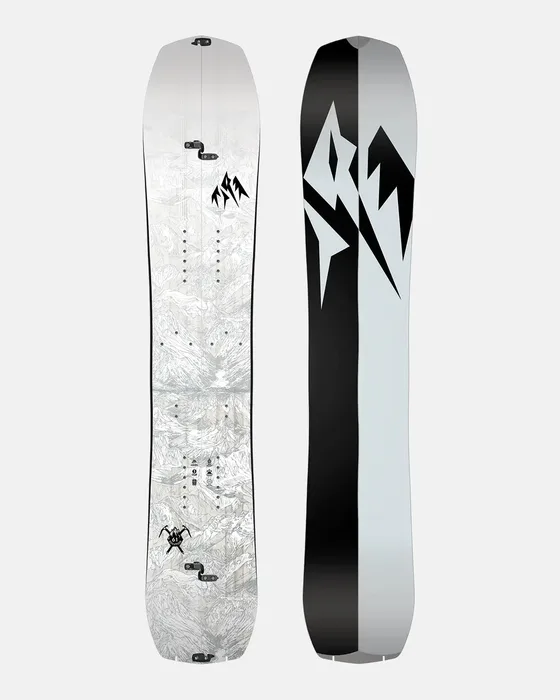
A directional, mid-stiff freeride split with High Traction Tech edges, a 3D contoured base and nine sizes from 154 to 169W.
Best for: Intermediate to advanced riders who want one split for long tours, steep lines and powder days.
- Freeride CamRock puts camber underfoot with rocker in the nose and a short tail rocker, which balances edge grip with float.
- High Traction Tech adds three bumps per edge, and Jones lists 4 to 8 mm of 3D contour in the nose to keep the tip from hooking.
- Nine sizes, four of them wide, each with a published board weight (2.9 to 3.6 kg) and rider weight range.
- It has the highest list price tier in this group alongside the Never Summer.
- Skins are sold separately; Jones lists a skin group per size rather than including them.
- The page does not specify the clips or hooks, so check what hardware comes fitted before you buy.
- An 8/10 flex is more board than a lighter or newer rider may want.
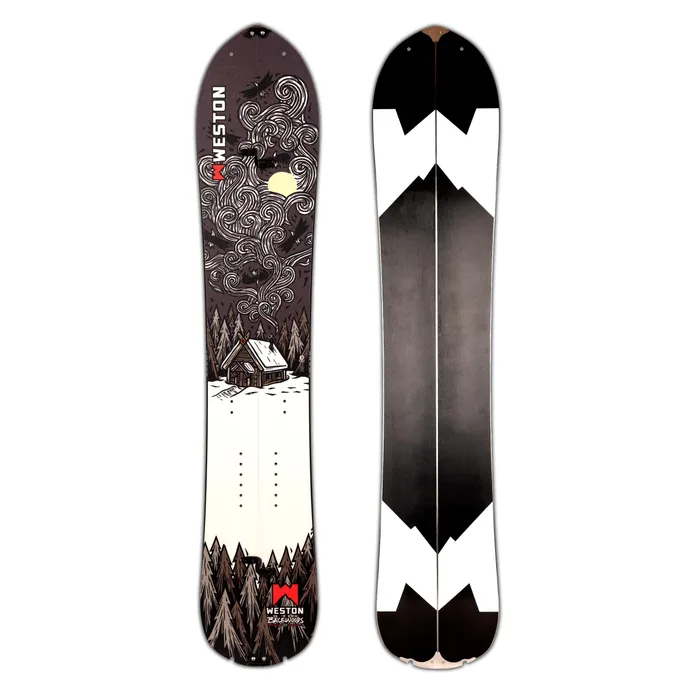
A tapered directional freeride split with camber underfoot, Karakoram clips and tip hardware, and a 4-year warranty.
Best for: Riders of average or heavier build who want a capable freeride split with good hardware for less outlay.
- Karakoram UltraClip 2.0 clips and Karakoram Tip-Loc skin attachment are listed as part of the board.
- Weston publishes weight, waist width, effective edge, rider weight and maximum boot size for every size.
- A 4-year warranty plus the Board Slayer Program is the longest coverage stated in this group.
- Weights climb quickly with size, from 3100 g at 157 cm to 3960 g at 167W.
- Only six sizes, with nothing shorter than 157 cm for lighter riders.
- Skins are not included; Weston lists a recommended skin per size.
- Weston's size selector showed several sizes unavailable at the time of writing, so stock can be thin.
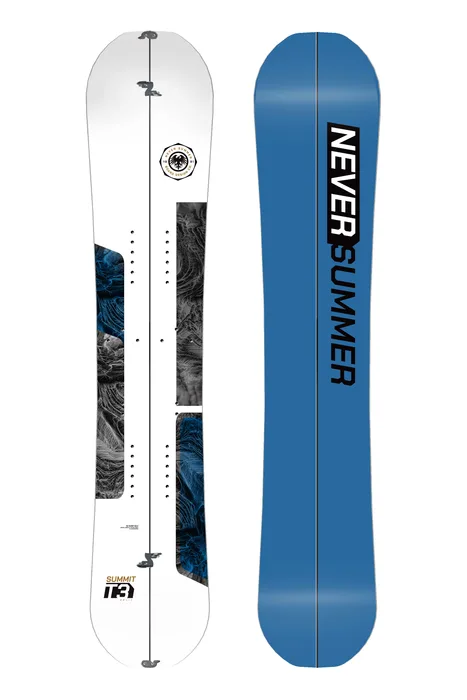
A stiff, damp directional split on Never Summer's Triple Camber Hybrid with R.I.P. edge hold and Phantom Hercules hooks.
Best for: Strong riders who tour for steep, firm or variable descents and want maximum edge hold and stability.
- Triple Camber Hybrid with R.I.P. Edge Hold Technology is built for grip on hard snow, a common condition on spring and high-alpine tours.
- Never Summer rates it 7 for flex and 9 for damp, which suits fast riding in variable snow.
- A Precision Stitched Carbon Matrix, a sintered Durasurf XT 5501 base and Phantom Hercules hooks are all listed.
- The product page text does not give waist widths, sidecut figures or rider weight ranges.
- The board weight data on the page has no units, so there is no clear weight to compare.
- A 40 mm setback and high damping favour powerful directional riding over a playful feel.
- Five sizes only, from 149 to 167X.
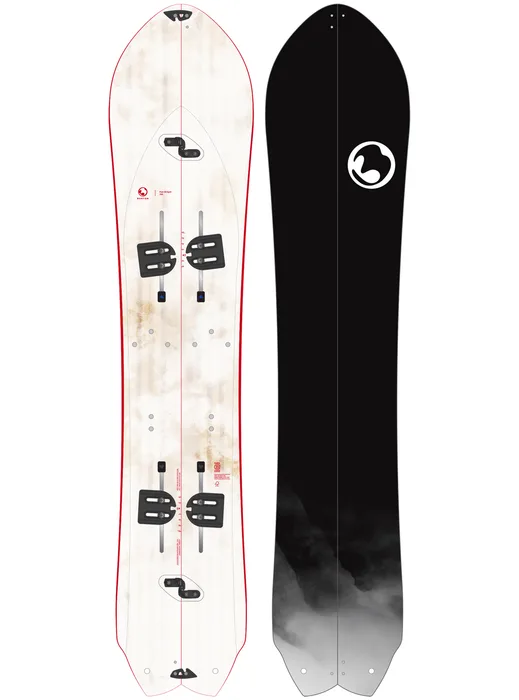
A short, wide, 30 mm tapered powder fish on a Directional Flat Top profile, in three sizes from 146 to 156.
Best for: Lighter riders who already own a general split and want a second board just for deep powder days.
- Its short, wide shape with 30 mm of taper is built for float and surfy turns in deep snow.
- Split Channel mounting comes with Channel-compatible pucks premounted, per Burton.
- The skin-ready tail is designed to connect with Burton split skins.
- Only three sizes, topping out at 156 cm with a listed rider range of 150 to 200 lb, and no wide option.
- A flat profile with a rocker nose has no camber underfoot to help grip on icy sidehill skin tracks.
- Burton rates it 0% for park and at most 40% for all mountain, so it is a powder specialist.
- Burton does not list a board weight, a key number for a touring board.
| Criteria | Jones Solution Splitboard Top pick | Weston Backwoods Splitboard | Never Summer Summit T3 Splitboard | Burton 3D Fish Flat Top Splitboard |
|---|---|---|---|---|
| Verdict | Buy it | Buy it | It depends | Skip it |
| Best for | Intermediate to advanced riders who want one split for long tours, steep lines and powder days. | Riders of average or heavier build who want a capable freeride split with good hardware for less outlay. | Strong riders who tour for steep, firm or variable descents and want maximum edge hold and stability. | Lighter riders who already own a general split and want a second board just for deep powder days. |
| Price tier | $$$ · premium | $$ · mid-range | $$$ · premium | $$$ · premium |
| Profile | Freeride CamRock (camber underfoot, nose and tail rocker) | Freeride camber, rocker nose | Triple Camber Hybrid | Directional Flat Top, rocker nose |
| Flex (maker rating) | 8/10, mid-stiff | Mid-stiff | 7 flex, 9 damp | Directional flex, no number given |
| Sizes | 9 (154 to 169W, 4 wide) | 6 (157 to 167W, 3 wide) | 5 (149 to 167X) | 3 (146 to 156) |
| Listed board weight | 2.9 to 3.6 kg | 3100 to 3960 g | Not clearly stated | Not listed |
| Stance setback | 2 cm | 10 mm | 40 mm | Not stated as setback |
| Base | Sintered 9900, 3D contour | Sintered DuraSurf 4001 | Sintered Durasurf XT 5501 | Sintered WFO |
| Split hardware listed | Splitboard insert pack; clips not specified | Karakoram UltraClip 2.0, Tip-Loc | Phantom Hercules hooks | Split Channel with pucks premounted |
| Warranty | 2+1 program, extension on registration | 4 years | 3 years | 3 years |
Which one is right for you?
- Intermediate to advanced riders who want one split for long tours, steep lines and powder days. Buy it Jones Solution Splitboard
- Riders of average or heavier build who want a capable freeride split with good hardware for less outlay. Buy it Weston Backwoods Splitboard
- Strong riders who tour for steep, firm or variable descents and want maximum edge hold and stability. It depends Never Summer Summit T3 Splitboard
- Lighter riders who already own a general split and want a second board just for deep powder days. Skip it Burton 3D Fish Flat Top Splitboard
How we judged the field
Five things separate a good splitboard from a frustrating one. Profile and shape decide the descent, and camber underfoot also helps the halves grip on firm, sideways skin tracks. Flex should match how hard you ride, since a stiff split is tiring in tight trees and a soft one feels vague at speed. Weight matters because you lift the board with every stride, so we looked for a published figure per size. Split-specific details such as clips, skin attachment and edge traction affect every transition. Finally, size range and rider weight tables tell you whether the board actually fits you.
The field splits into all-round freeride splits that most riders can live with, specialist boards built for hard snow or deep powder, and lighter premium versions that cost far more. We picked two all-round boards with clear spec sheets, one stiff hard-snow specialist and one popular powder fish that many people buy as their only split.
Jones Solution Splitboard
Buy itThe Jones Solution Splitboard is the reference point for this category, and the spec sheet shows why. Its Freeride CamRock profile puts camber underfoot for edge hold with an extended nose rocker for float, on a directional shape with 12 to 14 mm of taper and a 2 cm setback. The split-specific details are the real draw: High Traction Tech adds three bumps along each edge, the larger one in the centre, to bite on firm skin tracks, and a 3D contour base lifts the nose 4 to 8 mm so it does not hook in variable snow. The Ultra Split Core is mostly paulownia with poplar pockets, and Jones lists the 154 at 2.9 kg up to 3.6 kg for the 169W. Nine sizes, four of them wide, each come with a rider weight range. The trade-offs are an 8/10 flex that is more than newer riders need, skins sold separately, and clips not specified on the page. It is for intermediate and advanced riders who want one split for everything.
Weston Backwoods Splitboard
Buy itThe Weston Backwoods Splitboard is the value pick because it carries the lowest list price here without cutting the parts that matter. It uses a tapered directional shape with a rocker nose and camber underfoot, which Weston says grips on sidehills, plus 18 mm of taper and a 10 mm setback. The Slayer Split Core blends poplar and bamboo with two carbon stringers, and the base is sintered DuraSurf 4001. Hardware is the strong point: Karakoram UltraClip 2.0 clips and Tip-Loc skin attachment are listed, and SplitTech shifts the touring bracket position. Weston also publishes the most complete sizing data in this group, with board weight, waist, effective edge, rider weight and maximum boot size for every size, and backs it with a 4-year warranty. The catches are six sizes starting at 157 cm, weights that run from 3100 g up to 3960 g on the 167W, and no skins in the box. It suits average to heavier riders who want a capable freeride split for less money.
Never Summer Summit T3 Splitboard
It dependsThe Never Summer Summit T3 Splitboard depends on the rider. Never Summer builds it on its Triple Camber Hybrid profile with R.I.P. Edge Hold Technology, rates it 7 for flex and 9 for damp, and sets the stance back 40 mm on a directional shape with an early rise nose. A Precision Stitched Carbon Matrix, PowerSurf wood core, sintered Durasurf XT 5501 base and Phantom Hercules hooks round out the list. That recipe favours strong riders who tour for steep, firm or wind-affected descents and want a board that stays calm at speed. It is less suited to newer tourers or anyone who likes a loose, playful feel in tight trees. The bigger issue for comparison shoppers is the spec sheet: the page text gives no waist widths, sidecut numbers or rider weight ranges, and its weight data has no units. Five sizes run from 149 to 167X. Buy it if you ride hard and can see the size chart in person; otherwise the Jones covers similar ground with clearer data.
Burton 3D Fish Flat Top Splitboard
Skip itThe Burton 3D Fish Flat Top Splitboard is a well-loved shape, but as anyone’s only splitboard we would skip it. It is short and wide with 30 mm of taper and a Directional Flat Top profile, which floats beautifully in deep snow. Burton’s own terrain chart rates it 0% for park and at most 40% for all mountain, so the board is a powder specialist. On a tour that matters: a flat profile with a rocker nose has no camber underfoot to help the halves grip on icy side hills, and you rarely get to choose the conditions on the climb. Sizing is narrow too, with only 146, 151 and 156, the longest listed for riders 150 to 200 lb, and no wide version. Burton does not list a board weight, which makes it hard to compare against boards that publish one. The positives are real, including premounted Split Channel pucks and a skin-ready tail. It makes sense only as a second split for lighter riders chasing powder.
Sources
Specs in this review come from these pages.
- Jones Snowboards: Men's Solution Splitboard (jonessnowboards.com)
- Weston Backcountry: Backwoods Splitboard 26/27 (westonbackcountry.com)
- Never Summer: Unisex 2027 Summit T3 Splitboard (neversummer.com)
- Burton: 3D Fish Flat Top Splitboard (burton.com)
- Avalanche.org: Avalanche Basics and course progression (avalanche.org)
Jones Solution Splitboard vs Weston Backwoods Splitboard: which should you buy?
The Jones Solution and Weston Backwoods are closer than their price tiers suggest. Both are directional freeride splits with camber underfoot and a rocker nose, both use sintered bases and carbon in the layup, and both suit most snowboarders who tour. The Jones adds more split-specific shaping, with traction bumps on the edges and a 3D contoured nose, plus a wider spread of nine sizes, a stiffer 8/10 flex and a smaller 2 cm setback. The Weston answers with Karakoram clips and tip hardware already listed, a longer 4-year warranty and the lower list price.
Choose the Jones if you are lighter than about 135 lb, want a 154, or plan to ride icy skin tracks often enough that edge traction tech matters. Choose the Weston if you fit its 157 to 167W range, want a complete spec sheet including boot size limits, and would rather put the savings toward skins or split bindings. Either is a board you can grow into for several seasons.
What to look for
- Camber underfoot: Camber between the feet helps the halves hold on firm, sideways skin tracks, so pure rocker or flat boards are a compromise for general touring.
- Published weight per size: Compare the listed weight at your size, not the smallest size, because weight often rises steeply as boards get longer and wider.
- Size and boot fit: Use the rider weight range and any maximum boot size the maker lists, and choose a wide board if your boots are near the limit.
- Clips and skin hardware: Check which clips and tip and tail attachments are fitted, since quality hardware makes transitions faster and more secure.
- Mounting system: Confirm that your split bindings fit the board’s puck pattern or channel before you buy either one.
- Skins budget: Skins are rarely included, so budget for a skin matched to your exact board and size.
Our final take
For most riders the Jones Solution Splitboard is the one to buy: a proven freeride shape, real split-specific features like edge traction bumps, and full weight and rider data for nine sizes. If you fit its size range, the Weston Backwoods Splitboard rides in a similar way with Karakoram hardware, a 4-year warranty and a lower list price. The Never Summer Summit T3 rewards strong riders on firm, steep lines but leaves gaps in its published specs. Skip the Burton 3D Fish Flat Top as a one-board quiver; it is a powder toy with only three sizes and no listed weight. Pair any of them with rescue gear and avalanche training.
Questions, answered
Can I use my regular snowboard bindings on a splitboard?
Not directly. Splitboards need bindings that slide onto pucks or a mounting interface and pivot on a touring bracket for the climb. Dedicated split bindings are the usual choice, and some makers sell adapter plates for regular bindings that add weight and height. Check the mounting system first, since Burton's Split Channel boards ship with Channel-compatible pucks while the others use standard split puck patterns. Our snowboard bindings comparison covers bindings for solid boards, so treat a split binding as a separate purchase.
Do splitboards come with skins?
None of the four boards here list skins as included. Jones lists a skin group per size, Weston recommends a specific skin per size, and Burton designs the 3D Fish tail around Burton split skins. Budget for skins cut to your board's shape, because a skin that does not match the outline will slip on side hills. Buying the maker's own skin for your size is the simplest way to get a good fit.
What size splitboard should I get compared with my resort board?
Most riders choose a split about the same length as their resort freeride board, or slightly longer if they want more float. Use the maker's rider weight range and maximum boot size rather than your height alone. Weston lists a maximum boot size per size, and Jones points riders in US men's 11.5 or larger toward its wider boards. If your boot is near the limit, go to the wide version to avoid toe and heel drag.
Is a heavier splitboard a problem?
Weight matters more on a split than a resort board, because you lift it with every stride for hours. Within this group, published weights run from 2.9 kg for the smallest Jones to 3960 g for the largest Weston. The difference between sizes of the same board is often larger than the difference between brands, so compare at your size. Bindings and skins add to the total, so look at the whole setup rather than the board alone.
What else do I need before I go splitboarding?
A splitboard gets you into avalanche terrain, so you also need a transceiver, probe and shovel, and the training to use them, ideally starting with a recognised avalanche course. Our avalanche beacon comparison is a good place to start on the gear side. Add split bindings, skins, collapsible poles and a pack that can carry the board. Touring with partners who carry the same rescue gear is part of the basic setup.
Deciding between the top two? See our head-to-head: Jones Solution Splitboard vs Weston Backwoods Splitboard.
More Ski & Snowboard reviews
 The Best All-Mountain Skis: 4 Compared (and One to Skip)
 The Best Avalanche Airbag Packs: 4 Compared (and One to Skip)
 The Best Avalanche Beacons: 4 Compared (and One to Skip)
 The Best Avalanche Probes: 4 Compared (and One to Skip)
 The Best Avalanche Shovels: 4 Compared (and One to Skip)
 The Best Boot Dryers: 4 Compared (and One to Skip)