

Ski & Snowboard
The Best Avalanche Beacons: 4 Compared (and One to Skip)
We compared three-antenna transceivers from Mammut, BCA, Pieps and Ortovox on search strip width, speed in a fine search, battery setup and how much practice each one demands.
The short version
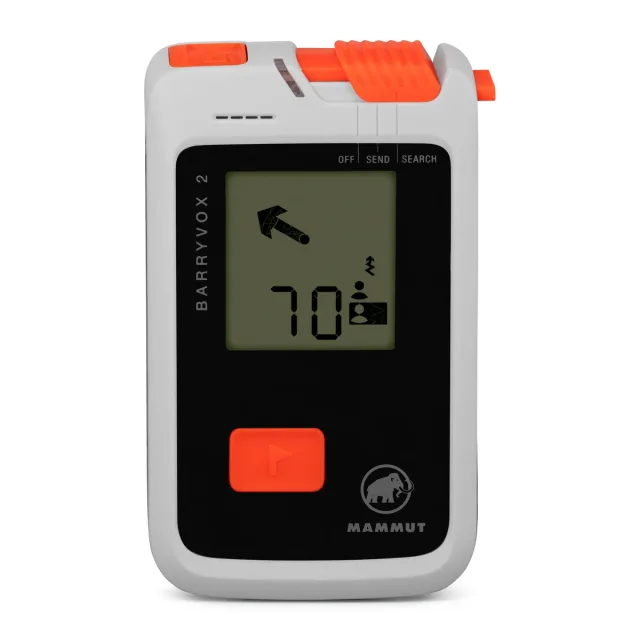
The Mammut Barryvox 2 is our pick: a compact 3-antenna beacon with a 70 m range, self-checking, Bluetooth updates and a guided search that stays usable under stress. The BCA Tracker 3+ is the value call: 55 m strip, dead-simple display, USA-assembled. The Pieps Pro IPS suits professionals who will use its 80 m strip and pro modes; for everyone else it is cost and complexity without benefit. Skip the Ortovox Diract Voice: voice navigation slows the search, it scored poorly in independent comparative testing, and a rechargeable battery can be dead when you need it. Best for: anyone who skis or rides outside controlled terrain and will actually practice.
Our picks at a glance
- Mammut Barryvox 2 - Buy. The compact all-rounder with a 70 m range and search support that holds up when your heart rate does not.
- Backcountry Access BCA Tracker 3+ - Buy. The long-running value beacon: instant real-time distance display, signal suppression for multiple burials, assembled in the USA.
- Pieps Pro IPS - It depends. The widest search strip on the market at 80 m, with interference-shielding tech aimed at professionals.
- Ortovox Diract Voice - Skip. The first avalanche beacon with spoken voice navigation, an idea that sounded better in marketing than in testing.
The verdict in 30 seconds
What mattered most
- Antennas
- Search strip width
- Battery
- Weight
- Multiple burials
- Updates
A beacon is the piece of avalanche kit you hope to never use for real, and the one you are most likely to fumble when it counts. Every transceiver here transmits on the standard 457 kHz frequency and has three antennas, but they differ sharply in search strip width, how they handle multiple burials, and how forgiving they are for someone who practices twice a season. We compared a mainstream pick, a budget standby, a pro-spec model and the industry's voice-guided experiment.
The compact all-rounder with a 70 m range and search support that holds up when your heart rate does not.
Best for: Most backcountry skiers and snowboarders who want fast, supported search behavior without a pro-level feature stack.
- Digital 3-antenna transceiver with a stated 70 m maximum range and a self-test that runs at power-on and continuously in the background.
- Runs on two AAA batteries with a claimed send-time of around 450 hours on alkaline cells.
- The Barryvox app allows firmware updates over Bluetooth, so the beacon stays current without a service trip.
- The fine-search guidance can lag if you move faster than a deliberate pace, which rewards the slow, methodical search instructors teach anyway.
- No lithium-battery option; in deep cold you give up the extra send time lithium buys.
- Carrying system and leash add a little cost over the bare-device price.

The long-running value beacon: instant real-time distance display, signal suppression for multiple burials, assembled in the USA.
Best for: Newer backcountry travelers and anyone who wants a proven, inexpensive beacon to practice with.
- Three antennas with a stated 50 m maximum range and a 55 m search strip width.
- Runs on three AAA alkaline cells, rated for roughly 250 hours in transmit and at least 1 hour of search after 200 hours of transmit.
- Signal Suppression and Big Picture modes handle multiple burials in a deliberately simple way, and auto-revert switches back to transmit if you stop moving.
- The shortest stated search strip of the four beacons here, so a slightly tighter search pattern is required.
- No Bluetooth and no app; updates happen through the dealer network.
- The red monochrome display is fast but shows less information than the newer graphic screens.

The widest search strip on the market at 80 m, with interference-shielding tech aimed at professionals.
Best for: Guides, ski patrol and motivated tourers who will actually use Scan, analog mode and the pro feature set.
- An 80 m stated search strip width, the widest in this comparison, with 3 antennas and dual-antenna signal processing.
- Runs on three AAA cells with a rated 600 hours on alkaline and 800 hours on lithium, the longest battery life here.
- Bluetooth plus the Pieps app for updates and settings, plus pro features like Scan mode, victim selection and an analog mode.
- The heaviest and largest device here at 212 g, and the most expensive by a wide margin.
- The feature depth that attracts professionals is wasted complexity for the one-rescue scenario most users will ever face.
- Firmware 1.3 is the current version; the beacon expects periodic updates and a bit of systems-administration on your part.
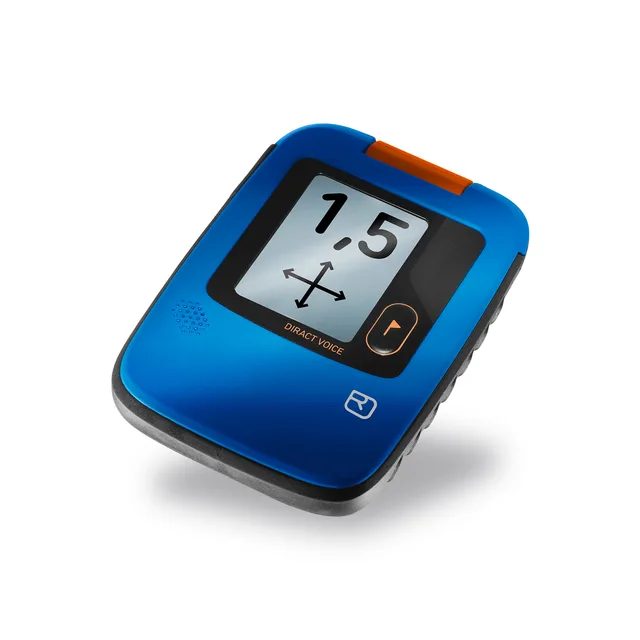
The first avalanche beacon with spoken voice navigation, an idea that sounded better in marketing than in testing.
Best for: Hard to recommend broadly: the voice feature targets anxious beginners, who are better served by practice and a faster beacon.
- Three antennas with Smart-Antenna switching, which picks the best-positioned antenna to transmit in a burial.
- A compact waterproof shell with a rubberized grip and a rechargeable lithium-ion battery; no AAA cells to buy.
- A 50 m stated search strip with a full-graphic display and Bluetooth for updates.
- The headline voice navigation adds audible instructions but slows the interface; an independent test panel found it among the slowest beacons in coarse, fine and multiple-burial scenarios.
- A rechargeable battery means the beacon can be dead when you grab it, where alkaline beacons carry a season of charge.
- The 50 m search strip trails the 70 and 80 m strip beacons it costs as much as.
| Criteria | Mammut Barryvox 2 Top pick | BCA Tracker 3+ | Pieps Pro IPS | Ortovox Diract Voice |
|---|---|---|---|---|
| Verdict | Buy it | Buy it | It depends | Skip it |
| Best for | Most backcountry skiers and snowboarders who want fast, supported search behavior without a pro-level feature stack. | Newer backcountry travelers and anyone who wants a proven, inexpensive beacon to practice with. | Guides, ski patrol and motivated tourers who will actually use Scan, analog mode and the pro feature set. | Hard to recommend broadly: the voice feature targets anxious beginners, who are better served by practice and a faster beacon. |
| Price tier | $$ · mid-range | $ · budget | $$$ · premium | $$ · mid-range |
| Antennas | 3 | 3 | 3, with dual-antenna processing | 3, with smart switching |
| Search strip width | 70 m range (strip not separately published) | 55 m | 80 m | 50 m |
| Battery | 2x AAA alkaline, ~450 h send | 3x AAA alkaline, ~250 h send | 3x AAA, 600 h alkaline / 800 h lithium | Rechargeable lithium-ion |
| Weight | Not published with batteries (115 x 68 x 21 mm body) | 164 g without harness | 212 g with batteries | 210 g plus 80 g carrying system |
| Multiple burials | Marking + app support | Signal Suppression + Big Picture | Scan, victim selection, marking | Flagging function |
| Updates | Bluetooth + Barryvox app | Dealer / service network | Bluetooth + Pieps app | Bluetooth |
| Best for | Most backcountry users | Budget buyers and beginners | Guides and power users | Voice-guidance curious |
Which one is right for you?
- Most backcountry skiers and snowboarders who want fast, supported search behavior without a pro-level feature stack. Buy it Mammut Barryvox 2
- Newer backcountry travelers and anyone who wants a proven, inexpensive beacon to practice with. Buy it Backcountry Access BCA Tracker 3+
- Guides, ski patrol and motivated tourers who will actually use Scan, analog mode and the pro feature set. It depends Pieps Pro IPS
- Hard to recommend broadly: the voice feature targets anxious beginners, who are better served by practice and a faster beacon. Skip it Ortovox Diract Voice
How we judged the field
Five things decide whether a beacon earns its place in your pack: how wide a strip it searches, how fast and readable its display is when you are moving, how it handles more than one burial, what powers it, and how much training it assumes. Range numbers come from manufacturers that each measure differently, so we treated them as ballparks and weighted interface and strip width more heavily.
The field is now mostly three-antenna digital transceivers on the same 457 kHz standard. We picked a mid-range all-rounder, the long-standing budget favorite, a flagship aimed at professionals, and the one experimental beacon in the market, then compared published specs with what independent testers report.
The Barryvox 2 is the beacon most backcountry users should buy. Mammut builds it around three antennas, a stated 70 m maximum range and a self-test that runs at power-on and keeps checking in the background while you transmit. In search it gives direction and distance cues with guided steps, and the display is large enough to read with cold hands and polarized lenses. It runs on two AAA alkaline batteries rated around 450 hours in send mode, and firmware updates arrive over Bluetooth through the Barryvox app rather than a service visit.
The trade-offs are modest. The guided fine search can feel like it lags if you rush it, which mostly punishes the bad habit of moving too fast. There is no lithium-cell option, and the harness system costs a little extra. Those are footnotes next to a fast, supported search interface at a mid-range price.
The Tracker 3+ is the old dependable of the category: three antennas, a stated 50 m maximum range and a 55 m search strip width, and a real-time distance display that has not changed much because it did not need to. It runs on three AAA alkaline cells rated at about 250 hours of transmit, and its Signal Suppression and Big Picture modes handle multiple burials with simple, learnable logic. Motion-sensing auto-revert flips it back to transmit if a second slide catches you.
Its limits are real but livable. The 55 m strip is the narrowest here, so your search pattern has to be a little tighter. There is no app and no Bluetooth; updates go through the dealer network, and the monochrome display shows less than newer graphic screens. What you get instead is a beacon that hundreds of thousands of beginners have learned on, assembled and tested in the USA, for the least money in this comparison.
The Pro IPS is the widest searcher here: an 80 m stated search strip with dual-antenna signal processing and Pieps’s interference-shielding system, which stabilizes the transmit signal around phones, radios and heated clothing. Battery life is the best in the group at a rated 600 hours on alkaline and 800 on lithium. Around that core, Pieps stacks professional tools: a Scan mode that surveys the whole deposition zone, victim selection, analog mode, group-check Pro mode, and Bluetooth updates through the Pieps app.
Whether all of that helps depends on who you are. The feature set is aimed at guides and rescuers managing complex scenarios; in the far more common single-burial search it adds menu depth and cost, and it is the biggest, heaviest device here at 212 g. If you instruct, guide or simply want the deepest tool, it is the pick. If you are a recreational tourer, the money buys complexity you will never open.
The Diract Voice is the industry’s experiment: the first beacon that talks to you during a search. Ortovox gives it three antennas with Smart-Antenna transmit switching, a waterproof shell, a full-graphic display, a 50 m stated search strip and a rechargeable lithium-ion battery, then adds spoken instructions that walk you through each phase.
In practice the voice guidance slows the workflow. An independent test panel that ran current beacons through coarse search, fine search and multiple-burial scenarios scored it lowest of the group, and the feature it sells hardest is the one most rescuers learn to turn off. The rechargeable battery is the other compromise: it can be flat when you grab the pack in November, while an alkaline beacon sits ready for a season. For the same money as the Barryvox 2, it gives you less strip width and more latency. Buy a faster beacon and spend the difference on an avalanche course.
Mammut Barryvox 2 vs BCA Tracker 3+: which should you buy?
Both are proven three-antenna transceivers, and the choice mostly comes down to interface and money. The Barryvox 2 gives you a wider effective search pattern, a full graphic display with guided steps, and Bluetooth updates from your phone. The Tracker 3+ counters with a simpler display, a narrower 55 m strip, and a lower price for the same fundamental job.
If you are new, on a budget, or buying a second beacon for a partner, the Tracker 3+ is the sensible buy. If you want the more supportive interface and longer rated battery life, and will keep it updated, buy the Barryvox 2.
What to look for
- Three antennas: the baseline for modern transceivers; all four here qualify.
- Search strip width: wider strips cover more ground per pass; 70-80 m beats 50 m.
- Interface clarity under stress: a display you can read fast matters more than buried feature menus.
- Battery system: AAA alkaline for set-and-forget seasons, lithium for cold endurance, rechargeable only if you will actually charge it.
- Multiple-burial tools: marking, signal suppression or scanning modes, by how you will actually practice.
- Updates: Bluetooth or dealer updates keep firmware current; check what the brand supports.
Our final take
For most people heading outside the boundary, the Mammut Barryvox 2 is the right beacon: wide enough, fast enough, and calm enough to use under pressure. The BCA Tracker 3+ earns the value slot for being nearly as capable for less. Guides and gear-forward tourers can justify the Pieps Pro IPS’s extra range and pro modes. The Ortovox Diract Voice is the one to skip: its voice navigation slows the search it claims to simplify, and the rechargeable battery adds a failure point AAA beacons do not have. Whatever you buy, the beacon is only the start; a probe, a shovel, a course and regular practice do the rest.
Questions, answered
Do I need an avalanche beacon for resort skiing?
No. Inside controlled, patrolled terrain, patrol teams manage avalanche hazard. A beacon becomes essential the moment you leave the boundary into uncontrolled terrain: backcountry touring, sidecountry accessed through gates, or off-piste in regions without control work. Everyone in the party needs a transmitting beacon, not just the leader.
What do the search strip width numbers mean?
Search strip width is the distance across which the beacon is expected to pick up a buried signal reliably. A 70 or 80 m strip lets you work a wider search pattern than a 50 m strip, which matters in a wide deposition zone. Manufacturers measure range differently, so treat the numbers as comparisons within reason rather than absolutes.
Rechargeable or AAA batteries?
Both work if you stay disciplined. AAA alkaline beacons carry hundreds of hours of transmit time and spare batteries are cheap and everywhere. Rechargeable beacons avoid waste but must be charged before trips, and a forgotten charge is a real-world failure mode. Whatever you buy, check the charge or swap batteries on a schedule.
How much does practice matter versus the beacon's features?
Practice matters more than almost any feature. A fast, intuitive beacon in trained hands beats a feature-rich beacon in untrained ones. The reason to buy a modern beacon is not that it rescues for you; it is that a clear interface and wide strip remove friction in a situation where friction costs minutes.
What else goes with the beacon?
A beacon finds the person; a probe pinpoints them and a shovel moves the snow, and all three are considered one kit. Add airbag packs or avalanche education as budget allows, and take an avalanche course before buying confidence from equipment.
Deciding between the top two? See our head-to-head: Mammut Barryvox 2 vs Backcountry Access BCA Tracker 3+.
More Ski & Snowboard reviews
 The Best Boot Dryers: 4 Compared (and One to Skip)
  The Best Ski Bags: 4 Compared (and One to Skip)
  The Best Ski Boot Heaters: 4 Compared (and One to Skip)
  The Best Ski Gloves: 4 Compared (and One to Skip)
  The Best Ski Goggles: 4 Compared (and One to Skip)
  The Best Ski Helmets: 4 Compared (and One to Skip)