

Ski & Snowboard
The Best All-Mountain Skis: 4 Compared (and One to Skip)
We compared four current all-mountain skis on waist width, turn radius, construction, weight and the kind of skiing each maker builds them for.
The short version
The Nordica Enforcer 94 is our top pick: a 94 mm waist, a wood and elastomer Pulse core between two titanal layers, a 16.5 m radius and Nordica's own note that it is a favorite with skiers who spend most of their time on trails. The Fischer Ranger 90 is the value pick, with a 90 mm waist, a 16 m radius, a Shaped Ti 0.5 layer and a stated 1750 g per ski at a lower price tier. The Völkl Mantra 88 depends on your skiing: its titanal frame and 3D Radius Sidecut reward a skier who drives the ski, but it asks more of you than the others. Skip the Atomic Maverick 105 CTI as a daily all-mountain ski: at about 104 to 105 mm underfoot, 2050 g per ski at 185 cm and the top price in this group, Atomic itself pitches it as a hard-charging freeride ski. Best for: intermediate to advanced resort skiers who want one ski for groomers and soft snow.
Our picks at a glance
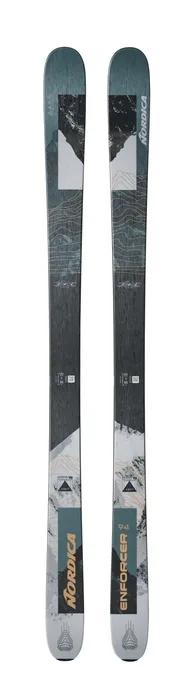
- Nordica Enforcer 94 - Buy. A 94 mm two-titanal all-mountain ski that Nordica builds for skiers who spend most of their time on trails.
- Fischer Ranger 90 - Buy. A 90 mm all-mountain ski with a thin titanal layer and a light published weight at a lower price tier.
- Völkl Mantra 88 - It depends. A precise 88 mm ski with a titanal frame and three-radius sidecut that rewards a strong, active skier.
- Atomic Maverick 105 CTI - Skip. A wide, heavy, top-priced freeride ski that most resort skiers buy as an everyday ski and should not.
The verdict in 30 seconds
What mattered most
- Waist width
- Tip / tail
- Turn radius
- Metal
- Core
- Published weight
An all-mountain ski is meant to be the one pair you take everywhere, which makes waist width and construction more important than graphics or hype. Most resort skiers spend most of their days on groomed runs with some soft snow off the side, and the right ski for that is narrower and easier to turn than the one in the ski film. We compared two metal-reinforced skis in the 90 to 94 mm range, a Völkl with a three-radius sidecut, and a 105 mm freeride ski that many people buy as an everyday ski. Bindings are sold separately on all four, and our separate guides cover ski bags, roof racks, poles and tuning kits.
A 94 mm two-titanal all-mountain ski that Nordica builds for skiers who spend most of their time on trails.
Best for: Intermediate to advanced skiers who want one stable ski for groomers with soft snow on the side.
- Nordica lists a 125-94-113 mm shape with a 16.5 m radius, which suits mixed turn shapes on groomers and soft snow.
- The 2 Ti Pulse Core puts a wood core and an elastomer Pulse core between two layers of titanal for a smooth, damp ride.
- An unlocked tail with more rise and a True Tip that trims ABS plastic from the tip are designed to make it easier to pivot at slower speeds.
- Nordica lists 3580 g per pair without saying which length, so compare weights carefully.
- Two sheets of titanal make it a ski for confident intermediates and better, not first-timers.
- It is sold flat, so you need to buy and mount a binding; Nordica suggests the Marker Griffon 13.
- It sits in the top price tier of this group.
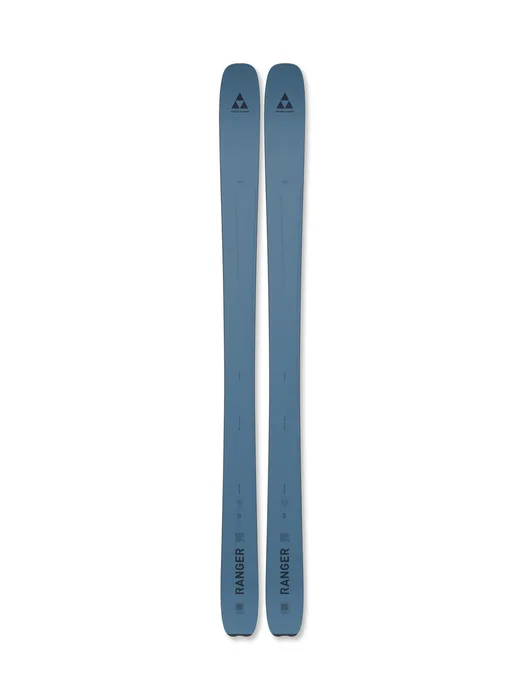
A 90 mm all-mountain ski with a thin titanal layer and a light published weight at a lower price tier.
Best for: Intermediate to advanced skiers who want a lighter, narrower all-mountain ski without paying top-tier prices.
- Fischer lists a 124-90-114 mm shape and a 16 m radius, a narrower waist that is quicker edge to edge on firm snow.
- Sandwich sidewall construction and a Shaped Ti 0.5 layer add stability without the bulk of two full metal sheets.
- At a stated 1750 g per ski it is the lightest ski with a published weight in this group.
- Fischer does not say which length its dimensions and weight refer to.
- Only three lengths are listed, 170, 177 and 184 cm, so shorter skiers have no option.
- Fischer rates it for advanced skiers and lists its skiing area as more off-piste, so true beginners may find it demanding.
- It is sold without a binding.
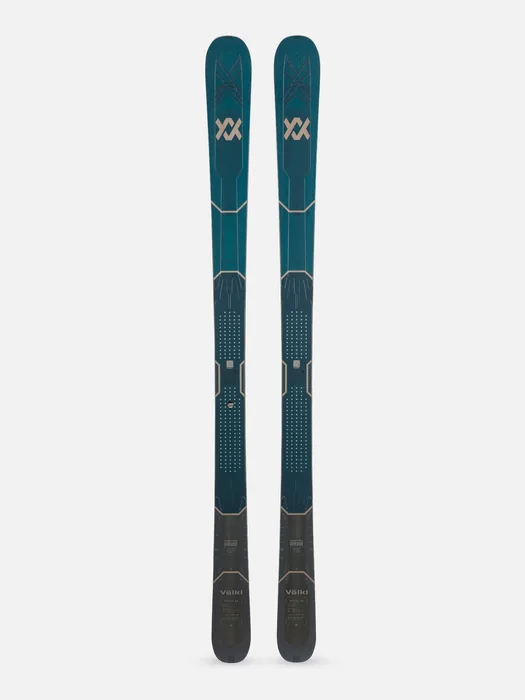
A precise 88 mm ski with a titanal frame and three-radius sidecut that rewards a strong, active skier.
Best for: Strong intermediate to expert skiers who spend most days on firm snow and like an energetic, precise ski.
- Völkl publishes a full table by length: 134-88-114 mm, an underfoot radius from 13.2 m at 163 cm to 17.3 m at 184 cm, and per-ski weights from 1690 g to 1980 g.
- The Tailored Titanal Frame scales metal content with length, plus a thinner titanal layer underfoot, so longer skis get more stiffness and damping.
- Tailored Carbon Tips and a 3D Radius Sidecut are designed for quick tip response and a choice of short or long turns.
- The metal frame and carbon tips are built for power transmission, which suits skiers who drive the ski more than relaxed cruisers.
- At 88 mm it is the narrowest here, so it gives up some float in deeper snow.
- Völkl ships it without bindings and says they must be mounted and tested by an authorized retailer.
- It sits in the top price tier of this group.

A wide, heavy, top-priced freeride ski that most resort skiers buy as an everyday ski and should not.
Best for: Strong skiers in snowy regions who ski off-piste most days; not a first or only ski for groomer-heavy resort skiing.
- The 103.5 to 105 mm waist and HRZN 3D tip give plenty of float in deep snow.
- A Power Woodcore of ash and poplar plus carbon and titanal is built for stability at speed.
- Four lengths from 170 to 191 cm, with radius rising from 17 m to 20 m.
- Atomic's own tagline calls it a ski for hard-charging freeride skiing, which is not what most all-mountain buyers do most days.
- At around 104 to 105 mm underfoot it is slower edge to edge on groomers than the 88 to 94 mm skis here.
- Atomic lists 2050 g per ski at 185 cm, the heaviest published weight in this group.
- It is the most expensive ski here, and the US page showed every size as sold out or unavailable.
| Criteria | Nordica Enforcer 94 Top pick | Fischer Ranger 90 | Völkl Mantra 88 | Atomic Maverick 105 CTI |
|---|---|---|---|---|
| Verdict | Buy it | Buy it | It depends | Skip it |
| Best for | Intermediate to advanced skiers who want one stable ski for groomers with soft snow on the side. | Intermediate to advanced skiers who want a lighter, narrower all-mountain ski without paying top-tier prices. | Strong intermediate to expert skiers who spend most days on firm snow and like an energetic, precise ski. | Strong skiers in snowy regions who ski off-piste most days; not a first or only ski for groomer-heavy resort skiing. |
| Price tier | $$$ · premium | $$ · mid-range | $$$ · premium | $$$ · premium |
| Waist width | 94 mm | 90 mm | 88 mm | 103.5 to 105 mm |
| Tip / tail | 125 / 113 mm | 124 / 114 mm | 134 / 114 mm | 130.5 to 136 / 119.5 to 125 mm |
| Turn radius | 16.5 m | 16 m | 13.2 to 17.3 m underfoot | 17 to 20 m |
| Metal | Two titanal layers | Shaped Ti 0.5 | Tailored Titanal Frame plus underfoot layer | Carbon and titanal (CTI) |
| Core | Wood plus elastomer Pulse core | Not listed | Multilayer woodcore | Ash and poplar Power Woodcore |
| Published weight | 3580 g per pair (length not stated) | 1750 g per ski (length not stated) | 1930 g per ski at 177 cm | 2050 g per ski at 185 cm |
| Lengths | 167, 173, 179, 185 cm | 170, 177, 184 cm | 163, 170, 177, 184 cm | 170, 178, 185, 191 cm |
| Binding | Sold flat | Sold without binding | Not included | Not stated |
Which one is right for you?
- Intermediate to advanced skiers who want one stable ski for groomers with soft snow on the side. Buy it Nordica Enforcer 94
- Intermediate to advanced skiers who want a lighter, narrower all-mountain ski without paying top-tier prices. Buy it Fischer Ranger 90
- Strong intermediate to expert skiers who spend most days on firm snow and like an energetic, precise ski. It depends Völkl Mantra 88
- Strong skiers in snowy regions who ski off-piste most days; not a first or only ski for groomer-heavy resort skiing. Skip it Atomic Maverick 105 CTI
How we judged the field
Five things matter in an all-mountain ski. Waist width comes first, because it decides how quickly the ski moves edge to edge on firm snow and how well it floats in soft snow. Turn radius and sidecut shape decide what size of turn the ski prefers. Construction, meaning the core and any titanal or carbon, sets how damp, stable and demanding the ski feels. Published weight affects how tiring the ski is to steer and carry. Finally, the maker’s own description of the intended skier and terrain tells you whether the ski is built for your days or someone else’s.
The category splits into narrower, groomer-leaning skis in the 80s, true middle-ground skis around 90 to 95 mm, and wider freeride skis over 100 mm that are often sold as all-mountain. We picked the Nordica Enforcer 94 and Fischer Ranger 90 as metal-reinforced middle-ground skis with published shapes, the Völkl Mantra 88 as a precise, demanding option, and the Atomic Maverick 105 CTI as an example of a capable freeride ski that is the wrong everyday choice for most resort skiers.
The Nordica Enforcer 94 is the ski we would recommend to most intermediate and advanced resort skiers. Nordica describes it as a favorite among skiers who spend most of their time on trails, and the numbers back that up: a 125-94-113 mm shape and a 16.5 m radius sit right in the middle of the all-mountain range. The 2 Ti Pulse Core places a wood core and an elastomer Pulse core between two layers of titanal for a smooth, stable ride. An unlocked tail adds rise so the ski pivots at slower speeds and in tight terrain, and the True Tip removes heavy ABS plastic from the tip to save weight. Nordica lists 3580 g per pair without naming the length, and offers 167, 173, 179 and 185 cm. It is sold flat, with the Marker Griffon 13 suggested. The trade-off is that two sheets of metal want a confident skier. It suits skiers who want one stable ski for groomers and soft snow.
The Fischer Ranger 90 is the value pick. Fischer lists a 124-90-114 mm shape and a 16 m radius, a slightly narrower ski than the Enforcer that switches edges quickly on firm snow while keeping enough width for soft snow. Construction combines a sandwich sidewall with Shaped Ti 0.5, a thin titanal layer, and Flex Cut, and Fischer states 1750 g per ski, the lightest published weight here. The catch is the detail Fischer leaves out: the page does not say which length its dimensions and weight refer to, and it lists no core material. It comes in 170, 177 and 184 cm only, and Fischer rates it for advanced skiers with a lean toward off-piste. It is sold without a binding. For a skier who wants a lighter, metal-reinforced all-mountain ski at a lower price tier, it is the smart buy.
The Völkl Mantra 88 depends on how you ski. Völkl publishes the most complete spec table in this group: a 134-88-114 mm shape at every length, an underfoot radius from 13.2 m at 163 cm to 17.3 m at 184 cm, and per-ski weights from 1690 g to 1980 g. The Tailored Titanal Frame changes metal content with length, with a second thinner titanal layer underfoot, and Tailored Carbon Tips sharpen tip response. The 3D Radius Sidecut combines long tip and tail radii with a shorter center radius for short or long turns, and the profile is tip and tail rocker with camber underfoot. That build rewards a skier who drives the ski with good technique and speed; a relaxed cruiser may find it more work than the Enforcer. The 88 mm waist also gives up some float. Völkl ships it without bindings. It suits strong skiers who spend most days on firm snow.
The Atomic Maverick 105 CTI is the one to skip as an everyday all-mountain ski. It is a capable ski: Atomic lists an ash and poplar Power Woodcore with carbon and titanal, an HRZN 3D tip for float and a 20/65/15 rocker profile. But Atomic’s own tagline is hard-charging freeride skiing in all conditions, and the dimensions follow: about 103.5 to 105 mm underfoot, 130.5 to 136 mm at the tip and a 17 to 20 m radius. On groomed runs, which is where most resort days are spent, that width is slower edge to edge than the 88 to 94 mm skis here. Atomic lists 2050 g per ski at 185 cm, the heaviest published figure in this group, and it is the most expensive ski here. The US page also showed every size as sold out or unavailable. If you ski deep snow most days it makes sense; for a single all-mountain ski, a 90 to 94 mm ski fits more skiing.
Nordica Enforcer 94 vs Fischer Ranger 90: which should you buy?
The Nordica Enforcer 94 and Fischer Ranger 90 are both metal-reinforced middle-ground skis, so the choice comes down to width, damping and price. The Enforcer is 4 mm wider, uses two full titanal layers around a wood and elastomer core, and has a tail built to pivot. The Ranger is narrower, uses a thinner Shaped Ti 0.5 layer and publishes a lighter weight, and it costs less.
If you ski fast, ski a mix of groomers and chopped-up snow, and want the most stable ride, buy the Enforcer 94. If you are lighter, ski mostly firm snow, or want to keep money back for bindings and mounting, the Ranger 90 makes more sense. Check the lengths too: Fischer lists only 170, 177 and 184 cm, while Nordica starts at 167 cm.
What to look for
- Waist width: For most resort skiers, a waist from the high 80s to mid 90s balances edge grip and float.
- Turn radius: Shorter radii favor quick turns; longer radii favor stability at speed.
- Metal content: Titanal adds damping and stability but asks more from the skier.
- Published weight: Check which length a weight figure refers to before comparing.
- Maker’s intended use: Read the tagline and terrain notes; a freeride ski sold as all-mountain is a different tool.
- Binding budget: All four skis here are sold without bindings, so add binding and mounting costs.
Our final take
For most intermediate and advanced resort skiers, the Nordica Enforcer 94 is the all-mountain ski to start with: a versatile 94 mm waist, a damp two-titanal build and a maker that says plainly it is built for skiers who spend most of their time on trails. The Fischer Ranger 90 is the lighter, narrower value choice. The Völkl Mantra 88 is excellent for a strong skier on firm snow and more work for everyone else. Skip the Atomic Maverick 105 CTI as an everyday ski; its width, weight and price are built for deep-snow days most people do not have.
Questions, answered
What waist width should an all-mountain ski have?
For most resort skiers who spend the majority of their days on groomed runs, something in the high 80s to mid 90s is the sweet spot. That range is quick enough edge to edge on firm snow and still floats in a few inches of fresh. Wider skis around 105 mm float better in deep snow but feel slower and heavier on hardpack. Pick the width for the snow you ski most, not the powder day you hope for.
Do I need metal in my skis?
Metal, usually titanal, adds damping and stability at speed, which is why it appears in all four skis here. It also makes a ski stiffer and asks more from the skier, especially in two-sheet designs like the Enforcer 94. Lighter or less aggressive skiers may prefer a ski with less metal, such as the thin Shaped Ti 0.5 layer in the Fischer Ranger 90. If you ski slowly and mostly on easy runs, a ski without metal is often easier.
How long should my skis be?
A common starting point is somewhere between your chin and the top of your head, adjusted for ability and weight. Shorter skis turn more easily and suit lighter or less aggressive skiers, while longer skis are more stable at speed. Rocker in the tip shortens the effective edge, so a rockered ski can be a little longer. Most makers offer a sizing guide on the product page, and a shop can help.
Why are these skis sold without bindings?
Bindings must be matched to your boots and set for your weight, height, age and ability. Völkl says its bindings must be mounted, adjusted and tested by an authorized retailer, and Nordica sells the Enforcer 94 flat with a suggested Marker binding. Buying separately lets you pick the right binding and release range. Budget for the binding and the mounting when you compare prices.
What does turn radius tell me?
The sidecut radius is the size of the turn the ski makes when you tip it on edge without skidding. Smaller numbers mean tighter, quicker turns; larger numbers mean longer, more stable turns at speed. The skis here run from about 13 m to 20 m depending on model and length. Völkl's Mantra 88 uses three radii along the ski, so it lists a tip, center and tail value.
Deciding between the top two? See our head-to-head: Nordica Enforcer 94 vs Fischer Ranger 90.
More Ski & Snowboard reviews
 The Best Avalanche Beacons: 4 Compared (and One to Skip)
  The Best Avalanche Probes: 4 Compared (and One to Skip)
  The Best Avalanche Shovels: 4 Compared (and One to Skip)
  The Best Boot Dryers: 4 Compared (and One to Skip)
  The Best Kids Snowsuits: 4 Compared (and One to Skip)
  The Best Ski Bags: 4 Compared (and One to Skip)