

Ski & Snowboard
The Best All-Mountain Snowboards: 4 Compared (and One to Skip)
We compared four current all-mountain snowboards on camber profile, flex, shape, sizing by rider weight, and base type, plus how much of that each maker actually publishes.
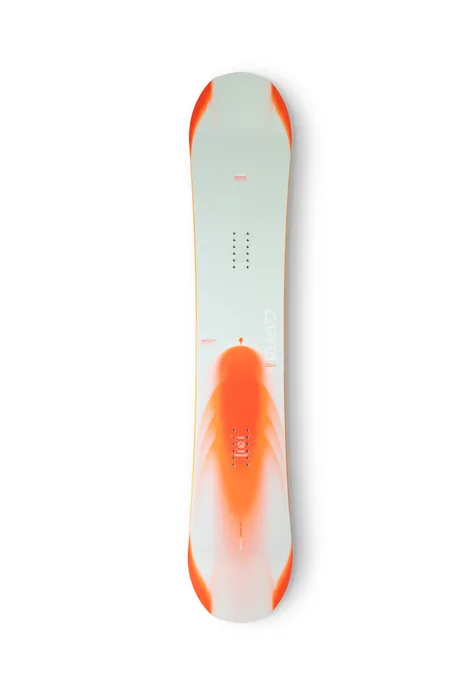
The short version
The Capita Mercury is our top pick: a directional all-mountain board with a stated 6.5 flex, a sintered base, and weight ranges for every size. The Burton Process is the value pick, a twin with PurePop Camber that handles groomers, side hits and some park without asking you to commit to one style. The GNU Money is the board for riders who lean toward park and playful riding, and its open-ended weight minimums make sizing less precise. Skip the Burton Instigator if you are already intermediate: it is a fair beginner board, but Burton rates it for beginners and builds it on an extruded base, so you are likely to outgrow it. Pair any of these with the right bindings, wax and helmet, which we cover in separate reviews. Best for: an intermediate rider who wants one board for the whole resort.
Our picks at a glance
- Capita Mercury - Buy. A directional all-mountain and freeride board with a numeric 6.5 flex, a sintered base, and weight ranges for every size.
- Burton Process - Buy. A twin with PurePop Camber and a Happy Medium personality for riders who mix groomers, side hits and some park.
- GNU Money - It depends. A twin park-leaning board with a C2 hybrid contour and a stated flex of 6 out of 10.
- Burton Instigator PurePop Camber - Skip. A real, widely sold beginner board that is the wrong purchase for a rider who is already intermediate.
The verdict in 30 seconds
What mattered most
- Shape
- Camber profile
- Flex per maker
- Base
- Core
- Weight ranges listed
An intermediate rider has outgrown the first board but does not need a race or park specialist, and that is where spec sheets get confusing. We compared four current boards from Capita, Burton and GNU on the things that change how a board rides: camber profile, flex, shape, weight-based sizing, and base construction. Two earn a clear buy, one suits a narrower rider, and one popular beginner board is the wrong purchase once you are linking turns on blue and black runs.
A directional all-mountain and freeride board with a numeric 6.5 flex, a sintered base, and weight ranges for every size.
Best for: An intermediate rider who spends most of the day on groomers and open terrain and wants a board to grow into.
- Capita publishes a numeric flex (6.5), so you can compare it directly with other boards that give a number.
- The base is sintered polyethylene, the type that takes and holds wax well.
- Weight ranges are listed for every size, including wide sizes, which makes sizing straightforward.
- The directional shape with 0.5 inch setback is less natural for riding switch than a twin.
- It is the most expensive board in this comparison.
- A flex of 6.5 asks more of a rider who is still inconsistent with edge control.
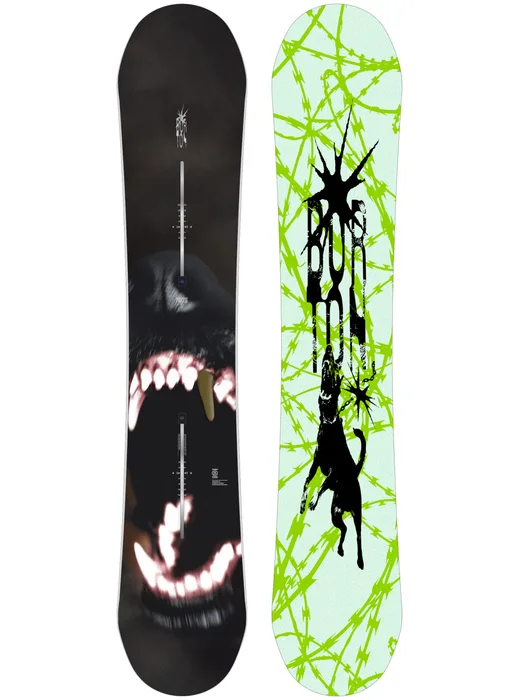
A twin with PurePop Camber and a Happy Medium personality for riders who mix groomers, side hits and some park.
Best for: A rider who wants one board for the whole resort and values being able to ride it either direction.
- Burton's terrain ratings run to 100 percent for all-mountain, with park up to 70 percent and powder up to 60 percent.
- The base is sintered and the glass is Triax.
- Weight ranges are listed for every size, with sizes from 143 to 162 plus wide sizes up to 165W.
- Burton gives no numeric flex, only a Twin Flex with a Happy Medium label.
- The page does not label the board by skill level, so deciding it suits an intermediate is your call.
- As a twin it is not built around a setback stance for open-terrain speed the way a directional board is.
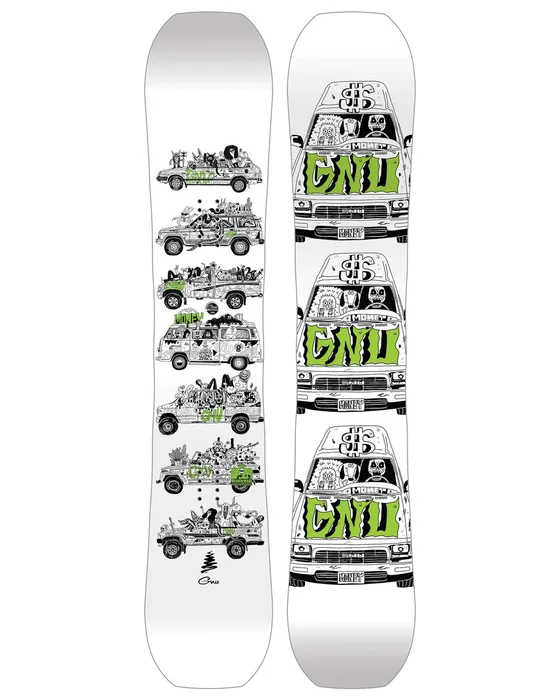
A twin park-leaning board with a C2 hybrid contour and a stated flex of 6 out of 10.
Best for: A park-leaning intermediate who wants a playful twin that still handles the rest of the mountain.
- GNU lists a numeric flex of 6 out of 10, with 5.5 for the 144 size.
- The twin shape and C2 hybrid contour suit riders who like to ride switch and play on features.
- Waist widths are listed for every size, including wide options like the 150W, 154W and 158W.
- GNU's weight ranges are open-ended minimums such as 110+ lb, so they say little about the top of the range for a size.
- The maker describes it as a park-preferring board, which makes it a narrower pick for all-mountain use.
- The page does not clearly state a rider skill level.
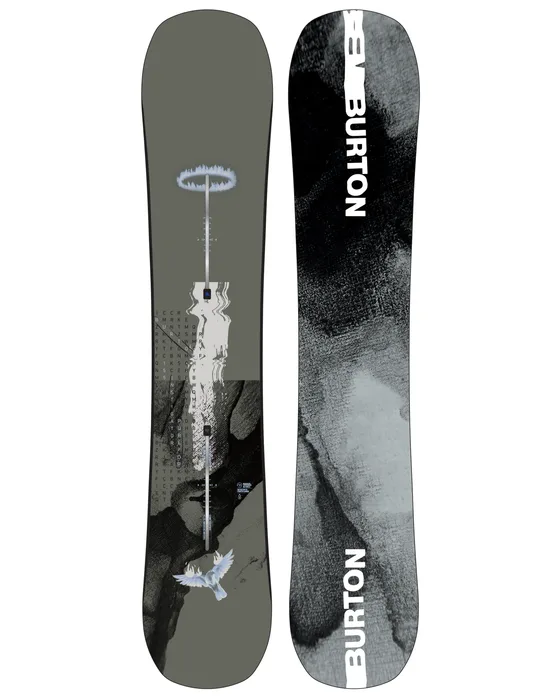
A real, widely sold beginner board that is the wrong purchase for a rider who is already intermediate.
Best for: A first-time rider who is still learning to link turns and wants a gentle, inexpensive board.
- Burton lists it as a beginner board with a catch-free feel and PurePop Camber.
- Weight ranges are listed for every size, from 145 up to 165W.
- It is the lowest tier in this comparison, which suits someone who is truly learning.
- Burton rates the riding level as Beginner and the all-mountain terrain bar stops at 90 percent.
- The base is extruded, the more basic of the two common base types, and generally holds wax less well than sintered.
- It uses a Biax fiberglass layup rather than the Triax on the Process.
- Several sizes were showing as sold out on the maker page when we looked.
| Criteria | Capita Mercury Top pick | Burton Process | GNU Money | Burton Instigator PurePop Camber |
|---|---|---|---|---|
| Verdict | Buy it | Buy it | It depends | Skip it |
| Best for | An intermediate rider who spends most of the day on groomers and open terrain and wants a board to grow into. | A rider who wants one board for the whole resort and values being able to ride it either direction. | A park-leaning intermediate who wants a playful twin that still handles the rest of the mountain. | A first-time rider who is still learning to link turns and wants a gentle, inexpensive board. |
| Price tier | $$$ · premium | $$ · mid-range | $$ · mid-range | $ · budget |
| Shape | Directional, 0.5 in setback | Twin | Twin | Directional, 5 mm taper |
| Camber profile | Resort V2 Directional with flat kick | PurePop Camber | C2 rocker-camber hybrid | PurePop Camber |
| Flex per maker | 6.5 (numeric) | Twin Flex, Happy Medium | 6 of 10 (5.5 on 144) | Twin Flex, no placement given |
| Base | Sintered (HYPERDRIVE) | Sintered | Eco Sublimated Co-Ex | Extruded |
| Core | Hover Core | Super Fly II 700G | G LITE 1 poplar and paulownia | Super Fly 800G |
| Weight ranges listed | Yes, every size | Yes, every size | Yes, minimums only (e.g. 110+) | Yes, every size |
| Maker skill label | Not stated | Not stated | Not clearly stated | Beginner |
| Price tier | $$$ · premium | $$ · mid-range | $$ · mid-range | $ · budget |
Which one is right for you?
- An intermediate rider who spends most of the day on groomers and open terrain and wants a board to grow into. Buy it Capita Mercury
- A rider who wants one board for the whole resort and values being able to ride it either direction. Buy it Burton Process
- A park-leaning intermediate who wants a playful twin that still handles the rest of the mountain. It depends GNU Money
- A first-time rider who is still learning to link turns and wants a gentle, inexpensive board. Skip it Burton Instigator PurePop Camber
How we judged the field
Five things matter most when you pick an all-mountain board. Camber profile sets how the board holds an edge and how lively it feels. Flex decides how much effort it takes to turn and how stable it is at speed. Shape, twin or directional, decides whether the board is happiest riding one way or both. Sizing by rider weight decides whether the board behaves as designed. Base type affects glide and how well the board takes wax. We also gave weight to something less obvious: how much of this the maker actually publishes, because a spec you cannot find is a spec you cannot compare.
The field splits into directional boards built for open terrain, twins built for versatility and park, and entry boards built for first-timers. We picked one of each so the choice reads clearly: the Mercury as the directional all-mountain pick, the Process as the twin that covers the most ground, the Money as the park-leaning option, and the Instigator as the common beginner board that an intermediate rider should step past. Every spec here comes from the maker’s own product page. Neighbouring gear such as bindings, wax, helmets and goggles is covered in separate reviews.
Capita lists the Mercury as an all-mountain and freeride board, and its page gives you nearly everything you need to choose a size. It is directional with a 0.5 inch setback, uses a Resort V2 Directional camber profile with a flat kick, and carries a flex of 6.5, a number Capita publishes outright. That is firmer than a soft twin, so the board rewards clean edging and stays composed when you push the pace, but it asks more of you when your technique is still inconsistent. The base is sintered polyethylene, which Capita calls HYPERDRIVE, and the core is Hover Core. Weight ranges are listed for every size from 147 up to 161, with wide sizes as well. The trade-off is the shape: a directional board with this much setback is happiest pointed downhill, and riding switch or hitting park laps feels less natural than on a twin. It is also the most expensive board here. Best for an intermediate who rides mainly groomers and open terrain and wants a board to grow into.
The Process is Burton’s most all-round twin in this field. It has a twin shape, PurePop Camber, and a Twin Flex that Burton describes as Happy Medium on its soft-to-stiff personality scale. Burton does not publish a numeric flex on the page, so you compare it by that label rather than a number. The core is Super Fly II 700G with SmoothRide, the glass is Triax, and the base is sintered. Burton’s terrain bars give it up to 100 percent for all-mountain, up to 70 percent for park and up to 60 percent for powder, which is a wide spread for one board. Sizes run from 143 to 162, with wide sizes up to 165W, and each has a listed weight range. The page never labels a skill level, so treat the idea that it suits an intermediate as our reading, not Burton’s claim. The trade-off is that a twin gives up some of the setback-driven stability of a directional board. Best for the rider who wants one board for groomers, side hits and the odd park lap.
The Money is GNU’s twin with a freestyle lean, and that is the main thing to understand before buying it. GNU describes it as a park-preferring board that handles the whole mountain, uses a C2 rocker-camber hybrid contour, and lists a flex of 6 out of 10, with 5.5 for the 144 size. The base is an Eco Sublimated Co-Ex base and the core is G LITE 1, made from FSC certified poplar and paulownia. Waist widths are listed for every size, including wide sizes. The sizing data is the weak point: GNU gives weight as open-ended minimums, such as 110+ lb for several sizes, so a range tells you where a size starts but not where it ends. GNU’s page also does not clearly state a skill level. If you spend real time in the park and want a playful twin, it fits well. If you ride mostly open groomers, the Mercury or Process is the easier choice. Best for a park-leaning intermediate.
The Instigator is a genuine beginner board, and that is exactly why it is a skip for an intermediate. Burton rates its riding level as Beginner, describes it as a catch-free ride, and sets its all-mountain terrain bar at 90 percent rather than 100. It has PurePop Camber, a directional shape with 5 mm of taper, and a Twin Flex with no placement given on Burton’s flex scale. The base is extruded, the more basic of the two common base types, and the fiberglass is Biax rather than the Triax on the Process. Weight ranges are listed for every size from 145 to 165W, and it sits at the lowest tier in this comparison. Several sizes showed as sold out on the maker page when we looked. None of that makes it a bad board for the right person. It makes it a board you are likely to outgrow quickly once you are linking turns confidently. Best for a first-timer who is truly still learning.
Capita Mercury vs Burton Process: which should you buy?
The Mercury and the Process are both good all-mountain boards, but they answer different questions. The Mercury is directional, rated at a numeric 6.5 flex, and aimed at open terrain and freeride, so it rewards a rider who is already confident on edges and wants stability at speed. The Process is a twin with a Happy Medium label, a wider spread of terrain ratings, and a lower tier, so it suits a rider who wants one board for everything including a few park laps.
If you mostly ride groomers and open runs and ride in one direction, buy the Mercury. If you ride switch, hit side features, or are not yet sure what kind of rider you will become, buy the Process. Either way, choose your size from the maker’s weight range, and remember that the Process gives no numeric flex, so you are comparing it by label.
What to look for
- Camber profile: Read the maker’s description of where the camber and rocker sit, because names like PurePop, C2 and Resort V2 are brand terms, not standards.
- Flex rating: A numeric flex lets you compare boards, but only within one maker’s scale, so a 6 from one brand is not guaranteed to match a 6 from another.
- Twin or directional: Pick directional if you ride in one direction on open terrain, and a twin if you ride switch or use park and side hits.
- Weight ranges: Choose the size whose listed range includes you, and be wary of ranges that give only a minimum.
- Base type: Sintered bases take wax well, while extruded bases are more basic, so check which one the maker lists.
- Maker skill label: A beginner label from the maker is a useful warning, but a missing label means you need to judge from the flex and terrain description.
Our final take
For an intermediate rider, the Capita Mercury is the board to buy if you ride mostly groomers and open terrain, because its spec sheet is clear, its flex is numeric, and its sizing is complete. The Burton Process is the better-value choice if you want one twin for everything and are happy comparing flex by label. Choose the GNU Money only if you genuinely lean toward park, and check its sizing carefully. Skip the Burton Instigator once you are past the beginner stage. Whichever board you buy, pair it with bindings and wax chosen separately.
Questions, answered
What camber profile should an intermediate rider look for?
A camber-dominant profile is the usual starting point because it gives edge hold and pop on groomers, which is where most intermediates spend their time. Hybrid profiles add rocker in places, which can make the board feel more forgiving or float better in soft snow. Makers use their own names, such as Resort V2 Directional on the Mercury, PurePop Camber on the Process and C2 on the Money, so read each maker's description rather than relying on the name. If you ride mostly groomers, any of the three is a reasonable fit. Powder-heavy riders may want something with more rocker.
Twin or directional: which is better for all-mountain riding?
A directional board is shaped to ride in one direction and is often set up with a setback stance, which helps at speed and in softer snow. A twin rides the same either way, which helps if you ride switch or like to play on features. The Mercury is directional and the Process and Money are twins, so the choice depends on whether you spend more time on open runs or on side hits and park. Neither is better for everyone. If you are unsure, a twin is the more flexible choice for a developing rider.
How do I pick a board size by weight?
Start with the maker's own weight range for each size, which all four of these boards publish in some form. Pick a size whose range includes you, then adjust for boot size and style: wide sizes exist for larger boots, and riders at the top or bottom of a range can shift toward longer or shorter. Be careful with ranges that only give a minimum, as the GNU Money does, because they tell you where a size starts but not where it stops. Height is a weaker guide than weight. If you land between two sizes, the maker's size chart and boot size note should break the tie.
Does the base type matter?
Yes, mostly for glide and wax care. A sintered base absorbs wax and is the more durable of the two common types, and the Mercury and Process use one. An extruded base is simpler and cheaper to make, and the Instigator uses one. The GNU Money lists an Eco Sublimated Co-Ex base, a different term that GNU does not describe as sintered or extruded on its page. Whichever you buy, wax it regularly, and see our separate snowboard wax review.
Do I need to buy bindings, a helmet and goggles separately?
Yes. These boards are sold without bindings, and you need compatible bindings, a helmet and goggles to ride. Check that your bindings match the board's mounting insert pattern. Our reviews of snowboard bindings, ski helmets and ski goggles cover those separately, and our snowboard wax review covers the maintenance side.
Deciding between the top two? See our head-to-head: Capita Mercury vs Burton Process.
More Ski & Snowboard reviews
 The Best All-Mountain Skis: 4 Compared (and One to Skip)
  The Best Avalanche Beacons: 4 Compared (and One to Skip)
  The Best Avalanche Probes: 4 Compared (and One to Skip)
  The Best Avalanche Shovels: 4 Compared (and One to Skip)
  The Best Boot Dryers: 4 Compared (and One to Skip)
  The Best Kids Snowsuits: 4 Compared (and One to Skip)