

Smart Home
The Best Smart Light Bulbs: 4 Compared (and One to Skip)
We compared four color-changing smart bulbs on brightness, color quality, app reliability, and ecosystem depth to find real winners.
The short version
After weighing independent testing and owner reports across four current color-changing smart bulbs, the Philips Hue White and Color Ambiance A19 is the definitive pick: it stays bright in saturated colors, its whites are the most accurate, and its Zigbee-based system is the most dependable in the category. The TP-Link Tapo L535E is the value runner-up - Matter certified, hub-free, and absurdly cheap in multipacks, with only modest compromises in brightness and white quality. The WiZ 60W A19 Color is a decent bulb that only makes sense in specific cases, since it undercuts neither the Tapo on price nor the Hue on performance. The Nanoleaf Matter Wi-Fi A19 is the one to skip: dim output and owner connectivity complaints outweigh its looks. Best for: Hue if you're building a lighting system to live with for years; Tapo if you want cheap, hub-free color that just works with your voice assistant.
Our picks at a glance
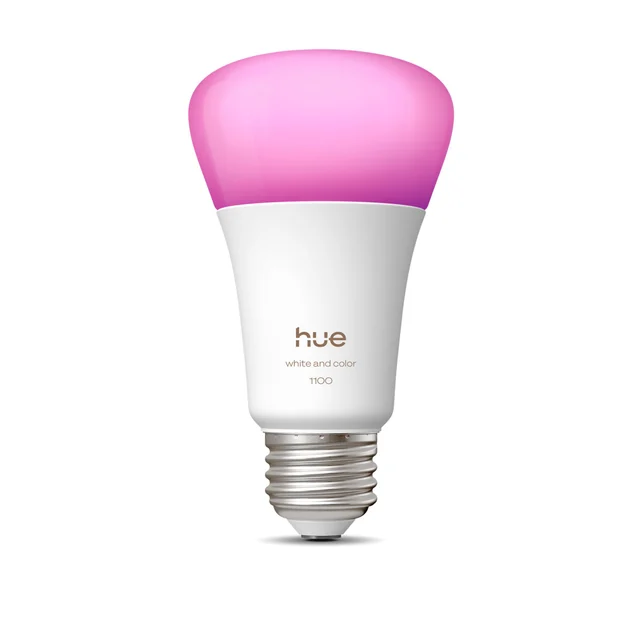
- Philips Hue White and Color Ambiance A19 (75W) - Buy. Still the gold standard: the brightest, most accurate, most reliable color bulb you can screw into a lamp.
- TP-Link Tapo L535E Matter Multicolor Smart Bulb - Buy. The value knockout: Matter support, no hub, and respectable color for pocket change.
- WiZ 60W A19 Color Smart Bulb - It depends. Signify's hubless budget line is genuinely good - but it sits awkwardly between the bargain and the flagship.
- Nanoleaf Matter Wi-Fi A19 Smart Bulb - Skip. Dim output and owner reports of shaky software outweigh the Matter support.
The verdict in 30 seconds
What mattered most
- Connectivity
- Hub required
- Brightness in color modes
- Color and white quality
- App and reliability
- Ecosystem and accessories
Color-changing smart bulbs have become cheap enough that the question is no longer whether to try one, but which system you want to live with. We synthesized independent testing and thousands of owner reports on four current app- and voice-controlled bulbs: a premium ecosystem pick, a bargain that overdelivers, a mid-field option that only makes sense for some homes, and one popular bulb we think most people should pass on.
Still the gold standard: the brightest, most accurate, most reliable color bulb you can screw into a lamp.
Best for: Anyone building whole-home smart lighting who values reliability and color quality over upfront savings
- Reviewers generally rate its color accuracy and white quality at the top of the category
- Bright even in saturated colors, where cheaper bulbs fall off badly
- Zigbee mesh (with the Bridge) has a strong reliability reputation, with owners reporting years of steady service
- Deepest ecosystem: dimmer switches, motion sensors, gradient lamps, and polished app automations
- Costs several times what budget Wi-Fi bulbs do, before you even add the Bridge
- Bluetooth-only setup is limited; the full experience assumes you will eventually buy the Bridge
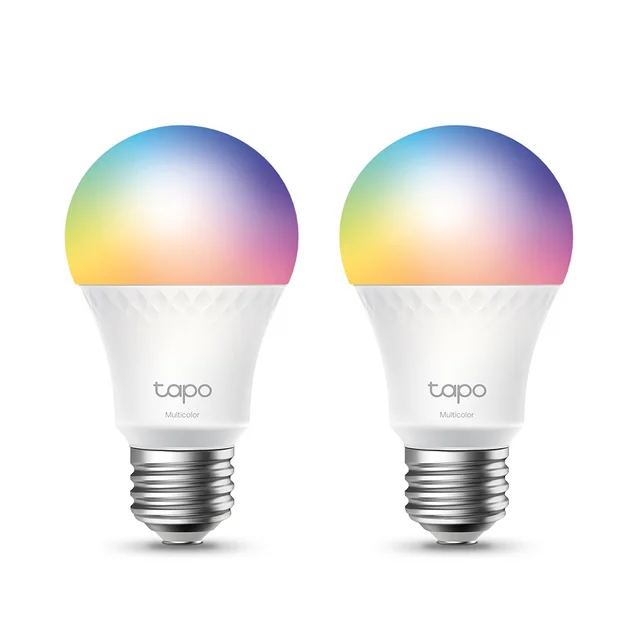
The value knockout: Matter support, no hub, and respectable color for pocket change.
Best for: Budget-minded buyers and renters who want a few color bulbs working with any voice assistant, fast
- Reviewers repeatedly call it the best cheap color bulb - sold in multipacks for less than a single premium bulb
- Matter certified, so it slots into Apple Home, Alexa, Google Home, and SmartThings without a hub
- Tapo app is polished for the price, with schedules and scenes
- No hub or subscription required
- 2.4 GHz Wi-Fi only, and large installs can crowd a home router
- Whites and saturated colors are good for the tier, but owners note it dims noticeably in deep color modes
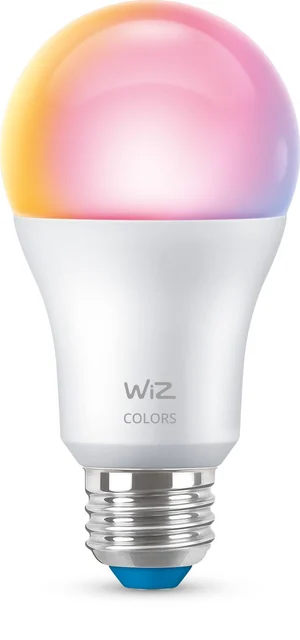
Signify's hubless budget line is genuinely good - but it sits awkwardly between the bargain and the flagship.
Best for: People who like the WiZ app's scenes and rhythms, or find it bundled at a discount
- Made by the company behind Hue, and it shows: good light quality and a capable, scene-rich app
- SpaceSense can use Wi-Fi sensing for motion-triggered lighting with no extra sensor
- Works over plain Wi-Fi with Alexa, Google, and Matter - no hub to buy
- Noticeably dimmer than Hue in saturated colors, and reviewers place its color accuracy a step below
- Cloud-dependent features and occasional app sluggishness are recurring themes in owner reports
- Usually costs a bit more than the cheapest Matter bulbs without clearly outperforming them
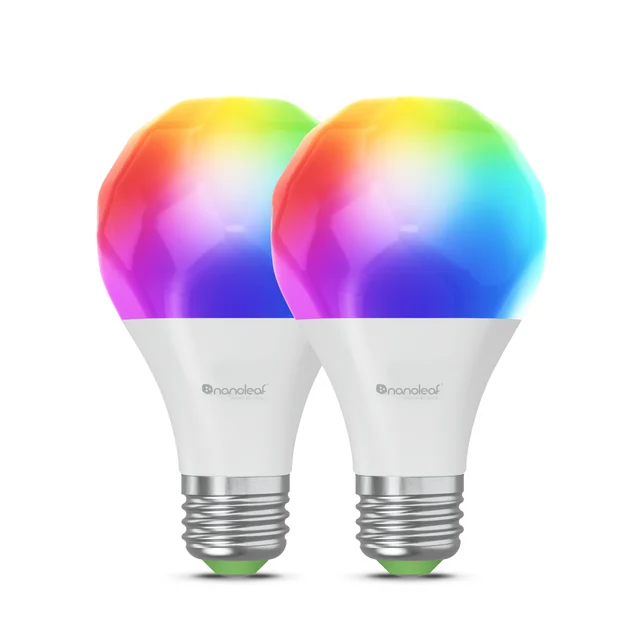
Dim output and owner reports of shaky software outweigh the Matter support.
Best for: Only committed Nanoleaf ecosystem fans who prize the aesthetic over performance
- Matter support, with Wi-Fi and Thread versions, and 16 million colors
- Screen Mirror and Sync+ coordinate it with other Nanoleaf products
- Owners widely report dim real-world output, especially in saturated colors
- Owner reports mention pairing failures, dropped connections, and laggy app control
- Costs more than better-performing budget rivals while delivering less light
| Criteria | Philips Hue White and Color Ambiance A19 (75W) Top pick Buy it Buy | TP-Link Tapo L535E Matter Multicolor Smart Bulb Buy it Buy | WiZ 60W A19 Color Smart Bulb It depends Buy | Nanoleaf Matter Wi-Fi A19 Smart Bulb Skip it Buy |
|---|---|---|---|---|
| Best for | Anyone building whole-home smart lighting who values reliability and color quality over upfront savings | Budget-minded buyers and renters who want a few color bulbs working with any voice assistant, fast | People who like the WiZ app's scenes and rhythms, or find it bundled at a discount | Only committed Nanoleaf ecosystem fans who prize the aesthetic over performance |
| Price tier | $$$ · premium | $ · budget | $ · budget | $$ · mid-range |
| Connectivity | Zigbee + Bluetooth; Matter via Bridge | 2.4 GHz Wi-Fi; Matter certified | 2.4 GHz Wi-Fi + Bluetooth; Matter | 2.4 GHz Wi-Fi; Matter certified |
| Hub required | No, but the Bridge unlocks the full experience | No | No | No |
| Brightness in color modes | Best in class; stays bright in saturated colors | Good for the tier; dims in deep colors | Adequate; a clear step below Hue | Weakest of the four per owner reports |
| Color and white quality | Top-ranked accuracy and tunable whites | Respectable; slightly cool white cast | Good whites; colors less accurate | Middling; muted saturated colors |
| App and reliability | Polished app; Zigbee mesh has a strong reliability reputation | Polished Tapo app; solid for Wi-Fi | Capable app; some owners report cloud sluggishness | Frequent owner complaints about pairing and lag |
| Ecosystem and accessories | Deepest: switches, sensors, sync features | Growing Tapo/Kasa range of plugs and cameras | Decent WiZ range plus SpaceSense | Panels and lightstrips; the bulb is one of many products |
| Voice assistants | Alexa, Google Assistant, Siri (via Bridge) | Alexa, Google Assistant, Siri (via Matter) | Alexa, Google Assistant, Siri (via Matter) | Alexa, Google Assistant, Siri (via Matter) |
| Price tier | $$$ · premium | $ · budget | $ · budget | $$ · mid-range |
Which one is right for you?
- Anyone building whole-home smart lighting who values reliability and color quality over upfront savings Buy it Philips Hue White and Color Ambiance A19 (75W)
- Budget-minded buyers and renters who want a few color bulbs working with any voice assistant, fast Buy it TP-Link Tapo L535E Matter Multicolor Smart Bulb
- People who like the WiZ app's scenes and rhythms, or find it bundled at a discount It depends WiZ 60W A19 Color Smart Bulb
- Only committed Nanoleaf ecosystem fans who prize the aesthetic over performance Skip it Nanoleaf Matter Wi-Fi A19 Smart Bulb
How we judged the field
We don’t run a lab. Instead, we synthesized what reviewers commonly measure - brightness in white and color modes, color accuracy, white-point quality, and response latency - with large volumes of owner reports covering the things labs miss: how often bulbs drop off the network, how annoying the apps are after month three, and what breaks after a firmware update. For a color-changing, app- and voice-controlled bulb, four things mattered most: light quality (both whites and saturated colors), connection reliability, app and ecosystem depth, and what you actually pay per socket. All four picks are current models sold in standard A19/E26 form.
Philips Hue White and Color Ambiance A19 (75W)
Buy itA decade in, Hue is still the reference point. Reviewers keep landing in the same place: the White and Color Ambiance A19 is rated among the most accurate in color and tunable whites, and - crucially - it stays bright when you push it into saturated reds and blues, where budget bulbs collapse to a glow. The Zigbee mesh (via the Hue Bridge) is the other half of the story. Owners report years of uneventful service: bulbs respond instantly, scenes fire reliably, and nothing falls off the network when your router hiccups. The ecosystem is unmatched - dimmer switches, motion sensors, outdoor lines, and entertainment sync that rivals simply don’t have. The catch is cost: one Hue bulb buys several Tapo multipacks, and the Bridge is effectively part of the price of doing it properly. If you’re outfitting one lamp, that’s hard to justify. If you’re outfitting a home, it’s the best money in the category.
TP-Link Tapo L535E Matter Multicolor Smart Bulb
Buy itThe Tapo L535E is the bulb that made cheap smart lighting stop feeling cheap. It’s Matter certified, so it drops into Apple Home, Google Home, Alexa, or SmartThings with no hub and no drama, and the Tapo app is far better than it has any right to be at this price - clean scheduling, grouped scenes, and simple automations. Reviewers consistently call it the best value in the category, and owner sentiment agrees: for the price of a takeout lunch you get a genuinely capable color bulb. The compromises are real but sensible ones. It’s 2.4 GHz Wi-Fi only, so a house full of them adds load to your router; its whites run slightly cool; and like all budget bulbs it dims noticeably in deep color modes. None of that undermines the verdict. If you want color in a few sockets without building a system, buy this and don’t look back.
WiZ 60W A19 Color Smart Bulb
It dependsWiZ is Signify’s hubless budget brand - same parent company as Hue - and the pedigree shows in a good app, pleasant whites, and clever features like SpaceSense, which uses Wi-Fi signal disturbance to trigger lights on motion without a separate sensor. The problem isn’t quality; it’s positioning. Reviewers generally place its color brightness and accuracy a step below Hue, while its street price usually lands at or above the cheapest Matter bulbs like the Tapo, which it doesn’t decisively beat. Owner reports also note occasional cloud sluggishness and features that lean on WiZ’s servers. So it depends: if you’re drawn to the WiZ app’s scene engine and circadian rhythms, or you find these bundled at a discount, they’re perfectly good bulbs you won’t regret. If you’re choosing cold from a shelf, the Tapo saves money and the Hue buys a real upgrade, leaving WiZ squeezed in the middle.
Nanoleaf Matter Wi-Fi A19 Smart Bulb
Skip itNanoleaf makes some of the most striking decorative lighting around. But as an everyday smart bulb, the case falls apart. Owners widely report real-world output that feels dim - especially in saturated colors, where complaints cluster - and owner reports describe software trouble: failed pairings, bulbs dropping offline, laggy app response, and firmware updates that giveth and taketh away. Wi-Fi and Thread versions both exist, and neither shook the reliability reputation. At a price above the Tapo and WiZ while delivering less light, it’s only defensible if you’re already invested in Nanoleaf’s panels and want one app for everything - and even then, we’d keep it out of any socket you rely on. Most buyers should skip it.
Philips Hue White and Color Ambiance A19 (75W) vs TP-Link Tapo L535E Matter Multicolor Smart Bulb: which should you buy?
This is really a question about how many sockets you’re filling and how long you plan to live with the answer. For one lamp, a bedroom, or a first experiment, buy the Tapo. It does most of what a casual user will ever ask - colors, schedules, voice control across every assistant via Matter - at a price where regret is impossible, and its app is pleasant enough that you won’t feel the savings. The Hue earns its premium the moment lighting becomes infrastructure. Its advantages compound at scale: the Zigbee mesh gets more reliable with more bulbs rather than straining your Wi-Fi, scenes across a dozen lights fire in lockstep, physical dimmers and motion sensors slot in cleanly, and the color quality gap is visible every single evening. Owners who go deep on Hue tend to stay with it; owners who fill a whole house with Wi-Fi bulbs can end up fighting their router. Short version: a few bulbs, Tapo; a lighting system, Hue.
What to look for
- Brightness in color, not just white. The lumen figure on the box is white-mode output; saturated colors can drop output by half or more. This is the biggest real-world gap between premium and budget bulbs.
- Radio type. Wi-Fi bulbs are hub-free and cheap but add devices to your router; Zigbee (Hue) needs a bridge but scales gracefully and keeps working locally.
- Matter certification if your home mixes Alexa, Google, and Apple - it’s the difference between one setup flow and three workarounds.
- App quality and local control. Check whether basic control survives an internet outage, and whether owners describe the app as fast after months of use.
- Ecosystem accessories. Wall-mountable dimmers and motion sensors matter more than they sound - nobody wants to open an app to turn on the hallway light.
- Standard fixtures only. Smart bulbs belong on plain on/off switches; traditional wall dimmers cause flicker and early failure.
Our final take
The color smart bulb market has matured into a clear shape: one premium system that’s worth it, and a crowd of budget Wi-Fi bulbs where only the best value survives scrutiny. The Philips Hue White and Color Ambiance A19 is the definitive buy for anyone treating lighting as a system - the quality and reliability gaps show up in reviewer ratings and in years of owner experience. The TP-Link Tapo L535E is the equally clear buy at the other end: the cheapest path to genuinely good color and full voice control. WiZ makes fine bulbs stuck in an unfine position - worth it only when its app features or a discount tip the scales. And the Nanoleaf A19, for all its looks, asks a mid-range price for the weakest light and the shakiest software in the group. Two buys, one maybe, one pass - and no reason left to guess.
Questions, answered
Do I need a hub or bridge to use these smart bulbs?
Three of the four - the Tapo L535E, WiZ A19, and Nanoleaf A19 - connect straight to your 2.4 GHz Wi-Fi with no hub. The Philips Hue bulb works hub-free over Bluetooth for basic control, but features like away-from-home control, accessories, and reliable response really assume the Hue Bridge, which is an extra purchase.
What is Matter, and does it matter for smart bulbs?
Matter is the shared smart-home standard backed by Apple, Google, Amazon, and Samsung. A Matter-certified bulb like the Tapo L535E or Nanoleaf A19 can be added directly to Apple Home, Google Home, Alexa, or SmartThings without a brand-specific hub. It's genuinely useful if your household mixes ecosystems, though day-to-day you'll still get the most features from each maker's own app.
Can I use smart bulbs with a wall dimmer switch?
No - smart bulbs should go in fixtures with standard on/off switches, not traditional wall dimmers. A dimmer chops the power the bulb's electronics need, causing flicker, dropouts, and early failure. All four bulbs here dim smoothly through their apps or voice control instead, and Hue offers its own smart dimmer accessories.
Do these bulbs still work if the internet goes down?
Partially. The wall switch normally still works for basic on/off. Hue keeps working locally through its Bridge even without internet, which is part of why owners rate it so reliable. Wi-Fi bulbs like the Tapo, WiZ, and Nanoleaf vary: local control often survives an internet outage if your router is up, but cloud-dependent features like remote access, some scenes, and voice control will pause.
Why do color smart bulbs seem dimmer when set to red or blue?
A bulb's headline brightness is measured in white mode, where all its LEDs work together. In a saturated color, only some LEDs are lit, so output drops - sometimes by more than half. This is where the field separates: owners and reviewers generally find the Hue holds its brightness in color modes well, the Tapo and WiZ dim more, and the Nanoleaf's color output draws the most owner complaints.
Deciding between the top two? See our head-to-head: Philips Hue White and Color Ambiance A19 (75W) vs TP-Link Tapo L535E Matter Multicolor Smart Bulb.
More in Smart Home
Smart Light Bulbs, Explained Plain-English guide → Philips Hue White and Color Ambiance A19 (75W) vs TP-Link Tapo L535E Matter Multicolor Smart Bulb Head-to-head →  The Best Smart Locks: 4 Compared (and One to Skip)
  The Best Smart Plugs (2026): Matter, Energy Monitoring, and One to Skip
  The Best Smart Smoke & Carbon Monoxide Detectors: 4 Compared (and One to Skip)
  The Best Smart Speakers: 4 Compared (and One to Skip)