

Audio & Headphones
The Best Sleep Headphones: 4 Compared (and One to Skip)
We compared sleep headbands and dedicated sleepbuds on side-sleeper comfort, isolation vs sound-masking, all-night battery, washability, and app features.
The short version
No over-ear headphone belongs in bed — it crushes your ear the moment you roll onto your side. For most people the Soundcore Sleep A20 sleepbuds are the buy: comfortable lying down, a full-night battery, and an app with white noise, tracking, a soft alarm and find-my. If your problem is a snoring partner or a noisy street, the Ozlo Sleepbuds seal and mask better and add smart sensors, for a premium price. If you can’t tolerate anything in your ears, the washable SleepPhones fabric headband is the comfiest answer, as long as you accept basic sound and no app. We’d skip the Philips (ex-Kokoon Nightbuds) hybrid: it costs premium money yet is neither as comfy as a headband nor as isolating as true sleepbuds. Best for: side-sleepers who want one comfortable, all-night option — start with the Soundcore Sleep A20.
Our picks at a glance
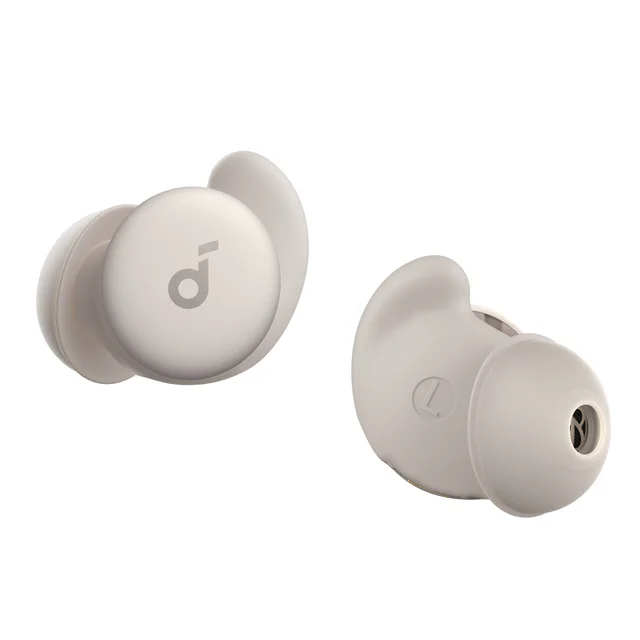
- Anker Soundcore Soundcore Sleep A20 - Buy. The sleepbud that finally nails the whole package: flat enough to lie on, a genuinely full-night battery, and an app that does white noise, tracking and find-my.
- Ozlo Sleepbuds - Buy. Built by the ex-Bose Sleepbuds team, these are the isolation-and-sensors pick for anyone whose real enemy is a snoring partner or a noisy street.
- AcousticSheep SleepPhones Wireless - It depends. The original washable fleece headband — nothing in your ear canal, so it wins on pure side-sleeping comfort even though the sound is basic.
- Philips Sleep Headphones (formerly Kokoon Nightbuds) - Skip. A clever thin-band hybrid with a good app, but it falls between two stools — and costs more than picks that do each job better.
The verdict in 30 seconds
What mattered most
- Format
- Side-sleeper comfort
- Isolation vs masking
- Battery for a full night
- Washable
- App & find-my
Normal over-ear headphones have no business in a bed — lie on your side and the earcup digs in until you have to flip over. Purpose-built sleep headphones solve that in two very different ways: a soft fabric headband with paper-thin speakers you can lie on and wash, or tiny in-ear sleepbuds that seal out noise and hide inside the ear. We synthesized independent testing and a large pool of owner reports to pick two clear buys, one it-depends option, and one popular product we think most people should skip.
The sleepbud that finally nails the whole package: flat enough to lie on, a genuinely full-night battery, and an app that does white noise, tracking and find-my.
Best for: Most people who want one do-it-all sleepbud without paying flagship money.
- Low-profile twin-seal fit that reviewers say stays comfortable for side-sleepers
- Manufacturer-rated for a full night on a charge, with a case that tops them up for several nights
- App bundles a white-noise/sound-masking library, sleep tracking, a gentle personal alarm and a find-my-earbuds locator
- Passive isolation only — it masks noise rather than actively cancelling it, so a loud snorer can still bleed through
- Tiny buds are easy to misplace if you skip the case (the find-my feature exists precisely because people lose them)
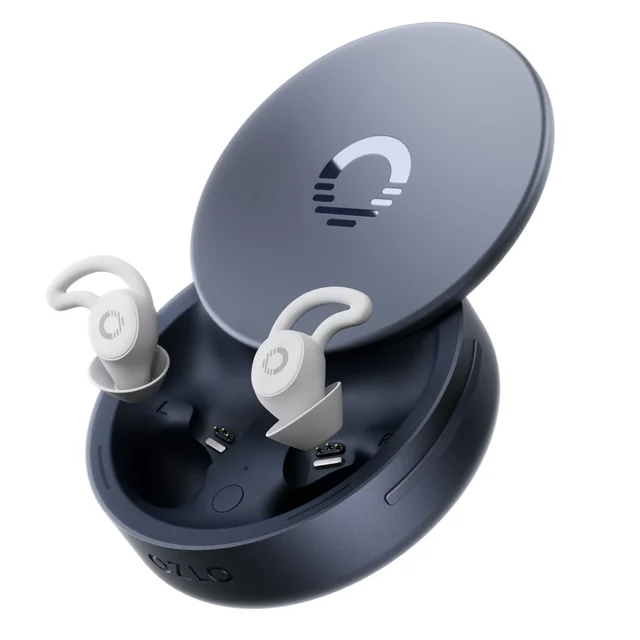
Built by the ex-Bose Sleepbuds team, these are the isolation-and-sensors pick for anyone whose real enemy is a snoring partner or a noisy street.
Best for: Light sleepers who need to physically block noise and want smart sleep sensing.
- Snug noise-masking seal that owners rate as the strongest at drowning out snoring and traffic
- On-board sensors detect when you’ve fallen asleep and can monitor bedroom noise, light and temperature
- Personal alarm plus Bluetooth streaming for audiobooks and podcasts, not just the built-in masking sounds
- Premium price for what is still a single-purpose sleep device
- The deeper seal and ear-tip design suit some side-sleepers less well than a flatter bud or a headband
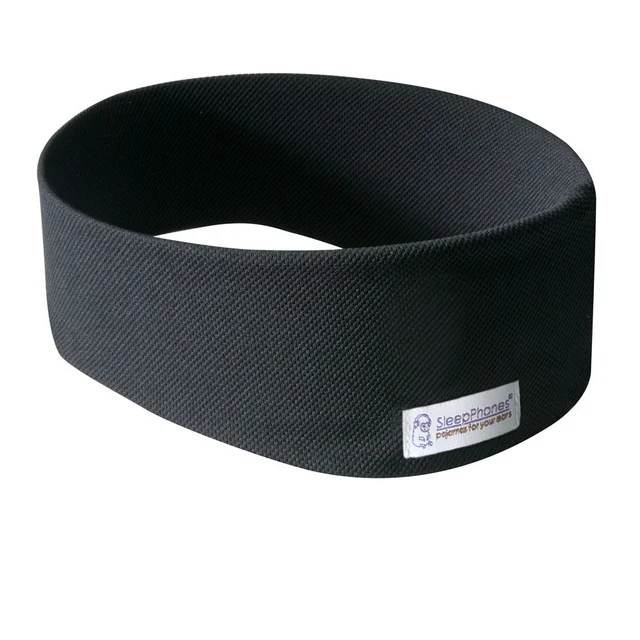
The original washable fleece headband — nothing in your ear canal, so it wins on pure side-sleeping comfort even though the sound is basic.
Best for: Side-sleepers who can’t stand anything in their ears and mostly want podcasts or white noise.
- Flat speakers inside a soft fabric band mean there’s nothing hard to lie on, which side- and ear-sensitive sleepers consistently love
- The electronics slide out so the headband itself is machine-washable — a real hygiene edge over any in-ear option
- Doubles as a light-blocking eye mask if you slide it down, and pairs to any phone over Bluetooth
- Thin, quiet sound with weak bass — fine for podcasts and white noise, underwhelming for music
- No built-in sound library, sleep tracking or find-my; you supply the audio from your phone
- The band can feel warm, and battery life is modest next to the best sleepbuds
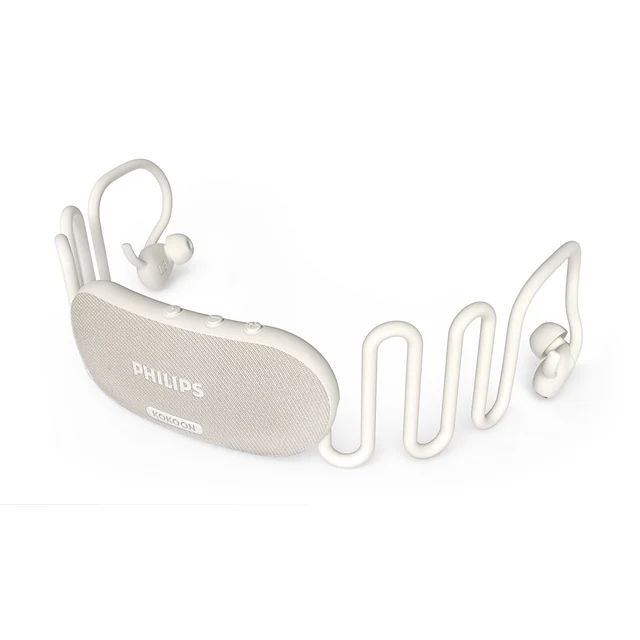
A clever thin-band hybrid with a good app, but it falls between two stools — and costs more than picks that do each job better.
Best for: Only the specific buyer who wants an on-band flat-bud hybrid and doesn’t mind paying for it.
- Slim behind-the-neck band keeps weight off your ear when you lie down
- Kokoon app has a strong sound-and-masking library plus sleep tracking
- Flat in-ear buds are lower-profile than most true earbuds
- Premium price yet the small buds still sit in your ear — less comfy than a headband, less isolating than dedicated sleepbuds
- Owners report app dependence and past reliability and syncing frustrations
- The move from the original Kokoon brand to Philips has left some buyers unsure about long-term support
| Criteria | Soundcore Sleep A20 Top pick | Ozlo Sleepbuds | SleepPhones Wireless | Philips Sleep Headphones (formerly Kokoon Nightbuds) |
|---|---|---|---|---|
| Verdict | Buy it | Buy it | It depends | Skip it |
| Best for | Most people who want one do-it-all sleepbud without paying flagship money. | Light sleepers who need to physically block noise and want smart sleep sensing. | Side-sleepers who can’t stand anything in their ears and mostly want podcasts or white noise. | Only the specific buyer who wants an on-band flat-bud hybrid and doesn’t mind paying for it. |
| Price tier | $$ · mid-range | $$$ · premium | $$ · mid-range | $$$ · premium |
| Format | In-ear sleepbuds | In-ear sleepbuds | Fabric headband | On-band flat in-ear buds |
| Side-sleeper comfort | Very good — low-profile buds | Good — deeper seal suits some less | Best — nothing hard to lie on | Mixed — buds still in-ear |
| Isolation vs masking | Passive seal + masking | Strongest noise-masking seal | Minimal — mostly covers sound | Moderate seal + masking |
| Battery for a full night | Full night, case tops up | A night, case tops up | Modest — a night at most | About a night |
| Washable | No — wipe tips only | No — wipe tips only | Yes — band is machine-washable | No — wipe only |
| App & find-my | Sounds, tracking, find-my | Sounds, sensors, locate | None — use your phone | Sounds & tracking, no true find-my |
| Auto-off / alarm | Personal alarm + auto features | Personal alarm + sleep sensing | None built in | App alarm & fade |
| Price tier | $$ · mid-range | $$$ · premium | $$ · mid-range | $$$ · premium |
Which one is right for you?
- Most people who want one do-it-all sleepbud without paying flagship money. Buy it Anker Soundcore Soundcore Sleep A20
- Light sleepers who need to physically block noise and want smart sleep sensing. Buy it Ozlo Sleepbuds
- Side-sleepers who can’t stand anything in their ears and mostly want podcasts or white noise. It depends AcousticSheep SleepPhones Wireless
- Only the specific buyer who wants an on-band flat-bud hybrid and doesn’t mind paying for it. Skip it Philips Sleep Headphones (formerly Kokoon Nightbuds)
How we judged the field
We don’t run a sleep lab. What we do is pull together independent testing and a broad pool of owner reports, then weigh them against the things that actually matter when you’re trying to fall asleep wearing something on your head. The non-negotiable first filter: it has to be comfortable when you lie on your side. That single rule disqualifies every normal over-ear headphone, which is why none appear here.
From there we looked at how each product handles noise — whether it physically seals and masks sound, or just plays audio over the top of the room. We weighed battery life against a realistic full night plus a nap, not a best-case number. We noted which ones are washable, since anything pressed against your face for eight hours gets grimy. And we looked at the software: a white-noise or sound-masking library, a gentle wake alarm, auto-off, sleep tracking, and — because people genuinely lose these — a find-my locator. Prices are given only as broad tiers.
One honest framing shaped every pick: a soft fabric headband wins on comfort and washability, while in-ear sleepbuds win on isolation and smart features. A lot of headband brands are cheap and interchangeable no-names, so we only considered the ones with a real product identity behind them.
Soundcore Sleep A20 - buy
This is the sleepbud we’d point most people to first. The buds are shaped to sit low in the ear with a twin-seal tip, and side-sleepers in owner reports say they can lie directly on them without the ear pain that kills regular earbuds. Battery is the standout: it’s rated to cover a full night on a single charge, and the case banks several more nights, so you’re not gambling on a dead bud at 3 a.m.
The app is what turns it from earbuds-that-are-small into an actual sleep tool: a library of white-noise and masking sounds, basic sleep tracking, a personal alarm that wakes only you, and a find-my-earbuds locator for when one vanishes into the duvet. The honest limitation is that isolation is passive — it seals and masks rather than actively cancelling — so a determined snorer can still get through. For the money, nothing else balances comfort, endurance and features this well.
Ozlo Sleepbuds - it depends
The Ozlo Sleepbuds come from the engineers behind the discontinued Bose Sleepbuds, and it shows. This is the pick when your real problem is noise you can’t control — a snoring partner, thin walls, a busy street. Owners rate the seal-plus-masking combination as the best here at burying that kind of sound. On top of that it adds genuinely smart touches: sensors that detect when you’ve actually fallen asleep, and monitoring of bedroom noise, light and temperature, plus a personal alarm and the ability to stream audiobooks and podcasts over Bluetooth.
So why “it depends” rather than a flat buy for everyone? Two reasons. It sits at a premium price for a device that only does one thing. And the deeper, more sealing fit that makes it so good at isolation suits some side-sleepers less comfortably than a flatter bud or a headband. If maximum quiet and sleep sensing are worth paying for, buy it with confidence; if you just want a comfortable, capable all-rounder, the A20 saves you money.
SleepPhones Wireless - it depends
SleepPhones is the original fabric-headband answer, and it solves the one problem in-ear devices can’t: some people simply cannot sleep with anything in their ear canal. The speakers are flat discs hidden inside a soft fleece band, so there’s nothing hard to lie on from any angle, and you can slide it over your eyes as a light-blocking mask. Best of all, the electronics slide out and the headband goes in the wash — a hygiene advantage no earbud can match.
The trade-offs are real, which is why it’s an “it depends.” The sound is thin and quiet with little bass, which is fine for podcasts and white noise but poor for music. There’s no sound library, no tracking and no find-my — you feed it audio from your phone. And the band runs warm, with battery life that trails the best sleepbuds. Buy it if in-ear comfort is your deal-breaker; look elsewhere if you want features or richer sound.
Philips Sleep Headphones (formerly Kokoon Nightbuds) - skip
On paper this hybrid is appealing: a slim band that sits behind your neck, flat in-ear buds that are lower-profile than normal earbuds, and the well-regarded Kokoon app for masking sounds and sleep tracking. In practice, we think most people should skip it. It carries a premium price, yet the design falls between two stools — the buds still go into your ear, so it’s less comfortable for side-sleepers than a fabric headband, while its seal doesn’t isolate as thoroughly as dedicated sleepbuds like the Ozlo.
Owner reports also flag app dependence and past reliability and syncing frustrations, and the brand’s transition from the original Kokoon to Philips has left some buyers unsure about long-term support. There’s a narrow buyer who specifically wants an on-band flat-bud design and will pay for it — but for the same money or less, the A20 is comfier and more capable, and SleepPhones is comfier still.
Soundcore Sleep A20 vs Ozlo Sleepbuds: which should you buy?
These are the two sleepbuds worth your money, and the choice is refreshingly clear. The Soundcore Sleep A20 is the all-rounder: comfortable to lie on, a battery that reliably clears a full night, a complete app, and a mid-range price. It masks noise well but doesn’t promise to erase a snorer.
The Ozlo Sleepbuds are the specialist. If the thing keeping you awake is external noise — a partner’s snoring, traffic, a hotel corridor — Ozlo’s seal-and-mask combination is the strongest here, and the on-board sensing is a real bonus. You pay a premium for that, and a minority of side-sleepers find its fit less comfortable than the flatter A20. Rule of thumb: start with the A20; upgrade to Ozlo only if noise is your number-one problem and you’ll use the smart features.
What to look for
- Match the format to how you sleep. Strict side-sleepers who hate in-ear anything should look at a fabric headband; anyone fighting external noise should look at in-ear sleepbuds.
- Comfort when lying down beats spec sheets. A low profile you can actually rest your head on matters more than driver size.
- Isolation vs masking. Sealing buds physically block noise and then mask it; headbands mostly just play sound over the room. Know which you need.
- A real full-night battery. Look for a charge that covers a full night plus a nap, and a case that recharges the buds.
- Washability and hygiene. Only fabric headbands are machine-washable; for buds, check that tips are replaceable and easy to wipe.
- App extras that earn their keep. A sound-masking library, a gentle personal alarm, sleep tracking and — for tiny buds — a find-my locator are the features people miss most when they’re absent.
- Skip the interchangeable no-names. Many cheap headbands are near-identical unbranded units; the ones worth buying have a real brand, warranty and support behind them.
Our final take
Buy the Soundcore Sleep A20 if you want one comfortable, all-night sleepbud that just works — it’s the right answer for most people. Step up to the Ozlo Sleepbuds if blocking a snorer or a noisy street is your top priority and you want smart sleep sensing. Choose the SleepPhones Wireless headband if you simply can’t bear anything in your ears and mostly listen to podcasts or white noise, accepting basic sound in exchange for unbeatable lie-down comfort and washability. And skip the Philips (ex-Kokoon Nightbuds) hybrid: it’s clever, but it costs premium money without being the best at either comfort or isolation. Whatever you choose, leave the over-ears on the nightstand — they were never made for a pillow.
Questions, answered
Headband or sleepbuds — which should I get?
It comes down to comfort versus quiet. A fabric headband like SleepPhones has nothing in your ear canal, so it’s the most comfortable thing to lie on and it’s washable, but it barely blocks outside noise. In-ear sleepbuds like the Soundcore Sleep A20 or Ozlo seal your ear, so they isolate and mask far better and add apps, alarms and find-my — at the cost of a small object in each ear. Side-sleepers who mainly want podcasts or white noise lean headband; anyone fighting a snorer leans sleepbuds.
Why not just use my normal earbuds or over-ear headphones in bed?
Over-ear headphones have a hard cup that presses painfully into your ear and pillow when you lie on your side, so you end up flipping all night. Standard earbuds stick out too far and dig in the same way. Sleep-specific designs exist precisely to sit flat: paper-thin speakers in a soft band, or stubby buds that don’t protrude past the ear.
Will any of these fully block out a snoring partner?
None will cancel snoring the way big active-noise-cancelling headphones do, because sleep devices stay small and comfortable. The in-ear sleepbuds do best: they combine a passive seal with masking sounds, and owners rate the Ozlo Sleepbuds highest for burying snoring and traffic. A fabric headband barely helps against loud snoring — it mostly plays sound over the top of it.
Do sleep headphones track sleep or improve it, like a medical device?
Some, including the Soundcore Sleep A20, Ozlo and the Kokoon/Philips app, offer sleep tracking and masking sounds, but these are general wellness features, not medical devices — treat the data as a rough guide, not a diagnosis. If you have ongoing insomnia, loud snoring, pauses in breathing or tinnitus, this is general product information and not medical advice; please speak to a doctor or sleep professional.
How do I keep from losing tiny sleepbuds in the sheets?
It’s a real problem — the buds are small and dark. Always drop them back in the charging case when you wake, and lean on the app’s find-my feature: the Soundcore Sleep A20 can ring the buds or show their last location, and Ozlo offers a locate function. This is one area where a headband wins outright — there’s nothing small to lose.
Deciding between the top two? See our head-to-head: Anker Soundcore Soundcore Sleep A20 vs Ozlo Sleepbuds.
More Audio & Headphones reviews
 The Best Speaker Isolation Pads: 4 Compared (and One to Skip)
  The Best Sports Earbuds: 4 Compared (and One to Skip)
  The Best Stereo Amplifiers: 4 Compared (and One to Skip)
  The Best Studio Monitors: 4 Compared (and One to Skip)
  The Best Turntable Stylus Cleaners: 4 Compared (and One to Skip)
  The Best Home Subwoofers: 4 Compared (and One to Skip)