

Tools & DIY
The Best Scroll Saws: 4 Compared (and One to Skip)
Four benchtop scroll saws compared on throat depth, speed range, blade compatibility, tilt design, frame mass and warranty, using each maker's published specs and manuals.
The short version
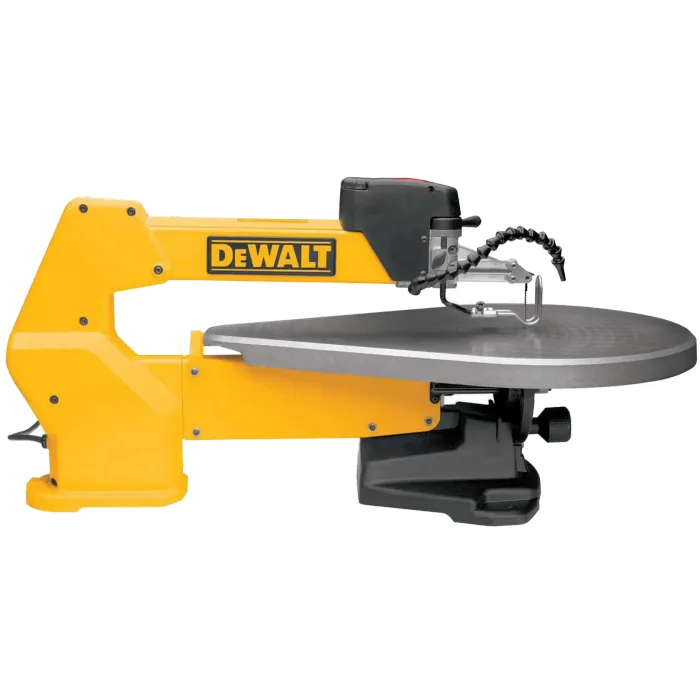
The DeWalt DW788 20 in. Variable Speed Scroll Saw is the best overall: a double parallel-link arm that DeWalt says cuts vibration and noise, a 20-inch throat, 400 to 1,750 strokes per minute, an arm that lifts for inside cuts and a cast-iron table that bevels 45 degrees both ways. The WEN 3922 is the value pick, with a 16-inch throat, a published 2-inch cutting capacity and a blade holder that takes pinned, pinless and spiral blades. The JET JWSS-22B suits serious scrollers who want the biggest throat here at 22-3/8 inches, a tilting arm that keeps the table level, a foot switch and a five-year warranty, but it is a premium machine. Skip the Ryobi SC165VS: it costs more than the WEN for the same throat and speed range, it is the lightest saw here, and Ryobi does not publish its stroke length or maximum cut thickness. Best for: the DeWalt if you scroll regularly, the WEN if you are starting out.
Our picks at a glance
- DeWalt DW788 20 in. Variable Speed Scroll Saw - Buy. A 20-inch parallel-arm saw with a lifting arm, front-mounted controls and a cast-iron table that bevels both ways.
- WEN 3922 16-inch Variable Speed Scroll Saw - Buy. A budget 16-inch saw that takes pinned, pinless and spiral blades and has a flip-open panel for blade changes.
- JET JWSS-22B 22" Scroll Saw with Foot Switch - It depends. The biggest throat here at 22-3/8 inches, with a tilting arm, a foot switch and a five-year warranty.
- Ryobi SC165VS 1.2 Amp Corded 16 in. Scroll Saw - Skip. A common 16-inch hardware-store saw that costs more than the WEN without matching its published capability.
The verdict in 30 seconds
What mattered most
- Throat depth
- Speed range (strokes per minute)
- Max cut thickness
- Stroke length
- Blade types
- Bevel
A scroll saw is the tool for fretwork, puzzles, inlay and tight inside curves that a jigsaw or band saw cannot follow. What separates a pleasant one from a frustrating one is how still it runs, how easily you can thread the blade through a pilot hole, and which blades it will accept. We picked a 20-inch parallel-arm saw with a long track record, a budget 16-inch saw with unusually flexible blade holders, a 22-inch saw with a tilting arm and foot switch, and the 16-inch saw that many first-time buyers bring home from the hardware store.
A 20-inch parallel-arm saw with a lifting arm, front-mounted controls and a cast-iron table that bevels both ways.
Best for: Woodworkers who scroll regularly and want a smooth, quiet saw with easy inside cuts.
- DeWalt's double parallel-link arm is designed to reduce vibration and noise and keep the blade perpendicular to the work.
- The arm lifts so you can thread the blade through a pilot hole, which speeds up fretwork with many inside cuts.
- The on-off switch, variable speed, dust blower and blade-tension lever all sit on the front of the upper arm, and the table bevels 45 degrees left and right.
- The manual says to use only 5-inch plain-end blades, so pinned blades are out.
- DeWalt lists no dust collection port, only a flexible dust blower.
- At 65.48 lb assembled it is heavy, and no stand is included.
- It is a premium-priced saw, more than a beginner needs to find out whether they enjoy scrolling.
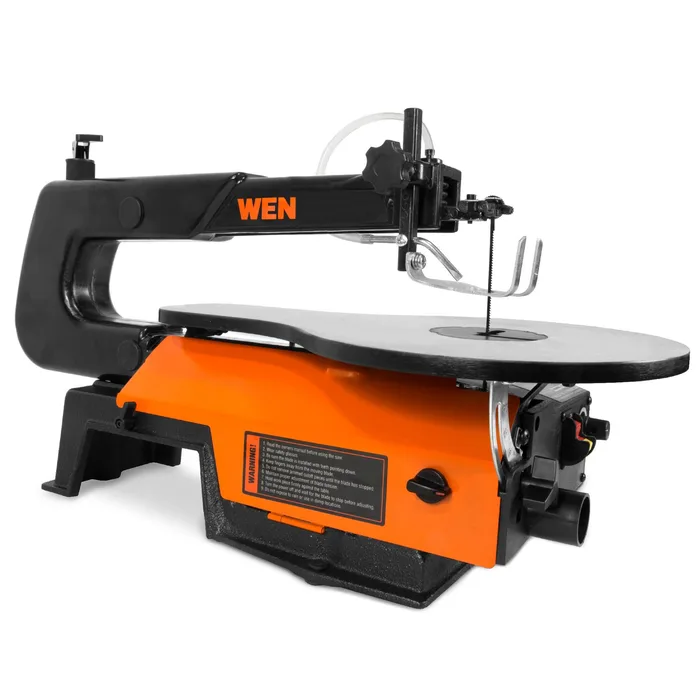
A budget 16-inch saw that takes pinned, pinless and spiral blades and has a flip-open panel for blade changes.
Best for: Beginners and occasional scrollers who want a capable saw without a big outlay.
- WEN says the blade holder accepts pinned, pinless and spiral blades, so you can start easy and move to finer plain-end blades later.
- A side panel swings open for access to the lower blade holder, and a thumb screw makes blade changes tool-free.
- It publishes the numbers: 550 to 1,600 strokes per minute, a 9/16-inch stroke, a 2-inch hardwood capacity and a 1-1/2-inch dust port.
- The 16-inch throat limits how wide a panel you can turn inside the arm.
- The two-year warranty is the shortest here.
- The arm does not lift like the DeWalt's, so threading many inside cuts takes more fiddling.
- A foot pedal switch is sold separately rather than included.
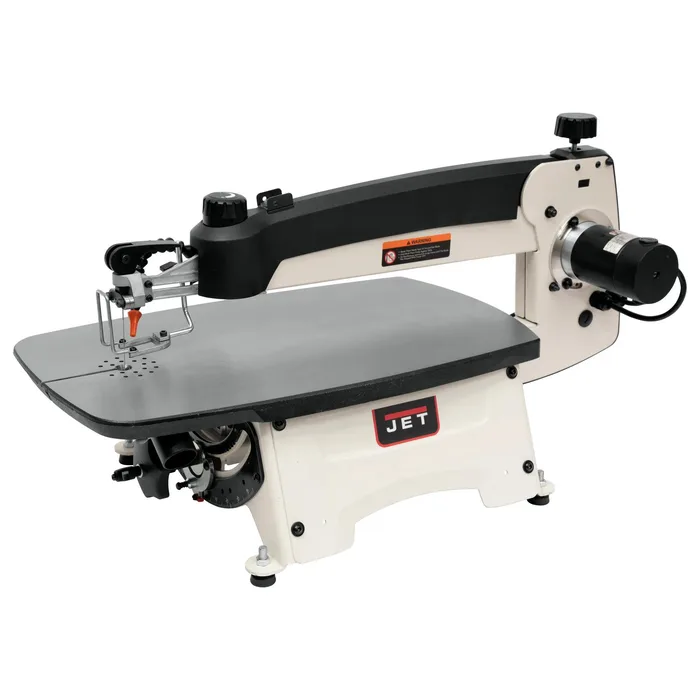
The biggest throat here at 22-3/8 inches, with a tilting arm, a foot switch and a five-year warranty.
Best for: Experienced scrollers who cut large patterns and want hands-free on-off control.
- A 22-3/8-inch throat depth handles wider panels and large fretwork patterns than any other saw here.
- The arm tilts 45 degrees left and right while the cast-iron table stays level, which keeps the workpiece flat for bevel cuts.
- A foot switch comes included, and JET backs it with a five-year warranty.
- Its 400 to 1,550 strokes per minute top speed is the lowest here.
- It is priced at the top of the field and is a lot of saw for an occasional project.
- JET's spec table does not say which blade end types the holders accept.
- It is a large benchtop machine with a 32 x 15-1/2 inch base, so plan bench space.
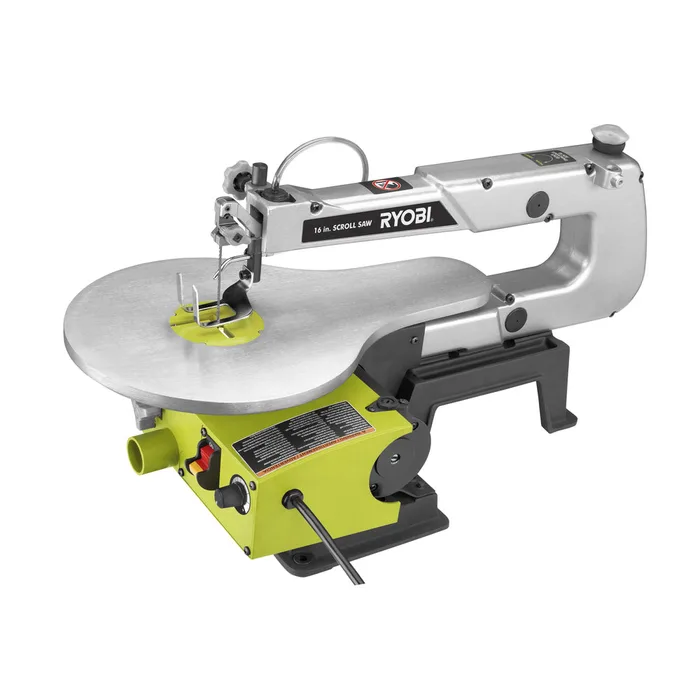
A common 16-inch hardware-store saw that costs more than the WEN without matching its published capability.
Best for: Only buyers already set on Ryobi's three-year warranty who cut thin stock.
- It accepts plain and pin-end blades and has tool-free blade clamps.
- The table tilts tool-free from 0 to 45 degrees, and there is a dust port for a wet/dry vac plus a dust blower.
- Ryobi backs it with a three-year warranty, a year longer than WEN's.
- It matches the WEN's 16-inch throat and 550 to 1,600 strokes per minute range but costs more.
- At 30.94 lb it is the lightest saw here, and Ryobi lists ABS as a construction material; mass is what keeps a scroll saw from shaking.
- Ryobi does not publish a stroke length or a maximum cut thickness.
- It does not list spiral blade support, which the WEN does.
| Criteria | DeWalt DW788 20 in. Variable Speed Scroll Saw Top pick | WEN 3922 16-inch Variable Speed Scroll Saw | JET JWSS-22B 22" Scroll Saw with Foot Switch | Ryobi SC165VS 1.2 Amp Corded 16 in. Scroll Saw |
|---|---|---|---|---|
| Verdict | Buy it | Buy it | It depends | Skip it |
| Best for | Woodworkers who scroll regularly and want a smooth, quiet saw with easy inside cuts. | Beginners and occasional scrollers who want a capable saw without a big outlay. | Experienced scrollers who cut large patterns and want hands-free on-off control. | Only buyers already set on Ryobi's three-year warranty who cut thin stock. |
| Price tier | $$$ · premium | $ · budget | $$$ · premium | $$ · mid-range |
| Throat depth | 20 in. | 16 in. | 22-3/8 in. | 16 in. |
| Speed range (strokes per minute) | 400 to 1,750 | 550 to 1,600 | 400 to 1,550 | 550 to 1,600 |
| Max cut thickness | 2 in. (manual) | 2 in. hardwood | 2 in. | Not published |
| Stroke length | Not published | 9/16 in. | 3/4 in. | Not published |
| Blade types | 5 in. plain-end only | Pinned, pinless, spiral | 5 in. blades (end type not listed) | Plain and pin-end |
| Bevel | Table, 45° left and right | Table, up to 45° | Arm, 45° left and right | Table, 0 to 45° |
| Dust handling | Dust blower, no port listed | Air pump, 1-1/2 in. port | Blower, 1-1/2 in. port | Blower, integrated port |
| Warranty | 3-year limited | 2 years | 5 years | 3 years |
Which one is right for you?
- Woodworkers who scroll regularly and want a smooth, quiet saw with easy inside cuts. Buy it DeWalt DW788 20 in. Variable Speed Scroll Saw
- Beginners and occasional scrollers who want a capable saw without a big outlay. Buy it WEN 3922 16-inch Variable Speed Scroll Saw
- Experienced scrollers who cut large patterns and want hands-free on-off control. It depends JET JWSS-22B 22" Scroll Saw with Foot Switch
- Only buyers already set on Ryobi's three-year warranty who cut thin stock. Skip it Ryobi SC165VS 1.2 Amp Corded 16 in. Scroll Saw
How we judged the field
Five things decide whether a scroll saw is a pleasure or a chore. Vibration control comes first, because a saw that shakes makes it hard to follow a line; mass, arm design and a cast-iron table all help. Throat depth sets the largest piece you can work. Blade compatibility matters more than buyers expect: pinned blades are easy but limit fine work, plain-end blades are what detailed fretwork needs. Speed range lets you slow down for hardwoods, plastics and thin stock. Finally, small conveniences like a lifting arm, front controls and a foot switch decide how tedious inside cuts become.
The field splits into budget 16-inch saws with similar headline specs and heavier 20 to 22-inch machines aimed at regular scrollers. We picked the DeWalt DW788 as the long-running reference saw, the WEN 3922 as the budget saw with the most open blade policy and published numbers, the JET JWSS-22B for buyers who want the biggest throat and a foot switch, and the Ryobi SC165VS because it is a very common first saw that does not justify its price over the WEN.
The DeWalt DW788 is the saw to buy if you expect to keep scrolling. DeWalt’s double parallel-link arm is designed to reduce vibration and noise and keeps the blade perpendicular to the work, which cuts down on over and under cutting. The arm lifts so you can drop the blade through a pilot hole, a real time saver on fretwork with dozens of inside cuts. Controls sit where you need them: the switch, variable speed, dust blower and blade-tension lever are all on the front of the upper arm. The oversized cast-iron table bevels 45 degrees left and right, and the manual lists 400 to 1,750 strokes per minute and a 2-inch maximum thickness. The trade-offs are real. The manual says to use 5-inch plain-end blades only, there is no listed dust port, it weighs 65.48 lb assembled and no stand comes in the box. It suits anyone past the beginner stage who wants a quiet, steady saw.
The WEN 3922 is the value pick and the friendliest saw here for a beginner. WEN says its blade holder accepts pinned, pinless and spiral blades, so you can learn on easy pinned blades and move to finer plain-end blades without changing saws. A side panel swings open for access to the lower blade holder, and a thumb screw makes changes tool-free. WEN also publishes the numbers that the Ryobi leaves out: 550 to 1,600 strokes per minute, a 9/16-inch stroke and a 2-inch hardwood capacity, plus a cast-iron base, an air pump and a 1-1/2-inch dust port. The 16.25 by 10-inch table bevels up to 45 degrees. What you give up is reach and refinement. The 16-inch throat limits panel size, the arm does not lift, and the warranty is two years. WEN sells a foot pedal switch separately. It is the right saw for someone starting out or scrolling a few times a month.
The JET JWSS-22B is a serious machine for a specific buyer. Its 22-3/8-inch throat is the deepest here, so large wall pieces and intarsia panels fit. Instead of tilting the table, JET tilts the arm 45 degrees left and right, which keeps the cast-iron table flat so your workpiece is not sliding downhill on bevel cuts. A foot switch is included, and JET lists a heavy-duty welded steel frame, adjustable blade tracking, a 3/4-inch stroke, a 2-inch maximum cut and a 1-1/2-inch dust port. JET backs it with a five-year warranty, the longest in this group. The catch is cost and scale. It sits at the top of the price range, its speed tops out at 1,550 strokes per minute, the lowest here, and the 32 by 15-1/2 inch base needs a dedicated spot. JET’s spec table also does not state which blade end types it accepts. Buy it if you already know you love scrolling and work large.
The Ryobi SC165VS is a familiar sight in hardware-store tool aisles and plenty of people start on it, but it is hard to recommend over the WEN. It shares the WEN’s 16-inch throat and 550 to 1,600 strokes per minute range, accepts plain and pin-end blades, has tool-free blade clamps, a table that tilts tool-free to 45 degrees, a cast-iron base, a dust port for a wet/dry vac and a blower. The problem is what you get for the extra cost. Ryobi lists the saw at 30.94 lb, the lightest here, with ABS among its construction materials, and mass is the main defence against vibration on a scroll saw. Ryobi also does not publish a stroke length or maximum cut thickness, and it does not list spiral blade support. Its three-year warranty beats WEN’s two years, which is the one solid point in its favor. For most beginners, the WEN does the same job for less.
DeWalt DW788 20 in. Variable Speed Scroll Saw vs WEN 3922 16-inch Variable Speed Scroll Saw: which should you buy?
The DeWalt DW788 and WEN 3922 aim at different stages of the hobby. The DeWalt gives you a 20-inch throat, a lifting arm for inside cuts, a parallel-link arm aimed at low vibration, controls on the front of the arm and a table that bevels both ways. The WEN gives you a 16-inch throat, a published 2-inch capacity and the most flexible blade holder here, at a budget price.
Choose the WEN if you are new to scrolling, cut mostly small pieces, or want to try pinned and spiral blades before committing. Choose the DeWalt if you already scroll, plan detailed fretwork with many inside cuts, or work panels wider than a 16-inch throat allows. One check before buying the DeWalt: it takes plain-end blades only, which most experienced scrollers prefer anyway, but it means skipping the pinned blades many beginners start on.
What to look for
- Throat depth: 16 inches covers most hobby work; go to 20 inches or more only if you cut large panels.
- Blade compatibility: a saw that accepts plain-end blades opens up fine fretwork, while pinned-only saws limit pilot-hole size.
- Arm design and mass: a parallel-link arm, cast iron and a heavy frame reduce the vibration that makes lines wander.
- Lifting arm or quick blade release: inside cuts mean rethreading the blade often, so easy access saves real time.
- Speed range: a low end near 400 strokes per minute helps with plastics, metals and thin veneers.
- Published specs: stroke length and maximum thickness should be on the spec sheet, not left for you to discover.
Our final take
For most people getting into scrolling, the WEN 3922 is the sensible start: a 16-inch throat, published 2-inch capacity and a blade holder that takes pinned, pinless and spiral blades, at a budget price. If you already know you enjoy the work, the DeWalt DW788 is the better long-term saw, with a 20-inch throat, a lifting arm for inside cuts and a parallel-link arm built to keep vibration down. The JET JWSS-22B is worth the premium for large work and hands-free control. Pass on the Ryobi SC165VS, which costs more than the WEN without matching its published capability.
Questions, answered
What does throat depth mean on a scroll saw?
Throat depth is the distance from the blade to the back of the arm. It sets the widest panel you can cut to its center, roughly double the throat if you can turn the piece. A 16-inch saw handles most plaques, ornaments and puzzles. A 20 or 22-inch saw matters when you cut large wall pieces or intarsia panels and keep hitting the back of the arm.
Should I buy pinned or plain-end blades?
Pinned blades have a small cross pin at each end and are easy to install, which is why beginner saws accept them. The trade-off is that the pin needs a larger pilot hole, which limits fine fretwork. Plain-end blades thread through tiny pilot holes and come in finer sizes, which is why serious scrollers use them. The DeWalt manual specifies plain-end blades only, the WEN takes pinned, pinless and spiral, and the Ryobi takes plain and pin-end.
Is a foot switch worth it?
For fretwork with many inside cuts, a foot switch lets you stop the blade, release it and rethread without taking your hands off the work. The JET includes one. WEN sells a separate momentary foot pedal switch on the same product page. On other saws, an aftermarket momentary pedal is a common upgrade, but check the maker's guidance before adding one.
Why does a heavy scroll saw cut better?
A scroll saw drives the blade up and down hundreds of times a minute, and that reciprocating motion tries to shake the machine. Mass and a rigid frame soak up that vibration so the blade tracks your line. DeWalt lists 65.48 lb assembled for the DW788 and uses a parallel-link arm aimed at vibration. The Ryobi is listed at 30.94 lb, so bolting it to a solid stand or bench matters more.
Can a scroll saw cut thick wood?
Most benchtop scroll saws top out around 2 inches, and the DeWalt manual and WEN page both state 2 inches. In practice, thick hardwood cuts slowly and wears blades quickly, so most scroll work is in stock well under an inch. If you regularly cut curves in thick stock, a band saw is the better tool. A scroll saw is for detail, not resawing.
Deciding between the top two? See our head-to-head: DeWalt DW788 20 in. Variable Speed Scroll Saw vs WEN 3922 16-inch Variable Speed Scroll Saw.
More Tools & DIY reviews
 The Best Snow Shovels: 4 Compared (and One to Skip)
  The Best Socket Sets: 4 Compared (and One to Skip)
  The Best Solder Wire for Electronics: 4 Compared (and One to Skip)
  The Best Solder Fume Extractors: 4 Compared (and One to Skip)
  The Best Soldering Irons and Stations: 4 Compared (and One to Skip)
  The Best Splitting Axes and Mauls: 4 Compared (and One to Skip)