

Office & WFH
The Best Ring Lights: 4 Compared (and One to Skip)
Four current ring lights compared on light quality, color control, power, and mounting for video calls and content creation.
The short version
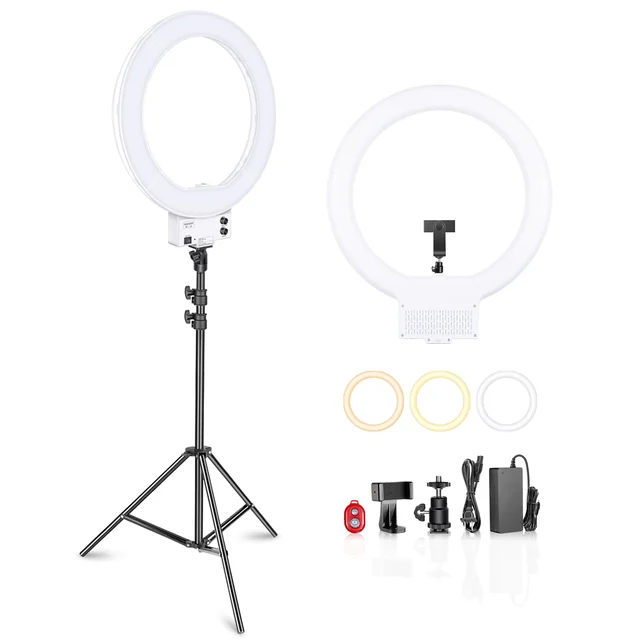
For most people upgrading their video calls and content, the NEEWER 18" Dimmable Bi-Color LED Ring Light Kit is the definitive buy: true warm-to-daylight color adjustment on a dial, high color accuracy, and a complete kit at a fair mid-range price. Creators who film in multiple locations should step up to the Lume Cube Cordless Ring Light Pro, whose built-in battery and soft edge-lit glow justify its premium if - and only if - you use the cordless freedom. The corded Lume Cube Ring Light 18" is a lovely piece of hardware, but it asks more money than the NEEWER without doing more, so it only makes sense if build quality and simplicity win out over value for you. Skip the NEEWER RL-18 New Version: its white-only LEDs force you to snap plastic filters over the ring to warm the light, a design true bi-color kits made obsolete. Best for: remote workers and creators who want studio-quality lighting without studio complexity.
Our picks at a glance
- NEEWER 18" Dimmable Bi-Color LED Ring Light Kit - Buy. The complete 18-inch bi-color kit that does everything most people need for the least money.
- Lume Cube Cordless Ring Light Pro - Buy. A battery-powered, edge-lit 18-inch ring that goes anywhere and looks the most professional doing it.
- Lume Cube Ring Light 18" - It depends. A well-built corded 18-inch ring that is lovely to own but undercut on value by cheaper bi-color kits.
- NEEWER RL-18 New Version 18" LED Ring Light - Skip. A dated white-only design that makes you snap plastic filters over the ring to change color - in 2026, don't.
The verdict in 30 seconds
What mattered most
- Size & design
- Color temperature
- Color accuracy
- Power
- Controls
- Included kit
A good ring light is the fastest way to stop looking like a hostage on video calls and start looking intentionally lit. The market splits into serious 18-inch bi-color kits and a long tail of dated or underpowered designs, and the gap between them is bigger than the price difference suggests. We compared four current, widely available models: two are easy recommendations, one only makes sense for a specific buyer, and one is a design the category has simply outgrown.
The complete 18-inch bi-color kit that does everything most people need for the least money.
Best for: Anyone who wants one ring light that handles daily video calls, streaming, and filming at a desk or in a home studio.
- True bi-color output from warm to daylight with no filters to fiddle with
- Complete kit: 6.5-foot stand, phone holder, hot shoe adapter, and Bluetooth receiver in the box
- CRI and TLCI of 95+ that owners say flatters skin tones on camera
- AC-only power means you are tethered to an outlet
- The included stand is serviceable but wobbles at full extension
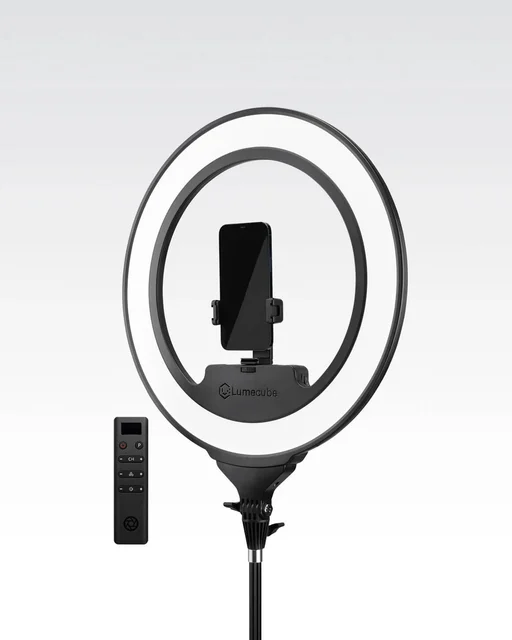
A battery-powered, edge-lit 18-inch ring that goes anywhere and looks the most professional doing it.
Best for: Content creators who film in different rooms or on location and will actually use the cordless freedom.
- Built-in battery runs up to 1.5 hours at full brightness with no outlet needed
- Edge-lit design produces a softer, more even glow than exposed-LED rings
- Very wide 2700K to 7500K color range plus a proper wireless remote, and USB-C ports to charge your phone while you shoot
- Costs roughly double a capable corded kit
- Battery runtime at full brightness is short enough that long sessions need the cable anyway
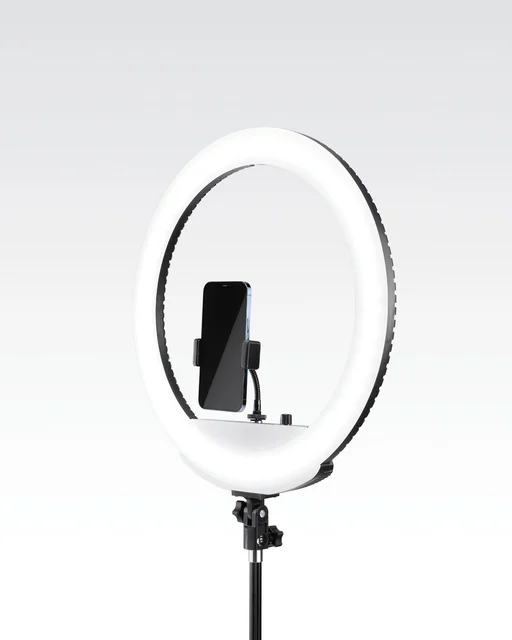
A well-built corded 18-inch ring that is lovely to own but undercut on value by cheaper bi-color kits.
Best for: Buyers who value fit-and-finish and a straightforward corded setup, and don't mind paying a little extra for it.
- Excellent color accuracy and a clean, soft light quality owners consistently praise
- Sturdy hardware with a tall stand, smartphone mount, and travel case included
- Simple onboard controls with no app required
- Costs more than equally capable competitors without adding brightness or features
- Lower peak output than the strongest corded kits in its size class
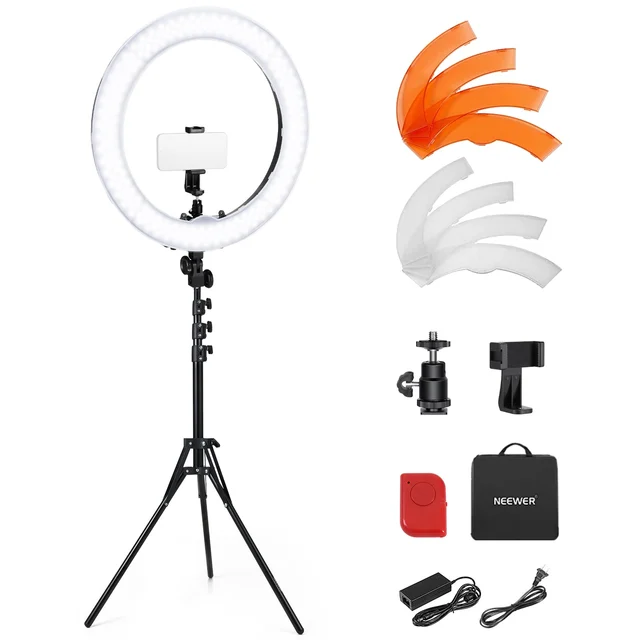
A dated white-only design that makes you snap plastic filters over the ring to change color - in 2026, don't.
Best for: Almost no one today - true bi-color kits cost only slightly more and are better in every practical way.
- Strong raw output for the money
- Proven, durable design that has been around for years
- Fixed daylight color; warming the light requires clipping physical orange filter shells over the ring
- Owners report the filters are fiddly, easy to lose, and hurt color accuracy
- Costs nearly as much as true bi-color kits that adjust with a dial
| Criteria | NEEWER 18" Dimmable Bi-Color LED Ring Light Kit Top pick Buy it Buy | Lume Cube Cordless Ring Light Pro Buy it Buy | Lume Cube Ring Light 18" It depends Buy | NEEWER RL-18 New Version 18" LED Ring Light Skip it Buy |
|---|---|---|---|---|
| Best for | Anyone who wants one ring light that handles daily video calls, streaming, and filming at a desk or in a home studio. | Content creators who film in different rooms or on location and will actually use the cordless freedom. | Buyers who value fit-and-finish and a straightforward corded setup, and don't mind paying a little extra for it. | Almost no one today - true bi-color kits cost only slightly more and are better in every practical way. |
| Price tier | $$ · mid-range | $$$ · premium | $$ · mid-range | $ · budget |
| Size & design | 18" bi-color, exposed-LED ring | 18"-class edge-lit ring | 18" exposed-LED ring | 18" white-only ring |
| Color temperature | Adjustable warm-to-daylight (3200-5600K) | Widest range here (2700-7500K) | Adjustable, range not published | 3200K or 5600K via clip-on filters only |
| Color accuracy | High (CRI and TLCI 95+) | High (figure not published) | High (figure not published) | CRI 95 per NEEWER; filters can shift it |
| Power | AC corded | Built-in battery + AC cord | AC corded (optional Sony NP batteries) | AC corded |
| Controls | Onboard knobs + Bluetooth receiver | Wireless remote | Onboard controls | Onboard dials + Bluetooth phone remote |
| Included kit | Stand, phone holder, hot shoe adapter, Bluetooth receiver | 70-inch stand, phone and camera mounts, remote, travel case | Stand, phone mount, travel case | Stand, phone holder, filters, cold shoe adapter, remote, carry bag |
| Price tier | $$ · mid-range | $$$ · premium | $$ · mid-range | $ · budget |
Which one is right for you?
- Anyone who wants one ring light that handles daily video calls, streaming, and filming at a desk or in a home studio. Buy it NEEWER 18" Dimmable Bi-Color LED Ring Light Kit
- Content creators who film in different rooms or on location and will actually use the cordless freedom. Buy it Lume Cube Cordless Ring Light Pro
- Buyers who value fit-and-finish and a straightforward corded setup, and don't mind paying a little extra for it. It depends Lume Cube Ring Light 18"
- Almost no one today - true bi-color kits cost only slightly more and are better in every practical way. Skip it NEEWER RL-18 New Version 18" LED Ring Light
How we judged the field
We don’t run a lab. Instead we synthesized independent testing of current ring lights with large volumes of owner reports - the people who actually sit in front of these things for hours of calls and filming. Four criteria mattered most: light quality (softness and color accuracy, since your face is the subject), color-temperature control (whether the light can match a real room without tricks), practicality (power, mounting, controls, and what’s actually in the box), and honest value against what the rest of the market charges for the same result. Every light here is an 18-inch-class model, because the evidence is lopsided: smaller rings don’t produce enough soft light at desk distance to be worth buying for video work.
NEEWER 18” Dimmable Bi-Color LED Ring Light Kit
Buy itThis is the ring light that makes the category make sense. True bi-color LEDs sweep from warm indoor tones to full daylight with a dial - no filters, no apps required - and its high color-accuracy rating shows up in owner reports as the thing people notice first: skin looks like skin. The kit is genuinely complete, with a 6.5-foot stand, phone holder, hot shoe adapter for a camera, and a Bluetooth receiver, so there is nothing else to buy. NEEWER rates it at 3200K to 5600K with CRI and TLCI of 95+. Independent testing found output easily sufficient to be the primary light for calls and content at desk-to-room distances. The compromises are ordinary ones: it needs a wall outlet, and the included stand gets top-heavy at full height. Neither changes the verdict. For most buyers, this is the right answer.
Lume Cube Cordless Ring Light Pro
Buy itThe Cordless Ring Light Pro is what happens when someone rethinks the ring light instead of just rebadging one. The edge-lit design fires its LEDs through a built-in diffusion ring, producing a noticeably softer, more even glow than exposed-LED rings - reviewers consistently single out how gentle it is on faces and how much less harsh the catchlight looks. The built-in battery is rated for up to 1.5 hours at full brightness, which frees the light from the outlet for a shoot or a string of calls, and the color range is the widest here, 2700K to 7500K. It costs roughly twice as much as the NEEWER kit, and owners note that full-power battery runtime is short enough that marathon sessions end up corded anyway. Buy it if you film in more than one place; that’s the buyer this premium was built for.
Lume Cube Ring Light 18”
It dependsThe corded Ring Light 18” is in an awkward spot, and it’s worth being precise about why. The hardware is genuinely nice: high color accuracy, a soft and even beam, the option to run it on Sony NP batteries, a tall sturdy stand, a travel case, and simple onboard controls that owners appreciate for having no app or pairing step. Nothing about it is bad. The problem is arithmetic - it costs more than the NEEWER bi-color kit while offering lower peak output and no remote, and it can’t match its corded rival on any spec that shows up on camera. If you value fit-and-finish, trust the brand, and want the simplest possible corded setup, you will be happy with it. If you’re optimizing for value, the NEEWER does the same job for less, and that’s most people.
NEEWER RL-18 New Version 18” LED Ring Light
Skip itThe RL-18 is the ring light design that time forgot. Its LEDs are white-only, fixed at daylight color; to warm the light for indoor rooms you physically snap curved orange plastic filter shells over the ring, and diffuse it with white ones. That approach was standard years ago. Today it’s a liability: owners report the filters are fiddly to attach, easy to crack or lose, and visibly degrade color accuracy, and there is no way to fine-tune temperature between ‘daylight’ and ‘filtered orange.’ The raw output is strong, NEEWER rates it at 55W and CRI 95, and the design is proven - this was a beloved workhorse in its day - but it now sells for close to true bi-color kits, including NEEWER’s own, which solve the whole problem with a dial. When a company’s own catalog contains the better answer at a similar price, the verdict writes itself. Skip it.
NEEWER 18” Dimmable Bi-Color LED Ring Light Kit vs Lume Cube Cordless Ring Light Pro: which should you buy?
This comes down to one question: where do you use the light? If the answer is ‘at my desk,’ buy the NEEWER. It matches or beats the Lume Cube on the specs that matter at a fixed workstation - output, color accuracy, included accessories - and costs dramatically less. Its AC cord is irrelevant when the light never moves. If the answer is ‘all over the place,’ the Lume Cube earns its premium. The battery eliminates outlet hunting, the edge-lit diffusion is the most flattering light in this comparison, the wider color range handles more environments, and the wireless remote is genuinely useful mid-shoot. Owners of both lights are happy owners; the mistake would be paying the Lume Cube premium for cordless freedom you’ll never use, or saving money on the NEEWER and then resenting the cable at every location shoot.
What to look for
- 18-inch class or go home: smaller rings can’t produce enough soft light at desk distance for video calls or filming.
- True bi-color LEDs: color temperature should adjust with a dial, not clip-on filters.
- High color accuracy (CRI mid-90s or better): this is what keeps skin tones natural on camera.
- A real stand and mounts: you want a floor stand that reaches eye level or above, plus a phone holder - and a cold shoe or camera mount if you film with more than a phone.
- Power that matches your life: corded is cheaper and fine for a fixed desk; pay for a battery only if you move.
- Remote control: surprisingly important once the light is positioned - walking over to adjust brightness mid-call gets old fast.
Our final take
The ring light market in 2026 rewards buyers who ignore both extremes: the tiny selfie rings that can’t light a video call, and the assumption that spending more always buys better light. The NEEWER 18” Dimmable Bi-Color LED Ring Light Kit is the definitive pick - complete, accurate, adjustable, and fairly priced. The Lume Cube Cordless Ring Light Pro is the justified upgrade for mobile creators and the nicest light here by feel. The corded Lume Cube Ring Light 18” is for the buyer who consciously pays extra for polish over specs. And the RL-18, honorable veteran that it is, belongs to an era of clip-on filters that dial-adjustable bi-color rings have decisively ended.
Questions, answered
What size ring light do I actually need for video calls?
An 18-inch ring is the sweet spot for lighting a full face from behind a laptop or camera at desk distance. Independent testing consistently finds that small clip-on and 10-inch selfie rings simply can't produce enough soft light at arm's length or further, which is why every light in this comparison is in the 18-inch class. Smaller rings are fine for phone-in-hand selfies, but they underdeliver for webcam framing.
Why does bi-color matter so much?
Your ring light has to blend with the other light in the room - window daylight is cool, household bulbs are warm. A bi-color ring lets you match that with a dial so your face doesn't look blue or orange against the background. Fixed-color lights like the RL-18 can only approximate this with physical clip-on filters, which owners report are clumsy and hurt color accuracy.
Do ring lights cause glare on glasses?
They can - the ring's shape reflects as a distinctive circular glare in eyeglasses, and it also appears as a ring-shaped catchlight in your eyes. Raising the light above eye level and angling it down reduces the effect, and edge-lit designs like the Lume Cube Cordless Pro are a bit gentler. If you wear glasses on every call, also consider an off-axis key light instead; our webcam and monitor light bar guides cover those alternatives.
Is a battery-powered ring light worth the extra cost?
Only if you genuinely move around. The Cordless Ring Light Pro's battery is transformative for filming in different rooms, at events, or anywhere outlets are scarce, but owners note that full-brightness runtime is short enough that long desk sessions end up plugged in anyway. If your light will live next to your desk, a corded kit does the same job for far less.
Ring light or key light panel - which is better for working from home?
A ring light is the easiest all-in-one answer: it mounts your phone or camera dead center and produces even, shadow-free light with a flattering catchlight. A panel or light bar off to the side looks more natural and avoids glasses glare, but takes more fiddling to position well. If you create content as well as take calls, the ring is the more versatile single purchase.
Deciding between the top two? See our head-to-head: NEEWER 18" Dimmable Bi-Color LED Ring Light Kit vs Lume Cube Cordless Ring Light Pro.
More in Office & WFH
Ring Lights, Explained Plain-English guide → NEEWER 18" Dimmable Bi-Color LED Ring Light Kit vs Lume Cube Cordless Ring Light Pro Head-to-head →  The Best Sling Bags: 4 Compared (and One to Skip)
  The Best Space Heaters: 4 Compared (and One to Skip)
  The Best Standing Desk Converters: 4 Compared (and One to Skip)
  The Best Trackball Mice: 4 Compared (and One to Skip)