

Automotive
The Best Paint Sealants: 4 Compared (and One to Skip)
We compared four paint sealants and found the durability figures live on the bottles rather than the web pages, with one product's label contradicting its own description.
The short version
Adam's Paint Sealant is the pick: a stated six to nine month window on paint, wheels and other painted exterior surfaces, UV blockers, and the only layering guidance in the group, which is to apply it before waxes or glazes. Chemical Guys Jet Seal is the runner-up and actually claims longer, with up to 12 months of protection and advanced UV protection printed on the bottle, though neither appears in the online description. Adam's Proline SHIELD is the depends pick: a professional spray sealant that can run neat or diluted for volume work, whose page calls it SiO2 ceramic while the bottle says polymer based. Skip P&S Ultracoat. Its own description opens by calling it the longest lasting wax we make, then uses four different names for the product in one paragraph and never states a duration. Best for: anyone who waxes twice a year and would rather do it once.
Our picks at a glance
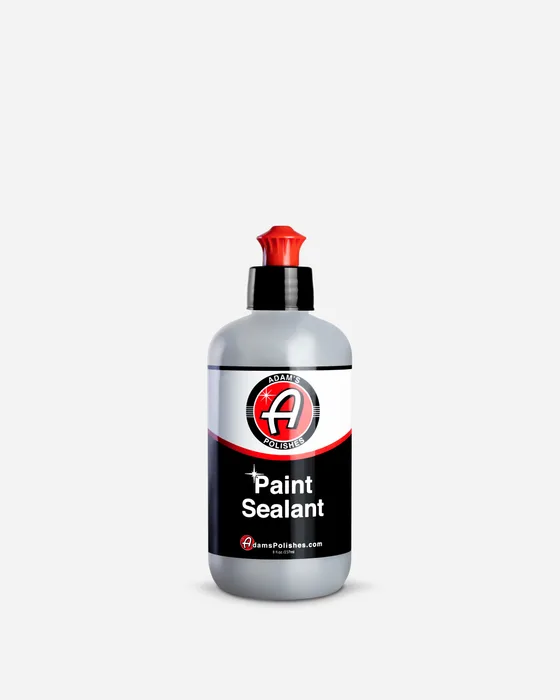
- Adam's Polishes Paint Sealant - Buy. The only sealant here that states how long it lasts on its product page, and it tells you where it goes in the layering order.
- Chemical Guys Jet Seal Sealant & Paint Protectant - Buy. Claims up to 12 months and advanced UV protection, both printed on the bottle and neither on the web page.
- Adam's Polishes Proline SHIELD Spray Sealant - It depends. A professional spray sealant whose page says SiO2 ceramic and whose bottle says polymer based.
- P&S Detail Products Ultracoat Paint Sealant - Skip. Its own description opens by calling it the longest lasting wax we make, then uses three different product names for it.
The verdict in 30 seconds
What mattered most
- Stated durability
- Where the claim appears
- Chemistry named
- UV protection claimed
- Format
- Application
A paint sealant is bought for one reason: it lasts longer than wax. That makes durability the entire specification, and this category keeps it in an odd place. Three of these four state a durability figure and two of those print it only on the bottle, where nobody shopping online will see it. One of those bottles also names a different chemistry from its own product page. The fourth leads with longest lasting and never says how long.
The only sealant here that states how long it lasts on its product page, and it tells you where it goes in the layering order.
Best for: Anyone protecting a car twice a year who wants to know roughly when the next application is due rather than guessing from how the water behaves.
- Six to nine months of protection claimed on paint, wheels and other painted exterior surfaces, the only durability window in this comparison.
- UV blockers stated as maintaining gloss, shine and reflective properties, which is the mechanism that keeps paint from dulling.
- Applies by hand or machine, so it suits both a weekend job and a full correction.
- The brand states it should go on before waxes or glazes to bond with the clear coat, which is layering guidance nobody else gives.
- Thermo-Resin Technology is a brand term rather than a chemistry anyone can evaluate.
- No cure time published, which matters because a sealant needs to be dry before it meets rain.
- Grey colour and a coconut pound cake scent, on a product you spread across an entire car.
- A cream applied by hand or machine is more work than a spray, which is the trade for the durability.
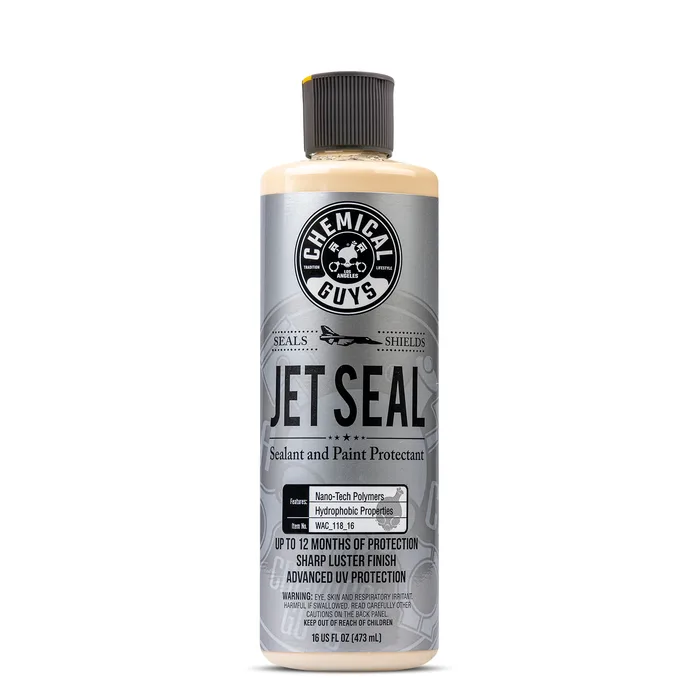
Claims up to 12 months and advanced UV protection, both printed on the bottle and neither on the web page.
Best for: Anyone wanting the longest published claim in the category at a mid-range price, who is comfortable that up to 12 months is a maximum rather than an expectation.
- The bottle states up to 12 months of protection, the longest duration claimed by anything in this comparison.
- Advanced UV protection and hydrophobic properties are listed on the label, alongside nano-tech polymers as the named chemistry.
- Developed for airplane exteriors, which is a genuine indication of how it was designed to handle UV, temperature swings and speed.
- A 16 ounce bottle, twice the 8 ounces of the Adam's cream sealant.
- None of the durability or UV claims appear in the online product description, only on the bottle.
- Up to 12 months is a ceiling rather than a range, so it sets no expectation for a normal car in normal weather.
- Sold in a single 16 ounce size.
- No cure time and no layering guidance published anywhere.
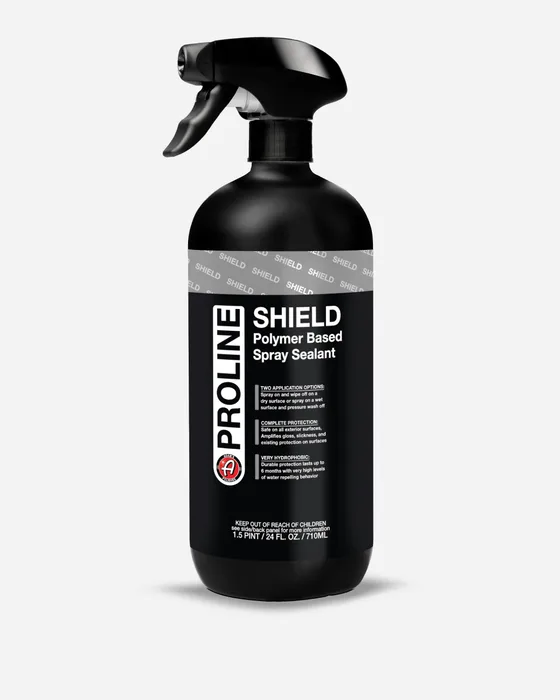
A professional spray sealant whose page says SiO2 ceramic and whose bottle says polymer based.
Best for: A detailing business running express services, or an enthusiast who already has a ceramic coating and wants a topper on the same chemistry.
- Works as a coating topper or as standalone protection, so it fits either side of a ceramic routine.
- Can be applied full strength for maximum protection or diluted for express services and high volume work.
- Strong hydrophobic behaviour and chemical resistance claimed, with two application methods given on the label.
- Sizes from 24 ounces to five gallons, which is what a detailing business needs.
- The product page describes SiO2 ceramic protection and a ceramic-rich formula while the bottle reads Polymer Based Spray Sealant.
- No dilution ratio published for the express service use, so the adjustable strength is adjustable by guesswork.
- The bottle claims up to 6 months, a ceiling the product page never repeats and does not split by strength.
- Positioned explicitly for professionals wanting speed and volume, which is not what a single-car owner is optimising for.
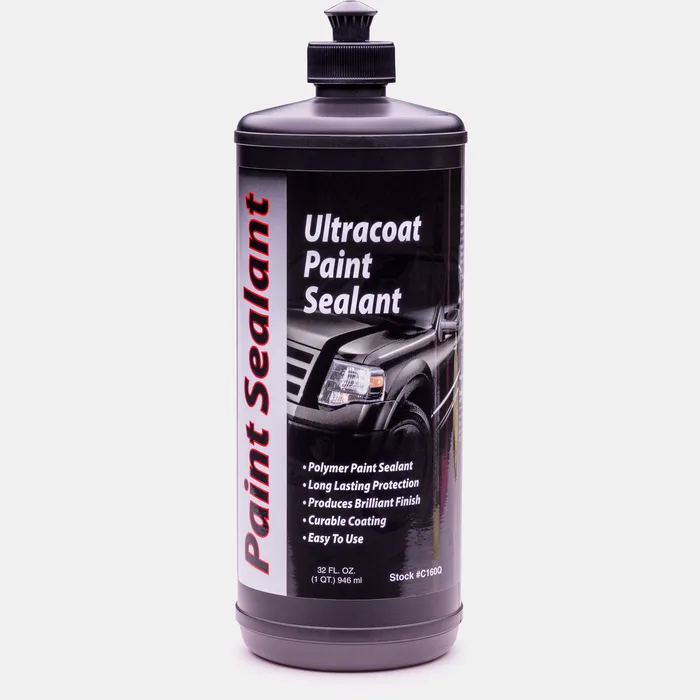
Its own description opens by calling it the longest lasting wax we make, then uses three different product names for it.
Best for: Almost nobody trying to choose deliberately. The chemistry may well be good and the page cannot settle whether the product is a wax or a sealant, or what it is called.
- Polymer and urethane sealants stated as the chemistry, which is more detail than most pages give.
- Described as hardening into a finish suited to urethane clear coat, lacquer and enamel paints.
- Applies by hand or orbital polisher, and is stated as safe on all colours.
- Quart and gallon sizes for anyone sealing more than one car.
- The first line of the description calls it the longest lasting, highest gloss and silkiest feeling wax we make, on a product sold as a paint sealant.
- The same paragraph refers to Ultracoat Paint Sealant, Ultracoat Paint Sealant Protection Plus, Ultracoat Wax Protection Plus and Protection Plus.
- No durability figure anywhere, despite longest lasting being the opening claim.
- No cure time and no layering guidance.
| Criteria | Paint Sealant Top pick Buy it Buy | Jet Seal Sealant & Paint Protectant Buy it Buy | Proline SHIELD Spray Sealant It depends Buy | Ultracoat Paint Sealant Skip it Buy |
|---|---|---|---|---|
| Best for | Anyone protecting a car twice a year who wants to know roughly when the next application is due rather than guessing from how the water behaves. | Anyone wanting the longest published claim in the category at a mid-range price, who is comfortable that up to 12 months is a maximum rather than an expectation. | A detailing business running express services, or an enthusiast who already has a ceramic coating and wants a topper on the same chemistry. | Almost nobody trying to choose deliberately. The chemistry may well be good and the page cannot settle whether the product is a wax or a sealant, or what it is called. |
| Price tier | $$ · mid-range | $$ · mid-range | $$ · mid-range | $$ · mid-range |
| Stated durability | 6 to 9 months | Up to 12 months, on the bottle only | Up to 6 months, on the bottle only | Not published |
| Where the claim appears | Product page | Bottle label, not the page | Bottle label, not the page | Nowhere, despite longest lasting claim |
| Chemistry named | Thermo-Resin, a brand term | Nano-tech polymers | SiO2 on the page, polymer based on the bottle | Polymer and urethane |
| UV protection claimed | Yes, UV blockers | Yes, advanced UV protection on the label | Not stated | Not stated |
| Format | Cream | Liquid | Spray | Not stated |
| Application | Hand or machine | Not stated | Spray, neat or diluted | Hand or orbital polisher |
| Layering guidance | Yes, apply before waxes or glazes | None | Coating topper or standalone | None |
| Sizes | 8 oz | 16 oz | 24 oz, gallon, 5 gallon | Quart, gallon |
Which one is right for you?
- Anyone protecting a car twice a year who wants to know roughly when the next application is due rather than guessing from how the water behaves. Buy it Adam's Polishes Paint Sealant
- Anyone wanting the longest published claim in the category at a mid-range price, who is comfortable that up to 12 months is a maximum rather than an expectation. Buy it Chemical Guys Jet Seal Sealant & Paint Protectant
- A detailing business running express services, or an enthusiast who already has a ceramic coating and wants a topper on the same chemistry. It depends Adam's Polishes Proline SHIELD Spray Sealant
- Almost nobody trying to choose deliberately. The chemistry may well be good and the page cannot settle whether the product is a wax or a sealant, or what it is called. Skip it P&S Detail Products Ultracoat Paint Sealant
How we judged the field
Five things decide a paint sealant. Durability comes first and it is the only reason the category exists, since a sealant is bought specifically because wax does not last. It is also worth checking where the figure appears, because two products in this group print it on the bottle and not on the website. Chemistry comes second, because polymer, resin and silica-based products behave differently in how they bond and how they age. Third is application format, since a cream applied by machine lays down more material than a spray but takes an afternoon rather than twenty minutes. Fourth is layering guidance, because a sealant applied over wax is bonding to the wrong thing and will not last whatever the label claims. Fifth is UV protection, which is what actually keeps paint from dulling over years rather than just making water bead.
The field splits by format and by buyer. Cream and liquid sealants applied by hand or machine are the traditional enthusiast products, laying down the thickest layer for the longest life. Spray sealants trade some of that durability for speed and are increasingly SiO2 based, which puts them next to ceramic toppers. We took three of the first kind plus a professional spray, which is where the category is growing fastest and where the buyer is a business rather than an owner.
Adam’s Polishes Paint Sealant
Buy itAdam’s Paint Sealant is the pick for one reason that outweighs everything else on its page: it tells you how long it lasts. Six to nine months on paint, wheels and other painted exterior surfaces is a window rather than a single figure, which is the honest way to state something that depends on climate and washing habits, and no other product in this comparison offers one at all. The page also names UV blockers as maintaining gloss, shine and reflective properties, which is the mechanism that matters over years rather than months, since ultraviolet exposure is what dulls paint. And it gives layering guidance almost nobody provides: apply before waxes or glazes so the sealant bonds directly with the clear coat. That single instruction prevents the most common mistake in protection, which is putting the durable layer on top of the soft one. The reservations are minor by comparison. Thermo-Resin Technology is a brand term, no cure time is published, and the grey cream and coconut fragrance are a matter of taste.
Chemical Guys Jet Seal Sealant & Paint Protectant
Buy itChemical Guys Jet Seal claims more than anything else here, and you have to look at the bottle to find that out. The label states up to 12 months of protection, advanced UV protection and a sharp luster finish, and lists nano-tech polymers and hydrophobic properties as the features. None of that appears in the online description, which confines itself to calling it a nano-tech polymer-based paint sealant developed for airplane exteriors that protects against the harshest elements. The aviation origin is worth more than a story, since exterior aviation products are designed around UV at altitude, temperature swings and speed. Twelve months is the longest duration claimed in this comparison, and the bottle holds 16 ounces against the 8 of the cream sealant above it. The caution is the form of the claim: up to 12 months is a ceiling reached in good conditions, not an expectation for a car parked outside through a winter. There is no cure time and no layering guidance, and it comes in one 16 ounce size.
Adam’s Polishes Proline SHIELD Spray Sealant
It dependsAdam’s Proline SHIELD is the one worth thinking about carefully, and it comes with a question attached. It is a professional spray sealant that works as a coating topper or as standalone protection, with strong hydrophobic behaviour and chemical resistance claimed, and its defining feature is that it can be applied full strength for maximum protection or diluted for express services and high volume maintenance programmes. That is a business capability: one product covering a premium detail and a quick express wash. The question is what is in it. The product page describes fast, durable SiO2 protection from a ceramic-rich formula. The bottle reads Polymer Based Spray Sealant. Those are different chemistries with different behaviour and different expectations, and the page and the label do not agree. Add that no dilution ratio is published, so the adjustable strength is adjustable by guesswork, and the only durability figure, up to 6 months, sits on the bottle with no split by strength.
P&S Detail Products Ultracoat Paint Sealant
Skip itP&S Ultracoat is the one to skip, and the reason is that its own page cannot decide what the product is or what it is called. The opening line of the description reads the longest lasting, highest gloss and silkiest feeling wax we make, on a product whose title is Ultracoat Paint Sealant. Wax and sealant are different chemistries with different lifespans, and that distinction is the entire reason someone shops in this category rather than the wax aisle. The same short paragraph then refers to the product as Ultracoat Paint Sealant, Ultracoat Paint Sealant Protection Plus, Ultracoat Wax Protection Plus, and simply Protection Plus. There is real information underneath the confusion: polymer and urethane sealants fortified to harden into a finish suited to urethane clear coat, lacquer and enamel, applied by hand or orbital polisher, safe on all colours, in quart and gallon sizes. But a page that leads with longest lasting and never states how long, while using four names for one product, is not a page you can buy from with confidence.
Sources
Specs in this review come from these pages.
Adam’s Polishes Paint Sealant vs Chemical Guys Jet Seal Sealant & Paint Protectant: which should you buy?
Adam’s Paint Sealant and Chemical Guys Jet Seal are the two most people should choose between, and the interesting part is that the runner-up claims longer. Jet Seal’s label says up to 12 months with advanced UV protection; Adam’s page says six to nine months with UV blockers. Taken at face value the Chemical Guys product wins on both counts.
The reason we still take the Adam’s is the shape of the claim and what surrounds it. Six to nine months is a range, which describes what a normal car should expect, where up to 12 months is a ceiling that describes a best case. Adam’s also tells you to apply the sealant before any wax or glaze so it bonds to the clear coat, which is the single most useful instruction in paint protection and which no other page here gives. And its claims are on the website where a buyer will actually read them rather than on a label they will see after the box arrives. If the longest claim matters more than planning, Jet Seal is a perfectly good answer and the longer number is genuinely printed on the bottle.
What to look for
- A durability figure, and where it appears: two products here print a duration on the bottle and nothing on the web page, so read the label in the product photos.
- A range rather than a ceiling: six to nine months tells you what to expect, up to 12 months tells you the best case and nothing about the middle.
- Agreement between the label and the page: one sealant here is described as SiO2 ceramic online and polymer based on the bottle.
- Layering guidance: the sealant goes onto bare clean paint first, and anything softer goes on top, which only one page here states.
- A UV protection claim: water beading is the visible benefit and UV blocking is the one that keeps paint from dulling.
- A cure time: none of these four publishes one, so plan on an overnight regardless.
Our final take
Durability is the whole reason a sealant exists, and this category keeps the number in strange places. Adam’s Paint Sealant is the pick because it states a six to nine month range on the page where buyers read it, names UV blockers, and is the only product here that tells you it goes under waxes and glazes rather than over them. Chemical Guys Jet Seal actually claims longer, up to 12 months with advanced UV protection, and prints all of it on the bottle and none of it on the website, which makes it a better product than its own listing suggests. Proline SHIELD is a capable professional spray whose page and label disagree about whether it is ceramic or polymer, whose up to 6 month claim lives only on the bottle, with an adjustable dilution and no ratio. Ultracoat calls itself a wax in its own first sentence and uses four names for one product, which is enough reason to buy elsewhere.
Questions, answered
What is the difference between a wax, a sealant and a ceramic coating?
Wax is a natural product, usually carnauba, that sits on the paint and gives warm depth for a few weeks to a couple of months. A sealant is synthetic, bonds more tightly to the clear coat, and typically lasts several months to a year. A ceramic coating is a silica-based film that cross-links into a hard layer and is measured in years. The prices overlap and the marketing blurs them, which is how one product in this comparison ends up describing its own paint sealant as a wax.
Why do the bottle and the website say different things?
It happens more than it should, and two products here show it. Chemical Guys Jet Seal prints up to 12 months of protection and advanced UV protection on the label, and neither claim appears in the online description, so anyone shopping from the website is told less than anyone holding the bottle. Adam's Proline SHIELD does both: the page describes SiO2 ceramic protection while the bottle says Polymer Based Spray Sealant, and only the bottle claims up to 6 months of protection. Where they disagree, the label is the version that was printed on the product, and it is worth looking at the product photos closely before buying.
Is up to 12 months better than 6 to 9 months?
Not necessarily, because they are different kinds of claim. Up to 12 months is a ceiling reached under favourable conditions, and nothing in it says what a normal car in normal weather should expect. Six to nine months is a range, which is a statement about the middle of the distribution rather than the best case. A range is more useful for planning, and a ceiling is more useful for marketing. Both products here are credible; the difference is what the number is actually telling you.
Can I put wax over a sealant?
Yes, and one brand here tells you to do it in that order. Adam's states its sealant should be applied before waxes or glazes so it can bond directly with the clear coat, which is the general rule: the durable synthetic layer goes down first onto bare, clean paint, and anything softer or more cosmetic goes on top. Doing it the other way round means the sealant is bonding to wax rather than to the car, and it will not last.
How long before the car can get wet?
None of these four publishes a cure time, which is a genuine gap. Synthetic sealants generally want several hours before they meet water and longer before a wash, and rain on a partly cured sealant can leave marks that need polishing off. The practical approach is to apply in a garage in the evening and leave the car overnight, and to avoid washing it for a few days afterwards regardless of which product you used.
Deciding between the top two? See our head-to-head: Adam's Polishes Paint Sealant vs Chemical Guys Jet Seal Sealant & Paint Protectant.
More in Automotive
Paint Sealants, Explained Plain-English guide → Adam's Polishes Paint Sealant vs Chemical Guys Jet Seal Sealant & Paint Protectant Head-to-head →  The Best Polishing Compounds: 4 Compared (and One to Skip)
  The Best Polishing Pads: 4 Compared (and One to Skip)
  The Best Quick Detailers: 4 Compared (and One to Skip)
  The Best Radar Detectors: 4 Compared (and One to Skip)