

Automotive
The Best Polishing Pads: 4 Compared (and One to Skip)
We compared four cutting pads on foam type, size range and stated aggressiveness, and found that orange means light cutting at one brand and medium-heavy at another.
The short version
Adam's Blue Foam Compound Pad is the pick: thick closed-cell foam for strong cutting, a flat face for heat dispersion, sizes from 2 to 6.5 inches, and it is the only pad here colour-matched to a named compound. Chemical Guys' Orange Hex-Logic is the value buy, a medium cutting pad in 4, 5 and 6 inch sizes with a hexagonal face pattern that helps spread product and shed heat. P&S's Double Sided Cutting Pad is the depends pick, an 8 inch bolt-on with 100 percent wool on one face and a 50/50 blend on the other, built for rotary production work rather than a home dual action. Skip Turtle Wax's Orange CCS Cutting Pad. Its title says cutting and its own description says light-duty, it comes in one size, and it is the pad most likely to be bought for the wrong job. Best for: anyone about to correct paint who has worked out that the pad matters as much as the compound.
Our picks at a glance
- Adam's Polishes Blue Foam Compound Pad - Buy. The most aggressive foam here, in the widest size range, and the only pad colour-matched to a named compound.
- Chemical Guys Orange Hex-Logic Medium-Heavy Cutting Pad - Buy. A genuine medium cutter in three sizes, with a hex face pattern that exists to manage heat and product spread.
- P&S Detail Products Double Sided Cutting Pad - It depends. Wool on one face and a 50/50 blend on the other, in 8 inches, which is a production tool rather than a weekend one.
- Turtle Wax Orange Cutting Foam Pad with CCS Technology, 6.5 in. - Skip. The title says cutting, the description says light-duty, and the listing offers one size.
The verdict in 30 seconds
What mattered most
- Colour
- Stated aggressiveness
- Material
- Sizes
- Face design
- Mounting
Polishing pads are colour-coded, and the colour code is private to each brand. There is no industry scale for pad aggressiveness, no agreed vocabulary between cutting, compounding and polishing, and no standard that says orange has to mean anything in particular. Across four pads all sold for cutting, two are orange and sit at opposite ends of the aggressiveness range, the most aggressive foam here is blue, and one brand uses no colour at all.
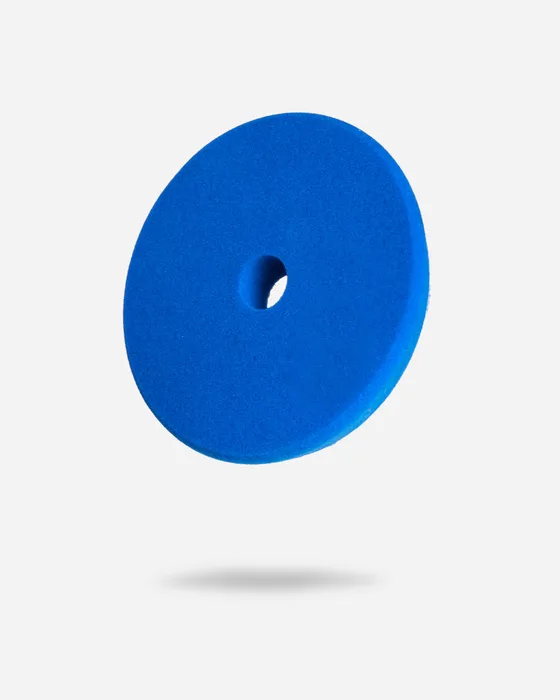
The most aggressive foam here, in the widest size range, and the only pad colour-matched to a named compound.
Best for: Removing real defects on hard clear coat, and anyone who wants spot pads and full-size pads from the same product line.
- Thick closed-cell foam described as giving strong cutting, the most aggressive foam pad in this comparison.
- Sizes from 2 inch and 3.5 inch spot pads up to 5.5 and 6.5 inch, the widest range here.
- Flat face for increased surface area and heat dispersion, with a centre hole to aid cooling and centring on the backing plate.
- Colour-matched to the brand's own Blue Compound, so the pad and product pairing is stated rather than guessed.
- Blue signals cutting only within Adam's own range, and means something different at other brands.
- The listing handle calls it a cutting pad while the product title calls it a compound pad, which are not the same word.
- Closed-cell foam can run hotter than an open-cell pad, which matters on a long correction session.
- The brand notes the pad softens as you work it, so its cut changes during a set.
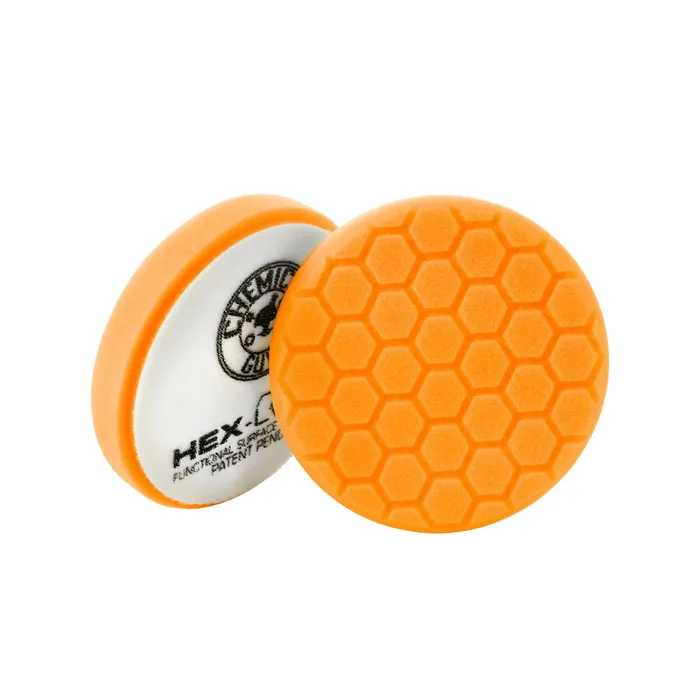
A genuine medium cutter in three sizes, with a hex face pattern that exists to manage heat and product spread.
Best for: General paint correction on a dual action polisher, where you want one pad that handles swirls without going straight to a wool cut.
- Described as removing light to moderate defects including swirls, scratches, oxidation and water spots.
- Available in 4, 5 and 6 inch sizes, so it covers spot work and panel work from one line.
- The hexagonal face pattern is meant to spread product across the pad and give heat somewhere to go.
- Sits in the middle of the aggressiveness range, which is where most home correction actually needs to be.
- The product title says Medium-Heavy Cutting while the description calls it a medium-cutting pad, which are different claims.
- Orange means something else entirely at other brands, including light cutting.
- No foam density or cell structure published.
- Face pattern reduces contact area compared to a flat pad, which changes how it finishes.
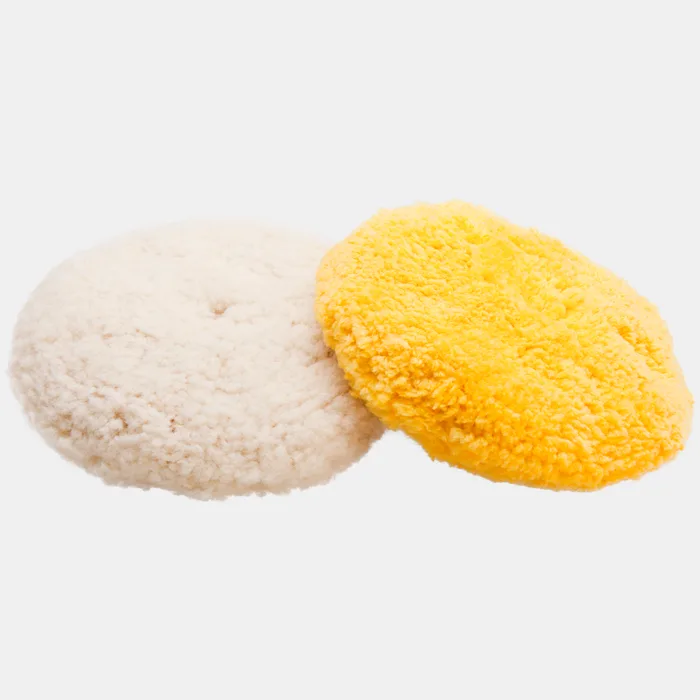
Wool on one face and a 50/50 blend on the other, in 8 inches, which is a production tool rather than a weekend one.
Best for: Rotary work at volume, body shop and reconditioning use, where the same pad has to do heavy and medium cutting without a change.
- Two aggressiveness levels on one pad: 100 percent wool for aggressive cut, a 50/50 blend for lighter work.
- Uses no colour code at all, so the description has to do the explaining rather than a colour you have to learn.
- Bolt-on mounting, described as suited to high production operations that turn work quickly.
- Wool cuts faster and runs cooler than foam, which matters over a long day.
- 8 inch only, which is too large for most home dual action polishers and awkward on contoured panels.
- Bolt-on mounting is a rotary convention and will not fit a hook-and-loop backing plate.
- Wool sheds and needs cleaning during use, which foam does not.
- No pad density, thickness or backing size published.
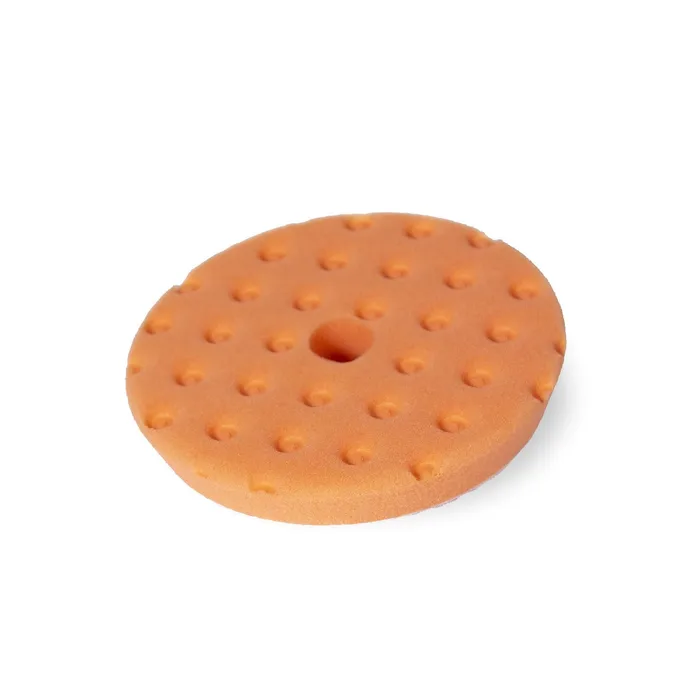
The title says cutting, the description says light-duty, and the listing offers one size.
Best for: Almost nobody as a first cutting pad. It is a competent light polishing pad wearing a cutting label, which is the one mismatch that wastes a whole afternoon.
- Collapsed Cell Structure dimples hold and release product across the face rather than letting it pool.
- A centre hole reduces friction and the heat that builds between a flat pad and the paint.
- Firm dense foam, and the brand states it works with any polish, swirl remover or light compound.
- Sold as a Cutting Foam Pad while its own description calls it a light cutting pad for light-duty cutting jobs.
- Effectively one size at 6.5 inches, too big for tight panels and door handles.
- Orange here means light cutting, while orange at Chemical Guys means medium-heavy, which is how people buy the wrong pad.
- No foam density or pore structure published beyond the CCS name.
| Criteria | Blue Foam Compound Pad Top pick Buy it Buy | Orange Hex-Logic Medium-Heavy Cutting Pad Buy it Buy | Double Sided Cutting Pad It depends Buy | Orange Cutting Foam Pad with CCS Technology, 6.5 in. Skip it Buy |
|---|---|---|---|---|
| Best for | Removing real defects on hard clear coat, and anyone who wants spot pads and full-size pads from the same product line. | General paint correction on a dual action polisher, where you want one pad that handles swirls without going straight to a wool cut. | Rotary work at volume, body shop and reconditioning use, where the same pad has to do heavy and medium cutting without a change. | Almost nobody as a first cutting pad. It is a competent light polishing pad wearing a cutting label, which is the one mismatch that wastes a whole afternoon. |
| Price tier | $$ · mid-range | $$ · mid-range | $$ · mid-range | $ · budget |
| Colour | Blue | Orange | None used | Orange |
| Stated aggressiveness | Strong cutting | Medium-heavy in the title, medium in the text | Aggressive wool one side, lighter blend the other | Cutting in the title, light-duty in the text |
| Material | Closed-cell foam | Foam, hex face pattern | 100 percent wool and 50/50 blend | Foam, collapsed cell structure |
| Sizes | 2, 3.5, 5.5, 6.5 in. | 4, 5, 6 in. | 8 in. | 6.5 in. |
| Face design | Flat, centre hole | Hexagonal pattern | Flat, double sided | Dimpled, centre hole |
| Mounting | Hook and loop | Hook and loop | Bolt-on | Hook and loop |
| Paired product named | Yes, colour-matched to the brand's Blue Compound | No | No | Suggests its One and Done Compound |
| Density published | No | No | No | No |
Which one is right for you?
- Removing real defects on hard clear coat, and anyone who wants spot pads and full-size pads from the same product line. Buy it Adam's Polishes Blue Foam Compound Pad
- General paint correction on a dual action polisher, where you want one pad that handles swirls without going straight to a wool cut. Buy it Chemical Guys Orange Hex-Logic Medium-Heavy Cutting Pad
- Rotary work at volume, body shop and reconditioning use, where the same pad has to do heavy and medium cutting without a change. It depends P&S Detail Products Double Sided Cutting Pad
- Almost nobody as a first cutting pad. It is a competent light polishing pad wearing a cutting label, which is the one mismatch that wastes a whole afternoon. Skip it Turtle Wax Orange Cutting Foam Pad with CCS Technology, 6.5 in.
How we judged the field
Five things decide a polishing pad. Aggressiveness comes first, because it has to match both the compound and the paint, and it is the property most obscured by the colour codes. Material comes second: foam is forgiving and finishes well, wool cuts hard and runs cool, microfibre sits between them and hazes. Third is size range, since a line that offers 2 inch spot pads and 6.5 inch panel pads lets you do a whole car without changing brands. Fourth is face design, because a flat face maximises contact while dimples and holes trade some of that for heat management. Fifth is whether the brand tells you which product the pad is meant to be paired with, which almost none of them do.
The field splits by machine more than by brand. Foam pads with hook-and-loop backing are what dual action polishers use, which is what almost every enthusiast owns. Wool and bolt-on pads belong to rotary machines in body shops and reconditioning bays. We took three foam pads that each brand sells as its cutting option, plus the professional wool pad, which shows how differently the same job is approached at volume. What we did not find anywhere was a published density figure or any cross-brand scale.
Adam’s Polishes Blue Foam Compound Pad
Buy itThe Adam’s Blue Foam Compound Pad is the most aggressive foam in this group and the most clearly explained. The brand describes thick, closed-cell foam that gives strong cutting on a flat face, chosen for surface area and heat dispersion, with a centre hole to aid cooling, and it is honest about how the pad behaves in use: rigid at first touch, softening after a few passes so the cut refines as the compound breaks down. That is a real property and almost nobody mentions it. The size range is the best here, running from 2 and 3.5 inch spot pads through 5.5 and 6.5 inch, so one product line covers a mirror housing and a hood. Most usefully, it is colour-matched to the brand’s own Blue Compound, which is the only colour-matched pad and compound pairing in this comparison. The catch is entirely about naming. The listing URL calls it a cutting pad, the title calls it a compound pad, and blue means something different at every other brand.
Chemical Guys Orange Hex-Logic Medium-Heavy Cutting Pad
Buy itThe Chemical Guys Orange Hex-Logic is the pad most people should reach for, because medium is where home correction actually lives. The description covers light to moderate defects, naming swirls, scratches, oxidation and water spots, which is a fair account of what a homeowner finds on a daily driver. Three sizes at 4, 5 and 6 inches cover spot work through panel work. The hexagonal face pattern is the design feature: it is meant to spread product across the pad instead of letting it pool in the centre, and the channels give heat somewhere to go, which on a long session is what stops a pad from glazing. The irritation is the same one running through this whole category. The product title says Medium-Heavy Cutting Pad and the description says medium-cutting pad, and those are not the same claim. No foam density is published either. Even so, this is a genuine medium cutter, which is what most corrections need.
P&S Detail Products Double Sided Cutting Pad
It dependsThe P&S Double Sided Cutting Pad is the one to think carefully about, because it is excellent and it is probably not for you. It carries 100 percent wool on one face for aggressive cutting and a 50/50 blend on the other for lighter work, so a single pad covers two stages, and it bolts on rather than using hook and loop. Both of those are rotary conventions, and P&S is explicit that this is aimed at high production operations that need to turn product quickly. Wool genuinely cuts faster than foam and runs cooler, which over a working day is a large advantage. The reasons to hesitate are practical. Eight inches is a production size that will not fit most home dual action polishers and will bridge across the contours of a modern car rather than sitting flat. Bolt-on mounting rules out standard backing plates. And wool sheds and needs cleaning mid-panel in a way foam does not.
Turtle Wax Orange Cutting Foam Pad with CCS Technology, 6.5 in.
Skip itThe Turtle Wax Orange CCS pad is the one to skip, and the reason is the gap between its name and its own description. The product is titled an Orange Cutting Foam Pad, and the first line of the description calls it a light cutting pad and says it is your go-to application pad for light-duty cutting jobs. Those are different products in practice: someone buying a cutting pad to remove real defects will find it cuts only lightly, and may conclude their compound is bad or their technique is wrong. The pad itself is competently made. Collapsed Cell Structure dimples hold and release product across the face instead of letting it pool, the centre hole cuts friction and heat, and firm dense foam works fine with a polish or swirl remover. But it comes in essentially one size at 6.5 inches, which is too large for tight areas. And orange here means light cutting while orange at Chemical Guys means medium-heavy, which is exactly how the wrong pad ends up on the machine.
Sources
Specs in this review come from these pages.
Adam’s Polishes Blue Foam Compound Pad vs Chemical Guys Orange Hex-Logic Medium-Heavy Cutting Pad: which should you buy?
The Adam’s blue pad and the Chemical Guys orange pad are the two foam options worth choosing between, and they sit at different points on the same scale. The Adam’s is the harder cutter, closed-cell and thick, and it comes in more sizes than anything else here, from 2 inch spot pads up. It is also the only pad in this comparison that names the compound it was designed around, which removes an entire class of guesswork about pairing.
The Hex-Logic is the more forgiving pad and the safer first purchase. Medium cut is where most defects on a daily driver actually are, and going harder than you need means more clear coat removed and a longer refining stage afterwards. The hex face pattern manages heat and product distribution better than a flat face, and 4, 5 and 6 inch sizes cover almost everything on a car. The honest recommendation is to buy on paint condition. If the car has real defects and hard clear coat, take the Adam’s and accept you will refine afterwards. If it has swirls from washing, take the Hex-Logic and you may not need a second stage at all.
What to look for
- The description, never the colour: two pads in this comparison are orange and sit at opposite ends of the aggressiveness range.
- A size range, not a single size: a line that offers spot pads and panel pads lets you do a whole car without switching brands mid-job.
- Whether the title and the description agree: two of these four pads describe themselves differently in their name and in their text.
- Mounting type: hook and loop fits dual action polishers, bolt-on is a rotary convention and will not fit a standard backing plate.
- Foam construction if it is stated: closed-cell foam cuts harder and holds more heat, open-cell finishes better and runs cooler.
- A named product pairing: one brand here tells you which compound the pad was designed around, which removes a real guess.
Our final take
This category runs on a colour code that means nothing once you cross between brands, and the two orange pads here prove it: one is described by its own maker as light-duty, the other as medium-heavy. Adam’s Blue Foam Compound Pad is the pick because it is the most aggressive foam here, comes in the widest range of sizes, and is the only pad colour-matched to a named compound. The Chemical Guys Orange Hex-Logic is the more sensible first pad for most people, because medium cut is where a daily driver’s defects actually are. The P&S wool pad is a proper production tool that will not fit a home polisher. The Turtle Wax pad is a decent light polishing pad with the word cutting on the label, and that mismatch is the single most expensive mistake in the category.
Questions, answered
Do pad colours mean the same thing across brands?
No, and this comparison is the proof. Two of these four pads are orange. Chemical Guys calls its orange pad a Medium-Heavy Cutting Pad, and Turtle Wax describes its orange pad as a light cutting pad for light-duty cutting jobs. Meanwhile the most aggressive foam here is blue, and one brand uses no colour at all. There is no industry standard for pad colour, so the colour is only a code within one manufacturer's own range. Read the description every time, even on a brand you think you know.
What is the difference between cutting, compounding and polishing pads?
In practice the words describe a spectrum with no agreed boundaries. Compounding and cutting generally mean removing defects, using firmer or more abrasive pads with a coarser product. Polishing means refining what the cutting step left behind, using softer foam and a finer abrasive. Finishing pads are softer still and are for applying glazes and sealants. The confusion is that brands use cutting and compounding interchangeably, and one pad in this comparison is called a cutting pad in its URL and a compound pad in its title.
Does pad size actually matter?
A great deal. A smaller pad concentrates the machine's energy into less area, so it cuts faster and reaches into tight sections, which is why spot pads at 2 and 3.5 inches exist. A larger pad covers a panel in fewer passes and is far more likely to skip over a curve rather than sit flat on it. Most home correction on a dual action polisher happens on 5 or 6 inch pads. An 8 inch pad, like the P&S here, is a production-machine size and is genuinely awkward on a modern car's contours.
Foam or wool?
Wool cuts faster and runs cooler because the fibres carry heat away and the open structure keeps the abrasive working, which is why body shops use it on rotaries. Foam finishes better, is easier to control, and is far more forgiving on a dual action polisher, which is what most people own. The practical rule is that wool is for removing a lot of material quickly and foam is for everything else, and if you are correcting your own car on a DA, foam is almost always the right answer.
How many pads do I need for one car?
More than one, and that surprises people. A pad loads up with spent abrasive and removed clear coat, and a saturated pad stops cutting and starts smearing. The usual approach is to clean the pad every panel or two and swap to a fresh one when cleaning stops restoring it, which means several pads per stage on a full car. Buying a single pad and expecting it to do a whole vehicle is the most common way a correction session goes wrong.
Deciding between the top two? See our head-to-head: Adam's Polishes Blue Foam Compound Pad vs Chemical Guys Orange Hex-Logic Medium-Heavy Cutting Pad.
More in Automotive
Polishing Pads, Explained Plain-English guide → Adam's Polishes Blue Foam Compound Pad vs Chemical Guys Orange Hex-Logic Medium-Heavy Cutting Pad Head-to-head →  The Best Quick Detailers: 4 Compared (and One to Skip)
  The Best Radar Detectors: 4 Compared (and One to Skip)
  The Best Rinseless Washes: 4 Compared (and One to Skip)
  The Best Rooftop Cargo Boxes: 4 Compared (and One to Skip)