

Automotive
The Best Rinseless Washes: 4 Compared (and One to Skip)
We compared four no-hose washes and found only one that tells you how far a bottle goes, plus two products that use the same silica for opposite reasons.
The short version
Adam's Hoseless Wash is the pick because it prints the fullest dilution chart: 1 fluid ounce per 2 gallon bucket for a rinseless wash, plus ratios for a waterless spray, a detail spray and a wash booster. Armour Detail Supply's HERO is the value buy and the most precisely described, a silica-enhanced formula that adds slickness while explicitly leaving no protection behind and not interfering with existing wax, sealant or coating. P&S Absolute Rinseless is the depends pick, a professional concentrate built around polymers that encapsulate and emulsify dirt, sold from the quart up. Skip Chemical Guys HydroGlide for this job. It is a waterless wash, not a rinseless one, so it is a ready-to-use spray for dust rather than a bucket product for a genuinely dirty car. Best for: apartment dwellers, water restrictions, winter, and anyone without a hose.
Our picks at a glance
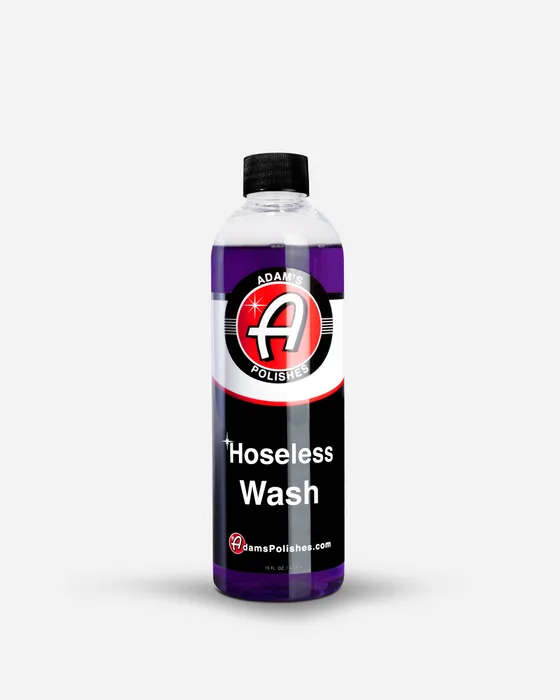
- Adam's Polishes Hoseless Wash - Buy. The fullest dilution chart here: one concentrate for the bucket, a waterless spray, a detail spray and a two-bucket wash booster.
- Armour Detail Supply HERO Rinseless Wash - Buy. Silica for slickness with nothing left behind, stated plainly, which is a distinction almost nobody draws.
- P&S Detail Products Absolute Rinseless Wash - It depends. A professional concentrate that describes its mechanism properly and tells you nothing about quantity.
- Chemical Guys HydroGlide Ceramic Waterless Wash - Skip. A waterless wash rather than a rinseless one, which is a lighter job and a different product.
The verdict in 30 seconds
What mattered most
- Product type
- Washes per bottle stated
- Dilution ratio
- Doubles as a waterless spray
- Stated mechanism
- Leaves protection behind
A rinseless wash is a concentrate you dilute in a bucket, and it works by a different mechanism from soap: polymers wrap each particle of dirt so it lifts into the towel instead of being dragged across the paint. That makes it safer than it sounds and entirely dependent on towel discipline. It also sits on the shelf next to waterless washes, which are ready-to-use sprays for a much lighter job, and the two get bought interchangeably.
The fullest dilution chart here: one concentrate for the bucket, a waterless spray, a detail spray and a two-bucket wash booster.
Best for: Anyone without a hose who wants one concentrate for bucket washes, spray touch-ups and detailing, with the ratios printed for each.
- Prints four dilutions: 1 fl oz per 2 gallons for a rinseless bucket, 2 fl oz in a 16 fl oz bottle for waterless wash, 1 fl oz in 16 for a detail spray, and 1 fl oz added to a two-bucket wash.
- At the bucket ratio, a 16 oz bottle works out to sixteen 2-gallon buckets, so the cost per wash is easy to calculate.
- Adam's describes emulsifiers that encapsulate dirt and advanced polymers that prevent scratching, the mechanism the category runs on.
- Adam's calls it the new version of its earlier Rinseless Wash.
- No washes-per-bottle figure is published, so the per-wash count is your own arithmetic.
- Sold in 16 ounce and gallon sizes only.
- Ultraviolet color and a sour-citrus scent, which is a matter of taste on something you wipe across every panel.
- Adam's says it can clean, shine and protect, but makes no statement about compatibility with existing waxes, sealants or coatings.
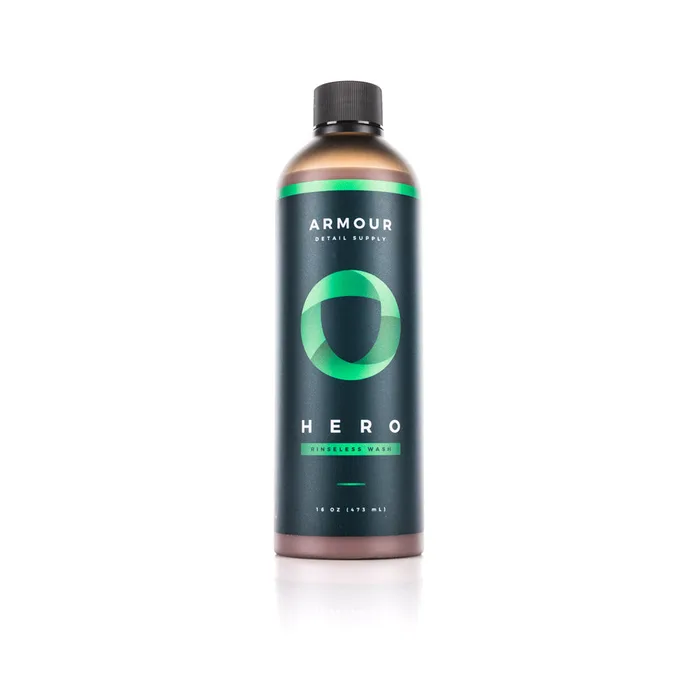
Silica for slickness with nothing left behind, stated plainly, which is a distinction almost nobody draws.
Best for: Anyone with a coated or freshly sealed car who wants slickness during the wash without a wash product adding a layer of its own.
- Silica-enhanced to boost slickness while explicitly leaving behind no protection and not interfering with existing waxes, sealants or coatings.
- Advanced lubricating polymers with residue-free surfactants, so the formula is described rather than just claimed.
- Designed to minimise waste and runoff, with no hose or special equipment needed.
- Sold in 16 ounce and 128 ounce sizes, with printed ratios of 256 to 1 for rinseless, 128 to 1 for clay lube and 64 to 1 for waterless.
- No figure for how many washes a bottle makes, though dilution ratios are printed.
- Silica that adds slickness without depositing protection is a subtle distinction that is easy to misread as a ceramic product.
- No stated guidance on how dirty a car it will safely handle.
- A smaller brand than the rest of this group, distributed through The Rag Company rather than sold direct.
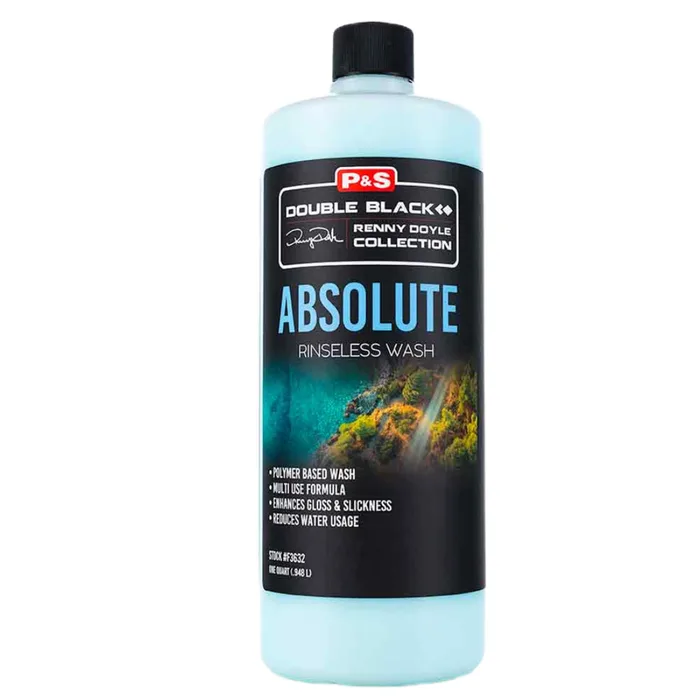
A professional concentrate that describes its mechanism properly and tells you nothing about quantity.
Best for: Anyone washing without a hose regularly enough that a quart makes sense, and who values the mechanism being described accurately.
- Built around polymers that encapsulate and emulsify dirt, which is the correct description of how a rinseless wash protects paint.
- Positioned as a premium soap alternative rather than a convenience product, so it is aimed at doing the whole job.
- Quart and gallon sizes, the right economics for anyone using it weekly.
- Professional supply pricing per volume.
- No dilution ratio and no washes-per-bottle figure.
- The smallest size is a quart, so there is no cheap way to try it.
- Listed as designed for coatings, wraps and PPF, but nothing is stated about waxes or sealants.
- Encapsulation beyond what soap is capable of is a comparative claim against an unnamed baseline.
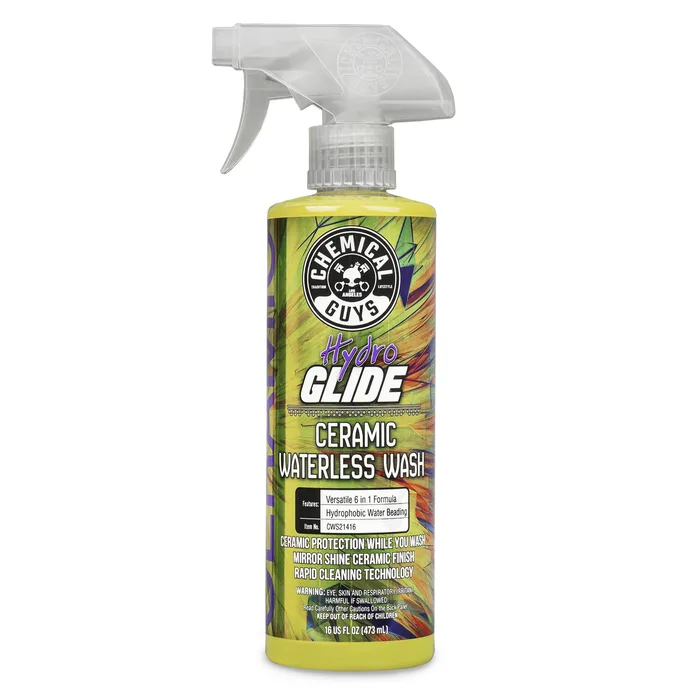
A waterless wash rather than a rinseless one, which is a lighter job and a different product.
Best for: Almost nobody shopping for a rinseless wash. As a between-washes spray on a coated car it is a good product doing a completely different job.
- SiO2 ceramic formula that adds durable hydrophobic protection as it cleans, which no rinseless product here does.
- Ready to use with no bucket, no dilution and no measuring.
- Stated to remove dust, dirt, bird droppings and road grime, and to help extend the life of an existing ceramic coating.
- It is a waterless wash, so it is a spray for light soil rather than a bucket product for a dirty car.
- Ready to use means no concentrate economics, so cost per wash is higher than a diluted rinseless.
- Single 16 ounce size.
- Used on a genuinely dirty car, a waterless spray does not carry enough lubrication to move grit safely.
Amazon had no buyable listing for this when we last checked. The link still works if it returns.
See our pick instead Find it on Amazon anyway Read our detailed assessment| Criteria | Hoseless Wash Top pick Buy it Buy | HERO Rinseless Wash Buy it Buy | Absolute Rinseless Wash It depends Buy | HydroGlide Ceramic Waterless Wash Skip it |
|---|---|---|---|---|
| Best for | Anyone without a hose who wants one concentrate for bucket washes, spray touch-ups and detailing, with the ratios printed for each. | Anyone with a coated or freshly sealed car who wants slickness during the wash without a wash product adding a layer of its own. | Anyone washing without a hose regularly enough that a quart makes sense, and who values the mechanism being described accurately. | Almost nobody shopping for a rinseless wash. As a between-washes spray on a coated car it is a good product doing a completely different job. |
| Price tier | $$ · mid-range | $$ · mid-range | $$ · mid-range | $$ · mid-range |
| Product type | Rinseless concentrate | Rinseless concentrate | Rinseless concentrate | Waterless, ready to use |
| Washes per bottle stated | Not published (16 buckets at its ratio) | Not published | Not published | Not applicable |
| Dilution ratio | 1 oz per 2 gallons; 2 oz in 16 for spray | 256 to 1 rinseless, 64 to 1 waterless | Not published | None, ready to use |
| Doubles as a waterless spray | Yes, 2 oz in a 16 oz bottle | Yes, 64 to 1 for waterless touch-ups | Not stated | It is the spray |
| Stated mechanism | Emulsifiers that encapsulate, polymers | Lubricating polymers, residue-free surfactants, silica | Polymers that encapsulate and emulsify | SiO2 ceramic |
| Leaves protection behind | Claims to protect, layer not described | No, stated explicitly | Not stated | Yes, hydrophobic SiO2 |
| Coating and wax safe | Not stated | Yes, stated | Coatings, wraps and PPF named; waxes not | Adds its own layer |
| Sizes | 16 oz, gallon | 16 oz, 128 oz | Quart, gallon | 16 oz |
Which one is right for you?
- Anyone without a hose who wants one concentrate for bucket washes, spray touch-ups and detailing, with the ratios printed for each. Buy it Adam's Polishes Hoseless Wash
- Anyone with a coated or freshly sealed car who wants slickness during the wash without a wash product adding a layer of its own. Buy it Armour Detail Supply HERO Rinseless Wash
- Anyone washing without a hose regularly enough that a quart makes sense, and who values the mechanism being described accurately. It depends P&S Detail Products Absolute Rinseless Wash
- Almost nobody shopping for a rinseless wash. As a between-washes spray on a coated car it is a good product doing a completely different job. Skip it Chemical Guys HydroGlide Ceramic Waterless Wash
How we judged the field
Five things decide a rinseless wash. Whether it actually is one comes first, because waterless sprays sit alongside them and are a different product for a lighter job. The stated mechanism comes second: encapsulation is what makes the method safe, and a brand that describes it is a brand that understands what it is selling. Third is any figure telling you how far a bottle goes, since these are concentrates and a bottle price means nothing without it. Fourth is whether the product leaves anything behind, because a coated car owner wants slickness during the wash and no extra layer afterwards. Fifth is size range, which decides whether weekly use is affordable.
The field is unusually consistent on chemistry and unusually quiet on quantity. Every rinseless product here is a polymer-based concentrate that works by wrapping dirt so it releases into a towel, and none publishes how many washes a bottle makes. We took three rinseless products from three brands plus the waterless spray people most often buy by mistake, because the boundary between the two is where most of the disappointment in this category comes from.
Adam’s Polishes Hoseless Wash
Buy itAdam’s Hoseless Wash is the pick for a reason that has nothing to do with chemistry: it prints the most complete set of instructions in this comparison. One fluid ounce in 2 gallons of water makes a rinseless wash, 2 ounces in a 16 ounce bottle make a waterless wash and drying aid, 1 ounce in 16 makes a detail spray, and an ounce added to a two-bucket wash boosts lubrication. At the bucket ratio, a 16 ounce bottle works out to sixteen 2-gallon buckets, so you can calculate what a wash costs even though Adam’s does not print a washes-per-bottle figure. Adam’s describes emulsifiers that encapsulate dirt and advanced polymers that prevent scratching, which is a fair summary of the mechanism, and it calls this the new version of its earlier Rinseless Wash. Two caveats. It comes only in 16 ounce and gallon sizes, and it claims to clean, shine and protect without saying what it leaves on the paint or whether it plays well with an existing wax or coating.
Armour Detail Supply HERO Rinseless Wash
Buy itArmour Detail Supply’s HERO is the most precisely described formula here and the one to buy if your car is coated. It is built on advanced lubricating polymers and residue-free surfactants, and the sentence that matters is that its silica-enhanced formula boosts slickness without leaving behind protection or interfering with existing waxes, sealants or coatings. That is a distinction very few brands bother to draw. Silica in a wash product usually means a ceramic top-up, and someone with a fresh coating often does not want a wash adding a layer of its own on top of it. HERO says plainly that it is using silica for lubricity during the wash and nothing else, which is exactly the right answer for a maintenance product. It comes in 16 ounce and 128 ounce sizes and is framed around minimising waste and runoff, and it is distributed through The Rag Company rather than sold direct. It prints its ratios, 256 to 1 for a rinseless wash, 128 to 1 for clay lubrication and 64 to 1 for waterless touch-ups, but gives no indication of how many washes a bottle covers.
P&S Detail Products Absolute Rinseless Wash
It dependsP&S Absolute Rinseless is the professional option and it describes the mechanism better than anyone. The page calls it a premium soap alternative built on a unique subset of polymers, and says it encapsulates and emulsifies dirt beyond what soap is capable of. Encapsulation is the correct word and the correct concept: the polymer wraps each particle so it lifts into the towel rather than being dragged, and a brand that leads with that is describing how the product protects your paint rather than how shiny it will look. Quart and gallon sizes put it at professional economics for anyone washing weekly. The reservations are the ones running through this whole comparison plus one of its own. No dilution ratio and no washes-per-bottle figure, coatings named but nothing about wax, and beyond what soap is capable of is a comparison against a baseline that is never named. The quart minimum also means there is no cheap way to find out whether you like it.
Chemical Guys HydroGlide Ceramic Waterless Wash
Skip itChemical Guys HydroGlide, currently listed as sold out on the maker’s site, is a reasonable product and the wrong one if rinseless is what you came for. It is a waterless wash: a ready-to-use SiO2 ceramic spray that cleans dust, dirt, bird droppings and road grime while adding durable hydrophobic protection, with no bucket, no dilution and no measuring. On a car that is already reasonably clean and already coated, that is a genuinely useful between-washes product and the ceramic top-up is a real benefit. The mismatch is duty. A waterless spray carries far less lubrication than a bucket of diluted rinseless, so on a car with real road film it does not have enough working fluid to encapsulate and float grit, and wiping it anyway is how paint gets marred. Being ready to use also removes the concentrate economics entirely, so the cost per wash is higher than a diluted product. Buy it deliberately as a waterless. Do not buy it expecting to wash a dirty car.
Sources
Specs in this review come from these pages.
- Adam's Hoseless Wash product page (adamspolishes.com)
- Armour Detail Supply HERO Rinseless product page (The Rag Company) (theragcompany.com)
- P&S Absolute Rinseless Wash product page (psdetailproducts.com)
- Chemical Guys HydroGlide Ceramic Waterless Wash product page (chemicalguys.com)
- EPA, Safer Choice standard for cleaning products (epa.gov)
Adam’s Polishes Hoseless Wash vs Armour Detail Supply HERO Rinseless Wash: which should you buy?
Adam’s and HERO are the two to choose between and they answer different anxieties. Adam’s answers the practical one: it prints a ratio for every job, from a 2 gallon rinseless bucket to a waterless spray and a detail spray, so one bottle covers all of them and the cost per wash is simple arithmetic. HERO also prints ratios for rinseless, clay lubrication and waterless use.
HERO answers the anxiety of anyone who has just paid for a coating. Its silica is there to make the wash slicker, and the brand says outright that it leaves no protection behind and does not interfere with existing wax, sealant or coating. If your car has a coating you want to keep behaving the way it does now, a wash that quietly adds its own layer is not what you want, and almost nothing else in the category is clear about which it does. Buy the Adam’s if you want one concentrate with a printed ratio for every job. Buy the HERO if you want to know what the wash is leaving on your paint.
What to look for
- Whether it is rinseless or waterless: one is a bucket concentrate for a dirty car and the other is a ready-to-use spray for dust, and they sit on the same shelf.
- Encapsulation named: it is the mechanism that makes the method safe, and a brand describing it understands what it is selling.
- Any figure for how far a bottle goes: nobody here puts a number on washes per bottle, so a printed dilution ratio is what lets you work it out.
- Whether it leaves protection behind: a silica wash can be adding a ceramic layer or just adding slickness, and only one page here says which.
- A size that matches your use: these are concentrates, so a gallon is cheap per wash and a small bottle is a trial.
- Enough towels to go with it: this is the part that decides whether a rinseless wash is safe, and it is not on any label.
Our final take
Rinseless washing is a real technique with a real mechanism, and the category sells it with almost no numbers. Adam’s Hoseless Wash is the pick because it prints the fullest dilution chart, so you can work out what a bottle buys for the bucket, the spray and the detailer. Armour Detail Supply’s HERO is the one to buy if your car is coated, because it is explicit that its silica adds slickness and leaves nothing behind. P&S Absolute describes the encapsulation mechanism better than anyone and then goes quiet about quantity. And HydroGlide is a good waterless wash that will disappoint anyone who bought it to wash a dirty car, which is the most common mistake in this aisle.
Questions, answered
How does a rinseless wash avoid scratching the paint?
Through encapsulation. The polymers in the solution wrap each particle of dirt in a slippery shell so it releases into the towel rather than being dragged across the clear coat. P&S describes exactly this, saying its formula encapsulates and emulsifies dirt beyond what soap is capable of. The important consequence is that the safety comes from the chemistry plus your towel discipline, not from the chemistry alone. A rinseless wash done with two towels on a filthy car will still mar the paint.
What is the difference between rinseless and waterless?
Dilution and duty. A rinseless wash is a concentrate you mix into a bucket, and it carries enough lubrication and encapsulating polymer to handle a normally dirty car with plenty of towels. A waterless wash is a ready-to-use spray with a lighter job: dust, fingerprints and light road film on a car that is already fairly clean. They sit next to each other on the shelf and one product in this comparison is a waterless sold alongside three rinseless. Adam's Hoseless Wash and HERO both list a thinner dilution for spray use, so one concentrate can cover both jobs.
How many towels do I actually need?
Far more than people expect, and this is where rinseless washes go wrong rather than in the bottle. The usual approach is one folded towel face per panel section, which on a full car means eight to sixteen towels, or a smaller number of large towels folded into eighths and rotated constantly. The moment you go back to a face that already holds grit, you are dragging it. Buy the towels before you buy the chemical.
Will a rinseless wash strip my wax or coating?
A well-formulated one will not, and only one product here says so in as many words. Armour Detail Supply states that HERO's silica boosts slickness without leaving behind protection or interfering with existing waxes, sealants or coatings, which is the reassurance a coated-car owner wants. P&S lists coatings among the surfaces Absolute is designed for, and Adam's makes no compatibility claim for Hoseless Wash. As a rule, rinseless washes are formulated near neutral and are gentler than a strip wash, but the absence of a statement is worth noticing.
How dirty is too dirty for a rinseless wash?
If you can see caked mud, grit or salt crust, pre-rinse it or do not use one. Rinseless chemistry handles road film, dust and light traffic grime well. It cannot suspend a layer of sand, and dragging that across paint is exactly the damage the method is supposed to avoid. A pump sprayer with diluted solution used as a pre-soak, or a bucket rinse over the worst areas, is the common workaround for anyone without a hose.
Deciding between the top two? See our head-to-head: Adam's Polishes Hoseless Wash vs Armour Detail Supply HERO Rinseless Wash.
More in Automotive
Rinseless Washes, Explained Plain-English guide → Adam's Polishes Hoseless Wash vs Armour Detail Supply HERO Rinseless Wash Head-to-head →  The Best Rooftop Cargo Boxes: 4 Compared (and One to Skip)
 The Best Steering Wheel Covers: 4 Compared (and One to Skip)
 The Best Tire Chains: 4 Compared (and One to Skip)
 The Best Portable Tire Inflators: 4 Compared (and One to Skip)