

Audio & Headphones
The Best Guitar Tuners: 6 Compared (and One to Skip)
We compared six clip-on and pedal guitar tuners on stated accuracy, display type, tuning modes and power, using each maker's own pages.
The short version
The Korg Pitchclip 2 is the best overall: Korg lists +/- 1 cent accuracy, about 24 hours on a coin cell and a clip that stays put, at the lowest tier. The D'Addario Micro is the value pick, a very small clip-on with four screen orientations and a 410 to 480 Hz calibration range. The BOSS TU-3 is the pedal to buy for a board, with a muted output and buffered bypass. The TC Electronic PolyTune 3 depends on whether you want to strum all six strings at once, and the Peterson StroboClip HD depends on whether you need 0.1 cent strobe precision and alternate temperaments. Skip the Snark ST-8: its own product page lists no accuracy, range or battery figures to hold it to. Best for: the Korg Pitchclip 2 for most players.
Our picks at a glance
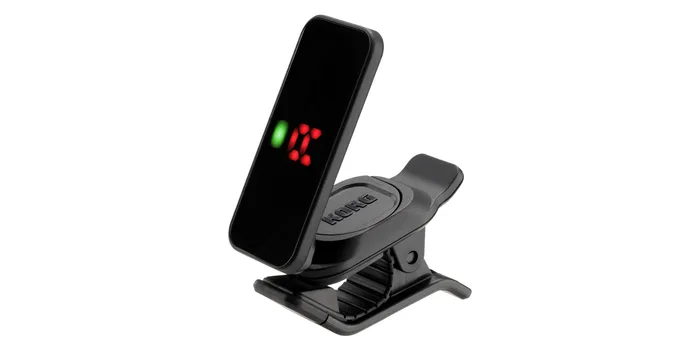
- Korg Pitchclip 2 - Buy. A tiny LED clip-on that Korg specs at +/- 1 cent with a 24 hour coin cell, a reverse display for the back of the headstock and a rubberized clip.
- D'Addario Micro Headstock Tuner - Buy. A very small full-color clip-on with four selectable screen orientations, a ratchet clamp and a 410 to 480 Hz calibration range.
- BOSS TU-3 Chromatic Tuner - Buy. The stage-standard pedal tuner: a 21-segment LED meter, silent tuning, buffered bypass and +/- 1 cent accuracy per BOSS.
- TC Electronic PolyTune 3 - It depends. A pedal that reads every string from one strum, with chromatic and strobe modes and a built-in buffer.
- Peterson StroboClip HD - It depends. A clip-on true-strobe tuner with 0.1 cent accuracy, more than 50 sweetened tunings and adjustable calibration.
- Snark ST-8 Super Tight - Skip. A widely sold clip-on whose own product page gives no accuracy, range, battery or calibration figures to check.
The verdict in 30 seconds
What mattered most
- Format
- Accuracy (maker stated)
- Display
- Tuning modes listed
- Power
- Calibration or range
A tuner is the cheapest way to make every guitar you own sound better, and the choice comes down to format first and accuracy second. We looked at four clip-on models and two pedals from six different makers, using only what each maker publishes about accuracy, display, modes and battery. Where a maker gives no number, we say so, and that gap decided one of the six. If you are still shopping for the instrument, start with our best acoustic guitars and best beginner electric guitars guides, or see the best guitar amps for the rest of a practice setup.
A tiny LED clip-on that Korg specs at +/- 1 cent with a 24 hour coin cell, a reverse display for the back of the headstock and a rubberized clip.
Best for: Most guitarists who want one small, cheap tuner that lives on the headstock.
- Korg lists detection accuracy of +/- 1 cent and a detection range from A0 (27.5 Hz) to C8 (4186 Hz) on its spec page.
- A CR2032 coin cell gives about 24 hours of continuous operation per Korg, with auto power-off after roughly three minutes without sound.
- The display can be inverted for left-handed players or for mounting on the back of the headstock, and the whole clip is rubberized to protect the finish.
- The note and meter are shown with LEDs only, so there is no numeric cents readout.
- Korg's spec page lists no tuning modes beyond 12-note equal temperament, so there are no presets for sweetened or alternate tunings.
- The LED meter is less detailed than the strobe displays on the premium pedal and clip models in this guide.
Own the Korg Pitchclip 2? Tell us how it held up.
Thanks. Counted, and shown once enough owners have weighed in.
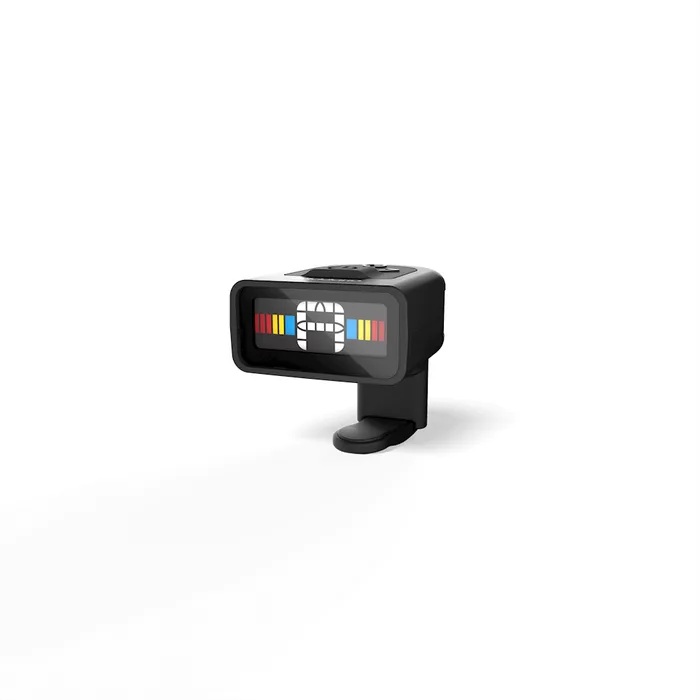
A very small full-color clip-on with four selectable screen orientations, a ratchet clamp and a 410 to 480 Hz calibration range.
Best for: Players who want a minimal, hard-to-see clip-on from a major string maker at the lowest tier.
- D'Addario lists four screen orientations, two vertical and two horizontal, so it can sit where it is easiest to read.
- The listed calibration range is 410 to 480 Hz, which covers A440 and most alternate reference pitches a guitarist uses.
- D'Addario says the updated piezo control helps in noisy environments, and a CR2032 battery is included.
- D'Addario does not publish a cents accuracy figure, a battery life or a weight for this model.
- The page lists no flat-tuning or capo presets, so drop tunings are read as plain chromatic notes.
- The small body sits low on the headstock, and the ratchet clamp is a different mounting style than the usual spring clip.
Own the D'Addario Micro Headstock Tuner? Tell us how it held up.
Thanks. Counted, and shown once enough owners have weighed in.
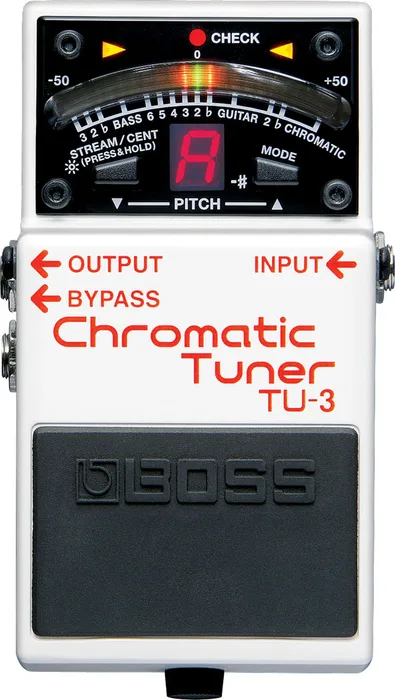
The stage-standard pedal tuner: a 21-segment LED meter, silent tuning, buffered bypass and +/- 1 cent accuracy per BOSS.
Best for: Players who run a pedalboard and want a fast, readable tuner with a muted output.
- BOSS lists +/- 1 cent tuning accuracy and offers Cent and strobe-style Stream display options on a 21-segment LED meter.
- Chromatic, Guitar and Bass modes are listed, with flat tuning options down six semitones in Guitar mode and three in Bass mode.
- Stepping on it mutes the output for silent tuning, bypass is buffered, and an optional adapter can power other pedals through a parallel cable.
- It is a pedal, so it needs board space and a 9V battery or adapter, and it does not clip to the headstock.
- BOSS lists about 21 hours of continuous use on an alkaline battery and about 5 hours on carbon-zinc, which is short for a pedal that is left on.
- At 390 g it is far heavier than a clip-on, and BOSS does not list polyphonic tuning.
Own the BOSS TU-3 Chromatic Tuner? Tell us how it held up.
Thanks. Counted, and shown once enough owners have weighed in.
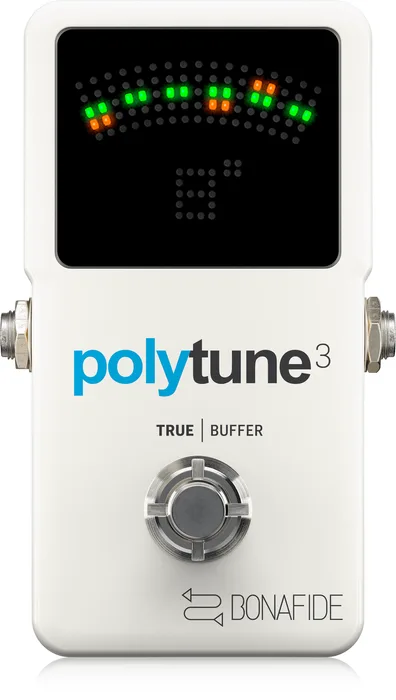
A pedal that reads every string from one strum, with chromatic and strobe modes and a built-in buffer.
Best for: Electric players with a pedalboard who retune often between songs and want to strum all the strings at once.
- Polyphonic mode shows which strings have drifted from a single strum and switches to monophonic tuning when you play one string, per the maker.
- TC lists chromatic accuracy of 0.5 cent and a strobe mode, with a 109-LED display and an ambient light sensor for brightness.
- True Bypass is the default, a built-in buffer can be switched on, and Drop D plus capo positions up to the seventh fret are listed.
- The maker page is inconsistent on strobe accuracy: one passage says +/- 0.1 cent and the feature list says +/- 0.02 cent.
- It runs on a 9V battery that is not included, or on a 9V supply sold separately, and the page gives no battery life or weight.
- It is a pedal, so it is no use for someone who wants a clip-on tuner on an acoustic or a ukulele.
Own the TC Electronic PolyTune 3? Tell us how it held up.
Thanks. Counted, and shown once enough owners have weighed in.
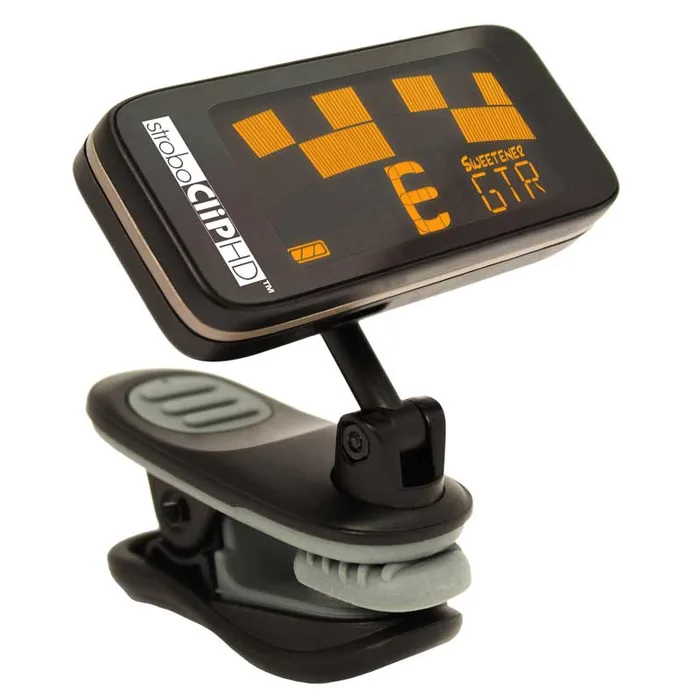
A clip-on true-strobe tuner with 0.1 cent accuracy, more than 50 sweetened tunings and adjustable calibration.
Best for: Players who care about intonation, use alternate tunings or temperaments, or want strobe-level precision on the headstock.
- Peterson lists 0.1 cent accuracy, a 192-segment backlit display and a frequency response range of 16 Hz to 1975 Hz.
- It carries 50 sweetened tunings and 11 historic temperaments, including Buzz Feiten presets, plus drop tuning and capo settings.
- Concert A can be set from 390 Hz to 490 Hz, the jaw opens wider than 1 inch, and Peterson lists a 2 year warranty.
- The display and the many tuning presets are more than most players need for plain standard tuning.
- It uses a CR2032 and Peterson lists it as not rechargeable, and no battery life figure is published on the page.
- At the maker's stated 1.3 oz and 1.75 by 2.4 by 1.2 in, it is bigger than the smallest clip-ons.
Own the Peterson StroboClip HD? Tell us how it held up.
Thanks. Counted, and shown once enough owners have weighed in.
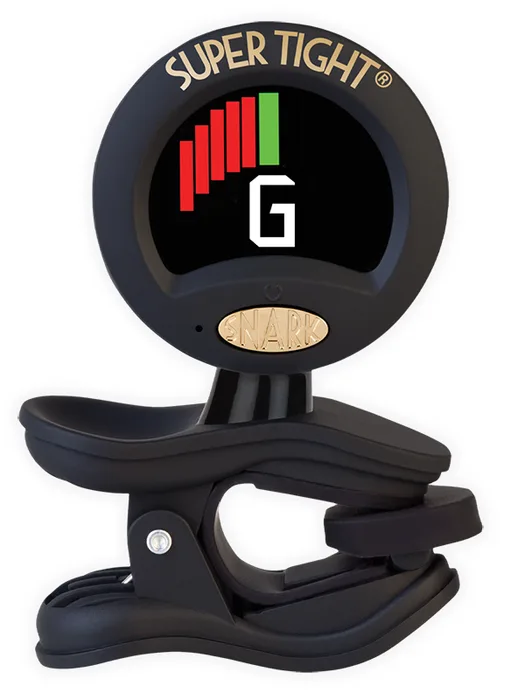
A widely sold clip-on whose own product page gives no accuracy, range, battery or calibration figures to check.
Best for: Nobody who wants verifiable numbers; take the Korg Pitchclip 2 or the D'Addario Micro instead.
- Snark presents it as a chromatic tuner for all instruments with a high definition display, and the clip-on form fits a headstock.
- It is the best known model in a line that also covers bass, violin and ukulele tuners.
- Snark sells it at the lowest tier alongside its other clip-ons.
- The Snark Super Tight page lists the ST-8 with only the line 'Fast! High Definition Display! Superb Accuracy!' and gives no cents figure.
- No detection range, calibration range, battery type or battery life appears on the pages loaded for this guide, so a buyer cannot compare it with the others.
- Snark's site shows many look-alike models side by side (ST-8, ST-2, SN-5X, SN-6X, SN-1X, SST-1, SN-RE) with no spec tables, which makes it easy to buy the wrong one.
Own the Snark ST-8 Super Tight? Tell us how it held up.
Thanks. Counted, and shown once enough owners have weighed in.
| Criteria | Korg Pitchclip 2 Top pick Buy it Buy | D'Addario Micro Headstock Tuner Buy it Buy | BOSS TU-3 Chromatic Tuner Buy it Buy | TC Electronic PolyTune 3 It depends Buy | Peterson StroboClip HD It depends Buy | Snark ST-8 Super Tight Skip it Buy |
|---|---|---|---|---|---|---|
| Best for | Most guitarists who want one small, cheap tuner that lives on the headstock. | Players who want a minimal, hard-to-see clip-on from a major string maker at the lowest tier. | Players who run a pedalboard and want a fast, readable tuner with a muted output. | Electric players with a pedalboard who retune often between songs and want to strum all the strings at once. | Players who care about intonation, use alternate tunings or temperaments, or want strobe-level precision on the headstock. | Nobody who wants verifiable numbers; take the Korg Pitchclip 2 or the D'Addario Micro instead. |
| Price tier | $ · budget | $ · budget | $$ · mid-range | $$ · mid-range | $$ · mid-range | $ · budget |
| Format | Clip-on | Clip-on | Pedal | Pedal | Clip-on | Clip-on |
| Accuracy (maker stated) | +/- 1 cent | Not published | +/- 1 cent | 0.5 cent chromatic; strobe figure given as both +/- 0.1 and +/- 0.02 cent | 0.1 cent | Not published |
| Display | LED note and meter | Full-color, 4 orientations | 21-segment LED meter | 109-LED display with ambient light sensor | 192-segment backlit LCD strobe | High definition display, type not stated |
| Tuning modes listed | 12-note equal temperament | Not listed | Chromatic, Guitar, Bass, with flat options | Polyphonic, chromatic, strobe; Drop D and capo | 50 sweetened tunings, 11 temperaments | Chromatic, per Snark |
| Power | CR2032, about 24 h | CR2032 included | 9V battery or adapter | 9V battery (not included) or supply | CR2032 (not rechargeable) | Not published |
| Calibration or range | A0 to C8 detection | 410 to 480 Hz | Not published | Not published | Concert A 390 to 490 Hz; 16 to 1975 Hz | Not published |
| Weight (maker stated) | 17 g | Not published | 390 g | Not published | 1.3 oz | Not published |
| Price tier | $ · budget | $ · budget | $$ · mid-range | $$ · mid-range | $$ · mid-range | $ · budget |
Which one is right for you?
- Most guitarists who want one small, cheap tuner that lives on the headstock. Buy it Korg Pitchclip 2
- Players who want a minimal, hard-to-see clip-on from a major string maker at the lowest tier. Buy it D'Addario Micro Headstock Tuner
- Players who run a pedalboard and want a fast, readable tuner with a muted output. Buy it BOSS TU-3 Chromatic Tuner
- Electric players with a pedalboard who retune often between songs and want to strum all the strings at once. It depends TC Electronic PolyTune 3
- Players who care about intonation, use alternate tunings or temperaments, or want strobe-level precision on the headstock. It depends Peterson StroboClip HD
- Nobody who wants verifiable numbers; take the Korg Pitchclip 2 or the D'Addario Micro instead. Skip it Snark ST-8 Super Tight
How we judged the field
Five things matter in a guitar tuner. Stated accuracy, in cents, says how close to true pitch it claims to read. Display type decides how fast you can read it on a dark stage or in sun. Tuning modes, such as chromatic, string-by-string, flat tunings and capo settings, decide how it handles drop tunings. Power and battery life decide whether it is dead when you need it. Format, clip-on or pedal, decides where it can be used at all.
The field splits into clip-ons that read vibration at the headstock and pedals that read the cable signal. We picked four clip-ons and two pedals from six different makers, and we only used numbers printed on the makers’ own pages. That left some gaps: D’Addario and Snark publish no accuracy figure, and TC Electronic’s page gives two different strobe figures. We marked each one rather than filling it in.
Korg Pitchclip 2
Buy itThe Pitchclip 2 is the safest default for a first or only tuner. Korg’s spec page lists +/- 1 cent detection accuracy, a range from A0 to C8 and a CR2032 coin cell good for about 24 hours of continuous use, with auto power-off after about three minutes of silence. It clips on with a rubberized jaw that Korg says holds 140 percent better than the earlier Pitchclip, and the display swivels through 120 degrees and can be flipped for left-handed players or for mounting on the back of the headstock. The trade-off is simplicity: the meter is LED only, there is no numeric readout, and the spec sheet lists no presets beyond 12-note equal temperament. Korg also says detection of low notes was improved, which helps with dropped tunings and 5 or 6 string basses. For a guitar, a ukulele or a bass that just needs to be in tune, this does the job at the lowest tier. If you also play ukulele, see our best ukuleles guide.
D’Addario Micro Headstock Tuner
Buy itD’Addario owns Planet Waves, so this is the same line under the current name. The Micro is built to disappear: D’Addario lists four selectable screen orientations, a ratchet clamp, a calibration range of 410 to 480 Hz and a CR2032 that comes in the box. The company says improved piezo control helps in noisy rooms, which is where a clip-on that reads vibration has an edge over a microphone. What it does not publish is any cents accuracy, battery life or weight, so we cannot rank it against the Korg on numbers. It also has no listed flat-tuning or capo presets. That keeps it behind the Pitchclip 2 for overall pick, but its small size and brand support make it a solid value choice at the lowest tier. It is a good match for acoustic players who also read our best acoustic guitars guide.
BOSS TU-3 Chromatic Tuner
Buy itThe TU-3 is the pedal to know. BOSS lists +/- 1 cent accuracy, Chromatic, Guitar and Bass modes, flat tunings down six semitones for guitar and three for bass, and a 21-segment LED meter that can show Cent or a strobe-style Stream view. A High Brightness mode helps outdoors. Stepping on it mutes the output, bypass is buffered, and an optional PSA adapter plus a parallel cord can feed power to other pedals. BOSS calls it the world’s best-selling stage tuner, which is the maker’s claim, not ours. Costs are practical rather than precision: it needs board space, a 9V battery or adapter, and the spec sheet lists about 21 hours of use on alkaline but only about 5 on carbon-zinc. At 390 g it is not for acoustic players who want a headstock tuner. It is for anyone who already plugs into a board or an amp such as those in our best guitar amps guide.
TC Electronic PolyTune 3
It dependsPolyTune 3 is for players who change tunings or find tuning six strings one by one slow. TC Electronic, part of Music Tribe, says a single strum shows which strings have drifted, and the display switches to monophonic tuning when you play one string. It lists chromatic accuracy of 0.5 cent, a strobe mode, a 109-LED display with an ambient light sensor, Drop D and capo positions up to the seventh fret, and a switchable buffer with True Bypass as the default. The maker page contradicts itself on strobe accuracy, giving +/- 0.1 cent in one place and +/- 0.02 cent in another, so treat strobe precision as unconfirmed. It needs a 9V battery that is not included, or a supply sold separately, and no battery life is published. Verdict: depends. It is a great fit for an electric player with a board, and the wrong tool for a clip-on buyer.
Peterson StroboClip HD
It dependsThe StroboClip HD is the precision clip-on. Peterson lists 0.1 cent true-strobe accuracy, a 192-segment backlit display, a frequency response down to 16 Hz, an adjustable Concert A from 390 to 490 Hz, drop tuning and capo settings, and 50 sweetened tunings along with 11 historic temperaments. Those include presets for 12 string guitars, baritones, Buzz Feiten systems, ukulele and several world instruments. The jaw opens wider than an inch and is lined with soft rubber, and Peterson lists a 2 year warranty. Against that, it is more instrument than many players need, uses a CR2032 that is not rechargeable, publishes no battery life and is physically larger than a Pitchclip 2. If you only tune to standard pitch, you will not use most of it. If you tune by ear to alternate temperaments, set up guitars or care about intonation, it is the clip-on to buy, and the premium over the Korg is easy to justify.
Snark ST-8 Super Tight
Skip itThe ST-8 is one of the most commonly bought clip-ons, which is why it needs a straight look. Snark’s Super Tight page lists it as a Chromatic All Instrument Tuner with ‘Superb Accuracy’ and a high definition display, and that is all. There is no cents figure, no detection or calibration range, no battery type and no battery life on the pages we loaded, so none of its claims can be checked against the Korg’s +/- 1 cent or the D’Addario’s 410 to 480 Hz range. The brand also lists a wide spread of similar models, including ST-2, SN-5X, SN-6X, SN-1X and the rechargeable SST-1 and SN-RE, each without a spec table, which makes it easy to end up with a different tuner than you meant to buy. It may well tune fine, and we are not claiming otherwise. We skip it because the maker gives you nothing to hold it to, when two clip-ons at the same tier do.
Sources
Specs in this review come from these pages.
- Korg, Pitchclip 2 product page (korg.com)
- Korg, Pitchclip 2 specifications (korg.com)
- D'Addario, Micro Headstock Tuner (daddario.com)
- BOSS, TU-3 Chromatic Tuner (boss.info)
- TC Electronic, POLYTUNE 3 (tcelectronic.com)
- Peterson Strobe Tuners, StroboClip HD (petersontuners.com)
- Snark, Super Tight tuners (snarktuners.com)
Korg Pitchclip 2 vs D’Addario Micro Headstock Tuner: which should you buy?
The Pitchclip 2 and the D’Addario Micro are both small, cheap clip-ons, but they differ in what they tell you. Korg states +/- 1 cent accuracy, a detection range and about 24 hours of use; D’Addario states four screen orientations and a 410 to 480 Hz calibration range but no accuracy. Both use a CR2032. The Korg is simpler to trust from the spec sheet, which is why it wins overall.
Choose the Pitchclip 2 if you want the clearest published performance and a display you can flip for the back of the headstock. Choose the Micro if the smallest possible footprint and the flexible screen angle matter more than a stated cents figure, or if you already use D’Addario strings. If either feels too basic, the Peterson StroboClip HD is the step up for precision work.
Who should buy which
- Most guitarists, any style: the Korg Pitchclip 2. Korg lists +/- 1 cent accuracy and about 24 hours per coin cell in a clip that stays on the headstock.
- Budget-minded acoustic player: the D’Addario Micro Headstock Tuner. A small clip-on with four screen orientations and a 410 to 480 Hz calibration range.
- Pedalboard user: the BOSS TU-3 Chromatic Tuner. Cent or Stream display, muted output and buffered bypass in the format most boards already carry.
- Electric player who retunes often: the TC Electronic PolyTune 3. One strum shows which strings are out, with chromatic and strobe modes.
- Setup, intonation or alternate tunings: the Peterson StroboClip HD. 0.1 cent true strobe with 50 sweetened tunings and 11 historic temperaments.
What to look for
- Stated accuracy: Look for a cents figure on the maker’s page. +/- 1 cent is already finer than most ears, and a model that publishes no figure gives you nothing to compare.
- Display type: LED meters are fast and bright, LCD strobes show smaller movements, and a backlight or ambient sensor helps on dark or sunlit stages.
- Tuning modes: Flat tunings and capo settings help with drop tunings, and presets for 7 string or baritone guitars matter only if you play them.
- Power: A CR2032 with a stated battery life beats an unstated one, and pedals need a 9V battery or a supply that is often sold separately.
- Clip and mounting: Rubberized jaws protect the finish, and a display that flips or swivels makes it readable on either side of the headstock.
- Calibration: An adjustable reference pitch, such as the 410 to 480 Hz on the D’Addario or 390 to 490 Hz on the Peterson, matters when you play with a piano or other fixed-pitch instruments.
Our final take
For most guitarists the Korg Pitchclip 2 is the tuner to buy: a stated +/- 1 cent, about 24 hours per coin cell and a clip you will forget is there. The D’Addario Micro is the compact value choice, the BOSS TU-3 is the dependable board pedal, and the TC Electronic PolyTune 3 suits those who want polyphonic tuning. Pick the Peterson StroboClip HD if intonation and alternate temperaments are part of how you play. Skip the Snark ST-8 until its maker publishes figures you can check, since two clip-ons at the same tier already do. Match the format to how you play before you chase specs.
Questions, answered
Is a clip-on or a pedal tuner better?
It depends on how you play. A clip-on stays on the headstock, works on acoustics, ukuleles and basses, and picks up vibration rather than sound, so a noisy room matters less. A pedal tunes through the cable, mutes your output and fits a pedalboard, but it needs a 9V battery or supply and cannot be used on an unplugged acoustic. Many players own one of each.
How accurate does a guitar tuner need to be?
For ordinary playing, the +/- 1 cent figure that Korg and BOSS list is far finer than most listeners can hear. Strobe tuners such as the Peterson StroboClip HD, which lists 0.1 cent, matter more when you are setting intonation, tuning by ear against other instruments or using alternate temperaments. Always compare the maker's stated figure, and be wary of models that publish none.
What does polyphonic tuning mean?
A polyphonic tuner reads all the strings from one strum and shows which are sharp or flat, instead of making you pluck each string. TC Electronic's PolyTune 3 does this and switches to single-string tuning when you play one note. It saves time between songs but does not replace a good ear.
Do I need a rechargeable tuner?
Not necessarily. Korg lists about 24 hours of continuous use from a CR2032, which is a lot for a tuner that auto powers off after about three minutes of silence. Peterson lists the StroboClip HD as not rechargeable. Pedal tuners like the BOSS TU-3 use a 9V battery or an adapter, and BOSS lists about 21 hours on alkaline and about 5 on carbon-zinc.
Will a guitar tuner work on a ukulele or bass?
Often yes, but check the listing. Korg says the Pitchclip 2 can be used on instruments from a ukulele to an electric guitar and improves low-note detection for basses. The BOSS TU-3 has a Bass mode, and the Peterson page lists ukulele and bass presets. Ukulele players can also see our best ukuleles guide for starter kits.
Deciding between the top two? See our head-to-head: Korg Pitchclip 2 vs D'Addario Micro Headstock Tuner.
More in Audio & Headphones
Guitar Tuners, Explained Plain-English guide → Korg Pitchclip 2 vs D'Addario Micro Headstock Tuner Head-to-head →  Harmonicas: Which to Buy and Which to Skip
 The Best Turntable Headshells: 4 Compared (and One to Skip)
 Which Karaoke Machine Should You Buy? 6 Compared
 Karaoke Microphones: Which to Buy and Which to Skip