

Outdoors & Fitness
The Best Folding Saws: 4 Compared (and One to Skip)
We compared Japanese pull saws, the bushcraft classic, a big pruning saw and a budget camping saw on cutting speed, lock strength, packability and blade quality.
The short version
The Silky Gomboy 240 is our pick: a Japanese pull saw with impulse-hardened teeth, a chrome-plated blade and a lock you trust on a hipbelt. The Bahco Laplander is the classic runner-up for compact bushcraft use. The Corona RS 7265D suits yard work where reach and branch diameter matter more than pack size. Skip the Coghlan's Sierra Saw: the soft blade and flexing plastic handle mean it is a one-season tool at best. Best for: hikers, campers and pruners who want a saw that stays sharp.
Our picks at a glance
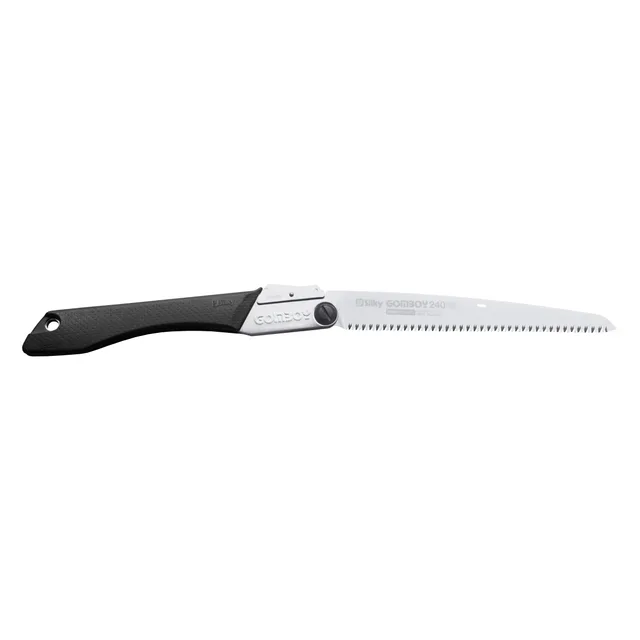
- Silky Gomboy Professional 240 - Buy. The Japanese pull saw that every other folding saw is measured against: chrome-plated, impulse-hardened, and very fast.
- Bahco 396-LAP Laplander - Buy. The classic bushcraft folder: a 190 mm blade, a lock that works both ways, and teeth for green and dry wood alike.
- Corona RazorTOOTH Folding Saw RS 7265D - It depends. A 10-inch curved pruning blade that cuts twice as fast per stroke as a small saw but packs like a garden tool, not a camp tool.
- Coghlan's Sierra Saw - Skip. The cheap folding saw that fills the bottom of every retail shelf, with a stamped plastic handle and a soft blade that dulls fast.
The verdict in 30 seconds
What mattered most
- Blade length / teeth
- Cut style
- Open / folded size
- Lock
- Blade replacement
- Materials
A folding saw is the tool you actually carry: it cuts firewood, clears trail deadfall and prunes the garden, then folds away safely. We compared the Japanese benchmark, the bushcraft classic, a big-bladed pruning saw and the budget saw that fills the cheap end of the listings.
The Japanese pull saw that every other folding saw is measured against: chrome-plated, impulse-hardened, and very fast.
Best for: Backpackers, hunters and gardeners who cut green wood often and want the fastest, cleanest pull saw in the category.
- 240 mm blade with 10 teeth per 30 mm, Mirai-Me teeth cut on the pull stroke with four cutting angles, and a chrome finish that resists rust and friction.
- Electro-impulse hardened teeth stay sharp far longer than a conventional saw, and the non-set tooth design leaves a smooth cut.
- Rubber GOM handle grips well wet or gloved, the lock is positive, and the blade folds to 270 mm with a limited lifetime warranty.
- At 500 mm open it is the longest saw here and feels oversized for small camp chores.
- The aggressive tooth geometry is for wood only; plastic and bone will dull it.
- Replacement blades cost nearly half a new saw, so it pays to avoid binding the blade in a kerf.
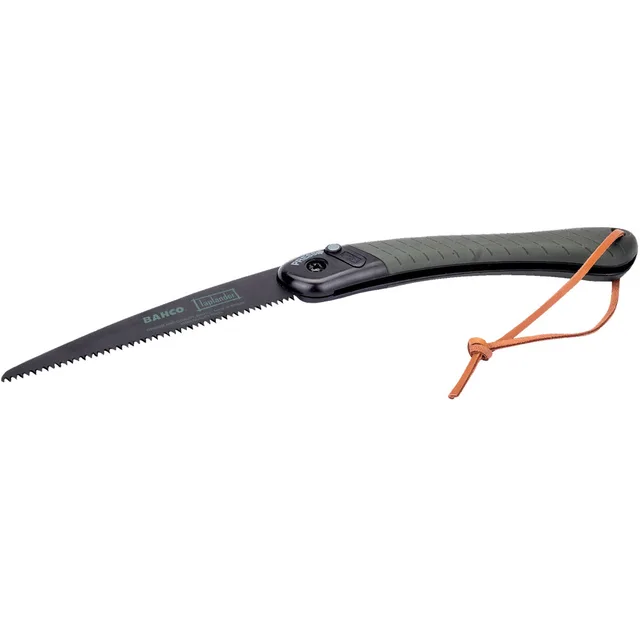
The classic bushcraft folder: a 190 mm blade, a lock that works both ways, and teeth for green and dry wood alike.
Best for: Bushcraft, hunting and trail kits where a compact, lockable saw that shrugs off dry wood and occasional plastic or bone beats raw speed.
- 190 mm blade with XT hardpoint teeth at 7 TPI, rated by the maker for green and dry wood, plastic and even bone.
- Safety lock secures the blade both open and folded, so it cannot swing free in a pack.
- Two-component grip with a leather strap, a rust-protective low-friction coating, and replacement blades sold separately.
- At 7.5 inches the blade is short for logs; you will stroke twice what a 240 mm saw clears per pull.
- Hardpoint teeth cannot be resharpened; when they dull you buy a replacement blade.
- The coarse 7 TPI cut is rougher than a fine Japanese blade, which shows on finished pruning wounds.
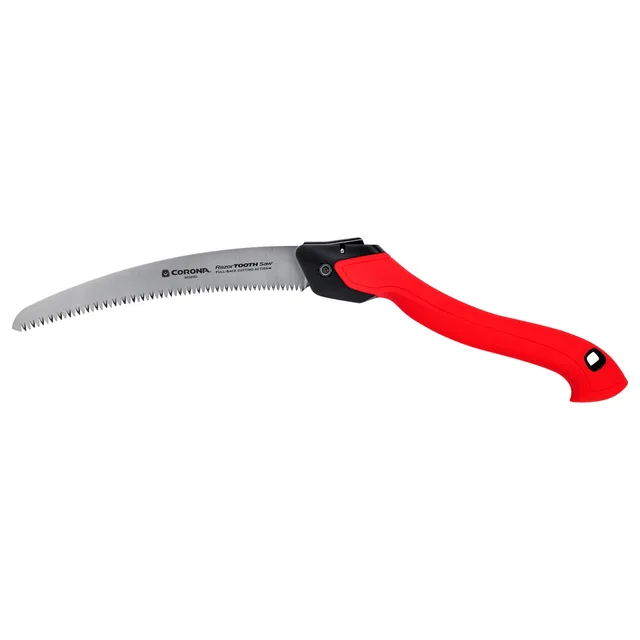
A 10-inch curved pruning blade that cuts twice as fast per stroke as a small saw but packs like a garden tool, not a camp tool.
Best for: Homeowners and orchard pruners who want one saw for limbs up to 6 inches and do not need it to disappear into a pack.
- 10-inch curved high-carbon steel blade with triple-ground impulse-hardened teeth rated to cut branches up to 6 inches.
- Up to 6 TPI on a pull stroke makes it the fastest cutter here on big limbs, per Corona's own cutting claims.
- Co-molded rubberized handle and a latch that fully covers the teeth when folded, with a limited lifetime warranty.
- Big and heavy versus a backpack saw; it is sized for the yard and the orchard, not a hipbelt pocket.
- The coarse blade and wide kerf waste effort on small branches and the hinge latch is looser than the lock on the Silky or Bahco.
- High-carbon steel is not stainless: oil it or it will spot-rust in a damp sheath.
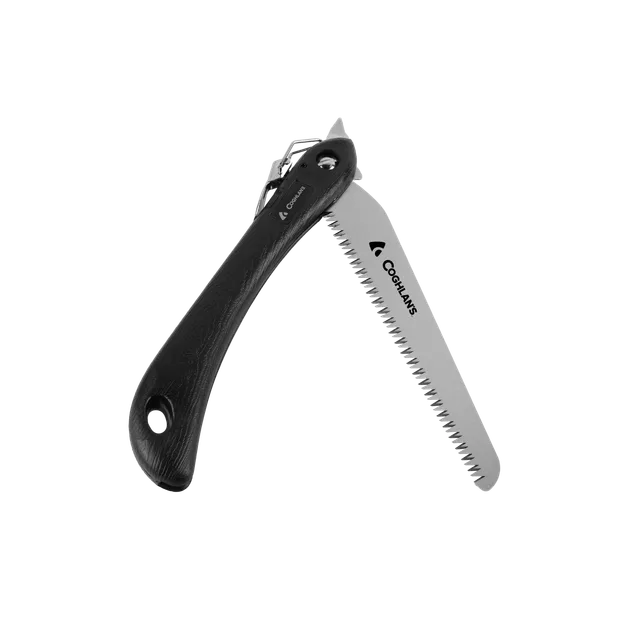
The cheap folding saw that fills the bottom of every retail shelf, with a stamped plastic handle and a soft blade that dulls fast.
Best for: A keep-in-the-car emergency saw; anyone cutting regularly should spend up for a replaceable-blade saw.
- 7-inch tempered steel blade and a locking mechanism, light at 155 g and cheap enough to leave in a glovebox.
- Folds flat and is fine for an occasional small branch or kindling on a casual trip.
- The thin stamped-plastic handle flexes in the cut and the single pivot feels loose after light use.
- Soft blade teeth dull quickly on dry or hardwood and there is no replacement-blade program: a dull saw is a disposable saw.
- It cuts on a slower, shallower stroke than any of the three above, so real pruning becomes work fast.
| Criteria | Silky Gomboy Professional 240 Top pick | Bahco 396-LAP Laplander | Corona RazorTOOTH Folding Saw RS 7265D | Coghlan's Sierra Saw |
|---|---|---|---|---|
| Verdict | Buy it | Buy it | It depends | Skip it |
| Best for | Backpackers, hunters and gardeners who cut green wood often and want the fastest, cleanest pull saw in the category. | Bushcraft, hunting and trail kits where a compact, lockable saw that shrugs off dry wood and occasional plastic or bone beats raw speed. | Homeowners and orchard pruners who want one saw for limbs up to 6 inches and do not need it to disappear into a pack. | A keep-in-the-car emergency saw; anyone cutting regularly should spend up for a replaceable-blade saw. |
| Price tier | $$$ · premium | $$ · mid-range | $ · budget | $ · budget |
| Blade length / teeth | 240 mm, 10 per 30 mm | 190 mm, 7 TPI | 10 in, up to 6 TPI | 7 in, tempered steel |
| Cut style | Pull stroke, fine smooth cut | Pull stroke, medium-aggressive | Pull stroke, coarse aggressive | Pull stroke, slow and shallow |
| Open / folded size | 500 / 270 mm | 405 / 230 mm | Long, pack-awkward | Compact |
| Lock | Positive spring-loaded lock | Locks open and closed | Latch covers teeth when folded | Single-pivot lock, looser over time |
| Blade replacement | Replaceable, costly | Replaceable, cheap | Replaceable | None: disposable |
| Materials | Chrome, impulse-hardened, rust-resistant | Rust-protective low-friction coat | High-carbon, chrome-plated | Tempered steel, thin plastic grip |
| Best for | Fast clean cutting, green wood | Compact bushcraft and all-around use | Yard pruning up to 6-inch limbs | Occasional emergency use only |
Which one is right for you?
- Backpackers, hunters and gardeners who cut green wood often and want the fastest, cleanest pull saw in the category. Buy it Silky Gomboy Professional 240
- Bushcraft, hunting and trail kits where a compact, lockable saw that shrugs off dry wood and occasional plastic or bone beats raw speed. Buy it Bahco 396-LAP Laplander
- Homeowners and orchard pruners who want one saw for limbs up to 6 inches and do not need it to disappear into a pack. It depends Corona RazorTOOTH Folding Saw RS 7265D
- A keep-in-the-car emergency saw; anyone cutting regularly should spend up for a replaceable-blade saw. Skip it Coghlan's Sierra Saw
How we judged the field
A folding saw lives or dies on four things: how fast it cuts, whether the lock and hinge stay tight, whether the blade keeps an edge, and how well it packs. Cutting speed comes from tooth geometry and steel; packability from folded length and weight; and longevity from whether a replacement blade exists.
We compared the Japanese benchmark, the bushcraft classic, a big pruning saw aimed at the yard, and the budget saw that keeps showing up under new names in the discount aisle.
The Gomboy is the saw the rest are judged against. Its 240 mm chrome-plated blade runs 10 impulse-hardened teeth per 30 mm, and the Mirai-Me tooth geometry cuts on the pull stroke at four angles, so green wood parts fast and cleanly. It weighs 270 g, opens to 500 mm, folds to 270, and the rubber GOM handle grips wet or gloved.
The spring-loaded lock is positive and the non-set teeth leave a cut smooth enough for live-branch pruning. The cost is size and price: it is the longest saw here, and the whole package costs what three budget saws do. If you cut wood on purpose, that is the right trade.
The Laplander is the other name everyone knows, and it earns it. The 190 mm blade carries XT hardpoint teeth at 7 TPI, a tooth count tuned for both green and dry wood and rated by Bahco for plastic and bone as well. At 405 mm open and 230 folded with a 200 g weight, it is meaningfully smaller than the Gomboy.
Its lock is the standout: it secures the blade both open and folded, so nothing swings free in a pack or pocket. The leather strap and two-component grip are comfortable in the cold. The honest limitations are a short blade for logs and hardpoint teeth that cannot be resharpened, which is why it sits a half-step behind the Silky on speed.
The Corona is the biggest saw here: a 10-inch curved high-carbon blade with triple-ground impulse-hardened teeth and a claimed branch capacity of 6 inches. Co-molded grip, latch that covers the teeth when folded, limited lifetime warranty. On big limbs it is the fastest cutter in this comparison because its blade is nearly double the length of the others.
That is exactly why it is an “it depends.” At this size it is a yard and orchard tool, not a hipbelt saw; it outweighs and outbulks everything else here, the hinge latch is looser than the true locks on the Silky and Bahco, and its high-carbon blade wants an oil wipe in damp storage. For someone pruning property rather than packing a saw, it is the right answer.
The Sierra Saw is the cheap folding saw you meet in every hardware aisle and discount listing. It is real Coghlan’s gear, 7 inches of tempered steel, 155 g, a locking mechanism, and a price tag that makes it easy to add to a cart. For an occasional saw it will do the job.
The problem is everything under the handle’s badge: thin stamped plastic that flexes in the cut, a single pivot that owners report loosening quickly, and a soft blade that dulls fast on dry wood and has no replacement. It is a disposable saw at a price that rents you a season, which makes it the one to skip: a used Bahco costs little more and lasts years.
Silky Gomboy vs Bahco Laplander: which should you buy?
This is the real fight. The Gomboy cuts faster, smoother, and farther per stroke thanks to its longer, finer-toothed blade, and its Japanese steel holds an edge longer. The Laplander is smaller, tougher-feeling in the hand, and its lock both ways is the safer carry.
Choose the Silky if cutting speed and cut quality matter most and you do not mind the extra length. Choose the Bahco if you want a compact bushcraft saw that locks positively, shrugs off dry wood, and costs less. You cannot pick wrong between them; they split on what you pack it for.
What to look for
- Blade length and TPI: longer and lower-TPI is faster on big limbs; shorter and finer is smoother and lighter.
- Lock quality: a lock that works open and closed is the difference between a tool and a hazard in a pack.
- Steel and teeth: impulse-hardened teeth stay sharp longest; chrome or a rust-protective coat matters outdoors.
- Replacement blades: buy a saw whose maker sells blades; disposable saws cost more over time.
- Weight and folded size: a saw you leave behind is useless, so folded length and weight matter for packs.
- Grip in the wet: rubber or textured handles beat smooth plastic when hands are cold or wet.
Our final take
For the most people who actually cut wood outdoors, the Silky Gomboy Professional 240 is the folding saw to buy once: fast, smooth, replaceable-blade, and backed for life. The Bahco Laplander is the pick when compact size and a two-way lock matter more than raw speed. Yard and orchard pruners should take the Corona RS 7265D. Skip the Coghlan’s Sierra Saw unless all you want is a glovebox emergency tool.
Questions, answered
Are folding saws better than fixed saws for camping?
For most outdoor use, yes. A folding saw packs safely without a sheath, stows flat in a pack and cuts at nearly the speed of a fixed blade of the same length. Fixed saws edge ahead on durability and price, but a folder's lock and sheath-free carry are why it is the default for packs and gloveboxes.
What TPI do I need on a folding saw?
Lower TPI (roughly 5 to 7) with big teeth cuts fast in green wood and is the standard for pruning and trail work. Higher TPI (10 or more) gives a finer, smoother cut and suits hardwood and finish pruning. The Silky's 10-per-30-mm geometry threads the needle: fast on green wood yet smooth enough for finished cuts.
Can you sharpen a folding saw blade?
Most modern folding saws, including the Silky and Bahco here, use impulse-hardened teeth that are not meant to be resharpened by hand. The practical answer is to cut wood cleanly and buy a replacement blade when it dulls; every saw above except the Coghlan's sells one. Blades outlast many seasons of casual use.
Is a folding saw safe to carry in a backpack?
Yes, provided the lock holds the blade closed in the folded position. The Bahco's lock works both open and folded, which is the safest arrangement. Whatever you carry, a saw with teeth still exposed when folded, like some cheap designs, should not go loose in a pack.
Pull-stroke or push-stroke folding saw?
Pull-stroke saws, the Japanese pattern used by Silky and most modern pruning saws, cut on the pull, so the blade stays in tension and can be thinner, which means a narrower kerf and a faster, smoother cut. Push saws need a thicker blade to avoid buckling and tend to be slower. For wood, buy pull-stroke unless you have a reason not to.
Deciding between the top two? See our head-to-head: Silky Gomboy Professional 240 vs Bahco 396-LAP Laplander.
More Outdoors & Fitness reviews
 The Best Hiking Gaiters: 4 Compared (and One to Skip)
  The Best Beginner Golf Club Sets: 4 Compared (and One to Skip)
  The Best Golf Push Carts: 4 Compared (and One to Skip)
  The Best Golf Laser Rangefinders: 4 Compared (and One to Skip)
  The Best GPS Running Watches for 2026
  The Best Grip Socks for Pilates and Barre: 4 Compared (and One to Skip)