

Health & Wellness
The Best Fire Extinguishers: 4 Compared (and One to Skip)
We compared home fire extinguishers on their UL 711 rating, what the agent does to the room after the fire is out, whether the unit can be serviced or only thrown away, and how the maker documents any of it.
The short version
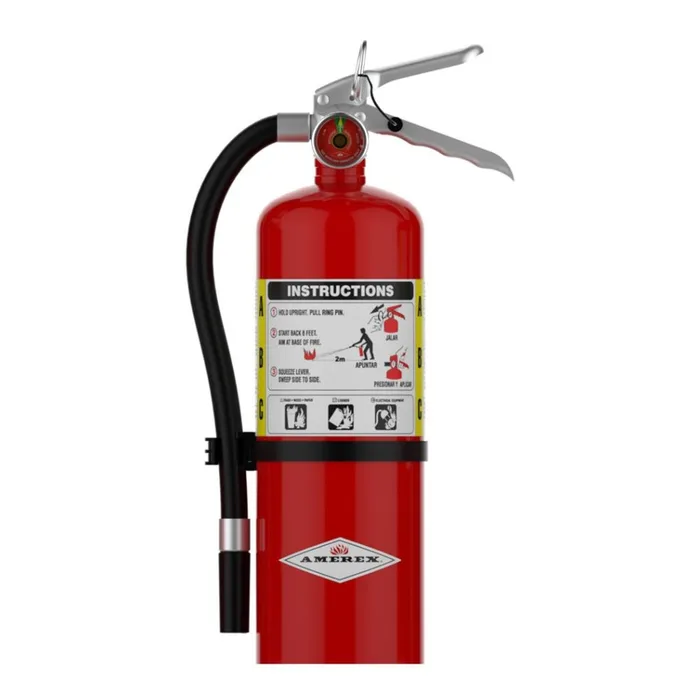
The Amerex B402 is the pick: a 3-A:40-B:C rating, a drawn steel cylinder with an all metal valve, a published 14 second discharge and a 6 year warranty, all from Amerex's own spec sheet. The First Alert PRO5 is the value choice and carries the same 3-A:40-B:C rating with a metal head and a 12 year limited warranty, though First Alert publishes less about what is inside. The Element E50 is the 'depends' pick and it is genuinely useful in a car or a boat, but It carries no UL listing, so it cannot stand in for a UL certified extinguisher where one is required, and Element itself describes it as suited to supplementary risks. Skip the Kidde Basic 110 as your main unit: it is 1-A:10-B:C, it is a sealed single use design that Kidde markets as needing no internal examination for its whole life, and its FA110G nameplate appears in the 2017 CPSC plastic handle recall for units built through August 15, 2017. Buy the biggest rechargeable unit you can actually lift and swing, then learn the NFPA 10 service intervals that keep it working. Best for: anyone who wants one extinguisher that will still discharge in year eight.
Our picks at a glance
- Amerex B402 5 lb ABC Dry Chemical Extinguisher - Buy. A fully documented 3-A:40-B:C rechargeable that a service shop can open, inspect and refill for decades.
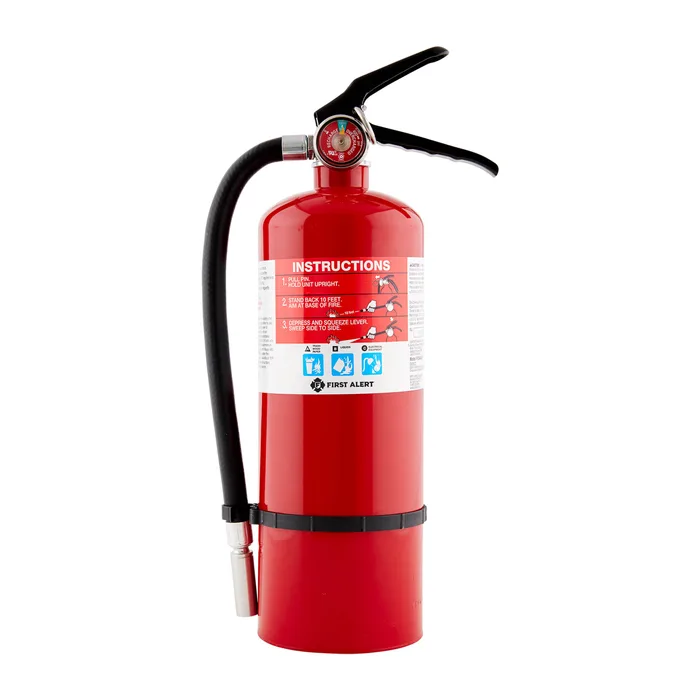
- First Alert PRO5 Heavy Duty Plus Rechargeable Fire Extinguisher (FE3A40GR) - Buy. The same 3-A:40-B:C rating as the Amerex in a unit sold through ordinary retail, with a longer warranty and a thinner spec sheet.
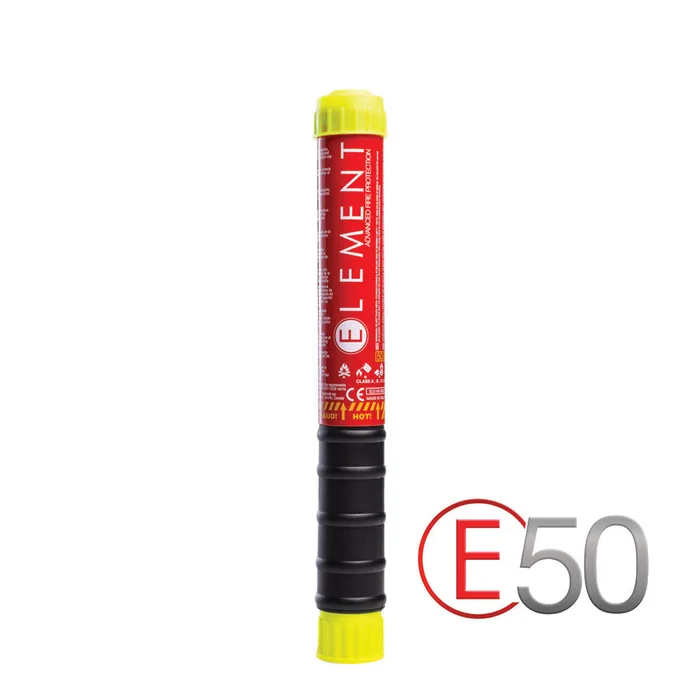
- Element E50 Fire Extinguisher - It depends. A 230 gram stick with a 50 second discharge that solves the storage problem in a car, as long as you understand it is a supplement and not a replacement.
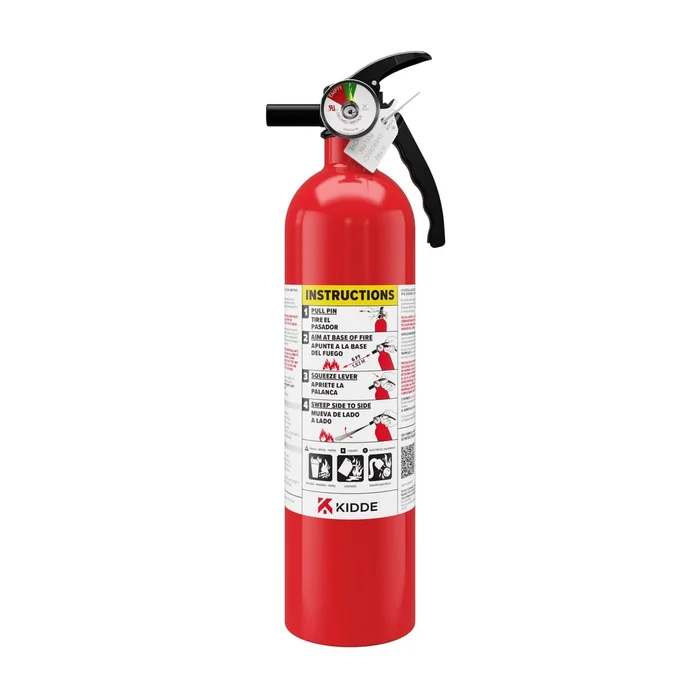
- Kidde Basic 110 Fire Extinguisher (FA110G) - Skip. The default cheap home extinguisher: the smallest useful rating, a plastic handle, and a sealed design nobody opens to check.
The verdict in 30 seconds
What mattered most
- UL 711 rating
- Agent
- Rechargeable
- Cylinder and valve
- Published weight
- Discharge time
A fire extinguisher is the rare purchase where the label is the product. Two red cylinders that look identical on a shelf can differ by a factor of four in tested Class B capacity, and one of them may be built so that no technician can ever open it. So we read UL ratings, manufacturer spec sheets, NFPA 10 service rules and the CPSC recall record rather than handling the units. The four here cover the two rechargeable ABC units most homes should look at, one non-traditional supplement, and the cheap disposable sold widely and deserves more scrutiny than it gets.
A fully documented 3-A:40-B:C rechargeable that a service shop can open, inspect and refill for decades.
Best for: The person who wants one serious extinguisher near the kitchen or garage and intends to have it serviced.
- UL and ULC rated 3-A:40-B:C, four times the listed Class B figure of a typical 2-A:10-B:C home unit.
- Drawn steel cylinder with an all metal anodized aluminum valve, so nothing structural is molded plastic.
- Amerex publishes the numbers most brands hide: 14 second discharge, 12 to 18 foot initial range, and a rated range of -65 F to 120 F.
- At 9.25 lb shipping weight it is a real object to hold one handed while aiming.
- The mono ammonium phosphate agent is acidic and can corrode untreated metal if it is not cleaned up quickly.
- Rechargeable ownership means paying for annual maintenance, a 6 year internal examination and a 12 year hydrostatic test if you follow NFPA 10.
- Sold mainly through fire equipment channels rather than the aisle where most people shop.
The same 3-A:40-B:C rating as the Amerex in a unit sold through ordinary retail, with a longer warranty and a thinner spec sheet.
Best for: Buying two or three rechargeable units at once so you are not walking past a fire to reach the only one.
- 3-A:40-B:C rated and rechargeable by a certified professional, which is unusual at this price level.
- First Alert specifies a metal head, a corrosion resistant metal gauge and a metal pull pin with a safety seal.
- 12 year limited warranty and a heavy duty wall bracket in the box.
- First Alert does not publish the agent charge weight, discharge time or effective range on the product page.
- Listed product weight is 10.2 lb, slightly heavier than the Amerex despite the same rating.
- Same ABC dry chemical cleanup problem as any mono ammonium phosphate unit.
- The published detail stops at 'meets UL standards' rather than naming the listing standards the way Amerex does.
A 230 gram stick with a 50 second discharge that solves the storage problem in a car, as long as you understand it is a supplement and not a replacement.
Best for: A glovebox, a motorcycle, a boat locker or a workshop bench, sitting alongside a UL listed extinguisher rather than instead of one.
- 230 grams and 27 cm long, so it fits places a 5 lb steel cylinder does not.
- Element publishes a 50 second discharge, far longer than the 14 seconds a 5 lb dry chemical unit gives you.
- No cylinder, no propellant and no gauge to go out of range, with a stated operating range of -50 C to +80 C and no effective expiration for the solid charge.
- It carries no UL 711 rating, so it has no A, B or C number to compare against anything else here.
- It carries no UL listing, so it is not a substitute for a UL listed extinguisher where one is required, and Element itself describes it as suited to small fires and supplementary risks.
- Single use with no recharge path, and Element notes it is not recommended for outdoor live ember fires such as wood campfires.
- The published approvals are European and military, including CE and an Italian MTIC Intercert assessment for fire classes A, B, C and F, which is not what a US code official or insurer is looking for.
The default cheap home extinguisher: the smallest useful rating, a plastic handle, and a sealed design nobody opens to check.
Best for: A supplemental unit in a spare bedroom or a boat, never the only extinguisher in the house.
- 1-A:10-B:C is a real UL rating and covers ordinary combustibles, flammable liquids and energized electrical equipment.
- Aluminum cylinder keeps it light enough for almost anyone to lift and aim.
- USCG approved with the UL approved strap bracket, meeting 5-B compliance for boats and watercraft.
- 1-A:10-B:C is the low end of the scale, a fraction of the 3-A:40-B:C ratings on the two rechargeable units here.
- Single use by design. Kidde markets a 12 year service free build that requires no internal examination for the life of the product, which also means no one ever verifies the agent inside.
- Any discharge, even a one second test squeeze, ends its life. There is no recharge path.
- The FA110G nameplate appears in CPSC recall 18022 among the plastic handle models with date codes from January 2, 2012 through August 15, 2017. Units built after that date are outside the recall, but the recall covered about 37.8 million US units after roughly 391 reports of failure to discharge or nozzle detachment, 16 injuries and one death.
| Criteria | B402 5 lb ABC Dry Chemical Extinguisher Top pick | PRO5 Heavy Duty Plus Rechargeable Fire Extinguisher (FE3A40GR) | E50 Fire Extinguisher | Basic 110 Fire Extinguisher (FA110G) |
|---|---|---|---|---|
| Verdict | Buy it | Buy it | It depends | Skip it |
| Best for | The person who wants one serious extinguisher near the kitchen or garage and intends to have it serviced. | Buying two or three rechargeable units at once so you are not walking past a fire to reach the only one. | A glovebox, a motorcycle, a boat locker or a workshop bench, sitting alongside a UL listed extinguisher rather than instead of one. | A supplemental unit in a spare bedroom or a boat, never the only extinguisher in the house. |
| Price tier | $$ · mid-range | $ · budget | $$ · mid-range | $ · budget |
| UL 711 rating | 3-A:40-B:C | 3-A:40-B:C | None; CE and military approvals only | 1-A:10-B:C |
| Agent | ABC dry chemical, mono ammonium phosphate | ABC dry chemical, mono ammonium phosphate | Solid charge, no pressurized cylinder | ABC dry chemical, mono ammonium phosphate |
| Rechargeable | Yes, by a certified technician | Yes, by a certified professional | No, single use | No, single use |
| Cylinder and valve | Drawn steel cylinder, anodized aluminum valve | Metal head, metal gauge, metal pull pin | No cylinder, valve or gauge | Aluminum cylinder, plastic handle and lever |
| Published weight | 9.25 lb shipping weight | 10.2 lb product weight | 230 g | Not published by Kidde |
| Discharge time | 14 seconds | Not published | 50 seconds | Not published |
| Service path under NFPA 10 | Annual external, 6 year internal, 12 year hydrostatic | Annual external, 6 year internal, 12 year hydrostatic | None; replace after any use | Annual external only, then replace |
| Manufacturer warranty | 6 years | 12 years limited | Not published as a warranty term | Not published on Kidde's page |
Which one is right for you?
- The person who wants one serious extinguisher near the kitchen or garage and intends to have it serviced. Buy it Amerex B402 5 lb ABC Dry Chemical Extinguisher
- Buying two or three rechargeable units at once so you are not walking past a fire to reach the only one. Buy it First Alert PRO5 Heavy Duty Plus Rechargeable Fire Extinguisher (FE3A40GR)
- A glovebox, a motorcycle, a boat locker or a workshop bench, sitting alongside a UL listed extinguisher rather than instead of one. It depends Element E50 Fire Extinguisher
- A supplemental unit in a spare bedroom or a boat, never the only extinguisher in the house. Skip it Kidde Basic 110 Fire Extinguisher (FA110G)
How we judged the field
Five things decide whether a home extinguisher is worth owning. First, the UL 711 rating, because it is the only comparable performance number on the product and it is earned against standardized test fires rather than claimed in marketing. Second, whether the agent suits the hazard, since ABC dry chemical is versatile but leaves an acidic residue that can corrode untreated metal if it is not cleaned up fast. Third, construction, specifically whether the valve and handle are metal or molded plastic, which is the exact failure behind a recall of about 37.8 million US units. Fourth, whether the unit can be serviced, because NFPA 10 puts stored pressure dry chemical extinguishers on a 6 year internal examination and a 12 year hydrostatic test and a sealed disposable can meet neither. Fifth, how much the maker is willing to publish, which turns out to correlate closely with everything else.
The field splits cleanly. On one side are rechargeable metal valve units built to be opened, inspected and refilled, which is where the Amerex B402 and the First Alert PRO5 sit at the same 3-A:40-B:C rating from opposite ends of the retail world. On the other side are sealed single use units, of which the Kidde Basic 110 is a widely sold example and the reason this category needs a skip pick at all. Off to the side is a third thing entirely: the Element E50, which has no US rating, no cylinder and no service life, and which Element positions for supplementary risks rather than as a replacement. We picked one from each corner plus the two that most people should actually be choosing between.
Amerex B402 5 lb ABC Dry Chemical Extinguisher
Buy itThe Amerex B402 is the one that answers questions before you ask them. Amerex publishes a UL and ULC rating of 3-A:40-B:C on a 5 pound charge, a 14 second discharge, a 12 to 18 foot initial range, a 9.25 pound shipping weight and an operating range of -65 F to 120 F. Construction is stated plainly: drawn steel cylinder, all metal anodized aluminum valve, conforming to ANSI/UL 299 and ANSI/UL 711. The warranty is 6 years. Nothing there is a surprise, which is the point, because the failure mode you are guarding against is a unit that looks fine and does nothing. The trade-off is that this is a real object: nine and a quarter pounds is a lot to hold steady while sweeping a nozzle, and the mono ammonium phosphate inside is the acidic powder that can corrode untreated metal if you do not clean it up quickly. It is also sold mostly through fire equipment suppliers rather than the aisle where you buy smoke alarms. Buy it if you want one extinguisher a technician can keep alive for twenty years.
First Alert PRO5 Heavy Duty Plus Rechargeable Fire Extinguisher (FE3A40GR)
Buy itThe First Alert PRO5, model FE3A40GR, is the interesting one, because it carries exactly the same 3-A:40-B:C rating as the Amerex while sitting in ordinary retail at a lower tier. First Alert specifies a heavy duty metal head, a corrosion resistant metal gauge, a metal pull pin with a safety seal and a chemical resistant waterproof label, and it is rechargeable by a certified professional after use. Listed dimensions are 16.2 inches tall and 10.2 pounds, with a 12 year limited warranty and a heavy duty wall bracket included. What you give up is disclosure. First Alert does not publish the agent charge weight, the discharge time or the effective range, and the listing language stops at meets UL standards rather than naming UL 299 and UL 711 the way Amerex does. For most buyers that gap does not change the outcome, since the rating is the number that matters and it is identical. If your plan is two or three units rather than one, this is the sensible way to get there without dropping to a 1-A:10-B:C disposable.
Element E50 Fire Extinguisher
It dependsThe Element E50 is a 27 centimetre stick weighing 230 grams that produces 50 seconds of discharge, has no cylinder, no propellant and no gauge, works from -50 C to +80 C and, per Element, has no effective expiration for its solid charge. In a car or a boat that combination is hard to beat, and 50 seconds is more than three times what a 5 pound dry chemical unit gives you. The problem is what it is not. It carries no UL 711 rating, so there is no A, B or C number to line up against anything else on this page, and Element’s own page describes it as suited to small fires and supplementary risks. Its published approvals are CE, military and an Italian MTIC Intercert assessment covering fire classes A, B, C and F. Element also notes it is not recommended for outdoor live coal fires. Treat it as a second line of defence you can keep where a steel bottle will not fit, not as the extinguisher your house is counting on.
Kidde Basic 110 Fire Extinguisher (FA110G)
Skip itThe Kidde Basic 110, model FA110G, is a very common home extinguisher, and that is the problem. It is rated 1-A:10-B:C, the low end of the scale, in an aluminum cylinder with a plastic handle and lever. Kidde markets a 12 year service free design that requires no internal examination for the entire life of the product, and correctly notes that under NFPA 10 single use extinguishers are exempt from the 6 year internal examination. Read that the other way around: nobody will ever open it to confirm the agent is still loose and the valve is still clear. Any discharge at all, including a test squeeze, ends its service life. And the FA110G nameplate is on the CPSC’s list of plastic handle models covered by recall 18022 for date codes from January 2, 2012 through August 15, 2017, a recall that spanned about 37.8 million US units following roughly 391 reports of failure to discharge or nozzle detachment, 16 injuries and one death. Units built after that date are not recalled. That is still the wrong lineage for your only extinguisher.
Sources
Specs in this review come from these pages.
- NFPA, Fire Extinguisher Ratings (nfpa.org)
- NFPA, Guide to Fire Extinguisher Inspection, Testing, and Maintenance (nfpa.org)
- NFPA, Extinguisher Placement Guide (nfpa.org)
- CPSC Recall 18022, Kidde Recalls Fire Extinguishers with Plastic Handles (cpsc.gov)
- Amerex, ABC Dry Chemical specification sheet (amerex-fire.com)
- US Fire Administration, Choosing and Using Fire Extinguishers (usfa.fema.gov)
Amerex B402 5 lb ABC Dry Chemical Extinguisher vs First Alert PRO5 Heavy Duty Plus Rechargeable Fire Extinguisher (FE3A40GR): which should you buy?
The Amerex B402 and the First Alert PRO5 hold the same UL 711 rating, 3-A:40-B:C, which means they were tested against the same wood crib and heptane pan fires and passed at the same level. On paper the difference between them is not performance, it is documentation and construction detail. Amerex tells you the discharge lasts 14 seconds, the initial range is 12 to 18 feet, the cylinder is drawn steel, the valve is anodized aluminum and the unit is rated from -65 F to 120 F. First Alert tells you the head is metal, the gauge and pull pin are metal, the whole thing weighs 10.2 pounds and it is covered for 12 years. Both are rechargeable by a certified technician, which is the single most important line on either page.
So choose on strategy rather than specs. If you want one extinguisher, want it near the highest risk part of the house, and intend to actually put it on the NFPA 10 schedule of an annual external check, a 6 year internal examination and a 12 year hydrostatic test, buy the Amerex and hand it to a service shop once a year. If you would rather have three extinguishers than one, which is usually the better fire outcome, the PRO5 gets you the same rating in each room for less, and the longer warranty softens the fact that First Alert publishes less about the internals. The one thing neither answers is cleanup: both are ABC dry chemical, and if you have a room full of electronics you care about, that room wants a clean agent or water mist unit of its own.
What to look for
- Read the rating, not the size: UL 711 assigns the A number against wood crib and panel fires and the B number against a heptane pan fire, so a 3-A:40-B:C unit is a genuinely different machine from a 1-A:10-B:C one even when the cylinders look similar.
- Metal valve or walk away: the hazard CPSC described in the 2017 Kidde recall was units that clogged or needed excessive force to discharge, and the recall was defined around plastic handle designs, so a metal valve and handle is the cheapest insurance in the category.
- Rechargeable beats disposable for your main unit: NFPA 10 puts stored pressure dry chemical extinguishers on an annual external check, a 6 year internal examination and a 12 year hydrostatic test, and a sealed single use unit can receive only the first of those.
- Match the agent to the room: Dry chemical is generally a poor choice for delicate electronic equipment and clean agents are the usual alternative, so a home office or workshop full of gear deserves a different unit from the garage.
- Do not trust the gauge alone: NFPA’s monthly inspection checks the gauge and separately checks that the extinguisher is full by lifting or weighing it, and USFA notes that some extinguishers need to be shaken monthly, so read your manual and do both.
- Buy for reach, not for one heroic unit: NFPA 10 caps travel distance to a Class A extinguisher at 75 feet in regulated buildings and NFPA’s home advice is to install near an exit, which usually means more than one extinguisher rather than a bigger one.
Our final take
Buy the Amerex B402 if you want the most documented, most serviceable unit here and are willing to have it maintained. Buy the First Alert PRO5 if you would rather spread the same 3-A:40-B:C rating across the kitchen, the garage and the upstairs landing, which is usually the better fire outcome anyway. Keep an Element E50 in the car if the packaging problem is real for you, but keep it alongside a UL listed extinguisher, not instead of one, because Element itself positions it for supplementary risks. And treat the cheap disposable as what it is: a sealed box nobody will ever inspect, at the bottom of the rating scale, from the design family behind a recall of about 37.8 million US units. The gauge being green is not a promise.
Questions, answered
What do the numbers in a rating like 2-A:10-B:C actually mean?
They come from UL 711, the standard for rating and fire testing of fire extinguishers. The Class A number is an index of extinguishing potential measured against wood crib and wood panel test fires, running from 1-A to 40-A. The Class B number comes from a heptane pan fire, and a higher number means a larger fire put out. The C is pass or fail with no number at all, and it only tests whether current flows back through the discharge, which is why you never see a C rating standing alone.
Is the ABC powder really going to wreck my electronics and appliances?
The residue is a genuine problem. Mono ammonium phosphate is acidic and will corrode untreated metal like any other acid if it is not cleaned up quickly. Dry chemical is generally a poor choice for protecting delicate electronic equipment, and clean agent extinguishers are the usual alternative for that hazard. In a house that means an ABC discharge over a stove, a server closet or an open computer is a cleanup job, not a wipe down. It is still the right general purpose agent for most homes, but if you have a room full of gear you actually care about, a clean agent or water mist unit belongs in that room specifically.
If the gauge needle is in the green, does that mean it will work?
No, and NFPA's own inspection checklist quietly makes the point. The monthly inspection under NFPA 10 lists checking the gauge and separately checking that the extinguisher is full by lifting or weighing it, because the gauge reports propellant pressure and nothing about the condition of the agent. The CPSC recall of Kidde plastic handle units is the harder evidence: the stated hazard was that the extinguishers could become clogged or require excessive force to discharge and could fail to activate in a fire, and there were roughly 391 reports of failed or limited activation. Nothing on the gauge announced any of that. USFA notes that some extinguishers need to be shaken monthly, so check your own manual and follow it rather than assuming a green needle is a green light.
Can a plastic valve disposable extinguisher ever be serviced?
Not in any practical sense. Kidde's own page for the Basic 110 describes a 12 year service free design that requires no internal examination for the entire life of the product, and notes that per NFPA 10 single use extinguishers do not require the 6 year internal examination that rechargeable stored pressure dry chemical units do. Annual external examination still applies. The catch is that the exemption is not a feature, it is an acknowledgement that nobody can open the unit to look. A rechargeable unit gets its internals inspected at 6 years and a hydrostatic test at 12; a disposable gets neither, and any discharge at all sends it to the bin.
How many does a house need, and where should they go?
There is no national code that forces an existing single family home to have any, so this is judgment rather than a rule. NFPA's home guidance is specific about two things: pick a multi purpose extinguisher large enough to put out a small fire but not so heavy you cannot handle it, and install it close to an exit so you can keep your back to a clear escape route while you use it. NFPA 10, which governs regulated buildings, caps the travel distance to a Class A extinguisher at 75 feet and requires mounting at least 4 inches off the floor with the top no more than 5 feet up. Applied to a house, that argues for one on each occupied level near a stairway or door rather than one buried under the sink. NFPA also states plainly that children should not be trained to operate them.
Deciding between the top two? See our head-to-head: Amerex B402 5 lb ABC Dry Chemical Extinguisher vs First Alert PRO5 Heavy Duty Plus Rechargeable Fire Extinguisher (FE3A40GR).
More Health & Wellness reviews
 The Best First Aid Kits: 4 Compared (and One to Skip)
  The Best Foot Massagers: 4 Compared (and One to Skip)
  The Best Foot Spas: 4 Compared (and One to Skip)
  The Best Hearing Protection: 4 Compared (and One to Skip)
  The Best Electric Heating Pads: 4 Compared (and One to Skip)
  The Best Mid-Range HEPA Air Purifiers for Allergies