

Home & Kitchen
The Best Fire Blankets: 4 Compared (and One to Skip)
We compared four fire blankets on the only things that decide whether one works: which fire test standard the maker will actually name, how big the blanket is, whether it protects your hands, and what the maker says about using it twice.
The short version
The MAUS Portable Fire Blanket is the pick. Its instruction sheet names both ASTM F1989-2005 and EN 1869:2019, it is 72 by 48 inches so it is large enough for the clothing fire case, it has sewn-in corner pockets for your hands, and it tells you plainly that it is single use. The Prepared Hero Emergency Fire Blanket is the value pick and the one most people already own: 40 by 40 inches, fine for a toaster, a candle or a small pan, too small to be a rescue blanket, and its own pages cite two different editions of EN 1869. The Steiner 371 silica welding blanket is the depends pick, rated to 1,800 F and brilliant over a fire pit or a workbench, but it is a heat barrier, not a tested cooking fire product. Skip the Li-Fire E-Bike Fire Cover: it is sold for lithium battery fires, and the standards it cites test cooking oil, building materials and curtains, none of which say anything about thermal runaway. Best for: one properly sized, properly certified blanket mounted where you cook, and a phone in your hand for anything bigger.
Our picks at a glance
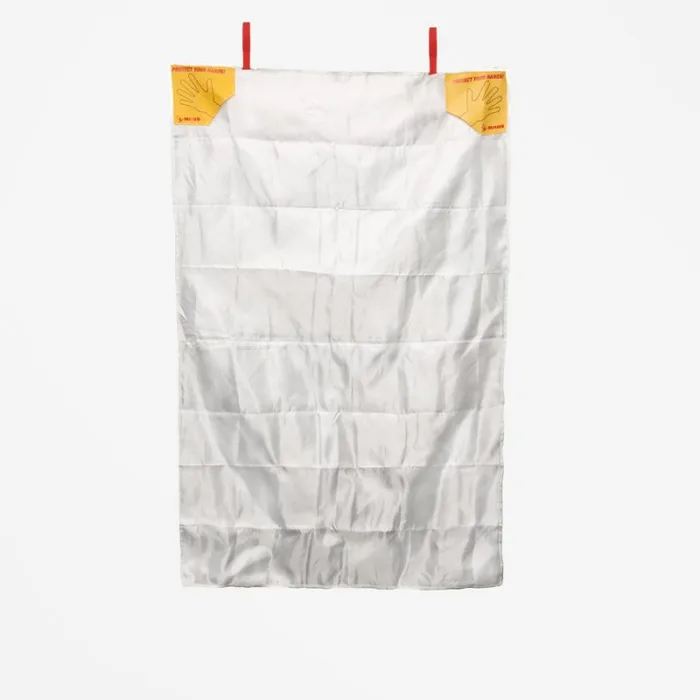
- MAUS Portable Fire Blanket 72 in x 48 in - Buy. The one blanket here whose own instruction sheet names both ASTM F1989 and EN 1869:2019, at the size fire bodies actually recommend.
- Prepared Hero Emergency Fire Blanket - Buy. The 40 inch square everyone already owns: a good fabric lid for a small contained fire, and honest about very little else.
- Steiner Industries Steiner 371 Silica Welding Blanket, 18 oz - It depends. A genuine 1,800 F silica blanket for a workshop or a fire pit, sold to a completely different buyer than the one shopping for a kitchen blanket.
- Li-Fire E-Bike Fire Cover - Skip. A premium priced cover sold for lithium battery fires, backed by three standards that between them test cooking oil, building materials and curtains.
The verdict in 30 seconds
What mattered most
- Standards named by the maker
- Size
- Material
- Temperature claim
- Hand protection
- Reuse
A fire blanket is a sheet of woven glass fibre you throw over a small fire to cut off its oxygen. It is a genuinely useful thing to own, and it is also one of the most loosely marketed products in the home safety aisle, where the same 40 inch square gets sold as a kitchen tool, a camping tool, a car tool and lately an e-bike tool. Two widely cited performance standards exist for consumer blankets, EN 1869 in Europe and ASTM F1989 in the United States, and few sellers in the US name both. We picked four blankets that show what the field actually looks like: one that names both standards and is the right size for a person, one cheap one that is everywhere, one industrial blanket that is superb at a job most buyers are not shopping for, and one that is sold against a fire type the fire research bodies say a blanket does not control.
The one blanket here whose own instruction sheet names both ASTM F1989 and EN 1869:2019, at the size fire bodies actually recommend.
Best for: Anyone who wants one blanket in the kitchen and wants it to be the right size and the documented one.
- The instruction sheet supplied with the retail unit is headed "ASTM F1989-2005 - MAUS Portable Fire Blanket - 72" X 48" - EN 1869:2019", naming both the US and European fire blanket standards.
- At 72 by 48 inches it matches the 1.8 m by 1.2 m size the Fire Industry Association says should ideally be selected to smother clothing that is being worn.
- Sewn-in corner pockets take your hands, and the same blanket comes in a hard wall case (model 5001-1) or a lighter soft case (model 5002-1) so you can put one in each place you need it.
- MAUS does not publish a temperature rating for the fabric, so you cannot compare it on that number.
- The instruction sheet says "SINGLE USE ONLY. DISCARD AFTER USE.", so any deployment, however small, costs you the blanket.
- The retail spec table at one large chain lists the product as "Class A:B:C - Multiple Use", which contradicts the single use line printed on the sheet inside the box.
- US distribution is narrow and the maker's US web address does not currently resolve, so most of the documentation you can actually read is Swedish or retailer hosted.
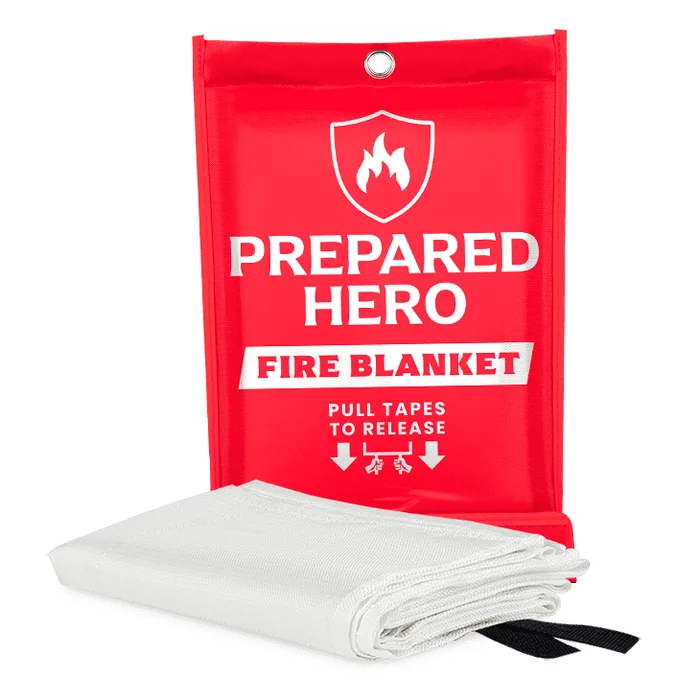
The 40 inch square everyone already owns: a good fabric lid for a small contained fire, and honest about very little else.
Best for: A stovetop, a workbench or a caravan, where the fire you are realistically covering is smaller than a pan lid.
- At 40 by 40 inches per the maker's own support page it drops neatly over a pan, a toaster or a bin, which is the job the Fire Industry Association assigns to smaller blankets.
- Woven fibreglass with a pull tab release and a hanging pouch, so it can live within arm's reach of the hob rather than in a cupboard.
- The maker answers the certification question directly and states that its blankets are not certified to ASTM F1989-05 and that UL testing is not applicable to fire blankets.
- The standards story changes page by page: the XL product page says it "meets EN-1869:1997 standards", the withdrawn edition, the support pages claim EN 1869:2019, and one large retailer's own certification field for the product reads "No Certifications or Listings".
- The maker says that as long as it is undamaged "it can be reused", which is the opposite of what EN 1869:2019 covers and of what MAUS tells its own buyers.
- At about 1 m square it is below the size the FIA lists for a clothing fire, and MAUS states that even for a frying pan fire a 1 m by 1 m blanket is not enough to smother it completely.
- Prepared Hero acknowledges loose fibreglass can cause itchiness and recommends wearing gloves, which is a real handling issue in a panic.
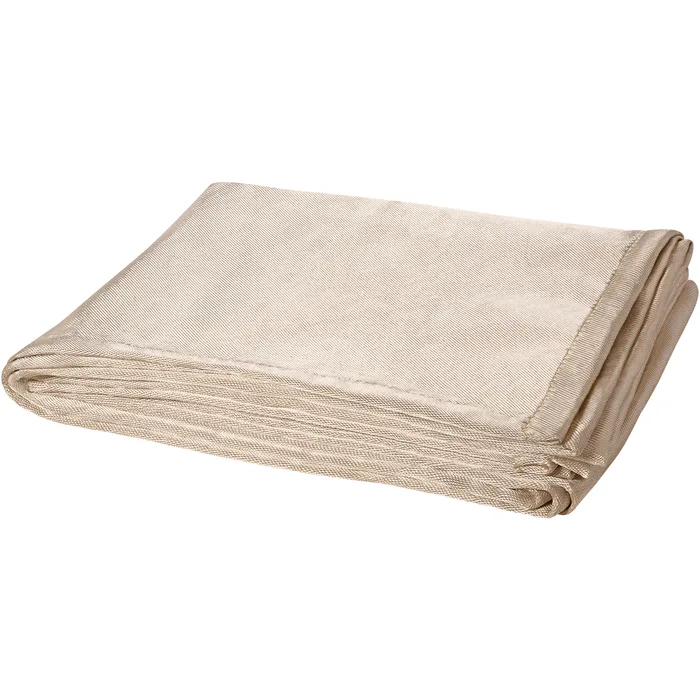
A genuine 1,800 F silica blanket for a workshop or a fire pit, sold to a completely different buyer than the one shopping for a kitchen blanket.
Best for: A garage, workshop, hearth or fire pit where you want a serious heat barrier and already own something else for the kitchen.
- Steiner lists an 1,800 F operating temperature and a 3,000 F melting temperature, well above typical coated fibreglass ratings.
- Sold in 6 by 6 ft, 6 by 8 ft and 10 by 10 ft blankets plus 50 yard rolls, so you can cover a whole bench, a hearth or a boat deck.
- Steiner lists it as FM approved for vertical applications, which is a real third party mark rather than a self declaration.
- It is a heat and spatter barrier for welding, not a cooking fire suppression blanket, and Steiner makes no EN 1869 or ASTM F1989 claim for it.
- No pouch, no pull tabs and no hand pockets, so deploying it fast over a fire is awkward.
- Silica cloth sheds and is unpleasant on skin, so gloves are not optional.
- The larger sizes are heavy and bulky, so they are impractical to keep within reach of a stove.
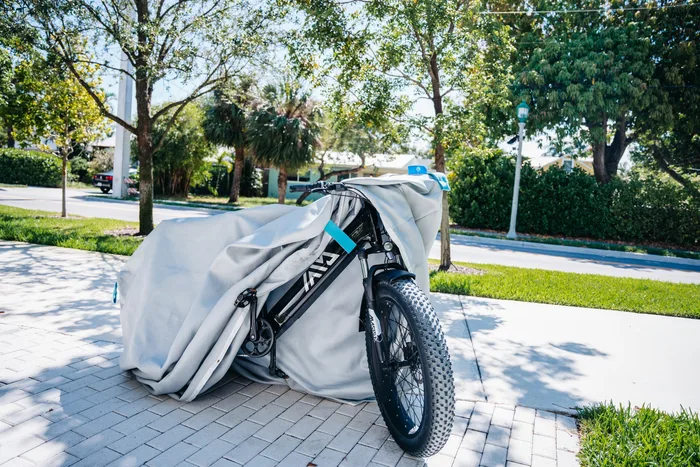
A premium priced cover sold for lithium battery fires, backed by three standards that between them test cooking oil, building materials and curtains.
Best for: Nobody as a fire response tool. If you want one as a dust cover that will not add fuel, buy it knowing that is what it is.
- It is a real product with a real maker, a published fit procedure and bottom snaps that close the gap around the frame.
- The copy is careful in places, using "help isolate" and "helps reduce" rather than claiming extinguishment.
- It ships with a duffel bag and the page tells you never to leave a charging battery unattended even with the cover in place.
- The page lists its FIBERWEAVE fabric as certified to EN 13501-1, NFPA 701, EN 1869 and DIN 91489, but EN 1869 tests cooking oil and heptane fires, EN 13501 classifies construction products, and NFPA 701 is a flame propagation test for textiles and films such as curtains and drapes. None of these standards tests lithium-ion thermal runaway.
- The Fire Protection Research Foundation and the Fire Safety Research Institute reported on 30 May 2025 that in their experiments a blanket eliminated flaming but "battery thermal runaway propagation continued", releasing and accumulating flammable battery gases, and that in some tests this "presented an explosion risk".
- The US Fire Administration escalated that into an urgent safety advisory on 11 June 2025 warning that reintroducing air into the trapped gas can increase the explosion risk, which is exactly what happens when someone lifts the cover.
- FDNY tells the public that if a lithium-ion battery catches fire you leave the area, close the door and call 911, which is a plan that does not involve walking toward the bike.
| Criteria | MAUS Portable Fire Blanket 72 in x 48 in Top pick | Prepared Hero Emergency Fire Blanket | Steiner 371 Silica Welding Blanket, 18 oz | Li-Fire E-Bike Fire Cover |
|---|---|---|---|---|
| Verdict | Buy it | Buy it | It depends | Skip it |
| Best for | Anyone who wants one blanket in the kitchen and wants it to be the right size and the documented one. | A stovetop, a workbench or a caravan, where the fire you are realistically covering is smaller than a pan lid. | A garage, workshop, hearth or fire pit where you want a serious heat barrier and already own something else for the kitchen. | Nobody as a fire response tool. If you want one as a dust cover that will not add fuel, buy it knowing that is what it is. |
| Price tier | $$ · mid-range | $ · budget | $$$ · premium | $$$ · premium |
| Standards named by the maker | ASTM F1989-2005 and EN 1869:2019 on the supplied instruction sheet | Varies by page: EN 1869:2019, EN 1869:1997, and one retailer field saying none | None for fire suppression; FM approved for vertical applications | EN 1869, EN 13501 and NFPA 701; none covers lithium fires |
| Size | 72 in x 48 in (1.8 m x 1.2 m) | 40 in x 40 in (about 1 m square) | 6 x 6 ft, 6 x 8 ft, 10 x 10 ft, plus 50 yd rolls | Full e-bike cover; dimensions not published |
| Material | Woven fibreglass | Woven fibreglass, polyester and PVC pouch | Coated silica cloth, 18 oz per square yard | FiberWeave, composition not published |
| Temperature claim | Not published | Over 1,000 F in support pages; 1,076 F (580 C) on product pages | 1,800 F operating, 3,000 F melting | Not published |
| Hand protection | Sewn-in corner pockets | Pull tabs only; maker recommends gloves | None; gloves required | Not applicable, it is a storage cover |
| Reuse | Single use only, discard after use | Maker says it can be reused if undamaged | Reusable industrial blanket | Not stated |
| Large enough for a clothing fire | Yes, matches the 1.8 x 1.2 m guidance | No | Large enough by area, but not built for it | No |
| Where it belongs | Wall mounted in the kitchen | Counter, drawer or hook beside the hob | Garage, workshop, hearth or fire pit | E-bike storage area, as a cover only |
Which one is right for you?
- Anyone who wants one blanket in the kitchen and wants it to be the right size and the documented one. Buy it MAUS Portable Fire Blanket 72 in x 48 in
- A stovetop, a workbench or a caravan, where the fire you are realistically covering is smaller than a pan lid. Buy it Prepared Hero Emergency Fire Blanket
- A garage, workshop, hearth or fire pit where you want a serious heat barrier and already own something else for the kitchen. It depends Steiner Industries Steiner 371 Silica Welding Blanket, 18 oz
- Nobody as a fire response tool. If you want one as a dust cover that will not add fuel, buy it knowing that is what it is. Skip it Li-Fire E-Bike Fire Cover
How we judged the field
Five things decide whether a fire blanket is worth owning. First, the standard the maker will name and the edition it names, because EN 1869:2019 and ASTM F1989-05(2020) both involve an actual cooking oil fire test and a withdrawn 1997 edition tells you the paperwork has not been touched in a generation. Second, size, because the Fire Industry Association’s code of practice for BS EN 1869 blankets lists three sizes and says a 1.8 m by 1.2 m blanket should ideally be selected if you might have to smother clothing being worn, while smaller blankets are for pans, bins and bench spills. Third, how you hold it, since a blanket without corner pockets or proper hand holds puts your hands closest to the flame. Fourth, what the maker says about reuse, which is the fastest way to tell whether they have read the standard they cite. Fifth, honesty about what the blanket cannot do.
The field splits cleanly along those lines. There is a small group of properly documented consumer blankets, mostly European in origin, that name a standard and a size and tell you to throw the blanket away afterwards. There is a very large group of near identical 39 and 40 inch squares, some branded and many not, that cite EN 1869 in the 1997 edition and are otherwise interchangeable. There is a separate industrial world of welding and heat blankets that are technically far more capable and were never designed for this job. And there is a fast growing lithium battery category whose marketing has run well ahead of what fire research bodies will support. We picked one from each so you can see the whole shape of the market rather than four versions of the same square.
MAUS Portable Fire Blanket 72 in x 48 in
Buy itMAUS is a Swedish fire safety brand, and the reason it wins is the piece of paper in the box. The instruction sheet distributed with the US retail unit is headed “ASTM F1989-2005 - MAUS Portable Fire Blanket - 72” X 48” - EN 1869:2019”, which is the only time in this group that both the American and the European consumer blanket standards appear on the same product. The size matters as much as the certification. At 72 by 48 inches it is 1.8 m by 1.2 m, the size the Fire Industry Association says should ideally be selected to smother clothing being worn, and MAUS designs around that use, with the blanket held in front of you and your hands inside sewn corner pockets. The same sheet ends “SINGLE USE ONLY. DISCARD AFTER USE.”, and MAUS repeats in its FAQ that a blanket may be used once and should not be washed. The trade-offs are honest: no published temperature rating, more bulk than a 40 inch square, thin US distribution, and a retail spec table that muddies the single use message.
Prepared Hero Emergency Fire Blanket
Buy itPrepared Hero is the blanket most American households already have, and taken on its own terms it is fine. It is 40 by 40 inches according to the maker’s own support pages, woven fibreglass, with pull tabs and a hanging pouch so it can sit within reach of the hob. That size does the job the Fire Industry Association assigns to smaller blankets: food in a frying pan, waste in a small bin, a toaster with the power off. Where it gets muddy is the paperwork. The product pages say the blanket “meets EN-1869:1997 standards”, the superseded edition, while the support pages claim EN 1869:2019 along with CE and AS/NZS 3504:2006. The support pages also say the blanket can be reused if it is undamaged, which is the opposite of what the 2019 scope covers and of what MAUS tells its buyers. Prepared Hero also acknowledges that loose fibreglass can cause itchiness and recommends gloves. Buy it as a cheap fabric lid for the stove, not as a rescue blanket, and put a pair of gloves next to it.
Steiner Industries Steiner 371 Silica Welding Blanket, 18 oz
It dependsThe Steiner 371 is what a serious heat blanket looks like, and it is included to show how different that is from a kitchen product. It is coated silica cloth at 18 oz per square yard, and Steiner publishes an 1,800 F operating temperature and a 3,000 F melting temperature, which is well above typical coated fibreglass ratings. It comes in 6 by 6 ft, 6 by 8 ft and 10 by 10 ft blankets and in 50 yard rolls, and Steiner lists it as FM approved for vertical applications. Over a fire pit, under a welding bench, draped on a hearth or protecting a boat deck, nothing else here comes close. But Steiner makes no EN 1869 or ASTM F1989 claim for it, because that is not what it is. There are no hand pockets, no pull tabs and no pouch, so deploying it quickly over a fire is clumsy, silica cloth is rough on skin, and the bigger sizes are too heavy to keep by a stove. Right blanket, different question.
Li-Fire E-Bike Fire Cover
Skip itLi-Fire sells the E-Bike Fire Cover as a containment cover for lithium-ion battery fires, and the case against it comes from its own page. The page lists its FIBERWEAVE fabric as certified to EN 13501-1, NFPA 701, EN 1869 and DIN 91489. Read what those three actually test. EN 1869 is a cooking oil and heptane fire blanket standard for a single-use blanket used by one person. EN 13501 classifies the reaction to fire of construction products. NFPA 701 is a flame propagation test for textiles and films, the standard used for curtains and drapes. Not one of them touches lithium-ion thermal runaway. Meanwhile the Fire Protection Research Foundation and the Fire Safety Research Institute reported in May 2025 that a blanket over a battery fire killed the flames while thermal runaway continued underneath and flammable gases built up, presenting an explosion risk, and the US Fire Administration warned in June 2025 that letting air back in raises that risk. FDNY’s advice to the public is to leave and call 911.
Sources
Specs in this review come from these pages.
- BSI, BS EN 1869:2019 Fire blankets (knowledge.bsigroup.com)
- Fire Industry Association, Code of Practice for Fire Blankets Manufactured to BS EN 1869 (fia.uk.com)
- ASTM F1989-05(2020) Standard Specification for Cooking Fire Suppression Blankets (store.astm.org)
- Fire Safety Research Institute and Fire Protection Research Foundation, notice on potential hazard involving EV fire blankets (fsri.org)
- US Fire Administration, urgent safety advisory on fire blankets for electric vehicle fire suppression (usfa.fema.gov)
- London Fire Brigade, pan fires (london-fire.gov.uk)
MAUS Portable Fire Blanket 72 in x 48 in vs Prepared Hero Emergency Fire Blanket: which should you buy?
The choice between MAUS and Prepared Hero is really a choice about what fire you are preparing for. If the scenario in your head is a pan that caught while you were standing right there, or a toaster, or a candle that got into a shelf, then a 40 inch square is enough blanket and Prepared Hero is the cheaper tier. If the scenario includes a person, or a fire that has already spread past the hob, then the size gap is not a detail. The Fire Industry Association names 1.8 m by 1.2 m as the size to choose when clothing being worn might have to be smothered, and MAUS is that size while Prepared Hero is about a metre square. MAUS also puts your hands in sewn pockets rather than wrapped in the blanket edge.
The second difference is documentation, and it is worth more than it sounds. MAUS names ASTM F1989-2005 and EN 1869:2019 on the sheet that ships with the product, and tells you in the same breath to throw the blanket away after one use. Prepared Hero cites the withdrawn 1997 edition on its product pages, the 2019 edition on its support pages, and says the blanket can be reused. Only one of those is a coherent position. Practical answer: if you buy one blanket, buy the MAUS and hang it where you cook. If you want blankets in several places, buy the MAUS for the kitchen and put cheap squares in the garage, the caravan and near the grill, where the fire you are covering is small and you are already standing next to it.
What to look for
- Named standard and edition: insist on EN 1869:2019 or ASTM F1989-05(2020) in writing, and treat “EN 1869:1997” as a sign the paperwork is a copy of a copy.
- Size that matches the job: the FIA lists BS EN 1869 blankets at 1.1 m by 1.1 m, 1.2 m by 1.2 m and 1.8 m by 1.2 m, and says the largest is the one to pick if clothing might have to be smothered.
- Hand protection: sewn-in corner pockets or proper hand hold devices keep your fingers away from the flame front, which a plain hemmed square does not.
- A single-use statement: EN 1869:2019 is written around blankets that are not reusable, so a maker promising reuse has either not read it or is not really certified to it.
- Mounting and reach: the FIA says to mount the hand holds about 1.5 m from the floor, in the same room as the hazard, within 10 m, and never behind a door or above a heat source.
- No lithium claims: if a blanket is sold for e-bike, EV or battery fires, check whether the standards it cites test batteries at all, because EN 1869, EN 13501 and NFPA 701 do not test for it.
Our final take
Own a fire blanket, mount it where you cook, and be realistic about what it is. It is a device for a small, contained, early fire that you can reach without leaning across it, and the honest advice from London Fire Brigade is that a pan already burning is a get out and call situation rather than a hero situation. Buy the MAUS if you buy one: it is the right size, it names both the American and European standards, and it is straightforward about being single use. Put cheap 40 inch squares wherever else you want them. Do not buy a blanket to solve a lithium battery, because the fire research bodies have now published what happens when you try.
Questions, answered
Is there actually a US fire blanket standard, or is EN 1869 the only one?
There is a US standard. ASTM F1989, Standard Specification for Cooking Fire Suppression Blankets, is active as ASTM F1989-05(2020) and covers size and shape, mass, hand holding devices, resistance to fraying and tearing, plus tests for flexibility, ease of removal, electrical resistance and fire performance. What the US does not have is a mandatory scheme or a widely used third party mark for consumer blankets, so most listings never mention it. UL is not the answer either. UL 1709 is the Standard for Rapid Rise Fire Tests of Protection Materials for Structural Steel, which is about protecting steel beams in hydrocarbon fires, not about kitchen blankets. Prepared Hero states in its own support pages that "UL Testing is not applicable for Fire Blankets".
What does EN 1869:2019 actually require?
BSI publishes it as a current standard dated 31 August 2019 and describes its scope as requirements for fire blankets that are not reusable and that are intended for use by one person. It sets requirements for firefighting performance, construction, marking, packaging and preservation, and the performance side is assessed with a cooking oil fire test, a heptane fire test and an electrical resistance test that limits the shock risk if the blanket touches live equipment. The Fire Industry Association's code of practice says blankets to BS EN 1869 come in three sizes, 1.1 m by 1.1 m, 1.2 m by 1.2 m and 1.8 m by 1.2 m. Note the words "not reusable" in the scope. A blanket sold as EN 1869 and also sold as reusable is telling you two different things.
If a pan catches fire, should I use the blanket at all?
Fire services do not agree, and you should know that before you buy. The US Fire Administration's cooktop guidance says to slide the pan lid over the pan, turn off the burner and do not move the pan. London Fire Brigade goes the other way and tells people not to tackle a pan fire at all: don't tackle the fire yourself, don't move the pan, never throw water, turn off the heat only if it is safe, then leave the room, close the door, warn others and call 999. Fire blankets are not mentioned on that page. A reasonable reading is that a blanket is for a small, contained, early fire you can reach without leaning over it, and that a chip pan or deep fryer already on fire is a leave-and-call situation.
Will a fire blanket stop an e-bike or EV battery fire?
The research says it stops the flames and not the fire. On 30 May 2025 the Fire Protection Research Foundation, the research affiliate of NFPA, and the Fire Safety Research Institute, part of UL Research Institutes, issued a joint notice reporting that deploying a fire blanket eliminated flaming by denying oxygen, but that battery thermal runaway propagation continued underneath, releasing and accumulating flammable battery gases, and that in some experiments this presented an explosion risk to firefighters working nearby. The US Fire Administration published an urgent safety advisory on 11 June 2025 and warned that reintroducing air into that oxygen-depleted pocket of unburned gas can increase the explosion risk. FDNY's public advice is simply to leave the area, close the door and call 911.
Can I fold my blanket up and keep it after using it once?
Makers that follow EN 1869:2019 say no. The MAUS instruction sheet printed for the US retail unit reads "SINGLE USE ONLY. DISCARD AFTER USE." MAUS goes further in its own FAQ and says blankets may only be used once and must be thrown away afterwards regardless of how small the fire was, and that you should not wash them. The EN 1869:2019 scope itself is written around blankets that are not reusable. Prepared Hero is the outlier here and says its blanket can be reused if there are no holes and the soot wipes off. Industrial wool blankets are a genuine exception, and one US supplier sells a wool blanket with cleaning instructions reading "Reusable if not burned or charred. Machine wash cold, gentle cycle", but that is a different product class with no EN 1869 claim. Separately, the Fire Industry Association suggests replacing an unused blanket after seven years from commissioning if the maker gives no other instruction, while one retailer lists a usable life of ten years for the MAUS.
Deciding between the top two? See our head-to-head: MAUS Portable Fire Blanket 72 in x 48 in vs Prepared Hero Emergency Fire Blanket.
More Home & Kitchen reviews
 The Best Fire Pits: 4 Compared (and One to Skip)
  The Best Firewood Racks: 4 Compared (and One to Skip)
  The Best Fish Spatulas: 4 Compared (and One to Skip)
  The Best Flannel Sheets: 4 Compared (and One to Skip)
  The Best Fondue Sets: 4 Compared (and One to Skip)
  The Best Food Dehydrators: 4 Compared (and One to Skip)