

Home & Kitchen
The Best Food Dehydrators: 4 Compared (and One to Skip)
We compared four current food dehydrators on airflow evenness, temperature control, capacity, and noise for jerky, fruit, and herbs.
The short version
For most kitchens, the COSORI Premium 6-Tray is the smart buy: horizontal airflow dries evenly with little tray rotation, it is listed under 48 dB, and it comes with six stainless trays. If you dry a lot, the Excalibur 3926TB trades quietness and counter space for the biggest capacity here. The Nesco Gardenmaster is a genuine 'it depends' pick that expands to huge capacity but is louder and needs tray rotation because of its round, stacked design. Skip the small Hamilton Beach 32100A unless you only want to dabble, because its stacked layout is reported to dry unevenly and you may outgrow it fast. Best for: even, low-fuss jerky, fruit, and herbs, choose the COSORI; for high-volume drying, choose the Excalibur.
Our picks at a glance
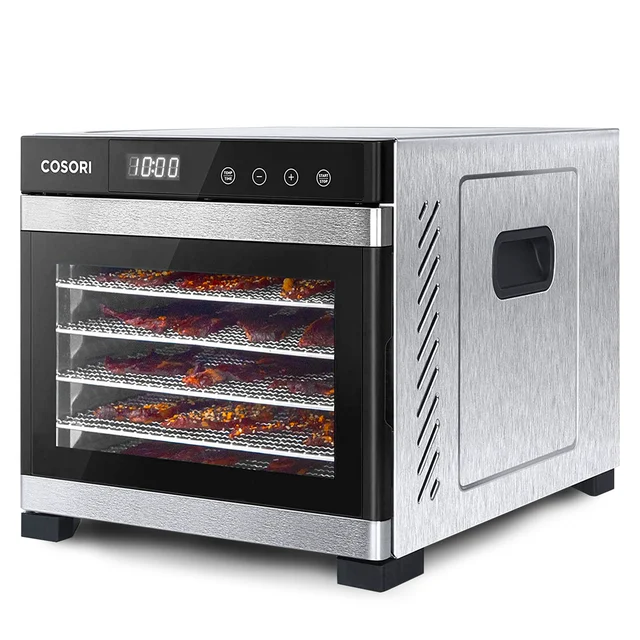
- COSORI Premium Stainless Steel Food Dehydrator (6-Tray, CP267-FD) - Buy. The best-balanced everyday dehydrator: quiet, even, and stainless trays.
- Excalibur 3926TB 9-Tray Food Dehydrator - Buy. The volume workhorse: horizontal airflow and a big flat capacity built for serious batches.
- Nesco Gardenmaster Digital Pro FD-1040 - It depends. A powerful top-fan stacker that expands to a huge capacity, if you can live with the round format.
- Hamilton Beach Digital Food Dehydrator (32100A) - Skip. Cheap and cheerful, but the small stacked design fights you the moment you get serious.
The verdict in 30 seconds
What mattered most
- Airflow design
- Temperature control
- Capacity
- Best for
- Noise
- Trays & cleanup
A good dehydrator lives or dies on even airflow and honest temperature control. We looked at the makers' own pages and owner reports across four models, from a quiet stainless all-rounder to a serious horizontal-airflow workhorse. Two earn a clear buy, one is a genuine 'it depends,' and one is an easy skip for anyone who plans to use it more than occasionally.
The best-balanced everyday dehydrator: quiet, even, and stainless trays.
Best for: Most home cooks who want set-and-forget jerky, fruit, and herbs without babysitting trays.
- Rear-mounted fan with horizontal airflow dries trays evenly with little or no rotating
- Six stainless-steel trays, cleaned with warm water, mild soap and a non-abrasive sponge per COSORI
- COSORI lists a noise level under 48 dB
- Digital timer (up to 48 hours) and a 95 to 165°F temperature range per COSORI
- Six trays is generous for a household but small next to a full 9-tray box
- Glass door and metal body make it heavier to move and store
Own the COSORI Premium Stainless Steel Food Dehydrator (6-Tray, CP267-FD)? Tell us how it held up.
Thanks. Counted, and shown once enough owners have weighed in.
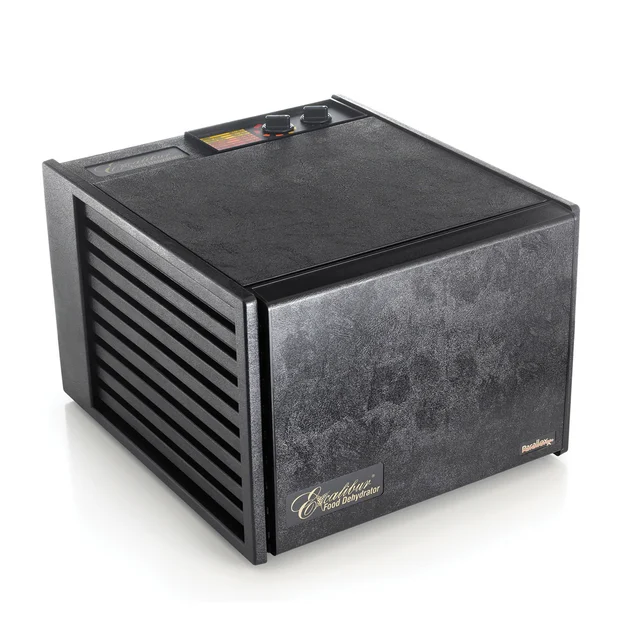
The volume workhorse: horizontal airflow and a big flat capacity built for serious batches.
Best for: Hunters, gardeners, and batch-cookers who dry a lot and want lab-grade evenness.
- Horizontal 'Parallexx' airflow is built for even drying across all nine trays
- Nine flat trays swallow large jerky and harvest batches
- Trays pull out and remove entirely, so tall or awkward loads fit easily
- Adjustable temperature and a long timer suit everything from herbs to raw foods
- Large plastic box takes up real counter and storage space
- Mesh screens and plastic trays can stain over time
- Premium price is hard to justify for occasional, small-batch use
Amazon had no buyable listing for this when we last checked. The link still works if it returns.
Find it on Amazon Read our detailed assessmentOwn the Excalibur 3926TB 9-Tray Food Dehydrator? Tell us how it held up.
Thanks. Counted, and shown once enough owners have weighed in.
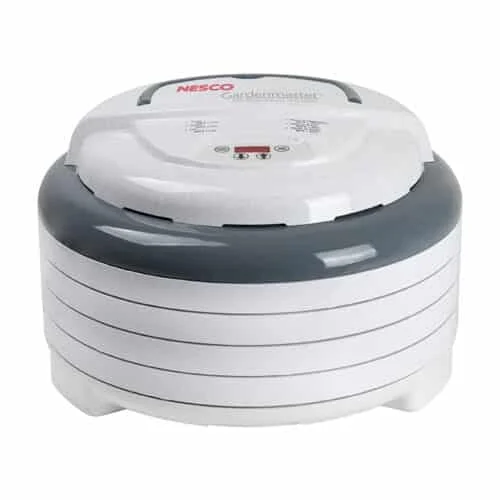
A powerful top-fan stacker that expands to a huge capacity, if you can live with the round format.
Best for: Gardeners who process big fruit and vegetable harvests and don't mind rotating trays.
- Strong top-mounted fan pushes air down and outward for good drying power
- Expandable well beyond the included trays for big seasonal harvests
- Compact round footprint stores more easily than a big box
- Digital temperature and timer control at a reasonable price
- Round stacked trays dry less evenly than horizontal-airflow units, so owners rotate trays
- Mostly plastic construction and a fan that owners describe as noticeably loud
- Round trays waste space when drying rectangular jerky strips
Amazon had no buyable listing for this when we last checked. The link still works if it returns.
Find it on Amazon Read our detailed assessmentOwn the Nesco Gardenmaster Digital Pro FD-1040? Tell us how it held up.
Thanks. Counted, and shown once enough owners have weighed in.
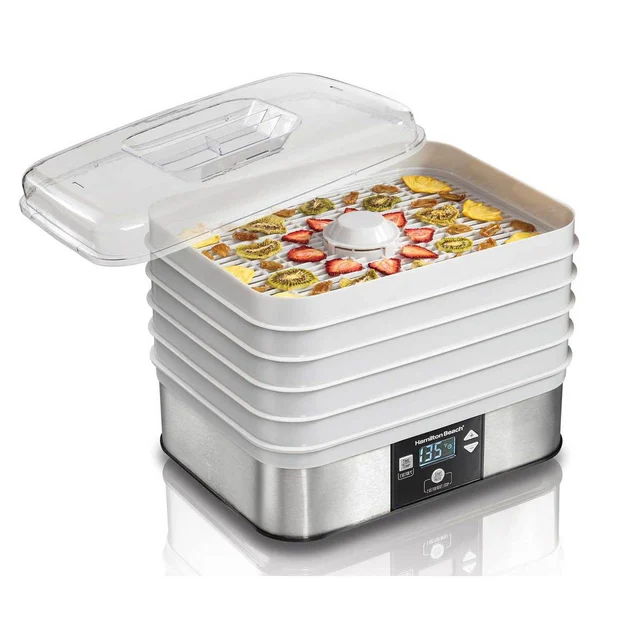
Cheap and cheerful, but the small stacked design fights you the moment you get serious.
Best for: A curious first-timer who wants to test the hobby cheaply before committing.
- Affordable entry point with a digital timer (48 hours) and thermostat (100 to 160°F)
- Small and light, easy to stash in a cabinet
- Fine for the occasional single tray of fruit or herbs
- Stacked trays dry less evenly than box units per owner reports, so owners rotate and swap layers
- Limited capacity that bogs down fast on jerky or a real harvest
- All-plastic trays feel flimsy and can retain odors and stains
- The page lists five trays and no expansion trays, so you may outgrow it if the hobby sticks
Own the Hamilton Beach Digital Food Dehydrator (32100A)? Tell us how it held up.
Thanks. Counted, and shown once enough owners have weighed in.
| Criteria | COSORI Premium Stainless Steel Food Dehydrator (6-Tray, CP267-FD) Top pick Buy it Buy | Excalibur 3926TB 9-Tray Food Dehydrator Buy it | Nesco Gardenmaster Digital Pro FD-1040 It depends | Hamilton Beach Digital Food Dehydrator (32100A) Skip it Buy |
|---|---|---|---|---|
| Best for | Most home cooks who want set-and-forget jerky, fruit, and herbs without babysitting trays. | Hunters, gardeners, and batch-cookers who dry a lot and want lab-grade evenness. | Gardeners who process big fruit and vegetable harvests and don't mind rotating trays. | A curious first-timer who wants to test the hobby cheaply before committing. |
| Price tier | $$ · mid-range | $$$ · premium | $$ · mid-range | $ · budget |
| Airflow design | Rear fan, horizontal | Rear fan, horizontal | Top fan, downward (rotate trays) | Stacked (owners report uneven drying) |
| Temperature control | Digital, 95 to 165°F | Adjustable | Digital, adjustable | Digital, 100 to 160°F |
| Capacity | 6 trays | 9 trays | Expandable, large | 5 trays |
| Best for | All-round jerky, fruit, herbs | High-volume jerky and harvests | Big garden harvests | Occasional small batches |
| Noise | Under 48 dB per maker | Not published | Owners describe as loud | Not published |
| Trays & cleanup | Stainless, hand-clean per maker | Plastic, check maker guidance | Plastic, check maker guidance | Plastic, check maker guidance |
| Expandable | Not stated | Not stated | Yes | Not stated |
| Price tier | $$ · mid-range | $$$ · premium | $$ · mid-range | $ · budget |
Which one is right for you?
- Most home cooks who want set-and-forget jerky, fruit, and herbs without babysitting trays. Buy it COSORI Premium Stainless Steel Food Dehydrator (6-Tray, CP267-FD)
- Hunters, gardeners, and batch-cookers who dry a lot and want lab-grade evenness. Buy it Excalibur 3926TB 9-Tray Food Dehydrator
- Gardeners who process big fruit and vegetable harvests and don't mind rotating trays. It depends Nesco Gardenmaster Digital Pro FD-1040
- A curious first-timer who wants to test the hobby cheaply before committing. Skip it Hamilton Beach Digital Food Dehydrator (32100A)
How we judged the field
We don’t run our own lab. Instead, we work from the makers’ own pages and owner reports, then weigh the factors that actually decide whether a dehydrator earns its counter space. Four things mattered most.
- Airflow evenness. The single biggest differentiator. Horizontal-airflow units with a rear fan dry every tray at a similar rate; stacked units with a top or bottom fan tend to dry unevenly and demand tray rotation.
- Temperature control. A real, adjustable thermostat that holds its setting lets you run hot for jerky and low for herbs. Fixed or drifting temperatures are where cheap units fall down.
- Capacity and expandability. How much you can dry at once, and whether the format wastes space on rectangular jerky strips.
- Livability. Noise over a multi-hour run, tray material and cleanup, and how much room the thing eats in your cupboard.
We deliberately picked across price tiers so the comparison is honest: a quiet mid-range all-rounder, a premium volume workhorse, an expandable stacker with real trade-offs, and a budget unit that looks tempting but disappoints anyone who gets serious.
COSORI Premium Stainless Steel Food Dehydrator (6-Tray, CP267-FD)
Buy itThis is the model we’d hand most people. The rear-mounted fan moves air horizontally across all six trays, so COSORI says there is no need to rotate trays, though it notes occasional rotation may still help, which is exactly what you want for uniform jerky and fruit leather. The six stainless-steel trays are cleaned by hand with warm water and mild soap, per COSORI. COSORI lists a noise level under 48 dB, a real consideration when it runs for hours. It isn’t the biggest box here, and the glass door and metal body make it heavier to store, but for balanced, low-fuss performance it’s the easy pick.
Excalibur 3926TB 9-Tray Food Dehydrator
Buy itIf you dry a lot, this is the workhorse. The horizontal ‘Parallexx’ airflow is the design Excalibur is known for, and with nine trays it swallows batches that would take the COSORI several runs. The trays pull out and remove entirely, so you can fit tall or awkward loads, and the adjustable temperature plus long timer cover everything from delicate herbs to jerky to raw-food projects. The costs are real: it’s a large plastic box that eats counter and storage space, the mesh screens and trays can stain, and it’s overkill (and overpriced) for someone drying a tray of apples now and then. For volume, though, it’s worth it.
Nesco Gardenmaster Digital Pro FD-1040
It dependsThe Gardenmaster is the interesting middle option. Its strong top-mounted fan has genuine drying power, and the round stacked design expands well beyond the included trays, which is great when a garden dumps a huge harvest on you at once. The compact round footprint also stores more easily than a big box. But the same round, stacked format that makes it expandable is why owners report less even drying and routinely rotate trays, and the fan is one many describe as loud. Round trays also waste space on rectangular jerky strips. Buy it if you process big seasonal harvests and don’t mind the fuss; look elsewhere if you want set-and-forget evenness or a quiet run.
Hamilton Beach Digital Food Dehydrator (32100A)
Skip itOn paper the 32100A is appealing: cheap, digital timer and thermostat, small enough to stash away. In practice it’s the one we’d steer people away from if they plan to use it for real. The stacked layout is reported by owners to dry unevenly, so they rotate and swapping trays, and the modest capacity bogs down the moment you attempt jerky or a proper harvest. The all-plastic trays feel flimsy and pick up odors and stains, and because the page lists only five trays you may outgrow it once the hobby sticks. It’s fine as a cheap way to test whether you like dehydrating; it’s a poor long-term tool.
Sources
Specs in this review come from these pages.
COSORI Premium 6-Tray vs Excalibur 3926TB: which should you buy?
Both use the horizontal airflow that makes drying even, so this comes down to scale and livability. The COSORI is listed as quiet, has stainless trays, takes up less space, and costs less, which is why it’s our overall pick for the typical household making jerky, fruit, and herbs. The Excalibur trades all of that for capacity: nine large flat trays and removable racks that handle big, repeated batches the COSORI would need several runs to match. If your drying is occasional to moderate, the COSORI is the better-rounded machine. If you’re regularly filling every tray, the Excalibur’s volume and uniformity justify the extra money, noise, and counter space.
What to look for
- Horizontal (rear-fan) airflow if you want even results without babysitting trays; stacked top/bottom-fan units dry less evenly.
- A real adjustable thermostat with a wide range, so you can run hot for jerky and low for herbs.
- Tray material and cleanup: stainless is sturdier; plastic is lighter but can stain.
- Capacity and format: flat rectangular trays use space better for jerky than round ones; consider whether the unit expands.
- Noise, because these run for hours, sometimes overnight.
- Footprint, since box units are more even but harder to store than round stackers.
Our final take
For most people, the COSORI Premium 6-Tray is the smart buy: even airflow, quiet operation, stainless trays, and a fair mid-range price. Step up to the Excalibur 3926TB only if you dry in real volume and want the largest, most uniform capacity here. The Nesco Gardenmaster is a legitimate ‘it depends,’ expandable and powerful but louder and fussier because of its round stacked design. And unless you just want to dabble, skip the small Hamilton Beach 32100A, its stacked, five-tray design is one you may outgrow fast.
Questions, answered
Which dehydrator style dries most evenly, stacked or box?
Horizontal-airflow box units like the COSORI and Excalibur push air across each tray from a rear fan, and owner reports commonly find them more even than stacked round units. Stacked designs such as the Nesco and Hamilton Beach are often reported to dry unevenly, so you may have to rotate trays partway through.
What temperature should I use for jerky, fruit, and herbs?
As a general guideline, owners and food-safety guidance point to higher settings for meat jerky, moderate settings for fruit and vegetables, and the lowest settings for delicate herbs so they keep their color and oils. This is general product information, not food-safety or medical advice; for meat jerky in particular, follow a trusted, current food-safety source for safe internal temperatures and handling.
Do I really need stainless trays?
You don't need them, but many owners prefer stainless because it feels more food-safe with hot, acidic, or fatty foods and it is easy to clean. Plastic trays can stain and hold odors, and are often hand-washed. Check the maker's care guidance for the model you choose.
Are cheap stackable dehydrators worth it?
For testing the hobby, a budget stacker like the Hamilton Beach can be fine, but owners frequently report uneven drying, constant tray rotation, and limited capacity. If you already know you'll make jerky or process harvests regularly, spending a bit more on a horizontal-airflow unit usually pays off in time saved and better results.
How much noise should I expect?
Dehydrators run for hours, so noise matters. COSORI lists a noise level under 48 dB, and owners describe the Nesco Gardenmaster as one of the louder options. If the unit will run overnight near living space, favor a quieter model.
Deciding between the top two? See our head-to-head: COSORI Premium Stainless Steel Food Dehydrator (6-Tray, CP267-FD) vs Excalibur 3926TB 9-Tray Food Dehydrator.
More in Home & Kitchen
Food Dehydrators, Explained Plain-English guide → COSORI Premium Stainless Steel Food Dehydrator (6-Tray, CP267-FD) vs Excalibur 3926TB 9-Tray Food Dehydrator Head-to-head →  The Best Food Processors: 4 Models Compared (and One to Skip)
  The Best Food Storage Containers: 4 Compared (and One to Skip)
  The Best Nonstick Frying Pans: 4 Compared (and One to Skip)
  The Best Garbage Disposals: 4 Compared (and One to Skip)