

Home & Kitchen
The Best Nonstick Frying Pans: 4 Compared (and One to Skip)
We compared four current 10-inch nonstick skillets on heat evenness, coating longevity, induction support, and honest value.
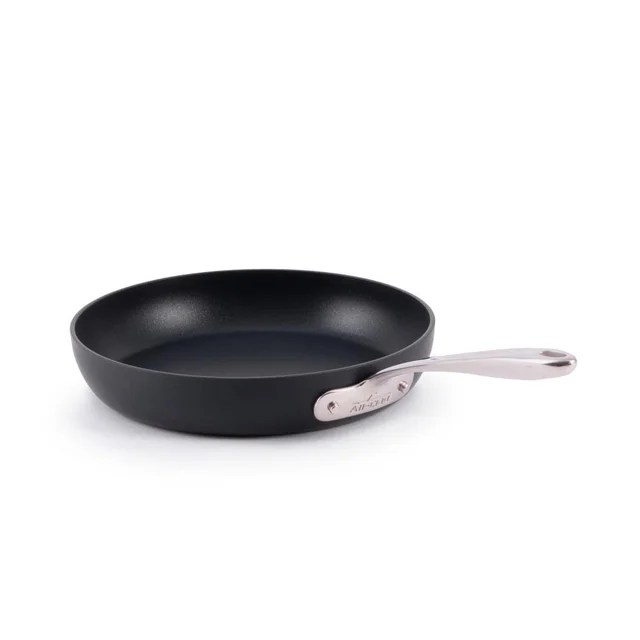
The short version
The All-Clad HA1 is our top pick: a hard-anodized body with a stainless induction plate and a three-layer PTFE surface, despite its weight and price. The OXO Professional Ceramic is the value winner, offering PFAS-free cooking and easy handling at a mid-range price. The Tramontina Professional is a commercial-grade aluminum pan at a budget price, but its bare-aluminum base rules out induction stovetops. The GreenPan Valencia Pro is well made, yet it charges premium money for a ceramic coating that is generally reported to fade faster than PTFE, so we skip it. Best for: most cooks who want one reliable nonstick skillet should buy the All-Clad HA1, or the OXO Professional Ceramic to save money.
Our picks at a glance
- All-Clad HA1 Hard-Anodized Nonstick 10-Inch Fry Pan - Buy. The most even, most durable everyday nonstick pan here, if you accept the weight and the price.
- OXO Professional Ceramic Non-Stick 10-Inch Frypan - Buy. The value pick and the easy choice if you want PFAS-free cooking without a premium price.
- Tramontina Professional Nonstick 10-Inch Fry Pan - It depends. A restaurant-grade workhorse for the money, but the bare-aluminum base rules out induction.
- GreenPan Valencia Pro Ceramic Nonstick 10-Inch Frypan - Skip. A well-made PFAS-free ceramic pan, but you pay premium money for a coating with a limited lifespan.
The verdict in 30 seconds
What mattered most
- Coating type
- Heat evenness
- Coating longevity
- Induction compatible
- Oven-safe rating
- Weight and handling
A good nonstick skillet is the pan most kitchens reach for daily, so it needs even heat, a coating that lasts, and a handle you can trust. We compared the makers' own product pages across four widely sold models. Two earn a clear buy, one depends on your stovetop and budget, and one we would skip unless a specific feature matters more than value.
The most even, most durable everyday nonstick pan here, if you accept the weight and the price.
Best for: Cooks who want the best all-around performance and durability and will pay for it.
- Hard-anodized aluminum body with a bonded stainless induction plate for even heating
- Three-layer PTFE nonstick surface
- Stainless induction plate makes it induction compatible, and All-Clad lists the pans as oven-safe to 500°F
- Heavy-gauge build is noticeably harder to lift and flip one-handed
- Costs more than most traditional nonstick pans

The value pick and the easy choice if you want PFAS-free cooking without a premium price.
Best for: Everyday cooks who want a PFAS-free nonstick pan at a sensible price.
- PFAS-free ceramic coating on a hard-anodized body, an appealing combination at this price
- Induction and gas compatible with a comfortable, stay-cool stainless handle owners praise
- Lightweight and easy to maneuver for daily eggs, vegetables, and quick sautes
- Like all ceramic coatings, nonstick performance fades faster than premium PTFE over time
- Rewards gentle heat and soft utensils rather than aggressive high-heat searing
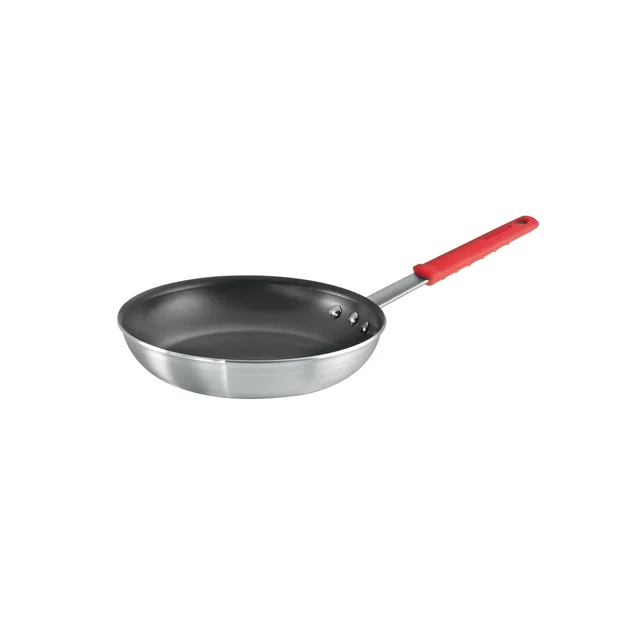
A restaurant-grade workhorse for the money, but the bare-aluminum base rules out induction.
Best for: Gas or electric cooks and heavy users who want commercial toughness on a budget.
- Commercial-grade, heavy-gauge aluminum that Tramontina says distributes heat quickly and evenly
- Reinforced nonstick coating, NSF certified and dishwasher-safe per Tramontina
- Removable silicone grip, oven-safe to 400°F, with a lifetime warranty
- Bare aluminum exterior is not induction compatible
- Utilitarian look, and the oven rating is lower than the others

A well-made PFAS-free ceramic pan, but you pay premium money for a coating with a limited lifespan.
Best for: Buyers set on a premium-feeling PFAS-free pan who accept ceramic's shorter coating life.
- Diamond-infused ceramic coating, with GreenPan stating metal utensils are safe
- Magneto induction base works on induction, and GreenPan lists the pans as oven safe up to 600°F
- PFAS-free surface (made without intentionally added PFAS) with a limited lifetime warranty on manufacturer defects
- Ceramic nonstick still loses release performance faster than the premium price implies
- Costs about as much as the top PTFE pick while offering a shorter effective coating life
| Criteria | All-Clad HA1 Hard-Anodized Nonstick 10-Inch Fry Pan Top pick Buy it Buy | OXO Professional Ceramic Non-Stick 10-Inch Frypan Buy it Buy | Tramontina Professional Nonstick 10-Inch Fry Pan It depends Buy | GreenPan Valencia Pro Ceramic Nonstick 10-Inch Frypan Skip it Buy |
|---|---|---|---|---|
| Best for | Cooks who want the best all-around performance and durability and will pay for it. | Everyday cooks who want a PFAS-free nonstick pan at a sensible price. | Gas or electric cooks and heavy users who want commercial toughness on a budget. | Buyers set on a premium-feeling PFAS-free pan who accept ceramic's shorter coating life. |
| Price tier | $$$ · premium | $$ · mid-range | $ · budget | $$$ · premium |
| Coating type | Three-layer PTFE | Ceramic (PFAS-free) | Reinforced nonstick | Diamond ceramic (PFAS-free) |
| Heat evenness | Hard-anodized body with induction plate | Good | Heavy-gauge aluminum | Good |
| Coating longevity | PTFE; per maker | Ceramic | Reinforced nonstick | Diamond-infused ceramic |
| Induction compatible | Yes | Yes | No (bare aluminum base) | Yes |
| Oven-safe rating | Up to 500F | Not confirmed | Up to 400F | Up to 600F |
| Weight and handling | Heavy-gauge | Not confirmed | Removable silicone grip | Metal utensil safe per maker |
| Best use | Everyday all-rounder | PFAS-free daily cooking | Budget commercial workhorse | Premium PFAS-free option |
| Price tier | $$$ · premium | $$ · mid-range | $ · budget | $$$ · premium |
Which one is right for you?
- Cooks who want the best all-around performance and durability and will pay for it. Buy it All-Clad HA1 Hard-Anodized Nonstick 10-Inch Fry Pan
- Everyday cooks who want a PFAS-free nonstick pan at a sensible price. Buy it OXO Professional Ceramic Non-Stick 10-Inch Frypan
- Gas or electric cooks and heavy users who want commercial toughness on a budget. It depends Tramontina Professional Nonstick 10-Inch Fry Pan
- Buyers set on a premium-feeling PFAS-free pan who accept ceramic's shorter coating life. Skip it GreenPan Valencia Pro Ceramic Nonstick 10-Inch Frypan
How we judged the field
We do not run our own lab. Instead, we compare the makers’ own product pages, and for nonstick skillets a few criteria matter most. Heat evenness decides whether eggs cook uniformly or scorch in a ring. Coating longevity decides how long that effortless release actually lasts, because every nonstick surface degrades eventually. We also weigh induction compatibility, oven-safe temperature, weight and balance in the hand, and honest value at each pan’s price. We focused on the standard 10-inch single skillet from each brand, the size most cooks use daily, rather than multi-piece sets.
One theme runs through the results: coating chemistry drives the verdict. PFAS-free ceramic pans are appealing, but ceramic release is generally reported to fade faster than PTFE. That tradeoff is easy to accept at a mid-range price and harder to justify at a premium one.
All-Clad HA1 Hard-Anodized Nonstick 10-Inch Fry Pan
Buy itThis is the pan to buy if you want one nonstick skillet to do everything well. All-Clad describes a hard-anodized aluminum body with a stainless induction plate and a three-layer PTFE nonstick surface. It is induction compatible (the plate does not apply to square or rectangular shapes) and All-Clad lists the pans as oven-safe up to 500°F. The honest downsides are weight and price: it is heavy enough that one-handed flipping takes effort, and it costs more than many nonstick pans. For an induction-ready, oven-safe PTFE pan, it is worth it.
OXO Professional Ceramic Non-Stick 10-Inch Frypan
Buy itThe OXO is our value pick and the natural choice for anyone who specifically wants a PFAS-free surface. It pairs a ceramic coating with a hard-anodized body, works on induction and gas, and is light and easy to maneuver, which owners appreciate for everyday cooking. The stay-cool stainless handle is comfortable and secure. The catch is inherent to ceramic: the slick release is excellent at first but fades faster than premium PTFE, so treat it gently with low-to-medium heat and soft utensils. At a mid-range price that tradeoff is fair, which is why it still earns a buy for the right shopper.
Tramontina Professional Nonstick 10-Inch Fry Pan
It dependsThis is a restaurant-style workhorse that punches far above its budget price. It uses commercial-grade, heavy-gauge aluminum that Tramontina says distributes heat quickly and evenly, plus a reinforced nonstick interior. A removable silicone grip and riveted stainless handle round out the package, and it is NSF certified, dishwasher-safe and oven-safe up to 400°F. The reason it is a depends rather than a buy is the base: bare aluminum means it will not work on an induction cooktop. The look is also plainly utilitarian. For gas or electric cooks who value toughness and value, it is an easy recommendation.
GreenPan Valencia Pro Ceramic Nonstick 10-Inch Frypan
Skip itThe Valencia Pro is well built, with a diamond-infused ceramic coating, a Magneto induction base, and an oven rating of up to 600°F. It is a legitimately nice pan. The problem is value. It charges premium money, roughly in line with our top PTFE pick, yet it is still a ceramic coating, which means the same faster decline in nonstick release that affects every ceramic pan. When a mid-range ceramic pan like the OXO offers the same PFAS-free benefit for less, and a premium PTFE pan lasts longer for similar money, the Valencia Pro is caught in the middle. Unless a premium ceramic specifically is what you want, we skip it.
All-Clad HA1 vs OXO Professional Ceramic: which should you buy?
These two answer different questions. The All-Clad HA1 wins on raw performance: a hard-anodized body with an induction plate, a three-layer PTFE surface, and a heavy build. Choose it if you want the best pan and will accept the weight and premium price. The OXO Professional Ceramic wins on value and chemistry: it is PFAS-free, lighter and easier to flip, induction friendly, and costs meaningfully less. Choose it if a PFAS-free surface matters to you or you simply do not want to spend premium money, and you are comfortable replacing a ceramic coating sooner than a PTFE one. Most cooks will be happy with either; the decision is performance-and-longevity versus price-and-PFAS-free.
What to look for
- Even heating: a heavy or clad base spreads heat and prevents the scorched ring that ruins eggs and pancakes.
- Coating type: PTFE generally keeps its release longer; ceramic is PFAS-free but fades faster, so weigh that against price.
- Induction compatibility: confirm a magnetic base if you cook on induction, since bare-aluminum pans will not work.
- Handle and weight: a secure, comfortable handle and a weight you can lift one-handed matter more than any spec sheet.
- Oven-safe rating: a higher rating adds versatility for finishing dishes under heat.
- Care requirements: low-to-medium heat, soft utensils, and hand-washing extend the life of any nonstick pan.
Our final take
If you want one nonstick skillet to trust for years, buy the All-Clad HA1: it pairs a hard-anodized body and induction plate with a three-layer PTFE surface. If you would rather save money or prefer a PFAS-free surface, the OXO Professional Ceramic is the smart value and an easy daily driver. The Tramontina Professional is a solid budget workhorse as long as you are not on induction. The GreenPan Valencia Pro is a fine pan sold at the wrong price, so we skip it in favor of better value above and below it. Match the pan to your stovetop and your budget, treat the coating gently, and any of the top three will serve you well.
Questions, answered
Which nonstick frying pan should most people buy?
For the best balance of build, induction support, and oven rating, the All-Clad HA1 is our top pick, thanks to its hard-anodized body and bonded induction plate. If you want to spend less or prefer a PFAS-free surface, the OXO Professional Ceramic is the value choice and handles daily eggs and vegetables with ease.
Is ceramic nonstick better than traditional PTFE nonstick?
They trade off. Ceramic coatings such as those on the OXO Professional Ceramic and GreenPan Valencia Pro are PFAS-free and start out very slick, but ceramic is generally reported to lose its nonstick release faster than PTFE. Traditional PTFE pans like the All-Clad HA1 and Tramontina Professional generally keep their release longer, provided you avoid high heat and metal utensils.
Will these pans work on an induction cooktop?
The All-Clad HA1 and GreenPan Valencia Pro list induction compatibility; check the OXO Professional Ceramic listing before relying on it. The Tramontina Professional lists gas, electric and ceramic glass cooktops only, so it is not rated for induction. Choose one of the others if you cook on induction.
How do I make a nonstick coating last longer?
Common habits that help: cook on low to medium heat rather than high, avoid metal utensils and abrasive scrubbers, let the pan cool before washing, and hand-wash even when a pan is labeled dishwasher safe. Overheating an empty nonstick pan is the fastest way to degrade any coating, ceramic or PTFE.
Are nonstick coatings safe to cook on?
Check each maker's statement on its coating; current PTFE and PFAS-free ceramic coatings are widely considered safe for normal home cooking when used as directed and not overheated while empty. This is general product information, not health or medical advice; if you have specific health concerns about cookware materials, consult a qualified professional.
Deciding between the top two? See our head-to-head: All-Clad HA1 Hard-Anodized Nonstick 10-Inch Fry Pan vs OXO Professional Ceramic Non-Stick 10-Inch Frypan.
More in Home & Kitchen
Frying Pans, Explained Plain-English guide → All-Clad HA1 Hard-Anodized Nonstick 10-Inch Fry Pan vs OXO Professional Ceramic Non-Stick 10-Inch Frypan Head-to-head →  The Best Garbage Disposals: 4 Compared (and One to Skip)
  The Best Garment Steamers: 4 Compared (and One to Skip)
  The Best Grow Lights: 4 Compared (and One to Skip)
  The Best Hand Mixers: 4 Compared (and One to Skip)