

Outdoors & Fitness
The Best Dry Bags: 4 Compared (and One to Skip)
We compared four dry bags on closure design, seam construction, fabric durability and real submersion performance for paddling and camping.
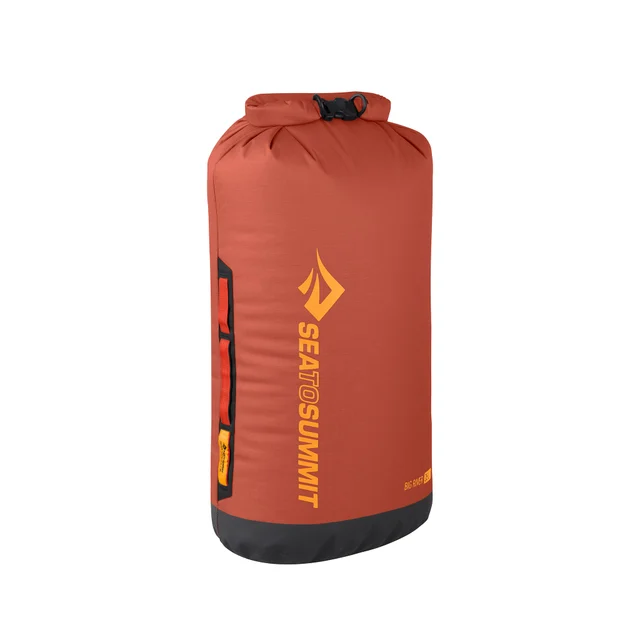
The short version
Buy the Sea to Summit Big River Dry Bag for most paddling and camping: 420D nylon, a non-wicking hypalon roll-top, lash points and a field replaceable buckle. Buy the NRS 65L Bill's Bag if your kit rides in a raft and needs vinyl laminate toughness with a removable backpack harness. The Watershed Westwater Backpack is built around radio frequency welded seams and a zip seal marketed as submersible, which is worth the money for whitewater and irreplaceable gear but requires seal maintenance. Skip the Sea to Summit Ultra-Sil Dry Bag for water use: 30D fabric and taped seams make it a backpacking stuff sack, not a river bag. Remember that most leaks are closure errors, so roll the top three full turns with the air pressed out. Best for: paddlers and campers who want gear that stays dry without paying for expedition sealing they will never use.
Our picks at a glance
- Sea to Summit Big River Dry Bag - Buy. The 420D all-rounder that handles deck duty, camp organization and everything between.
- NRS 65L Bill's Bag Dry Bag - Buy. The outfitter standard: vinyl laminate heavy enough to outlast the boat it rides in.
- Watershed Westwater Backpack - It depends. Welded seams and an airtight zip seal built for submersion, if you accept the upkeep and the price.
- Sea to Summit Ultra-Sil Dry Bag - Skip. A superb ultralight stuff sack that keeps getting bought as a paddling dry bag, which it is not.
The verdict in 30 seconds
What mattered most
- Waterproof level
- Seam construction
- Closure
- Fabric
- Carry system
- Size range
Dry bags all look the same on a shelf and behave very differently in a swamped boat. What separates them is closure design, whether the seams are welded or stitched and taped, and how much fabric weight you are willing to carry. Two here are easy recommendations for most paddlers and campers, one is worth the extra money only if leaking is unacceptable, and one is a fine product that keeps getting bought for the wrong job.
The 420D all-rounder that handles deck duty, camp organization and everything between.
Best for: Kayakers, canoeists and campers who want one durable, repairable bag family for most of their gear.
- Tough 420D nylon body with a triple-coated base that resists gravel and rope abrasion
- Non-wicking hypalon roll-top plus a Field Repair Buckle you can swap with a Phillips screwdriver
- Lash loops let you rig it to a kayak deck or thwart instead of trusting one strap
- Sizes from small enough for a phone to large enough for a sleeping system, so one family covers a whole kit
- Seams are double stitched and taped, not welded, so it is built for spray and short dunks rather than sustained submersion
- Heavier and bulkier than ultralight sacks when you are counting grams
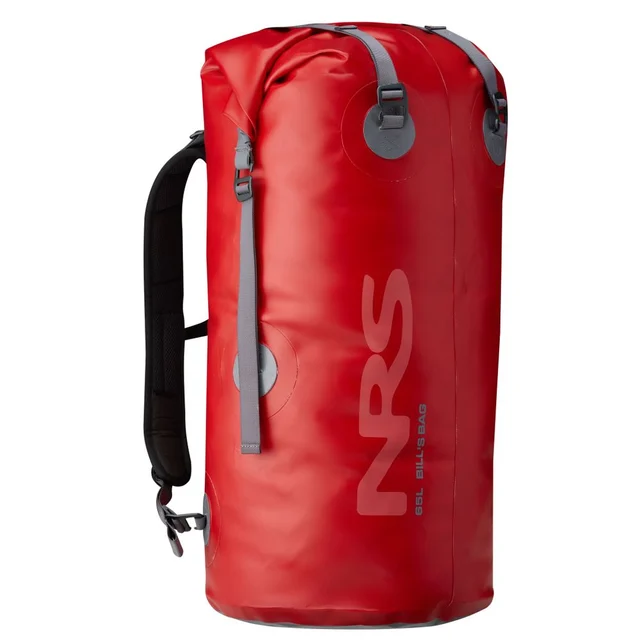
The outfitter standard: vinyl laminate heavy enough to outlast the boat it rides in.
Best for: Rafters and multi-day river trippers who need one big bag to keep a whole camp kit dry.
- 21 oz TobaTex body with a 34 oz reinforced bottom takes raft, gravel and load-pile abuse
- Fold-down StormStrip closure helps the roll lie flat and seal evenly, removing most user error
- Four compression straps with aluminum fasteners stabilize the load in a boat
- Removable padded backpack harness carries well and strips off for flying
- Heavy and bulky before you pack anything, and a chore to portage fully loaded
- Priced like the outfitter equipment it is, and far more bag than a day paddle needs
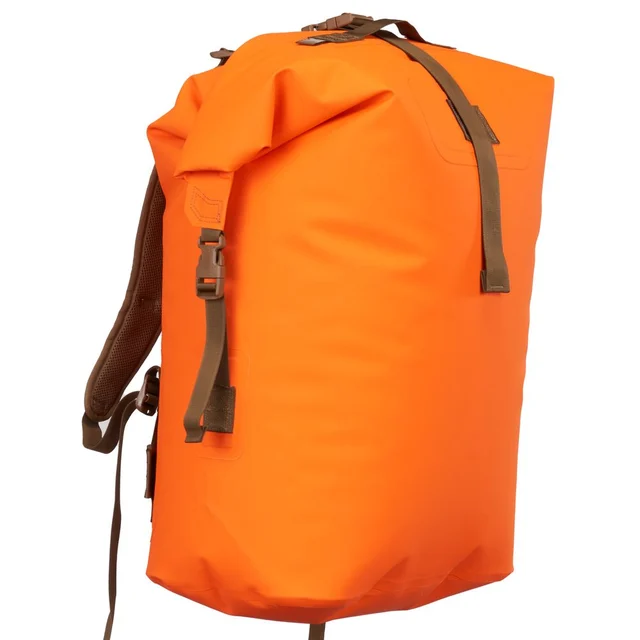
Welded seams and an airtight zip seal built for submersion, if you accept the upkeep and the price.
Best for: Whitewater paddlers, rescue and safety kit, and anyone carrying gear that cannot get wet.
- Radio frequency welded seams mean no needle holes to tape over
- ZipDry airtight seal is marketed as submersible rather than merely waterproof
- Wide opening makes packing and finding gear easier than a narrow roll-top
- Polyurethane laminated nylon body with padded shoulder and waist straps
- The zip seal needs a firm full-length press to close and periodic non-petroleum lubrication, and owners who skip that report a stiff seal
- Costs meaningfully more than roll-top bags of similar volume
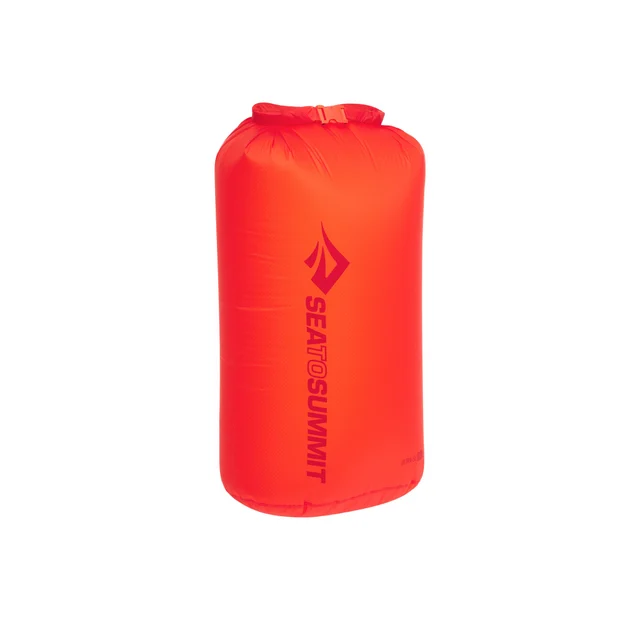
A superb ultralight stuff sack that keeps getting bought as a paddling dry bag, which it is not.
Best for: Backpackers organizing gear inside a pack, not paddlers protecting gear on the water.
- Feathery 30D siliconized Cordura nylon that packs down very small
- Semi-translucent fabric makes contents easy to identify inside a pack
- Excellent at its real job: keeping a sleeping bag or layers dry inside a backpack
- 30D fabric has little abrasion resistance against decks, gravel or rope, and owners report pinholes with outdoor use
- No lash points for rigging to a boat, and taped seams on light fabric put it in the splash category, not the immersion category
| Criteria | Sea to Summit Big River Dry Bag Top pick | NRS 65L Bill's Bag Dry Bag | Watershed Westwater Backpack | Sea to Summit Ultra-Sil Dry Bag |
|---|---|---|---|---|
| Verdict | Buy it | Buy it | It depends | Skip it |
| Best for | Kayakers, canoeists and campers who want one durable, repairable bag family for most of their gear. | Rafters and multi-day river trippers who need one big bag to keep a whole camp kit dry. | Whitewater paddlers, rescue and safety kit, and anyone carrying gear that cannot get wet. | Backpackers organizing gear inside a pack, not paddlers protecting gear on the water. |
| Price tier | $ · mid-range | $$ · premium | $$ · flagship | $ · budget |
| Waterproof level | Rainproof and dunk resistant | Rainproof and dunk resistant | Submersible | Splash and rain only |
| Seam construction | Double stitched and tape sealed | Vinyl laminate, seam method not listed | Radio frequency welded | Taped seams on light fabric |
| Closure | Hypalon non-wicking roll-top | Fold-down StormStrip roll closure | ZipDry airtight zip seal | Hypalon non-wicking roll-top |
| Fabric | 420D nylon, triple-coated base | 21 oz TobaTex, 34 oz base | Polyurethane laminated nylon | 30D siliconized Cordura nylon |
| Carry system | Grab handles, lash loops, optional sling | Removable padded backpack harness | Padded shoulder and waist straps | None, roll-top buckle only |
| Size range | Small personal through large kit sizes | 65L and 110L sizes | Large single size | Small through medium sizes |
| Best environment | Kayak, canoe, camp, moto | Raft and multi-day river trips | Whitewater and critical gear | Inside a backpack |
| Price tier | $ · mid-range | $$ · premium | $$ · flagship | $ · budget |
Which one is right for you?
- Kayakers, canoeists and campers who want one durable, repairable bag family for most of their gear. Buy it Sea to Summit Big River Dry Bag
- Rafters and multi-day river trippers who need one big bag to keep a whole camp kit dry. Buy it NRS 65L Bill's Bag Dry Bag
- Whitewater paddlers, rescue and safety kit, and anyone carrying gear that cannot get wet. It depends Watershed Westwater Backpack
- Backpackers organizing gear inside a pack, not paddlers protecting gear on the water. Skip it Sea to Summit Ultra-Sil Dry Bag
How we judged the field
Dry bags are simple enough that the differences hide in three places: how the bag closes, how the seams are joined, and how thick the fabric is. We synthesized independent gear testing, manufacturer construction specs, and aggregated owner reports from paddlers, rafters and campers, then weighed each bag against the way people actually use it: lashed to a deck, thrown onto a raft, dragged over gravel, and occasionally dunked.
The single biggest finding is that most dry bag failures are not manufacturing defects. They are closure errors. A roll-top needs at least three full folds of the opening before you clip the buckle, with the fabric flattened and air pressed out first. Two rolls looks closed and leaks under pressure. Reviewers who run controlled dunk tests report the same thing owners do: bags that leaked at the top almost always had a short roll or a wrinkled, uneven fold.
The second thing that mattered is the gap between water resistant and submersible. Marketing blurs it constantly. A taped and stitched seam is sealed against rain, spray and a brief dunk. A radio frequency welded seam fuses the coating itself, with no needle holes at all, and that is what survives being held underwater. Both are sold as waterproof. Only one of them earns the word when the boat flips.
Third, fabric denier is a straight trade. A 30D sack weighs almost nothing and abrades through in a season of deck use. A 420D nylon body shrugs off gravel and rope. A 21 oz vinyl laminate takes years of guide abuse and weighs what you would expect. None of these is wrong. They are answers to different questions.
This is the bag most paddlers and campers should own, and the one that answers the most questions at once. The body is 420D nylon with a triple-coated base, which is the sweet spot where a bag stops feeling disposable but still packs and folds like fabric rather than sheet vinyl. Sea to Summit rates the material at a 10,000 mm hydrostatic head, and the seams are double stitched and fully tape sealed.
The details are what earn the pick. The roll-top is a non-wicking hypalon strip, so the closure itself does not soak up water and weep it inward, which is a common failure on cheap bags with plain nylon tops. Lash loops let you strap it to a kayak deck or a thwart instead of trusting one buckle. The Field Repair Buckle can be swapped with a Phillips screwdriver, which matters more than it sounds: a cracked buckle on day two of a trip is otherwise a dead bag. The oval base stops it from rolling off a sloped bank.
It runs from small enough for a lunch and a phone to large enough for a sleeping system, so you can color code a whole kit in one product family. The limit is the seam construction. Stitched and taped seams are excellent against spray, rain and a swim to shore. For gear that must stay dry after a full capsize with a bag pinned under water, this is not the tier you want.
Bill’s Bag has been the default overnight bag on guided river trips since 1977, and the construction explains why. The body is 21 oz TobaTex laminate with a 34 oz reinforced bottom, which is a different category of material from nylon dry bags. It does not care about gravel bars, aluminum frames, or being stacked at the bottom of a load with three other bags on top.
The closure is NRS’s fold-down StormStrip system, a stiffened strip that helps the roll lie flat and seal evenly, which removes most of the user error that sinks roll-tops. Four compression straps with aluminum fasteners cinch the load so it does not shift in a raft, and the padded backpack harness is removable, which is genuinely useful when you fly with it or want fewer snag points on a boat.
The costs are weight and bulk. It is a heavy bag before you put anything in it, the 65L size is a portage chore when fully loaded, and the whole design assumes a boat carries it most of the time. It is also priced like the outfitter equipment it is. For weekend river trips, expedition kit, or anything that lives in a raft, that is the right trade. For a day paddle, it is far more bag than the job needs.
The Westwater is built the way you would build a bag if leaking were unacceptable. The seams are radio frequency welded rather than stitched, so there are no needle holes to tape over, and the closure is Watershed’s ZipDry seal, a press-together airtight zipper rather than a roll. Watershed markets the result as submersible, not merely waterproof, and the polyurethane laminated nylon body is expedition equipment. The wide opening makes packing easier than a narrow roll-top throat.
The reasons to hesitate are real. The ZipDry seal takes a firm press along its whole length to close, and it wants periodic lubrication with a non-petroleum product such as a UV protectant or a hand salve. Owners who skip that report a stiff, cranky seal. It costs more than most people expect to spend on a bag, and once you are past 65L of gear the roll-top boats are usually a better value.
Buy it if you paddle whitewater, run rescue or safety gear, carry a camera body, or have ever lost a sleeping bag to a swim. Skip it if your paddling is flatwater and your worst case is rain.
To be clear about what this is: an excellent ultralight stuff sack, and a poor choice as your paddling dry bag. The fabric is 30D siliconized nylon with Cordura yarns, the seams are taped, and the whole thing weighs almost nothing and packs down very small. Inside a backpack, protecting a down bag from rain and condensation, it is close to ideal, which is why it has been a backpacking staple for two decades.
On the water it is the wrong tool. Thirty denier has little abrasion resistance against a deck, a gravel bank, or a rope, and paddlers report pinholes and worn corners quickly. There are no lash points for rigging to a boat, the slippery finish that helps it slide into a pack also helps it slide out of one, and the taped seams and light fabric put it firmly in the splash and rain category rather than the immersion category.
It gets a skip here not because it is badly made but because it is the bag people buy when the label says dry bag and the price is easy, then blame when a wet phone comes out of it. Buy it for backpacking. Do not buy it for the river.
Sea to Summit Big River Dry Bag vs NRS 65L Bill’s Bag Dry Bag: which should you buy?
These two solve different halves of the same problem. The Big River is a modular system: buy several sizes, color code them, lash them to a deck, and carry a rugged 420D bag that still folds down when empty. The Bill’s Bag is a single large vessel for an entire overnight kit, built from vinyl laminate heavy enough to outlast the boat.
Pick the Big River if you paddle a kayak or canoe, camp out of a car or a boat, and want one product family covering everything from a phone to a sleeping system. Pick Bill’s Bag if you raft, run multi-day river trips, or need one bag that takes abuse from an outfitter’s load pile and keeps a full camp kit dry underneath other gear. If you do both, most people end up owning a Bill’s Bag for the trip and two or three Big Rivers for organization inside it, which is exactly how guide kits are assembled.
On pure sealing, neither is the strongest here. That is the Westwater, and if the contents are irreplaceable, that is the one to buy.
What to look for
- Closure type. Roll-top is versatile and repairable. A zip seal like ZipDry is more waterproof but needs care and costs more. Whatever you buy, roll it three full turns, flatten the fabric first, and press the air out.
- Seam construction. Welded or radio frequency welded seams have no needle holes and handle submersion. Double stitched and taped seams handle rain, spray and short dunks. Read the spec, not the headline.
- Fabric denier. 30D for inside a pack, 200D to 420D nylon for general paddling and camping, vinyl laminate in the 20 oz range for raft and guide abuse. Higher denier means more weight and less packability.
- Lash points and handles. Rigging loops, D-rings and low-profile grab handles decide whether the bag stays with the boat when things go wrong.
- Repairability. Replaceable buckles, patch kits and a real warranty matter more than one more waterproof rating.
- Size headroom. Stated volume assumes minimal rolldown. Buy a size up from what the packing list suggests, because you lose capacity every time you roll.
- Color and visibility. A white or light interior makes finding small items possible. A bright exterior makes a floating bag findable.
Our final take
Buy the Sea to Summit Big River Dry Bag if you want one bag that does nearly everything well: tough enough for deck duty, light enough to carry, and available in enough sizes to organize a whole kit. Buy the NRS 65L Bill’s Bag if your gear travels by raft and you want a bag that will outlast the trips. Consider the Watershed Westwater Backpack when leaking is genuinely unacceptable and you accept a stiffer seal, more maintenance and a higher price for true submersion. Leave the Ultra-Sil for the inside of your backpack, where it is superb.
And whichever you buy, the closure is still the weak point. Three full rolls, air pressed out, buckle clipped snug. Most wet gear stories end there.
Questions, answered
How many times do I actually need to roll the top?
Three full folds is the minimum, and it is the single most important thing you can do. Flatten the opening so the two sides lie together without wrinkles, press the excess air out, roll it down three complete turns, then clip the buckle so the roll is snug rather than loose. Two rolls looks closed and leaks under pressure, and most reports of a dry bag failing trace back to a short or crooked roll rather than a defect in the bag.
What is the difference between waterproof and submersible?
Waterproof usually means the bag keeps out rain, spray and a brief dunk. Submersible means it can be held under water and stay sealed. The difference is mostly seams and closure: welded or radio frequency welded seams fuse the coating with no needle holes, while stitched and taped seams rely on tape over thread holes. Both get marketed as waterproof, so read the construction spec, not the headline.
Are welded seams really better than stitched and taped?
For immersion, yes. A welded seam has nothing to leak through, which is why expedition and rescue bags use it. Stitched and taped seams are cheaper to make in complex shapes and hold up fine against rain, spray and a swim to shore, but the tape is the only thing standing between water and the needle holes, and tape is what ages first. If your worst case is a capsize with the bag pinned underwater, buy welded.
What size dry bag should I buy?
Buy one size larger than your packing list suggests. Stated volume assumes minimal rolldown, and you give up capacity with every fold you make, so a bag filled to the brim cannot be rolled three times. Most paddlers end up with a large bag for a sleeping system and clothing plus two or three small ones for electronics, first aid and food.
How do I keep a dry bag working for years?
Rinse salt and grit off, dry it inside out before storage, and store it unrolled so the fabric does not set a crease. Do not leave it packed and compressed for months, keep coated fabrics out of long sun exposure, and patch pinholes early with the manufacturer's repair tape. Zip-seal bags need periodic lubrication with a non-petroleum product, and roll-top buckles are worth replacing at the first crack rather than mid trip.
Deciding between the top two? See our head-to-head: Sea to Summit Big River Dry Bag vs NRS 65L Bill's Bag Dry Bag.
More Outdoors & Fitness reviews
 The Best Duffel Bags: 4 Compared (and One to Skip)
  The Best Electric Coolers: 4 Compared (and One to Skip)
  The Best Electric Scooters: 4 Compared (and One to Skip)
  The Best Emergency Weather Radios: 4 Compared (and One to Skip)
  The Best Fire Starters: 4 Compared (and One to Skip)
  The Best Castable Fish Finders: 4 Compared (and One to Skip)