

Outdoors & Fitness
The Best Electric Scooters: 4 Compared (and One to Skip)
We compared four adult commuter electric scooters on range, ride quality, portability, and reliability - with one clear model to avoid.
The short version
For most adult commuters, the Segway Ninebot Max G3 is the scooter to buy: independent testing found its long-range claims genuinely hold up, and its dual suspension, self-sealing tires, and anti-theft features make it a complete daily driver. The NIU KQi 300X is the smart mid-range alternative - owners report superb build quality over thousands of miles, and it keeps the essentials at a friendlier price. The Apollo City 2.0 is a terrific machine, but its flagship price, serious weight, and beyond-legal-limit speed make it worthwhile only for riders with long, rough routes who will actually use that capability. The Gotrax G6 tempts with a big battery for little money, but pneumatic tires, no published water-resistance rating and range claims that run from 25 to 45 miles on its own page make it the one to skip. Best for: daily commuters who want a reliable, comfortable ride - get the Max G3 if the budget allows, the KQi 300X if not.
Our picks at a glance
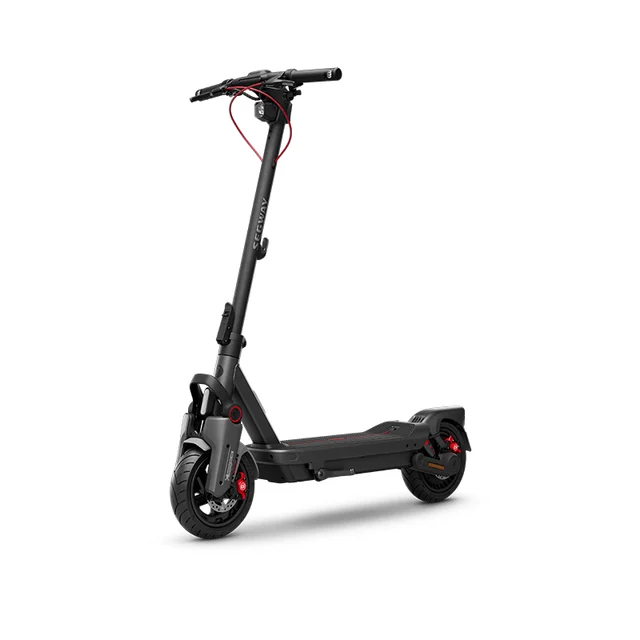
- Segway Ninebot Max G3 - Buy. The most complete commuter scooter you can buy - long real-world range, dual suspension, and Segway's proven track record.
- NIU KQi 300X - Buy. The mid-range sweet spot - polished build quality, front suspension, and dependable range without the flagship price.
- Apollo City 2.0 - It depends. A superb 1,200W single-motor machine with IP66 water resistance - but it's more speed, weight, and money than most commutes require.
- Gotrax G6 - Skip. A big battery at a tempting price, on pneumatic tires with no published water-resistance rating and a range claim that changes across its own page.
The verdict in 30 seconds
What mattered most
- Top speed
- Claimed max range
- Real-world range (reported)
- Suspension
- Tires
- Weight / portability
Adult commuter electric scooters have matured fast: self-sealing tires, real suspension, and 30-plus-mile range are now table stakes in the mid-tier. We synthesized independent testing and owner reports across four current models - Segway's Ninebot Max G3, NIU's KQi 300X, Apollo's City 2.0, and Gotrax's G6 - to find which ones actually hold up to daily commuting. Two earn a clear buy, one is a great machine that's more scooter than most commuters need, and one budget option gives up the tire and weather spec the others share, so we'd steer around it.
The most complete commuter scooter you can buy - long real-world range, dual suspension, and Segway's proven track record.
Best for: Daily commuters who want one scooter that does everything well and lasts for years
- Independent testing found its long-range claims hold up unusually well in real-world riding
- Dual suspension plus self-sealing tubeless tires make for a genuinely comfortable, low-maintenance ride
- A 2000W peak motor rated for 30 percent inclines, a built-in fast charger, and Apple Find My integration to help deter theft
- Heavy enough that carrying it up stairs is a chore
- Costs meaningfully more than capable mid-range rivals
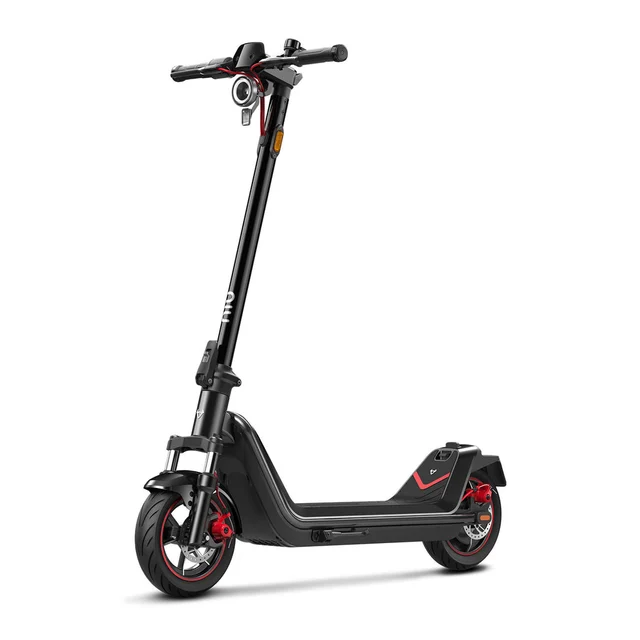
The mid-range sweet spot - polished build quality, front suspension, and dependable range without the flagship price.
Best for: Commuters who want near-premium ride quality at a mid-range price
- Owners consistently report excellent build quality and very few defects over thousands of miles
- Front suspension and larger tubeless tires soak up rough city pavement
- Strong braking and a refined app experience for its class
- Heavier than it looks - awkward to carry far when folded
- NIU discourages DIY repairs, so out-of-warranty fixes usually mean a service center
Amazon had no buyable listing for this when we last checked. The link still works if it returns.
Find it on Amazon Read our detailed assessment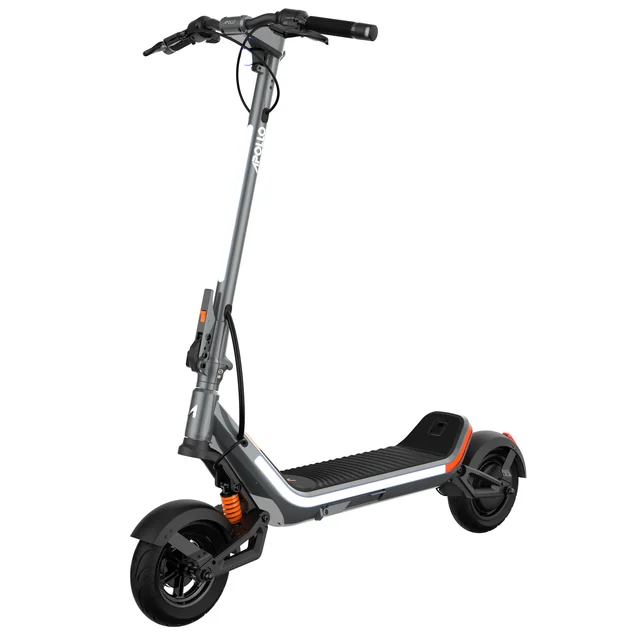
A superb 1,200W single-motor machine with IP66 water resistance - but it's more speed, weight, and money than most commutes require.
Best for: Riders with longer, rougher routes who prioritize power and weatherproofing over portability and price
- Owners report very few serious defects even after long-term heavy use
- Self-healing tubeless tires and strong water resistance handle bad roads and bad weather
- Fender-integrated turn signals and a 1,900W peak motor outclass typical commuter scooters
- Among the heaviest scooters in its class - portability suffers
- Its top speed exceeds legal limits for scooters in many cities, so you may never use what you paid for
- Sold on pre-order on Apollo's own store, with delivery expected in December 2026
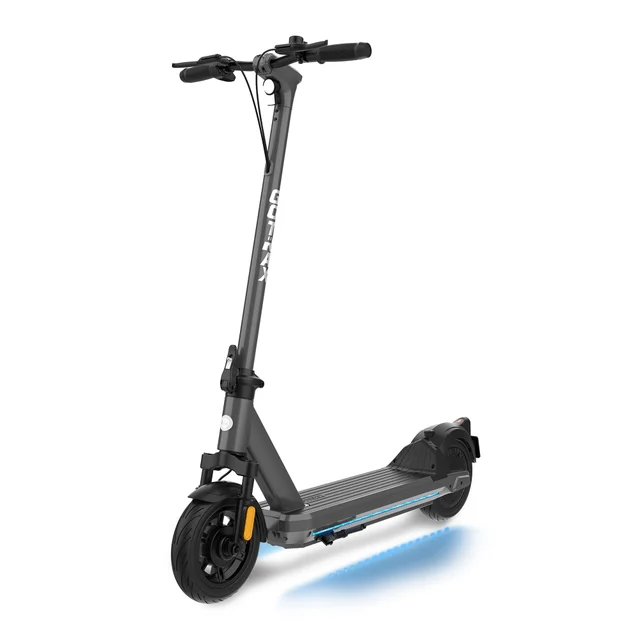
A big battery at a tempting price, on pneumatic tires with no published water-resistance rating and a range claim that changes across its own page.
Best for: Short, dry, smooth-road trips where a flat is an inconvenience rather than a stranding; spend more for the NIU for daily commuting
- A 48V 15Ah (720Wh) battery, the largest here, for budget money
- At a stated 45 lbs it is the lightest scooter here, with a 2 year warranty and UL 2272 certification
- Solid feature set on paper: cruise control, a passcode lock, and a bright display
- 10 inch pneumatic tires, while the other three use tubeless tires with a self-sealing or self-healing layer
- Gotrax publishes no water-resistance rating for it
- Its own page states range as up to 25-35 miles, up to 35 miles, and up to 45 miles in different places
- A 500W motor, 20 mph top speed and front-only suspension
| Criteria | Segway Ninebot Max G3 Top pick Buy it Buy | NIU KQi 300X Buy it | Apollo City 2.0 It depends Buy | Gotrax G6 Skip it Buy |
|---|---|---|---|---|
| Best for | Daily commuters who want one scooter that does everything well and lasts for years | Commuters who want near-premium ride quality at a mid-range price | Riders with longer, rougher routes who prioritize power and weatherproofing over portability and price | Short, dry, smooth-road trips where a flat is an inconvenience rather than a stranding; spend more for the NIU for daily commuting |
| Price tier | $$$ · premium | $$ · mid-range | $$$$ · flagship | $ · budget |
| Top speed | 28 mph (20 mph by default, raised via the app) | 20 mph on-road | 32 mph (single motor) | 20 mph |
| Claimed max range | Up to 50 miles (Eco mode) | Up to 37.3 miles | Up to 40 miles | Up to 35 miles (45 in Gotrax feature copy) |
| Real-world range (reported) | Excellent - claims largely hold up | Good - dependable for daily commutes | Good, drops fast at high speed | Inconsistent; Gotrax states 25 to 45 miles across its own page |
| Suspension | Dual (front and rear hydraulic) | Front hydraulic | Triple-spring, front and rear | Front only |
| Tires | Tubeless, self-sealing | Tubeless, self-healing | Tubeless, self-healing gel | Pneumatic |
| Weight / portability | Heavy - curb-to-door friendly, stairs not so much | Moderately heavy | Very heavy - hardest to carry | Lighter than the others, easier to lug |
| Reliability reputation | Excellent - proven Max lineage | Excellent - few reported defects | Very good - minor niggles only | Pneumatic tires, no water rating published |
| Price tier | $$$ · premium | $$ · mid-range | $$$$ · flagship | $ · budget |
Which one is right for you?
- Daily commuters who want one scooter that does everything well and lasts for years Buy it Segway Ninebot Max G3
- Commuters who want near-premium ride quality at a mid-range price Buy it NIU KQi 300X
- Riders with longer, rougher routes who prioritize power and weatherproofing over portability and price It depends Apollo City 2.0
- Short, dry, smooth-road trips where a flat is an inconvenience rather than a stranding; spend more for the NIU for daily commuting Skip it Gotrax G6
How we judged the field
We don’t run a lab. Instead, we synthesized what independent testing and aggregated owner reports consistently say about each scooter, then weighted the findings for how adult commuters actually ride: real-world range at commuting speeds (not brochure numbers), ride comfort over broken city pavement, braking confidence, portability for the train-and-stairs crowd, and - above all - reliability and after-sales support, because a commuter scooter that strands you is worse than no scooter at all. All four models are listed on their makers’ sites, though the Apollo City 2.0 is sold on pre-order, with Apollo stating expected delivery in December 2026. Where testers and owners disagreed, we favored patterns repeated across many owner reports over any single review.
Segway Ninebot Max G3
Buy itThe Max line built its reputation on being the scooter that just keeps working, and the G3 is the strongest version of that formula yet. Independent testing found its headline range claim - roughly 50 miles in the most conservative mode - holds up unusually well, which is rare in a category where spec sheets are routinely optimistic. The 2000W peak motor is rated for 30 percent inclines, and the combination of front hydraulic suspension, rear suspension, and self-sealing tubeless tires makes it one of the most comfortable and lowest-maintenance rides in the class. Thoughtful touches stack up: fast charging, a bright integrated display, and Apple Find My support that adds a genuine theft deterrent. The honest downsides are weight - this is a roll-it-don’t-carry-it scooter - and a price that sits clearly in premium territory. But per mile of dependable commuting, reviewers and owners agree it’s money well spent.
NIU KQi 300X
Buy itNIU’s KQi 300X is what we’d point most people to if the Segway stretches the budget. It pairs a dual-tube hydraulic front suspension with a 608.4Wh battery and 10.5 inch self-healing tubeless tires. The standout theme in owner reports is build quality: long-term owners describe thousands of miles with few or no failures, which is notable at any price and especially in the mid-range. Independent testing praises its braking and its composed, planted feel on rough pavement. Trade-offs are real but livable: it’s heavier than its sleek looks suggest, its top speed is a modest 20 mph on-road, and NIU steers repairs toward service centers rather than DIY. None of that undermines the core appeal - near-premium commuting for a mid-range outlay.
Apollo City 2.0
It dependsThe Apollo City 2.0 is arguably the best scooter here - and still not the right buy for most commuters. Owners report impressively few defects even after long, hard use; its 1,200W nominal motor gives it the highest top speed here, 32 mph; the suspension is well-tuned; and its PunctureGuard tubeless tires come pre-filled with a self-healing gel that seals most punctures. An IP66 water resistance rating makes it the best pick for riders who can’t choose their weather, and fender-integrated turn signals are a genuine safety upgrade in traffic. So why the hedge? At a published 72 lbs it’s the heaviest scooter here by a clear margin, it costs flagship money, and its top speed exceeds what many cities legally allow - meaning many buyers pay for performance they can never use. If your commute is long, hilly, rough, or rainy, it’s worth every bit of the premium. If yours is a flat few miles, it’s overkill.
Gotrax G6
Skip itOn paper, the G6 is the value story of the group: a 48V 15Ah (720Wh) battery, the largest here, plus cruise control, a code lock on the display, a 2 year warranty and UL 2272 certification for budget money, and at a stated 45 lbs it is the lightest scooter in this comparison. The trouble is in what Gotrax’s own page says and does not say. It rides on 10 inch pneumatic tires, while the Segway, NIU and Apollo all use tubeless tires with a self-sealing or self-healing layer, so flats are back on the table. Gotrax publishes no water-resistance rating, where Apollo states IP66. And the range claim moves around the page: up to 25-35 miles in the summary, up to 35 miles in the specification table, and up to 45 miles in the feature copy. A 500W motor, 20 mph top speed and front-only suspension complete a spec that suits short, dry trips better than a daily commute. With the KQi 300X one tier up, the G6 is the one to skip.
Segway Ninebot Max G3 vs NIU KQi 300X: which should you buy?
This comes down to how far you ride and how much scooter you want to pay for. The Max G3 wins on outright capability: substantially more real-world range, a higher top speed where it’s legal, dual suspension rather than front-only, and extras like Find My integration and fast charging. If your round trip is long, your terrain is hilly, or you simply want the scooter you’ll never need to think about, the Segway justifies its premium. The KQi 300X counters with the better value proposition: owner-reported reliability that matches anything in the class, a comfortable suspended ride, and enough range for the vast majority of daily commutes - at a meaningfully lower price. Both are heavy; neither is fun on stairs. Our take: buy the Max G3 if your commute genuinely uses its extra range and speed, and buy the KQi 300X if your commute is under about ten miles each way - you’ll bank the savings and give up very little.
What to look for
- Real-world range, not claimed range. Assume 60-70 percent of the brochure number at commuting speeds, and buy double your round-trip distance.
- Tubeless or self-sealing tires. They’ve turned flats from a weekly anxiety into a rarity - a bigger quality-of-life upgrade than any spec-sheet number.
- Suspension if your streets are rough. Small-wheeled scooters transmit every crack in the pavement; even basic front suspension transforms the ride.
- Weight against your actual door-to-door route. Stairs, trains, and elevators make every pound matter; ground-floor storage makes weight nearly irrelevant.
- Brand support and parts availability. A scooter is a vehicle, not a gadget - established brands with responsive warranty service are worth a real premium.
- Local legality. Check your city’s speed caps and where scooters may ride before buying, especially for faster models.
Our final take
The commuter scooter market has split into scooters that are dependable vehicles and scooters that are gadgets wearing vehicle costumes. The Segway Ninebot Max G3 and NIU KQi 300X sit firmly in the first camp: both pair honest range with strong owner-reported reliability, and choosing between them is mostly a question of commute length and budget. The Apollo City 2.0 is a genuinely excellent machine that only makes sense for riders whose routes demand its power and weather sealing - and whose local laws let them use it. The Gotrax G6 shows why price alone is the wrong way to shop this category: a big battery means less when the tires are pneumatic, no water rating is published and the range claim changes across its own page. Buy the Max G3 if you can, the KQi 300X if you’re watching the budget, and whatever you ride - wear the helmet.
Questions, answered
Do I need a helmet, and are electric scooters even legal where I live?
Wear a helmet on every ride - no exceptions. Scooter falls happen at speeds where head injuries are a real risk, and a certified bike or scooter helmet dramatically improves your odds. Just as important: electric scooter rules vary widely by country, state, and even city - speed caps, minimum ages, sidewalk bans, and where you're allowed to ride all differ. Check your local laws before buying, especially for faster models like the Apollo City 2.0, whose top speed exceeds what many cities allow on public roads.
How much range do I actually need for commuting?
A good rule of thumb is to buy at least double your daily round-trip distance. Manufacturer range figures are measured at low speeds in ideal conditions; real-world range at commuting speeds with stops, hills, and a full-size adult aboard is often 60-70 percent of the claim. Cold weather cuts it further. That is why the Max G3's reputation for hitting close to its claimed range matters more than a bigger number on a spec sheet.
Are heavier scooters worth it, or should I prioritize a light one?
It depends on your door-to-door reality. Every scooter in this comparison is heavy enough that carrying it up multiple flights of stairs gets old fast. If your commute involves trains, elevators, or stairs, weight should rank near the top of your criteria - but be aware that very light scooters usually sacrifice range, suspension, and stability. If you can roll it most of the way and store it at ground level, the comfort of a heavier scooter wins.
What maintenance do commuter scooters need?
Less than they used to. Tubeless and self-sealing tires (on the Segway, NIU, and Apollo here) have largely eliminated the flat-tire misery of older scooters. Beyond that: keep tires at the recommended pressure, check brake adjustment monthly, keep the folding mechanism snug, and store the battery indoors - lithium batteries dislike both freezing cold and hot cars. Owners note NIU scooters are best serviced through official channels rather than DIY.
Is a budget scooter like the Gotrax G6 ever the right call?
Budget scooters make sense for short, flat, fair-weather trips where a failure means walking a few blocks, not being stranded miles from home. The G6's specific problem is what Gotrax leaves out for daily use. It rides on pneumatic tires where the others here are tubeless and self-sealing, Gotrax publishes no water-resistance rating, and its own page quotes range anywhere from 25 to 45 miles. If your budget is firm and your trips are short and dry, it can work; for a daily commute, the KQi 300X is the safer spend.
Deciding between the top two? See our head-to-head: Segway Ninebot Max G3 vs NIU KQi 300X.
More in Outdoors & Fitness
Electric Scooters, Explained Plain-English guide → Segway Ninebot Max G3 vs NIU KQi 300X Head-to-head →  The Best Emergency Weather Radios: 4 Compared (and One to Skip)
  The Best Fire Starters: 4 Compared (and One to Skip)
  The Best Castable Fish Finders: 4 Compared (and One to Skip)
  The Best Fishing Reels: 4 Compared (and One to Skip)